Article Authored By : Dr. Girija Shawarikar (SP Jain School of Global Management, Singapore)
In the current educational context, where students increasingly have access to AI-based tools for information retrieval and content generation, it has become even more important to design assessments that emphasise analysis, judgment, and synthesis over simple content production. Tasks that once required hours of searching, summarising, and drafting can now be completed within minutes using widely available generative technologies. While this development offers genuine opportunities for supporting learning, it also raises serious pedagogical questions particularly in analytically oriented disciplines such as economics.
In microeconomics, the central educational objective has never been the memorisation of definitions or the reproduction of standard diagrams. Rather, the intellectual core of the subject lies in the ability to apply models, interpret evidence, evaluate trade-offs, and reason systematically about real-world situations. In an environment where explanations of market structures, elasticity, or cost curves can be generated instantly by digital tools, the challenge for instructors is no longer how to provide information, but how to design learning tasks that make student thinking visible, defensible, and intellectually meaningful.
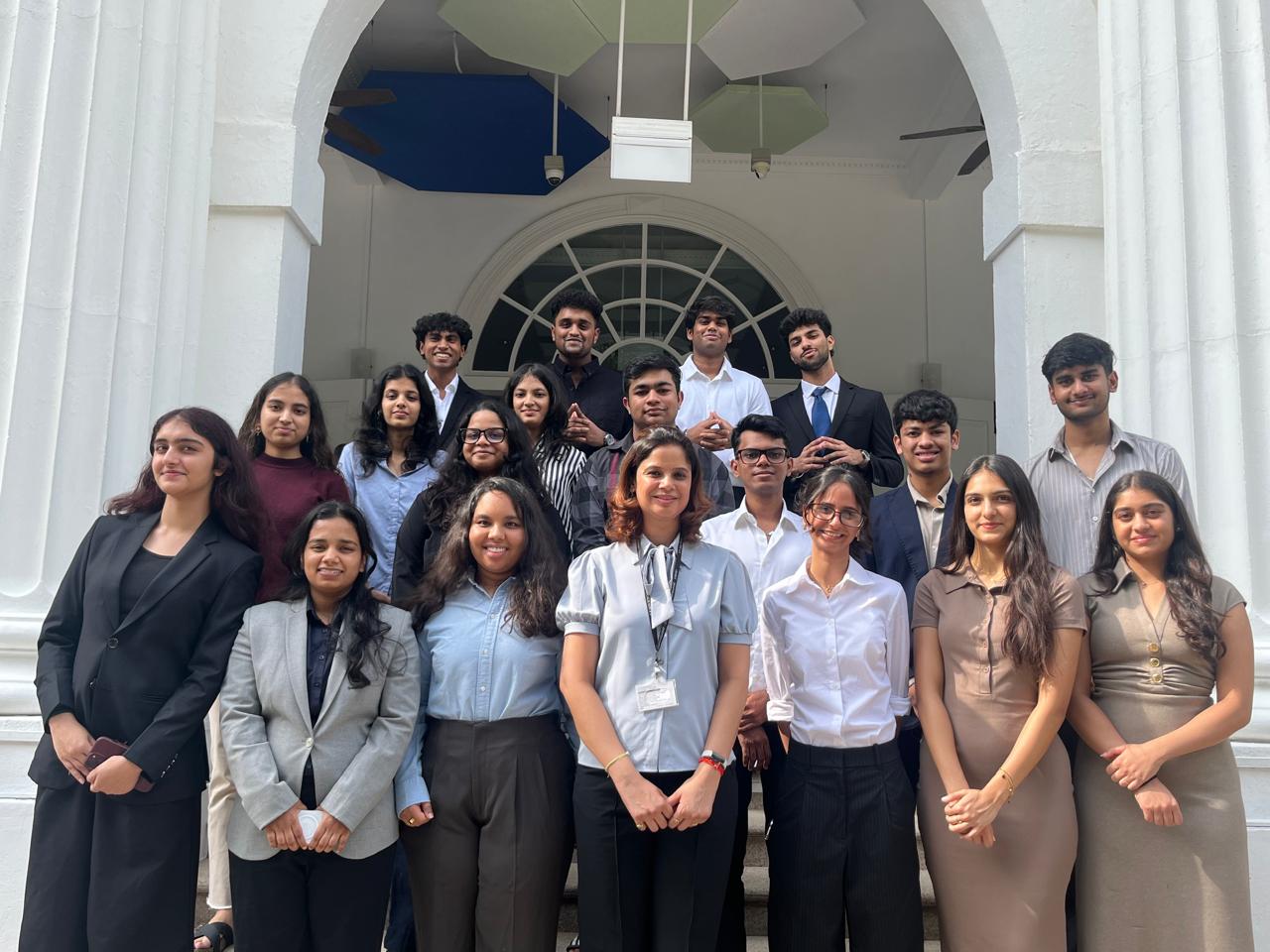
This section describes and reflects on a teaching innovation implemented in the Bachelor of Business Administration (BBA) Microeconomics course at SP Jain School of Global Management (Singapore), a poster presentation assignment themed “Profit Meets Planet: Decoding Market Structures for a Sustainable Singapore.” The initiative was developed not as a response to technology alone, but as part of a broader effort to shift assessment away from content reproduction and toward analytical judgment and application, building capabilities that remain central to economic thinking regardless of technological change.
Microeconomics, AI, and the Changing Nature of Student Work
Microeconomics is particularly exposed to the effects of AI-assisted learning. Its core concepts-market structures, demand and supply, elasticity, costs, pricing strategies are well-defined, widely documented, and highly standardised. As a result, generic explanations can be produced quickly and fluently by automated systems. While such tools can support student learning when used responsibly, they also make it increasingly difficult for instructors to rely on traditional written assignments as indicators of genuine understanding.
This does not mean that microeconomics is becoming less important. On the contrary, the discipline’s emphasis on incentives, constraints, trade-offs, and strategic interaction is arguably more relevant than ever in a world shaped by technological disruption and sustainability challenges. What is changing is the nature of what should be assessed. The pedagogical focus must move decisively from what students can produce to how students think.
The Teaching Initiative: Concept and Design
The poster assignment is embedded in the undergraduate Microeconomics course. Students are asked to explore how firms operating in Singapore behave under different market structures- perfect competition, oligopoly, or monopoly and how these firms integrate sustainability considerations while balancing profitability and environmental responsibility.
Each student group was required to select a firm operating within one of the specified market structures. Broadly following parameters were considered:
⦁ Justify the classification of the firm’s market structure using economic reasoning
⦁ Analyse pricing strategies, competitive environment, barriers to entry, and overall market dynamics.
⦁ Examine the role of government policy, regulation, and consumer preferences in shaping sustainability strategies and present the entire analysis on a single-page poster, supported by a short presentation and question and answer discussion.
From a teaching innovation perspective, two design features are particularly important.
First, the one-page constraint is not a formatting requirement but a pedagogical device. It forces students to decide what is essential, what can be omitted, and how arguments can be structured economically and visually. In practice, this compels students to clarify their own understanding before they can communicate it to others.
Second, the oral defence component ensures that the final product is not merely a polished visual artifact, but a representation of the student’s own reasoning. Students must explain their choices, justify their interpretations, and respond to questions making their thinking both visible and testable.
Why This Matters in the AI Era
The assignment does not reject the presence of AI tools. Instead, it repositions them as supporting instruments for exploration and information gathering, while preserving the centrality of human judgment and economic reasoning.
Observed Impact on Student Learning
From repeated implementation, classroom observation, and student feedback, several consistent patterns have emerged.
First, student engagement with microeconomics increases noticeably. The combination of real firms, contemporary sustainability issues, and a visual presentation format makes the subject more concrete and relevant.
Second, students demonstrate stronger conceptual integration. Rather than treating elasticity, cost structures, and market forms as separate topics, they begin to use them together as part of a single analytical narrative.
Third, students’ ability to explain economic reasoning in simple, structured language improves. This is particularly evident during presentations, where students must communicate ideas to peers who are not working on the same firm or industry.
Fourth, from an instructor’s perspective, the posters provide exceptionally rich diagnostic information. In other words, the assignment makes student thinking visible.
Assessment Design as Teaching Innovation
From a teaching innovation standpoint, the most important contribution of this initiative is not the use of posters per se, but the reframing of what is being assessed.
In an AI era, assessment cannot primarily be about the production of information or even the reproduction of analysis. It must be about framing problems, making justified choices, connecting theory to context, synthesising ideas under constraints and defending interpretations. The microeconomics poster initiative represents one practical, scalable way of doing exactly this within a core undergraduate course.
It preserves academic rigour not by increasing surveillance or restriction, but by designing tasks that are inherently thinking intensive.
Conclusion
The poster presentation initiative illustrates how a carefully designed teaching innovation can respond constructively to the challenges and opportunities of the AI era.
By shifting the emphasis from content production to analytical judgment, synthesis, and application, the assignment preserves the intellectual core of microeconomics while making learning more engaging, visible, and relevant.
Most importantly, it shows that in an age of increasingly powerful tools, the true goal of economics education remains unchanged to develop students who can think clearly, reason carefully, and apply economic logic thoughtfully to the real world.