















Mastering Photographic Composition: Visual Storytelling, Balance, and Emotional Impact
Master photographic composition to craft memorable, emotionally resonant images that communicate narrative, mood, and visual impact with precision.
#1 Most Popular Online Course & Internship in Arts and Photography You can enroll today & get certified from EasyShiksha & HawksCode.
 Build real-world projects
Internship with certificate
Resume-ready experience
Beginner to advanced
Lifetime access
Interview prep included
Build real-world projects
Internship with certificate
Resume-ready experience
Beginner to advanced
Lifetime access
Interview prep included
 Updated October 12, 2026
Join 5,00,000+ students already enrolled worldwide
No risk — 30-day full refund guarantee
Start instantly after payment — access in seconds
Certificate + Internship Joining Letter included
Updated October 12, 2026
Join 5,00,000+ students already enrolled worldwide
No risk — 30-day full refund guarantee
Start instantly after payment — access in seconds
Certificate + Internship Joining Letter included

 Free Preview
 101 On-demand Videos
 Internship Joining Letter
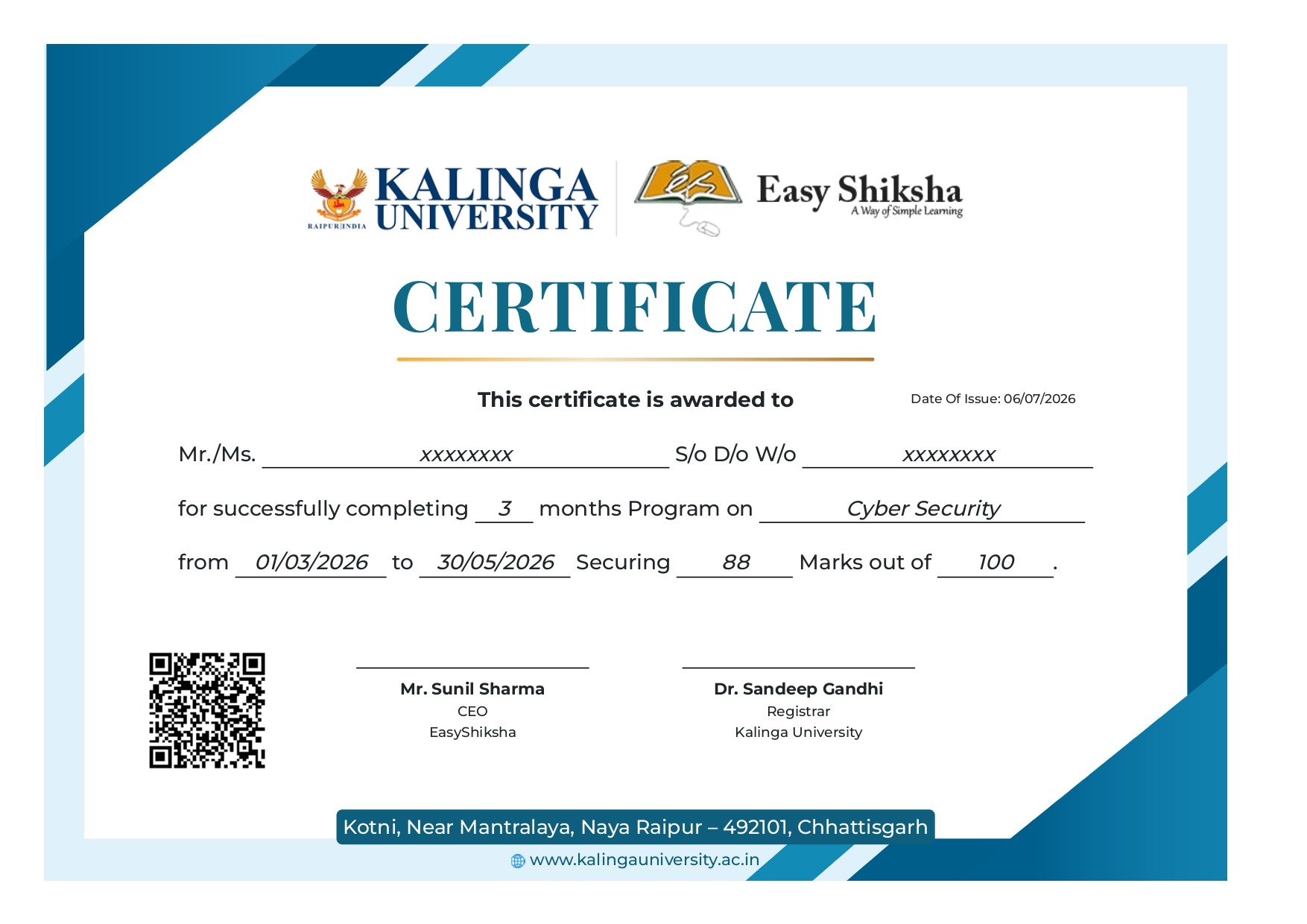
 2 Certificates (Course + Internship)
 Lifetime Access
 1 Quiz + Assignments
 Mobile & Desktop Access




Why This Course and Internship Stands Out
See exactly what separates EasyShiksha students from everyone else
 Watching scattered YouTube
videos with no structure
No certificate — nothing to show
employers
No internship experience on
resume
Wasting months without clear
direction
Struggling to stand out in job
applications
No proof of practical skills
Structured, beginner-to-advanced
learning path
Verified certificate — shareable
on LinkedIn
Real internship offer letter for
your resume
Go from zero to job-ready in one
programme
Resume-ready experience before
graduation
Practical projects you can show
any recruiter
Watching scattered YouTube
videos with no structure
No certificate — nothing to show
employers
No internship experience on
resume
Wasting months without clear
direction
Struggling to stand out in job
applications
No proof of practical skills
Structured, beginner-to-advanced
learning path
Verified certificate — shareable
on LinkedIn
Real internship offer letter for
your resume
Go from zero to job-ready in one
programme
Resume-ready experience before
graduation
Practical projects you can show
any recruiter
Internship Opportunity Included With This Course
"This is not just a course — it's real career experience. Walk away with documents that prove your skills to any employer."




This Course is Perfect For
Whether you're starting from scratch or switching careers — this course is designed with your success in mind.








This course uses elements of Artificial IntelligenceWhat transforms a photograph from ordinary to unforgettable? How do master photographers use composition to speak without words, capturing our attention, guiding our emotions, and etching memories into our minds? If you’ve ever wondered how images make you feel, think, and remember—or if you’re seeking to elevate your photographic artistry with intention and purpose—welcome. This in-depth course unlocks the secrets of photographic composition at a level rarely explored online, giving you the tools to create images that are not just seen, but truly experienced.
Photography is our most universal visual language—simultaneously documentary and dreamlike, scientific and poetic. In an age defined by visual overload, standing out requires more than technical skill. It requires deep understanding of how design, psychology, and culture intersect inside the photographic frame. Our team of award-winning photographers, educators, and visual storytellers invite you on an immersive journey into the true heart of image-making, where composition becomes your most powerful tool for meaning, mood, and memorable storytelling.
Why Composition Is More Critical Now Than Ever
Today, billions of photos are shared every day across social media, news platforms, and personal devices. Audiences are savvier than ever, instantly able to scroll past, critique, or adore. But what makes them pause? What causes a photo to spark curiosity, ignite emotion, or communicate a complex narrative with a single glance? At its core, it’s not just the subject—it’s how you arrange, balance, and orchestrate every element within your frame.
This course is designed for those who seek mastery—photographers, designers, content creators, and even visual art aficionados ready to deepen their vision. Whether you shoot portraits or editorial, landscapes or commercial campaigns, understanding composition is your gateway to more powerful communication. From unlocking the mysteries of visual perception and spatial storytelling, to dissecting iconic images that shaped history, you’ll gain practical skills blended with creative insight grounded in current visual culture.
What Sets This Course Apart
Most composition courses teach rules. We go far beyond—offering an inside-out approach that explores not only established frameworks, but also the psychology, cultural context, and intuitive artistry behind every decision. You’ll learn directly from imagery that changed the world, with exclusive case analyses, interactive exercises, portfolio-building projects, and guided critiques that challenge you to experiment and refine your own vision.
Our curriculum merges classic art theory, cutting-edge cognitive science, and real-world editorial practice. We don’t just discuss *what* works—we show you *why*, *when*, and *how* to adapt. Each section is carefully crafted to layer technical skills with perceptual depth, building confidence whether you’re shooting handheld on the street or staging in the studio.
Your Course Journey: The Anatomy of Powerful Images
*Start by Understanding the Foundations.*
We open with a sweeping introduction to photographic composition as the silent language of stories—how image-makers throughout history have harnessed structure, balance, and visual flow to shape perception. Through vivid storytelling and visual analyses, you’ll discover how our eyes move across photographs, why certain elements command attention, and how some images have defined entire generations.
*Explore the Building Blocks of Visual Structure.*
Delve into the essential components—shape, color, line, texture, pattern, and rhythm—that form the architecture of all compelling photographs. Learn how masters manipulate light and shadow to create drama, how contrast steers attention, and the subtle role patterns and repetition play in creating harmony or striking discord.
*Master Visual Balance and Emotional Dynamics.*
Uncover the secrets of symmetry and asymmetry, discovering how compositional choices impact the psychological energy of an image. We’ll guide you in using negative space, juxtaposition, and distributed elements to evoke calm, tension, power, or movement. Step into the emotional world of photographs, decoding how order and chaos coexist in some of the most iconic works ever made.
*Placement, Proportion, and the Power of Design.*
Achieve deeper control over your compositions with advanced lessons in subject placement—comparing rules of thirds, golden ratios, and centrality. Learn how to layer foreground, middle, and background for three-dimensional storytelling, and see real examples from magazine covers and high-impact advertising campaigns.
*Take Command of Narrative through Dominance and Hierarchy.*
Move beyond surface-level beauty to wield contrast, dominance, and subordination for layered storytelling. You’ll experiment with grouping and isolation, orchestrating complex visual narratives that guide your viewer’s focus, using techniques borrowed from documentary photography and editorial design.
*Shape Mood and Tone with Intention.*
Every image has a mood. You’ll learn how color harmonies, visual order, imbalance, texture, and atmospheric detail influence emotion—from serene stillness to energetic movement. Explore the expressive spectrum, studying work ranging from fine art to commercial portfolios.
*Unlock the Power of Spatial Storytelling and Depth.*
Discover the art of spatial relationships—using foreground-background interplay, perspective, vanishing points, and layering to build immersive contexts. Real-world portrait and landscape sessions reveal how to arrange space for clarity or complexity, with special emphasis on what makes spatial narratives compelling and memorable.
*Implement Framing and the Art of Inclusions.*
Find out how to emphasize or obscure with frames within the frame, borders, and creative cropping. Learn when exclusion heightens mystery, and how partial obstruction can engage viewers by prompting questions rather than giving easy answers. Cinematic and documentary examples unpack framing as a central narrative device.
*Dive Deep into Visual Psychology and Cognitive Engagement.*
Explore how Gestalt principles shape image reading, and how visual anchors, points of entry, and pattern disruption affect perception. See how perceptual psychology informs editorial decisions and the creation of images that hold attention in competitive outlets like magazines and national news.
*Command Direction through Lines and Paths.*
Harness the dynamic energy of lines—horizontal, diagonal, curved, and spiral—to lead the viewer’s eye, suggest movement, and structure narrative flow. Analyze landscapes, architectural shots, and candid moments for the subtle orchestration of visual exploration.
*Orchestrate Complexity and Rhythm with Patterns and Repetition.*
Break the grid or create it: discover the storytelling potential of recurring forms, rhythm, and organized chaos. Experiment with pattern disruption for maximum emphasis, using nature, urban environments, and abstract arrangements as your palette.
*Interpret Contrast in All Its Forms.*
Develop advanced skills in reading and creating contrast—whether with light, shadow, color, or texture. Delve into chiaroscuro, the psychological force of warm versus cool colors, and how context determines the impact of visual opposites. Case studies from celebrated photojournalism and fine art illustrate these powerful techniques.
*Balance Rules with Intuitive Freedom.*
We believe in mastering rules—and knowing when to break them. Discover a structured but flexible approach to composition, fusing the classic “rules of thumb” with intuition and improvisation. Practical, hands-on exercises train you to sense when the moment calls for tradition or creative rebellion.
*Context, Culture, and Visual Storytelling in a Global Age.*
Expand your worldview by investigating how cultural factors, symbolism, and genre conventions shape compositional preferences—from Eastern ideals of harmony to Western traditions of bold centrality. Analyze cross-cultural campaigns and genre tropes, understanding the global language of photography.
*Sequence, Structure, and Photo Essays.*
Learn to build photographic stories that unfold over time, mastering visual pacing, closure, and the construction of essays that move and persuade. Guided projects challenge you to create narrative sequences ready for editorial publication or gallery exhibition.
*Apply Advanced Visual Perception Theory.*
From salience mapping and visual memory to cognitive load management and purposeful ambiguity, you’ll explore what makes some images unforgettable and others quickly forgotten. Debate the role of interpretation in photographic meaning, honing a truly expert eye.
*Case Studies from the Masters.*
In-depth analyses of historic portraits, landscapes, news images, and commercial photographs reveal how compositional genius was achieved—and teach you the language and tools to forge your own legacy. Deconstruct five award-winning photos in detail, applying lessons to your own work.
*Build Your Unique Visual Voice.*
Across the course, you’ll assemble a portfolio of thoughtfully composed images ready for personal projects, editorial submission, or client presentations. Our critical assignments and peer feedback sessions encourage rigorous self-reflection and growth. By the final module, you’ll be ready to identify your individual style, making composition a lifelong, evolving process of discovery.
Course Features and Outcomes
- Portfolio-ready projects and assignments to showcase your compositional development
- Downloadable resources, compositional templates, and guided checklists
- Interactive community forums and optional live critique sessions for personalized feedback
- Assessments that go beyond quizzes—requiring creative application, self-analysis, and peer review
- Downloadable case studies, before/after breakdowns, and comparison gallery of masterworks
- A culminating capstone project: design and share a narrative photo essay incorporating advanced compositional strategies
The Unique Value You Gain
What truly differentiates this course is our blending of visual psychology, cross-cultural analysis, and hands-on creative practice. You receive not just a toolkit of techniques, but a way of *seeing*—an approach that incorporates global photographic trends, cognitive science, and the living traditions of both classical art and contemporary media. All instructions, case work, and exercises are designed for both immediate application and deep, ongoing growth—no matter your preferred camera or style.
Our team brings decades of collective experience teaching at leading art schools, judging international photo competitions, and publishing in major media outlets. Yet our methods remain approachable, introspective, and student-centered—prioritizing your evolution as a visual communicator.
Why Enroll Now?
If you’re ready to move beyond snapshots and develop images that resonate, this course is your next step. Whether you work in editorial, fine art, advertising, social media, or personal storytelling, mastering composition will dramatically expand your impact and creative satisfaction. Your images will not only stand out in today’s visual world—but will have the power to move, persuade, and be remembered.
Join us for the most rigorous, inspiring, and transformative exploration of photographic composition available online. With essential photography keywords embedded throughout every lesson—photographic composition, visual storytelling, balance, symmetry, spatial arrangement, contrast, visual psychology, photographic narrative, and more—you’ll find yourself mastering skills crucial for 21st-century creators.
The journey starts with a single frame. Are you ready to see the world, and your own images, in a profoundly new way? Enroll now and make every photograph a work of art and communication.
 Unlock 99 More Lessons + Internship Access

 Missing this = losing the internship credential Missing this = losing your early-access advantage Missing this = falling behind candidates who did enroll



.svg?v1)
 Chat with us first →
 UPI
UPI
 Wallets
 Debit/ Credit card
 NetBanking
 EMIs
101 On-demand Videos Course Completion Certificate
Internship Certificate
Internship Joining/Offer Letter
Letter of Appreciation (LOA)
Internship Attendance Report
Internship Evaluation Report
Internship Certificate Hard Copy
Project Report Assitance
Internship Project Assitance
1:1 Live Mentor Call
Course Certificate in Elegant Wooden Frame
2 Certificates (Course + Internship) Lifetime Access Projects & Assignments 1 Quiz + Assignments
EMIs
101 On-demand Videos Course Completion Certificate
Internship Certificate
Internship Joining/Offer Letter
Letter of Appreciation (LOA)
Internship Attendance Report
Internship Evaluation Report
Internship Certificate Hard Copy
Project Report Assitance
Internship Project Assitance
1:1 Live Mentor Call
Course Certificate in Elegant Wooden Frame
2 Certificates (Course + Internship) Lifetime Access Projects & Assignments 1 Quiz + Assignments
Why Start Now?
The Opportunity Won’t Wait.
Every day you delay is a missed opportunity to grow your skills. Learners who start today gain the advantage — whether it's building skills, improving careers, or unlocking new opportunities.
Still Thinking?
Here's everything that makes this a no-brainer:
No prior experience needed — start from absolute zero Beginner friendly — explained step by step Risk-free — 30-day full refund guarantee One-time payment — access forever Student-friendly pricing — see details at checkout Real internship certificate includedWhat Happens After You Enroll?
From payment to certificate — here's exactly what to expect
 Secure Payment
 Instant Access
30-Day Refund
2 Certificates
Instant Access
30-Day Refund
2 Certificates
Imagine After Completing This Course
Picture yourself 30 days from now — with skills, experience, and credentials that open real doors.




 Includes Internship


















