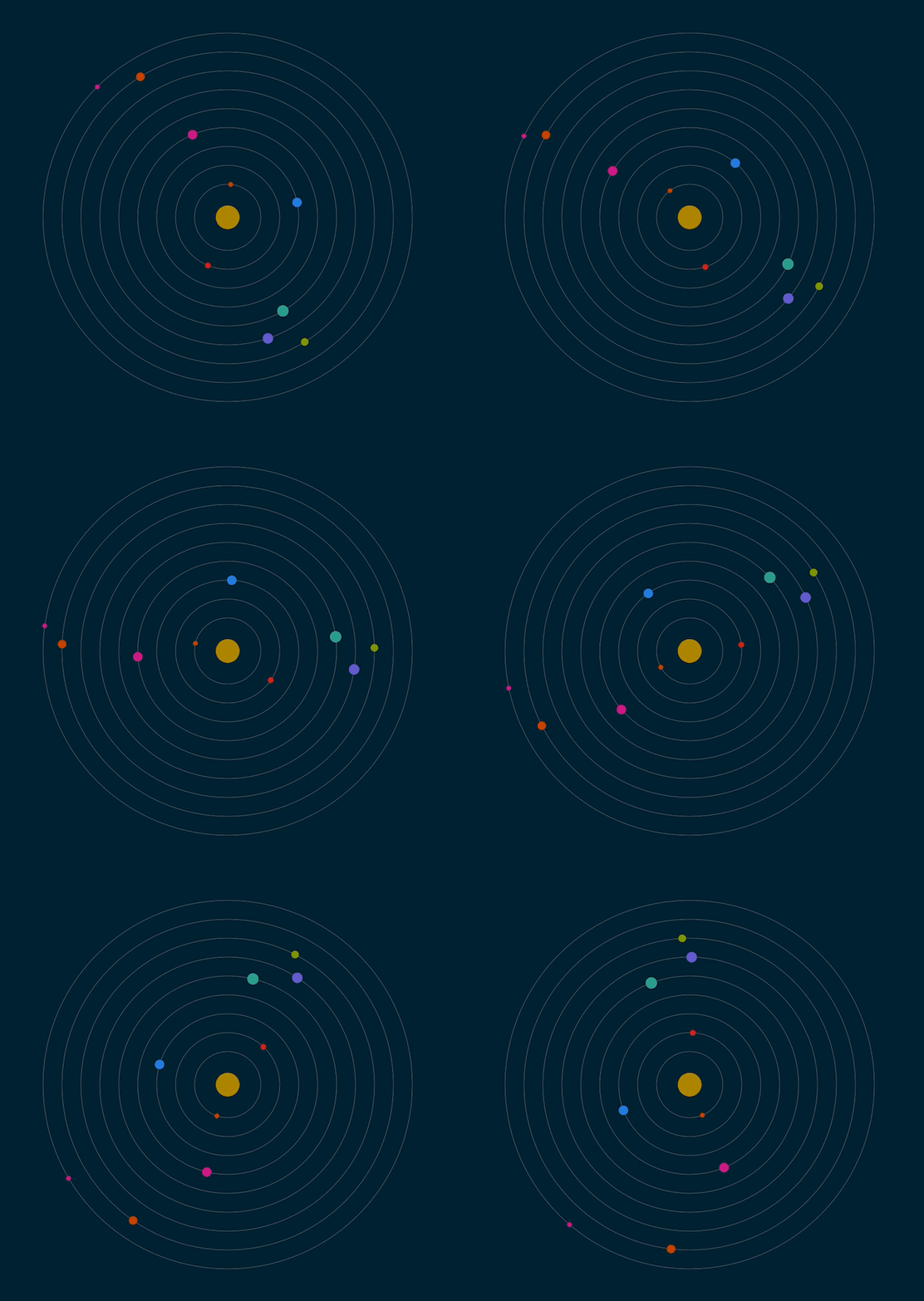
🌟 8 Planets:
Mercury 🔥 • Venus 🌕 • Earth 🌍 • Mars 🔴 • Jupiter 🪐 • Saturn 💍 • Uranus 🔵 • Neptune 🌊
🔥 Mercury is the closest planet to the Sun.
🪐 Jupiter is the largest planet of the solar system.
🌊 Neptune is the furthest planet from the Sun.
🌟 Solar System Key Facts 🌟
What you should know...
- Mercury is the smallest planet of our solar system.
- It is the closest planet to the Sun and the Earth.
- The planet is the fastest planet in the solar system.
- The planet is named after the Roman messenger of the gods.
- Venus is the hottest planet in the solar system.
- The second planet from the Sun and almost as large as Earth.
- Venus is very bright and does not have any moons.
- The planet is named after the Roman goddess of beauty.
- Our Earth is the fifth largest planet of our solar system.
- Earth is the third planet from the Sun and has one moon.
- This is the only place where there is life.
- About 70% of the Earth's surface is covered with water.
- Mars is the fourth planet from the Sun.
- This planet is also called Red Planet and named after the Roman god of war.
- Mars has two moons: Phobos and Deimos
- This planet is very cold and dry but there is ice at the poles.
- Jupiter is the largest planet of the solar system.
- The fifth planet from the sun is named after the Roman king of gods.
- Jupiter is a gas giant and more than two times bigger than all other planets combined.
- The planet has more than 80 moons and the largest moon of all planets: Ganymede
- Saturn is the second largest planet of our solar system.
- The huge planet is made of gas and has visible rings.
- Saturn has many moons, with Titan being the largest.
- The planet is sixth planet from the sun and named after the Roman god of agriculture.
- Uranus is the second furthest planet from the Sun.
- The planet orbits on its side and has 27 moons.
- Uranus is the fourth largest planet and an ice giant.
- The planet is named after the Roman god of the sky.
- Neptune is the furthest planet from the Sun.
- The planet is made of dense gas and is 17 times as massive as the Earth.
- The planet is named after the Roman god of the sea.
- Neptune is a planet of heavy winds and storms.
🌟 Solar System | About Planets 🌟
Here more facts about the planets in details:
The closest planet to the Sun is only about as wide as the Atlantic Ocean! 🌊 18 Mercuries would
fit into the Earth. The planet does not have an atmosphere, just like it is on all the other
planets. There is no water present on this dangerous planet either! 💧 There temperatures vary
between -180°C and 430°C/-290°F and 842°F. 🌡️
This is also the fastest planet! It speeds through space with 50km per second/31 miles per
second. 🚀
The BepiColombo mission was launched in October 2018 and now travels in space towards Mercury
which it will reach by 2025. It will orbit the planet to solve mysteries about Mercury. 🛰️
Venus - named after the Roman goddess of beauty - is also known as the evening or morning star.
⭐ Yellow clouds made of sulfur and sulfuric acid cover the entire planet causing light to
reflect off the surface. ☁️
This makes Venus the second brightest object in the night sky after the Moon. 🌙 Venus is very
similar to Earth in terms of size and material.
However, it is the hottest planet in the Solar system with temperatures reaching 460°C/480°F. 🔥
The surface of Venus hosts thousands of volcanoes, craters and super-high mountain ranges. 🌋
Earth is the fifth largest planet of our solar system and has one large natural satellite, the
Moon. 🌙
Did you know that all planets were named after Roman and Greek gods and goddesses, except the
Earth. 🏛️ The name 'Earth' nevertheless is more than 1,000 years old and means just 'ground'.
🌱
Everything one ever knows is here. This is the only place where life is known to currently
exist. 🧬 Most of the Earth's surface (about 70%) is covered with water. 🌊
Mars, the most likely candidate for a future human habitat, is affected by huge dust storms that
occur every now and then and cover the entire planet! 🌪️
Mars is very cold and dry but water exists in form of ice at the North and South poles. ❄️ The
surface of Mars has many craters, deep valleys and volcanoes. 🌋
The largest peak on the red planet is a volcano called Olympus Mons, which is three times higher
than Mount Everest! ⛰️ Mars has two moons called Phobos and Deimos. 🌙
Jupiter is the largest planet in the solar system. 🌟 The most famous feature on the surface of
the planet is the 'Great Red Spot' which is actually a storm that has been blowing for about 350
years! 🌪️
Jupiter has some of the largest moons in the solar system and one in particular, Europa might be
able to sustain life in an ocean below its icy surface. 🧊
There is one spacecraft currently orbiting Jupiter called Juno. Juno is trying to solve how the
planet formed and finding out more about the winds that occur. 🛰️
Saturn is a gas giant just like Jupiter, Neptune and Uranus. This means that it doesn't really
have a proper solid surface as it is mainly made up of gases with a small rocky core. 💨
Saturn is the second largest planet and is known for its rings, although the other gas giants
also have these kinds of rings, only Saturn's rings can be seen the clearest. 💍
Saturn's moon, Titan is the second largest in the solar system. 🌙 In 2005, NASA and ESA landed
a space-probe called 'Huygens' on Titan revealing the composition and the landscape of this
moon. 🛰️
Uranus is the second furthest planet from the Sun and therefore also has to travel a pretty long
time to go once around our home star. ⏰ It takes Uranus roughly 84 years to orbit once around
the Sun! 🌞
Uranus is a blue planet, not because of water, but because of gases that make it appear blue. 💙
Uranus orbits on its side, which means that its seasons are completely different to ours. Summer
and winter each take 21 years at the north and south poles! ❄️☀️
Neptune is closely related to Uranus, the atmosphere is composed of almost the same gases and
just like Uranus, Neptune also appears blue. 💙 Neptune inherits its name from the Roman god of
the sea as reference to its deep blue color. 🌊
Neptune is the furthest planet from the Sun and it takes 165 years for Neptune to go once around
the Sun. ⏰
No space probes have ever visited Neptune or its partner Uranus but a fly-by was made by the
space probe Voyager 2 in 1989. 🚀