


A new WSSA research article indicates that public gardens can act as first alert systems to detect invasive plants at their earliest invasion stages
WESTMINSTER, Colo., Feb. 26, 2026 /PRNewswire/ -- A Weed Science Society of America (WSSA) journal, Invasive Plant Science and Management, recently published a research article that shows public gardens in the U.S. and Canada can serve as sentinels to invasive plant species in North America. Researchers examined data collected through Public Gardens as Sentinels against Invasive Plants (PGSIP), a project which links data from a network of botanical gardens and arboreta across North America to provide information on plants within their collection that are escaping cultivation.
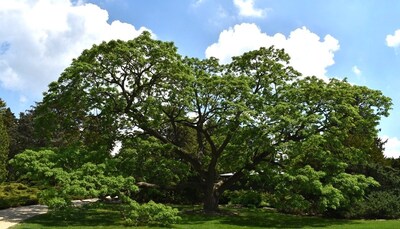
"Effective invasive species management requires early detection and quick and aggressive treatment of problematic species to minimize detrimental impacts to the natural environment," says Theresa M. Culley, Ph.D., University of Cincinnati professor, head of the Ohio Invasive Plants Council Invasive Plant Assessment Team, and the corresponding research author. "Both early detection and removal also help to greatly minimize invasive species management and control expenses, which have been estimated to cost more than $190 billion from 1960 to 2020 in the United States alone."
Plants that escape from cultivation demonstrate an early invasion stage. According to the research authors, "as of November 2024, participating gardens had submitted 996 reports to the PGSIP database, representing 597 unique species. Some of the most reported species such as Amur corktree (Phellodendron amurense), burning bush (Euonymus alatus), and wintercreeper (Euonymus fortunei) are frequently recognized as invasive species. However, 36% of the species reported were not listed as invasive by any U.S. state or Canadian province, suggesting that gardens may be detecting these plants at the earliest stage of invasion."
Through the PGSIP Data Dashboard and Plant Alerts, PGSIP provides advance notice on priority plants of concern to help reduce their introduction and spread, keep potentially invasive ornamentals from initially entering the nursery trade and allow more time to develop alternatives. "If given advance warning, land managers could be on the alert for potential invaders and quickly eradicate single individuals or new satellite populations, well before they develop into large infestations," notes Culley. "Early notification of potential spread would also benefit state-based agencies and invasive plant councils that create regulated and educational lists."
Overall, PGSIP serves to identify plants that have the potential to be invasive, especially those that have not yet been introduced into the broader landscape. "It allows us to see patterns along a wider geographic spread in order to identify what plants might be the up-and-coming invasives that we just haven't noticed yet," says Culley. "As sentinels of plant invasion, public gardens and arboreta now offer a unique opportunity to help predict which introduced plant species may have the propensity to escape cultivation and to soon become invasive."
More information about the study is available online in the article: "Data from sentinel public gardens are useful indicators of potential plant invasion." The research article is among others recently featured online in Invasive Plant Science and Management, a Weed Science Society of America journal, published by Cambridge University Press. Culley can be contacted about the study at theresa.culley@uc.edu.
About Invasive Plant Science and Management
Invasive Plant Science and Management is a journal of the Weed Science Society of America, a nonprofit scientific society focused on weeds and their impact on the environment. The publication presents peer-reviewed original research related to all aspects of weed science, including the biology, ecology, physiology, management, and control of weeds. To learn more, visit www.wssa.net.

 View original content to download multimedia:https://www.prnewswire.com/news-releases/public-gardens-prove-valuable-sentinels-for-invasive-plants-302697849.html
SOURCE Weed Science Society of America









Discover thousands of colleges and courses, enhance skills with online courses and internships, explore career alternatives, and stay updated with the latest educational news..

Gain high-quality, filtered student leads, prominent homepage ads, top search ranking, and a separate website. Let us actively enhance your brand awareness.
Download EasyShiksha Mobile Apps from Android Play Store, Apple App Store, Amazon App Store, and Jio STB.



1 million+ learned on the EasyShiksha App
Trusted by Standards & Global Compliance Frameworks





Built under internationally recognized standards for quality, information security, educational excellence and business continuity.
ISO 9001:2015 | ISO/IEC 27001:2022 | ISO 21001:2018 | ISO 22301:2019 | DPIIT Recognized Startup | MSME Registered