A child opens a game on a phone and immediately becomes focused. A student who was reluctant to read another chapter may spend twenty minutes solving challenges, making decisions, collecting points, or trying to reach the next level. From the outside, it may simply look like entertainment. The colourful interface, rewards, characters, sounds, challenges, and competition can make the activity feel very different from traditional study. Yet beneath the entertainment, something important may be happening: the learner may be remembering information, testing ideas, solving problems, and developing new skills.
This raises an important question for modern education: what actually makes a game educational instead of simply entertaining?
The answer is not the presence of points, badges, animations, levels, or a colourful design. A game becomes educational when its core activities are meaningfully connected to a learning objective. Entertainment can make an experience enjoyable, but educational value comes from what the learner is thinking, practising, discovering, and applying while playing. A game that looks educational but requires little meaningful thinking may provide entertainment without creating substantial learning. On the other hand, a simple-looking game can become a powerful learning experience if its challenges encourage students to understand concepts, make decisions, solve problems, and learn from mistakes.
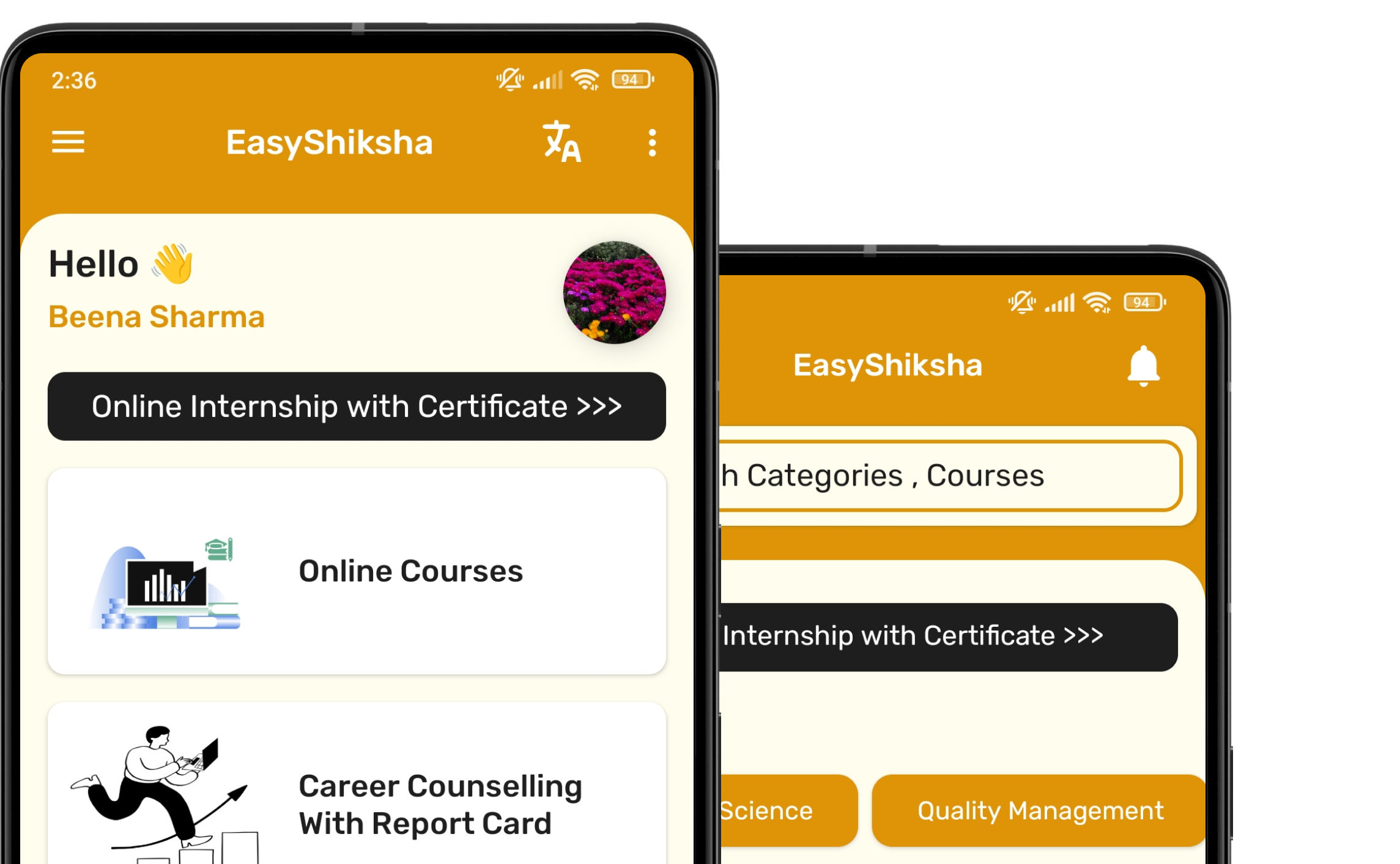
This distinction is increasingly relevant as digital learning becomes part of everyday student life. Online courses, quizzes, educational applications, interactive simulations, digital classrooms, and learning games are changing how students encounter information. Platforms such as EasyShiksha can bring learning and interactive experiences closer together by offering courses, quizzes, games, internships, career counselling, online degrees, and educational discovery tools within a broader digital education ecosystem.
For students, the purpose should not be to replace learning with games. The opportunity is to understand how games can become another way of learning when they are designed with educational purpose.
Entertainment and Education Are Not Opposites
The first misconception to address is that something cannot be both entertaining and educational. In reality, enjoyment can support learning when it encourages students to remain engaged with meaningful tasks. A student who enjoys solving a problem may spend more time attempting it. A learner who is curious about reaching the next level may practise a concept repeatedly. A child who wants to understand why a game character succeeded or failed may experiment with different strategies.
Entertainment becomes problematic only when it replaces the learning objective. If a student earns points simply by clicking the correct answer repeatedly without understanding why it is correct, the activity may have limited educational value. If an attractive animation distracts from the concept rather than reinforcing it, the visual design does not automatically make the game educational.
The important question is therefore not whether a learning game is fun. It is whether the fun is connected to meaningful learning.
Consider two games designed for students learning mathematics. The first displays colourful fireworks every time a student selects an answer, but the questions are extremely simple and the learner can repeatedly guess until the correct option appears. The second presents a small challenge in which the student must use mathematical reasoning to make a decision, receive feedback, and adjust the strategy if the answer is incorrect. The second game may have fewer visual effects, but its underlying structure creates more opportunities for meaningful thinking.
An educational game does not need to remove entertainment. It needs to make learning part of the experience rather than an unrelated activity placed inside a game.
The Learning Objective Comes First
The strongest educational games begin with a clear learning objective. Before designing levels, characters, rewards, or challenges, the creator needs to understand what the learner should know or be able to do after playing.
This might involve remembering vocabulary, understanding a scientific concept, solving mathematical problems, recognising patterns, developing financial decision-making skills, practising communication, learning coding logic, or understanding a historical sequence. The objective determines what kind of game mechanics are useful.
For example, if the objective is to help students understand basic financial planning, a game could present a simulated monthly budget. Players might need to allocate money between essential expenses, savings, and discretionary spending. The game becomes educational because the decisions require the learner to understand the consequences of financial choices.
If the objective is programming, the game could require players to arrange logical instructions to solve a problem. If the objective is language learning, the game could require learners to use vocabulary in context rather than simply identify isolated words.
The game should therefore be built around the learning outcome rather than the other way around. A common mistake is to start with an entertaining game concept and then add a few educational questions to it. That approach can create a game that feels playful but has weak educational value. When learning objectives guide the design from the beginning, the game mechanics can reinforce the knowledge students are expected to develop.
A Real Educational Game Requires Active Participation
One of the most important differences between educational and purely entertaining experiences is the level of cognitive participation required from the learner. Students should have to think, make choices, solve problems, remember information, experiment, or apply concepts.
Simply watching educational content inside a game does not necessarily make the experience interactive learning. If the player only presses “next” after reading information, the game may be functioning like a digital textbook with decorative elements.
Active participation changes the experience. Instead of receiving an answer immediately, students may need to determine the answer. Instead of being shown the correct strategy, they may need to experiment with different approaches. Instead of simply memorising a formula, they may need to decide when and how to use it.
This active participation can make students more involved in the learning process. They are not simply receiving information from an instructor or screen. They are making decisions based on information and experiencing the consequences of those decisions.
For younger learners, this might involve matching, sorting, sequencing, or solving puzzles. For older students, it could involve simulations, strategy challenges, coding tasks, business scenarios, scientific experiments, or career-based decision-making.
The level of complexity should change according to the learner's age and knowledge, but the underlying principle remains the same: the learner should be doing meaningful mental work.
Feedback Turns Mistakes Into Learning Opportunities
Another characteristic of a strong educational game is useful feedback. Games naturally provide feedback because players need to know whether their actions worked. Educational games can use that same mechanism to help students understand why an answer or decision was correct or incorrect.
Imagine a student solving a science challenge and choosing the wrong explanation for a physical phenomenon. If the game simply displays a red cross and moves on, the student knows that the answer was wrong but may not understand why. If the game provides a short explanation, demonstrates the relevant concept, or gives the learner another opportunity to approach the problem differently, the mistake becomes part of the learning process.
Feedback should help students connect actions with outcomes. A learner should gradually understand not only which choice was successful but why it worked.
This is particularly useful because mistakes can become less intimidating in a game environment. Students may be more willing to attempt an unfamiliar solution when failure does not carry the same emotional weight as a formal examination. They can try again, adjust their strategy, and learn from the result.
The goal is not to make failure meaningless. The goal is to make mistakes informative.
Games Can Make Practice More Engaging
Practice is essential for learning, but repetitive practice can sometimes feel difficult to sustain. Students may understand that they need to practise mathematics, vocabulary, coding, or other skills but become bored when the same type of exercise is repeated.
Game mechanics can introduce variety and progression into practice. A learner may encounter increasingly difficult challenges, new scenarios, time-based tasks, puzzles, or problem-solving environments. The student can see progress through levels or achievements while continuing to practise the underlying skill.
For example, a vocabulary game can begin with simple word recognition and gradually introduce sentence construction and contextual usage. A mathematics game can progress from basic calculations to multi-step problems. A coding game can begin with simple logic and gradually introduce more complex conditions and sequences.
The educational value comes from the repetition of meaningful practice. The game provides a structure that encourages learners to continue engaging with the material.
EasyShiksha's inclusion of games within a wider education ecosystem creates an opportunity to connect this engagement with other forms of learning. A student can encounter a concept through a course, test it through a quiz, reinforce it through an interactive game, and then apply it through a project or internship. Each format serves a different purpose.
Rewards Should Encourage Learning, Not Replace It
Points, badges, stars, certificates, levels, and virtual rewards are common features of digital games. These mechanisms can motivate students to continue participating, but rewards alone do not make a game educational.
A reward system becomes more meaningful when it is connected to genuine progress. If a student earns a badge for completing a set of increasingly difficult problems, the badge can represent persistence and achievement. If a student earns points simply for clicking through screens, the reward provides little information about learning.
The distinction is important because students can become focused on the reward rather than the knowledge. If the game encourages learners to maximise points without understanding the concepts, the educational purpose can weaken.
Well-designed educational games can make rewards reinforce useful behaviours. Completing a difficult challenge, improving accuracy, solving a problem independently, or successfully applying a concept can all be connected to progression. The reward then becomes a representation of learning rather than a substitute for it.
This is similar to the broader idea of gamification in education. Gamification can increase engagement through game-inspired elements, but educational value still depends on the underlying activity. A leaderboard does not teach a concept by itself. A badge does not create understanding by itself. The educational content and the learner's interaction with it remain central.
Progression Should Reflect Increasing Understanding
A strong educational game should provide a meaningful sense of progression. The learner should not simply move from one level to another because more time has passed. Levels should ideally represent increasing complexity, deeper understanding, or improved skill.
A beginner may first encounter simple questions that establish foundational knowledge. As the learner progresses, the game can introduce new variables, unfamiliar situations, or more complicated problems. The student should gradually move from guided tasks to more independent decision-making.
For example, an environmental education game could begin by asking students to identify recyclable materials. Later levels could ask them to manage waste in a simulated community, where different choices have consequences for cost, resources, and environmental impact. The game becomes progressively more complex because the learner is expected to apply the knowledge in broader contexts.
This progression mirrors real learning. Beginners need support and simple examples. As their understanding grows, they need challenges that require more independence.
Educational games can therefore create a bridge between basic knowledge and more complex application when their progression is carefully designed.
Good Games Encourage Problem-Solving
Problem-solving is one of the strongest educational possibilities of game-based learning. Games naturally present obstacles that players must overcome, and educational games can design these obstacles around subject-specific knowledge.
A science game might present a problem that requires the learner to identify a cause and predict an outcome. A business simulation might ask players to decide how to manage limited resources. A coding game could require the learner to identify why a program is not working. A language game could ask students to construct appropriate responses in different communication situations.
In these cases, students are not merely recalling information. They are using knowledge to reach an objective.
Problem-solving also introduces uncertainty. The learner may not know the answer immediately. They have to consider possibilities, test strategies, and learn from consequences. This can create a deeper form of engagement than simply selecting a memorised definition.
For EasyShiksha learners, educational games can complement quizzes and courses by providing another environment in which knowledge can be applied. A quiz may ask whether a student knows a concept, while a game can place that concept inside a situation requiring a decision.
Simulations Can Bring Real Situations Into Learning
Some subjects are difficult to practise directly because real-world environments can be expensive, dangerous, unavailable, or difficult to access. Digital simulations can provide a controlled alternative.
A student learning business management could participate in a simulated company environment. A learner studying science could interact with a virtual experiment. A finance student could manage a simulated budget. A healthcare learner could work through a hypothetical scenario designed for educational purposes. A cybersecurity student could identify threats in a controlled digital environment.
The value of simulation comes from allowing learners to make decisions and observe consequences. Instead of merely reading about a situation, students can experience a simplified representation of it.
However, simulations should be designed carefully. A simplified environment cannot reproduce every complexity of real life. Students should understand that simulations are learning tools rather than exact replacements for professional experience. Internships, practical projects, laboratory work, and other real-world opportunities can provide additional context.
This is why games can be most powerful when they are part of a larger learning journey rather than isolated experiences.
Educational Games Should Connect With Other Learning Activities
A game does not have to carry the entire responsibility of teaching a subject. In fact, it can be more effective when it is connected to other educational formats.
A student may first learn a concept through an online course. A quiz can then test basic understanding. A game can provide an interactive challenge that requires application. A project can allow the student to create something independently. An internship can provide professional exposure.
Each stage answers a different question. The course can introduce knowledge. The quiz can check recall. The game can encourage decision-making and experimentation. The project can demonstrate practical ability. The internship can introduce workplace context.
This connected model fits naturally with the wider learning ecosystem offered by EasyShiksha. Students can access online courses, online degrees, quizzes, internships, games, career counselling, and educational discovery resources. The value comes from how these tools support different parts of the student's journey.
A learner does not need to choose between serious education and enjoyable learning. The objective is to use each format for the purpose it serves best.
What Makes a Game Meaningful for Different Age Groups?
Educational game design should consider the age and development of the learner. A game appropriate for a primary school child may not be suitable for a college student. The level of language, complexity, independence, feedback, and challenge should change according to the audience.
For younger learners, educational games may focus on foundational concepts such as numbers, letters, vocabulary, patterns, shapes, basic science, and problem-solving. The interface can be highly visual and interactive because younger children may respond strongly to immediate feedback and exploration.
For teenagers, games can introduce more complex subjects and decision-making. They might involve science simulations, financial literacy, coding logic, geography, language practice, or career exploration. The game can encourage students to understand relationships between choices and consequences.
For college students and adult learners, educational games may become more specialised. Simulations, professional scenarios, strategy challenges, technical problem-solving, and industry-based situations can help learners practise skills related to their academic or career interests.
The fundamental principle remains the same at every stage: the game should serve a learning purpose.
Accessibility Is Part of Educational Value
A game cannot be considered successful as an educational tool if many intended learners cannot use it effectively. Accessibility should therefore be considered during the design process.
Students have different abilities, devices, internet connections, learning preferences, and levels of digital familiarity. A game that requires high-speed hardware or complex controls may exclude learners who do not have access to such technology. Similarly, unclear instructions or inaccessible interfaces can create barriers unrelated to the learning objective.
Educational platforms need to consider whether students can understand the instructions, navigate the interface, receive feedback, and participate meaningfully. Simple design can sometimes be more educationally effective than excessive visual complexity.
This is particularly important in online education because students may access learning from different locations and devices. A learning game should ideally support the educational objective without making unnecessary technical requirements the main challenge.
One of the strongest qualities of games is their ability to create curiosity. Students often want to know what happens next, what is behind the next level, or whether a different strategy will produce a different result.
Educational games can use this curiosity to encourage exploration. A science game might allow students to change variables and observe outcomes. A history game could present different decisions and consequences. A business simulation could allow students to experiment with pricing or resource allocation.
Curiosity changes the learner's relationship with information. Instead of asking only, “What is the correct answer?” the student may begin asking, “What happens if I try something else?”
This type of exploration can be valuable because learning often involves discovering relationships rather than memorising isolated facts. When students experiment, they may notice patterns and develop questions that lead them back to the underlying concepts.
The game should still provide accurate information and appropriate guidance. Curiosity becomes educational when it leads toward meaningful understanding.
The Role of Difficulty in Educational Games
A game that is too easy can become boring, while a game that is too difficult can become frustrating. Educational games therefore need an appropriate level of challenge.
The ideal level depends on the learner's existing knowledge. Beginners may need simple tasks and clear guidance. As their skills improve, the game can gradually increase complexity. This creates a sense of progression without overwhelming the student.
Difficulty can also be adaptive. A game may provide additional support when a student repeatedly struggles and introduce more complex challenges when the learner demonstrates strong understanding. Such adaptation can help make digital learning more responsive to individual progress.
This principle connects with personalised learning more broadly. Students do not all learn at exactly the same pace. Digital platforms can provide opportunities to adjust content and challenge levels according to performance.
However, adaptation should not simply make everything easier. Productive challenge is important. Students should encounter tasks that require effort and encourage them to think carefully.
Why Mistakes Matter in Game-Based Learning
Traditional academic environments can sometimes make students afraid of mistakes because errors may be associated with marks, grades, or embarrassment. Games can create a different environment in which trying again is often part of the experience.
When a learner chooses an incorrect strategy, the game can allow another attempt. The student can change the approach and observe whether the outcome improves. This creates a natural cycle of experimentation.
For example, a student learning coding may try one sequence of instructions and discover that it produces an unexpected result. Instead of simply being told the answer, the learner can modify the sequence and test it again. Through repeated attempts, the student develops a better understanding of logic.
This does not mean every game should eliminate consequences. Consequences can actually make learning more meaningful. The important point is that the consequences should help learners understand cause and effect.
Mistakes become educational when students can learn from them.
Games Should Lead Somewhere Beyond the Game
An educational game becomes even more valuable when students can connect what they learned during play with activities outside the game.
A student who learns budgeting through a simulation could apply the same ideas to a personal finance exercise. A learner who practises coding logic could use those concepts in a programming project. A student who explores career scenarios could investigate relevant courses or internships. A learner who studies environmental issues through a game could conduct a small research project.
This connection helps prevent the game from becoming an isolated activity. The experience becomes one stage in a broader learning journey.
EasyShiksha's combination of games, courses, quizzes, internships, career counselling, and educational discovery can support such connections. Students can move from interactive learning to more formal education, practical experience, and career exploration.
The game does not need to teach everything. It needs to help students take the next step.
How Students Can Recognise Educational Value
Students do not have to rely only on the appearance of a game to determine whether it is educational. They can consider what the game actually asks them to do.
If the game requires them to remember, reason, solve problems, make decisions, apply concepts, experiment, or explain ideas, it has a stronger connection to learning. If it simply rewards rapid clicking or repeated guessing, its educational value may be more limited.
Students can also consider whether the game provides useful feedback, whether challenges become more meaningful over time, and whether the knowledge can be applied outside the game. These questions help learners distinguish genuine educational interaction from entertainment presented with educational branding.
This awareness is particularly important because digital education is expanding rapidly. Students now have access to an enormous range of learning applications and interactive resources. The presence of the word “educational” does not automatically guarantee meaningful learning.
The quality of the learning experience depends on its design and purpose.
EasyShiksha and the Future of Learn-and-Play
The growing connection between learning and play represents an important opportunity for digital education. Students increasingly expect technology to be interactive, accessible, and engaging. Educational platforms can respond by providing different ways to learn rather than relying on a single format.
EasyShiksha's broader ecosystem combines online courses, online degrees, quizzes, internships, career counselling, educational games, and school, college, and university discovery. This creates the possibility of a connected learning journey in which students can move between different experiences according to their educational goals.
A student may begin with a game that creates curiosity about a subject. That curiosity can lead to a course. The course can introduce foundational knowledge. A quiz can test understanding. A practical activity can reinforce the concept. An internship can provide exposure to professional work. Career counselling can help the student reflect on possible directions.
In this model, games are not replacements for courses or professional experience. They are another tool within the learning ecosystem.
The most useful question is therefore not whether students should learn through games instead of traditional methods. The more productive question is how games can complement other educational experiences.
Welcome to Career Helper
A Career Concern of EasyShiksha
Career Helper suggests occupations that correspond to your interests, values, aspirations, and personality.
Career Helper consists of:
IQ Test
Basic Test
Advance Test
Psychometric Test
Know your talents, skills, strengths, and weaknesses.
Choose the profession that suits you best.
Get best career guidance by Experts.
Explore various career options in India with EasyShiksha.
The Future of Educational Games Is About Meaningful Interaction
As digital education continues to develop, educational games may become more sophisticated. Artificial intelligence, adaptive learning, simulations, virtual environments, interactive storytelling, and personalised challenges can create new ways for students to practise concepts.
However, technology alone will not determine whether a game is educational. A highly advanced game can still have weak learning value if the educational objective is unclear. Conversely, a simple quiz-based challenge can provide meaningful learning if it encourages students to retrieve knowledge and think carefully.
The fundamental principles remain consistent. Students need meaningful challenges, appropriate difficulty, useful feedback, opportunities to practise, and connections between learning activities and real-world application.
The strongest educational games will therefore not simply ask students to play. They will give students reasons to think.
Conclusion: When Playing Becomes Learning
A game becomes educational not because it contains points, badges, colourful graphics, characters, or levels, but because the experience is designed to help learners develop knowledge and skills. Entertainment can attract attention, but educational purpose gives that attention direction.
A meaningful educational game encourages students to participate actively. It gives them challenges that require thinking, decisions that have consequences, feedback that explains mistakes, and progression that reflects growing understanding. It can make practice more engaging, create opportunities for experimentation, and introduce students to situations that might otherwise be difficult to experience.
At the same time, games should not be isolated from the rest of education. Their greatest potential may come when they are connected with courses, quizzes, projects, internships, career guidance, and continued learning. A student can learn a concept through a course, test it through a quiz, explore it through a game, apply it in a project, and experience its professional context through an internship.
That is the difference between simply playing and learning through play.
For an education ecosystem such as EasyShiksha, games can become one part of a broader digital learning journey that helps students discover, learn, practise, test, and apply knowledge. The purpose is not to make every lesson a game. It is to recognise that learning can happen through different forms of interaction.
Anshika Jain is an Engineer, Developer, and Educational Content Author known for her dedication to technology and knowledge sharing. With a strong analytical mindset and a passion for innovation, she has consistently contributed to creating meaningful digital solutions and insightful educational articles.
Her ability to simplify complex technical concepts into engaging and easy-to-understand content makes her work valuable for students and learners across various platforms. Along with her technical expertise, Anshika is admired for her creativity, professionalism, and commitment to continuous learning.
She represents a perfect blend of technical excellence and impactful communication, inspiring others through both her development work and educational contributions.