The modern employment market increasingly appears to demand more qualifications than ever before. Jobs that once required a basic degree may now ask for a postgraduate qualification, additional certifications, specialised training or several years of experience. Entry-level positions frequently include long lists of technical skills, professional credentials and software requirements, even when the actual responsibilities of the role have changed very little. As a result, students and job seekers are often encouraged to collect more qualifications simply to remain competitive.
Yet an important question remains: does the accumulation of credentials necessarily produce better-skilled professionals?
A candidate may hold multiple certificates, complete several online courses and possess an impressive academic background without being able to demonstrate the practical capabilities required for a particular job. Another candidate may have fewer formal qualifications but stronger problem-solving ability, relevant project experience and a better understanding of workplace responsibilities. When employers rely heavily on credentials as indicators of capability, these differences can become difficult to recognise.
This phenomenon is closely connected to credential inflation, a situation in which employers increasingly demand higher or additional educational qualifications for roles without a corresponding increase in the skills or responsibilities required to perform those jobs. It can create a cycle in which students pursue more education to remain eligible, employers raise qualification requirements to narrow applicant pools, and candidates accumulate credentials simply to avoid being excluded.
The result can be an employment market in which the value of qualifications increases on paper while their ability to distinguish actual competence becomes weaker.
For an education ecosystem such as EasyShiksha, this challenge creates an important opportunity to reconsider how learning achievements are designed, assessed and presented. Online courses, quizzes, internships, projects, certificates, university programmes and career guidance can potentially help students move beyond qualification accumulation towards demonstrable capability. The objective should not be to discourage formal education or professional certification. It should be to ensure that every qualification represents meaningful learning and contributes to skills that students can actually apply.
The future of education may depend less on how many credentials a learner collects and more on whether those credentials provide credible evidence of what the learner can do.
Understanding the Credential Inflation Trap
Credential inflation occurs when the educational qualifications required for a job increase faster than the actual knowledge, skills or responsibilities needed to perform that job. A position that previously accepted candidates with an undergraduate degree may begin requiring a master's degree. A role that once valued practical experience may start demanding several additional certificates. Over time, qualifications that were once considered specialised advantages become minimum entry requirements.
This process can happen even when the nature of the job remains largely unchanged. Employers may raise qualification requirements because they receive large numbers of applications and need a convenient way to shortlist candidates. A degree or certificate becomes an administrative filter rather than a carefully evaluated measure of job readiness.
The trap emerges when candidates respond to these changing expectations by pursuing additional qualifications, even if those qualifications do not substantially improve their ability to perform the work. Employers then encounter an applicant pool with more credentials but not necessarily stronger practical capabilities. Because the number of qualifications has increased, organisations may raise their requirements again to identify candidates.
This creates a repeating cycle. More qualifications become necessary to compete, but the additional qualifications do not always translate into proportionately greater productivity or competence.
Credential inflation is not identical to educational expansion. When more people gain access to higher education, the workforce may genuinely become more educated and skilled. Credential inflation becomes a concern when qualification requirements rise without a meaningful change in the work itself or the capabilities needed to perform it.
Employers operate in competitive recruitment environments where selecting suitable candidates can be difficult and expensive. A single job advertisement may attract hundreds or thousands of applications, particularly for popular entry-level positions. Reviewing every application in detail requires time, resources and trained recruitment professionals.
Academic qualifications provide an easily recognisable way to reduce the applicant pool. A degree, postgraduate qualification or professional certificate can be checked quickly, whereas practical ability may require technical assessments, interviews, work samples or detailed evaluation.
This creates an incentive to use credentials as screening mechanisms. Employers may include additional qualifications in job descriptions because they believe these requirements will increase the likelihood of finding capable candidates. However, a higher qualification threshold does not automatically produce a more accurate selection process.
Another reason is organisational risk management. Recruitment decisions can have financial consequences, and employers may prefer candidates whose educational backgrounds appear stronger or more established. A postgraduate degree or recognised certification may be interpreted as evidence of commitment, discipline or specialised knowledge, even when its direct relationship with job performance is uncertain.
Industry competition also contributes to qualification inflation. When competing organisations begin requesting additional credentials, other employers may adopt similar requirements to avoid appearing less selective. Over time, these expectations can become normalised across an industry.
The problem is that job descriptions may gradually become collections of desirable qualifications rather than precise descriptions of essential capabilities. Candidates are then evaluated against increasingly long lists of requirements that may have limited relevance to the actual work.
Credential inflation can be understood as a self-reinforcing cycle involving employers, educational institutions and job seekers. Employers increase qualification requirements to filter applications. Candidates respond by enrolling in more programmes and obtaining additional certificates. Educational providers expand their offerings to meet this demand, while professional credentials become increasingly common among applicants.
As the average number of qualifications increases, employers may find that credentials provide less differentiation than before. A certificate that once distinguished a candidate from the wider applicant pool may become common among most applicants. Employers may then demand additional qualifications or higher levels of education.
This process can continue even when the underlying job has not become significantly more complex. The qualification threshold rises because the market has changed its expectations, not necessarily because the work requires a new level of expertise.
For students, the consequences can be substantial. A graduate may believe that completing a degree will make them eligible for employment, only to discover that job advertisements expect additional certifications, internships and experience. The student then invests more time and money in qualifications to meet requirements that may continue changing.
This creates uncertainty about when education is sufficient. Candidates may keep studying because they fear that stopping will make them less competitive, even when their next investment in education offers limited practical value.
When Certificates Become Screening Tokens Instead of Learning Evidence
Certificates can provide valuable recognition of learning. They help students communicate that they have completed a course, participated in a training programme or achieved a particular standard of assessment. Professional certifications can also demonstrate specialised knowledge and familiarity with industry practices.
However, the value of a certificate depends on what it represents. If a credential confirms only participation or course completion, it should not automatically be interpreted as evidence of advanced professional capability.
The distinction becomes important when employers use certificates as substitutes for practical evaluation. A candidate may possess several certificates in programming but struggle to debug an unfamiliar application. Another may hold multiple digital marketing credentials but lack experience in campaign planning, audience analysis or performance measurement.
When credentials become screening tokens, their presence may matter more than the learning behind them. Students begin collecting certificates because recruitment systems appear to reward quantity. Educational providers may also feel pressure to issue more credentials to attract learners.
This creates the possibility of a credential-heavy employment market in which certificates are abundant but meaningful evidence of capability remains limited.
For EasyShiksha, this is an important distinction. A certificate should ideally represent a clearly defined learning achievement. Where practical competence is claimed, the learner should have an opportunity to demonstrate that competence through an appropriate assessment, project or applied task.
The Difference Between Being Qualified and Being Capable
Qualifications and capabilities are connected, but they are not interchangeable. A qualification indicates that a person has completed an educational or professional requirement. Capability refers to the person's ability to apply knowledge and skills to perform tasks effectively.
A degree in computer science can provide an important theoretical foundation, but it does not automatically establish that a graduate can develop, test and maintain a software application. A finance qualification may demonstrate knowledge of accounting principles, but practical financial analysis also requires interpretation, accuracy and decision-making. Similarly, completing a digital marketing course does not necessarily prove that a learner can manage a campaign with real business objectives.
The gap between qualification and capability becomes visible when candidates enter practical environments. They may understand concepts but struggle to apply them under time constraints, work with unfamiliar tools or communicate their decisions to others.
This does not mean theoretical education is unimportant. Strong conceptual knowledge is essential for understanding complex problems and adapting to changing technologies. The problem occurs when educational achievement is treated as complete proof of workplace readiness without considering practical application.
An effective education system should therefore connect knowledge with demonstrated performance. Courses can provide foundations, quizzes can assess understanding, projects can test application and internships can introduce professional expectations.
For EasyShiksha, connecting these experiences could help students build a stronger relationship between what they study and what they can demonstrate.
How Credential Inflation Affects Fresh Graduates
Fresh graduates are particularly vulnerable to credential inflation because they often enter the employment market without extensive professional experience. They may have completed a degree and possess foundational knowledge, but employers increasingly expect them to demonstrate specialised capabilities and workplace readiness.
A graduate applying for an entry-level web development position may encounter requirements for a degree, knowledge of multiple programming languages, familiarity with modern frameworks, cloud platforms, version control and practical experience. Although some of these requirements may be relevant, the overall list can become unrealistic for a genuinely entry-level role.
Candidates respond by enrolling in additional courses, completing short certifications and building multiple projects to strengthen their profiles. These activities can be useful when they develop relevant skills. However, they can also become a costly attempt to satisfy an expanding list of recruitment requirements.
The problem becomes more serious when employers demand professional experience for roles intended for beginners. Students may be expected to possess internship experience before securing their first job, while internships themselves may require previous practical exposure.
This creates a circular barrier. Candidates need experience to obtain employment, but they need opportunities to gain experience in the first place.
EasyShiksha's combination of courses, quizzes, practical projects and internships could potentially help address part of this transition. Students could build foundational knowledge, demonstrate their understanding and gain practical exposure before entering the employment market. The emphasis should be on creating meaningful evidence rather than simply adding more entries to a resume.
The Financial Cost of Qualification Accumulation
Credential inflation can create a significant financial burden for students and families. Each additional qualification may involve tuition fees, examination charges, study materials, travel expenses and time away from paid employment. Even relatively affordable online courses can become expensive when students enrol in many programmes without a clear understanding of their career value.
The financial consequences are not limited to course fees. Students also invest time that could otherwise be used to gain practical experience, build projects, apply for jobs or develop professional networks.
This creates an opportunity-cost problem. A student may spend several months pursuing another general certificate when a targeted project or internship could provide more relevant evidence for the desired role.
The difficulty is that students often cannot easily determine which qualifications employers genuinely value. Job advertisements may contain extensive requirements, but these do not always distinguish between essential capabilities and preferred credentials. Candidates may therefore spend money trying to satisfy every listed condition.
A more transparent education ecosystem could help students evaluate learning investments according to their intended outcomes. Before enrolling in another course, learners should be able to understand what skills it develops, how those skills are assessed and which types of professional tasks they may support.
For EasyShiksha, this creates an opportunity to connect course discovery with career relevance. Career guidance could potentially help students identify skill gaps and prioritise learning that contributes directly to their goals, rather than encouraging qualification accumulation without a clear purpose.
Credential Inflation and Educational Inequality
The effects of credential inflation are not experienced equally. Students from financially secure backgrounds may be able to pursue postgraduate education, unpaid internships, specialised certifications and additional training. Learners with limited financial resources may have fewer opportunities to accumulate the credentials increasingly expected by employers.
When qualifications become stronger filters for employment, access to education can become an additional barrier to economic mobility. A capable candidate may be excluded because they cannot afford another degree or certification, even when they already possess the practical skills needed for the role.
Geographical differences can create further inequality. Students in major cities may have easier access to professional internships, industry events and specialised institutions. Learners in smaller cities or rural areas may depend more heavily on online education and remote opportunities.
Credential inflation can also affect people who enter the workforce through non-traditional routes. Career changers, self-taught professionals and individuals with significant practical experience may struggle to demonstrate their capabilities through conventional academic qualifications.
This is why employment systems need more reliable ways to recognise competence acquired through different learning pathways. Formal education remains important, but it should not be the only route through which individuals can establish professional credibility.
EasyShiksha could potentially support broader access by connecting affordable online learning with assessments, projects and internships. Such an approach would not eliminate structural inequality, but it could give more students opportunities to develop and present relevant evidence of their capabilities.
Why More Qualifications Can Produce Less Meaningful Differentiation
Qualifications are useful partly because they help distinguish between candidates with different levels of preparation. However, when a credential becomes extremely common, its ability to differentiate applicants can decline.
Consider a situation in which only a small proportion of applicants possess a specialised certification. Employers may initially view that certification as a useful signal of additional knowledge. As more candidates obtain it, the qualification becomes a standard expectation. Applicants may then need another credential to stand out.
This is similar to an escalation in competitive signalling. Candidates pursue qualifications not only to gain knowledge but also to maintain their position relative to other applicants.
The result can be a form of credential saturation. Resumes become longer, but employers find it increasingly difficult to determine which credentials indicate meaningful differences in capability.
This also creates pressure on educational providers. When certificates become widely available, providers may compete through new titles, specialisations and credential levels. The number of available credentials can increase without a comparable improvement in assessment quality.
A stronger system would place greater emphasis on the evidence behind each achievement. Instead of asking only how many certificates a candidate possesses, employers could examine what the learner completed, which competencies were assessed and whether practical work supports the claimed ability.
The Role of Practical Projects in Reducing Credential Dependence
Projects can provide an alternative form of evidence because they allow students to demonstrate how they apply knowledge. A completed project can reveal technical ability, problem-solving, creativity, planning and the capacity to produce a usable outcome.
For example, a frontend development candidate could present a responsive website, explain the design decisions and demonstrate how the application works across different devices. A data analytics candidate could present a project involving data cleaning, analysis and visualisation. A digital marketing candidate could show a campaign strategy, audience research and performance analysis using a clearly defined case study.
These examples provide employers with something more concrete than a list of course titles. They allow recruiters and technical evaluators to inspect the quality of the work and ask questions about the decisions involved.
Projects do not replace formal qualifications in every profession. Certain roles require legally recognised degrees, licences or specialised certifications. However, in many digital and knowledge-based occupations, practical evidence can complement academic credentials and provide a clearer picture of capability.
For EasyShiksha, project-based learning could become an important part of the transition from education to employment. Courses could introduce concepts, quizzes could assess understanding and practical assignments could generate evidence that students can present in portfolios.
The purpose would be to make every learning experience contribute to something demonstrable.
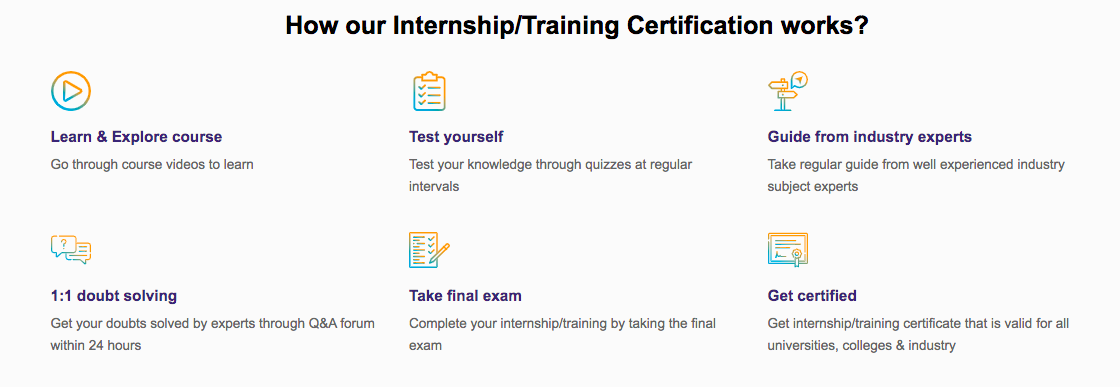
How EasyShiksha Internship/Training Program Works
Internships as Evidence Beyond Academic Credentials
Internships can provide another important response to credential inflation because they expose students to real workplace expectations. A learner may possess theoretical knowledge and completed projects but still need experience working with professional teams, deadlines, tools and communication processes.
An internship can help bridge this gap. It allows students to apply knowledge in a professional or simulated professional environment, understand task requirements and experience the relationship between individual responsibilities and organisational objectives.
However, not every internship automatically demonstrates meaningful competence. An internship that involves little responsibility or provides no structured feedback may add limited value to a student's profile. The quality of the experience matters more than the title alone.
A well-designed internship should provide clearly defined tasks, opportunities to apply relevant skills and some form of feedback or evaluation. Where appropriate, students should be able to document completed work and explain the capabilities developed through the experience.
EasyShiksha could potentially connect course learning with internship opportunities so that students progress from foundational knowledge to practical exposure. This would help create a more coherent development pathway than treating certificates and internships as unrelated resume additions.
Can Employers Move From Credential Screening to Skills-Based Hiring?
Skills-based hiring aims to evaluate candidates according to the capabilities required for a role rather than relying exclusively on educational qualifications. It does not necessarily mean removing degrees or professional credentials from recruitment. Instead, it encourages employers to identify which qualifications are essential and where practical evidence can provide additional insight.
A skills-based hiring process might include structured technical assessments, work samples, problem-solving exercises and behavioural interviews related to actual job responsibilities. These methods can help employers understand how candidates approach tasks rather than simply examining their educational backgrounds.
For example, a junior developer could be asked to review a small codebase, identify an issue and explain a possible solution. A marketing candidate might be asked to interpret campaign data and recommend improvements. A finance candidate could analyse a practical case involving budgeting or financial reporting.
Such assessments must be designed carefully. Poorly constructed tests can introduce bias, demand unpaid labour or evaluate skills unrelated to the actual role. They should be proportionate, transparent and relevant to the position.
Skills-based hiring also requires employers to distinguish between essential and preferred qualifications. Entry-level positions should not demand extensive professional experience when the role is intended to provide training and development.
For EasyShiksha, this shift creates an opportunity to help learners prepare for practical evaluations through relevant courses, quizzes, projects and internships. Career guidance could also help students understand how to present their capabilities alongside formal qualifications.
AI and the Future of Credential Evaluation
Artificial intelligence could change how educational credentials are evaluated. Employers and education platforms may increasingly use AI systems to analyse resumes, compare qualifications and identify potential matches between candidates and job requirements.
These systems could help organise large volumes of educational information and identify relationships between course outcomes, assessments and workplace skills. A structured learning record might allow an AI system to recognise that a candidate has developed relevant capabilities through several different educational experiences.
However, AI can also reinforce credential inflation if its evaluation models rely heavily on qualification counts, institution names or familiar certification labels. If historical recruitment decisions favour candidates with particular degrees, automated systems trained on those decisions may reproduce the same preferences.
There is also a risk that candidates begin optimising their profiles for automated screening rather than developing meaningful capability. Resumes may become filled with keywords, certificates and course titles designed to satisfy algorithms.
A more responsible AI-based approach would evaluate the relationship between a credential and the actual skills required for a role. It could distinguish between course completion and demonstrated competence, identify supporting project evidence and highlight missing information rather than automatically treating every qualification as equivalent.
For EasyShiksha, AI could potentially help students identify relevant skill gaps and understand which learning activities would improve their readiness for specific opportunities. Recommendations should be explainable and should not pressure students into collecting unnecessary certificates.
Designing an Evidence-First Education Model at EasyShiksha
The Credential Inflation Trap suggests that educational platforms need to rethink how they communicate the value of learning. A platform should not measure success only through the number of courses completed or certificates issued. It should also consider whether students can apply what they have learned.
EasyShiksha could potentially explore an evidence-first education model in which each learning experience is connected to a clear outcome. A course would explain the knowledge and skills it aims to develop. Quizzes could assess conceptual understanding, while practical assignments could test application. Projects could create portfolio evidence, and internships could provide exposure to professional responsibilities.
Certificates could then communicate what the learner actually achieved. A course-completion credential would confirm participation and completion, while an assessed credential could indicate that the learner demonstrated specified learning outcomes. Where a project has been evaluated, the record could identify the type of work completed and the relevant assessment criteria.
This distinction would help prevent every certificate from being interpreted as proof of professional competence. It would also make credentials more informative for students, employers and other educational providers.
The platform could further connect learning records with career guidance. A student interested in frontend development might receive recommendations based on the skills demonstrated through courses and projects, rather than being encouraged to collect unrelated qualifications.
The broader objective would be to make education more focused on capability development and less dependent on the accumulation of credentials.
A Better Way to Measure Educational Progress
Credential inflation also exposes a weakness in conventional measures of educational progress. Course completion counts and certificate totals are easy to track, but they do not necessarily explain how much a learner has developed.
A more meaningful model would consider whether students understand concepts, apply them in unfamiliar situations, complete practical work and improve through feedback. It would also examine whether learners can transfer knowledge from one context to another.
For example, completing a programming course is an important milestone, but the ability to build a working application provides additional evidence. Passing a quiz demonstrates understanding of selected concepts, while debugging unfamiliar code can reveal how well a learner applies that understanding.
The same principle applies to other fields. A student studying finance should be able to interpret relevant financial information. A learner studying digital marketing should understand how to evaluate campaign performance. Someone studying cybersecurity should be able to reason about security scenarios and identify appropriate responses.
Educational progress should therefore be measured through a combination of knowledge, application and demonstrated performance. Credentials remain useful, but their value increases when they are connected to clear evidence.
The Risk of Replacing Credential Inflation With Assessment Inflation
Moving away from excessive qualification requirements does not automatically solve every problem. If employers replace degree filters with numerous technical assessments, candidates may face a different form of screening pressure.
A job seeker could be required to complete lengthy assignments, multiple online tests, unpaid projects and repeated interview exercises before receiving an employment decision. This can create another barrier, particularly for candidates who are already working or have limited financial resources.
Assessment quality matters as much as assessment quantity. Employers should evaluate only the capabilities relevant to the role and avoid demanding extensive work that produces little value for the candidate.
Educational platforms should follow a similar principle. Students should not have to complete endless quizzes and projects simply to generate evidence. Assessments should be meaningful, proportionate and aligned with learning outcomes.
For EasyShiksha, an evidence-first model should avoid turning every course into an excessive testing process. The goal is to create reliable evidence of learning without making education unnecessarily complicated.
Empower your team. Lead the industry
Get a subscription to a library of online courses and digital learning tools for your organization with
EasyShiksha
What Students Can Do When Qualification Requirements Keep Rising
Students cannot independently change every employer's recruitment policy, but they can make more informed decisions about their education. Instead of enrolling in another programme whenever a job advertisement lists an additional certificate, learners can examine the actual responsibilities of the role and identify the capabilities that matter most.
They can compare repeated job requirements, distinguish essential skills from preferred qualifications and investigate whether a new course provides knowledge or practical experience that they do not already possess. They can also use projects and internships to demonstrate the application of their existing knowledge.
This approach does not mean avoiding further education. Advanced qualifications may be necessary for specialised professions, regulated occupations and roles requiring deeper theoretical knowledge. The important question is whether the next qualification creates meaningful value for the student's intended career direction.
Students should also maintain organised records of their projects, assessments, certificates and internship experiences. A well-structured portfolio can help communicate capabilities that may not be immediately visible from a degree title.
EasyShiksha could potentially support this process through connected learning pathways and career guidance that help students identify relevant development opportunities rather than pursuing credentials without a clear objective.
Conclusion: The Future Should Reward Capability, Not Credential Accumulation
The Credential Inflation Trap emerges when employers demand increasingly higher qualifications without a corresponding increase in the capabilities required to perform the work. Students respond by collecting additional degrees and certificates, educational providers expand their credential offerings and employers gradually raise their expectations again. The result can be a cycle in which qualifications become more common while their ability to distinguish genuine competence becomes weaker.
This does not make education or professional certification less valuable. Degrees provide important foundations, specialised credentials can demonstrate advanced knowledge and structured courses help learners develop new capabilities. The challenge is ensuring that qualifications remain connected to meaningful learning rather than becoming administrative requirements that candidates must accumulate simply to remain eligible.
The future of employment will require a stronger relationship between education and demonstrated performance. Projects, practical assessments, internships and work samples can help show what students can actually do. Employers can improve recruitment by identifying essential capabilities and evaluating candidates through relevant, transparent methods.
For EasyShiksha, this creates an opportunity to support a shift from certificate accumulation towards evidence-based learning. Online courses can build knowledge, quizzes can assess understanding, projects can demonstrate application, internships can provide professional exposure and career guidance can help students connect their capabilities with suitable opportunities. Certificates can remain an important part of this ecosystem, but they should communicate meaningful achievements rather than function as isolated symbols of completion.
Ultimately, students should not have to spend their entire educational journey collecting qualifications simply to keep pace with changing recruitment expectations. Education should help them become more capable, adaptable and confident in applying what they know.
A qualification should open the door to opportunity, but demonstrated capability should help determine what a person can contribute once they enter.
Anshika Jain is an Engineer, Developer, and Educational Content Author known for her dedication to technology and knowledge sharing. With a strong analytical mindset and a passion for innovation, she has consistently contributed to creating meaningful digital solutions and insightful educational articles.
Her ability to simplify complex technical concepts into engaging and easy-to-understand content makes her work valuable for students and learners across various platforms. Along with her technical expertise, Anshika is admired for her creativity, professionalism, and commitment to continuous learning.
She represents a perfect blend of technical excellence and impactful communication, inspiring others through both her development work and educational contributions.