Education systems are traditionally organised around predefined curricula, institutional rules, examinations and standardised expectations. Students are expected to study particular subjects, complete assigned courses, follow prescribed learning sequences and demonstrate achievement through established assessments. Although this structure provides organisation and academic direction, it does not always reflect how differently individuals develop knowledge, form opinions, evaluate information and make decisions about what they want to learn.
The modern information environment has made this challenge more complex. Students now encounter information through online courses, educational platforms, social media, search engines, AI assistants, digital communities and professional networks. They can access explanations on almost any subject, but access does not automatically produce understanding. Information may be inaccurate, incomplete, biased, outdated or presented without sufficient context. Generative AI can explain complicated ideas quickly, yet it can also produce convincing answers that require independent verification. Students therefore need more than access to knowledge. They need a personal system for deciding what to trust, how to learn, when to question an explanation and how to use information responsibly.
This creates an interesting possibility: what if every student had a Personal Knowledge Constitution?
A Personal Knowledge Constitution could be understood as a learner-defined framework of principles that governs how an individual discovers, evaluates, organises, develops and applies knowledge. It would not replace school regulations, university curricula or academic standards. Instead, it would help students establish their own intellectual rules within those structures. It could define how they approach unfamiliar subjects, distinguish evidence from opinion, respond to disagreement, use AI assistance, protect independent thinking and decide when their understanding is strong enough to support a conclusion.
For an education ecosystem such as EasyShiksha, this concept opens a broader opportunity to connect online courses, quizzes, internships, projects, certificates, university programmes and career guidance with the development of independent learners. Rather than measuring educational progress only through completed courses and examination results, a learning platform could also help students understand the principles that guide their intellectual development.
The central idea is simple but significant: students should not only learn information. They should gradually develop the ability to govern how they know what they know.
What Is a Personal Knowledge Constitution?
A Personal Knowledge Constitution is a proposed framework through which learners define the principles, boundaries and responsibilities that guide their relationship with information. It can be compared with a constitution because it establishes foundational rules that influence decisions across different situations. However, it would be personal rather than institutional, adaptable rather than permanently fixed, and focused on intellectual development rather than political authority.
A student's constitution might establish that important claims should be supported by reliable evidence, that disagreement should be examined rather than automatically rejected, and that uncertainty should be acknowledged instead of hidden. It could also define how the student uses AI tools, what kinds of assistance are acceptable during independent assessments and how personal opinions should be separated from verified facts.
The framework would not prescribe what a student must believe about every subject. Its purpose would be to establish how the student approaches the process of forming beliefs and reaching conclusions. Two learners could have different perspectives on a complex issue while following equally responsible principles for evaluating evidence.
This distinction is important. A Personal Knowledge Constitution should not become a system for enforcing identical opinions. It should protect the learner's ability to investigate, question, revise and develop ideas through reasoned engagement with information.
Why Students Need Rules for Managing Knowledge
The traditional educational environment generally provides students with a syllabus, textbooks, recommended reading and assessment guidelines. These resources establish what students are expected to study, but they do not always explain how learners should manage the much larger information environment surrounding formal education.
A student researching climate technology, for example, may encounter scientific reports, commercial advertisements, opinion articles, government publications, social media discussions and AI-generated explanations. Each source may present information with a different purpose, level of accuracy and degree of transparency. Without a consistent method for evaluating these sources, the learner may confuse popularity with credibility or persuasive language with reliable evidence.
The same problem appears in professional education. A student learning finance may encounter investment claims that are presented confidently but lack adequate evidence. Someone studying health-related subjects may find conflicting explanations about nutrition, supplements and wellness. A technology learner may discover outdated programming tutorials that no longer reflect current tools or recommended practices.
The challenge is not simply that inaccurate information exists. It is that students must increasingly make decisions about information quality without always having direct access to an expert who can evaluate every source for them.
A Personal Knowledge Constitution could provide a consistent intellectual framework for these situations. Instead of relying entirely on the authority of a particular platform, instructor or search result, students would develop principles that help them evaluate information across different environments.
From Following a Curriculum to Governing a Learning Philosophy
A curriculum defines what a student is expected to learn. A Personal Knowledge Constitution would define how the student intends to approach learning.
These two structures serve different purposes and can operate together. A university programme may require a student to study economics, mathematics and management. The student's personal knowledge framework could establish how they approach each subject, how they evaluate competing theories and how they distinguish established principles from assumptions that remain open to debate.
For example, a learner studying economics may decide to examine the assumptions behind a model before applying it to a real-world situation. A programming student may establish that understanding the logic of a solution is more important than copying code that produces the correct output. A marketing student may decide to distinguish between measured campaign performance and interpretations based on incomplete data.
This approach gives students greater ownership of their intellectual development without removing the academic structure required for formal education. It allows the curriculum to provide direction while the learner develops a personal method for engaging with that direction.
For EasyShiksha, the concept could potentially complement course-based learning by encouraging students to reflect on how they approach different subjects. The platform could help learners connect their educational choices with a broader set of principles for understanding and applying knowledge.
The Principle of Evidence Before Confidence
One of the most important elements of a Personal Knowledge Constitution could be the principle that confidence should not be treated as proof of accuracy.
Students often encounter explanations that sound convincing because they are clearly written, supported by attractive visuals or delivered by a confident speaker. However, presentation quality does not necessarily establish factual reliability. A weak argument can sound persuasive, while a well-supported conclusion may require careful qualifications.
An evidence-oriented learner would attempt to understand what supports a claim before accepting it. This does not mean that every statement requires an academic research paper. The level of verification should depend on the importance, complexity and potential consequences of the claim. A basic programming definition may be checked against reliable documentation, while a medical or financial claim may require much stronger evidence and appropriate professional guidance.
The constitution could encourage students to distinguish between direct evidence, expert interpretation, personal experience, speculation and advertising. It could also remind them that evidence may be incomplete and that different sources can support different parts of a larger explanation.
This principle becomes especially valuable when students use AI tools. An AI-generated answer may provide a useful starting point, but the learner should understand when verification is necessary. The objective is not to reject AI assistance. It is to prevent fluency from becoming a substitute for evidence.
The Right to Question Established Knowledge
A Personal Knowledge Constitution should protect a student's ability to question information, including information presented by authoritative institutions. This does not mean rejecting established knowledge simply because it is inconvenient or unfamiliar. It means recognising that meaningful learning requires the ability to examine explanations, identify assumptions and understand why a particular conclusion is accepted.
Students sometimes hesitate to question textbooks, instructors or educational resources because they assume that disagreement is inappropriate. Yet academic progress often depends on asking whether a theory applies in a particular context, whether an explanation leaves something unresolved or whether new evidence requires an earlier conclusion to be reconsidered.
A student studying history may examine how different sources interpret the same event. A science learner may investigate the limitations of an experimental result. A computer science student may compare alternative algorithms and understand why one performs better under specific conditions.
The Personal Knowledge Constitution could establish questioning as a responsibility rather than an act of disrespect. Students would be encouraged to challenge claims through evidence, reasoning and constructive discussion.
This principle also requires intellectual discipline. Questioning should not become an excuse to dismiss every source or treat unsupported claims as equally credible. A learner should be prepared to revise an objection when stronger evidence becomes available.
The Principle of Intellectual Revision
Knowledge develops over time, and responsible learners must be willing to change their understanding when new evidence or better explanations become available. A Personal Knowledge Constitution could make intellectual revision an explicit principle of student development.
Many students experience changing their opinions as a form of failure. They may feel pressure to defend an earlier answer because they have already expressed it publicly or invested time in supporting it. This can make learning unnecessarily defensive. Instead of examining new evidence, the student may focus on protecting an existing position.
A constitutional approach to knowledge would treat revision as a normal part of intellectual growth. Students could record why they originally accepted a particular explanation, what new information challenged it and how their understanding changed.
This process is especially relevant in subjects where knowledge evolves rapidly. Artificial intelligence, cybersecurity, biotechnology, environmental science and digital business regularly introduce new methods, tools and findings. A student who treats every completed lesson as permanently final may struggle to adapt when the field changes.
For EasyShiksha, quizzes and course assessments could potentially support this principle by encouraging learners to revisit earlier concepts after encountering more advanced material. The purpose would not be to track every opinion a student has ever expressed, but to help them recognise that learning involves continuous refinement.
Establishing Personal Rules for AI Use
Generative AI has introduced a new challenge for students: how should they decide when to use an AI assistant, when to work independently and how to evaluate the output?
A Personal Knowledge Constitution could provide a framework for responsible AI use. Students might define that AI can be used to explain unfamiliar concepts, generate practice questions, suggest alternative approaches or provide feedback on a draft. At the same time, they could establish that AI-generated information must be checked when accuracy matters, that assessed work must follow institutional rules and that they should understand the reasoning behind any solution they submit.
These principles would help distinguish between assistance and intellectual substitution. Using AI to understand a difficult programming concept can strengthen learning. Submitting generated code without understanding how it works may produce a completed task without developing the capability the task was intended to assess.
The distinction also matters in writing and research. An AI assistant can help a student organise ideas, identify possible research directions or improve clarity. However, the student remains responsible for checking factual claims, respecting source requirements and ensuring that the final work reflects their own understanding.
A Personal Knowledge Constitution should not impose one universal AI policy on every subject. The appropriate boundaries depend on the learning objective, assessment rules and professional context. Its purpose is to help students make those boundaries explicit rather than use AI without considering the consequences.
Knowledge Boundaries: Understanding What You Do Not Know
A strong learner is not someone who claims to know everything. A strong learner can recognise the limits of their understanding and identify situations in which further information or expert assistance is necessary.
A Personal Knowledge Constitution could establish the importance of knowledge boundaries. Students would be encouraged to distinguish between subjects they understand well, topics they have studied but cannot yet apply independently, areas where their knowledge is incomplete and questions that require specialist guidance.
This is particularly important when learners move between academic subjects and real-world decisions. A student who has completed an introductory course in finance should not automatically assume they can provide professional investment advice. Someone who has studied basic health information should understand the difference between educational knowledge and clinical expertise.
Recognising knowledge boundaries also helps prevent overconfidence. Students can learn to say that they do not know enough to reach a reliable conclusion, explain what information is missing and identify the next step required to investigate the question.
This principle could become an important part of career readiness. Professionals are frequently required to make decisions under uncertainty, and knowing when to seek assistance can be as important as knowing how to solve a problem independently.
The Right to Learn Beyond the Prescribed Curriculum
Formal curricula provide essential academic structure, but students often develop interests that extend beyond their assigned subjects. A learner studying business may become interested in behavioural economics. A computer science student may explore digital ethics, while a biology student may develop an interest in environmental policy.
A Personal Knowledge Constitution could recognise the value of intellectual exploration beyond formal course requirements. It would allow students to define areas of curiosity that they want to investigate even when those subjects are not directly connected to their immediate examinations.
This does not mean that students should ignore academic responsibilities. Rather, it acknowledges that education becomes more meaningful when learners have opportunities to connect formal knowledge with personal interests and emerging questions.
Digital education platforms can make such exploration more accessible. A student who completes an introductory course may discover related subjects through additional learning resources. Quizzes can help assess foundational understanding, while projects can provide opportunities to investigate a question in greater depth.
For EasyShiksha, this could support a learning experience in which course discovery is connected with student curiosity. Instead of treating every learner as someone who simply needs to finish a predefined sequence, the platform could help them explore related areas and build broader knowledge pathways.
The Principle of Context: Knowledge Must Be Applied Carefully
A concept can be correct in one context and misleading in another. Students may understand a definition or formula but still struggle to identify the conditions under which it should be applied.
A Personal Knowledge Constitution could establish context as an essential part of understanding. Before using information, learners would consider where it came from, what assumptions it depends on and whether those assumptions apply to the situation they are examining.
For example, a business strategy that works for a large organisation may not be suitable for a small enterprise with limited resources. A programming method that performs well for a small dataset may become inefficient when the volume of information increases. A marketing principle that works in one audience segment may produce different results in another market.
The ability to recognise context helps students move beyond memorisation. It encourages them to ask not only whether a statement is correct, but also when, where and under what conditions it is useful.
This principle is especially valuable in practical learning. Projects and internships expose students to situations in which theoretical concepts must be adapted to real constraints. The learner must understand that applying knowledge requires judgment rather than simply repeating a previously studied answer.
Protecting Independent Thinking in a Highly Connected Learning Environment
Digital education makes it easier for students to receive explanations from multiple sources, but constant access to external guidance can also influence how they approach independent problem-solving. A student may become accustomed to searching for a ready-made answer before attempting to understand a question.
A Personal Knowledge Constitution could establish the importance of independent thinking. It might encourage learners to attempt a problem before requesting a solution, form an initial interpretation before reading other opinions or explain a concept in their own words before relying on a generated summary.
These practices would not require students to avoid assistance. Independent thinking does not mean learning without teachers, peers, textbooks or AI tools. It means retaining an active role in the learning process.
The student should remain responsible for interpreting information, comparing explanations and deciding whether an answer makes sense. Assistance should expand the learner's ability rather than replace the process of understanding.
This principle connects naturally with productive struggle. Some educational challenges require students to spend time reasoning, testing possibilities and correcting mistakes. A system that immediately supplies every answer may reduce frustration in the short term but can also remove opportunities to develop independent capability.
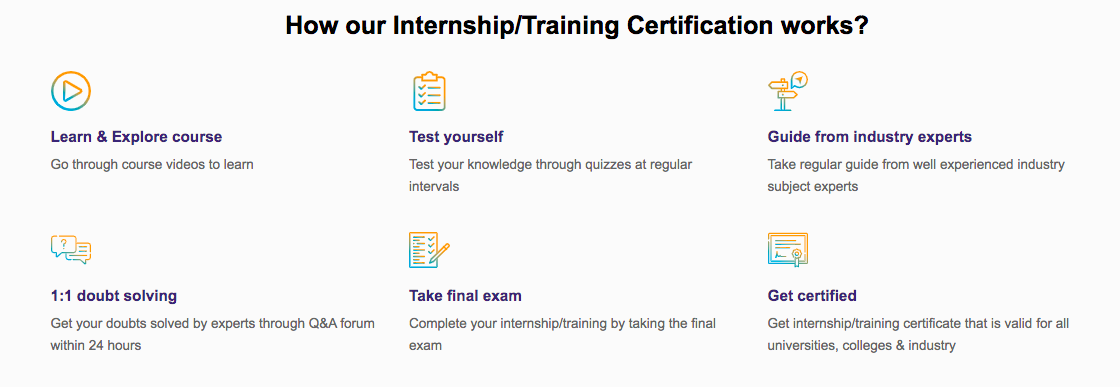
How EasyShiksha Internship/Training Program Works
A Constitution That Evolves With the Student
A Personal Knowledge Constitution should not be a permanent document created once at the beginning of education. Students change as they encounter new subjects, professional responsibilities and different forms of evidence. Their intellectual principles may become more detailed as their understanding develops.
A school student may begin with simple commitments to check information before sharing it and ask questions when a concept is unclear. At university, the same learner may develop more advanced principles concerning research quality, academic integrity, source evaluation and responsible use of AI. During professional life, the framework may expand to include confidentiality, technical accountability and the limits of professional expertise.
The constitution should therefore evolve through reflection. Students could review their principles periodically and consider whether they still support their learning objectives. They might identify rules that have become too restrictive, assumptions that require reconsideration or new responsibilities that have emerged.
This flexibility is important because a Personal Knowledge Constitution should support intellectual independence, not create another rigid checklist that students follow without thinking.
How EasyShiksha Could Support a Personal Knowledge Constitution
EasyShiksha's broader education ecosystem provides a useful context for exploring how a Personal Knowledge Constitution could become part of a student's learning journey. Online courses can introduce concepts and subject knowledge, while quizzes can help learners evaluate their understanding. Projects can encourage independent application, internships can expose students to professional expectations, and career guidance can help connect educational choices with longer-term goals.
A potential Personal Knowledge Constitution feature could begin with a guided reflection experience. Students could consider how they evaluate information, how they use AI, what they do when they encounter disagreement and how they respond when new evidence challenges an existing belief. The objective would be to help them articulate their own principles rather than assign them a predetermined intellectual identity.
As learners progress through courses, they could revisit selected principles when relevant. A research-oriented course might encourage reflection on source reliability. A programming course could introduce principles concerning independent problem-solving and code verification. A business course could explore assumptions, evidence and context when evaluating decisions.
Quizzes could also include questions about responsible knowledge practices, although these should assess understanding rather than attempt to measure a student's personal beliefs. Projects could provide opportunities to apply the principles in practical situations. For instance, a learner might compare conflicting sources, document the evidence behind a recommendation or explain the limitations of an AI-generated response.
Career guidance could help students understand how their learning principles relate to professional responsibilities. Different occupations require different standards of evidence, confidentiality, accuracy and accountability. A student entering healthcare, finance, engineering or education needs to understand the specific responsibilities associated with that profession.
Such a model would not require EasyShiksha to decide what students should believe. Its role would be to help learners develop more thoughtful and responsible methods of acquiring and applying knowledge.
The Difference Between a Knowledge Constitution and a Student Profile
A conventional student profile records information about a learner, such as educational history, course completion, examination results, certificates and skills. A Personal Knowledge Constitution would serve a different purpose.
It would describe the principles guiding the student's relationship with information. It would not primarily record what the learner has achieved, but how they intend to approach the process of understanding and using knowledge.
This distinction could make the framework valuable throughout a student's educational journey. A certificate may demonstrate that a learner completed a course, while a project may provide evidence of practical capability. A Personal Knowledge Constitution could provide context about the intellectual principles the learner used while approaching the work.
However, the constitution should not become another compulsory credential. Students should not be ranked according to whether their personal principles match an institution's preferred language or framework. It should remain a developmental resource that supports reflection and independent judgment.
If students choose to share parts of their framework with instructors or mentors, they should understand what is being shared and why. Personal reflections should not automatically become part of an employment screening profile or permanent academic record.
Privacy and Ownership: Who Controls a Student's Intellectual Principles?
A Personal Knowledge Constitution could contain sensitive information about how students think, what sources they trust, how they approach disagreement and which areas they find difficult. Such information should be treated carefully.
The framework should belong to the learner. Students should be able to create, revise, export and delete their personal reflections according to clearly explained platform policies. They should also have control over whether particular sections are shared with teachers, mentors, educational institutions or employers.
This is especially important if AI is used to help students reflect on their learning behaviour. An AI system might identify patterns in how a student evaluates sources or responds to uncertainty, but those observations should not automatically become permanent labels. A learner who frequently asks for assistance in one subject should not be classified as intellectually dependent. Someone who changes an opinion after receiving new evidence should not be treated as inconsistent.
The purpose of the constitution is to support development, not create a surveillance system for measuring private thought.
Any digital implementation should explain how information is collected, how AI-generated suggestions are produced and how long personal reflections are retained. Students should remain free to disagree with recommendations and reject interpretations that do not accurately represent them.
Avoiding the Risk of Intellectual Rigidity
A Personal Knowledge Constitution could create value, but it also introduces a possible danger. If students begin treating their principles as permanent rules that must never change, the framework could restrict the very intellectual flexibility it is intended to encourage.
For example, a learner might establish that they trust only a particular category of source. Over time, that rule could prevent them from examining valuable information from unfamiliar disciplines or perspectives. Another student might decide that every important question requires extensive verification, creating unnecessary delays even when a reasonable level of evidence is already available.
The constitution should therefore include a principle of self-review. Students must be able to question their own rules just as they question external information.
It should also distinguish between foundational ethical commitments and practical learning preferences. Academic honesty and respect for evidence may remain important across many contexts, while preferences about note-taking, reading methods or study schedules may change as the learner develops.
A healthy knowledge framework should create intellectual discipline without eliminating curiosity, experimentation or openness to new ideas.
Can a Personal Knowledge Constitution Improve Career Readiness?
Professional work requires more than subject knowledge. Employees must evaluate information, recognise uncertainty, communicate conclusions and understand the consequences of their decisions. These responsibilities become increasingly important as AI systems automate routine information-processing tasks.
A worker may receive a report generated by an AI system, but still need to determine whether the findings are accurate and relevant. A marketing professional may have access to automated campaign recommendations but must understand whether those recommendations align with the organisation's objectives. A software developer may use AI-generated code but remains responsible for evaluating security, reliability and maintainability.
A Personal Knowledge Constitution could help students develop the intellectual habits required for these responsibilities before entering employment. It could encourage them to understand the limits of their expertise, distinguish evidence from assumptions and take responsibility for the conclusions they communicate.
This would be particularly relevant to EasyShiksha's connection between learning and career development. Courses and certificates can establish educational progress, while projects and internships can demonstrate how students apply knowledge. A personal framework for responsible learning could complement these experiences by helping students understand the principles behind their decisions.
It would not replace technical competence or professional qualifications. Instead, it could strengthen the judgment that allows people to use their knowledge responsibly in changing work environments.
Measuring Success Without Scoring a Student's Beliefs
One of the most important design decisions would be determining how to evaluate a Personal Knowledge Constitution. It would be inappropriate to assign students a score based on whether their opinions align with a particular institution or AI model.
The quality of the framework should instead be examined through the clarity and usefulness of its principles. Can the student explain how they evaluate information? Do they understand why evidence matters? Can they distinguish between established knowledge and uncertainty? Are they able to revise a conclusion when stronger evidence appears? Do they understand the boundaries of their expertise?
Even these dimensions should be approached carefully. A student may understand the importance of source evaluation without applying it perfectly in every situation. Intellectual development is gradual, and a single assessment cannot capture the complete process.
A more appropriate approach would use reflection, practical scenarios and self-assessment. Students could examine how they approached a research task, what information influenced their conclusion and what they would do differently next time. Educators could provide feedback on the reasoning process without attempting to control the student's personal beliefs.
The purpose is to develop better knowledge practices, not to produce a numerical ranking of intellectual conformity.
Empower your team. Lead the industry
Get a subscription to a library of online courses and digital learning tools for your organization with
EasyShiksha
The Future: Education That Develops Self-Governing Learners
The future of education may require a stronger balance between structured instruction and individual intellectual responsibility. As information becomes more accessible and AI systems become more capable, students will increasingly need to make decisions about what to learn, which explanations to trust and how to apply knowledge in unfamiliar situations.
A Personal Knowledge Constitution could become one way to support this development. It would give learners a framework for approaching information across subjects, institutions and professional environments. Rather than depending entirely on the rules of one educational platform, students could carry their principles into university programmes, online courses, internships and future employment.
The framework could also evolve alongside lifelong learning. A person entering a new industry may need to understand unfamiliar standards of evidence and professional responsibility. Someone learning a new technology may need to revise their assumptions about how work is performed. A personal knowledge framework can provide continuity while allowing the learner's understanding to change.
For education platforms, this suggests a broader role. Their purpose would not be limited to delivering content and recording completion. They could also help learners develop the judgment needed to navigate a world in which information is abundant, expertise is specialised and technology is constantly changing.
Conclusion: Students Should Learn How to Govern Their Own Knowledge
A Personal Knowledge Constitution introduces a different way of thinking about student development. Instead of focusing exclusively on what learners study, it considers the principles that guide how they acquire, evaluate, question, revise and apply knowledge.
Such a framework could encourage students to value evidence over confidence, question established explanations responsibly, recognise the limits of their expertise and revise their understanding when new information becomes available. It could also establish thoughtful boundaries for AI use and protect opportunities for independent thinking.
For EasyShiksha, the concept creates an opportunity to connect online courses, quizzes, projects, internships, certificates and career guidance with a deeper model of intellectual development. Students could learn not only how to complete educational activities, but also how to approach knowledge responsibly across different subjects and professional situations.
The framework must remain flexible, private and learner-controlled. It should never become a mechanism for ranking personal beliefs, enforcing ideological conformity or monitoring private thoughts. Its value lies in helping students become more independent, reflective and responsible learners.
Education traditionally gives students knowledge, qualifications and opportunities. A Personal Knowledge Constitution could add another important dimension: the ability to govern their own relationship with knowledge.
The most valuable outcome of education may not be a student who knows the most information, but one who understands how to question, evaluate, develop and responsibly use what they know.
Anshika Jain is an Engineer, Developer, and Educational Content Author known for her dedication to technology and knowledge sharing. With a strong analytical mindset and a passion for innovation, she has consistently contributed to creating meaningful digital solutions and insightful educational articles.
Her ability to simplify complex technical concepts into engaging and easy-to-understand content makes her work valuable for students and learners across various platforms. Along with her technical expertise, Anshika is admired for her creativity, professionalism, and commitment to continuous learning.
She represents a perfect blend of technical excellence and impactful communication, inspiring others through both her development work and educational contributions.