For many students, professional reputation appears to begin only after securing a first job. A candidate joins an organisation, completes assigned responsibilities, collaborates with colleagues, and gradually becomes known for particular skills and qualities. Over time, professional relationships, demonstrated expertise, work experience, and recommendations shape how others perceive that individual. However, this traditional understanding of reputation overlooks an important possibility: students can begin establishing professional credibility long before receiving their first formal employment opportunity.
The modern digital environment has created new ways for learners to demonstrate their abilities, share their work, contribute to professional communities, and develop relationships with people in their chosen industries. A student can publish a well-researched technical article, create a useful software application, contribute to an open-source project, complete a practical internship, or document the development of a marketing campaign. These activities can provide evidence of capability even when the student has never held a full-time position.
This shift creates an opportunity for educational platforms such as EasyShiksha. Through online courses, quizzes, internships, certificates, practical projects, university programmes, and career guidance, a learning ecosystem could help students develop not only knowledge but also a credible professional identity. Instead of treating reputation as something that begins after employment, the platform could help learners build it progressively throughout their educational journey.
The central question is not whether students can imitate experienced professionals. It is whether they can demonstrate reliability, knowledge, initiative, and practical ability within the limits of their current experience. When these qualities are supported by verifiable evidence, students can begin developing a professional reputation before their first formal job.
Understanding Professional Reputation in the Student Years
Professional reputation is the accumulated perception that other people develop about an individual's competence, reliability, judgement, communication, and conduct. It influences whether people trust someone with responsibilities, recommend them for opportunities, collaborate with them on projects, or consider them for employment. Reputation is therefore more complex than popularity, online visibility, or the number of followers a person has accumulated.
A student may have thousands of social media followers without demonstrating any meaningful professional capability. Another student may have a small online presence but a strong record of completed projects, thoughtful technical explanations, reliable teamwork, and useful contributions to a professional community. The second student may possess a stronger foundation for professional credibility because the available evidence demonstrates specific capabilities rather than general visibility.
For students, professional reputation should be understood as a developing record of demonstrated behaviour. It does not require extensive employment history or senior-level expertise. Instead, it begins with small but meaningful signals. Completing a project carefully, explaining a technical concept accurately, meeting a deadline, responding constructively to feedback, and acknowledging mistakes can all contribute to how others perceive a learner.
This distinction matters because students often believe they must wait until they gain employment before they can establish credibility. In reality, the process can begin whenever they undertake work that others can evaluate. The challenge is to make that work visible, understandable, and trustworthy without exaggerating its significance.
Why Traditional Career Preparation Often Begins Too Late
Conventional career preparation frequently follows a sequential model. Students first complete their academic programmes, then prepare a resume, apply for jobs, attend interviews, and attempt to demonstrate their suitability to employers. Their professional identity is often assembled in a hurry when employment becomes an immediate requirement.
This approach creates a disadvantage for students who have limited work experience. When recruiters ask for practical evidence, candidates may have little more to present than academic qualifications, course certificates, and general statements about their skills. Even students who have learned useful technologies or completed independent projects may struggle to communicate what they can actually do.
The problem is not necessarily a lack of ability. It is a lack of accumulated, organised, and verifiable evidence. Students may have learned WordPress, JavaScript, data analysis, graphic design, accounting, or digital marketing, but they may not have documented their progress in ways that make their capabilities easy to evaluate.
A reputation-building approach would change the timeline. Instead of waiting until graduation, students could begin creating professional evidence while learning. Each course could lead to a practical output, each project could provide an opportunity to demonstrate judgement, and each internship could generate feedback about workplace behaviour. By the time a student begins applying for a first job, the learner could have a developing record of work rather than a resume assembled from scratch.
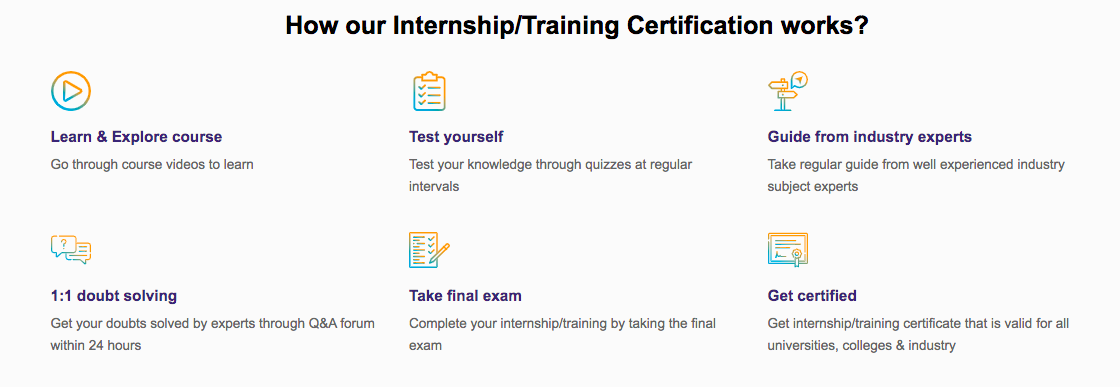
How EasyShiksha Internship/Training Program Works
From Learning Credentials to Public Evidence of Capability
Certificates play a useful role in education because they can indicate that a learner has completed a programme or met particular assessment requirements. They can help communicate effort and subject knowledge, especially when the issuing organisation and assessment process are credible. However, a certificate does not automatically establish that a student can apply the knowledge independently.
Professional reputation becomes stronger when learning credentials are connected to practical evidence. A student who completes a web development course, for example, could publish a working website, explain the design decisions, describe the challenges encountered, and demonstrate how the application behaves under different conditions. A digital marketing learner could document a campaign plan, explain the target audience, and present a transparent analysis of results from an appropriate project.
The distinction is between claiming a skill and showing how that skill has been used. Employers and collaborators may still need to assess the quality of the work, but they have something concrete to examine.
EasyShiksha could potentially support this progression by connecting learning completion with project-based activities and evidence records. A learner's profile might show which concepts were studied, which assessments were completed, what practical work was produced, and which capabilities were demonstrated. Such a system would not need to treat every course completion as proof of professional mastery. Instead, it could distinguish between learning participation, assessed knowledge, and demonstrated application.
This distinction would make student profiles more informative. Rather than presenting every achievement as an equivalent credential, the platform could help learners explain what each achievement actually represents.
Building a Professional Identity Through Practical Projects
Projects are among the most accessible ways for students to begin developing professional credibility. They allow learners to transform abstract knowledge into visible work that can be examined, discussed, improved, and reused as evidence of capability. A project also creates an opportunity to demonstrate decisions and problem-solving rather than merely reporting that a subject has been studied.
A student learning frontend development might build a responsive portfolio website, a task management application, or an interactive educational tool. A finance student could create a clearly documented budgeting model or analyse a publicly available dataset. A graphic design learner might develop a consistent visual identity for a fictional business, while a digital marketing student could prepare a content strategy and explain the reasoning behind its structure.
The strongest projects do more than display a finished result. They explain the problem being addressed, the constraints involved, the decisions made, and the lessons learned. This context helps other people understand the student's contribution and the level of independent thinking involved.
Project quality should matter more than project quantity. Publishing ten incomplete or repetitive projects may communicate less than producing two carefully documented examples that demonstrate different capabilities. Students should also be honest about whether a project was created independently, collaboratively, as part of a course, or with substantial assistance from AI tools. Clear attribution protects credibility and helps reviewers interpret the work fairly.
Within an EasyShiksha learning journey, courses could provide the foundations for these projects, while quizzes could test understanding and practical assignments could help learners demonstrate application. Over time, the student could build a collection of work that reflects a genuine progression from beginner knowledge to more independent problem-solving.
Can Online Courses Contribute to Professional Reputation?
Online courses can contribute to professional reputation when they become part of a broader pattern of learning and demonstration. Enrolling in a course alone does not establish that a learner has become proficient, but consistent learning followed by practical application can create a meaningful record of development.
For example, a student interested in React.js might first study JavaScript fundamentals, complete exercises involving arrays and promises, and then build an interactive application. The student could document the development process, explain how components are organised, and describe the problems encountered while handling state or asynchronous operations. This creates a clearer picture of capability than a list of course titles alone.
A professional identity built through learning should also show progression. Early projects may reveal basic understanding, while later work can demonstrate better architecture, clearer communication, improved testing, and greater independence. This visible development can help reviewers understand how a learner responds to practice and feedback.
EasyShiksha could potentially make this progression easier to communicate by connecting courses with relevant practical tasks and presenting achievements in a structured learning profile. Such a profile should clearly distinguish course completion from independently verified skills. Its purpose would be to help students tell an accurate story about what they have learned and what they can demonstrate.
The most useful course-related reputation signal is therefore not the total number of certificates collected. It is the connection between learning, application, reflection, and improvement.
Internships as Reputation-Building Experiences
Internships provide another important route through which students can develop professional credibility before securing a permanent job. They introduce learners to expectations that may be difficult to reproduce through coursework alone, including communication with supervisors, collaboration, deadlines, feedback, and responsibility for deliverables.
A successful internship can produce evidence of how a student behaves in a working environment. A learner may demonstrate the ability to follow instructions, ask relevant questions, handle revisions, communicate progress, and complete assigned tasks. These qualities are important because professional reputation depends not only on technical knowledge but also on whether others can rely on a person.
However, the value of an internship should not be measured solely by its title or certificate. A meaningful experience should provide a clear learning objective, reasonable supervision, appropriate tasks, and feedback that helps the student understand their progress. An internship certificate without substantive work may communicate little about actual capability.
EasyShiksha could potentially strengthen the connection between internships and professional identity by helping learners document responsibilities, completed deliverables, skills practised, and feedback received. Where appropriate and authorised, supervisors could verify specific contributions. Students would then be able to describe their experience with greater precision when applying for future opportunities.
Confidentiality must remain central to this process. Students should never publish internal documents, customer information, private business data, or proprietary work without permission. A public portfolio can describe the nature of an assignment and the student's contribution without exposing confidential material.
Reputation Is Also Built Through Reliability and Conduct
Professional reputation is not created exclusively through impressive technical achievements. Reliability and conduct often determine whether people are willing to work with someone again. Students can begin developing these qualities through academic projects, volunteer activities, internships, group assignments, and professional communities.
A learner who communicates delays early, acknowledges mistakes, responds respectfully to feedback, and completes agreed responsibilities demonstrates behaviours that matter in almost every workplace. These actions may appear ordinary, but consistent conduct builds trust over time.
Conversely, exaggerating achievements, taking credit for another person's work, missing commitments without communication, or responding defensively to constructive criticism can damage credibility. A polished online profile cannot compensate indefinitely for behaviour that others experience as unreliable.
This is why professional reputation should be treated as a relationship rather than a marketing exercise. Students do not simply publish information about themselves; they create expectations through their actions. Other people then form judgements based on the quality and consistency of those actions.
Educational platforms could help students understand this dimension by including collaboration, communication, reflection, and responsible conduct in practical learning experiences. Career guidance could explain how to present achievements honestly, communicate limitations, and respond professionally when something goes wrong.
Building Reputation Through Professional Communities
Professional communities offer students opportunities to learn from experienced practitioners, ask questions, contribute ideas, and develop relationships around shared interests. These communities may exist through technical forums, open-source repositories, industry groups, design communities, research networks, or professional social platforms.
Students do not need to present themselves as experts to participate meaningfully. They can begin by asking well-researched questions, sharing useful notes, explaining what they learned from a project, or helping other beginners solve problems they have already encountered. The objective is to contribute something relevant rather than to attract attention through frequent posting.
Consistency and quality matter more than volume. A thoughtful explanation that helps others understand a technical issue may have greater long-term value than a large number of generic updates. Similarly, respectful discussion and willingness to correct mistakes can strengthen a learner's reputation within a community.
Students should also recognise the difference between genuine participation and promotional activity. Repeatedly advertising a portfolio without contributing to discussions may be less effective than sharing work when it is relevant and explaining the reasoning behind it.
EasyShiksha could potentially help learners move from private learning to responsible professional participation by encouraging them to document projects, discuss lessons learned, and connect their work with relevant learning communities. Such participation should remain optional and privacy-conscious. Not every student wants or needs a highly visible public identity, and professional development should not depend on constant online exposure.
The Role of AI in Student Reputation Development
Artificial intelligence can help students organise their work, improve documentation, identify skill gaps, and communicate their achievements more clearly. It can assist with writing project summaries, reviewing portfolio structure, preparing technical explanations, and suggesting areas for improvement. These capabilities may be especially useful for students who have practical skills but find it difficult to present their work professionally.
However, AI introduces an important challenge. If students rely on generated descriptions that exaggerate their contributions or use AI to produce work they cannot explain, their professional profiles may become less trustworthy. A polished presentation is valuable only when it accurately represents the student's knowledge and involvement.
A responsible AI-supported reputation system should therefore prioritise evidence over impressive language. It could encourage students to link claims to actual projects, explain which parts of a task they completed, and identify where AI tools or collaborators contributed. It could also suggest improvements to documentation without automatically declaring the learner competent.
For example, an AI assistant might help a student describe a JavaScript project more clearly, but it should not claim that the student independently designed every feature if the work was generated or substantially completed by another system. The student should be able to explain the code, understand its limitations, and demonstrate the application in practice.
Within EasyShiksha, AI could potentially act as a professional development guide that helps learners identify their strongest evidence, improve project explanations, and prepare for interviews. Its role would be to strengthen the connection between real capability and its presentation, not to manufacture credibility.
A Student Reputation Profile: Beyond the Traditional Resume
The traditional resume is designed to summarise qualifications, skills, experience, and achievements in a compact format. It remains useful, but it may not fully represent a student's development when formal employment history is limited. A reputation profile could complement the resume by providing more detailed evidence of learning and contribution.
Such a profile might connect courses, assessments, projects, internships, certificates, presentations, and authorised recommendations. Each record would have a clear purpose. A course certificate could demonstrate completion, a quiz result could indicate assessed understanding, a project could show practical application, and an internship record could describe workplace experience.
The profile should also communicate the context of each achievement. Reviewers need to know whether the work was individual or collaborative, whether it was assessed, what tools were used, and what the student personally contributed. Without this context, a collection of digital badges or project links can become difficult to interpret.
EasyShiksha could potentially provide a foundation for such a profile by connecting its learning and career-related services. Students might be able to organise selected achievements into a shareable professional portfolio, with control over what is public and what remains private. The system should allow learners to correct inaccurate information and decide which records to share with employers.
This would not replace resumes, interviews, or independent hiring assessments. Instead, it could give students a more complete way to demonstrate their development before their first formal job.
How Employers Could Interpret Early Professional Reputation
Employers frequently face uncertainty when evaluating candidates who have little employment history. Academic qualifications can indicate educational background, while interviews can reveal communication and reasoning, but neither always shows how a candidate will perform on practical tasks. A well-documented student portfolio can provide another source of evidence.
A recruiter evaluating a junior frontend developer, for instance, could inspect a deployed project, review the source code where available, and ask the candidate to explain key decisions. A marketing employer might examine a campaign proposal and discuss the reasoning behind audience selection and performance measurement. A finance employer could review a model and ask how the student handled assumptions and limitations.
Early professional reputation can make these conversations more specific. Rather than relying entirely on general statements, the candidate and employer can discuss work that already exists. This may also help students identify the areas where they need further development.
Nevertheless, employers should not treat public visibility as a substitute for fair assessment. Students have unequal access to time, equipment, mentoring, and professional networks. Some capable learners may have limited opportunities to publish projects or participate in unpaid activities. Hiring decisions should therefore consider evidence in context and provide accessible ways for candidates to demonstrate competence.
A strong reputation profile can improve the information available to employers, but it should not become a rigid ranking system that disadvantages students who have fewer resources.
The Risks of Turning Reputation Into a Competition
If professional reputation becomes an important part of early career development, educational platforms must avoid turning it into a popularity contest. Public rankings, follower counts, badge totals, or engagement metrics can reward visibility without accurately measuring capability.
Students may begin selecting projects because they appear impressive rather than because they support meaningful learning. They may publish frequently to remain visible, collect credentials without applying knowledge, or exaggerate achievements to compete with peers. Such behaviour would undermine the purpose of reputation-building.
A healthier model would focus on the quality, relevance, and credibility of evidence. A small number of well-documented projects could be more meaningful than a large portfolio of superficial work. A verified contribution could carry more interpretive value than a badge awarded simply for participation, provided the verification process is clear and appropriate.
Reputation should also remain open to change. Students develop, make mistakes, learn new skills, and move between career interests. An early error should not permanently define a learner's professional identity. Systems should allow corrections, updates, and explanations, with safeguards against unfair or misleading claims.
For EasyShiksha, the opportunity would be to support professional development without reducing students to a single score. The platform could help learners understand their strengths and identify next steps while preserving context, choice, and the possibility of improvement.
Privacy, Consent, and Ownership of Student Work
A professional reputation system depends on information about a student's learning, projects, assessments, and experience. This makes privacy and ownership essential design considerations. Students should understand which information is collected, who can access it, and how it may be used.
Not every educational achievement needs to be public. A student may want to share a portfolio with prospective employers while keeping personal learning notes, unsuccessful attempts, or sensitive feedback private. The system should support these distinctions rather than assume that greater visibility is always better.
Ownership is equally important. Projects may include contributions from teammates, course providers, internship organisations, or AI tools. Students should not claim exclusive ownership of work that belongs to someone else or disclose materials they are not authorised to publish. Clear attribution and permission processes help protect both the learner and the people who contributed to the work.
A trustworthy platform would also avoid treating student data as an unrestricted commercial asset. Learners should have meaningful control over sharing and should be able to understand how recommendations or assessments are generated. Where verification is offered, the platform should explain what was verified and what remains unverified.
These safeguards are not obstacles to professional reputation. They are part of what makes reputation credible. A system that protects the learner's interests can support long-term trust more effectively than one that prioritises public visibility above all else.
How EasyShiksha Could Connect Learning With Reputation
EasyShiksha could potentially approach early professional reputation as a continuous development process rather than a separate profile-building activity. The journey might begin when a student explores a subject through online courses and introductory assessments. As the learner progresses, practical tasks could provide opportunities to apply concepts and produce work that can be documented.
Further development could connect projects with internships, allowing students to practise their skills in more realistic settings. Certificates could record course completion, while project evidence and authorised internship feedback could communicate additional dimensions of capability. Career guidance could then help students select the most relevant evidence for a particular role.
For example, a student preparing for a frontend development role might complete JavaScript and React.js learning modules, build an accessible website, document the implementation, receive feedback, and use the project as a discussion point during an interview. A student pursuing digital marketing could complete relevant courses, develop a campaign plan, analyse available results, and document what was learned. In both cases, learning and practical evidence would reinforce one another.
A connected system could also identify gaps between a student's desired role and the available evidence. If the learner has completed several courses but has not yet built a practical project, the platform could recommend an appropriate project. If the student has technical work but little experience explaining decisions, career guidance could suggest documentation or presentation practice.
The goal would not be to guarantee employment or promise that a profile will attract recruiters. Rather, it would help students become better prepared to demonstrate their abilities and make informed decisions about their next steps.
Measuring Progress Without Reducing Reputation to a Score
A student reputation system should measure progress in ways that preserve meaning. A single numerical score may be attractive because it simplifies comparison, but it can hide important differences between achievements. A course completion, a collaborative project, an independently assessed skill, and a supervisor's recommendation represent different forms of evidence. Combining them without explanation could produce misleading results.
A more useful approach would describe the evidence available and the conditions under which it was produced. A profile could distinguish between self-reported skills, course-based assessments, reviewed projects, and contributions verified by an authorised organisation. It could also show when evidence was created, whether it remains relevant, and whether the student has since developed the skill further.
Such a system should recognise that reputation is contextual. A learner may demonstrate strong design skills but still be developing communication or project management. Another may be an effective collaborator but have limited experience with advanced technical tasks. These differences are more informative than a single overall rank.
Progress should also include reflection and improvement. Students need opportunities to update old projects, incorporate feedback, and explain how their approach has changed. This demonstrates that professional development is ongoing rather than fixed at the moment a certificate is issued.
EasyShiksha could potentially support this approach through a structured learning profile that presents evidence clearly while avoiding unsupported claims about mastery or employability.
Empower your team. Lead the industry
Get a subscription to a library of online courses and digital learning tools for your organization with
EasyShiksha
Developing professional reputation before the first formal job can offer benefits beyond recruitment. It can help students understand their strengths, identify gaps, develop professional communication, and build confidence through completed work. It may also help them make better decisions about specialisations, internships, and further education.
The process can create a positive feedback loop. A student publishes a useful project, receives constructive feedback, improves the work, and develops relationships with people who share similar interests. These interactions may lead to new learning opportunities, collaborations, mentorship, or job referrals. None of these outcomes is guaranteed, but each becomes more possible when the student has meaningful work to discuss.
Early reputation-building can also make career development less dependent on a single moment of success. Students who begin documenting their work during their education have more time to learn from setbacks and improve their presentation. They do not need to construct an entire professional identity immediately before graduation.
However, reputation should remain a by-product of genuine development rather than the sole objective of education. Students should still explore subjects, make mistakes, and learn privately without feeling pressured to turn every activity into public content. A healthy professional identity grows from capability, responsible conduct, and thoughtful participation, not from continuous self-promotion.
Conclusion: The First Job Does Not Have to Be the Beginning of Professional Identity
Students do not need to wait for their first formal job to begin building professional reputation. They can start by learning consistently, applying knowledge through projects, participating responsibly in professional communities, gaining practical experience, and documenting their contributions honestly. Over time, these activities can create a credible record of capability that helps others understand what the student knows and how they approach work.
The key is to distinguish reputation from visibility. Being seen is not the same as being trusted, and collecting certificates is not the same as demonstrating skill. Professional credibility develops when claims are supported by relevant evidence, contributions are accurately attributed, commitments are respected, and feedback leads to improvement.
For EasyShiksha, this creates an opportunity to connect online courses, quizzes, internships, certificates, practical projects, and career guidance into a more continuous professional development journey. A student could move from learning a concept to applying it, from applying it to documenting the result, and from documenting the result to presenting credible evidence when exploring internships or employment.
Such a model would not eliminate the challenges of entering the job market, nor would it guarantee that employers will recognise every student's work. It could, however, help learners approach their first job search with a clearer record of what they have learned, what they have built, and what they can explain.
Professional reputation need not begin with a job title. It can begin with the first meaningful contribution, the first carefully completed project, the first constructive collaboration, and the first demonstrated commitment to doing good work. When education helps students recognise and build on these moments, their professional identity can develop long before their first employment contract.
Anshika Jain is an Engineer, Developer, and Educational Content Author known for her dedication to technology and knowledge sharing. With a strong analytical mindset and a passion for innovation, she has consistently contributed to creating meaningful digital solutions and insightful educational articles.
Her ability to simplify complex technical concepts into engaging and easy-to-understand content makes her work valuable for students and learners across various platforms. Along with her technical expertise, Anshika is admired for her creativity, professionalism, and commitment to continuous learning.
She represents a perfect blend of technical excellence and impactful communication, inspiring others through both her development work and educational contributions.