Online education has solved one of the biggest problems in traditional learning: access. A student no longer needs to live near a university, attend a physical classroom, or follow a rigid timetable to gain access to educational content. Courses, quizzes, certifications, internships, degree programs, career guidance, and practical learning experiences can increasingly be accessed through digital platforms such as EasyShiksha.
Yet access alone does not guarantee learning.
A student may enroll in a course but never begin it. Another may complete several lessons and then disappear. A learner may perform well in the first few quizzes but stop participating when the difficulty increases. Someone may understand the theoretical content but become inactive when asked to complete a project. Another student may finish a course but never move toward an internship or career opportunity.
These moments reveal an important problem in modern EdTech: learning momentum is fragile.
Students do not always leave because they dislike education. Sometimes they encounter friction that gradually makes continuing harder. The friction may come from confusing navigation, excessive content, difficult concepts, poor pacing, lack of motivation, technical problems, unclear goals, weak feedback, insufficient practice, or uncertainty about what to do next.
This creates the need for a new way of understanding student behavior.
The Learning Friction Index can be imagined as an intelligent framework for identifying, measuring, and reducing the points where students lose momentum during an educational journey. Instead of asking only whether a student completed a course, the system asks where the learning experience became difficult to continue and why.
For an education ecosystem like EasyShiksha, this idea could become especially powerful because learning does not stop at courses. The journey can include quizzes, games, certificates, internships, university programs, degrees, career guidance, and employment-oriented experiences. Every transition between these stages can create friction or momentum.
The future of EdTech may therefore depend not only on delivering more learning content, but on understanding the invisible obstacles that prevent students from progressing through it.
What Is the Learning Friction Index?
The Learning Friction Index is a conceptual measurement system that evaluates the difficulty students experience while progressing through an educational journey.
The word “friction” does not necessarily mean that something is technically broken. A learning experience can be perfectly functional and still create friction.
A lesson may be available, but too difficult for the student's current knowledge level. A quiz may work correctly, but the learner may not understand why the answers were incorrect. An internship may be available, but the student may not know whether they are ready to apply. A certificate may be issued, but the learner may not understand what career opportunity should come next.
An intelligent Learning Friction Index could therefore examine the entire student journey rather than focusing on isolated activities.
It could identify when students hesitate, abandon, repeat, struggle, return after long gaps, or fail to transition from one stage to another. AI could then analyze these patterns and estimate where the education experience is losing momentum.
The purpose would not be to blame students for dropping out. It would be to determine whether the learning system itself is creating avoidable obstacles.
Why Completion Rates Are Not Enough
Completion rate is one of the most common metrics in online education.
It provides useful information, but it is incomplete.
Suppose a course has a 60 percent completion rate. That number tells us how many students reached the end, but it does not explain what happened to the remaining 40 percent.
Did they struggle with the first lesson? Did they find the course too long? Did they lose interest after discovering that the content did not match their expectations? Did they encounter a difficult concept? Did they become confused by navigation? Did they complete the course but fail to continue into practical learning?
Without this information, educators may attempt to solve the wrong problem.
The Learning Friction Index introduces a more detailed perspective. Instead of measuring only the final outcome, it examines the journey between starting and completing.
This could reveal that students are not dropping out randomly. They may be consistently losing momentum at specific points.
Once those points are identified, they can be redesigned.
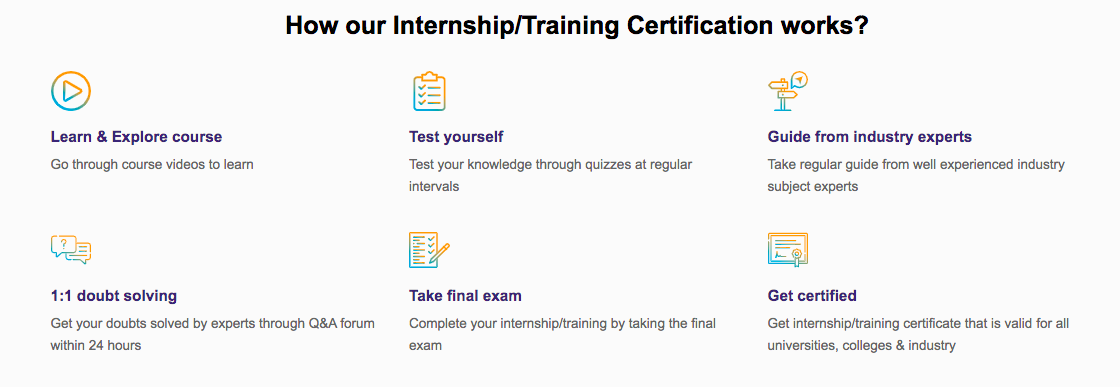
How EasyShiksha Internship/Training Program Works
The First Friction: Choosing What to Learn
Learning friction can begin before the first lesson.
Modern students face an enormous number of educational choices. An online platform may contain hundreds or thousands of courses covering technology, business, finance, marketing, cybersecurity, artificial intelligence, design, communication, and other areas.
Choice is valuable, but excessive choice can become overwhelming.
A student interested in artificial intelligence may encounter courses in machine learning, deep learning, generative AI, data science, Python, natural language processing, computer vision, AI tools, and AI ethics. Without guidance, the student may struggle to determine where to begin.
This creates decision friction.
An intelligent Learning Friction Index could identify signals such as repeated course-page visits, frequent switching between categories, abandoned enrollments, or unusually long periods between course selection and course initiation.
For EasyShiksha, AI could use these signals to simplify discovery.
Instead of showing students only more options, the platform could help answer a more useful question: “Based on your current skills and goal, where should you start?”
The Second Friction: Starting the Course
Enrollment does not equal engagement.
A student can register for a course because the topic looks interesting, but starting requires a different level of commitment.
If the first interaction with a course is complicated, unclear, or overly demanding, momentum can disappear before learning has really begun.
The opening experience therefore matters.
An AI-powered platform could analyze how long students take to begin after enrollment, whether they abandon the first lesson, and whether certain introductory screens or activities are associated with early drop-off.
If thousands of students consistently enroll but fail to begin, the issue may not be motivation alone. It may indicate a mismatch between expectations and the actual learning experience.
The Learning Friction Index could help distinguish these possibilities.
Content Friction: When Learning Becomes Too Difficult
One of the most important forms of friction occurs when students encounter concepts that exceed their current readiness.
Difficulty itself is not bad. In fact, meaningful learning often requires effort.
The problem occurs when difficulty becomes disconnected from the learner's existing knowledge.
A beginner introduced to advanced technical terminology without sufficient foundations may feel lost. A learner who already understands basic concepts may become bored if forced through excessive repetition.
AI can potentially detect both situations.
Quiz performance, time spent on lessons, repeated attempts, incorrect answers, and patterns of revisiting previous material can provide signals about cognitive friction.
The system could then recommend a prerequisite lesson, additional explanation, interactive practice, or a more advanced pathway.
This creates adaptive difficulty.
The goal is not to make education effortless. The goal is to make difficulty productive.
The Productive Struggle Versus Harmful Friction
This distinction is critical.
Not every difficult learning experience should be removed.
Students sometimes need to struggle with complex concepts because struggle can lead to deeper understanding. If an AI system eliminates every difficult moment, it could create an educational environment that feels comfortable but produces weak learning.
The Learning Friction Index should therefore distinguish between productive struggle and harmful friction.
Productive struggle occurs when the learner is challenged but still has a realistic pathway toward understanding. Harmful friction occurs when the obstacle prevents meaningful progress without providing educational value.
For example, a challenging programming problem may be productive. A confusing interface that prevents the student from finding the assignment is unnecessary friction.
This distinction could become one of the most important design principles for AI-powered education.
Assessment Friction: When Quizzes Stop Helping
Quizzes are valuable because they provide feedback about learning. However, poorly designed assessments can become sources of friction.
If students do not understand why an answer is wrong, they may repeat the same mistake. If quizzes are disconnected from course content, students may perceive them as arbitrary tests rather than learning opportunities.
EasyShiksha can potentially use quizzes as both assessment tools and learning-navigation tools.
Instead of simply recording whether an answer was correct, an intelligent system could identify patterns in mistakes.
If a learner repeatedly struggles with a particular concept, the system could recommend targeted revision. If the learner performs consistently well, it could introduce more challenging questions.
This makes the assessment experience part of the learning journey rather than a barrier at the end of it.
The Feedback Friction Problem
Feedback is one of the strongest drivers of learning momentum.
Students need to know whether they are progressing, what they understand, what they need to improve, and what they should do next.
Delayed, vague, or overly generic feedback creates friction.
Imagine a student completing a project and receiving only a score. The score tells the learner what happened but not necessarily how to improve.
An intelligent platform could provide more contextual feedback by connecting assessment results with specific skills.
A student might discover that their conceptual understanding is strong but their practical application needs improvement. Another may demonstrate excellent technical ability but weak communication.
This type of feedback transforms the platform from a content provider into a learning coach.
Motivation Friction: When the Goal Becomes Invisible
Students are more likely to maintain momentum when they understand why they are learning something.
A long course can feel disconnected from the learner's goals if the relationship between individual lessons and future outcomes is unclear.
An AI learning system could continuously reconnect learning activities with the student's objectives.
For example, if a learner wants to become a cybersecurity professional, the platform could show how a networking module contributes to later security concepts and practical projects.
This creates purpose.
The student is no longer completing a random sequence of lessons. They are progressing toward a visible destination.
For EasyShiksha, career guidance can become an important part of reducing motivational friction because students can understand how courses, quizzes, projects, internships, and certificates contribute to broader career development.
Time Friction: When Learning Does Not Fit Real Life
Students rarely have unlimited time.
College students have classes and examinations. Working professionals have jobs. Parents have family responsibilities. Some learners may have only short periods available for study.
A course designed around unrealistic time expectations can create friction even when the content itself is excellent.
AI could personalize learning schedules around available time.
Instead of assuming that every learner should complete the same amount of content each day, the platform could divide learning into manageable sessions.
The goal would not simply be shorter lessons. It would be better alignment between learning design and real-life schedules.
A student who has twenty minutes available should still be able to make meaningful progress.
This can help protect learning momentum.
Transition Friction Between Learning Stages
One of the most overlooked forms of friction occurs between educational activities.
A student may successfully complete a course but never take a quiz. They may pass the quiz but never start a project. They may complete a project but never apply for an internship.
Each transition represents a potential point of momentum loss.
This is especially important for an ecosystem such as EasyShiksha because the platform can potentially connect multiple stages of the learning journey.
An intelligent system could monitor these transitions.
If many students complete a particular course but rarely begin the associated internship pathway, the platform could investigate why. Perhaps students do not know that internships are available. Perhaps they are uncertain about eligibility. Perhaps they do not feel prepared.
The solution may therefore be improved guidance rather than more content.
The Internship Readiness Gap
Internships represent a major bridge between education and employment, but students often experience uncertainty when moving from theoretical learning into professional environments.
They may ask whether their skills are sufficient, whether their resume is ready, or whether they know enough to contribute.
An AI system could reduce this friction through an internship readiness layer.
The platform could compare completed learning activities, quiz results, project performance, and demonstrated competencies with internship requirements.
Instead of telling a student simply that an internship is available, the system could explain their readiness and identify areas requiring improvement.
This transforms internship participation from a disconnected opportunity into a logical next step in the learning journey.
Technical Friction and the Digital Learning Experience
Not all learning friction is educational. Technical problems can be equally damaging. Slow pages, confusing navigation, broken links, inconsistent interfaces, difficult login processes, unclear course structures, or poor mobile experiences can interrupt learning momentum.
From a student's perspective, these problems are not separate from education. They are part of the education experience.
A Learning Friction Index could therefore combine learning analytics with experience analytics. If students repeatedly abandon a lesson immediately after a particular interface change, that could indicate a technical or usability problem.
The goal would be to understand the difference between “the student could not learn this concept” and “the student could not easily access the learning experience.” Both matter, but they require different solutions.
Emotional Friction in Online Learning
Education is also an emotional experience.
Students can experience frustration, uncertainty, boredom, anxiety about performance, fear of failure, or loss of confidence.
An AI system should approach emotional signals carefully and ethically. It should not attempt to make unsupported psychological judgments from limited behavioral data.
However, patterns such as repeated failed attempts, sudden inactivity, unusually long pauses, or frequent switching between easier and harder activities may provide useful indicators that a learner could benefit from additional support.
The appropriate response should be supportive rather than intrusive.
A student may need a simpler explanation, a confidence-building practice activity, a mentor interaction, or simply a clearer next step.
Reducing emotional friction does not mean eliminating challenge. It means ensuring that learners do not become isolated when they encounter difficulty.
Building a Student Momentum Map
The Learning Friction Index could eventually produce a dynamic student momentum map.
Instead of viewing a learner's progress as a simple percentage, the platform could visualize where momentum is increasing, stable, or declining.
A student might show strong momentum during short courses but slow down during assessments. Another might perform well academically but experience friction when transitioning into practical work.
These patterns could become useful for personalized intervention.
The platform could respond differently to different situations rather than sending identical reminders to everyone.
This would represent a major evolution from traditional learning analytics.
AI as a Friction Detector
Artificial intelligence is particularly suited to identifying patterns across large amounts of learning data.
A human educator may recognize that some students are struggling, but an AI system can analyze patterns across thousands of learners.
It could identify that students who encounter a particular concept are significantly more likely to pause their learning. It could detect that learners who fail a certain quiz question often abandon the course afterward. It could discover that students who complete a practical project are more likely to continue toward internships.
These insights can inform course design.
The AI is not simply monitoring students. It is also monitoring the education system itself.
That distinction is important.
From Student Analytics to Learning Design Analytics
Traditional learning analytics often focus on the student.
The Learning Friction Index expands the focus to the learning experience.
If a large percentage of students struggle at the same point, the problem may not be the students. It may be the instructional design.
Perhaps a concept needs better explanation. Perhaps the course assumes prerequisite knowledge that many learners do not have. Perhaps the project instructions are unclear. Perhaps the assessment is poorly aligned with the lesson.
AI can help educators identify these patterns.
This creates a feedback loop in which student behavior improves course design.
Education becomes a system that learns from its learners.
The Role of Games in Reducing Learning Friction
Games can provide another mechanism for maintaining momentum.
When appropriately designed, educational games can transform repetition into interaction. Instead of asking students to review the same concept through static material, a game can create challenges, progression, rewards, and immediate feedback.
For EasyShiksha, games could potentially become part of the friction-reduction strategy.
A student struggling with a particular concept might receive an interactive activity that allows them to practise without the pressure of a formal assessment.
However, gamification should not become a distraction. The game should support the learning objective rather than simply increase screen time.
The best educational game reduces unnecessary friction while preserving meaningful cognitive effort.
The Learning Friction Index and Personalization
Personalization is often described as giving students different content.
A more advanced form of personalization would give students different levels of support.
One learner may need additional explanations. Another may need more practice. Another may need greater challenge. Another may need help understanding how the current course connects to a career objective.
AI can potentially determine which type of support is most appropriate.
This makes personalization less about creating thousands of different courses and more about dynamically adjusting the journey around the learner.
A Possible Future Learning Friction Score
A future EdTech platform could potentially represent learning friction through a composite score.
Such a score might consider engagement interruptions, repeated assessment failures, unusually long pauses, content difficulty, navigation issues, transition drop-offs, time constraints, and other relevant signals.
However, the score should never be treated as a judgment of the student.
A high friction score should mean that the learning environment requires attention, not that the learner is “bad.”
This distinction is essential.
The purpose of measurement should be intervention and improvement rather than labeling.
Reducing Friction Without Removing Responsibility
There is also a danger in trying to make education too frictionless.
Students need persistence. They need to develop the ability to deal with difficult concepts, uncertain outcomes, failed attempts, and complex problems.
An education system that removes every obstacle may produce learners who struggle when support disappears.
The goal should therefore be intelligent friction.
The platform should remove obstacles that have no educational value while preserving challenges that develop capability.
This principle could become central to future EdTech design.
Empower your team. Lead the industry
Get a subscription to a library of online courses and digital learning tools for your organization with
EasyShiksha
The Future of EasyShiksha: From Course Platform to Momentum Engine
EasyShiksha has the potential to evolve beyond being a destination where students find courses and certificates.
Its combination of courses, quizzes, internships, games, degrees, university programs, certificates, career guidance, and job-oriented learning can support a more connected educational journey.
An intelligent Learning Friction Index could become part of that journey.
The platform could understand when students are progressing smoothly, when they are struggling academically, when they are becoming disengaged, when they are ready for practical experience, and when they need a different learning pathway.
This could transform the role of the platform from content delivery to momentum management.
The goal would not simply be to increase course completion.
It would be to help students maintain meaningful progress from discovery to learning, from learning to practice, from practice to internship, and from internship toward career development.
Conclusion: The Future of EdTech May Be Designed Around Momentum
The most important challenge in online education may not be getting students to enroll.
It may be helping them continue.
Students lose momentum for many reasons. Some are educational, some technical, some motivational, some structural, and some related to the transition between different stages of the learning journey.
The Learning Friction Index provides a framework for understanding these moments.
By identifying where students struggle, pause, abandon, repeat, or become uncertain, AI-powered EdTech platforms can begin to redesign learning around actual student behavior rather than assumptions about how learning should happen.
For EasyShiksha, this concept could connect the platform's major educational components into a more intelligent ecosystem. Courses could build knowledge. Quizzes could identify learning gaps. Games could support practice. Projects could strengthen application. Internships could provide professional exposure. Certificates could document achievements. Career guidance could provide direction.
Anshika Jain is an Engineer, Developer, and Educational Content Author known for her dedication to technology and knowledge sharing. With a strong analytical mindset and a passion for innovation, she has consistently contributed to creating meaningful digital solutions and insightful educational articles.
Her ability to simplify complex technical concepts into engaging and easy-to-understand content makes her work valuable for students and learners across various platforms. Along with her technical expertise, Anshika is admired for her creativity, professionalism, and commitment to continuous learning.
She represents a perfect blend of technical excellence and impactful communication, inspiring others through both her development work and educational contributions.