Choosing an online course is often the beginning of an important educational decision. Students invest their time, money, attention, and expectations in a programme because they believe it will help them acquire new knowledge, develop practical skills, or move closer to a career goal. However, many learners begin a course without knowing whether its difficulty level matches their current knowledge, whether its teaching approach suits their learning preferences, or which topics might require additional preparation. Some discover that the course is too advanced, while others realise halfway through that they lack essential foundational knowledge. These situations can lead to frustration, unfinished courses, and wasted learning opportunities.
What if students could explore a simulated version of their learning journey before enrolling in a course? What if a digital system could estimate where they might struggle, identify the knowledge they already possess, and recommend preparation activities that could improve their chances of success? This is the idea behind a Learning Digital Twin, an emerging educational concept that could make course selection more informed, personalised, and evidence-based.
A Learning Digital Twin can be understood as a digital representation of a learner's current knowledge, demonstrated skills, learning patterns, goals, and potential development needs. Using available information and educational models, the system could simulate possible learning scenarios and estimate how a student might respond to a particular course. It would not predict the student's future with complete certainty. Instead, it would generate evidence-based scenarios that help learners and educators understand possible challenges before formal learning begins.
For EasyShiksha, this concept offers an opportunity to explore a more intelligent approach to online education. Through a connected learning ecosystem involving courses, quizzes, internships, certificates, games, and career guidance, EasyShiksha could potentially develop a system that helps students evaluate their readiness before enrolling in a programme. Rather than recommending courses based only on interests or popularity, the platform could explore how a course aligns with a learner's existing capabilities and what preparation may be useful.
The larger goal would be to move from recommending a course that appears suitable to helping a student understand how they might experience it, what they may need to learn first, and how they could improve their readiness. This could make educational decisions more transparent and support a more personalised learning journey.
Understanding the Concept of a Learning Digital Twin
The term digital twin is commonly associated with a digital representation of a physical object, process, or system. In engineering and manufacturing, digital twins can use data and models to simulate behaviour, examine possible outcomes, and support decisions before changes are made in the real world. A Learning Digital Twin applies a related idea to education by creating a model of a learner and using it to explore possible educational experiences.
Unlike a traditional student profile, which may contain basic information such as age, qualifications, completed courses, and assessment scores, a Learning Digital Twin would aim to represent how different learning factors interact. These factors could include prior knowledge, demonstrated competencies, familiarity with prerequisite concepts, assessment performance, learning pace, and responses to different types of practice activities.
For example, two students may both want to enrol in a beginner programming course, but their starting points could be very different. One may already understand logical reasoning and basic computational concepts, while the other may have no previous programming experience. A conventional recommendation system might suggest the same course to both students because they share the same interest. A Learning Digital Twin could instead simulate how each learner might approach the course based on available evidence and recommend different preparation pathways.
The first student might be ready to begin immediately, while the second might benefit from introductory exercises on problem-solving, algorithms, and programming fundamentals. The system could also identify topics that are likely to require additional practice once the course begins.
The key distinction is that a Learning Digital Twin would not simply describe what a student has done. It would use that information to explore what might happen under different learning conditions. This could help students make better decisions before committing to a course and give educational platforms a more detailed understanding of individual learning needs.
However, a digital twin should not be treated as a perfect copy of a student's mind. Human learning is influenced by motivation, personal circumstances, teaching quality, health, environment, and many other factors that cannot be fully captured by a digital model. Its role would be to support informed decisions through carefully qualified estimates rather than produce definitive judgements about a learner's ability.
Why Students Need Course Simulation Before Enrolling
Online education offers learners a wide range of programmes, but having more choices does not automatically make choosing the right course easier. Course descriptions usually explain the subjects covered, the expected duration, and the skills learners may develop. They do not always show how demanding the material may feel to someone with a particular background or where that person is likely to encounter difficulties.
A student enrolling in artificial intelligence, for example, may discover that the course assumes familiarity with mathematics, programming, statistics, or data handling. Someone without this foundation may struggle even when the course content is well designed. Another student might have the required knowledge but need more practical examples to understand abstract concepts. In both cases, a better understanding of individual readiness could improve the learning experience.
Course simulation could help identify these differences before enrolment. A Learning Digital Twin might estimate the relationship between the student's current knowledge and the course's prerequisite requirements. It could then highlight areas where the learner appears prepared and areas where additional practice may be beneficial.
The system could also help learners understand the expected commitment. If a course involves frequent coding assignments, complex reading, or multi-stage projects, the simulation could explain the kinds of tasks students may encounter. Where reliable information is available, it could provide a realistic picture of the course structure and the competencies required to progress.
This would be particularly useful for students who are balancing education with employment, internships, examinations, or family responsibilities. Understanding a course's demands in advance could help them decide whether to begin immediately, prepare first, or select a more appropriate starting point.
For EasyShiksha, the objective would not be to discourage students from challenging courses. It would be to help them approach those courses with realistic expectations and suitable preparation. A course that appears difficult today may become manageable after a short, targeted learning pathway.
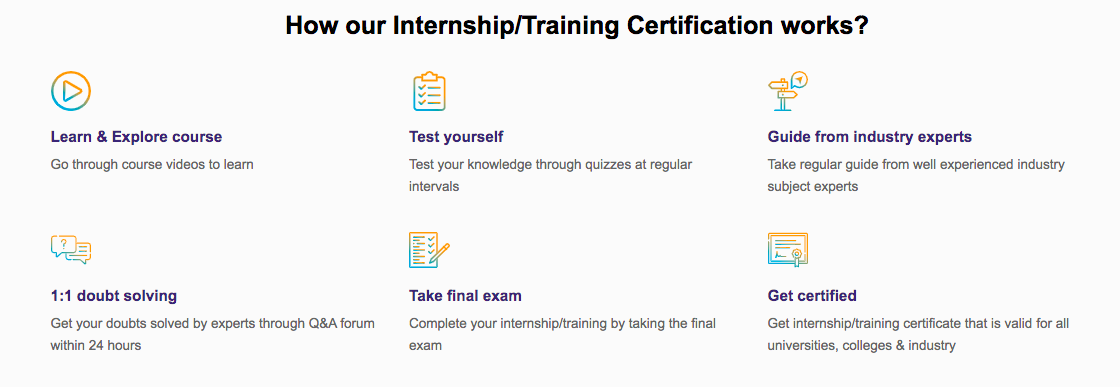
How EasyShiksha Internship/Training Program Works
How a Learning Digital Twin Could Work on EasyShiksha
A Learning Digital Twin would require several connected components. The first would be a learner model that represents the student's current knowledge and demonstrated skills. The second would be a course model describing learning outcomes, prerequisite concepts, assessment requirements, and expected progression. The third would be a simulation engine that explores how the learner might interact with the course under different conditions.
EasyShiksha could begin by gathering relevant information from activities that students voluntarily complete on the platform. This might include diagnostic quizzes, course assessments, completed learning modules, project results, and self-reported goals. Where appropriate, the system could also consider a student's previous educational background or experience, provided the information is relevant and handled with suitable privacy protections.
The platform would then compare this information with a structured model of the target course. If the course requires familiarity with basic statistics, for example, the system could examine whether the student has demonstrated the relevant concepts through an assessment or related learning activity. It would need to distinguish between a student who has never studied statistics and one who has studied it but has not yet provided evidence of understanding.
The simulation engine could use these inputs to generate possible learning scenarios. It might estimate which modules could require additional effort, where the student could benefit from supplementary material, or whether a short preparation course would improve readiness. These estimates should be presented with clear explanations and appropriate uncertainty rather than as guaranteed predictions.
The learner could then explore different options. They might begin the course immediately, complete a recommended preparation module, take a diagnostic assessment, or select an alternative course with fewer prerequisites. The system could compare these pathways and explain how each option relates to the learner's goals.
The digital twin would need to change as the student learns. Once the learner begins the actual course, new assessment results and learning interactions could help refine the model. The initial simulation would serve as a starting hypothesis, while later evidence would show whether the predicted challenges matched the learner's real experience.
This process would turn course selection into a more informed decision without removing the student's freedom to choose a different path.
Building a Digital Model of Student Knowledge
A useful Learning Digital Twin needs a meaningful representation of what a student knows. Course completion alone may not provide enough information because students can finish a course with different levels of understanding. A learner may remember key definitions but struggle to apply them, while another may be able to solve practical problems even if their theoretical knowledge is incomplete.
EasyShiksha could explore a skill and knowledge map that connects course topics with specific learning outcomes. In a web development course, for example, the map might include HTML structure, CSS styling, JavaScript fundamentals, debugging, and responsive design. These concepts could be linked according to their learning dependencies, making it possible to identify which foundations support later topics.
Diagnostic quizzes could help estimate a student's familiarity with these concepts. However, a single quiz should not be treated as a complete measurement of ability. A student may answer incorrectly because of a confusing question, unfamiliar terminology, or temporary distraction. Multiple forms of evidence, such as short assessments and practical tasks, could provide a more balanced view.
The model should also distinguish between knowledge that has been demonstrated recently and knowledge that may need revision. A learner who studied a concept several years ago may still understand it well, while another may need a refresher after a shorter period. The system should therefore use evidence of current performance rather than assuming that knowledge automatically disappears after a fixed time.
Confidence could be considered cautiously as well. If a student reports feeling confident about a subject but performs poorly on a diagnostic assessment, the system might suggest a low-pressure review. If the student performs well but reports uncertainty, it could offer additional practice to build confidence. Such information should guide support, not label the learner.
The purpose of the knowledge model would be to identify useful learning opportunities. It should remain flexible, explainable, and open to correction as new evidence becomes available.
Simulating Course Difficulty Before the First Lesson
Course difficulty is not a fixed property that affects every learner in the same way. The same lesson may be straightforward for a student with strong foundational knowledge and challenging for someone encountering the subject for the first time. A Learning Digital Twin could estimate the relationship between course demands and an individual's current preparation.
To accomplish this, the platform would need a structured description of the course. This could include the concepts taught in each module, the knowledge required before beginning, the complexity of assignments, and the type of assessments used. Course designers could identify dependencies between topics and explain which concepts learners should understand before progressing.
Suppose a student wants to enrol in a machine learning course. The course may require basic Python programming, an understanding of datasets, and introductory statistics. The digital twin could examine the learner's available assessment evidence and estimate whether these prerequisites appear sufficiently developed.
If the learner demonstrates strong programming skills but limited statistical understanding, the system could identify statistics as a likely challenge rather than classifying the entire course as unsuitable. It could then recommend a focused preparation pathway covering probability, distributions, and interpreting data. The learner might return to the course after completing a short assessment that checks the relevant foundations.
A simulation could also compare different study conditions. For example, it might estimate how a learner's progress could differ between a pathway with supplementary exercises and one without them. Such comparisons would need to be based on suitable educational data and should be presented as scenarios rather than factual predictions about what will definitely happen.
This approach could make course difficulty more actionable. Instead of displaying a simple label such as beginner, intermediate, or advanced, EasyShiksha could explore a more personalised explanation of the prerequisites that matter for a particular student.
Predicting Learning Obstacles Without Labelling Students
One of the most valuable applications of a Learning Digital Twin would be identifying possible learning obstacles before they cause frustration. These obstacles could include gaps in prerequisite knowledge, unfamiliar terminology, insufficient practice, or difficulty transferring theoretical concepts into practical tasks.
For example, a student may understand programming definitions but struggle to write a complete program independently. The system could identify a possible gap between conceptual understanding and practical application. Before the learner begins an advanced programming course, it could recommend short coding exercises that build confidence with problem-solving and debugging.
Another student may have strong technical knowledge but limited experience interpreting long technical instructions. If relevant assessments indicate difficulty with reading and applying multi-step requirements, the system could recommend guided exercises that gradually increase in complexity. This would be more useful than simply describing the student as weak in a particular subject.
The language used to present simulation results would be critical. Students should not receive permanent labels such as poor performer, slow learner, or unsuitable candidate. These labels can undermine confidence and make predictions appear more certain than they are. Instead, the platform should explain which specific prerequisites may need attention and which learning activities could help.
A digital twin should also recognise that difficulty can be productive. Challenging material can promote deeper understanding when learners have appropriate support and sufficient opportunities to practise. The goal should not be to remove every challenge from a course but to distinguish between useful intellectual effort and avoidable barriers caused by missing foundations.
For EasyShiksha, this could support a more constructive form of personalised education. Students would receive practical guidance about how to prepare rather than a judgement about whether they are capable of succeeding.
The Role of Artificial Intelligence in Learning Simulation
Artificial intelligence could help connect information about student readiness with the structure of a course. Machine learning models may identify patterns in historical learning data, while language models could help interpret course descriptions, learning outcomes, and assessment questions. Recommendation systems could then suggest preparation activities that address specific gaps.
For instance, an AI-supported system could analyse the learning outcomes of a cybersecurity course and identify foundational topics such as networking, operating systems, and security principles. It could compare these requirements with the student's available evidence and recommend relevant introductory modules where gaps appear.
AI could also help generate explanations that make the simulation understandable. Rather than displaying an unexplained readiness score, the system could describe the evidence behind its recommendation. It might explain that the learner has demonstrated familiarity with basic programming but would benefit from reviewing conditional logic before beginning a course that requires writing scripts.
However, generative AI should not independently invent evidence about a student's ability. It should work from validated course information, relevant assessment results, and clearly defined rules. Where a model is uncertain, it should say so and suggest a diagnostic assessment instead of producing a confident but unsupported conclusion.
Historical data must also be used carefully. If a model learns from students who previously abandoned a course, it may incorrectly associate certain backgrounds or learning patterns with future failure. These correlations may reflect course design problems, limited access to resources, or external circumstances rather than an individual's ability.
EasyShiksha would need to evaluate its models regularly, examine differences in outcomes across learner groups, and provide ways to correct inaccurate profiles. Human oversight would remain important, particularly when simulation results influence significant educational decisions.
The most responsible role for AI would be to help learners understand their options and receive targeted support, not to determine who is allowed to learn a subject.
Connecting Learning Digital Twins With Courses, Quizzes, and Games
A Learning Digital Twin becomes more useful when it can connect simulation with practical learning activities. For EasyShiksha, courses, quizzes, and educational games could contribute to both the creation and refinement of a learner model.
Before enrolment, diagnostic quizzes could help identify the concepts a student already understands. The system could use the results to recommend an appropriate course level or a short preparation pathway. After the student completes the recommended activities, a follow-up quiz could provide additional evidence about readiness.
Educational games could offer another way to practise foundational skills. A logical reasoning game, for example, could provide opportunities to work with patterns, sequences, or decision-making. If the activity has been designed and validated to assess a particular competency, its results might contribute to the learner model. Casual game participation alone should not be treated as proof of academic or professional competence.
Once the learner begins a course, the digital twin could compare predicted difficulties with actual progress. If the student performs better than expected, the system might recommend more advanced practice or reduce unnecessary revision. If the student struggles with a particular concept, it could suggest an explanation, exercise, or prerequisite lesson that addresses the difficulty.
This creates a feedback loop between simulation and learning. The initial model helps prepare the learner, while real learning outcomes improve future recommendations. Over time, the platform could become better at identifying which kinds of preparation are helpful for particular course structures and learning needs.
The system should still preserve flexibility. Students should be able to skip recommendations, explore alternative material, or continue with a course even when the simulation identifies possible challenges. Personalisation should create more options rather than impose a rigid sequence.
From Course Readiness to Internship and Career Preparation
The Learning Digital Twin concept could eventually extend beyond course selection to career preparation. Professional roles often require combinations of knowledge and practical capabilities, and students may need to understand how their current skills relate to the demands of a particular internship or entry-level position.
EasyShiksha could explore a career-oriented extension that connects course readiness with relevant skill requirements. A student interested in digital marketing, for example, could review the competencies commonly associated with an introductory role, such as content planning, audience research, search engine optimisation, and campaign analysis. The system could identify which competencies are supported by existing learning evidence and which may require further development.
The digital twin could then simulate possible learning pathways. One student might benefit from completing a marketing fundamentals course before attempting a campaign project, while another might already have the necessary foundations and be ready for more advanced practical work. Internship recommendations could take account of the learner's demonstrated capabilities and the requirements stated by the provider.
This should not be interpreted as predicting job performance with certainty. A course-readiness model is not automatically a reliable employment prediction model. Workplace success depends on collaboration, judgement, communication, supervision, organisational context, and many factors that cannot be inferred from a few quizzes.
Instead, the system could help learners understand what they need to develop before applying for a particular opportunity. It could also encourage them to build evidence through projects, assessments, and internships rather than relying only on course completion.
For EasyShiksha, the long-term opportunity would be to connect the learning journey from course discovery to practical application and career exploration. The digital twin could act as a planning tool that helps learners choose the next useful step without promising a specific employment outcome.
Privacy, Consent, and Ethical Boundaries
A Learning Digital Twin may involve personal educational information, including assessment results, course history, learning goals, and inferred areas of difficulty. If these records are collected or shared without appropriate safeguards, the system could create risks for students instead of supporting them.
EasyShiksha would need to establish clear rules about what information is collected, why it is necessary, how long it is retained, and who can access it. Students should understand how their data contributes to simulations and whether their information is used to improve recommendations or train analytical models. Any secondary use should be governed by appropriate permissions and applicable legal requirements.
A particularly important boundary concerns access by universities and employers. A simulated prediction that a student may struggle with a course should not automatically become a permanent record visible to recruiters. Such a prediction is an estimate based on limited information, not a verified fact about the learner's ability. Sharing it outside the original educational purpose could create unfair disadvantages.
The system should distinguish between observations, verified achievements, and predictions. A completed and assessed project is evidence of an activity and its evaluated outcome. A predicted difficulty is a model-generated estimate. These should never be displayed as though they have the same status.
Students should also have ways to review and correct their profiles. They may have gained new skills outside the platform, completed learning activities elsewhere, or experienced a temporary difficulty that no longer reflects their current ability. The digital twin should be capable of updating when better evidence becomes available.
Ethical implementation also requires avoiding discriminatory assumptions based on demographic characteristics or educational background. Course readiness should be assessed through relevant competencies and course requirements wherever possible. The system must not use a predicted outcome to deny learners the chance to attempt a course, particularly when appropriate support could help them succeed.
Challenges in Building an Accurate Learning Digital Twin
Developing a reliable Learning Digital Twin would require more than collecting student data and applying an AI model. The platform would need meaningful course descriptions, consistent assessment methods, reliable evidence of learning, and a clear understanding of how different factors influence performance.
One challenge is the lack of standardisation across courses. Two programmes with the same title may cover different concepts, use different assessments, and demand different levels of prior knowledge. A model cannot estimate readiness accurately if the course requirements are poorly defined or inconsistent.
Another challenge is data quality. A learner may complete a quiz under different conditions, take an assessment without sufficient time, or demonstrate a skill through a project that is not directly comparable with another student's work. Historical learning records may also be incomplete because students often study through several platforms. The digital twin must account for these limitations rather than assuming that every available data point is equally reliable.
Prediction accuracy is another concern. A model might identify patterns in historical student outcomes, but those patterns do not necessarily establish cause and effect. Students who completed a preparation course may have performed better because they were more motivated or had more available time, rather than because the preparation alone caused the improvement.
The platform would also need to account for changes in course design. If an instructor updates the material, improves explanations, or changes the assessments, a simulation built on older data may become less useful. Course models and predictive systems would therefore require regular review.
Finally, students must understand the results. A technically sophisticated simulation is of limited value if its recommendations are confusing or intimidating. The system should communicate uncertainty, explain the reasons behind its suggestions, and present practical actions that learners can take.
A successful implementation would depend on combining educational expertise, responsible data practices, careful technical design, and continuous evaluation.
Measuring Success: Does Simulation Improve Learning Outcomes?
The value of a Learning Digital Twin should be evaluated through its impact on the learner experience rather than the sophistication of its technology. A system may produce detailed simulations, but those simulations are useful only if they help students make better decisions or improve their preparation.
EasyShiksha could begin with a pilot involving a small number of courses with clearly defined prerequisites and assessments. Students could complete a diagnostic activity before enrolment, receive a personalised readiness explanation, and choose whether to follow the suggested preparation pathway. Their actual learning experience could then be compared with the initial simulation.
Evaluation could examine whether students better understand course expectations, whether recommended preparation addresses genuine knowledge gaps, and whether learners find the guidance useful. The platform could also investigate changes in assessment performance, course completion, learner confidence, and engagement with supplementary resources.
However, course completion alone should not determine success. A student who chooses a more appropriate alternative after reviewing a simulation may still benefit, even if they do not enrol in the original course. Similarly, a learner who begins a challenging course and succeeds with additional support should not be treated as a failure of the system simply because the initial estimate identified potential difficulty.
The platform should also monitor false predictions. If the system frequently predicts that students will struggle when they are actually well prepared, it may discourage learners unnecessarily. If it consistently overlooks genuine prerequisite gaps, it may fail to provide useful preparation. Both types of error matter.
Students should be invited to provide feedback about the accuracy, clarity, and fairness of the recommendations. Instructors could help identify whether the model correctly represents course demands and whether additional learning resources address the obstacles students encounter.
Through this process, EasyShiksha could determine whether the Learning Digital Twin provides meaningful benefits and identify the conditions under which it is most useful.
Empower your team. Lead the industry
Get a subscription to a library of online courses and digital learning tools for your organization with
EasyShiksha
The Future of Education: From Course Recommendations to Learning Simulations
Most digital learning platforms help students discover educational content through categories, interests, search terms, or recommendation systems. A Learning Digital Twin could extend this model by helping students examine what may happen after they choose a course.
Instead of simply suggesting a programme, the platform could explain the knowledge it requires, identify the student's demonstrated foundations, and outline possible preparation pathways. The learner could explore different scenarios before making a decision and understand how additional practice might improve readiness.
In the future, connected digital twins could potentially support broader educational planning. A student might simulate a pathway from foundational programming to software development, compare different course sequences, or explore which learning activities could prepare them for a particular internship. Such simulations would remain estimates, but they could make long-term planning more concrete.
For EasyShiksha, this concept aligns with a connected education ecosystem in which online courses, quizzes, projects, internships, certificates, and career guidance contribute to a continuous learning journey. A Learning Digital Twin could help organise these experiences around the learner's goals and current capabilities.
The long-term objective would not be to predict every student outcome. Human learning is too complex for that. Rather, it would be to help learners make more informed choices, recognise useful preparation opportunities, and adjust their plans as they gain new knowledge and experience.
The most valuable digital twin would be one that changes when the learner changes. It would not preserve an early estimate as a permanent judgement but continuously respond to new evidence, improved skills, and changing ambitions.
Conclusion: Helping Students Prepare Before They Begin
A Learning Digital Twin introduces a new way to think about personalised education. By creating a digital model of a learner's current knowledge and comparing it with the demands of a course, the system could simulate possible learning experiences before enrolment. It could identify prerequisite gaps, highlight likely challenges, and recommend preparation activities that help students approach learning with greater confidence.
For EasyShiksha, this concept offers a potential path toward more informed course recommendations. Diagnostic quizzes could establish a starting point, courses could develop knowledge, educational games could support selected forms of practice, and practical projects could provide evidence of application. As students progress, new learning results could refine their digital twins and improve subsequent recommendations.
The key principle is that simulation should empower learners rather than restrict them. A prediction that a student may find a course challenging should lead to useful guidance, not an automatic rejection. A student should remain free to attempt a demanding subject, explore an alternative pathway, or correct an inaccurate assessment of their readiness.
Building such a system would require reliable educational data, clear course models, transparent AI methods, strong privacy protections, and ongoing evaluation. It would also require a commitment to presenting predictions as uncertain estimates rather than unquestionable facts.
If implemented responsibly, a Learning Digital Twin could help EasyShiksha move beyond recommending what students should learn toward helping them understand how they might prepare for it. It could make course selection more personalised, support more effective preparation, and strengthen the connection between learning choices and long-term educational goals. Ultimately, the purpose of simulating a learning journey is not to decide a student's future in advance. It is to give the student better information, better preparation, and more control over what happens next.
Anshika Jain is an Engineer, Developer, and Educational Content Author known for her dedication to technology and knowledge sharing. With a strong analytical mindset and a passion for innovation, she has consistently contributed to creating meaningful digital solutions and insightful educational articles.
Her ability to simplify complex technical concepts into engaging and easy-to-understand content makes her work valuable for students and learners across various platforms. Along with her technical expertise, Anshika is admired for her creativity, professionalism, and commitment to continuous learning.
She represents a perfect blend of technical excellence and impactful communication, inspiring others through both her development work and educational contributions.