Every student makes decisions about learning. Some choose a degree because it is required for a particular profession, while others enrol in online courses to develop practical skills, improve their employment prospects, or prepare for a career change. A student may spend weeks learning Python, complete a digital marketing course, practise financial analysis, or develop expertise in user interface design. Yet one important question often remains unanswered: how much could this particular skill contribute to the learner's future career?
Education platforms generally explain what a course teaches, how long it takes to complete, and whether a certificate is awarded. Some also provide information about projects, tools, and internship opportunities. These details help students understand the learning experience, but they do not always explain how a specific skill connects to actual career opportunities. A learner may know that a course teaches data visualisation without understanding which professional tasks require that capability, what complementary skills might be necessary, or how to demonstrate the skill to a potential employer.
This creates a gap between educational information and career decision-making. Students are asked to invest their time, effort, and sometimes money before they have a clear picture of the possible professional applications of what they are learning. Although no platform can predict an individual's career outcome with certainty, education technology could do considerably more to explain the potential value of individual skills.
Imagine an education platform that could show how a skill relates to different job roles, which professional tasks it supports, how frequently it appears in relevant job descriptions, what additional competencies are usually required, and what evidence a learner could develop to demonstrate proficiency. Instead of presenting a course as an isolated learning product, the platform could explain its relationship with the wider employment landscape.
For EasyShiksha, this idea creates an opportunity to connect online courses, quizzes, internships, projects, certificates, university programmes, and career guidance through a proposed Skill-to-Career Value Engine. The purpose would not be to promise employment or assign a guaranteed monetary value to every skill. It would be to help learners make better-informed decisions about where to direct their learning efforts and how to turn educational progress into demonstrable professional capability.
What Is the Career Value of a Skill?
The career value of a skill is the contribution that a particular capability may make to a person's ability to perform professional tasks, qualify for opportunities, adapt to changing work requirements, or progress towards a career goal. It is not a single fixed number because the usefulness of a skill depends on the context in which it is applied.
For example, knowledge of HTML and CSS may help a learner build and maintain websites. When combined with JavaScript, responsive design, accessibility principles, and practical debugging experience, these foundational capabilities may support applications for frontend development roles. The value of HTML and CSS therefore depends partly on the learner's existing knowledge, the complexity of the work they want to perform, and the additional skills available in their portfolio.
The same principle applies to communication. Communication skills may appear less technical than programming or data analysis, but they can influence how effectively a professional explains ideas, collaborates with colleagues, presents findings, and manages client expectations. Their career value becomes especially visible when they complement another capability, such as software development, sales, teaching, or project management.
A useful career-value model must therefore move beyond the question of whether a skill is popular. It should examine what the skill enables a person to do, which opportunities may require it, how it combines with other capabilities, and what evidence supports the learner's claim of proficiency.
This also requires a distinction between learning exposure and demonstrated competence. Watching a course about a technology does not necessarily mean that a learner can use it independently. A career-value system should explain both the potential relevance of a skill and the level of evidence needed to show that the learner can apply it.
Why Students Need More Than Course Descriptions
Course descriptions are designed primarily to explain educational content. They may identify topics, tools, learning objectives, duration, and certification details. However, students frequently make decisions based on a different concern: whether learning those topics will help them move closer to a particular career.
A learner interested in becoming a data analyst may encounter courses covering spreadsheets, SQL, Python, statistics, and business intelligence tools. Without a connected view of professional requirements, it can be difficult to determine which capability to learn first, which skills depend on one another, and which practical exercises would provide the most useful evidence of readiness.
Another student may enrol in several courses because their titles appear attractive, only to discover that the courses cover overlapping concepts. The learner accumulates certificates but still lacks the ability to complete an integrated professional task. The problem is not necessarily a shortage of educational content. It is a lack of visibility into the relationship between learning activities and the work students ultimately want to perform.
A Skill-to-Career Value Engine could address this problem by translating course information into career-relevant explanations. It could show the professional tasks associated with each skill, the roles in which the skill commonly appears, the prerequisites that may be necessary, and the practical outcomes a learner could work towards.
For EasyShiksha, this could help students evaluate courses according to their own goals rather than relying exclusively on course popularity, broad marketing claims, or certificate availability. The platform would become more useful not simply by offering learning options, but by helping learners understand why particular options may be relevant to them.
The proposed Skill-to-Career Value Engine would connect three major elements: the skills learners develop, the tasks professionals perform, and the opportunities through which those capabilities may be used. Its purpose would be to make the connection between education and employment more transparent.
The system could begin by identifying the competencies covered by a course. Instead of describing a course only through its title, it would map its learning outcomes to specific capabilities. A web development course might cover page structure, styling, responsive layouts, browser behaviour, JavaScript interactions, and debugging. Each competency could then be connected to relevant professional tasks.
The next stage would connect those tasks with job roles. For example, building responsive interfaces may be relevant to frontend development, web design implementation, website maintenance, and certain digital product roles. The system could explain that these roles may share some competencies while requiring different levels of depth and additional knowledge.
A further layer would evaluate the evidence available to the learner. Completing introductory lessons might demonstrate participation in learning, while passing a practical assessment could provide stronger evidence of understanding. Building a working project could demonstrate application under specified conditions, and completing a relevant internship could provide evidence of experience in a workplace environment.
The result would be a more complete picture of how learning may contribute to career readiness. The system would not claim that a particular course guarantees a job. Instead, it would show the relationship between learning, demonstrated capability, and the requirements of potential opportunities.
Measuring Career Relevance Without Inventing a Salary Promise
One of the most difficult aspects of showing career value is deciding how to measure it. Students may naturally want to know whether a skill could increase their salary or improve their chances of getting hired. However, assigning a precise monetary value to an individual skill can be misleading.
Salary depends on multiple factors, including experience, location, industry, education, employer budgets, communication ability, economic conditions, and the complexity of the work performed. A programming language may be associated with well-paid roles in one market while offering fewer opportunities in another. Even within the same city, professionals with similar technical skills may receive different compensation because their responsibilities and experience differ.
An education platform should therefore avoid claiming that learning one skill will increase a student's salary by a fixed amount unless reliable evidence supports a clearly defined estimate. It should distinguish between observed market data, statistical estimates, and general guidance.
Instead of relying on a single career-value score, a platform could show several dimensions of relevance. These might include how frequently a skill appears in a defined set of job descriptions, the number of related roles in the selected market, the typical experience level associated with those roles, the availability of practical learning opportunities, and the number of complementary skills required.
The system could also explain the confidence and limitations of its analysis. A skill associated with many job descriptions may have broad relevance, but that does not automatically mean that the skill is scarce, highly paid, or sufficient for employment.
For EasyShiksha, a transparent multi-dimensional assessment could be more useful than a single impressive-looking score. It would help learners understand what the available evidence actually indicates and which factors remain uncertain.
Career Value Changes With Location, Industry, and Experience
A skill does not have the same career value everywhere. Its relevance may vary between cities, industries, company sizes, and professional levels. A learner seeking an entry-level position in Jaipur may face a different set of opportunities from someone targeting technology companies in Bengaluru, Hyderabad, Pune, or a remote international role.
Industry context matters as well. Spreadsheet expertise may support accounting, operations, marketing, administration, and business analysis, but the depth and application of that expertise will differ across roles. SQL may be essential for some data positions, useful in certain business roles, and unnecessary in jobs that do not involve structured data.
Experience also changes the relationship between skills and opportunities. A beginner who understands the fundamentals of JavaScript may be ready for further practice but not yet prepared for the same responsibilities as a developer who can independently build, test, optimise, and maintain complex applications.
A career-value engine should therefore ask what kind of opportunity the learner is exploring. It could allow students to compare career relevance across selected locations, industries, and experience levels when reliable data is available. The same skill could then have different contextual explanations rather than one universal rating.
EasyShiksha could use this approach to make career guidance more practical for students in India. Rather than recommending a skill because it appears generally popular, the system could help learners investigate its relevance to their preferred location, target role, existing capabilities, and willingness to relocate or work remotely.
Skill Combinations Can Be More Valuable Than Individual Skills
Professional capability often emerges from combinations of skills rather than from a single technical ability. A student who learns one programming language may gain a useful foundation, but combining programming with debugging, version control, testing, and project communication can create a more complete development profile.
The same pattern appears in digital marketing. Understanding search engine optimisation is valuable, but combining it with content strategy, analytics, technical website knowledge, and clear reporting may enable a learner to perform a wider range of tasks. A finance learner may benefit from combining accounting principles with spreadsheet analysis, data visualisation, and business communication.
A career-value engine could therefore identify complementary skills and explain why their combination matters. It might show that a learner's current knowledge supports a particular task, while an additional competency would enable a more advanced responsibility. This would help students understand the difference between collecting unrelated skills and building a coherent professional capability.
The system could also identify overlapping skills. If two courses cover similar foundational material, learners could review their content before spending additional time or money on both. This would make the educational journey more efficient while encouraging students to invest in meaningful progression.
For EasyShiksha, the opportunity lies in presenting learning as a connected capability pathway. Students could begin with foundational knowledge, develop complementary skills, apply them in projects, and gradually build evidence that supports more advanced career objectives.
The Skill Dependency Map: Understanding What Should Be Learned First
Career goals can feel overwhelming when learners see a long list of requirements attached to a job description. A role may mention several programming technologies, tools, frameworks, testing practices, and collaboration skills. Without a clear learning sequence, a beginner may try to learn everything simultaneously and make little progress.
A skill dependency map could simplify this problem by showing which competencies provide the foundation for others. For example, a learner interested in React development may benefit from understanding JavaScript fundamentals, functions, arrays, objects, asynchronous operations, and basic browser behaviour before attempting more advanced application architecture.
The map would not need to enforce a rigid sequence. Some skills can be learned in parallel, while others become easier after a prerequisite has been mastered. The important function would be to explain these relationships and help students identify a realistic next step.
A platform could also distinguish between essential requirements and useful additions. Some roles require a particular technical competency, while others allow multiple ways to achieve the same outcome. Treating every skill mentioned in a job description as equally mandatory could unnecessarily discourage students or lead them to study topics that are not immediately relevant.
EasyShiksha could use a skill dependency map to connect course recommendations with a learner's existing knowledge and career objectives. Instead of suggesting a long list of courses, the platform could explain which capability should be developed next and why that step matters for the intended pathway.
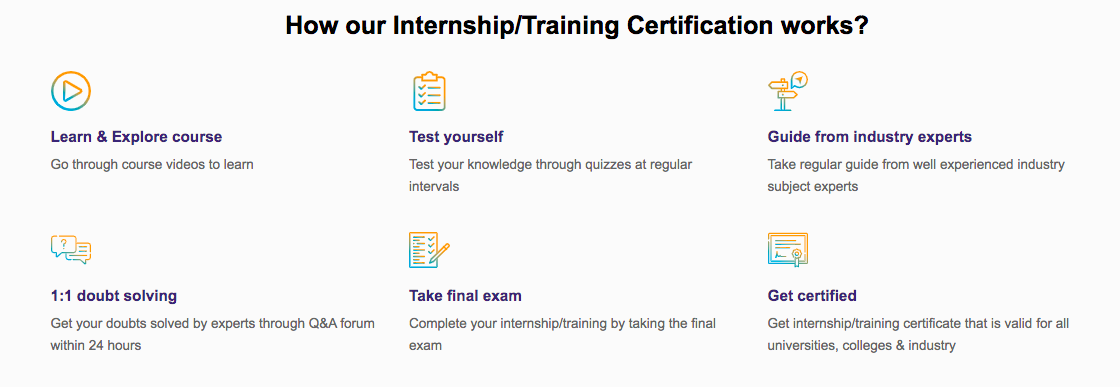
How EasyShiksha Internship/Training Program Works
From Skill Completion to Demonstrated Career Evidence
Knowing that a skill is relevant to a career is only the beginning. Learners also need opportunities to demonstrate that they can apply it.
An education platform could connect each competency to suitable evidence. A learner studying web development might build a responsive website, implement an interactive feature, resolve a debugging challenge, or explain the technical decisions behind a project. A student learning data analytics might clean a dataset, perform an analysis, create visualisations, and communicate findings through a report.
This approach makes career value more concrete. Rather than telling students that a skill is useful, the platform can explain what applying that skill looks like in practice and what a learner could produce to demonstrate it.
The evidence should be described honestly. A project completed independently under realistic conditions is different from a guided exercise completed by following step-by-step instructions. Both can support learning, but they demonstrate different levels of independence. Similarly, an educational simulation can provide valuable practice without being represented as actual workplace experience.
EasyShiksha could connect course completion with practical projects, quizzes, internships, and certificates to create a more meaningful record of development. Where appropriate, learners could receive guidance on how to present their work in a portfolio and explain the specific competencies it demonstrates.
This would shift the focus from accumulating credentials alone to building a credible body of evidence that learners can use when exploring employment or further education.
Connecting Career Value With Internships and Practical Experience
A skill's professional relevance becomes easier to understand when learners can apply it to real tasks. Courses introduce knowledge, but projects and internships help students encounter constraints that may not be visible in a structured lesson.
A learner studying digital marketing might understand campaign terminology but still need experience analysing performance data, interpreting audience behaviour, and communicating recommendations. A programming student may understand syntax but need to learn how to work with existing code, manage changes, test functionality, and resolve unexpected errors.
A career-value engine could connect learning outcomes with practical opportunities that allow students to practise these tasks. It might identify projects that help demonstrate a particular competency or suggest internship experiences that are relevant to a learner's target role.
This connection should work in both directions. Career requirements can help students decide what to practise, while project and internship experiences can reveal which additional skills deserve attention. The learning pathway becomes a cycle of learning, application, feedback, and further development.
For EasyShiksha, this could connect its educational offerings with a clearer explanation of how each experience contributes to professional preparation. An internship would not simply appear as another item on a learner's profile; it could help document the tasks performed, the skills used, and the evidence developed, subject to appropriate verification and privacy arrangements.
AI as the Intelligence Layer Behind Career-Value Discovery
Artificial intelligence could help make career-value information more personalised and easier to interpret. It could analyse course descriptions, structured learning outcomes, job descriptions, competency frameworks, and relevant labour-market information to identify connections between educational content and professional requirements.
For example, an AI system could compare the competencies covered by a course with the skills mentioned in a selected group of job postings. It could explain where the course appears relevant, identify requirements that are not covered, and suggest additional learning or practice that may help close the gap.
AI could also help translate technical job descriptions into accessible explanations. A beginner may not understand what employers mean by API integration, responsive implementation, test automation, or data modelling. A career-aware learning assistant could explain each requirement, identify its prerequisites, and suggest ways to practise it.
However, AI-generated recommendations should not be treated as unquestionable facts. Job descriptions may contain outdated requirements, duplicated skill lists, unrealistic expectations, or terminology that differs between employers. A system trained on incomplete data may overlook emerging roles or overemphasise popular technologies.
A responsible platform should therefore show the source, date, and scope of the data behind important career claims whenever possible. It should also allow users to distinguish between verified course outcomes, observed job-market patterns, and AI-generated suggestions.
EasyShiksha could use AI as an interpretation layer that helps learners make sense of career information while preserving human judgment and acknowledging uncertainty. The aim would be to make decisions more informed, not to automate a student's future.
Career Value Must Account for Skills That Change Over Time
The relevance of a skill can change as technology, business practices, and employment requirements evolve. A tool that is widely used today may become less important in some roles, while a new framework or workflow may create demand for additional competencies.
This means that career-value information should not be treated as permanent. A skill's relevance should be reviewed against current evidence, and historical information should remain distinguishable from recent market observations.
At the same time, not every foundational skill loses value when a particular tool changes. Problem-solving, analytical reasoning, communication, and the ability to learn unfamiliar systems can remain useful across many technological transitions. A learner who understands underlying principles may adapt more easily when a specific tool is replaced.
A sophisticated career-value engine would therefore distinguish between tool-specific knowledge, transferable capabilities, and combinations of both. It could explain that learning a particular framework may support immediate tasks, while understanding broader programming principles may provide a foundation for adapting to future technologies.
For EasyShiksha, this would make course recommendations more resilient. Students could understand not only which skill may be relevant now, but also which foundational capabilities could help them continue learning as their chosen field changes.
Avoiding the Danger of Turning Education Into a Salary Ranking
Showing the career value of skills creates a risk: students may begin treating every learning decision as a race towards the highest salary or the largest number of job openings.
Career earnings are important, particularly for students who must manage education costs and financial responsibilities. However, salary alone cannot capture the full value of learning. Some skills support long-term career flexibility, entrepreneurship, professional confidence, creative work, or the ability to move between industries. Other capabilities may be personally meaningful even when their immediate commercial value is difficult to measure.
A system that ranks skills solely by expected earnings could also encourage students to crowd into the same popular fields. This may create unrealistic expectations and overlook differences in aptitude, interests, local opportunities, and personal circumstances.
A more balanced approach would show career relevance alongside learning cost, time requirements, prerequisites, practical evidence, potential role diversity, and uncertainty. It could help students compare options without declaring one career path universally superior to another.
EasyShiksha could position career-value guidance as a decision-support service rather than a mechanism for directing every learner towards a single definition of success. The platform should help students understand their options and trade-offs while preserving their freedom to choose goals that match their circumstances and interests.
Empower your team. Lead the industry
Get a subscription to a library of online courses and digital learning tools for your organization with
EasyShiksha
A career-value system should be evaluated by whether it improves decisions, not simply by whether it generates attractive dashboards or personalised recommendations.
One important question is whether students develop a clearer understanding of the skills required for their intended roles. Another is whether they choose more relevant courses, complete appropriate projects, and build stronger evidence of their capabilities. The system could also examine whether learners waste less time repeating overlapping content or enrolling in courses that do not match their stated goals.
Longer-term evaluation could explore whether the guidance helps students prepare for interviews, qualify for relevant opportunities, or progress towards further education. These outcomes must be interpreted carefully because employment depends on many factors beyond education, including economic conditions, personal circumstances, employer decisions, and access to opportunities.
A platform should not claim that its recommendations caused a job placement merely because a learner completed a suggested course before getting hired. Meaningful evaluation requires a careful understanding of the other factors that may have contributed to the outcome.
For EasyShiksha, measuring the usefulness of career-value guidance could support continuous improvement. The system could examine whether its explanations help learners make more informed choices and whether the recommended learning activities produce the intended educational outcomes.
The Future of EasyShiksha: From Course Discovery to Career-Value Discovery
Traditional course discovery begins with a subject, a title, or a category. Career-value discovery would begin with the learner's goal and work backwards towards the capabilities needed to pursue it.
A student interested in frontend development could explore the tasks associated with the role, identify the relevant competencies, assess existing knowledge, and discover courses that address the gaps. The student could then practise through projects, evaluate progress through assessments, and investigate internship opportunities that provide relevant experience.
Another learner interested in business analytics could follow a different path involving spreadsheets, SQL, statistics, data visualisation, and business communication. The platform could explain how each capability contributes to the target role and identify where the learner needs additional practice.
These journeys would not need to follow identical sequences. Students begin with different levels of experience, have different budgets, and pursue different career objectives. A useful system would adapt to those differences while making its recommendations understandable.
EasyShiksha could bring this approach together through a career-aware learner dashboard that connects skills, courses, projects, assessments, internships, certificates, and career guidance. Each learning activity could explain its intended contribution, the evidence it produces, and the next steps it may support.
Such a system would not guarantee employment or remove uncertainty from career planning. It would give students a clearer framework for evaluating their learning investments and understanding how individual skills contribute to broader professional goals.
Conclusion: Make the Value of Learning Visible
Every skill a student develops represents an investment of time, attention, and effort. Yet the professional relevance of that investment is often difficult to understand until the learner begins applying for jobs or encounters real workplace tasks.
Education platforms have an opportunity to close this gap by connecting learning outcomes with professional tasks, career requirements, practical evidence, and changing market conditions. A Skill-to-Career Value Engine could help students understand where a skill may be useful, what additional capabilities might be required, and how they can demonstrate what they have learned.
For EasyShiksha, this approach could transform course discovery into a more informed career-planning experience. Courses would remain important, but their value would become easier to interpret through the projects, assessments, internships, and competencies they support. AI could help connect these elements while transparent data, careful evaluation, and learner choice would keep the system responsible.
The most valuable platform would not simply tell a student which skill is trending. It would explain why that skill may matter, where it could be applied, what evidence would demonstrate proficiency, and what limitations remain in the available information.
The future of career-focused education may depend on making learning's potential value visible before students invest in it—and helping them turn that potential into demonstrated capability. When students understand the relationship between what they learn and the work they hope to perform, education becomes easier to plan, evaluate, and connect with meaningful opportunities.
Anshika Jain is an Engineer, Developer, and Educational Content Author known for her dedication to technology and knowledge sharing. With a strong analytical mindset and a passion for innovation, she has consistently contributed to creating meaningful digital solutions and insightful educational articles.
Her ability to simplify complex technical concepts into engaging and easy-to-understand content makes her work valuable for students and learners across various platforms. Along with her technical expertise, Anshika is admired for her creativity, professionalism, and commitment to continuous learning.
She represents a perfect blend of technical excellence and impactful communication, inspiring others through both her development work and educational contributions.