Artificial intelligence is changing how students access information, understand difficult subjects and complete educational tasks. A student who once spent hours searching through textbooks can now ask an AI assistant to explain a concept, summarise a chapter, solve a mathematical problem, generate code or clarify a technical term within seconds. This convenience has created new opportunities for accessible and personalised education, especially for students who need additional explanations or cannot always access individual academic support. However, the growing ability to obtain instant answers has introduced a deeper educational question: when a student receives a correct answer from AI, does that necessarily mean the student understands the concept behind it?
The answer is no. Receiving information and developing understanding are two different processes. An AI system can produce a clear explanation, but the learner must still interpret the explanation, connect it with existing knowledge, evaluate its accuracy and develop the ability to use the concept independently. A student may copy a generated answer into an assignment, understand its wording while reading it and even achieve a satisfactory result without being able to explain the same idea later. The immediate task may be completed successfully, while the underlying learning remains incomplete.
This difference can be described as the Prompt-to-Understanding Gap: the distance between asking an AI system a question and developing genuine, independent understanding of the answer. As generative AI becomes a regular part of education, this gap deserves attention from students, teachers, institutions and digital learning platforms. For EasyShiksha, which connects online courses, quizzes, internships, university programmes, games, certificates and career guidance, addressing this gap presents an opportunity to make AI-supported learning more meaningful. The objective should not simply be to help learners obtain better answers. It should be to help them turn those answers into lasting knowledge and practical capability.
Understanding the Prompt-to-Understanding Gap
The Prompt-to-Understanding Gap begins when a learner assumes that receiving an explanation is equivalent to mastering the subject. AI can reduce the time required to find information, but it cannot automatically guarantee that the information has become part of the learner's own knowledge. The student may understand the explanation in the moment without being able to recall it independently, apply it in a different situation or recognise when the explanation is incomplete.
Consider a student learning the concept of machine learning. The student asks an AI assistant to explain supervised learning and receives a well-structured answer describing labelled data, training examples, prediction and model evaluation. The explanation may be accurate and easy to follow. However, if the student cannot identify a supervised learning problem in a practical situation, distinguish it from an unsupervised learning problem or explain why labelled examples matter, the concept has not yet been fully understood.
The same issue can occur across subjects. A business student may generate a marketing strategy without understanding why a particular audience was selected. A programming learner may obtain working code without knowing how its functions interact. A finance student may receive a calculation without understanding the assumptions behind the formula. In each case, the output can appear successful while the learner's ability to reason independently remains uncertain.
The gap is not evidence that AI is inherently harmful to education. Rather, it reveals that AI access and learning design must work together. The technology can provide explanations and examples, but the educational experience must also include opportunities for interpretation, retrieval, application and reflection. Without these stages, students may become more efficient at obtaining information without becoming equally capable of using it.
Why AI Answers Can Feel Like Understanding
One reason the Prompt-to-Understanding Gap is difficult to recognise is that AI-generated explanations can create a strong feeling of clarity. Complex ideas can be presented in simple language, unfamiliar terminology can be defined immediately and lengthy material can be condensed into readable summaries. When students encounter an explanation that makes sense while they are reading it, they may conclude that they have mastered the subject.
However, understanding an explanation while it is visible is different from reconstructing the concept independently. When information is presented clearly, the learner can follow the reasoning without necessarily being able to reproduce it. The explanation supplies much of the structure that the student would otherwise need to create from memory.
This distinction becomes clearer when the student closes the AI conversation and attempts a new problem. The familiar explanation is no longer available, and the learner must retrieve the relevant knowledge, identify the appropriate method and decide how to apply it. If these steps prove difficult, the earlier feeling of understanding may have been stronger than the actual level of mastery.
AI can therefore make information feel easier to understand without automatically making learning deeper. The challenge for digital education is to distinguish immediate comprehension from independent capability. An effective learning environment should not assume that a student has mastered a topic simply because the student has received, read or approved an explanation.
The Difference Between Answer Accuracy and Learning Accuracy
AI-generated answers are usually evaluated according to whether the response addresses the prompt, follows instructions and provides correct information. These qualities matter, but education requires another level of evaluation: whether the interaction has helped the student develop accurate knowledge.
An answer may be factually correct while producing little learning. For example, a student might ask an AI system to solve a percentage problem and receive the correct numerical result with a detailed explanation. If the student copies the result without understanding the relationship between the original value, the percentage and the final calculation, the answer is accurate but the learning outcome is uncertain.
The reverse situation is also possible. A student may attempt a problem independently and make an error that reveals a specific misunderstanding. Although the final answer is incorrect, the attempt provides valuable information about the learner's reasoning. With appropriate feedback and another opportunity to solve the problem, the student may develop a more reliable understanding than someone who simply copied the correct solution.
This means educational AI should not measure success exclusively through output quality. It should also examine whether the learner can explain the reasoning, identify errors, transfer the concept to a new problem and reproduce the process without continuous assistance. The purpose of AI in education should extend beyond producing correct responses to supporting the development of correct thinking.
How Prompt Engineering Can Become a Substitute for Learning
Prompt engineering has become an important skill because the quality of an AI response often depends on how clearly a request is expressed. Students can improve results by providing context, defining the expected format, specifying constraints and asking for examples. These abilities are useful, but they can become problematic when students treat prompt quality as a replacement for subject knowledge.
A learner may develop sophisticated prompts that generate polished essays, detailed business plans or functional code. Yet the ability to request a high-quality output does not necessarily demonstrate an understanding of the subject being discussed. The student may know how to direct the AI system without knowing how to evaluate the assumptions, methods or conclusions contained in its response.
This distinction becomes increasingly important in academic and professional environments. A person who can generate a financial report must still understand whether its calculations are appropriate. Someone who produces code through AI must be able to recognise security risks, incorrect logic and unexpected behaviour. A learner who generates a research summary must understand whether the evidence supports the conclusion.
Prompting is therefore one component of AI literacy, not a complete substitute for disciplinary knowledge. Students need to learn how to ask effective questions while also developing the ability to judge answers, identify limitations and apply concepts without relying entirely on generated assistance.
The Cognitive Cost of Skipping the Thinking Process
Learning requires more than exposure to information. Students need to retrieve knowledge, compare ideas, identify relationships, test assumptions and connect new concepts with what they already know. These activities can require effort, but they help learners build the mental structures needed for later reasoning.
When AI performs too much of this work, students may lose opportunities to practise these important processes. If an AI assistant immediately supplies the final answer to every difficult question, the learner may not attempt to recall a relevant principle or work through the problem independently. If it writes every explanation, the student may not practise organising their own thoughts. If it completes every project, the learner may miss the experience of making decisions and responding to mistakes.
This does not mean students must avoid assistance or solve every problem without technology. Appropriate guidance can make challenging subjects more accessible and prevent learners from becoming stuck for unnecessary reasons. The concern arises when assistance removes the intellectual activity that the learning task was intended to develop.
An effective AI learning system should therefore preserve meaningful student participation. It can explain unfamiliar concepts, provide hints, offer worked examples and identify mistakes while still asking learners to make decisions and demonstrate their reasoning. The goal is to use AI to support the thinking process rather than replace it.
From Passive Consumption to Active Reconstruction
One way to reduce the Prompt-to-Understanding Gap is to move learners from passive consumption toward active reconstruction. Instead of treating an AI explanation as the final stage of an interaction, students should be encouraged to rebuild the concept in their own words, explain its logic and demonstrate how it works in a different context.
Suppose a learner asks AI to explain cybersecurity authentication. After reading the explanation, the student could be asked to describe the concept without looking at the original response, compare authentication with authorisation and analyse a practical login scenario. These activities require the learner to organise information rather than merely recognise it.
Reconstruction also reveals misunderstandings that may remain hidden during reading. A student might remember a definition but struggle to explain how the concept operates. Another might understand a simple example but fail to identify the same principle in a different situation. These difficulties provide useful signals about what should be revisited.
For EasyShiksha, this approach could connect AI-supported explanations with course activities, quizzes and practical exercises. A student could receive an explanation, attempt to reconstruct it, answer a diagnostic question and apply the idea to a new task. The AI interaction would then become the beginning of a learning sequence rather than an isolated answer-generation event.
Why Explanation Is Not Enough Without Retrieval
A concept that appears familiar during a lesson may be difficult to recall later. This is why retrieval practice is an important part of learning design. Retrieval requires students to bring information back to mind instead of relying entirely on visible notes or explanations.
AI can make retrieval practice more accessible by generating questions at different difficulty levels, creating short recall exercises and asking students to explain ideas from memory. Rather than repeatedly presenting the same answer, the system can prompt learners to demonstrate what they remember and identify which parts remain uncertain.
For example, after completing an online course about digital marketing, a student could be asked to explain the difference between reach and engagement without opening the lesson. The system could then introduce a campaign scenario and ask the learner to select a suitable metric. If the student remembers the definitions but cannot apply them, the platform can identify a gap between recall and practical understanding.
EasyShiksha could use this method to make quizzes part of a continuous learning process. Instead of treating a quiz only as a score-generating activity, the platform could use it to test retention, diagnose misunderstandings and guide students toward the next appropriate learning experience. This would help ensure that an AI-generated explanation is followed by an opportunity to demonstrate independent knowledge.
The Importance of Concept Transfer
One of the strongest indicators of understanding is the ability to apply a concept in a situation that differs from the original example. This ability is often described as transfer. A learner may solve a familiar exercise correctly but struggle when the same principle appears in an unfamiliar context.
AI can make this distinction easier to test. After explaining a concept, an AI-enabled learning experience can generate a new scenario that requires the same underlying principle but changes the surface details. The student must identify the relevant concept and decide how to use it rather than simply reproduce a memorised solution.
Consider a learner who studies break-even analysis in a business course. The student may understand a worked example involving a small retail business but struggle when asked to apply the same principle to an online subscription service with different costs and revenue assumptions. A transfer task reveals whether the learner understands the relationship between costs, pricing and sales volume or has simply memorised a procedure.
For EasyShiksha, transfer-based activities could connect course knowledge with practical projects, games and internship preparation. Students could learn a principle through structured lessons, test it through a quiz and then encounter a new situation that requires independent application. This progression would provide stronger evidence of learning than the completion of an AI-assisted task alone.
AI Should Ask Questions, Not Only Answer Them
Traditional search systems are primarily designed to help users locate information. Generative AI can do much more, but educational use should not be limited to responding to questions with complete solutions. AI can also act as a questioning partner that helps students examine their assumptions and develop their own explanations.
When a learner asks for the solution to a problem, the system could first determine whether the student wants a direct explanation, a hint or a guided learning experience. In a learning-focused interaction, it could ask what the student has already tried, which step appears difficult or what principle they think applies. These questions can reveal the learner's current understanding and help the system provide more relevant support.
This approach also encourages students to become active participants in the interaction. Instead of receiving information without reflection, they must articulate their reasoning and respond to feedback. The process creates opportunities to identify misconceptions before they become deeply established.
An AI system should not turn every interaction into a long interrogation. Students sometimes need a direct answer, particularly when checking a fact or resolving a simple doubt. The important distinction is whether the purpose of the interaction is information retrieval or concept mastery. When the goal is learning, asking the right follow-up question can be as valuable as producing the initial answer.
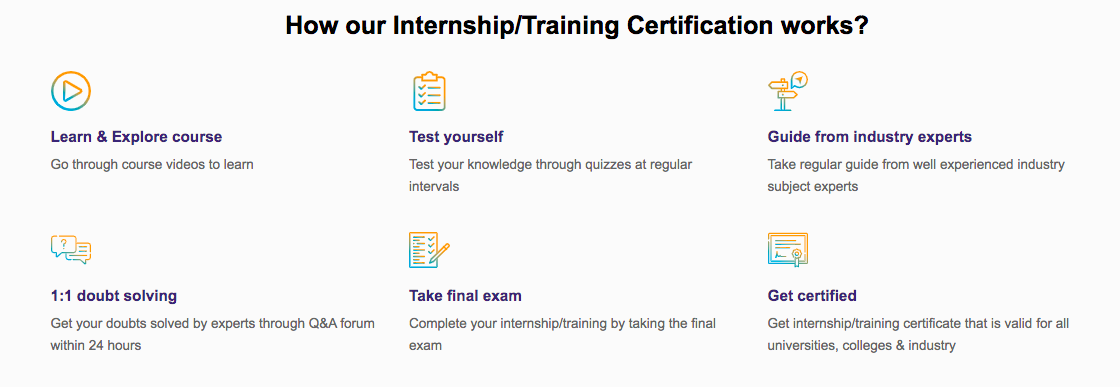
How EasyShiksha Internship/Training Program Works
Designing an AI Learning Loop for EasyShiksha
The Prompt-to-Understanding Gap suggests that AI-supported education should be designed as a sequence of connected learning activities. An explanation can introduce a concept, but the learner should then have opportunities to interpret, recall, apply and review it. This creates a learning loop in which each stage produces information that can improve the next stage.
Within EasyShiksha, such a loop could begin when a student studies a concept through an online course or asks an AI assistant for clarification. The platform could then invite the learner to explain the concept in their own words or answer a short question that tests its central principle. A follow-up quiz could check whether the learner can retrieve the information without seeing the original explanation. A practical challenge could then require the learner to apply the concept in a new context.
The system could use the learner's responses to determine what should happen next. If the student demonstrates strong understanding, the platform could introduce a more advanced concept or practical project. If the learner remembers the definition but struggles with application, the system could provide another example and a transfer task. If the learner reveals a foundational misunderstanding, the platform could recommend a relevant lesson before moving forward.
This model connects AI assistance with EasyShiksha's wider educational ecosystem. Courses provide structured knowledge, quizzes test understanding, games create interactive challenges, projects encourage application, internships introduce professional contexts and certificates document completed learning. The value comes from connecting these experiences around the learner's development rather than treating them as separate platform features.
The Role of Quizzes in Detecting False Understanding
Quizzes can help reveal the difference between perceived understanding and demonstrated knowledge, but their design matters. Questions that simply repeat wording from a lesson may allow students to recognise familiar phrases without understanding the concept. More effective assessments require learners to interpret information, distinguish between similar ideas, explain relationships and apply principles to new examples.
AI can support the development of varied questions while adjusting their difficulty according to student performance. However, the objective should not be to generate an unlimited number of questions without considering their educational purpose. Each question should test a meaningful aspect of the concept and provide information about the learner's understanding.
A student studying artificial intelligence, for example, might correctly define a neural network but struggle to explain why training data affects model performance. A well-designed quiz can expose this distinction by asking the learner to analyse a scenario rather than simply select a memorised definition.
EasyShiksha can use this principle to make assessment more diagnostic. Instead of treating a score as a complete representation of mastery, the learning experience could consider which types of questions the student answers successfully and where misunderstandings persist. This creates a clearer path from assessment to targeted practice.
The Role of Educational Games in Conceptual Understanding
Educational games can provide another way to reduce the gap between receiving an answer and understanding a concept. A well-designed game requires learners to make decisions, observe consequences, revise strategies and apply knowledge in an interactive environment. These activities can reveal whether students understand how a concept works rather than merely recognising its definition.
For example, a business simulation could ask learners to adjust pricing, manage costs and observe how different decisions influence profitability. A cybersecurity challenge could require students to identify suspicious behaviour and explain why a particular action creates risk. A programming game could ask learners to diagnose a faulty sequence of instructions rather than simply display the correct code.
AI can personalise these experiences by providing hints, explaining mistakes and introducing new challenges when students demonstrate readiness. It can also identify recurring errors and suggest a relevant lesson or practice activity. However, game completion alone should not be treated as proof of understanding. The educational value depends on whether students can explain their decisions and transfer the underlying knowledge beyond the game.
Within EasyShiksha, games can therefore complement courses and quizzes by turning abstract ideas into experiences that require active reasoning. They can help learners move from knowing what a concept means to understanding how it operates.
The Connection Between AI Learning and Project-Based Practice
Projects provide a particularly valuable environment for testing whether learning has moved beyond the prompt. A student may receive AI-generated guidance while building a website, preparing a marketing campaign, analysing a dataset or designing a business plan. The educational value depends on the student's ability to make decisions, evaluate suggestions and explain the final result.
A learner building a website, for example, might ask AI to generate a section of code. Instead of accepting the output without examination, the student should be able to explain what the code does, identify its dependencies and test whether it behaves as intended. If an error appears, the learner should participate in diagnosing the problem rather than repeatedly requesting replacement code without understanding the cause.
This does not require students to reject AI-generated support. Professional work increasingly involves tools that accelerate routine tasks. The essential capability is knowing how to supervise those tools, verify their outputs and remain responsible for the final result.
EasyShiksha can connect this approach with project-based learning and internships. Course concepts can be introduced through structured lessons, tested through quizzes and applied in projects where students must demonstrate reasoning. Internship experiences can then introduce more complex situations in which learners need to use knowledge with greater independence. The result is a learning journey that values both effective AI use and genuine personal capability.
Measuring Understanding Beyond Course Completion
Digital education platforms often track registrations, lesson completion, quiz scores, certificates and engagement. These indicators are useful for understanding participation, but none alone proves that a student has developed lasting understanding. A learner can complete every lesson and still struggle to apply the knowledge independently.
A more meaningful approach would examine evidence from several types of learning activity. Can the student recall the concept after a delay? Can they explain it in their own words? Can they solve a new problem without being shown the method? Can they identify a misleading AI answer? Can they use the concept in a project or professional scenario?
These indicators provide a richer picture of mastery than completion alone. They also help distinguish between different learning needs. One student may require additional practice to strengthen recall, while another may need opportunities to apply knowledge in unfamiliar contexts. A third may understand the concept but need more experience evaluating AI-generated suggestions.
For EasyShiksha, this approach supports a shift from measuring educational activity to measuring learning progression. Certificates can remain valuable milestones, but they become more meaningful when supported by evidence of understanding and practical application. The objective is not to replace every existing metric but to connect those metrics with a clearer picture of capability development.
AI Literacy Must Include Verification
Understanding how to use AI responsibly requires more than knowing how to write prompts. Students must also learn that generated responses can contain errors, incomplete explanations, outdated information or unsupported claims. Even a fluent and confident answer should not be accepted automatically.
Verification is therefore a central part of the learning process. Depending on the subject, students may need to compare an answer with course materials, check calculations, inspect code, consult reliable references or test a claim against evidence. They should also learn to recognise when a question requires professional judgement or authoritative information that an AI system cannot independently guarantee.
This is particularly important when AI is used for research, science, finance, cybersecurity and other subjects where mistakes can have meaningful consequences. A student who accepts every generated answer without evaluation may develop incorrect knowledge while believing that the information has been confirmed.
An intelligent education platform should teach verification as an ordinary learning behaviour rather than an optional precaution. Students should understand not only how to obtain an answer but also how to determine whether it is reliable and appropriate for the task. This creates a more complete form of AI literacy that supports independent judgement.
Avoiding AI Dependency Without Rejecting AI
Concerns about AI dependency sometimes lead to the assumption that students should avoid using AI for learning. Such a position overlooks the technology's genuine benefits. AI can provide explanations at different levels, help learners explore unfamiliar subjects, generate additional practice and offer support when human assistance is not immediately available.
The challenge is not to eliminate AI use but to develop appropriate patterns of use. Students should learn when AI can help them understand a concept, when they should attempt a problem independently and when they need to verify information through other sources. They should also understand when completing a task with AI assistance would undermine the purpose of the assessment.
This balance can be supported through gradual independence. Beginners may benefit from detailed explanations and guided examples. As their understanding improves, they can be encouraged to solve problems with fewer hints, explain their reasoning and apply concepts in unfamiliar contexts. Advanced learners can use AI for critique, comparison and exploration while remaining responsible for their own conclusions.
EasyShiksha can incorporate this principle into its learning experiences by making the level of assistance responsive to the educational goal. AI should help students develop the ability to think and act independently, not create a permanent requirement for automated support.
The Human Role in AI-Supported Learning
Although AI can provide immediate explanations and personalised practice, educators continue to play an important role in helping students interpret difficult ideas, develop judgement and connect learning with broader goals. Teachers can recognise contextual factors that automated systems may miss, challenge assumptions and help students understand why a concept matters beyond an assessment.
Human guidance is particularly valuable when students experience persistent confusion, lose confidence or need help making complex academic and career decisions. AI can identify patterns and suggest learning activities, but educational decisions should remain sensitive to individual circumstances and the limitations of automated interpretation.
The most effective model is therefore not necessarily one in which AI replaces human teaching. It is one in which technology handles appropriate forms of explanation, practice and feedback while educators support deeper understanding, motivation and contextual judgement.
For an ecosystem such as EasyShiksha, the combination of digital learning tools, structured courses, practical experiences and career guidance can support this balanced approach. AI can make learning more responsive, while human expertise helps ensure that education remains meaningful, responsible and connected to real student needs.
Empower your team. Lead the industry
Get a subscription to a library of online courses and digital learning tools for your organization with
EasyShiksha
The growth of generative AI creates an opportunity to redefine what educational quality means. In the past, digital learning platforms were often evaluated by the quantity of content available, the convenience of delivery and the number of students who completed courses. These measures remain relevant, but AI introduces a new question: does the platform help students develop understanding that remains useful when the AI response is no longer visible?
A stronger standard for AI-enabled education would consider the entire journey from question to capability. Students should be able to ask meaningful questions, interpret explanations, verify information, retrieve knowledge and apply concepts independently. They should also develop the judgement to recognise when assistance is useful and when they need to think through a problem themselves.
This standard has implications for how courses are designed, how quizzes are evaluated, how games are developed and how project work is assessed. Educational technology should not simply optimise the speed at which learners obtain outputs. It should help them become more capable of reasoning, creating, solving problems and making informed decisions.
EasyShiksha can use this principle to connect its different educational offerings around a common purpose. Courses can build foundational knowledge, AI assistance can clarify difficult concepts, quizzes can test retrieval, projects can demonstrate application, internships can provide professional exposure and career guidance can help learners identify their next steps. The Prompt-to-Understanding Gap then becomes a design challenge that connects the whole educational journey.
Conclusion: The Goal Is Not to Get an Answer, but to Own the Understanding
The ability to obtain an AI-generated answer within seconds is one of the most significant changes in modern education. It can reduce barriers to information, make explanations more accessible and provide students with new ways to practise difficult concepts. Yet the availability of instant answers does not remove the need for thinking, retrieval, verification and application. A response can be correct, clear and useful without becoming lasting knowledge for the person who receives it.
The Prompt-to-Understanding Gap highlights the distance between obtaining information and developing independent capability. Closing this gap requires learning experiences that encourage students to reconstruct explanations, retrieve knowledge from memory, apply concepts to unfamiliar problems and verify AI-generated information. It also requires intelligent systems that know when to provide an answer, when to offer a hint and when to invite the learner to try independently.
For EasyShiksha, this creates an opportunity to build a more connected model of AI-supported education. Online courses, quizzes, games, projects, internships, certificates, university programmes and career guidance can work together to turn information into understanding and understanding into practical capability. Instead of treating an AI interaction as a completed learning task, the platform can use it as the starting point for a deeper process of discovery, practice and application.
The future of education will not be defined only by how quickly students can obtain answers. It will be defined by what they can understand, explain, question and accomplish after receiving them. AI can provide the answer, but meaningful education must help the learner develop the understanding to use it wisely.
Anshika Jain is an Engineer, Developer, and Educational Content Author known for her dedication to technology and knowledge sharing. With a strong analytical mindset and a passion for innovation, she has consistently contributed to creating meaningful digital solutions and insightful educational articles.
Her ability to simplify complex technical concepts into engaging and easy-to-understand content makes her work valuable for students and learners across various platforms. Along with her technical expertise, Anshika is admired for her creativity, professionalism, and commitment to continuous learning.
She represents a perfect blend of technical excellence and impactful communication, inspiring others through both her development work and educational contributions.