Artificial intelligence is changing how students approach academic work. Learners can now use AI tools to explain difficult concepts, generate ideas, organise research, improve grammar, write code, analyse information and develop solutions to complex problems. These capabilities can make education more accessible and help students overcome barriers that previously slowed down their learning. However, they also introduce an important challenge for educational institutions: when a student submits work created with the assistance of artificial intelligence, how can educators determine which parts demonstrate the student's own understanding and independent reasoning?
This question is becoming increasingly important because traditional assessment systems were designed around the assumption that submitted work primarily represents the student's individual effort. An essay, programming assignment, research report or presentation was generally treated as evidence of what a learner could understand and produce independently. With generative AI, this assumption is no longer reliable. A student may write an original argument, use AI to improve its structure, ask an AI assistant to identify weaknesses and then submit a revised version. Another student may ask an AI system to generate the entire response and make only minor changes. Both submissions could appear polished, yet the level of independent intellectual contribution may be completely different.
This creates what can be described as the Human-AI Attribution Problem: the difficulty of identifying which parts of a student's work represent independent reasoning, which parts were substantially influenced by AI and how the collaboration contributed to the final result. The challenge is not simply detecting whether AI was used. It is understanding the nature and extent of the student's intellectual contribution.
For an educational ecosystem such as EasyShiksha, this problem creates an opportunity to rethink how learning and assessment are designed. Online courses, quizzes, university programmes, projects, internships and certificates could potentially be connected through assessment methods that recognise both AI-assisted productivity and independent capability. Instead of treating AI use as automatically dishonest, an intelligent learning environment could examine how students use assistance, what decisions they make and whether they can explain and reproduce their reasoning without depending entirely on a machine.
The future of education may therefore require a shift from evaluating only the final submitted product to understanding the process through which that product was developed.
Understanding the Human-AI Attribution Problem
The Human-AI Attribution Problem emerges when the intellectual origin of submitted work becomes difficult to establish. In conventional academic settings, educators often evaluate an assignment as a representation of a student's knowledge, reasoning and ability to communicate. However, when AI contributes to the process, the final result may contain ideas, explanations, structures or solutions generated by both the student and the AI system.
The difficulty is that human and AI contributions are not always separated into clearly identifiable sections. A student may begin with an original idea, ask AI to explain an unfamiliar concept, reject part of the explanation, combine the useful information with previous knowledge and produce a final argument. The submitted work is neither entirely independent nor entirely machine-generated. It is the result of an interaction.
This interaction can take many forms. AI may function as a spelling assistant, research companion, brainstorming partner, programming debugger, critical reviewer or content generator. Each role contributes differently to the student's work. Correcting a grammatical error does not represent the same level of intellectual involvement as generating the central argument of an essay. Similarly, asking an AI assistant to explain a programming error is different from asking it to write an entire application.
An effective attribution system must therefore recognise different levels and types of assistance. A simple classification of work as either human-generated or AI-generated cannot adequately represent the complexity of modern learning.
Why Traditional Assessment Systems Struggle With AI Collaboration
Traditional assessment systems frequently focus on the final output. An educator evaluates the accuracy of an answer, the quality of an argument, the functionality of a program or the presentation of a project. These methods can measure important aspects of learning, but they do not necessarily reveal how the student arrived at the result.
Before generative AI became widely available, educators could often make reasonable assumptions about the relationship between a student's submission and their individual capability. Although plagiarism, collaboration and external assistance were already concerns, producing a complete alternative response required considerable effort. Generative AI has changed this situation by making sophisticated assistance readily accessible.
A student can now submit an academically structured essay without having independently developed its argument. A programming assignment can function correctly even when the student cannot explain the code. A research report may contain accurate-looking references and detailed analysis without the learner having evaluated the underlying sources.
This creates a gap between output quality and demonstrated capability. A high-quality submission may reflect strong student reasoning, effective AI collaboration or extensive dependence on generated content. The final document alone may not reveal which explanation is correct.
Consequently, educational institutions need assessment approaches that examine the student's understanding alongside the submitted result. The objective should not be to punish every form of assistance but to establish whether the student has achieved the learning outcomes that the assignment was designed to measure.
One of the most important distinctions in the Human-AI Attribution Problem is the difference between using AI as a learning tool and depending on AI to perform the intellectual work.
A student who uses AI to understand a difficult mathematical concept may develop a stronger foundation for solving problems independently. Another student may use the same tool to obtain completed solutions without attempting to understand the underlying methods. Both learners have used AI, but the educational outcomes are different.
AI assistance can support learning when it helps students clarify unfamiliar ideas, identify mistakes, compare approaches and improve their understanding. It becomes problematic when students cannot explain, evaluate or reproduce the work they submit.
This distinction suggests that attribution should focus on the learner's contribution rather than simply the presence of AI. The relevant questions include whether the student understood the task, made meaningful decisions, evaluated the AI output, identified errors and demonstrated the ability to apply the underlying knowledge.
For EasyShiksha, this distinction could become a foundational principle of AI-aware assessment. Students should be able to use approved AI tools where appropriate, but their assessments should also establish whether they have developed the independent capabilities required by the course or programme.
The Difference Between Content Contribution and Reasoning Contribution
Not every contribution to an academic submission has the same intellectual significance. A student may receive assistance with formatting, grammar, sentence structure or presentation without changing the reasoning behind the work. In other situations, AI may generate the central interpretation, select the evidence and construct the conclusion.
This creates a need to distinguish between content contribution and reasoning contribution.
Content contribution refers to assistance with how information is presented. It may include language correction, formatting, summarisation, transcription or structural improvements. Reasoning contribution involves decisions about what should be argued, why a particular conclusion is justified, which evidence is relevant and how different ideas should be connected.
The distinction is not always absolute. An AI-generated summary may influence which evidence a student considers important. A suggested outline may shape the direction of an argument. A code recommendation may introduce an algorithmic approach that the student had not previously considered.
Therefore, attribution cannot be based only on identifying which sentences were generated by AI. It must also consider how AI influenced the development of ideas and decisions.
A useful educational framework would examine whether the student can explain the reasoning behind the final work, identify the sources of important ideas and justify the decisions that shaped the submission.
A Proposed Human-AI Attribution Framework
A possible approach to this challenge is a Human-AI Attribution Framework that evaluates the relationship between student decisions and AI assistance throughout the learning process. Rather than assigning a single percentage of human authorship, the framework could examine different dimensions of intellectual contribution.
The first dimension would involve independent problem understanding. It would examine whether the student can explain the task, identify its requirements and describe the problem in their own words before relying on AI-generated solutions. Understanding the problem is important because students who cannot identify what they are trying to solve may become dependent on whatever response the AI system produces.
The second dimension would involve independent reasoning. This would consider whether the student develops explanations, hypotheses, calculations, interpretations or solution strategies without simply accepting generated content. The framework could examine whether the learner makes meaningful decisions and can explain why those decisions were appropriate.
The third dimension would involve AI evaluation. A student who critically examines AI output may demonstrate considerable understanding even when the system contributes substantial material. The learner might identify an incorrect assumption, challenge a weak argument, verify a source or reject a suggested solution. Such actions represent intellectual participation rather than passive acceptance.
The fourth dimension would involve final understanding. It would assess whether the student can explain the submitted work, respond to questions about its reasoning and apply the same concepts in a new situation. This is particularly important because the quality of a submitted document does not necessarily establish that the learner has mastered its content.
Together, these dimensions could provide a more meaningful picture of student contribution than a simple human-versus-AI classification.
Process-Based Assessment: Understanding How the Work Was Created
One possible way to improve attribution is to evaluate the development process rather than relying entirely on the final submission. Process-based assessment examines how students approach a task, make decisions, revise their work and respond to challenges.
For example, when a student prepares a research report, the educational platform could encourage them to record the initial research question, preliminary ideas, selected sources and major revisions. The student could also explain when AI assistance was used and how the resulting suggestions influenced the final work.
This does not require continuous monitoring of every student action. It could be implemented through structured reflection, selected checkpoints and evidence of important decisions. The purpose is to make the learning process more visible without turning education into intrusive surveillance.
In programming assignments, process evidence could include the student's initial solution, debugging decisions, explanations of important code sections and a demonstration of the final application. In a writing assignment, it could include the original thesis, evidence selection and a short explanation of how the argument changed during revision.
For EasyShiksha, process-based assessment could potentially be integrated into online courses and practical projects. Students would demonstrate not only what they produced but also how they developed their understanding.
The Role of Reasoning Traces in AI-Aware Assessment
A reasoning trace is a record of the important decisions and steps involved in solving a problem. In education, this could provide evidence of how a student approached an assignment and how their thinking developed.
A reasoning trace does not need to capture every private thought or every interaction with an AI system. Instead, it could focus on observable academic decisions. Students might explain why they selected a particular method, which evidence influenced their conclusion, what alternative approaches they considered and how they evaluated suggestions from AI.
For example, a student completing a data analysis project could submit the final visualisation along with an explanation of the variables selected, the assumptions made and the reasons for choosing a particular analytical method. If AI helped generate code, the student could explain which parts were modified and how the final output was verified.
Such evidence would help educators understand whether the learner participated meaningfully in the work. It would also encourage students to become more conscious of their decisions rather than treating the final result as the only important outcome.
However, reasoning traces must be designed carefully. They should evaluate meaningful academic decisions rather than demand exhaustive records of private mental activity. The aim is to assess understanding, not to monitor every aspect of a student's thought process.
Oral Verification: Can Students Explain Their Own Work?
One of the most direct ways to evaluate independent understanding is to ask students to explain the work they submit. An oral discussion, short presentation or recorded explanation can reveal whether a learner understands the concepts and decisions represented in an assignment.
For example, a student who submits a machine learning project could be asked why a particular algorithm was selected, how the training data was prepared and what limitations affect the results. A student who writes an essay on environmental policy could be asked to explain the main argument, compare alternative perspectives and justify the evidence used.
The purpose of oral verification should not be to test confidence or public speaking ability unless those skills are part of the learning outcomes. Some students may understand a subject but experience difficulty expressing themselves under pressure. Questions should therefore be clear, relevant and appropriate to the assessment context.
Oral verification could also be conducted through short, targeted questions rather than lengthy examinations. An educator might ask the student to explain one important decision, identify a weakness in their submission or apply a concept to a slightly different scenario.
EasyShiksha could potentially incorporate explanation-based checkpoints into selected courses and project assessments. This would provide an additional way to establish whether students can independently discuss the knowledge represented in their submissions.
The Independent Reconstruction Test
Another promising assessment method is the Independent Reconstruction Test. Instead of asking students to repeat their submitted work, the system asks them to reconstruct an important part of the solution under different conditions.
A student who has submitted an AI-assisted programming assignment might be asked to modify a function, correct an error or build a smaller version of the same feature without receiving a complete generated solution. A learner who has completed a research analysis could be asked to explain the central argument using a new example or evaluate a different dataset.
The objective is to determine whether the student has internalised the underlying concepts. If a learner can reproduce or adapt the reasoning independently, this provides stronger evidence of capability than the original submission alone.
Reconstruction should not be treated as an exact repetition exercise. The new task should require transfer of understanding rather than memorisation of the submitted answer. This helps distinguish genuine learning from the ability to recall or copy previously generated material.
For EasyShiksha, reconstruction-based assessment could be useful in programming, digital marketing, finance, data analytics, design and other skill-oriented courses. It would connect AI-assisted learning with evidence of independent application.
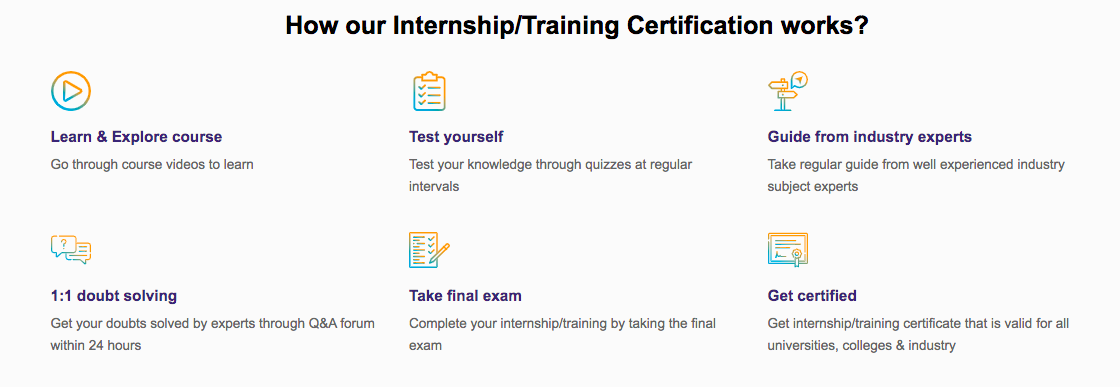
How EasyShiksha Internship/Training Program Works
Measuring the Quality of AI Evaluation
A student may not originate every idea in an assignment, but they can still contribute meaningful reasoning by evaluating AI-generated material. This is an important capability in an environment where professionals increasingly work with intelligent tools.
Consider a learner who asks an AI assistant to suggest a business strategy. The system produces a detailed recommendation, but the student notices that the proposal ignores customer acquisition costs and regional market differences. The student then revises the strategy using additional evidence.
In this situation, the original suggestion came from AI, but the learner contributed important analytical judgment. The student's ability to identify missing assumptions and improve the recommendation may demonstrate substantial independent reasoning.
An AI-aware assessment system should therefore recognise critical evaluation as a legitimate form of intellectual contribution. It should not assume that a student has performed no meaningful work simply because an AI tool generated part of the initial response.
This also creates an important educational objective: students should learn to challenge AI outputs rather than accept them automatically. The ability to identify unsupported claims, incomplete explanations and incorrect reasoning may become an increasingly valuable professional skill.
Why AI Detection Tools Cannot Solve Attribution Alone
AI detection tools attempt to estimate whether text or other content was generated using artificial intelligence. Although these systems may provide signals for academic review, they cannot reliably establish the full intellectual history of a student's work.
A document may contain AI-generated sentences that have been substantially revised by the student. Another document may be written entirely by a human but resemble machine-generated text because it uses formal language and predictable structures. Some AI-assisted work may also be difficult to identify after extensive editing.
More importantly, detecting AI-generated content does not reveal whether the student understood the subject. A student may use AI for language correction while independently developing the argument. Another may submit human-written text that demonstrates little understanding of the topic.
This means that AI detection and human-AI attribution are different problems. Detection attempts to identify possible machine-generated material, while attribution attempts to understand the distribution and nature of intellectual contribution.
For EasyShiksha, AI detection should not be treated as a substitute for assessment. Any concerns should be examined alongside process evidence, student explanations, source verification and demonstrated capability. Decisions that affect grades, certificates or academic progression should include appropriate human review.
Designing AI-Aware Quizzes and Assessments
Quizzes can be redesigned to evaluate understanding in ways that are less dependent on the quality of a generated answer. Instead of focusing exclusively on direct factual recall, assessments could include application questions, unfamiliar examples, interpretation tasks and questions that require students to justify a decision.
For instance, a learner studying cybersecurity could be presented with a new scenario and asked to identify the most important security weakness. A student studying finance might analyse a short financial situation and explain which factors influence the decision. A programming learner could be asked to debug a small code segment and explain the cause of the error.
Such questions can still be supported by AI during preparation, but the assessment should establish whether the student can apply the relevant concepts independently under the conditions specified by the educator.
EasyShiksha could potentially use a combination of practice quizzes and controlled assessment activities. Practice environments may allow AI assistance and hints, while selected evaluation tasks could require students to demonstrate their own reasoning. The distinction between learning support and independent assessment should be made clear before students begin.
This would help students understand when AI is being used as a learning companion and when they are expected to demonstrate individual capability.
Connecting Attribution With Projects and Internships
Projects and internships offer particularly useful environments for understanding human-AI collaboration because they involve practical decisions rather than only written responses.
A student developing a website may use AI to generate code, troubleshoot errors or suggest interface improvements. However, the student's contribution can be evaluated through the ability to explain the architecture, modify features, identify security concerns and respond to changing requirements.
Similarly, a student working on a digital marketing project may use AI to generate campaign ideas or draft content. Their independent contribution could be demonstrated through audience analysis, strategy selection, performance interpretation and decisions about how the campaign should be adjusted.
Internships create an additional opportunity to observe how students work with AI in professional environments. Learners may use intelligent tools to complete tasks, but employers still need to understand whether they can exercise judgment, communicate decisions and take responsibility for outcomes.
EasyShiksha could potentially connect project assessments and internship evaluations with evidence of independent capability. This would help students demonstrate not only that they can produce work using modern tools but also that they understand and can take responsibility for the results.
The Human-AI Contribution Record
A further opportunity is the development of a proposed Human-AI Contribution Record. Rather than assigning a single authorship percentage, this record could document the nature of assistance used during a particular learning activity and the capabilities the student independently demonstrated.
For example, a project record might indicate that AI was used for initial brainstorming, code suggestions and language refinement. It could also document that the student independently selected the final approach, verified the code, corrected errors and explained the system's limitations.
Such a record would provide a more nuanced representation of academic work. It would recognise that modern professional capability increasingly involves collaborating with intelligent tools while maintaining responsibility for decisions and outcomes.
The record should be specific to the assignment rather than becoming a permanent label attached to the learner. Students may use AI differently across subjects, tasks and levels of experience. Their independence can also develop over time.
For EasyShiksha, a contribution record could potentially complement certificates and project portfolios. A certificate could confirm course completion, while a project record could provide additional evidence of what the learner achieved independently and how AI supported the process.
Privacy, Fairness and Student Trust
Attribution systems may require information about student submissions, revision histories, assessment responses and AI assistance. Collecting such information creates important privacy and fairness responsibilities.
Students should understand what information is being recorded, why it is required and how it will be used. Educational platforms should collect only the information necessary for legitimate assessment purposes and provide clear retention and access policies.
Fairness is equally important. Students may have different levels of access to AI tools, devices, internet connectivity and technical support. Some learners may be more experienced in using AI than others. An assessment system should not confuse familiarity with technology with deeper subject understanding.
Language and communication differences must also be considered. A student who uses AI to improve grammar may still possess strong independent reasoning. Penalising language assistance without examining the actual learning outcome could disadvantage learners who are developing academic communication skills.
Any attribution framework should therefore be transparent, proportionate and subject to human oversight. Students should have an opportunity to explain their work and challenge incorrect conclusions about their contribution.
Preparing Students for Responsible Human-AI Collaboration
The long-term objective of AI-aware education should not be to prevent students from using artificial intelligence. AI tools are becoming part of many professional workflows, and students need to understand how to use them responsibly.
Learners should develop the ability to identify tasks suitable for AI assistance, verify generated information, recognise limitations and take responsibility for final decisions. They should also understand when independent work is necessary, particularly when an assessment is designed to measure a specific skill.
This requires AI literacy to become part of education rather than an optional technical subject. Students need opportunities to compare AI-generated explanations, identify errors, evaluate sources and explain why they accepted or rejected a recommendation.
EasyShiksha could potentially integrate these capabilities into courses, quizzes and project-based learning. For example, a student could compare an AI-generated solution with an independently developed solution and explain the differences. Another learner could review a generated business recommendation and identify unsupported assumptions.
Such activities would prepare students for professional environments where success depends not only on using AI efficiently but also on knowing when its output should be questioned.
Empower your team. Lead the industry
Get a subscription to a library of online courses and digital learning tools for your organization with
EasyShiksha
The Future of Assessment: From Authorship to Demonstrated Capability
The Human-AI Attribution Problem may eventually change how educational institutions define academic achievement. Traditional assessment often treats authorship as an important indicator of individual work. In AI-supported environments, however, the more important question may be whether the student possesses the capability that the assignment was intended to measure.
A student who uses AI to improve a project may still demonstrate strong problem-solving, analytical judgment and technical understanding. Another student may submit a polished result but be unable to explain even its basic structure. The difference becomes visible when assessment moves beyond the final document.
Future educational systems may therefore combine submitted work with independent explanations, practical demonstrations, reasoning records and reconstruction tasks. These methods could provide a more complete picture of student capability while recognising that AI collaboration is becoming a normal part of modern work.
For EasyShiksha, this approach aligns with a broader movement from course completion toward evidence-based learning. Online courses can build knowledge, quizzes can test understanding, projects can demonstrate application, internships can provide professional experience and certificates can recognise achievements. Human-AI attribution could help connect these activities with a clearer understanding of what students can actually do.
Conclusion: The Real Question Is What the Student Can Understand and Demonstrate
The Human-AI Attribution Problem is not simply about determining whether a student has used artificial intelligence. It is about understanding the relationship between human reasoning, machine assistance and the final academic result. As AI becomes more integrated into education, the distinction between independently produced work and AI-supported work will become increasingly complex.
A reliable assessment system must therefore examine more than the submitted output. It should consider how students understand problems, make decisions, evaluate generated suggestions, explain their conclusions and apply knowledge independently. Process-based assessment, reasoning traces, oral verification, independent reconstruction and practical demonstrations could all contribute to a more meaningful evaluation of student capability.
For EasyShiksha, this creates an opportunity to develop a more responsible model of AI-supported education. Courses, quizzes, university programmes, projects, internships and certificates could be connected through assessment methods that recognise useful AI assistance without losing sight of independent learning outcomes.
The objective should not be to force students to avoid intelligent tools or to assume that every AI-assisted submission lacks originality. Instead, education should help learners become capable collaborators who can use AI effectively while retaining the ability to think, question, verify and make informed decisions.
Ultimately, the value of a student's work should not be measured only by how impressive the final result appears. It should also be measured by the understanding, judgment and independent capability the student can demonstrate behind it.
Anshika Jain is an Engineer, Developer, and Educational Content Author known for her dedication to technology and knowledge sharing. With a strong analytical mindset and a passion for innovation, she has consistently contributed to creating meaningful digital solutions and insightful educational articles.
Her ability to simplify complex technical concepts into engaging and easy-to-understand content makes her work valuable for students and learners across various platforms. Along with her technical expertise, Anshika is admired for her creativity, professionalism, and commitment to continuous learning.
She represents a perfect blend of technical excellence and impactful communication, inspiring others through both her development work and educational contributions.