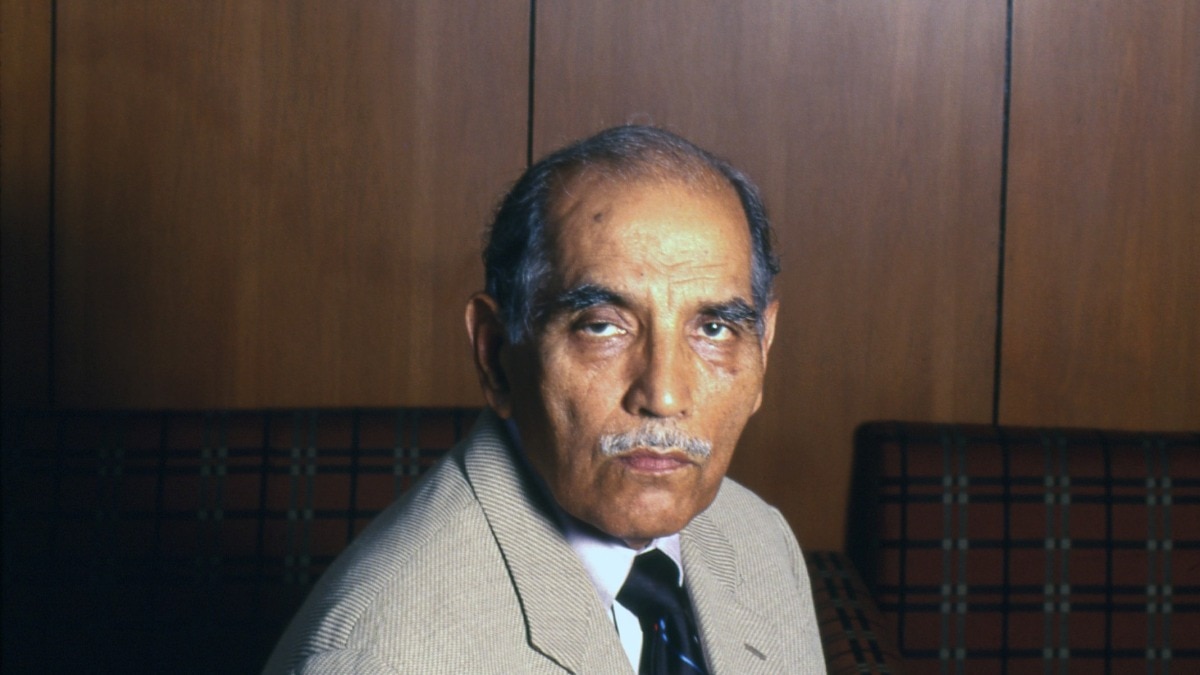
When people talk about India’s IT story, which today employs around 5 million people and generates $190 billion in revenue, the talk usually begins with software exports, Bengaluru’s emergence as a technology hub, and the rise of companies such as Wipro and TCS. But long before India became a global technology-services hub, Faqir Chand Kohli was working on a fundamental challenge: how to make technology work in India.
Kohli, widely known as the “Father of the Indian IT Industry”, was not originally a software executive.
His training was in electrical engineering, and his first major work in India was in power systems. That background would shape the way he approached technology for decades: solve the problem, build the system and, just as importantly, train people who can run it.
FROM PESHAWAR TO LEADING TCS
Born in Peshawar in 1924, Kohli studied at Government College, Lahore, before moving to Canada on a scholarship.
Kohli initially wanted to join the Navy but instead won a scholarship to study electrical engineering at Queen’s University, Canada. He later pursued a master’s at MIT and trained in power-system operations in the US before returning to India in 1951.
After working in the US power sector, he returned to India in 1951 and joined Tata Electric.
At Tata Electric, Kohli worked on power-system operations and helped introduce computer-based systems into the business. One of the early projects involved using a mainframe computer to manage the electricity network between Mumbai and Pune.
At a time when computers were still largely viewed as machines for specialised calculations, Kohli saw them as infrastructure.
That mindset became important in 1969.
JRD Tata asked Kohli to help set up a new unit that would work with computers and technology. That unit became Tata Consultancy Services. Kohli became its first CEO and spent the next three decades building the company.
In the early years, TCS was not the global IT services giant it is today. It had to find clients, build technical capability and convince businesses that an Indian company could deliver technology work at scale. Its first major international software-services contract came from Burroughs Corporation in 1972.
Kohli’s job was therefore bigger than running projects. He had to create a talent pipeline.
He pushed for training, technical education and standardised ways of working. The idea was simple: India might not have the capital or technology infrastructure of the West, but it could build a large pool of engineers and train them for the emerging software economy.
IIT KANPUR, NASSCOM AND MANY COATS THAT KOHLI WORE
People who worked with Kohli often associated him with high standards and a direct management style. He was known to focus on technical depth and execution rather than presentation.
For him, the question was rarely just whether a system worked. It was whether people understood why it worked and could build the next one.
That approach also extended beyond TCS.
Kohli was involved with technical education and played a role in faculty recruitment at IIT Kanpur. He was associated with the College of Engineering, Pune, and later worked through industry bodies to promote India as a destination for technology services.
As president of NASSCOM in 1995-96, he was part of the effort to build international partnerships and position India’s software-services sector for global business.
His reputation, then, was not built around one company alone. It came from connecting three pieces that were still developing in India: technology, talent and global markets.
Kohli retired as TCS chief executive in 1996, but did not really leave the technology conversation. He continued to work on areas including technical education, adult literacy, water purification and regional-language computing.
He received the Padma Bhushan in 2002 for his contribution to the Indian software industry and several lifetime achievement awards later in his career.
Kohli died in 2020 at the age of 96.
By then, the industry he had helped build had moved far beyond mainframes and early software contracts. India had become a major global technology-services market.
Anshika Jain is an Engineer, Developer, and Educational Content Author known for her dedication to technology and knowledge sharing. With a strong analytical mindset and a passion for innovation, she has consistently contributed to creating meaningful digital solutions and insightful educational articles.
Her ability to simplify complex technical concepts into engaging and easy-to-understand content makes her work valuable for students and learners across various platforms. Along with her technical expertise, Anshika is admired for her creativity, professionalism, and commitment to continuous learning.
She represents a perfect blend of technical excellence and impactful communication, inspiring others through both her development work and educational contributions.