A student opens an online course with the intention of completing a lesson, understanding a new concept, or preparing for an upcoming assessment. Within a few minutes, however, another browser tab appears, a notification interrupts the lesson, a message demands attention, or a quick search leads to an unrelated website. The student eventually returns to the course, but the original train of thought has already been interrupted. This process may happen repeatedly throughout a single learning session, creating an experience in which the student spends considerable time in front of a screen without maintaining sustained attention on the material.
This behaviour is increasingly relevant to digital education because online learning takes place in the same environment that students use for communication, entertainment, research, shopping, and social networking. Unlike a traditional classroom, where the teacher and the surrounding environment provide some external structure, a digital learning platform often competes with numerous other activities on the same device. Students may move between a lecture, a search engine, a messaging application, a digital notebook, and an unrelated website within minutes. Although switching between resources can sometimes support learning, frequent and unplanned switching can make it difficult to build a coherent understanding of complex material.
For educational platforms such as EasyShiksha, this creates an important question: can digital learning systems recognise when a student's attention becomes fragmented and provide useful support before the learning experience loses its effectiveness? The answer requires a careful distinction between observable digital activity and genuine attention. A platform may be able to detect certain interaction patterns, such as repeated pauses, frequent changes in learning activity, or difficulty completing a lesson. However, these signals cannot reliably establish what a student is thinking or whether a switch to another tab represents a distraction. A learner may be consulting a relevant reference, taking notes, checking a technical instruction, or responding to an essential personal responsibility.
The opportunity for EasyShiksha is therefore not to monitor every movement a student makes on a screen. It is to understand how the design of digital learning can support focused engagement, recognise possible learning friction, and help students return to meaningful activity when interruptions become a barrier. By combining thoughtful course design, interactive practice, learner-controlled support, and responsible learning analytics, digital education can become more responsive to the realities of modern student attention.
Understanding the Tab-Switching Student
The tab-switching student is a learner who frequently moves between browser tabs, applications, learning resources, and unrelated digital activities while attempting to study. The behaviour can appear simple, but it represents several different patterns that should not be treated as identical. Some students deliberately move between resources to compare information or complete a task. Others switch because they have forgotten what they were reading, feel bored, encounter difficulty, or respond automatically to notifications. Still others need to use multiple applications to complete legitimate learning activities.
The distinction between purposeful switching and fragmented attention is particularly important. A programming student may alternate between a course lesson, a code editor, and technical documentation because the task requires all three. A researcher may compare several sources to understand a concept, while a language learner may consult a dictionary during a reading exercise. In these situations, switching between resources can be a productive part of learning. The problem emerges when switching becomes frequent, unplanned, or disconnected from the task's objective, making it difficult for the learner to sustain a line of reasoning.
Fragmented attention can also occur without visible tab switching. A student may remain on a single video while mentally disengaging, or repeatedly scroll through a lesson without processing its content. Conversely, a student may switch tabs many times while completing a demanding research task successfully. Browser activity is therefore an incomplete representation of the learning process.
For EasyShiksha, the concept of fragmented attention should be understood as a possible learning challenge rather than a fixed student characteristic. The same learner may demonstrate strong concentration during an interactive exercise but struggle to remain engaged during a lengthy theoretical explanation. Attention can vary with task difficulty, personal circumstances, motivation, device conditions, and the structure of the learning experience. An effective platform should respond to these changing conditions instead of categorising students as inherently attentive or inattentive.
Why Digital Learning Encourages Frequent Switching
Digital learning provides flexibility and immediate access to information, but the same convenience can introduce competing demands. A student can move from an educational video to a social media feed with almost no physical effort. Notifications, messages, advertisements, and recommendations may repeatedly draw attention away from the original task. Even when students intend to remain focused, the digital environment can make alternative activities continuously available.
The structure of online lessons can contribute to this pattern. Long videos without meaningful interaction may encourage passive consumption, particularly when students cannot easily identify their progress or test whether they understand the material. If a lesson becomes difficult to follow, learners may search for a simpler explanation, open unrelated content, or postpone the activity. In some cases, the switching behaviour reflects a problem with the learning material rather than an inability to concentrate.
Digital education also requires students to manage their own attention more actively. Learners must decide when to begin, how long to study, which resources to consult, and when to take breaks. Students who have not yet developed effective study routines may find it difficult to manage these decisions, particularly when studying alongside work, examinations, family responsibilities, or other commitments.
Another factor is the expectation of constant responsiveness. Many students use the same devices for academic work and social communication, making it difficult to separate study time from other digital demands. A message may appear important enough to interrupt a lesson, while a brief check can lead to several minutes of unrelated activity. When this pattern repeats, the original learning session can become a series of disconnected attempts rather than a sustained period of understanding.
The solution is not necessarily to eliminate all switching or restrict students to a single application. Modern learning often requires research, collaboration, note-taking, and practical experimentation. Instead, platforms should help learners distinguish between switching that supports the task and switching that repeatedly interrupts it.
Learning complex material requires students to connect new information with concepts they already understand. When attention shifts unexpectedly, the learner may need to reconstruct the context of the original task before continuing. This process can make learning feel slower and more demanding, particularly when the material requires careful reasoning or the integration of several ideas.
Consider a student learning a new programming concept. The lesson explains a function, demonstrates an example, and then introduces a practical problem. If the student repeatedly switches to unrelated messages during the explanation, they may miss the connection between the function's structure and its practical use. When they return, they may need to replay the lesson, search for the missing explanation, or attempt the exercise without fully understanding the concept.
A similar challenge can occur in subjects such as finance, mathematics, science, and language learning. Students often need to retain several pieces of information long enough to compare them, identify patterns, or follow a sequence of reasoning. Frequent interruptions may make it harder to maintain that continuity, increasing the likelihood of errors or repeated review.
However, it would be inaccurate to assume that every interruption causes lasting cognitive harm or that every student needs uninterrupted study sessions of the same length. Some tasks naturally benefit from alternating between resources, and planned breaks can support sustained effort. The relevant question is whether the pattern of switching helps or hinders the learner's ability to achieve the intended objective.
EasyShiksha could address this issue by designing learning activities that make important conceptual connections clearer, provide opportunities for active recall, and help students resume their work after an interruption. Rather than measuring success by the number of minutes spent on a page, the platform could place greater emphasis on whether learners can explain, apply, and retain the concepts they study.
Can EdTech Actually Detect Fragmented Attention?
Educational technology can observe certain aspects of digital interaction, depending on the permissions available, the platform's technical design, and the information students have agreed to share. A learning management system may record when a lesson begins, when a video is paused, whether a quiz is submitted, how frequently a learner interacts with course material, and how long a student takes to complete an activity. These data points can provide useful information about engagement, but they do not directly reveal the student's mental state.
More detailed browser-level monitoring may be technically possible in specific environments, but it raises additional questions about privacy, consent, compatibility, and proportionality. An ordinary website cannot automatically know everything a student does across other applications, and a platform should not assume that it has access to activity outside its own learning environment. Any collection of additional behavioural information requires an appropriate technical basis, clear disclosure, and a legitimate educational purpose.
A responsible approach would therefore focus on detecting possible patterns associated with learning friction rather than claiming to measure attention directly. For example, a student may repeatedly pause a lesson, leave the activity unfinished, and struggle with the related assessment. Taken together, these signals could justify offering an alternative explanation or asking whether the learner needs help. They would not establish that the student was distracted by social media.
The distinction matters because a system that incorrectly identifies productive research as distraction could interfere with effective learning. A student who opens a reference document to understand a concept should not be discouraged from doing so simply because the platform detects a change in activity. Similarly, a learner who pauses a video to take detailed notes should not automatically receive a warning about losing focus.
For EasyShiksha, the most useful question is not whether technology can watch every tab but whether it can identify moments when the learner may benefit from support. A system that offers a relevant explanation after repeated assessment difficulties may be more educationally valuable than one that counts every application switch without understanding its purpose.
Learning Signals That May Indicate Attention Fragmentation
One possible indicator is a change in a learner's established activity pattern. A student who usually completes a short lesson and its associated quiz may begin leaving lessons unfinished or returning to the same section repeatedly. Such a change could suggest difficulty maintaining progress, although it could also reflect a busier schedule or a shift in study habits. Comparing patterns over time may provide context, but it cannot establish a definitive cause.
Another possible indicator is repeated interruption around a particular learning task. If students frequently pause a specific module, abandon it before reaching the practice activity, or return several times without completing the associated assessment, the platform could investigate whether the lesson is too long, confusing, or poorly structured. The pattern may reveal a content-design issue that affects many learners rather than an individual attention problem.
Assessment performance can provide additional evidence. A student who appears to complete lessons but consistently struggles to apply the concepts may need more active practice or clearer explanations. However, assessment results should be interpreted alongside the difficulty level, the student's previous knowledge, and the quality of the questions. Low scores alone do not prove fragmented attention.
Student feedback can provide context that behavioural data cannot. An optional prompt asking whether the learner found a lesson confusing, too lengthy, or difficult to fit into their schedule may help the platform understand the problem more accurately. This information can be used to offer appropriate support while preserving the learner's control over what they disclose.
These signals become most valuable when they are used together and interpreted cautiously. A platform should avoid creating a rigid attention score from a small number of interactions. Instead, it should recognise uncertainty, consider alternative explanations, and provide support that is useful even when the underlying cause remains unknown.
The Difference Between Attention Monitoring and Learning Intelligence
Attention monitoring attempts to observe behaviour associated with a learner's engagement. Learning intelligence goes further by asking what that behaviour may mean for understanding, progress, and the design of educational support. The distinction is important because an accurate record of activity does not automatically produce an accurate explanation of learning.
A student may spend forty minutes on a lesson because they are carefully analysing a difficult concept. Another student may spend the same amount of time with the video playing in the background while doing unrelated activities. A simple time-based metric would treat the sessions as similar even though the educational experiences differ considerably. Neither duration nor interaction frequency is sufficient to establish whether meaningful learning occurred.
A more useful system would combine activity patterns with evidence of understanding. If a learner completes a lesson, answers questions accurately, and applies the concept in a practical task, the platform has stronger evidence of learning than it would from video completion alone. If the learner repeatedly revisits the same material but cannot answer basic questions about it, the system may have reason to offer additional support.
For EasyShiksha, this approach could connect courses, quizzes, interactive games, projects, and career-oriented activities. Rather than asking only whether a student stayed on a page, the platform could investigate whether the learner understood the concept and could use it in an appropriate context. This would shift the focus from digital presence to meaningful participation.
Learning intelligence should also help improve the educational experience itself. If a large proportion of students struggle with the same lesson, the appropriate response may be to revise the explanation, add examples, or reorganise the content. Treating every difficulty as a problem with student attention would overlook opportunities to improve course design.
Designing Lessons for the Reality of Modern Attention
One of the most effective ways to respond to fragmented attention is to design lessons that help learners understand what they are doing, why it matters, and how they can recognise progress. A lengthy lesson that presents information continuously may be difficult to navigate, especially when students need to pause, review a concept, or return after an interruption. Breaking the learning experience into meaningful sections can make it easier to maintain continuity without reducing the depth of the material.
The objective should not be to turn every subject into extremely short content. Some topics require extended reasoning, detailed demonstrations, or sustained reading. Instead, lessons can be organised around clear conceptual stages, with natural points where students can check their understanding before moving forward. A student learning financial analysis, for example, could study a principle, examine a worked example, and then apply it to a short scenario before encountering a more complex problem.
Active learning can also help students recognise when their attention has drifted. Questions that require learners to explain a concept, predict an outcome, or solve a problem create opportunities to engage with the material rather than merely allowing a video to continue playing. If a student cannot answer a question, the platform can provide a targeted review rather than forcing the learner to repeat the entire lesson.
Clear navigation is equally important. Students should be able to identify their current position, understand what remains, and return to a previous section without losing their progress. When learners know exactly where to resume, an interruption becomes less disruptive. A visible learning path can reduce uncertainty and help students continue even when study sessions are divided across several periods.
EasyShiksha could apply these principles across its online courses, quizzes, and educational games. The goal would be to create learning experiences that remain coherent even when students study in short sessions, use several resources, or need to pause for legitimate reasons.
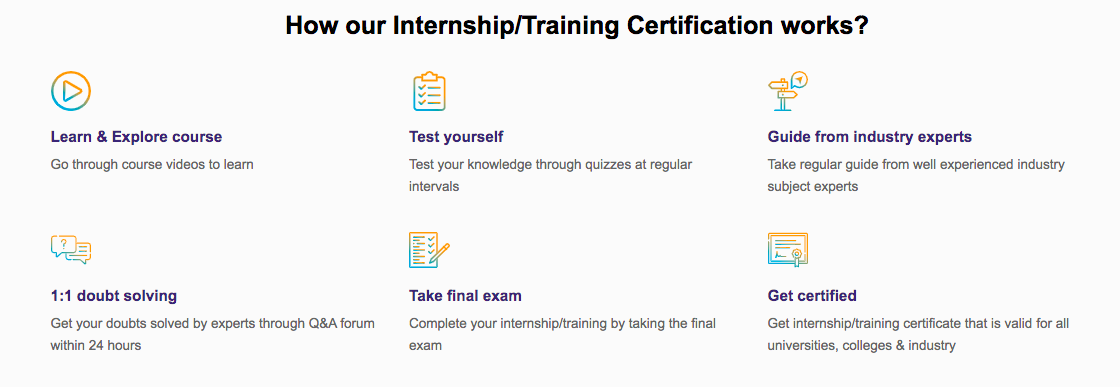
How EasyShiksha Internship/Training Program Works
Personalised Focus Support Through AI
Artificial intelligence could help educational platforms offer personalised support when a learner appears to be struggling with a particular lesson or activity. Rather than sending the same notification to every student, an AI-assisted system could consider the type of learning task, recent progress, assessment performance, and the learner's preferred study approach. It could then offer a relevant next step without claiming to know exactly what the student is thinking.
For example, a student who repeatedly pauses a technical lesson and struggles with the associated quiz might be offered a shorter explanation or a practical demonstration. A learner who completes lessons successfully but loses progress because of a busy schedule might benefit from a flexible study plan. Someone who regularly returns to an unfinished task could receive a reminder of the last completed section and an option to continue from that point.
AI could also help learners manage transitions between activities. At the end of a lesson, the system might summarise the central idea and identify the next practical task. When a student returns after a break, it could provide a brief recap of the previous section. These features would not prevent every interruption, but they could make it easier to recover the context required to continue learning.
The system should remain transparent and learner-controlled. Students should be able to dismiss suggestions, adjust reminders, and choose how they want to study. AI recommendations should be presented as options rather than instructions, especially when the system has limited information about the student's circumstances.
Most importantly, AI should not diagnose attention disorders or infer psychological conditions from browser activity. Frequent switching may have many explanations, and automated systems are not qualified to determine a learner's health status from ordinary learning interactions. The appropriate goal is to improve the learning experience, not to label students.
How EasyShiksha Could Build a Focus-Aware Learning Journey
EasyShiksha could explore a focus-aware learning journey that connects course structure, practice activities, and progress support without requiring intrusive monitoring. The journey could begin by helping students define a learning objective and select a realistic schedule. A learner preparing for an internship might choose to complete a particular course module each week, while someone exploring a new subject could prefer shorter, flexible sessions.
During the course, the platform could provide clear checkpoints that show what the student has completed and what comes next. After a lesson, a short quiz could help the learner verify understanding. If the student struggles, the platform could offer a revision resource or an alternative explanation before recommending additional content. This would help ensure that the next activity responds to the learner's needs rather than simply following a fixed sequence.
Educational games could provide another way to reinforce concepts, particularly when they require students to apply knowledge instead of merely collecting points. A learner studying cybersecurity might solve a simulated security challenge, while a business student could make decisions within a virtual company. These activities can encourage active participation and help students recognise the practical value of what they have learned.
Projects and internship preparation could provide a further connection between attention and purpose. When students can see how a course contributes to a practical outcome, it may become easier to understand why sustained effort matters. EasyShiksha could help learners identify these connections while making it clear that course completion, simulation performance, and actual workplace experience represent different forms of achievement.
A focus-aware system should also respect interruptions. Students may need to pause because of work, family responsibilities, examinations, or personal circumstances. The platform should preserve progress where possible, allow learners to return without penalty, and avoid treating every break as a problem that requires intervention. Flexibility is an essential part of effective digital education.
Practical Learning Features That Support Attention Without Surveillance
Some of the most useful focus-support features do not require monitoring activity outside the learning platform. A clear resume function can help students return to the exact point where they stopped. A short recap can restore the context of the previous lesson, while a progress indicator can make the next step visible. These features support continuity without needing to track unrelated browser activity.
A learner-controlled focus session could also help students organise their study time. The student might choose a period for learning, select one task, and receive a reminder when the planned session ends. The feature could remain optional, allowing students to decide whether structured sessions suit their learning style. It should not automatically assume that a longer session is better or that frequent breaks indicate poor engagement.
Another possibility is an interruption-recovery prompt. When a learner returns to a paused lesson, the platform could briefly summarise the previous concept and provide a choice to continue, review, or test understanding. This can reduce the effort required to reconstruct the lesson's context and make returning to study feel less demanding.
The platform could also support intentional note-taking and resource use. If a course requires students to consult documentation, review a reference, or use an external tool, the lesson should make those requirements clear. A learning environment that assumes every departure from the page is a distraction may discourage legitimate research and practical work.
These features demonstrate that attention support does not have to depend on extensive surveillance. By reducing unnecessary friction and helping students resume meaningful tasks, EasyShiksha could improve the learning experience while preserving privacy and student autonomy.
Measuring Success Through Understanding, Not Screen Time
A focus-aware learning platform should avoid treating time spent online as its main measure of success. Students can remain logged in for long periods without learning effectively, while others may complete a demanding activity in a shorter period because they already understand the material. Screen time alone cannot establish whether a learner has achieved the intended outcome.
A more meaningful evaluation would consider whether students understand concepts, complete relevant practice activities, improve their assessment performance, and retain knowledge over time. Practical tasks can help determine whether learners can apply what they have studied, while student feedback can reveal whether the learning experience feels clear, manageable, and useful.
EasyShiksha could also examine whether particular support features help students resume learning after interruptions. For example, the platform could assess whether lesson recaps reduce repeated confusion, whether clear progress indicators help learners return to unfinished activities, and whether alternative explanations improve subsequent quiz performance. These evaluations should account for differences in subject matter, learner experience, and course difficulty.
The system should also measure unintended effects. Students may find reminders distracting, dislike unnecessary interventions, or prefer a different study pattern. If a focus-support feature creates additional pressure without improving understanding, its design should be reconsidered. The objective is not to maximise platform engagement at any cost but to support sustainable and effective learning.
Privacy, Fairness, and Student Autonomy
The possibility of detecting fragmented attention raises important questions about privacy. Students may reasonably expect an educational platform to record their course progress, quiz results, and other information required to provide its services. They may not expect the platform to analyse unrelated activity across their devices or infer personal characteristics from every interruption. Any additional monitoring should have a clear educational purpose, appropriate safeguards, and transparent explanations.
Fairness is equally important because students do not all study under the same conditions. Some learners use shared devices, have limited internet access, or need to balance education with employment and family responsibilities. Others may require assistive technologies or alternative study arrangements. A system built around one standard pattern of uninterrupted participation could incorrectly interpret these circumstances as poor engagement.
Student autonomy should remain central to the design. Learners should be able to understand why a suggestion appears, decline optional interventions, and choose their preferred study routines. Automated systems should not penalise students for taking breaks, switching resources for legitimate reasons, or choosing to study outside a recommended schedule.
EasyShiksha should also avoid turning behavioural predictions into permanent labels. A learner who struggles to sustain attention during one course may perform very differently in another context. Any support should respond to the immediate learning situation and remain open to correction when the platform's interpretation is inaccurate.
Responsible technology recognises the limits of its observations. By collecting only necessary information, providing meaningful choices, and prioritising educational outcomes, a focus-aware platform can help students without treating their entire digital lives as material for analysis.
Empower your team. Lead the industry
Get a subscription to a library of online courses and digital learning tools for your organization with
EasyShiksha
The future of digital education may involve platforms that adapt not only to what students know but also to the practical conditions under which they learn. Such systems could provide clearer explanations when students struggle, help learners resume interrupted activities, organise complex subjects into manageable stages, and connect individual lessons with larger goals. Their value would come from making learning more coherent and responsive rather than from measuring every second of a student's screen activity.
For EasyShiksha, this approach could strengthen the relationship between online courses, quizzes, educational games, projects, internships, and career guidance. A student who struggles with a concept could receive targeted practice before progressing. A learner who frequently returns after interruptions could benefit from concise recaps and a clear next step. Someone who successfully completes a course could move towards a practical project that demonstrates how the knowledge can be used.
The approach should remain grounded in evidence and respect for individual differences. No single study routine is ideal for every learner, and not every digital interruption is harmful. The platform should help students recognise their own learning needs, choose strategies that work for them, and develop the ability to manage attention independently.
Ultimately, attention-aware education should help students become more capable learners, not more closely monitored users. Technology can reduce friction, provide timely support, and make learning progress easier to understand, but students must retain control over their goals and study choices. When digital learning environments are designed around understanding, flexibility, and responsible support, they can help learners navigate the distractions of modern technology while building knowledge that lasts.
Conclusion: From Tracking Tabs to Supporting Learning
The tab-switching student represents a broader challenge in digital education: the difference between being present on a learning platform and engaging meaningfully with the material. Frequent switching can interrupt complex reasoning, make lessons feel fragmented, and create difficulties when students struggle to resume a task. Yet switching can also support research, practical work, and legitimate multitasking, which means it cannot be treated as a reliable measure of distraction on its own.
Educational technology can identify certain patterns that may indicate learning friction, particularly when changes in activity appear alongside unfinished lessons or difficulty applying concepts. However, these patterns should be interpreted cautiously and used to offer support rather than make assumptions about a student's attention or motivation. AI can help recommend relevant resources, provide recaps, and guide students towards manageable next steps, but it cannot directly determine what a learner is thinking from digital activity alone.
For EasyShiksha, the opportunity is to build a learning environment that makes sustained understanding easier without relying on intrusive surveillance. Well-structured lessons, interactive practice, personalised revision, clear progress indicators, and flexible return-to-learning features can help students recover from interruptions and continue towards their goals. Courses, quizzes, games, projects, and career opportunities can work together to give each learning activity a clear purpose.
The real measure of attention-aware education is not how few tabs a student opens or how long they remain on a screen. It is whether they can understand what they study, apply it to meaningful problems, and return to learning when distractions or difficulties arise. By prioritising these outcomes, EasyShiksha can help transform digital attention from a problem to be monitored into a learning capability that students can gradually develop and manage for themselves.
Anshika Jain is an Engineer, Developer, and Educational Content Author known for her dedication to technology and knowledge sharing. With a strong analytical mindset and a passion for innovation, she has consistently contributed to creating meaningful digital solutions and insightful educational articles.
Her ability to simplify complex technical concepts into engaging and easy-to-understand content makes her work valuable for students and learners across various platforms. Along with her technical expertise, Anshika is admired for her creativity, professionalism, and commitment to continuous learning.
She represents a perfect blend of technical excellence and impactful communication, inspiring others through both her development work and educational contributions.