Artificial intelligence is becoming increasingly capable of performing tasks that once required substantial human effort. It can explain difficult concepts, generate assignments, analyse student performance, recommend courses, evaluate written responses, create programming solutions, and support career planning. These capabilities are transforming education by making learning resources more accessible and enabling new forms of personalisation. However, as AI becomes more deeply integrated into educational systems, a more important question emerges: should every task that machines can perform be delegated to them?
The answer requires education to establish a clear boundary between what AI can handle independently, what it can assist humans with, and what should never be entrusted to an automated system without meaningful human involvement. This boundary can be described as the Human-AI Task Boundary. It represents the principles, responsibilities, and safeguards that determine how work should be divided between people and intelligent systems in educational environments.
The challenge is not simply to identify which tasks AI performs accurately. A system may produce technically correct results while overlooking a student's personal circumstances, misinterpreting an unusual response, reinforcing an existing bias, or making a decision that has serious consequences for someone's future. Accuracy matters, but it is not the only consideration. Accountability, fairness, privacy, human dignity, and the ability to challenge a decision also matter.
For an education ecosystem such as EasyShiksha, this concept creates an opportunity to explore a more responsible approach to intelligent learning. Online courses, quizzes, projects, internships, certificates, university programmes, games, career guidance, and job-related learning could incorporate AI while preserving meaningful human responsibility. Rather than asking only how much educational work can be automated, institutions and platforms could ask which activities benefit from automation and which require human understanding, supervision, or final authority.
The future of intelligent education will not depend solely on making AI more powerful. It will also depend on establishing clear boundaries that allow technology to improve learning without weakening human agency, independent thinking, or institutional responsibility.
What Is the Human-AI Task Boundary?
The Human-AI Task Boundary is a framework for deciding how responsibilities should be distributed between humans and artificial intelligence. It recognises that different tasks require different levels of automation, supervision, contextual understanding, and accountability. Some activities can be automated with relatively little risk, while others require human review even when AI performs most of the preliminary work.
For example, an AI system can help a student generate a revision timetable, summarise a chapter, or suggest practice questions. These activities generally allow learners to review the output, make adjustments, and reject suggestions without irreversible consequences. However, deciding whether a student should be removed from a programme, whether an assessment result should invalidate an important qualification, or whether a learner is suitable for a particular educational opportunity involves greater consequences. Such decisions require stronger safeguards and meaningful human involvement.
The boundary is therefore not simply a division between easy and difficult tasks. A complex task may be suitable for AI assistance if its output can be verified and the consequences are manageable. A seemingly simple decision may require human oversight if it affects a student's rights, opportunities, reputation, or long-term educational pathway.
This distinction is essential because AI capability and decision-making authority are not the same thing. A system may be capable of producing a recommendation without having the appropriate authority to make the final decision.
A responsible Human-AI Task Boundary framework would establish when AI can act independently, when its output must be reviewed, when a human must make the final decision, and when automation should not be used for a particular purpose at all.
Why Education Needs Clear Automation Boundaries
Educational institutions are under pressure to improve efficiency, personalise learning, reduce administrative workloads, and support students at scale. AI appears attractive because it can perform many activities quickly and consistently. However, the desire for efficiency can encourage organisations to automate decisions before fully understanding their educational consequences.
Consider an automated assessment system that identifies unusual student responses and flags them as possible academic misconduct. Such a system might help educators identify cases that deserve closer examination. However, an unusual response does not automatically prove dishonesty. A student may use an unconventional writing style, have access to different learning resources, or demonstrate an original approach that the system does not recognise. If the automated flag is treated as a final judgment, the student may face an unfair penalty.
A similar problem can occur in career guidance. An AI system might recommend certain careers based on a student's quiz results, learning activity, or previous achievements. If the recommendation is presented as a definitive judgment about the student's potential, it could unnecessarily narrow the learner's options. Students should be able to explore alternatives, question recommendations, and change their direction as they gain experience.
Clear automation boundaries help prevent such problems by distinguishing assistance from authority. AI can provide useful evidence, identify patterns, and suggest possible actions, but the educational institution must determine whether the system is appropriate for the decision and whether a human review is necessary.
For EasyShiksha, this distinction could guide how AI-enabled features are designed across the student journey. The objective would be to make technology more useful while ensuring that students retain the ability to question, correct, and influence decisions that affect them.
One practical way to understand the Human-AI Task Boundary is to divide educational tasks into three broad layers: autonomous assistance, supervised decision support, and human-controlled decisions. These layers would not need to apply identically to every institution or learning activity. They would provide a starting point for evaluating the risks and responsibilities associated with different uses of AI.
Autonomous assistance is appropriate when a task has clearly defined objectives, low consequences, and outputs that users can readily inspect or correct. AI might generate practice questions, explain a concept in different ways, suggest a study schedule, or help a learner organise notes. The system can perform these activities independently because the student or educator can review the results without surrendering important decision-making authority.
Supervised decision support applies when AI can contribute valuable analysis but the outcome requires contextual interpretation or verification. Examples include providing formative feedback on a complex assignment, recommending learning interventions, identifying possible knowledge gaps, or suggesting internship opportunities. The system can analyse available information and present recommendations, but a student, teacher, mentor, or authorised professional should be able to examine the reasoning and override the recommendation when necessary.
Human-controlled decisions involve situations in which automation should not exercise final authority because the consequences require judgment, accountability, or procedural protection. Decisions involving serious disciplinary action, disputed academic outcomes, significant restrictions on educational opportunities, or sensitive personal circumstances may require an authorised human decision-maker. AI may provide carefully governed assistance where appropriate, but it should not become an unchallengeable authority.
This framework also recognises that the boundary can change as technology improves, evidence develops, and educational contexts evolve. However, moving a task into a more autonomous category should require evidence that the change is appropriate, not simply confidence that a newer AI system is more capable.
What Should AI Be Allowed to Do Independently?
AI is particularly useful for tasks that are repetitive, clearly specified, reversible, and easy to verify. In education, these tasks may include generating additional practice examples, helping students organise revision sessions, summarising publicly available learning material, explaining terminology, or recommending resources related to a stated learning objective.
Even these activities require reasonable safeguards. Generated material may contain factual errors, and a study plan may fail to reflect a student's actual schedule. Nevertheless, the consequences are often manageable because users can compare the output with course material, request clarification, or choose a different approach.
Automation can also improve access to learning. Students may benefit from explanations adapted to different reading levels, additional examples when a concept is confusing, or practice activities that help them revise independently. These capabilities can reduce delays and allow educators to spend more time on tasks that require direct interaction.
EasyShiksha could explore this category through AI-supported course assistance, practice generation, learning resource discovery, and revision planning. Such features could make learning more responsive without giving AI unrestricted control over a student's educational journey.
The key condition is that autonomous assistance should remain transparent about its limitations. Students should understand when information is AI-generated, know how to verify important claims, and have the ability to seek an alternative explanation when an answer appears incorrect or incomplete.
What Should AI Never Decide Alone?
Some educational decisions require stronger protection because they affect a person's opportunities, rights, or future. The important question is not whether AI can generate a recommendation in these situations, but whether it should be allowed to determine the outcome without meaningful human review.
High-impact disciplinary decisions provide one example. AI may help identify patterns that deserve investigation, but an automated score or generated report should not be treated as conclusive evidence of misconduct. Students need a fair process in which relevant evidence can be examined, alternative explanations can be considered, and decisions can be challenged.
Similarly, consequential decisions about admission, progression, scholarship eligibility, graduation, or access to important educational opportunities should not be reduced to an opaque automated score without appropriate safeguards. Where AI is used to support such decisions, institutions should establish clear accountability, meaningful review, and procedures for correcting inaccurate information.
Career guidance presents a different but equally important boundary. AI can suggest occupations, compare skill requirements, and identify potential learning pathways. However, it should not make definitive judgments about what a student is capable of becoming or automatically close off opportunities based on historical performance. A learner's abilities can develop, interests can change, and previous assessments may not capture the full range of their potential.
Sensitive personal circumstances also require caution. A student may be dealing with financial pressure, accessibility needs, family responsibilities, or other circumstances that cannot be fully understood from learning analytics alone. Automated systems should not make intrusive assumptions or impose consequential interventions without appropriate context and safeguards.
The principle is straightforward: the more a decision affects a student's future, the stronger the justification required for automation and the more important meaningful human accountability becomes.
The Difference Between Human Oversight and Human Approval
A major weakness in some automated decision processes is the assumption that human involvement exists simply because a person clicks an approval button. This practice can create the appearance of supervision without ensuring that anyone has meaningfully examined the recommendation.
Effective human oversight requires more than a final signature. The reviewer must have sufficient information, appropriate expertise, adequate time, and genuine authority to reject the AI's output. If the system presents a recommendation as unquestionable or makes independent review too difficult, human involvement may become largely symbolic.
Imagine a teacher reviewing AI-generated feedback on a student's assignment. If the teacher can inspect the student's work, compare the feedback with the learning objectives, modify the comments, and explain the final assessment, the system supports professional judgment. If the teacher is expected to approve hundreds of automated evaluations within a short period, meaningful review may be impossible.
The same problem can occur in academic administration. A human reviewer cannot provide reliable oversight if the AI system does not explain the evidence behind a recommendation or if institutional pressure encourages staff to accept automated outputs without examination.
For EasyShiksha, any proposed human-in-the-loop educational workflow should therefore consider the quality of the review process rather than simply the presence of a human reviewer. The important question is whether the person can understand the recommendation, evaluate its limitations, and change the outcome when the evidence warrants it.
Human-AI Boundaries in AI-Powered Assessment
Assessment is one of the most sensitive areas of educational automation because it influences feedback, academic progression, qualifications, and sometimes employment opportunities. AI can support assessment by generating practice questions, identifying recurring errors, offering preliminary feedback, and helping educators review large volumes of work. However, these uses must be distinguished from giving an automated system unrestricted authority over consequential academic outcomes.
For low-stakes practice, AI-generated feedback can help students learn at their own pace. A student working through a programming exercise might receive suggestions about a syntax error, while a learner studying business concepts might receive an explanation of why an answer does not satisfy the question. These interactions can improve learning when the feedback is accurate and appropriately framed.
More complex assessments require additional care. An AI system may misunderstand an original argument, overlook an unconventional but valid solution, or evaluate writing in ways that disadvantage particular communication styles. An automated assessment may also be influenced by weaknesses in its training data or evaluation criteria.
A responsible model would use AI to support assessment rather than automatically replace every form of professional judgment. Educators could review disputed results, inspect uncertain cases, and examine whether assessment criteria are appropriate. Students should have a clear way to request a review when they believe an outcome is incorrect.
EasyShiksha could incorporate these principles into its quizzes, course assessments, and practical projects. AI might provide immediate formative feedback while high-impact decisions remain subject to clear rules, verification, and appropriate human review. This would allow assessment to become more responsive without treating automated evaluation as inherently infallible.
The Human-AI Boundary in Personalised Learning
Personalised learning systems attempt to adapt educational experiences to individual students. AI can analyse quiz responses, recommend revision material, suggest learning sequences, and help identify concepts that require additional practice. These capabilities may make education more responsive, especially when learners have different levels of preparation and different learning goals.
However, personalisation can become restrictive if the system assumes that a student's previous behaviour defines their future potential. A learner who performs poorly on an early assessment might repeatedly receive easier material. A student who shows interest in one subject might receive recommendations that increasingly exclude unrelated fields. Over time, the system could narrow rather than expand the learner's opportunities.
The Human-AI Task Boundary requires a distinction between recommending a pathway and controlling it. AI can suggest a learning sequence based on current evidence, but students should retain meaningful opportunities to explore other subjects, request more challenging material, and revise their goals. Educators should be able to identify when an automated recommendation appears too restrictive or fails to account for the learner's circumstances.
A useful personalised learning system should also recognise uncertainty. A low quiz score may indicate a knowledge gap, but it may also reflect a poorly worded question, limited time, or unfamiliarity with the assessment format. The system should not automatically treat every performance signal as a definitive statement about ability.
For EasyShiksha, this creates an opportunity to design personalisation around learner agency. AI could provide guidance while allowing students to make informed choices, explore alternative pathways, and seek human assistance when recommendations do not reflect their goals.
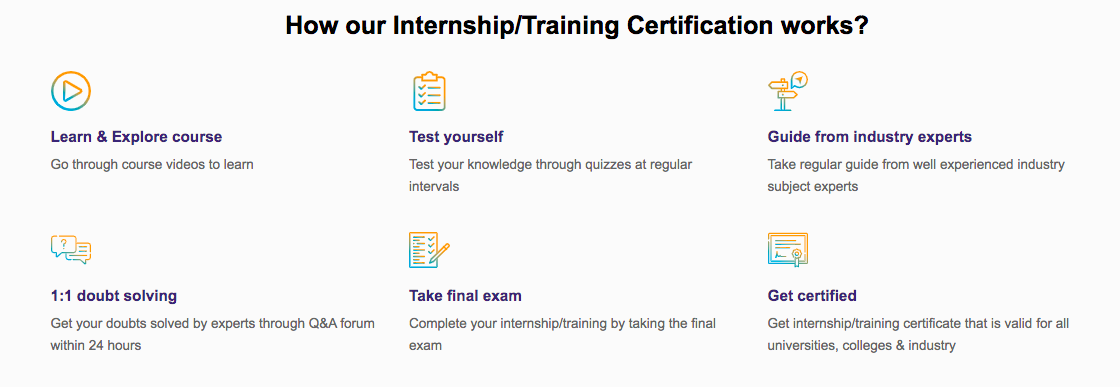
How EasyShiksha Internship/Training Program Works
Protecting Independent Thinking in AI-Assisted Education
An important educational risk emerges when students begin to delegate not only repetitive tasks but also the reasoning they need to develop. AI can generate an essay, solve a programming problem, explain a mathematical concept, or create a project outline. These functions can be useful, but their educational value depends on how they are integrated into the learning process.
If a student repeatedly receives complete solutions without attempting the underlying work, the student may finish assignments without developing the knowledge or reasoning required to perform independently. The immediate output may be impressive while the learner's actual capability remains limited.
The Human-AI Task Boundary should therefore include learning objectives, not merely operational rules. An activity designed to teach problem-solving should preserve opportunities for students to solve problems themselves. AI might provide hints, examples, or feedback before offering a complete explanation. A project might require students to justify their choices, test their solutions, and explain which parts of the work were completed with AI assistance.
This does not mean that every use of AI should be restricted. Professional competence increasingly includes the ability to use AI effectively. Students need to learn how to collaborate with intelligent systems while understanding the material well enough to evaluate the results.
EasyShiksha could support this balance through courses, quizzes, and projects that distinguish between assisted performance and independent mastery. The objective would be to ensure that AI expands a learner's capabilities rather than concealing gaps in understanding.
Designing Clear AI Rules for Projects and Internships
Projects and internships introduce situations in which the appropriate use of AI depends on the purpose of the task. In some projects, using AI to generate code, organise research, or improve documentation may be a legitimate part of the learning objective. In other activities, students may need to demonstrate independent performance because the assessment is intended to establish their own understanding.
A single universal rule cannot address every situation. Educational institutions should explain what forms of AI assistance are permitted, which contributions must be disclosed, and which parts of an assignment must be completed independently. These expectations should be communicated before students begin the work rather than introduced only after a dispute arises.
For example, a software development project might permit AI-generated suggestions while requiring students to test the code, explain its design, and demonstrate that they understand its security implications. A research assignment might allow AI to help organise ideas but require students to verify every important factual claim against reliable sources. A workplace internship might permit approved AI tools while prohibiting the disclosure of confidential organisational information.
EasyShiksha could use project guidelines and internship preparation resources to help students understand these boundaries before entering practical environments. Students would learn not only how to use AI tools but also how to document their contributions, verify outputs, respect confidentiality, and recognise when professional approval is required.
This approach would prepare learners for workplaces where responsible AI use involves both technical skill and compliance with organisational expectations.
Privacy and the Limits of Educational Surveillance
AI systems often depend on information about student activity, performance, and learning behaviour. Such information can help personalise support, but it can also create the risk of excessive monitoring. The fact that a system can collect or infer information does not automatically mean that it should do so.
An educational platform might analyse quiz results to identify concepts that require revision. That use has a direct relationship to the learning objective. A system that attempts to infer sensitive personal characteristics from unrelated activity would raise different concerns and require much stronger justification, if it were appropriate at all.
The Human-AI Task Boundary should therefore include limits on what information AI can access, what conclusions it may draw, and how those conclusions may be used. Educational systems should collect information for defined purposes, protect it appropriately, and explain important uses of student data in understandable language.
Students should also have appropriate ways to correct inaccurate information and challenge decisions influenced by automated analysis. Where a recommendation is based on an uncertain inference, the system should not present it as an established fact.
For EasyShiksha, responsible design would mean treating privacy and student trust as core parts of any proposed AI-enabled learning experience. Personalisation should improve educational support without turning every aspect of student behaviour into a source of unrestricted automated judgment.
How EasyShiksha Could Build a Human-AI Boundary Framework
EasyShiksha could explore a Human-AI Boundary Framework that classifies educational activities according to their purpose, risk, reversibility, and need for human judgment. Such a framework would help product designers, educators, and administrators decide where automation is appropriate and where additional safeguards are needed.
The first stage would involve identifying the actual task. Generating revision questions is different from deciding whether a student should pass a high-stakes examination. Recommending a course is different from denying a learner access to an educational opportunity. A clear definition of the task helps prevent broad assumptions about AI capability from replacing careful evaluation of the specific use case.
The next stage would assess the consequences of error. If an incorrect recommendation can be easily corrected, limited automation may be appropriate. If an automated decision could damage a student's academic record, restrict an important opportunity, or expose sensitive information, the system would require stronger review and accountability. The assessment should also consider whether the decision can be reversed and whether the student has a meaningful way to challenge it.
The framework could then define the appropriate role of AI and humans. Some tasks might permit independent generation with user verification. Others could require an educator or authorised professional to review the output. High-impact decisions could require a documented human decision, clear reasons, and a formal review process. Certain uses might be prohibited when the risks cannot be adequately controlled.
Finally, the framework would need ongoing evaluation. An AI system that performs well in one context may fail when used with different students, subjects, languages, or assessment formats. Educational institutions should monitor errors, review complaints, test for unfair outcomes, and revise the boundary when evidence indicates that the current arrangement is inadequate.
This approach would allow EasyShiksha to explore intelligent educational tools with a clearer understanding of the responsibilities that accompany them.
Measuring Success Beyond Automation Efficiency
Educational AI is often evaluated through measures such as speed, cost reduction, response time, completion rates, and user engagement. These indicators can be useful, but they do not fully establish whether automation improves education.
A system might reduce the time required to grade assignments while producing less reliable feedback. It might increase course completion rates while encouraging students to depend on generated answers. It might recommend learning resources efficiently while repeatedly directing certain learners toward unnecessarily narrow pathways.
A more complete evaluation would examine whether the system improves understanding, supports independent capability, provides accurate and fair feedback, and allows students to challenge important decisions. It would also consider whether educators can review automated outputs effectively and whether the system handles uncertain cases appropriately.
EasyShiksha could use these principles when evaluating proposed AI-enabled features. For example, a learning assistant could be assessed not only by how quickly it answers questions, but also by whether students understand the material better after using it. An assessment tool could be evaluated by the quality of its feedback, the consistency of its results, and the effectiveness of its review process.
The objective should be responsible educational improvement rather than maximum automation. A system is not necessarily better because it automates more tasks. It is better when the division of work between humans and AI produces stronger learning outcomes while protecting students' rights and interests.
Empower your team. Lead the industry
Get a subscription to a library of online courses and digital learning tools for your organization with
EasyShiksha
The Future: From AI Adoption to AI Governance in Education
The next stage of educational technology may involve a shift from asking which AI tools institutions should adopt to deciding how those tools should operate within a clear system of responsibility. As AI becomes integrated into learning platforms, assessment systems, career guidance, and administrative processes, institutions will need policies that connect technical capability with educational purpose.
This will require cooperation between educators, students, developers, administrators, and relevant specialists. Developers need to understand the educational consequences of design choices. Educators need enough information to evaluate automated recommendations. Students need to understand when AI is involved and how to question its output. Institutions need to establish accountability for decisions made through automated workflows.
The boundary must also remain adaptable. AI systems will improve, educational needs will change, and new uses will emerge. Some activities that require substantial supervision today may become suitable for greater automation later. Other activities may remain sensitive because their consequences involve fairness, rights, trust, or human responsibility rather than technical accuracy alone.
A mature educational ecosystem will therefore treat the Human-AI Task Boundary as an ongoing governance process rather than a one-time checklist. Every significant use of AI should have a defined purpose, an appropriate level of authority, clear responsibility, and a way to detect and correct failure.
For EasyShiksha, this could become a guiding principle for connecting AI with courses, quizzes, internships, projects, certificates, university programmes, and career support. Technology would be evaluated according to how well it advances learning while preserving human agency.
Conclusion: Intelligent Education Must Know What Not to Automate
Artificial intelligence offers significant opportunities to make education more accessible, responsive, and efficient. It can help students practise concepts, receive explanations, discover learning resources, and explore possible career pathways. It can also help educators manage repetitive work and focus more attention on complex learning needs. However, these benefits do not justify handing every educational responsibility to an automated system.
The Human-AI Task Boundary provides a way to distinguish between tasks that AI can perform independently, decisions that require supervised support, and responsibilities that should remain under meaningful human control. The distinction depends not only on technical accuracy but also on the consequences of error, the reversibility of a decision, the need for contextual understanding, and the rights of the people affected.
For EasyShiksha, this concept offers a framework for developing more responsible educational experiences. Courses can build AI literacy, quizzes can develop verification skills, projects can teach students to explain their decisions, internships can introduce professional AI boundaries, and certificates can be supported by evidence of genuine capability. Career guidance can help students explore options without allowing automated recommendations to define their future.
The objective is not to keep AI away from education. It is to make sure that AI is used where it helps and constrained where unrestricted automation could undermine learning, fairness, or accountability.
As intelligent systems become more capable, education will need to teach students both how to use them and how to question them. It must also help institutions recognise that the ability to automate a task does not automatically create the authority to make every decision associated with it.
The most responsible educational system will not be the one that delegates the greatest number of decisions to machines. It will be the one that understands which responsibilities can be automated, which require human collaboration, and which demand clear human accountability. That is the foundation of a Human-AI Task Boundary designed not merely for technological efficiency, but for better learning, stronger judgment, and a more trustworthy future of education.
Anshika Jain is an Engineer, Developer, and Educational Content Author known for her dedication to technology and knowledge sharing. With a strong analytical mindset and a passion for innovation, she has consistently contributed to creating meaningful digital solutions and insightful educational articles.
Her ability to simplify complex technical concepts into engaging and easy-to-understand content makes her work valuable for students and learners across various platforms. Along with her technical expertise, Anshika is admired for her creativity, professionalism, and commitment to continuous learning.
She represents a perfect blend of technical excellence and impactful communication, inspiring others through both her development work and educational contributions.