Education depends on the assumption that the knowledge presented to students is accurate, consistent and logically connected. A student may learn a concept from a school textbook, encounter it again in an online course, explore it through a university lecture and eventually demonstrate their understanding through an examination. Ideally, each of these experiences should reinforce the same underlying knowledge. However, educational content is rarely developed within one unified system. Textbooks are written by different authors, courses are designed by different educators, assessments are created independently and digital platforms frequently combine learning materials from multiple sources. As a result, students can encounter contradictory explanations, inconsistent definitions, outdated facts and assessment questions that do not agree with the concepts they are supposed to evaluate.
This creates a significant challenge for modern education. A student might learn one definition in a course and encounter a different definition in a textbook. A quiz might treat an answer as incorrect even though it is supported by the learning material. A university programme might teach a particular method while an associated online resource uses an incompatible approach without explaining the difference. These inconsistencies can confuse learners, weaken confidence and make it difficult to determine which information should be trusted.
What if educational systems could detect these contradictions before students encountered them? What if textbooks, online courses, quizzes, projects and assessments could be checked against a formal representation of the knowledge they contain?
This is where formal verification in education becomes an interesting possibility. Formal verification is a method of using mathematical logic, precisely defined rules and computational techniques to determine whether a system satisfies specified properties. It is commonly associated with software engineering, hardware design, security and other areas where errors can have serious consequences. Its underlying principles could also offer a new approach to educational quality assurance.
For EasyShiksha, this concept creates an opportunity to explore a more reliable learning architecture. Instead of treating courses, quizzes, certificates and educational resources as independent content products, an intelligent platform could examine how their concepts and claims relate to one another. The objective would be to identify contradictions, incomplete explanations and logical inconsistencies while preserving the flexibility required for different subjects and teaching approaches.
The future of educational quality assurance could therefore move beyond proofreading and content review towards systematic verification of the relationships between educational materials.
What Is Formal Verification?
Formal verification is the process of checking whether a system satisfies explicitly defined requirements using mathematical or logical methods. Rather than relying entirely on visual inspection, human judgement or testing a limited number of examples, it uses a structured representation of expected behaviour and examines whether the system conforms to it.
In software engineering, a developer might specify that a payment system must never transfer more money than an account contains. Formal methods can help determine whether the system's logic satisfies that requirement under the conditions represented in its model. Similarly, a hardware system can be checked to determine whether certain operations remain safe across possible states.
The educational equivalent would involve defining important knowledge claims, relationships, assumptions and rules in a structured form. Educational content could then be compared against this representation to identify conflicts.
For example, imagine that a beginner programming course teaches that a JavaScript array is an ordered collection of values. An assessment later describes arrays as unordered collections. If both statements refer to the same language feature and context, the system could identify a contradiction.
However, formal verification is not simply a search for sentences that use different words. Two statements may appear different while expressing the same concept, or they may appear similar while referring to different conditions. A meaningful verification system must therefore understand the context, scope and assumptions behind each claim.
This distinction is important because educational knowledge is not always expressed through simple mathematical rules. Some subjects contain interpretations, competing theories, historical debates and context-dependent conclusions. Formal verification must be applied carefully so that it identifies genuine contradictions without incorrectly treating legitimate academic differences as errors.
Why Contradictions Occur Across Educational Systems
Educational contradictions often develop because learning materials are created, updated and distributed through separate processes. A textbook may be revised every few years, while an online course receives smaller updates throughout the year. A quiz may continue using questions written for an earlier version of the curriculum. An instructor may modify a concept to suit a particular audience without updating the related learning resources.
These separate content cycles can gradually create inconsistencies.
Another source of contradiction is the difference between academic and practical explanations. A university textbook may introduce a concept using a formal definition, while a professional course may simplify the same concept for workplace application. Simplification is often necessary, but it can become misleading when important conditions are removed. Students may interpret the simplified explanation as universally valid even when it applies only to a particular situation.
Translation and localisation can introduce further complications. An educational concept may be translated into another language, adapted to a regional curriculum or rewritten for a different level of understanding. During these transformations, technical terminology and logical relationships can change. A statement that was originally conditional may become absolute, or a distinction between two related concepts may disappear.
Digital education adds another layer of complexity. Educational platforms may combine instructor-created content, external resources, AI-generated explanations, recorded lectures and independently developed assessments. Each source may use different terminology, assumptions and levels of detail. Without a system for examining their relationships, inconsistencies can remain hidden.
For a platform such as EasyShiksha, which connects online learning, quizzes, certificates, internships and university-related educational opportunities, this challenge becomes especially relevant as the number and variety of learning resources increase.
Traditional content quality assurance generally focuses on whether an educational resource is clear, readable, relevant and factually accurate. Editors and subject experts review explanations, correct mistakes and improve the presentation of information. These processes remain essential, but they may not identify every contradiction across a large collection of resources.
A textbook can be accurate when reviewed independently, and an online course can also be accurate within its own context. Yet the two resources may disagree when a student encounters them together.
This reveals a limitation of resource-level quality assurance. Checking individual documents does not automatically establish consistency across an entire educational ecosystem.
Formal verification introduces a different approach. It focuses on the relationships between knowledge claims rather than examining each resource only in isolation. A system could identify important concepts, represent their definitions and conditions, and compare how they appear across textbooks, lessons, quizzes and other learning materials.
The process would not eliminate human review. Instead, it could help educators identify where their attention is most needed. Rather than manually comparing hundreds of pages, subject experts could review a smaller set of flagged inconsistencies with their surrounding context.
This would transform educational quality assurance from a process centred mainly on individual documents into one that also considers the consistency of the complete learning environment.
Building a Formal Knowledge Model for Education
Formal verification requires something against which a system can be checked. In education, this could take the form of a structured knowledge model containing concepts, definitions, relationships, assumptions and constraints.
Consider a course on basic finance. The subject may include concepts such as revenue, profit, expenses, assets, liabilities and cash flow. These concepts are related, but they are not interchangeable. A learning resource that uses revenue and profit as synonyms could create a conceptual error. A formal knowledge model could record their distinct meanings and relationships so that educational materials can be checked against them.
The same approach could be used in programming education. A knowledge model might represent the behaviour of variables, functions, arrays, promises and events. It could distinguish between synchronous and asynchronous execution, record relevant language rules and identify dependencies between concepts.
In mathematics, the model could include definitions, theorems, assumptions and conditions under which particular methods are valid. In science, it could represent relationships between variables, units, experimental conditions and established principles.
The important point is that the model should not attempt to reduce every subject to a single rigid explanation. It should represent the knowledge that can be defined precisely while allowing room for interpretation, competing frameworks and subject-specific complexity.
For EasyShiksha, a structured knowledge model could potentially become a foundation for connecting different learning resources. A concept introduced in an online course could be linked to related quiz questions, practical exercises and advanced learning material. The system could then examine whether these resources preserve the same essential meaning.
How a Contradiction Detection System Could Work
A formal verification system for education could begin by extracting knowledge claims from textbooks, courses, quizzes and other educational materials. These claims would need to be converted into structured representations that preserve their meaning, context and source.
For example, a learning resource might contain the statement that a particular programming operation returns a Boolean value. Another resource might describe the same operation as returning a string. The system would first need to establish whether both statements refer to the same operation, language version and execution conditions.
If the statements concern the same context, the system could flag a potential contradiction. If they refer to different versions or different operations, the apparent disagreement might be valid.
This means that contradiction detection requires more than comparing isolated sentences. It must consider the identity of the concept, the conditions under which a statement applies and the relationship between the two sources.
A possible verification architecture could include a content extraction layer, a semantic interpretation layer, a formal knowledge representation layer and a verification engine. The extraction layer would identify relevant claims. The semantic layer would interpret their meaning and context. The knowledge representation layer would express claims in a structured form. Finally, the verification engine would examine whether the claims satisfy defined consistency rules.
When a potential conflict is detected, the system could provide the original statements, their source locations, the relevant concept and an explanation of why they may be inconsistent. An educator could then decide whether the material requires correction, clarification or an explicit explanation of the different contexts.
Such a process could make large educational collections easier to maintain without assuming that automated systems can independently determine the truth of every academic claim.
Detecting Contradictions Between Textbooks and Online Courses
Textbooks and online courses often explain the same subject using different structures. A textbook may provide a detailed theoretical treatment, while an online course may divide the subject into short lessons designed for independent learning. Differences in presentation are not necessarily problematic, but differences in the underlying claims can create confusion.
Imagine a student studying database normalisation. A textbook explains a particular normal form using a set of conditions, while an online course provides an incomplete description that omits one of those conditions. The online explanation may appear reasonable to a beginner, but it could create an incorrect understanding when the student later encounters more advanced material.
A verification system could compare the structured claims in both resources and identify missing conditions or conflicting definitions. It might also distinguish between an introductory simplification and a statement that is technically incorrect.
Another example could arise in science education. A textbook might describe a physical relationship under specified conditions, while a short digital lesson presents the relationship without mentioning those conditions. A verification system could flag the missing context because it affects how the statement should be interpreted.
For EasyShiksha, this approach could support greater consistency between course lessons and supplementary learning resources. Students could encounter different explanations of a concept without being exposed to incompatible meanings.
Verifying the Relationship Between Courses and Assessments
One of the most important applications of formal verification could be the relationship between educational content and assessments.
A quiz is expected to evaluate what a student has learned. However, assessment questions are often developed separately from the lessons they evaluate. This can produce situations where a question assumes knowledge that was never introduced, an answer key contradicts the course explanation or a question has more than one defensible answer.
Consider a JavaScript course that teaches the difference between let, const and var. An assessment question might ask which declaration allows reassignment, but its answer key could incorrectly mark const as the correct choice under ordinary conditions. A verification system could compare the question, options, answer key and relevant course concepts to identify the inconsistency.
In a mathematics course, an assessment might require students to apply a formula without including the conditions under which that formula is valid. A verification process could identify the missing assumptions and alert the course author.
This does not mean every assessment can be completely verified through formal logic. Open-ended questions, subjective evaluations and creative assignments require different forms of review. Nevertheless, questions with precise definitions, calculations, logical relationships and objectively testable answers may be suitable for structured verification.
An EasyShiksha learning environment could potentially use this approach to check whether quiz questions align with course content, whether answer keys are consistent and whether the assessment evaluates the intended learning outcomes.
Formal Verification and Prerequisite Relationships
Educational concepts rarely exist independently. Students need foundational knowledge before they can understand more advanced material. When a course assumes knowledge that has not been introduced, the learning pathway can become difficult to follow.
Formal verification could help examine these prerequisite relationships.
For example, a programming course that introduces asynchronous JavaScript may assume that students understand functions, callbacks and the execution model. If the course begins using promises without explaining the relevant foundations, learners may struggle even when the individual lessons are technically accurate.
A structured knowledge model could represent prerequisite relationships and check whether a learning pathway introduces the necessary concepts before relying on them. It could also detect circular dependencies, where one concept is described as requiring another while the second concept is itself defined as requiring the first.
This is particularly valuable when educational content is assembled from multiple courses or learning providers. A learner might complete one introductory course and move into another advanced programme. The receiving programme may assume a particular foundation that the earlier course did not actually teach.
For EasyShiksha, prerequisite verification could support better connections between beginner courses, advanced courses, quizzes and practical projects. The objective would be to make learning progression more coherent and reduce unnecessary gaps between educational stages.
Detecting Logical Errors in Educational Explanations
Some educational contradictions are not direct disagreements between two statements. They arise when an explanation contains an invalid inference.
For example, a course might correctly explain that all squares are rectangles but then incorrectly conclude that all rectangles are squares. The individual terms are familiar, but the logical relationship has been reversed.
In programming, an explanation might state that a function is asynchronous and then incorrectly claim that every operation inside it automatically runs in parallel. In statistics, a learning resource might confuse correlation with causation. In finance, an explanation might treat revenue growth as proof of profitability without accounting for expenses.
These are logical errors rather than simple terminology differences.
Formal methods could help identify certain classes of such mistakes when the relevant concepts and relationships are represented precisely. A system might check whether a conclusion follows from the stated premises, whether a definition is being applied consistently or whether an explanation violates an explicitly encoded rule.
Natural language processing and AI could assist with extracting the relevant claims from educational content. However, the formal verification stage would need sufficiently precise representations to make meaningful checks.
This combination could be useful for subjects where students build knowledge through chains of reasoning. It could also help educators identify explanations that sound convincing but contain unsupported conclusions.
AI as an Assistant to Formal Verification
Artificial intelligence could provide an important supporting layer for educational verification. Large language models can analyse natural language, identify concepts, compare explanations and help convert unstructured content into structured claims.
For example, an AI system could examine a textbook chapter and extract statements about a particular scientific concept. It could then compare those statements with a course lesson and an assessment question. When it detects a possible disagreement, it could present the relevant passages to a verification engine or human reviewer.
However, AI-generated interpretations should not automatically be treated as formally verified facts. Language models can misunderstand technical terminology, overlook qualifications and produce explanations that sound authoritative despite containing errors.
A more reliable architecture would separate AI-assisted interpretation from formal checking. AI could help identify and organise candidate claims, while explicit rules and logical representations would be used to verify relationships that can be expressed precisely.
Human subject experts would remain responsible for reviewing difficult cases, deciding between legitimate interpretations and approving important corrections.
This combination could allow EasyShiksha to explore intelligent content quality assurance without depending entirely on automated judgement.
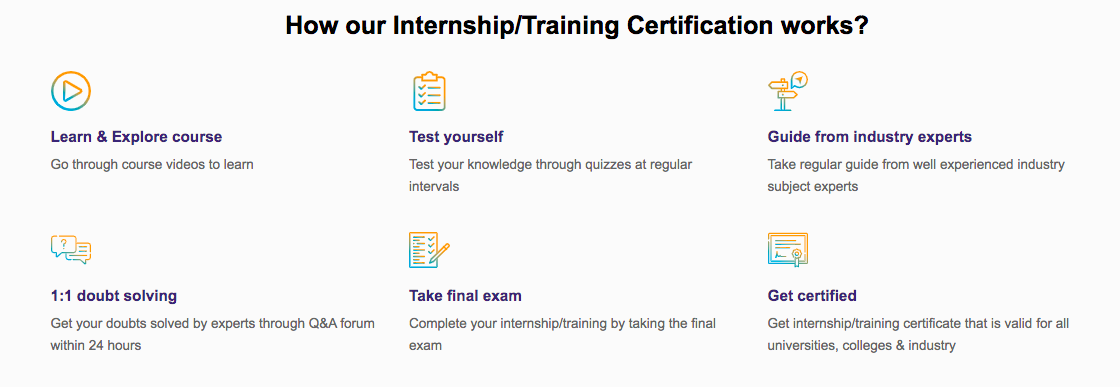
How EasyShiksha Internship/Training Program Works
The Role of Version Control in Educational Verification
Educational knowledge changes over time. Scientific findings develop, programming languages introduce new features, regulations are amended and professional standards evolve. A statement that was accurate in one context may become outdated later.
A verification system must therefore understand content versions.
For example, a programming course may explain a feature according to an older language specification. A newer course may describe updated behaviour. If the system compares both resources without considering their versions, it could incorrectly identify a valid historical explanation as a contradiction.
Version-aware verification would record when a resource was created, which curriculum or technical standard it follows and when it was last reviewed. It could then determine whether two claims conflict within the same version or simply describe different stages of development.
This is particularly important for subjects such as technology, taxation, business regulations and professional certification, where changes can affect the correctness of educational material.
For EasyShiksha, a proposed version-aware verification layer could help identify resources that need review when related course material changes. It could also preserve older learning content where historical context remains valuable.
Formal Verification Across Projects and Internships
The value of educational verification need not stop at textbooks and quizzes. It could also extend to projects and internship-related learning activities.
A project brief may specify particular technical requirements, while the assessment rubric evaluates different capabilities. An internship task may require students to demonstrate a process that was not covered in the associated preparation material. These inconsistencies can make learning outcomes difficult to interpret.
A structured verification system could compare project requirements with their intended learning outcomes and assessment criteria. It could check whether the required skills are introduced in the learning pathway and whether the evaluation criteria correspond to the work students are expected to complete.
For example, a web development project might require students to build a responsive interface, but its evaluation criteria could focus entirely on visual appearance while ignoring responsiveness and functional behaviour. A verification system could flag the mismatch between the project requirements and the assessment criteria.
Internship preparation could also benefit from stronger alignment. If a course claims to prepare learners for a particular professional task, the associated practical activity should provide opportunities to demonstrate the relevant capability.
For EasyShiksha, this could help connect courses, practical projects, internships and certificates through more consistent learning outcomes.
Creating an Educational Verification Layer for EasyShiksha
A possible direction for EasyShiksha would be to explore an Educational Verification Layer that operates across its learning ecosystem. Its purpose would not be to replace educators, authors or academic reviewers. Instead, it would provide a structured way to examine consistency between learning resources.
The first stage could involve identifying important concepts and claims within courses, quizzes and supplementary material. These claims could be associated with specific subjects, learning outcomes, source documents and applicable versions. A knowledge model could then represent how the concepts relate to one another.
The second stage could introduce verification rules for areas where correctness can be defined precisely. These might include mathematical relationships, programming behaviour, terminology consistency, assessment answer keys and prerequisite dependencies. More complex claims could be marked for expert review rather than automatically classified as correct or incorrect.
The third stage could provide an educator-facing review interface. When the system identifies a possible contradiction, it could display the relevant passages side by side, explain the nature of the conflict and identify the learning resources affected. An author or subject expert could review the evidence and decide whether a correction is necessary.
Finally, approved corrections could be connected to related resources. If a concept changes in a course, the system could identify relevant quizzes, projects and supplementary explanations that may also require revision.
This would create a more connected quality assurance process in which corrections are not limited to one document but can be considered across the educational ecosystem.
Measuring Educational Consistency
A verification system would need meaningful ways to measure whether it improves educational quality. Counting the number of contradictions detected would provide only limited information because some conflicts may be minor, while others could seriously affect learning.
A more useful evaluation would consider the severity of each inconsistency, the number of resources affected and whether the contradiction could change a student's understanding or assessment outcome.
Another important measure would be the time required to identify and resolve verified issues. If educators can detect inconsistencies earlier and correct related resources more efficiently, the system may reduce the maintenance burden associated with large educational collections.
Assessment alignment could also be evaluated by examining whether questions accurately reflect the concepts and learning outcomes taught in their associated courses. Prerequisite completeness could measure whether advanced lessons rely on knowledge that students have been given a reasonable opportunity to acquire.
Student feedback may provide an additional signal. Repeated reports that two learning resources disagree could help identify areas requiring review. Such feedback should be treated as evidence for investigation rather than automatic proof that one resource is incorrect.
The broader objective would be to improve consistency, transparency and reliability without reducing educational quality to a single numerical score.
The Challenges of Applying Formal Verification to Education
Despite its potential, formal verification cannot be applied to every educational claim in the same way. Some subjects contain objective rules that can be represented precisely, while others involve interpretation, debate and changing perspectives.
Mathematical proofs and programming language behaviour may be suitable for relatively precise verification. Historical explanations, literary interpretations and ethical arguments are more complex because several defensible perspectives may coexist.
A system that treats every difference as a contradiction could create false alerts and discourage academic discussion. It might also reinforce one particular interpretation simply because that interpretation has been encoded into its knowledge model.
Another challenge is the difficulty of translating natural language into formal representations. Educational explanations frequently use examples, metaphors, simplified descriptions and implied assumptions. Converting them into logical structures without losing their meaning is a demanding task.
There is also the issue of source authority. Two resources may disagree because one is outdated, one is incorrect or both are valid within different frameworks. A verification engine can identify certain logical conflicts, but determining which source should be preferred may require subject expertise and reliable external standards.
These limitations mean that formal verification should be treated as a support system for educational judgement, not a replacement for it.
Avoiding False Contradictions and Preserving Academic Diversity
One of the most important design principles is distinguishing between genuine contradictions and legitimate differences in perspective.
Consider two economics courses that explain inflation using different theoretical frameworks. Their explanations may emphasise different mechanisms without necessarily contradicting each other. Similarly, two history textbooks may interpret the significance of an event differently because they draw attention to different evidence or historiographical approaches.
A verification system should not attempt to force all educational materials into identical language or conclusions. Its purpose should be to detect cases where claims cannot reasonably coexist under the same stated conditions.
Context is therefore essential. The system should record the subject, level, scope, assumptions, source and date associated with a claim. It should also allow multiple accepted interpretations where the subject requires them.
This approach would make verification more useful and less restrictive. It would help preserve academic diversity while still identifying errors that could mislead students.
Privacy, Intellectual Property and Educational Governance
A connected verification system may need to process textbooks, course materials, assessments, student feedback and other educational records. This creates responsibilities around privacy, copyright and access control.
Educational institutions and content creators may have legitimate restrictions on how their materials can be stored, analysed and reused. A platform must therefore ensure that verification processes respect ownership and licensing arrangements.
Student information should also be protected. Although contradiction detection can often operate on educational content without examining identifiable learner records, feedback and assessment data may contain personal information. Such data should be handled with appropriate safeguards and used only for clearly defined educational purposes.
Governance is equally important. Educators should be able to understand why a contradiction was flagged, which rule was applied and what evidence supports the finding. Important changes should be traceable so that reviewers can identify who approved a correction and which resources were affected.
Trust will depend not only on the accuracy of the verification system but also on the transparency of its decisions.
Empower your team. Lead the industry
Get a subscription to a library of online courses and digital learning tools for your organization with
EasyShiksha
The Future: From Educational Content Libraries to Verified Knowledge Ecosystems
As digital education expands, platforms may increasingly combine resources from universities, independent educators, professional organisations and AI-assisted content systems. This could create more learning opportunities, but it would also increase the difficulty of maintaining consistency.
A future educational platform may therefore need more than a large collection of courses. It may need an architecture that understands the relationships between the knowledge contained in those courses.
Formal verification could contribute to this shift by making educational claims more traceable and consistency easier to examine. Knowledge models could connect definitions, prerequisites and learning outcomes. AI could help identify potential conflicts. Verification engines could check precisely defined properties, while educators could review complex or disputed cases.
For EasyShiksha, this represents a potential evolution from providing individual educational resources towards supporting a connected and quality-aware learning environment. Courses could introduce concepts, quizzes could assess them, projects could test their application and internships could provide practical experience. A verification layer could help ensure that the learning objectives remain meaningfully connected throughout these stages.
Such a system would not guarantee that every educational statement is universally correct. No single model can eliminate the complexity of human knowledge. However, it could make contradictions easier to identify, investigate and resolve before they affect learners.
Conclusion: Education Needs Consistency Without Losing Complexity
The quality of education depends not only on whether individual textbooks, courses and assessments contain useful information, but also on whether those resources work together. Students should not have to resolve unexplained contradictions between lessons, discover that an assessment conflicts with its own course material or struggle with advanced concepts because essential prerequisites were omitted.
Formal verification offers a promising way to address some of these challenges. By representing educational claims through structured knowledge models and checking them against explicit rules, learning systems could identify certain logical errors, conflicting definitions, incomplete conditions and assessment inconsistencies.
For EasyShiksha, an Educational Verification Layer could potentially connect online courses, quizzes, projects, internships, certificates and university-related learning resources through a more systematic approach to content consistency. AI could help extract and compare claims, formal methods could verify precisely defined relationships, and educators could retain responsibility for interpreting complex academic questions.
The goal should not be to make every textbook, course or instructor explain knowledge in exactly the same way. Education needs room for different teaching methods, academic perspectives and evolving discoveries. What it needs to avoid is confusion caused by contradictions that remain hidden across disconnected learning resources.
The next generation of educational platforms may therefore be judged not only by how much content they provide, but also by how reliably that content connects. When educational knowledge can be examined, traced and verified across learning experiences, students gain a more coherent foundation for understanding, applying and extending what they learn.
Anshika Jain is an Engineer, Developer, and Educational Content Author known for her dedication to technology and knowledge sharing. With a strong analytical mindset and a passion for innovation, she has consistently contributed to creating meaningful digital solutions and insightful educational articles.
Her ability to simplify complex technical concepts into engaging and easy-to-understand content makes her work valuable for students and learners across various platforms. Along with her technical expertise, Anshika is admired for her creativity, professionalism, and commitment to continuous learning.
She represents a perfect blend of technical excellence and impactful communication, inspiring others through both her development work and educational contributions.