






Advanced Certification in Manufacturing
Program Overview
Manufacturing is a technical and skill-oriented field that covers the processes, technologies, materials, machinery, quality systems, automation, and management practices involved in manufacturing operations. The curriculum introduces learners to areas such as manufacturing technology, material science, machine tools, mechanical engineering, industrial engineering, metrology, tool engineering, production automation, mechatronics, machining, metal forming, CAD/CAM, and rapid prototyping.
The program provides a combination of foundational engineering knowledge and manufacturing-focused subjects. Learners can build an understanding of applied physics, chemistry, mathematics, electricity, electronics, IT tools, manufacturing technology, machine tools, measuring instruments, industrial management, total quality management, lean and agile manufacturing, maintenance and safety engineering, and computer-aided manufacturing. The curriculum also includes practical lab work and projects at different stages of the full B.Voc program.
Knowledge of Manufacturing can support career opportunities across production, quality control, process improvement, operations, maintenance, materials planning, supply chain, CAD/CAM, logistics, and safety. Depending on their skills and interests, learners can explore roles such as Manufacturing Technologist, Production Supervisor, Quality Control Inspector, Process Improvement Specialist, Supply Chain Manager, Operations Manager, Maintenance Engineer, Materials Planner, CAD/CAM Engineer, and Environmental Health and Safety Specialist.
Eligibility Criteria
Candidates must have completed their 12th grade or equivalent from a recognized Indian board of education. The candidate's age should be at least 17 years old.
Approval Details
MHRD, Government of India and UGC
Curriculum
- Manufacturing Technology – II
Builds on manufacturing technology concepts and provides further exposure to manufacturing processes and technologies. - General Mechanical Engineering
Introduces mechanical engineering concepts relevant to manufacturing and engineering operations. - Machine Tool Technology
Covers machine tool concepts and their role in manufacturing processes. - Industrial Engineering
Introduces industrial engineering concepts associated with manufacturing systems and operations. - Metrology and Measuring Instruments
Covers measurement principles and measuring instruments used in engineering and manufacturing. - Industrial Management and Total Quality Management
Introduces management and quality concepts relevant to industrial and manufacturing environments. - Production Automation & Computer Integrated Manufacturing
Covers automation and computer-integrated approaches used in modern manufacturing systems. - Fundamentals of Mechatronics
Introduces the fundamentals of mechatronics and its connection with manufacturing technologies.
Fee Structure
Admission Process
Students can apply for the Advanced Certification Diploma Manufacturing programme through EasyShiksha. The complete application process is designed to make admission simple and convenient for eligible students.
Step 1: Click on Apply Now
Click the Apply Now button on the Advanced Certification Diploma Manufacturing programme page and begin your application through EasyShiksha.
Step 2: Complete Personal Information
Fill in the required personal, contact and academic details accurately in the application form.
Step 3: Upload Required Documents
Upload the required documents for eligibility and admission verification as specified during the application process.
Step 4: Pay Application Fee
Pay the applicable application fee through the available online payment options to submit your application and initiate the admission process.
Step 5: Application Review
The EasyShiksha team reviews your application and submitted documents to verify your eligibility and ensure that the required information and documents have been provided.
Step 6: University Enrollment
Once the application is successfully reviewed and the student is found eligible, EasyShiksha facilitates the enrollment process with Manipur International University.
Step 7: LMS Access
After successful enrollment, the student is provided access to the Learning Management System (LMS) to begin their academic journey and access the available learning resources.
Start Your Application
Ready to begin your journey in Software Development? Click Apply Now to submit your application through EasyShiksha.
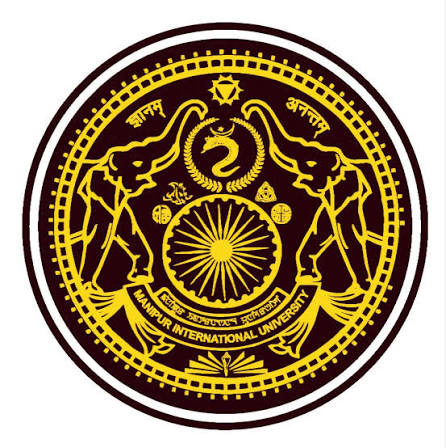
Manipur International University, Imphal
Manipur International University is a UGC-recognized private university located in Imphal, Manipur, India. Known for its strong industry connections, cutting-edge curriculum, and commitment to technology-driven education, Manipur International University has established itself as one of central India's premier higher education institutions.
The university's vision is to foster academic excellence, industry readiness, and global competitiveness among its graduates — making it an ideal partner for EasyShiksha's mission of accessible, quality online education.
EasyShiksha has signed an MoU with Manipur International University to facilitate applications for various university programs and jointly offer B.Voc programs. All degrees and certifications under these programs will be awarded by Manipur International University. The EasyShiksha team will provide complete assistance and support throughout the admission and program process.
Manipur International University, Manipur
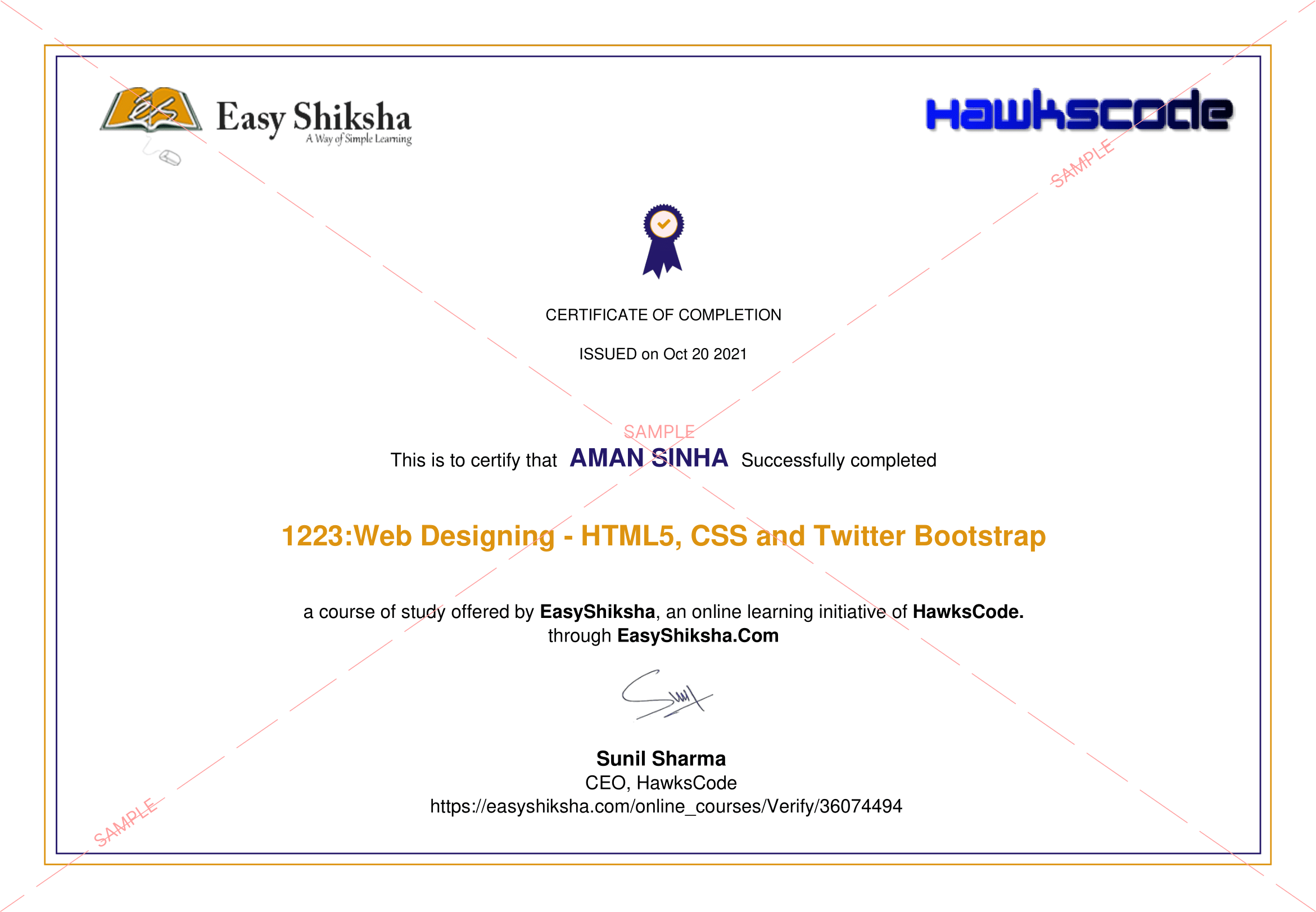
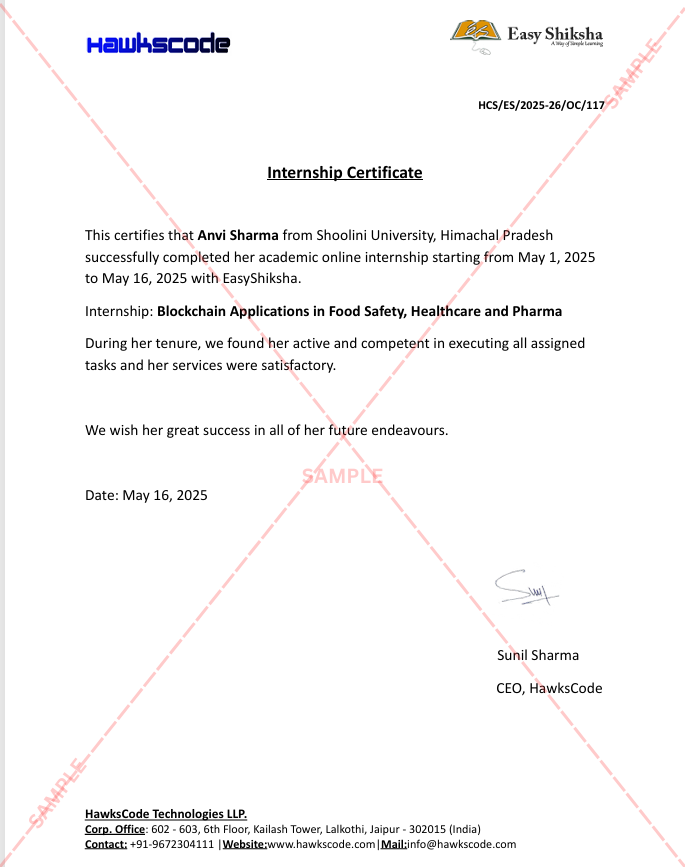
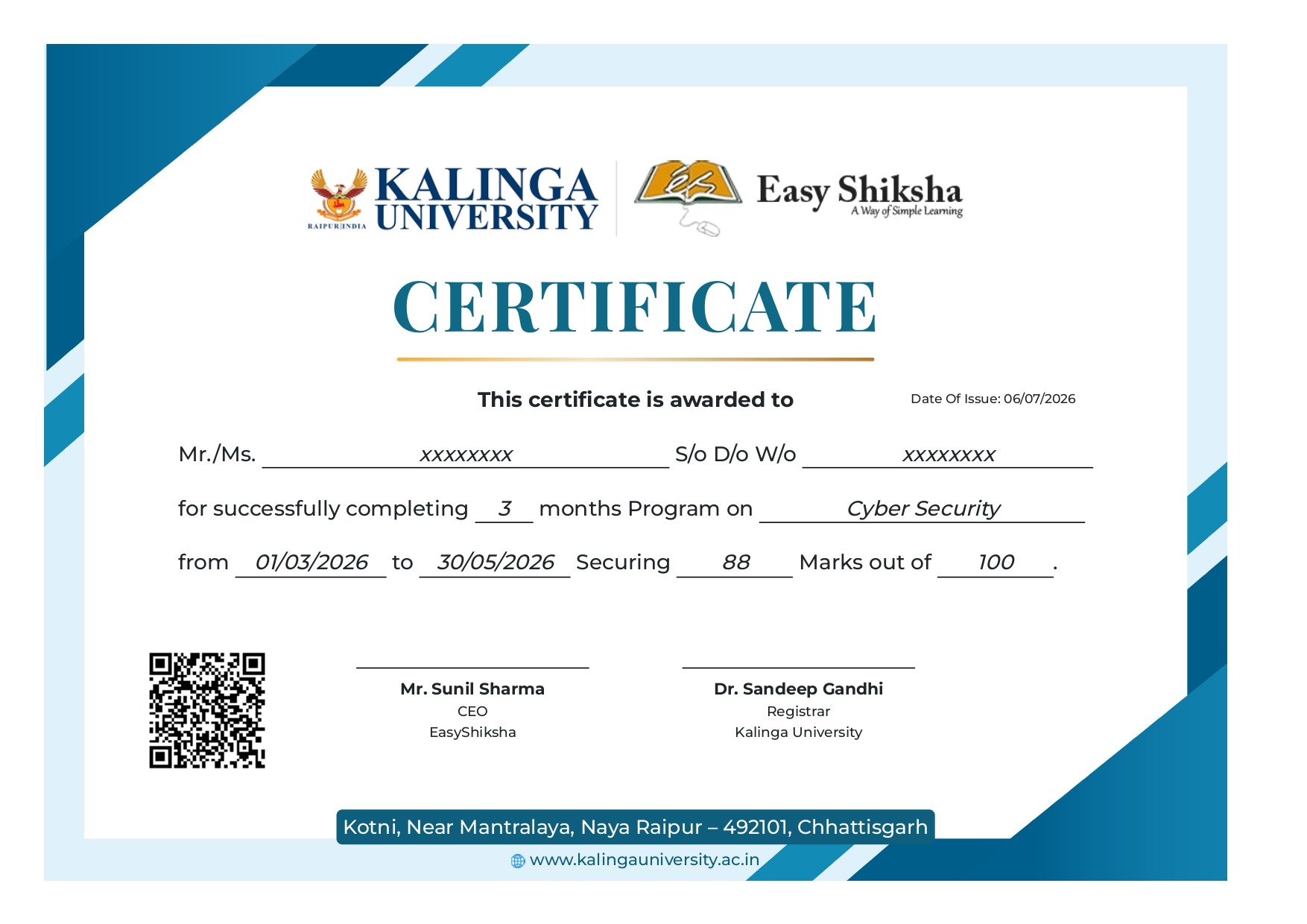
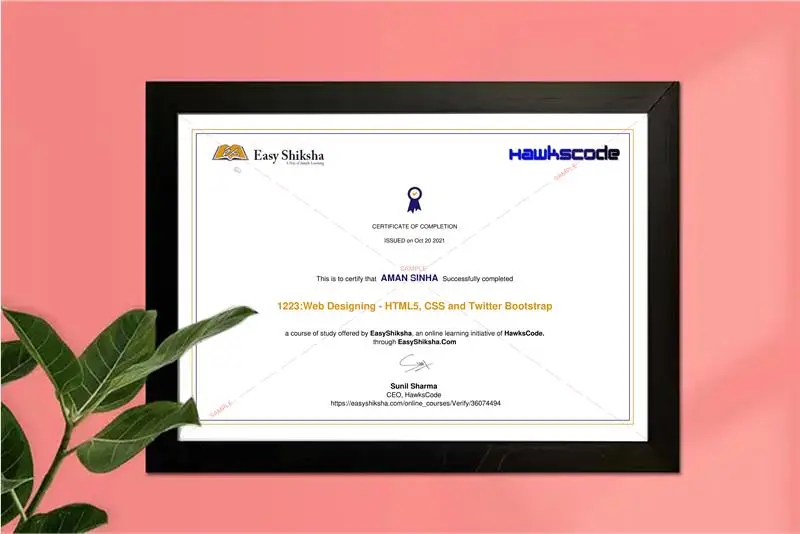
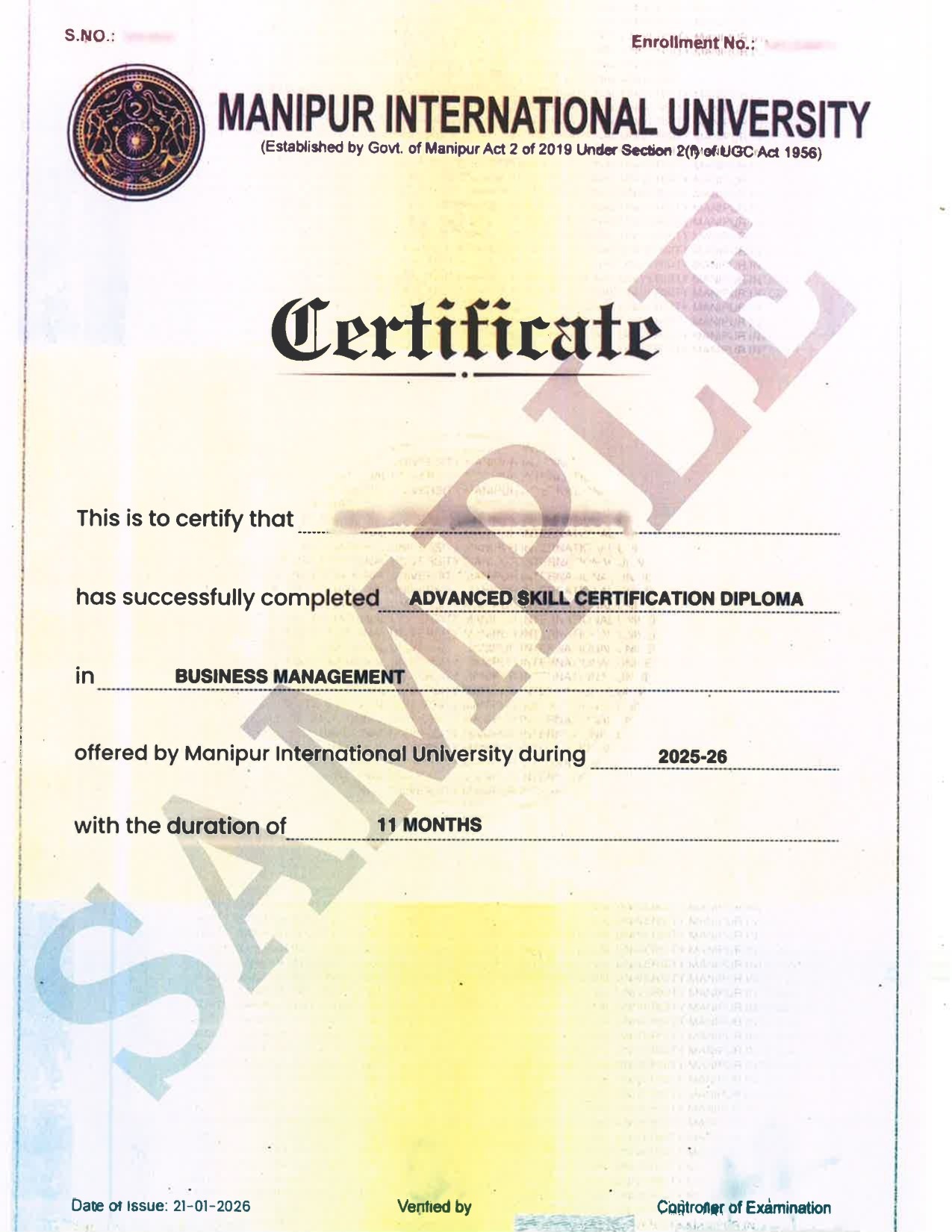
Sample Certificate
Documents
Media Gallery
Frequently Asked Questions
Yes, Manipur International University (MIU) is recognized as per the sections 2(f) and 22 of the UGC Act, 1956. This is a recognized university by the university grant commission and is allowed to award undergraduate, postgraduate and doctoral degrees. Recognition by UGC implies that degrees awarded by MIU are recognized for higher education, competitive exams and job opportunities in India. MIU is an institution where students desiring quality higher education in Northeast India can achieve their educational goals without any difficulty
Students must opt for Manipur International University as it provides degree courses that are recognized. MIU provides numerous choices of courses from undergraduate, graduate to doctorate level. The curriculum of the course is in accordance with National Education Policy (NEP) 2020. Practical learning, innovative research and industry-oriented education is what MIU students believe in to ensure that the students create successful careers. Experienced faculty and modern facilities provided by MIU to its students.
Manipur International University is located at MIU Palace, Luwangsangbam Makha Leikai, Luwangsangbam, Imphal East, Imphal, Manipur-795002.
Manipur International University provides its students with a student-friendly, modern campus equipped with all the necessary facilities that would aid both academic and social life. Smart classes, laboratories, library, computer labs, Wifi-equipped rooms for learning, sports, recreation, cultural and extracurricular activities and many other facilities are offered at MIU.
After doing 12th PCB, there are various courses available for pursuing further studies. Some of the popular courses which can be taken after 12th are Biotechnology, Microbiology, Nursing, Allied Health Science, Medical Laboratory Technology, Environmental Science, Psychology, Pharmacy and many others. These courses will provide a lot of opportunities in hospitals, laboratory, pharmaceutical industries, research institutions and healthcare institutes. Students can select a course on the basis of their interests and future career plans.
There are many career paths for students pursuing PCM in engineering and other sciences and technologies. The popular courses that students may join include B.Tech, BCA, Computer Science, Information Technology, Data Science, Artificial Intelligence, Cyber Security, Mathematics, Architecture, and Engineering subjects. These courses provide various opportunities in software development, engineering, robotics, research, telecommunication, and new technologies. The students should choose any one of the courses based on their personal and professional interest.
Yes, MIU focuses on industry based education by including practical learning projects, skill development, and real world applications in its curriculum. This helps students gain the knowledge and experience needed to handle workplace challenges. MIU has industry based education that helps students improve important skills like critical thinking, communication, teamwork, and leadership. By learning about the latest industry trends, students stay updated and become better prepared for future career opportunities.
MIU does encourage research, innovations, and curiosity among their students and faculty. Research allows students to learn more through exploring new areas, solving problems and gaining deeper insights into their respective fields. Innovations enable the students to think out of the box and increase their analytical abilities. Students can increase their knowledge through research activities, conferences and seminars.
Yes, MIU does motivate its students to participate in several co-curricular and extra-curricular activities that will assist them in developing themselves. These activities include several cultural functions, physical games and sports, leadership, seminars, workshops, etc. These activities not only help the students develop their confidence and leadership qualities but also contribute towards their educational development.
The programme information lists 71 Certification programmes under the Certification category.
A B.Voc programme typically has a duration of three years, with Class 12 or an equivalent qualification generally serving as the entry point.
Yes. A B.Voc can provide a foundation for further education, including M.Voc, which allows learners to pursue advanced specialisation in a vocational field.
Depending on the curriculum, D.Voc programmes may include practical training, projects, workshops, and other occupational learning components focused on applied and skill-based education.
MBA programmes may be offered with specialisations such as Finance, Marketing, Human Resource Management, International Business, Operations Management, Business Analytics, Entrepreneurship, Healthcare Management, and Information Technology Management, depending on the university and programme.
A B.Lib programme can introduce students to areas such as library administration, cataloguing, classification, documentation, reference services, information retrieval, library automation, and digital information management.
It covers advanced areas such as manufacturing technology, mechanical engineering, machine tools, industrial engineering, metrology, quality management, automation, and mechatronics.
Yes. Production Automation & Computer Integrated Manufacturing is included in the selected syllabus.
Yes. Total Quality Management is included along with Industrial Management in the selected syllabus.
Fundamentals of Mechatronics is included in the syllabus to introduce learners to mechatronics concepts relevant to manufacturing technologies.
Relevant areas include manufacturing technology, production, industrial engineering, quality control, automation, machine tools, operations, and technical manufacturing functions.