A student develops a website, creates a software application, builds an engineering prototype, designs a business process or prepares a detailed research project. The work functions successfully when the student is present to explain it, operate it and resolve unexpected problems. However, what happens when the creator is no longer available? Can another person understand the design, operate the system, identify errors, make necessary changes and continue using it without depending on the original creator?
This question reveals an important limitation in conventional educational assessment. Students are frequently evaluated on the quality of the final product, the accuracy of their answers, their individual contribution and their ability to explain what they have created. These measures are valuable, but they do not always reveal whether the work can survive independently of its creator. A technically successful project may depend heavily on undocumented decisions, personal knowledge, manual intervention or assumptions that exist only in the student's mind.
In professional environments, however, successful systems must often continue functioning when their original designers, developers or operators are unavailable. Software must remain maintainable after its developer leaves. Manufacturing processes must operate across different shifts. Research experiments must be repeatable by other researchers. Business operations must continue when a manager is absent. Infrastructure must remain reliable even when the person who designed it is no longer involved.
This creates an interesting possibility for education: what if students were evaluated not only on what they create, but also on whether their creations remain understandable, usable and functional without them?
The concept could be developed into a proposed educational framework called Creator-Independent System Design Assessment. It would evaluate a student's ability to design systems that preserve their functionality, purpose and reliability beyond the involvement of the original creator. For an educational ecosystem such as EasyShiksha, this approach could connect online courses, quizzes, projects, internships, certificates, university programmes and career guidance with a deeper form of practical assessment.
The central idea is simple but significant. A student's work should not be considered complete merely because it functions during a demonstration. It should also demonstrate that another person can understand, operate, maintain and responsibly improve it.
Understanding Creator-Independent System Design
Creator-independent system design refers to the ability to develop a system that can continue performing its intended functions without requiring the constant presence, memory or intervention of the person who originally created it.
The system may be a digital application, engineering design, research procedure, educational resource, operational workflow or business process. Its independence does not mean that it must operate forever without maintenance or human involvement. Rather, it means that its continued operation should not depend unnecessarily on one individual's undocumented knowledge.
Consider a student who develops a student attendance management application. During the final presentation, the student explains how to create accounts, enter attendance records, generate reports and correct errors. The application works perfectly because the creator knows its internal structure and understands the decisions behind every feature.
Now imagine that the student becomes unavailable. A new administrator needs to add users, recover data, modify attendance rules or investigate an error. If the application has unclear instructions, undocumented database structures and no reliable recovery process, its practical value may be significantly reduced.
A creator-independent design would address these possibilities before the project is considered complete. It would include understandable instructions, organised architecture, appropriate access controls, error-handling procedures and sufficient technical documentation. Another person would be able to operate the application without relying on private explanations from its creator.
This principle applies beyond software development. A laboratory experiment should contain enough procedural detail for another student to reproduce it. An automated irrigation system should explain how its sensors, controls and maintenance requirements work. A business process should define responsibilities and decision conditions so that operations do not stop when one employee is absent.
The important achievement is not simply creating something that works. It is creating something whose operation can be understood and continued by others.
Why Conventional Educational Assessment Often Misses This Capability
Traditional project assessment generally focuses on visible outcomes. Students are asked to demonstrate their work, explain its features, answer questions and submit a report. Teachers evaluate whether the expected requirements have been satisfied and whether the student understands the subject.
However, a successful demonstration may hide significant weaknesses. A student may remember every technical detail because they personally developed the project. They may know how to correct errors without having documented the process. They may operate the system through a sequence of actions that no other person could easily reproduce.
This creates a difference between creator competence and system quality. A student can be highly capable while producing a system that is difficult for others to use. Similarly, a relatively simple project may demonstrate excellent design maturity if it can be understood, operated and maintained by someone unfamiliar with its development.
Conventional assessments may also reward individual performance in ways that unintentionally discourage knowledge transfer. Students sometimes concentrate on producing an impressive final presentation rather than making their work accessible to future users. The immediate objective becomes proving that the creator knows the system, not proving that the system can function independently.
In professional environments, this distinction matters considerably. Organisations cannot depend entirely on the continued availability of every individual who creates a process or product. Teams change, employees leave, software developers move to other projects and research responsibilities are transferred.
Education therefore has an opportunity to evaluate a capability that connects individual knowledge with the long-term usability of the systems students create.
A proposed method for evaluating this capability could be called the Creator Absence Test. It would examine what happens when the original creator is deliberately removed from the operation of their own project.
After completing a project, the student would provide another person with the necessary materials, instructions, access and documentation. The evaluator would then ask that person to perform realistic tasks without receiving direct assistance from the creator.
For a software application, the new operator might need to install the system, create an account, enter information, generate a report and resolve a predefined error. For a laboratory project, another student might need to reproduce the experiment using the submitted procedure. For an engineering prototype, a different operator might be asked to start the device, identify its components, perform routine maintenance and respond to a simulated fault.
The creator would remain unavailable during the test. This is important because the objective is to evaluate the system rather than the creator's ability to provide additional explanations.
The test would not expect every system to be completely self-explanatory. Complex systems may require training, technical expertise or professional supervision. Instead, the assessment would examine whether the information and operational structure supplied by the student are sufficient for the intended user.
A well-designed system should make its essential requirements visible. It should communicate what it does, how it should be operated, what limitations exist and what actions are necessary when something goes wrong.
The Creator Absence Test would turn these qualities into observable educational evidence.
Designing Systems That Do Not Depend on Personal Memory
One of the biggest challenges in creator-independent design is the difference between documented information and knowledge retained only by the creator.
During development, students make numerous decisions. They choose particular technologies, select materials, modify parameters, change the original design and discover solutions to unexpected problems. Some of these decisions may never appear in the final project report because the student remembers why they were made.
This creates hidden operational knowledge. The system may work correctly, but another person cannot understand why a particular configuration was selected or what could happen if it is changed.
A strong design should externalise essential knowledge. The creator should record important decisions, dependencies, operating conditions and known limitations in a form that another person can understand.
In software projects, this could involve architecture descriptions, setup instructions, configuration explanations and maintenance records. In engineering, it could include component specifications, assembly procedures, operating limits and inspection requirements. In research, it could involve experimental protocols, measurement conditions, data definitions and analysis procedures.
The purpose is not to produce excessive documentation. It is to identify which information is necessary for the system to remain usable after the creator is absent.
This distinction would be particularly valuable in education because students would learn that their personal understanding is not automatically transferred to the people who use their work.
Documentation as an Engineering Capability
Documentation is frequently treated as an administrative requirement that students complete after finishing a project. Creator-independent assessment would give it a more important role.
Documentation is part of the system's design because it determines how effectively another person can interact with the system. An application without installation instructions may be difficult to deploy. A machine without maintenance guidance may become unsafe to operate. A research procedure without sufficient methodological detail may be impossible to reproduce.
The quality of documentation should therefore be evaluated according to its practical usefulness rather than its length.
A student developing a mobile application, for example, should explain the system requirements, installation process, user roles, important workflows and recovery procedures. A student creating a business inventory system should explain how stock is entered, how discrepancies are handled and how records can be reviewed. A student conducting a scientific experiment should provide enough information for another researcher to understand the materials, conditions and sequence of the procedure.
Documentation should also distinguish between routine operations and exceptional situations. Another person needs to understand not only how the system works under normal conditions but also what to do when expected conditions are not met.
When students begin treating documentation as part of the actual product, they develop a professional capability that extends far beyond academic report writing.
System Continuity and the Problem of Single-Person Dependency
Many systems become vulnerable because too much knowledge or authority is concentrated in one person. This is known as a single-person dependency problem. The issue appears in software teams, small businesses, research laboratories, hospitals, manufacturing units and educational institutions.
A business may depend on one employee who understands its complete inventory process. A website may depend on one developer who knows how its custom functions work. A laboratory may depend on one researcher who understands the exact procedure required to operate a specialised instrument.
If that person becomes unavailable, the system may experience delays, errors or operational failure.
Students should understand this risk when designing professional systems. A project that depends on one person's memory, personal account or undocumented manual process may be technically functional but operationally fragile.
Creator-independent assessment could therefore evaluate whether students identify and reduce unnecessary single-person dependencies. It might examine how responsibilities are distributed, how access is managed, how important information is recorded and whether another authorised person can take over essential tasks.
For example, a student designing a school management system should consider how an administrator can transfer responsibilities to another staff member. A student creating a cloud-based project should consider what happens if the original developer's account becomes unavailable. A team developing a research platform should ensure that essential experimental information is not stored exclusively in one member's personal workspace.
The objective is not to eliminate individual responsibility. It is to prevent the entire system from becoming dependent on the continued availability of one individual.
Reliability Beyond the Final Demonstration
A project demonstration usually represents a controlled moment. The student knows what will happen, the equipment is prepared and the environment is arranged to show the intended features. However, real systems operate under changing conditions.
An application may encounter unexpected inputs. A sensor may produce inaccurate readings. A network connection may fail. A machine may require maintenance. A user may perform an operation in an unintended sequence.
Creator-independent design must therefore include the ability to handle predictable disruptions.
Students should be encouraged to identify likely failure conditions and design appropriate responses. Software projects might include validation, error messages, backups and recovery procedures. Engineering projects might include safety mechanisms, inspection requirements and clearly defined operating limits. Research systems might include procedures for dealing with missing observations, measurement errors or inconsistent results.
The assessment should examine whether the student has considered how the system behaves when normal conditions are interrupted.
This does not require every student project to achieve industrial-grade reliability. Expectations should be appropriate to the project's scale, subject and intended use. A beginner's website and a medical monitoring system have very different safety and reliability requirements. Nevertheless, every project can demonstrate some level of preparation for conditions beyond the ideal demonstration.
The Role of Standardised Interfaces
A system becomes easier to transfer when its different components communicate through understandable and consistent interfaces.
In software engineering, interfaces define how components interact. In business operations, standard procedures define how information moves between people and departments. In engineering, standard connectors and clearly labelled controls help different operators understand how equipment is used.
Students should learn that a well-designed system does not require every user to understand all its internal details. It should provide appropriate ways to interact with its functions.
For example, a student developing a data-processing application could create clearly defined input formats and output structures. Another developer would then be able to use the system without understanding every internal implementation decision. Similarly, a student designing a laboratory instrument could label controls and provide operating instructions that make its essential functions accessible to trained users.
Standardised interfaces reduce the amount of hidden knowledge required to operate a system. They also make future improvements easier because changes to one component do not necessarily require rebuilding the entire system.
This could become an important part of creator-independent educational assessment, particularly in computer science, engineering, information technology and industrial design.
Evaluating Maintainability and Future Modification
A system that works today may not remain suitable forever. Software requirements change, business processes evolve, equipment components wear out and scientific methods improve. Creator-independent design must therefore consider whether another person can maintain and modify the system after its original creator leaves.
Maintainability involves more than repairing errors. It includes understanding the structure of the system, identifying which components can be changed, recognising dependencies and ensuring that modifications do not create unexpected problems.
A student developing a website should organise its code so that another developer can understand and update it. A student designing an automated system should make it possible to replace or recalibrate components without reconstructing the entire design. A student developing an educational resource should explain how its content can be updated when the underlying information changes.
An assessment could introduce a controlled modification challenge. The evaluator might request a small feature change, a revised operating condition or a correction to an existing process. Another person would attempt to make the modification using the student's documentation and system structure.
The student's original work would be evaluated not only on whether it functions but also on whether it can evolve.
This is particularly important in technology-oriented education because professional software and engineering systems are rarely static products.
Designing for Users Who Do Not Think Like the Creator
Creators often understand their own designs because they already know the intentions behind them. They can overlook unclear labels, missing instructions and confusing workflows because they mentally fill in information that the system does not actually communicate.
A new user does not possess this background knowledge.
Creator-independent assessment should therefore involve people who are unfamiliar with the project. Their interaction can reveal whether the system communicates its purpose and operation clearly.
For example, a student may develop an online learning dashboard that appears intuitive to its creator. However, a new user may not understand how to enrol in a course, locate assessment results or retrieve a certificate. The system may contain every required feature, but its usability remains weak.
Similarly, an engineering prototype may be technically sound while its controls are poorly labelled. Another operator might understand the underlying mechanism but still be uncertain about the correct operating sequence.
This is where user-centred design becomes essential. Students should learn to evaluate their work from the perspective of someone who did not participate in its creation.
The ability to design for unfamiliar users is a significant indicator of professional maturity because real systems are rarely used exclusively by the people who build them.
Applying Creator-Independent Assessment Across Academic Disciplines
The framework could be applied across multiple disciplines because most professional fields depend on systems that must operate beyond the involvement of their original creators.
Computer Science and Software Development
In computer science, creator-independent assessment could evaluate whether another developer can install, understand, test and maintain a student's application. The assessment might examine code organisation, configuration management, database structure, security practices, error handling and technical documentation.
A student who builds an application that works only on their own computer would demonstrate a different level of design maturity from someone whose application can be deployed and maintained by another developer.
The evaluation could also examine whether credentials, API keys and sensitive configuration information have been handled responsibly. A system should never depend on unsafe access arrangements simply because the original creator understands them.
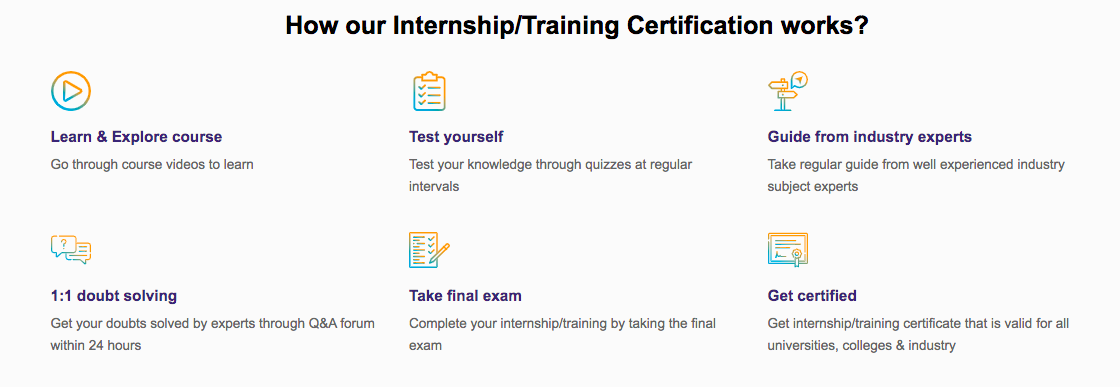
How EasyShiksha Internship/Training Program Works
Engineering and Industrial Design
Engineering students could be assessed on whether another trained operator can assemble, operate, inspect and maintain their prototypes. The system should communicate its components, operating limits, safety requirements and maintenance procedures.
A mechanical prototype that functions only when its creator adjusts it manually would not demonstrate the same level of independence as a design with clearly documented settings and repeatable operating procedures.
The assessment could include simulated component replacement, operator handover and fault identification exercises.
Business and Management
Business students frequently develop operational plans, marketing strategies, inventory systems and organisational workflows. These projects can be evaluated by examining whether another employee could continue the process without relying on the original student's personal explanations.
A marketing campaign, for example, should document its objectives, audience assumptions, content strategy, performance indicators and reporting procedures. A different team member should be able to understand what was done and continue the campaign within the defined requirements.
Science and Research
Research students could be evaluated on whether another researcher can understand and reproduce their experimental procedures. This would involve clear methods, measurement conditions, data structures, analytical decisions and limitations.
A research result is more useful when its underlying process can be independently examined. If essential methodological information exists only in the researcher's memory, the work becomes difficult to verify and extend.
Education and Learning Design
Students studying education could create lesson plans, digital learning resources, assessments and instructional activities that another teacher can use. The materials should communicate learning objectives, required resources, teaching procedures and assessment criteria.
A lesson should not depend entirely on the original designer's personality or verbal explanation. Another qualified educator should be able to understand its intended structure and adapt it appropriately.
Team Projects and Knowledge Transfer
Team projects offer a particularly useful environment for evaluating creator-independent design. In group assignments, different students often take responsibility for separate components. This creates an opportunity to examine whether the final system can be understood by team members who did not create every part of it.
A student may develop the database while another creates the interface and a third handles the testing process. If each component is understandable only to the person who developed it, the project contains knowledge-transfer weaknesses.
A practical assessment could require students to exchange responsibilities after completing the project. One student would operate a component originally created by another, while the original creator would remain unavailable for assistance.
This process would reveal whether interfaces, documentation and system architecture support collaboration.
However, the assessment should distinguish between reasonable specialist knowledge and unnecessary dependency. A complex engineering system may require trained expertise, and it would be unrealistic to expect every team member to understand every technical detail. The goal is to ensure that responsibilities and required knowledge are transferable to appropriately prepared people.
This would also teach students an important professional lesson: successful collaboration depends not only on dividing work but also on making the results understandable to others.
AI as an Evaluation Assistant
Artificial intelligence could help educators evaluate creator-independent design by examining different forms of project evidence.
An AI-enabled assessment assistant could review technical documentation, compare it with the actual system structure and identify missing explanations. It could examine whether the documented installation process matches the software configuration, whether project requirements are reflected in the operating instructions or whether a research procedure contains sufficient detail for another person to follow.
For example, an AI system could compare a student's application code with its documentation and identify features that are implemented but not explained. It could also identify references to missing files, unclear configuration settings or inconsistent terminology.
In engineering projects, AI could help compare operating procedures with component specifications and identify areas where additional safety explanations may be required. In research projects, it could examine whether reported methods clearly describe the conditions under which an experiment was performed.
However, AI should not be treated as the final authority on system independence. A document may appear complete while remaining difficult for an actual user to follow. Similarly, an application may contain well-organised code but fail when deployed in another environment.
Human testing remains essential. AI can support the evaluation process, identify potential weaknesses and organise evidence, while educators and practical evaluators determine whether the system genuinely works without its creator.
The Creator-Independent Design Score
A proposed Creator-Independent Design Score could provide a structured way to assess this capability. Rather than relying on one overall impression, educators could examine several aspects of system continuity.
The evaluation could consider operational independence, documentation quality, maintainability, error recovery, user accessibility, knowledge transfer and responsible access management. Each dimension would represent a different requirement for continued operation.
Operational independence would examine whether another person can perform the system's essential tasks. Documentation quality would examine whether instructions provide sufficient information. Maintainability would evaluate whether changes can be made without reconstructing the project. Error recovery would examine whether the system can respond appropriately to expected disruptions.
Knowledge transfer would focus on whether essential decisions and dependencies are recorded. User accessibility would consider whether the intended users can understand and operate the system. Responsible access management would examine whether ownership, permissions and credentials have been handled appropriately.
The resulting score should be interpreted in relation to the intended purpose of the project. A small student application should not be compared directly with a complex industrial control system. The assessment should evaluate whether the student has met the level of independence reasonably expected for the project's scale and risk.
The score would be a proposed educational assessment model rather than an established universal standard. It would require testing, validation and discipline-specific adaptation before being used for formal comparisons.
Connecting the Framework With EasyShiksha
EasyShiksha's broader learning ecosystem could provide opportunities to introduce creator-independent design as a practical dimension of student development. Online courses can teach the foundations of system design, software development, documentation, project management and operational reliability. Quizzes can assess whether students understand concepts such as system dependencies, maintainability, error handling and knowledge transfer.
Projects could then allow learners to apply these ideas. A student completing a web development course might be asked to build an application that another person can install, operate and update. A learner studying digital marketing could create a campaign process that another team member can continue. A student exploring data analytics could develop a repeatable workflow that allows another user to process a new dataset using the documented method.
Internships could introduce students to real workplace handovers. Learners could observe how teams document processes, transfer responsibilities and maintain operations when employees change roles. They could also gain experience identifying systems that depend too heavily on individual knowledge.
Certificates could potentially recognise the completion of structured learning and practical assessments, while career guidance could help students understand how system independence relates to roles in software development, engineering, operations, research, business analysis and project management.
The opportunity is to connect these experiences into a coherent learning pathway. Instead of evaluating students only on their ability to complete a course or produce a project, the platform could help them develop the ability to create work that others can confidently continue using.
Turning Projects Into Transferable Professional Evidence
A project that survives its creator's absence can become stronger evidence of professional capability than a project that can only be demonstrated by its author.
Employers often need people who can build systems that remain useful across changing teams and responsibilities. A developer must write code that colleagues can maintain. An operations professional must create procedures that different employees can follow. A project manager must ensure that important decisions and responsibilities remain visible when team members change.
Students who demonstrate creator-independent design can show that they understand these professional requirements.
A project portfolio could therefore include more than screenshots, feature descriptions and final results. It could also explain how another person successfully operated the system, which documentation was provided, what modifications were completed and how the system responded to a simulated failure.
Such evidence would help employers understand how a candidate approaches continuity, maintainability and collaboration. It would also make academic projects more closely connected to the realities of professional work.
For EasyShiksha, this could create an opportunity to position project-based learning around demonstrable system capability rather than project completion alone.
Empower your team. Lead the industry
Get a subscription to a library of online courses and digital learning tools for your organization with
EasyShiksha
Creator-independent assessment would need careful implementation. Not every system can operate without specialist intervention, and some projects are intentionally designed for expert users. A medical device, advanced laboratory instrument or industrial control system may require professional training and regulatory supervision.
The assessment should therefore not confuse independence with the complete absence of human support. It should examine whether the system can be operated and maintained by the appropriate people using the information and resources provided.
There is also a risk that students may produce excessive documentation simply to improve their assessment scores. Long reports do not necessarily make systems easier to use. Educators should evaluate whether documentation is accurate, relevant and effective in real operating situations.
Another challenge concerns project complexity. Students should not be penalised for selecting an appropriately ambitious project that requires specialist knowledge. The evaluation should consider the intended users, system purpose, available resources and expected level of expertise.
Security and privacy must also remain central. A student should not make a system easier to operate by exposing sensitive information, sharing unrestricted administrator access or removing necessary security controls. Responsible transfer must preserve appropriate permissions and safeguards.
Finally, the Creator Absence Test should be designed fairly. Students should know the evaluation conditions, and the substitute operator should receive the level of training appropriate to the system. The objective is to measure the quality of the design, not to create an artificial situation in which an unfamiliar person is expected to perform impossible tasks.
The Long-Term Value of Designing Beyond the Creator
The ability to create systems that continue working beyond the creator's involvement has implications far beyond individual academic projects. It changes how students think about responsibility, collaboration and the long-term consequences of their work.
A student who designs a system for another person must consider clarity, accessibility and reliability from the beginning. They become more aware of hidden assumptions and dependencies. They learn that an elegant solution is not necessarily a complete solution if nobody else can operate it.
This mindset also encourages more responsible innovation. A system should not be judged only by how impressive it appears during a presentation. Its practical value depends on whether it can serve its intended users under realistic conditions and whether it can be maintained as requirements evolve.
In the long term, creator-independent design could help educational institutions prepare students for environments where continuity matters. Organisations need professionals who can build systems that support teams rather than making teams dependent on individual knowledge.
Education can help develop this capability by making system handover, documentation, maintainability and operational continuity visible parts of assessment.
Conclusion: The Best Student Project Should Not End When the Student Leaves
A successful educational project should demonstrate more than the creator's ability to produce a working result. It should also show that the underlying system can be understood, operated, maintained and responsibly improved by others.
The proposed Creator-Independent System Design Assessment offers a way to evaluate this capability. Through creator absence tests, practical handovers, documentation reviews, maintenance challenges and independent operation, educators could examine whether students have designed systems that remain useful beyond their personal involvement.
For EasyShiksha, this approach could connect online courses, quizzes, projects, internships, certificates and career guidance with a more practical understanding of professional readiness. Students could learn not only how to create applications, processes, research procedures and engineering solutions, but also how to make those creations transferable and sustainable.
The deeper educational shift is from evaluating the individual who creates a system to evaluating the quality of the system itself. Students would still need technical knowledge, creativity and problem-solving ability, but they would also need to demonstrate that their work can serve people who were not part of its creation.
Ultimately, the strongest measure of a student's design capability may be what happens after the student steps away. If another person can understand the work, continue its operation, identify its limitations and improve it responsibly, the student has created something more valuable than a successful demonstration.
The real achievement is not building a system that works only when its creator is present. It is building a system that remains useful when the creator is no longer there.
Anshika Jain is an Engineer, Developer, and Educational Content Author known for her dedication to technology and knowledge sharing. With a strong analytical mindset and a passion for innovation, she has consistently contributed to creating meaningful digital solutions and insightful educational articles.
Her ability to simplify complex technical concepts into engaging and easy-to-understand content makes her work valuable for students and learners across various platforms. Along with her technical expertise, Anshika is admired for her creativity, professionalism, and commitment to continuous learning.
She represents a perfect blend of technical excellence and impactful communication, inspiring others through both her development work and educational contributions.