India is one of the world's most linguistically diverse countries, and this diversity has a direct connection with education. Millions of learners grow up speaking Hindi, Bengali, Marathi, Tamil, Telugu, Gujarati, Kannada, Malayalam, Punjabi, Odia, Assamese, and many other Indian languages. Yet for a long time, a significant portion of digital educational content has been available primarily in English.
English remains extremely important for higher education, technology, professional communication, and global employment. However, depending exclusively on English can create an unnecessary barrier for learners who may have the ability and motivation to learn but are more comfortable understanding complex concepts in their native language.
The growth of vernacular learning platforms is helping change this situation. By providing educational explanations, tutorials, assessments, and other learning resources in Indian languages, digital platforms can make education more accessible to a much broader audience.
Government initiatives have also recognized the importance of multilingual digital education. The National Education Policy 2020 promotes the development of educational content and software in major Indian languages. Government initiatives such as DIKSHA and PM e-VIDYA have expanded access to multilingual educational resources, with DIKSHA supporting educational content in dozens of Indian languages.
For platforms such as EasyShiksha, the movement toward vernacular digital education represents an important opportunity to make online learning more inclusive. EasyShiksha already provides online courses through web and mobile platforms, and its FAQ states that while most courses are currently in English, the platform is continuously working toward adding courses in other Indian languages.
The future of digital education in India is therefore not simply about putting more courses online. It is about making those courses understandable, accessible, affordable, and relevant to learners from different linguistic backgrounds.
Understanding Vernacular Learning in India
Vernacular learning refers broadly to education delivered through a learner's regional or native language. In the digital environment, this can include video lessons, written explanations, quizzes, interactive activities, subtitles, audio lessons, assessments, and support services provided in Indian languages.
The importance of vernacular education comes from a simple principle: learners often understand difficult concepts more naturally when explanations are presented in a language they are comfortable using in everyday life.
A student may know basic English but still find technical terminology difficult to understand. A professional may be able to communicate in English at work but prefer learning a complicated new subject in Hindi or another regional language. A learner from a rural area may have strong academic potential but limited exposure to English-medium digital content.
Vernacular learning platforms can reduce this language barrier.
This does not mean English becomes unnecessary. Instead, multilingual education gives learners additional pathways to understanding.
A student can first understand a concept in a familiar language and then gradually become comfortable with the English terminology used in the professional world.
Why Language Matters in Digital Education
Language is more than a communication tool. It influences how learners process information, ask questions, interpret examples, and connect new knowledge with what they already know.
When a learner encounters a difficult concept in an unfamiliar language, some of their mental effort may be spent understanding the language rather than understanding the subject.
For example, imagine a student trying to learn the basics of computer programming. The actual concept may be relatively simple, but unfamiliar English terminology can make it appear more complicated.
If the same concept is explained in the learner's familiar language, the student may be able to focus more directly on the programming concept.
This is particularly important in online education because learners often study independently. In a physical classroom, students can immediately ask a teacher to explain something differently. In a self-paced online course, a language barrier can cause a learner to stop, skip lessons, or abandon the course altogether.
Vernacular content can therefore improve the accessibility of self-directed education.
India's Linguistic Diversity Creates a Huge Opportunity
India's linguistic diversity makes the country both a challenge and an opportunity for digital education.
A single English-language learning platform may reach a large audience, but a multilingual platform can potentially connect with learners who previously felt excluded from digital education.
The government has already recognized this opportunity. According to the Ministry of Education, DIKSHA provides educational resources in 33 Indian languages, demonstrating the scale at which multilingual digital education can be developed.
This demonstrates that language-inclusive digital education is not a small niche. It can be part of a nationwide strategy for expanding educational access.
For private online learning platforms, the opportunity extends beyond school education.
Higher education, professional development, technology training, competitive examination preparation, entrepreneurship, digital marketing, programming, communication skills, and career development can all benefit from multilingual learning resources.
Vernacular Platforms Can Reach Learners Beyond Major Cities
Digital education has the potential to reduce geographic barriers, but language can become another barrier if most content is available only in English.
A learner living in a metropolitan city may have extensive exposure to English through school, college, work, and the internet. A learner in a smaller city or rural community may have a very different linguistic background.
Vernacular learning can help online education reach these audiences more effectively.
A student does not necessarily need to move to a large city to access educational resources. With a smartphone, internet connection, and suitable regional-language content, the learner can access educational material from home.
EasyShiksha's mobile accessibility supports this broader model of flexible learning. The platform states that its courses can be accessed through smartphones, tablets, and computers, and its mobile applications are available for Android and iOS.
When device accessibility is combined with language accessibility, the potential reach of online education becomes considerably larger.
Vernacular Learning and the Digital Divide
The digital divide is not only about whether someone has an internet connection.
It also involves device availability, affordability, digital literacy, connectivity quality, accessibility, and the availability of relevant content.
A learner may own a smartphone but still struggle to benefit from online education if most of the available material is difficult to understand because of language.
This is why multilingual education is an important component of digital inclusion.
Government initiatives under PM e-VIDYA have specifically focused on providing multimodal educational access to address India's digital divide. The Ministry of Education describes PM e-VIDYA as an initiative designed to provide equitable access through portals, applications, television, radio, and other modes.
Vernacular learning adds another layer to this accessibility: making the content itself easier to understand.
Comprehension is one of the most direct benefits of learning in a familiar language.
When learners understand the language used in an explanation, they can concentrate more effectively on the underlying concept.
This is particularly important for subjects that contain complicated terminology.
Consider a learner studying financial literacy. Concepts such as investment, inflation, compound interest, taxation, budgeting, and financial planning can already be challenging. If the learner is simultaneously struggling to understand the language of instruction, the cognitive burden increases.
A regional-language explanation can simplify the first stage of understanding.
Once the concept is clear, learners can gradually become familiar with the English terminology that they may encounter in textbooks, workplaces, financial institutions, or professional environments.
This creates a bridge between local-language understanding and global professional communication.
Vernacular Content Can Increase Learner Confidence
Confidence is an important part of successful online learning.
Learners who constantly encounter unfamiliar language may begin to believe that a subject is beyond their ability.
In reality, the problem may not be the subject itself. It may be the language in which the subject is being presented.
When learners can understand the initial explanation more easily, they may feel more comfortable asking questions, completing exercises, and attempting assessments.
This can create a positive learning cycle.
Understanding leads to participation. Participation leads to practice. Practice improves confidence. Greater confidence encourages continued learning.
For an online learning app such as EasyShiksha, increasing learner confidence can be particularly important because self-paced education requires learners to take greater responsibility for their own progress.
Vernacular Learning Can Improve Course Completion
Course completion is a major challenge across the online education industry.
Learners may enroll in a course with strong intentions but stop midway because of lack of time, difficulty, low motivation, or confusion.
Language can contribute to this problem.
If learners repeatedly struggle to understand lessons, they may become discouraged.
Providing explanations in familiar languages can reduce one potential source of friction.
This does not mean that translation alone guarantees completion. Course quality, instructional design, motivation, difficulty level, course length, user experience, and career relevance remain important.
However, language accessibility can make it easier for learners to stay engaged.
Regional Languages Can Make Technical Education More Accessible
Technical education is often strongly associated with English.
Programming documentation, software interfaces, technology tutorials, and professional resources frequently use English terminology.
As a result, learners sometimes assume that they must become fluent in English before they can begin learning technology.
Vernacular digital education can challenge this assumption.
A beginner can learn the fundamentals of programming, data science, artificial intelligence, cybersecurity, or web development through explanations in a familiar language while retaining important technical terms in English.
For example, a Hindi explanation can introduce the concept of a programming variable while retaining the English word “variable” because that is the terminology the learner will encounter in software development.
This bilingual or multilingual approach can be particularly effective.
It does not isolate learners from the global technology ecosystem. Instead, it gives them a more accessible starting point.
Vernacular Learning and Skill Development
India's digital economy increasingly requires skills in areas such as programming, digital marketing, graphic design, data analysis, artificial intelligence, cloud computing, cybersecurity, communication, and entrepreneurship.
Many learners want to acquire these skills but may not be comfortable learning entirely through English.
Vernacular learning platforms can make skill development more approachable.
A learner can understand the basic concept in a regional language, complete practice exercises, and gradually become familiar with professional vocabulary.
This can help expand the pool of learners participating in India's digital economy.
For EasyShiksha, this is particularly relevant because the platform focuses on online courses, certifications, internships, and career-oriented skill development. Its platform currently offers more than 1,000 online courses across different subjects, according to its mobile app information.
Expanding multilingual access can potentially make this wider course ecosystem relevant to an even broader audience.
Vernacular Education Does Not Mean the End of English
There is sometimes a false choice between English education and regional-language education.
In reality, India needs both.
English is important for global communication, higher education, international research, technology, and many professional environments. At the same time, regional languages are essential for accessibility and inclusion.
The strongest digital education model can therefore be multilingual.
A learner might begin with a Hindi explanation, use English technical terminology during practice, read English documentation later, and eventually communicate professionally in English.
This approach creates a gradual pathway rather than forcing learners to choose between two languages.
For EasyShiksha, multilingual education could similarly complement its existing English-language courses rather than replace them.
The Role of Subtitles and Translations
Vernacular learning does not necessarily require every course to be completely recreated in multiple languages.
Technology allows several approaches.
A course can retain the original English video while providing regional-language subtitles. Written transcripts can be translated into different languages. Key concepts can be summarized in regional languages. Quizzes can potentially be offered in multiple languages.
This can make multilingual expansion more practical.
For example, a programming course originally produced in English could provide Hindi subtitles and translated explanations of difficult concepts. Learners could then choose the language that best supports their understanding.
Over time, more courses could be professionally localized.
AI Is Accelerating Multilingual Education
Artificial intelligence is likely to become an important part of vernacular digital education.
AI-based translation, speech recognition, text generation, voice synthesis, and conversational systems are making it easier to create multilingual educational experiences.
A learner could potentially watch a lesson in one language, read an explanation in another, ask a question using voice, and receive an answer in their preferred language.
AI can also help educational platforms localize content more efficiently.
However, automated translation should not be treated as a complete substitute for human expertise.
Educational translation requires more than converting words from one language to another. Technical terminology, cultural context, examples, grammar, pronunciation, and educational tone all matter.
Human review remains important for maintaining accuracy.
Voice-Based Learning Can Support Vernacular Education
Voice technology offers another significant opportunity.
Typing in a regional language can sometimes be difficult for users who are more comfortable speaking than writing.
Voice-based educational assistants can reduce this barrier.
A learner could ask a question in Hindi, Marathi, Tamil, Bengali, Telugu, or another supported language and receive a spoken or written response.
This could make digital education more accessible to learners who have limited experience with English-language keyboards or complex digital interfaces.
For mobile-first platforms such as EasyShiksha, voice interaction could become an important part of future multilingual learning experiences.
Vernacular Learning and Personalized Education
Language personalization can also work alongside AI-powered adaptive learning.
Imagine two learners studying the same course.
One prefers Hindi explanations, while another prefers Marathi. Both learners may have different levels of prior knowledge.
An intelligent learning platform could potentially personalize both dimensions.
The first learner could receive Hindi explanations and beginner-level practice. The second could receive Marathi explanations and more advanced exercises.
This creates a more individualized learning journey.
AI-based adaptive learning research increasingly explores systems that personalize content according to learner characteristics, proficiency, preferences, and performance. Language can become another meaningful dimension of that personalization.
Vernacular Learning Can Help Parents and Families Participate
Language accessibility can also affect family involvement in education.
Parents who are not comfortable with English may find it difficult to understand what their children are learning through English-heavy digital platforms.
Regional-language explanations can make educational content more approachable for families.
Parents can understand course objectives, discuss concepts with children, and encourage learning more confidently.
This is especially valuable for younger learners, but the principle can also apply to adult education.
A family member who understands the learner's preferred language may be able to provide encouragement and support.
Vernacular Platforms Can Support Lifelong Learning
Digital education is no longer limited to school and college students.
Adults increasingly need to learn new skills throughout their careers.
A small-business owner may want to learn digital marketing. A professional may want to understand artificial intelligence. A homemaker may want to learn graphic design. A graduate may want to learn coding. An entrepreneur may want to understand financial management.
These learners come from different educational backgrounds.
Some may have completed formal education years ago and may not feel comfortable returning to English-heavy academic material.
Vernacular online courses can make lifelong learning less intimidating.
The learner does not have to return to a traditional classroom. They can learn from home, at their own pace, using familiar language.
EasyShiksha and the Opportunity for Multilingual Digital Learning
EasyShiksha already focuses on making digital education accessible through online courses, internships, certifications, and mobile learning.
The platform's own FAQ acknowledges that most courses are currently in English while stating that it is continuously working on adding courses in other Indian languages.
This creates a clear opportunity for the platform's future.
As EasyShiksha expands multilingual content, regional-language learners could potentially access courses across areas such as technology, business, communication, personal development, creative skills, and career preparation.
The platform's existing mobile accessibility can complement this effort because language and device accessibility together can significantly reduce barriers to digital learning.
Its online course model also allows learners to study at their own pace, making regional-language content relevant not only to students but also to professionals and lifelong learners.
Vernacular Learning Can Strengthen India's Employability Ecosystem
Skill development is increasingly connected to employability.
Learners want education that can help them build practical capabilities and improve their career prospects.
Language-inclusive skill development can potentially bring more people into this ecosystem.
A learner should not have to choose between understanding a subject and developing professional terminology.
Instead, a course can introduce the concept in a familiar language while teaching the English terminology needed in the workplace.
This bilingual approach can create a stronger connection between education and employment.
For example, a Hindi-speaking learner can understand the concept of “search engine optimization” through Hindi explanations while learning that the professional term used in the industry is SEO.
The learner develops both conceptual understanding and workplace vocabulary.
Challenges Facing Vernacular Digital Education
Despite its enormous potential, multilingual online education has several challenges.
Creating high-quality content in multiple languages requires investment, subject experts, translators, editors, instructors, voice artists, and technology infrastructure.
Literal translation is not enough.
An educational explanation must preserve meaning and clarity.
Some technical terms do not have widely accepted equivalents in every regional language. In such cases, retaining the English technical term while explaining it in the regional language may be more effective.
There is also the challenge of maintaining consistency.
If a course is updated in English, corresponding versions in other languages need to be updated as well.
AI can help reduce some of these costs, but human quality control remains essential.
The Importance of Cultural Context
Vernacular education should not simply translate language. It should also consider context.
Examples, analogies, case studies, and references should make sense to the target audience.
For example, a financial literacy course aimed at Indian learners can use familiar examples involving Indian banking, digital payments, household budgeting, and local financial practices.
Similarly, a business course can use examples from Indian startups and small businesses.
This makes learning more relatable.
For EasyShiksha, localization could therefore involve not only translating courses but also adapting examples and learning activities for Indian learners from different regions.
Digital Infrastructure Still Matters
Language accessibility cannot solve every challenge.
Learners still need smartphones or other devices, reliable connectivity, affordable data, and basic digital skills.
Government initiatives such as PM e-VIDYA recognize the importance of multimodal access because not every learner has the same level of connectivity or device availability.
Future vernacular platforms should therefore consider lightweight applications, downloadable resources, subtitles, audio content, and other options that can work under different connectivity conditions.
This is particularly important if digital education is expected to reach remote and underserved communities.
Frequently Asked Questions
Q. How can I apply for an internship with EasyShiksha?
You can apply by visiting our website, browsing available internships, and following the application instructions provided.
Q. What types of internships are available through EasyShiksha?
EasyShiksha offers a wide range of internships across technology, business, marketing, healthcare, and more.
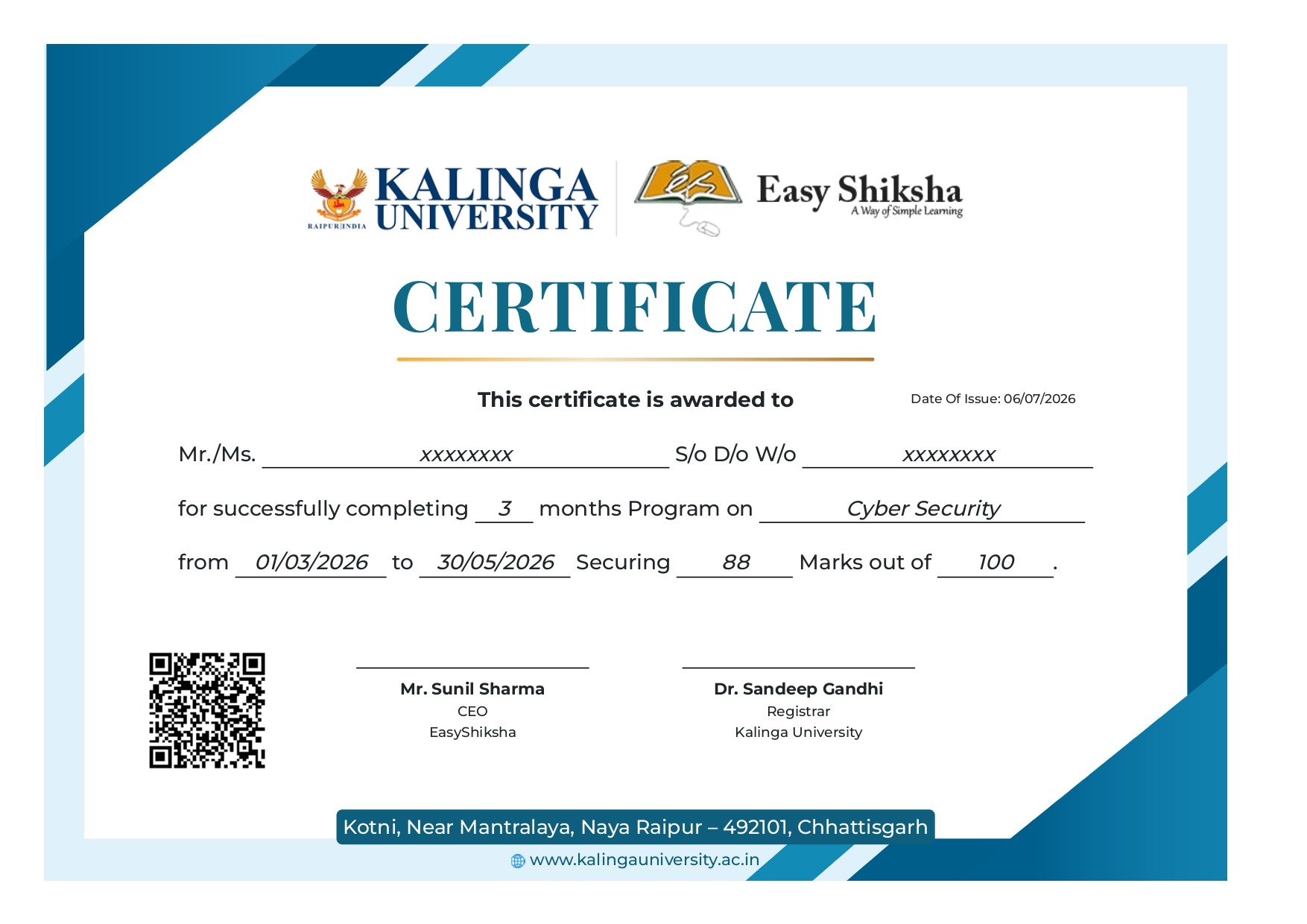
Q. Will I receive a certificate upon completing an internship?
Yes, upon successful completion, you will receive a certificate recognizing your participation and achievements.
Q. Are EasyShiksha's certificates recognized?
Yes, the certificates are recognized by universities, colleges, and employers worldwide.
Q. When can I start the course?
You can choose any course and start immediately without delay.
Q. What are the course and session timings?
These are fully online courses. You can learn at any time and pace that fits your schedule.
Q. What will happen when my course is over?
After completion, you will have lifetime access to the course for future reference.
Q. Can I download the notes and study material?
Yes, you can access and download course materials and have lifetime access for future reference.
Q. What software/tools would be needed?
All necessary software/tools will be shared during the training as needed.
Q. I’m unable to make a payment. What should I do?
Try using a different card. If the problem persists, email us at info@easyshiksha.com.
Q. Do I get the certificate in hard copy?
No, only a soft copy is provided, which can be downloaded and printed if required.
Q. The payment got deducted but shows “failed”?
The deducted amount will be returned to your account in 7-10 working days automatically.
Q. Payment successful but dashboard shows ‘Buy Now’?
Reflection may take 30 mins. If longer, email info@easyshiksha.com with your screenshot.
Q. What is the refund policy?
Refunds are available for technical issues. No refunds once a certificate is generated.
Q. Can I enroll in a single course?
Yes, select any course, complete the details, and start learning immediately.
Q. Need further help?
Contact us at info@easyshiksha.com for any other questions.
The Future of Vernacular Learning in India
The future of vernacular learning is likely to be increasingly multilingual, intelligent, interactive, and personalized.
AI can make translation and localization faster. Voice technology can make learning more conversational. Adaptive learning can personalize content according to performance. Interactive quizzes can provide immediate feedback. Simulations can make technical subjects more practical.
These technologies can work together.
Imagine a learner opening an EasyShiksha course and selecting Hindi as the preferred language. The platform understands the learner's skill level through an introductory assessment. Lessons are presented with Hindi explanations and English professional terminology. Quizzes adjust according to performance. An AI assistant answers questions in Hindi. Practical projects allow the learner to apply the knowledge. The learner eventually completes the course and earns a certificate that can support their professional profile.
This is the broader vision of inclusive digital education.
Vernacular Learning Can Help Build a More Inclusive Digital India
Education becomes more powerful when more people can participate in it.
Vernacular learning platforms can help reduce one of the barriers that has historically limited access to digital education: language.
They can help learners understand difficult concepts more comfortably, increase confidence, encourage participation, support lifelong learning, and connect regional-language learners with modern skills.
Government initiatives have already demonstrated the importance of multilingual educational content. DIKSHA's availability across numerous Indian languages and the policy emphasis on regional-language educational resources show that multilingual digital education is an important part of India's broader education strategy.
Private platforms such as EasyShiksha can contribute to this transformation by progressively expanding language accessibility across their online courses and career-oriented learning ecosystem.
Conclusion
Vernacular learning platforms are helping redefine what digital education can look like in India.
The objective is not to replace English or isolate learners from global opportunities. Instead, vernacular education can provide an accessible starting point from which learners can build knowledge, confidence, technical skills, and professional vocabulary.
For millions of Indian learners, language can determine whether online education feels accessible or intimidating. By providing learning experiences in familiar languages, digital platforms can make education more inclusive and relevant to India's extraordinary linguistic diversity.
EasyShiksha is well positioned to participate in this transformation. Its existing online course ecosystem, mobile accessibility, certifications, internships, and focus on practical skill development provide a foundation for expanding learning opportunities to diverse audiences. The platform already states that it is working toward adding courses in Indian languages, which reflects the growing importance of multilingual digital education.
The next stage of online education in India will therefore not simply be about increasing the number of courses available. It will be about making those courses easier to understand, more practical to use, more personalized to individual learners, and accessible across languages.
As technology continues to evolve, the combination of vernacular content, artificial intelligence, mobile learning, interactive assessments, practical projects, and career-focused education can bring digital learning to more people than ever before.
India's linguistic diversity should not be viewed as a barrier to digital education. It can become one of its greatest strengths.
When learners can learn in a language they understand and then use those skills to participate in a wider professional world, digital education becomes more than a technological convenience. It becomes a powerful tool for inclusion, opportunity, and lifelong growth.
Anshika Jain is an Engineer, Developer, and Educational Content Author known for her dedication to technology and knowledge sharing. With a strong analytical mindset and a passion for innovation, she has consistently contributed to creating meaningful digital solutions and insightful educational articles.
Her ability to simplify complex technical concepts into engaging and easy-to-understand content makes her work valuable for students and learners across various platforms. Along with her technical expertise, Anshika is admired for her creativity, professionalism, and commitment to continuous learning.
She represents a perfect blend of technical excellence and impactful communication, inspiring others through both her development work and educational contributions.