Online education has transformed the way students, graduates, professionals, and lifelong learners acquire knowledge. With an internet connection and a digital device, learners can now access courses, tutorials, assessments, certifications, and career-focused training from almost anywhere. Platforms such as EasyShiksha have made online learning more accessible by bringing a wide range of educational and skill-development opportunities into a digital environment.
However, online education has historically faced one important challenge: how can learners gain practical experience when they are learning through a screen?
Reading a lesson about engineering is different from interacting with a machine. Watching a video about human anatomy is different from exploring a three-dimensional model of the human body. Studying a laboratory procedure theoretically is different from performing a simulated experiment. Learning about architecture, manufacturing, electronics, or computer networks becomes considerably more meaningful when learners can interact with virtual environments rather than simply reading about them.
This is where 3D simulations are becoming increasingly important.
Three-dimensional simulations can transform abstract concepts into interactive experiences. Instead of only watching an instructor explain how something works, learners can explore a virtual environment, manipulate objects, observe processes, repeat activities, and learn from mistakes. These capabilities make digital education more experiential and can help narrow the gap between theoretical knowledge and practical application.
For an online learning platform such as EasyShiksha, the integration of 3D simulations represents an exciting direction for the future of skill-based education. As online courses increasingly focus on employability, technical knowledge, professional skills, and real-world applications, immersive and interactive learning technologies can help learners understand not only what something is, but also how it works.
What Are 3D Simulations in Online Education?
A 3D simulation is a digitally created environment or model that represents objects, systems, processes, or real-world situations in three dimensions. Learners can interact with these environments to explore concepts and perform activities that may otherwise require physical equipment, laboratories, workshops, or specialized facilities.
Unlike a conventional image or video, a 3D simulation can provide a sense of spatial interaction. Learners may be able to rotate an object, zoom into specific components, move parts, change parameters, observe outcomes, and repeat a procedure.
For example, a student learning mechanical engineering could explore a virtual engine and examine how individual components work together. A computer science learner could interact with a simulated network environment. A medical learner could explore a three-dimensional anatomical model. A business student could participate in a simulated decision-making environment.
The educational value comes from interaction.
Instead of remaining a passive observer, the learner becomes an active participant in the learning process.
Why Practical Learning Matters in Online Education
Traditional online courses are excellent for delivering information efficiently. Video lectures, reading materials, quizzes, presentations, and downloadable resources can help learners acquire foundational knowledge.
However, knowledge alone does not always translate into practical competence.
Someone can understand the theory of programming but struggle to build a functioning application. A learner can memorize the principles of digital marketing but find it difficult to develop a campaign. A student can study electronics concepts but lack confidence when working with components.
This difference between knowing and doing is particularly important for career-oriented education.
Employers frequently expect candidates to demonstrate practical skills rather than simply describe theoretical concepts. Students therefore need opportunities to apply what they learn.
3D simulations can contribute to this process by creating environments where learners can practice skills before applying them in physical or professional settings.
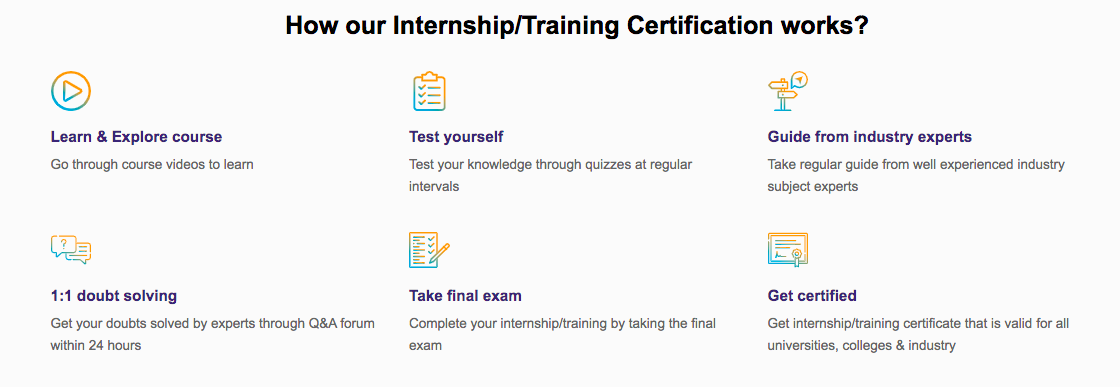
How EasyShiksha Internship/Training Program Works
Turning Abstract Concepts Into Visual Experiences
Some educational concepts are difficult to understand because they are abstract.
Imagine trying to understand how a complex machine operates using only a paragraph and a static diagram. The learner may understand individual terms but struggle to visualize how the components interact.
A 3D simulation can make the same concept more accessible.
The learner can examine the machine from different angles, isolate individual components, observe movement, and understand relationships between parts. Instead of mentally constructing the entire system from written descriptions, the learner can explore it directly.
This can be particularly valuable in subjects such as engineering, architecture, science, medicine, geography, manufacturing, and technology.
The visual and interactive nature of 3D environments can also make complex educational material more engaging because learners are given an opportunity to investigate rather than simply consume information.
3D Simulations Create Learning-by-Doing Experiences
One of the biggest advantages of simulation-based learning is the ability to learn through action.
Consider a student studying electronics.
A conventional online lesson may explain how a circuit works and provide a diagram. A 3D or interactive simulation could allow the learner to assemble virtual components, change connections, modify values, and observe what happens.
If the learner makes an incorrect connection, the simulation can provide feedback without damaging real equipment.
This creates an environment where experimentation becomes part of learning.
The learner can ask, implicitly, “What happens if I change this?” and immediately observe the result.
This approach encourages curiosity and active participation, which can make learning more meaningful than simply memorizing information.
A Safe Environment for Making Mistakes
Mistakes are an essential part of practical learning.
In a physical laboratory or industrial environment, however, some mistakes can be expensive or dangerous. Damaging equipment, using materials incorrectly, or following an unsafe procedure can have serious consequences.
A simulation provides a controlled environment.
Learners can experiment, make mistakes, restart the activity, and try again.
For example, a student learning industrial safety could explore a simulated workplace and identify hazards. A learner studying chemistry could perform a virtual experiment without physically handling hazardous materials. An engineering student could test different design configurations before working with actual equipment.
This does not mean simulations should completely replace real-world training. Instead, they can serve as an additional preparation stage that helps learners develop familiarity and confidence before entering physical environments.
3D Simulations and STEM Education
Science, technology, engineering, and mathematics education can benefit significantly from simulation-based learning.
STEM subjects frequently involve systems, structures, spatial relationships, experiments, and processes that are difficult to represent fully through static content. A physics learner, for example, could explore forces and motion in a simulated environment. Instead of simply reading equations, the learner could change variables and observe how the system responds.
An engineering student could examine mechanical assemblies and understand how components fit together. A biology student could explore cellular structures or anatomical models. A mathematics learner could interact with three-dimensional graphs and visualize relationships that might otherwise remain abstract.
This type of learning can help connect mathematical or theoretical concepts with observable outcomes.
3D Simulations in Medical and Healthcare Education
Healthcare education is another field where three-dimensional learning can provide valuable educational support.
Understanding the human body requires learners to develop a strong sense of spatial relationships. Textbooks and two-dimensional illustrations remain important, but interactive three-dimensional models can provide another perspective.
A learner can examine organs, skeletal structures, muscles, and other anatomical features from different viewpoints. Structures can potentially be isolated, enlarged, or explored individually.
Simulated environments can also help learners understand procedures and clinical scenarios before they encounter them in real settings.
Again, simulation should not be viewed as a complete replacement for supervised practical training. Healthcare education requires real-world experience, professional supervision, and appropriate clinical environments. However, simulation can strengthen preparation by giving learners opportunities to rehearse concepts and procedures in controlled environments.
Making Engineering Education More Interactive
Engineering education traditionally depends heavily on laboratories, workshops, equipment, and physical models.
These resources can be expensive and are not always available to every learner.
3D simulations can extend access to engineering concepts beyond the physical classroom.
A learner can explore a mechanical assembly, inspect a structural design, visualize fluid movement, or examine an industrial process through a digital environment.
This is particularly relevant to online learning because physical equipment is one of the biggest limitations of remote technical education.
A carefully designed simulation can provide learners with at least some of the visual and interactive experiences associated with physical laboratories.
For EasyShiksha, this presents an opportunity to complement theoretical courses with practical digital experiences, particularly in technical and career-focused subjects.
3D Learning for Computer Science and Technology
At first glance, computer science may appear less dependent on 3D simulations than engineering or medicine. However, simulation-based learning can still play an important role.
Computer networks, cybersecurity environments, cloud infrastructure, robotics, artificial intelligence systems, and software architecture can involve complex relationships that are difficult to visualize.
A simulated network environment could help learners understand how devices communicate. A cybersecurity simulation could create a controlled environment in which learners investigate vulnerabilities and defensive strategies. A robotics simulation could allow students to program virtual machines before working with physical robots.
This creates an important bridge between theoretical knowledge and technical practice.
For students taking technology courses through EasyShiksha, such environments could make learning more application-oriented and help them build confidence before attempting real projects.
Simulations Can Improve Learner Engagement
Keeping learners engaged is one of the biggest challenges in digital education. Long videos and large amounts of reading can become difficult to sustain, particularly when learners are studying independently.
Interactive simulations introduce another form of engagement.
Instead of asking the learner to watch something happen, the simulation can invite the learner to cause something to happen. This difference is significant. When learners manipulate an environment, make decisions, observe outcomes, and try again, they become active participants in the lesson.
Research into virtual and immersive learning environments has explored their potential to support engagement, experiential learning, spatial understanding, and practical skill development. The educational impact, however, depends strongly on the design of the simulation and how effectively it connects with learning objectives.
The technology itself does not automatically create better education. A well-designed simulation with clear instructional goals can be valuable; an unnecessarily complicated simulation can simply distract learners.
3D Simulations Can Support Different Learning Speeds
Every learner progresses differently.
In a traditional classroom or live online session, an instructor may need to maintain a particular pace for the group.
Simulation-based learning can provide more flexibility.
A learner can repeat an activity several times until they understand it. Another learner can move through the same activity more quickly.
This is particularly useful in skill development.
Suppose two learners are completing an online course about machine maintenance. One learner already has experience with machinery and quickly understands the simulated environment. Another learner is encountering the concepts for the first time.
The first learner can progress toward more complex activities, while the second can spend additional time exploring basic components.
When combined with artificial intelligence and learning analytics, simulations could become even more adaptive. AI can potentially monitor performance and recommend additional practice based on the learner's actions and outcomes.
AI and 3D Simulations Can Work Together
The combination of AI and 3D simulations could be one of the most significant developments in future online education.
AI can provide personalization, while simulation provides interaction.
Imagine a learner entering a virtual laboratory.
The learner begins with a basic experiment. AI monitors the learner's progress and recognizes that they are struggling with a particular step. Instead of simply marking the activity incorrect, an AI tutor could provide a contextual explanation or demonstrate the relevant concept.
The learner tries again.
If the learner succeeds, the system can increase the difficulty. If the learner continues to struggle, the system can provide additional practice.
This creates a continuous learning loop involving practice, feedback, adaptation, and progression.
For online learning platforms such as EasyShiksha, the combination could eventually make courses much more interactive and responsive.
Empower your team. Lead the industry
Get a subscription to a library of online courses and digital learning tools for your organization with
EasyShiksha
3D Simulations Can Strengthen Career-Oriented Learning
One of the major advantages of practical digital learning is its relevance to employment.
Students increasingly want online courses that provide more than certificates. They want knowledge and skills that can help them perform in real professional environments.
A simulation can help create this connection.
A digital marketing learner could enter a simulated campaign environment. A project management learner could manage a virtual project with changing requirements. An engineering student could work through a simulated design problem. A cybersecurity learner could practice responding to a controlled security incident.
These activities resemble real-world decision-making more closely than simple multiple-choice questions.
When learners repeatedly practice applying knowledge, they can develop greater familiarity with professional situations.
Virtual Laboratories and the Future of Online Practical Education
Laboratory education has traditionally been one of the hardest areas to reproduce online.
Physical laboratories require space, equipment, maintenance, safety procedures, and supervision.
Virtual laboratories can reduce some of these barriers.
A learner can access a simulated laboratory through a digital device and conduct experiments in a controlled environment. The learner can change variables, observe outcomes, repeat procedures, and analyze results.
Virtual laboratories are particularly valuable when physical resources are limited.
However, they should be considered complementary rather than universally interchangeable with physical laboratories. Certain skills involve physical sensations, equipment handling, environmental conditions, and real-world unpredictability that digital simulations cannot perfectly reproduce.
The strongest educational approach may therefore combine simulation with physical practice wherever appropriate.
3D Simulations Make Learning More Experiential
Experiential learning is based on the idea that learners gain knowledge through experience, reflection, application, and repeated practice.
3D simulations fit naturally into this approach.
Instead of presenting a concept as a finished answer, the simulation can create a situation in which the learner must explore and make decisions.
For example, rather than simply teaching the theory of construction management, an online course could place a learner inside a simulated project environment where they must identify risks, allocate resources, respond to delays, and make decisions.
The learner learns from consequences.
This makes the educational experience more closely connected to real-world problem-solving.
The Role of 3D Simulations in EasyShiksha's Online Learning Ecosystem
EasyShiksha is positioned around accessible online education, courses, internships, certifications, and skill development. As the expectations of online learners evolve, practical learning can become increasingly important.
Learners do not only want to know that they completed a course. They want to understand whether they can actually use the knowledge.
This is where simulations can add significant value.
An EasyShiksha course could potentially combine traditional instructional videos with interactive simulations, assessments, projects, and practical activities. Learners could first understand the concept, then explore it in a simulation, and finally apply it through a project or assessment.
Such a learning structure would create a progression from understanding to experimentation to application.
This approach can be especially useful for courses related to technology, engineering, business, design, science, cybersecurity, digital skills, and other practical disciplines.
3D Simulations Can Help Build Learner Confidence
Confidence is often overlooked in online education.
A learner may understand a concept theoretically but hesitate to apply it because they are afraid of making a mistake. Simulation can reduce this psychological barrier. When learners know that they can restart an activity, repeat a procedure, and learn from mistakes without serious consequences, they may become more willing to experiment.
Repeated practice can gradually build familiarity.
A learner who has completed a simulated procedure several times may approach the real-world version with greater confidence than someone who has only read about it. This confidence does not replace competence, but it can support the transition from theoretical learning to practical application.
The Importance of Good Simulation Design
It is important to understand that simply adding 3D graphics to an online course does not automatically improve education.
The simulation needs a clear purpose.
If a learner spends most of the time navigating a complicated virtual environment without understanding the educational objective, the technology can become a distraction.
Effective simulations should connect directly to learning outcomes. The learner should know what they are trying to understand or accomplish.
Feedback is equally important.
When learners make decisions, they should receive meaningful information about the consequences. The system should help them understand not only that something went wrong but also why it went wrong and how they can improve.
The most effective simulations therefore combine technology with sound instructional design.
Accessibility Will Remain Important
As 3D learning becomes more common, accessibility must remain a priority.
Not every learner will have access to a high-end computer, powerful graphics hardware, virtual reality equipment, or high-speed internet.
For an online platform serving a broad audience, including learners in areas with limited connectivity, practical learning experiences need to be designed with different devices and network conditions in mind.
A useful approach may involve offering multiple levels of interaction.
A learner with a basic smartphone could access a lightweight interactive model, while a learner with a more powerful device could access a richer three-dimensional environment.
This can help ensure that technological innovation expands educational access rather than creating another barrier.
Mobile-Friendly 3D Learning
The growth of mobile learning makes this consideration particularly relevant.
Many online learners access educational platforms through smartphones rather than desktop computers.
As mobile hardware becomes more capable, 3D educational experiences can increasingly be designed for mobile environments.
Learners could explore models, interact with virtual objects, complete practical scenarios, and access simulations without necessarily requiring specialized hardware.
For an app-based learning ecosystem such as EasyShiksha, mobile-friendly simulation could make practical learning more accessible to a wider audience.
Measuring the Effectiveness of 3D Learning
Educational technology should ultimately be evaluated based on learning outcomes rather than visual appeal.
A 3D simulation may look impressive, but the important question is whether learners actually understand the subject better or become more capable of applying their knowledge.
Learning platforms can evaluate effectiveness through assessments, practical tasks, learner feedback, completion rates, knowledge retention, and performance improvements.
AI and learning analytics can potentially provide additional insight by comparing learner performance across different activities.
This evidence can help course creators improve simulations over time.
The Future of Practical Online Learning
The future of online education is likely to involve a combination of technologies rather than a single solution.
Video will remain valuable for explanations. Text will remain important for detailed reference. Quizzes will continue to measure knowledge. Projects will provide application opportunities. AI will support personalization and guidance.
3D simulations can add another important layer: interactive experience.
As technologies such as artificial intelligence, extended reality, cloud computing, real-time 3D graphics, and mobile devices continue to develop, educational simulations may become more realistic and accessible.
Learners could eventually move through highly personalized digital environments that respond to their decisions and abilities in real time.
For platforms such as EasyShiksha, this could create new possibilities for combining courses, internships, projects, assessments, certifications, and practical simulations into a more complete learning ecosystem.
Conclusion
3D simulations are changing the possibilities of online education by helping learners move beyond passive consumption of information toward active participation.
Instead of only reading about a machine, students can explore it. Instead of simply studying a laboratory procedure, they can simulate the process. Instead of memorizing a system, they can interact with it. Instead of answering questions about professional situations, they can practice making decisions inside simulated environments.
This makes online education more practical, experiential, and connected to real-world application.
For EasyShiksha, the growing importance of practical digital learning creates an opportunity to enhance online courses with interactive experiences that help students, fresh graduates, and professionals develop skills they can apply beyond the classroom.
The most valuable future of 3D learning will not be about creating impressive virtual worlds simply for entertainment. It will be about using technology purposefully to help learners understand difficult concepts, practice skills safely, receive feedback, build confidence, and prepare for real-world challenges.
When combined with AI-powered personalization, interactive assessments, projects, internships, and expert-designed courses, 3D simulations could become an important part of the next generation of online education.
The future learner may not simply ask, “What does this concept mean?”
Instead, online education can increasingly help them ask a more practical question:
“Can I experience it, practice it, and apply it?”
That shift—from knowing to doing—could be one of the most important developments in the evolution of online learning.
Anshika Jain is an Engineer, Developer, and Educational Content Author known for her dedication to technology and knowledge sharing. With a strong analytical mindset and a passion for innovation, she has consistently contributed to creating meaningful digital solutions and insightful educational articles.
Her ability to simplify complex technical concepts into engaging and easy-to-understand content makes her work valuable for students and learners across various platforms. Along with her technical expertise, Anshika is admired for her creativity, professionalism, and commitment to continuous learning.
She represents a perfect blend of technical excellence and impactful communication, inspiring others through both her development work and educational contributions.