In today's rapidly evolving job market, academic qualifications alone are no longer enough to secure long-term career success. Employers across industries are looking for individuals who possess practical skills, adaptability, digital literacy, communication abilities, and a mindset geared toward continuous learning. This shift has introduced a powerful concept known as Career Capital—the collection of valuable skills, experiences, knowledge, professional relationships, and personal qualities that make an individual highly employable and capable of thriving in a competitive professional environment.
Career capital is not built overnight. It is developed through consistent learning, practical exposure, hands-on projects, internships, certifications, networking, and continuous self-improvement. Students who begin investing in their career capital early gain a significant advantage when entering the workforce. Instead of relying solely on a degree, they present themselves as well-rounded professionals capable of delivering immediate value.
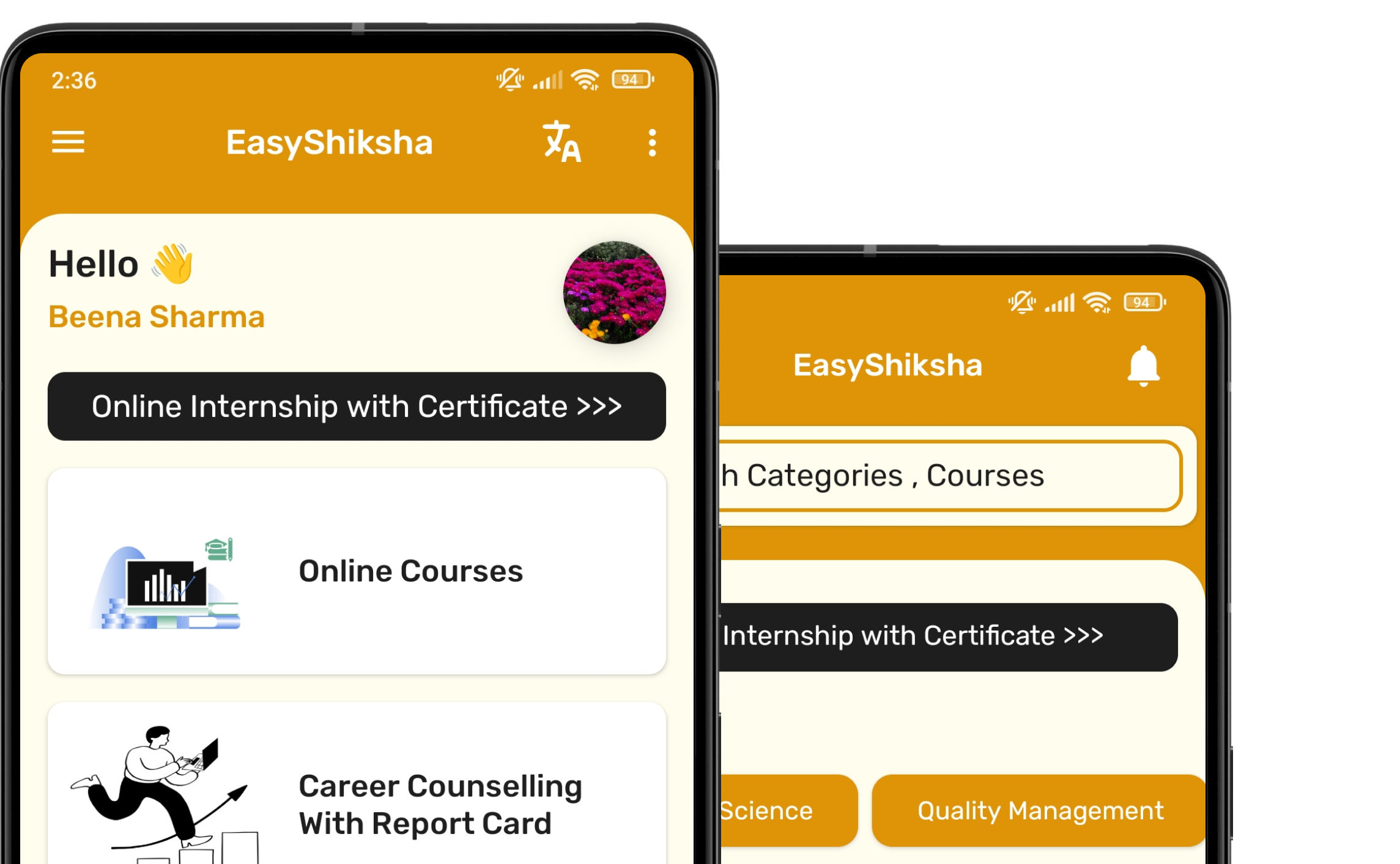
With the increasing availability of digital education platforms, building career capital has become more accessible than ever before. Online learning applications such as EasyShikshahave emerged as valuable companions for students who wish to enhance their skills beyond the classroom. By offering industry-relevant courses, certifications, internship opportunities, and career-focused learning resources, EasyShiksha enables learners to transform their academic journey into a successful professional pathway.
This article explores the meaning of career capital, its importance, the components every student should develop, and how EasyShiksha helps learners build this invaluable asset for long-term career success.
Understanding Career Capital
Career capital refers to the accumulated value of everything an individual brings to the professional world. Unlike financial capital, which represents money or investments, career capital represents knowledge, competencies, practical experience, achievements, credibility, and professional relationships.
Every course completed, every certification earned, every internship undertaken, every project delivered, and every new skill mastered contributes to career capital. It is an investment that continues to appreciate over time as students gain more expertise and experience.
Career capital can often become more influential than grades alone. Employers appreciate candidates who demonstrate initiative, practical abilities, problem-solving skills, and a willingness to learn continuously. A strong portfolio of experiences frequently outweighs theoretical knowledge when organizations make hiring decisions.
Why Career Capital Matters More Than Ever
The modern workplace is undergoing constant transformation due to technological advancements, automation, artificial intelligence, and globalization. Traditional career paths are evolving rapidly, creating new job roles while eliminating others.
As industries become more dynamic, employers increasingly value individuals who can adapt to change, acquire new skills quickly, and solve complex problems. This makes career capital an essential asset for students entering today's workforce.
Students with strong career capital enjoy several advantages. They are better prepared for interviews because they can discuss practical experiences rather than theoretical concepts alone. They possess certifications that validate their expertise. They understand industry expectations through internships and projects. They have developed communication and teamwork skills that employers actively seek.
Career capital also provides long-term security. Even if industries change or technologies evolve, individuals with strong learning abilities and diverse skills can transition into new roles more easily than those who rely solely on formal qualifications.
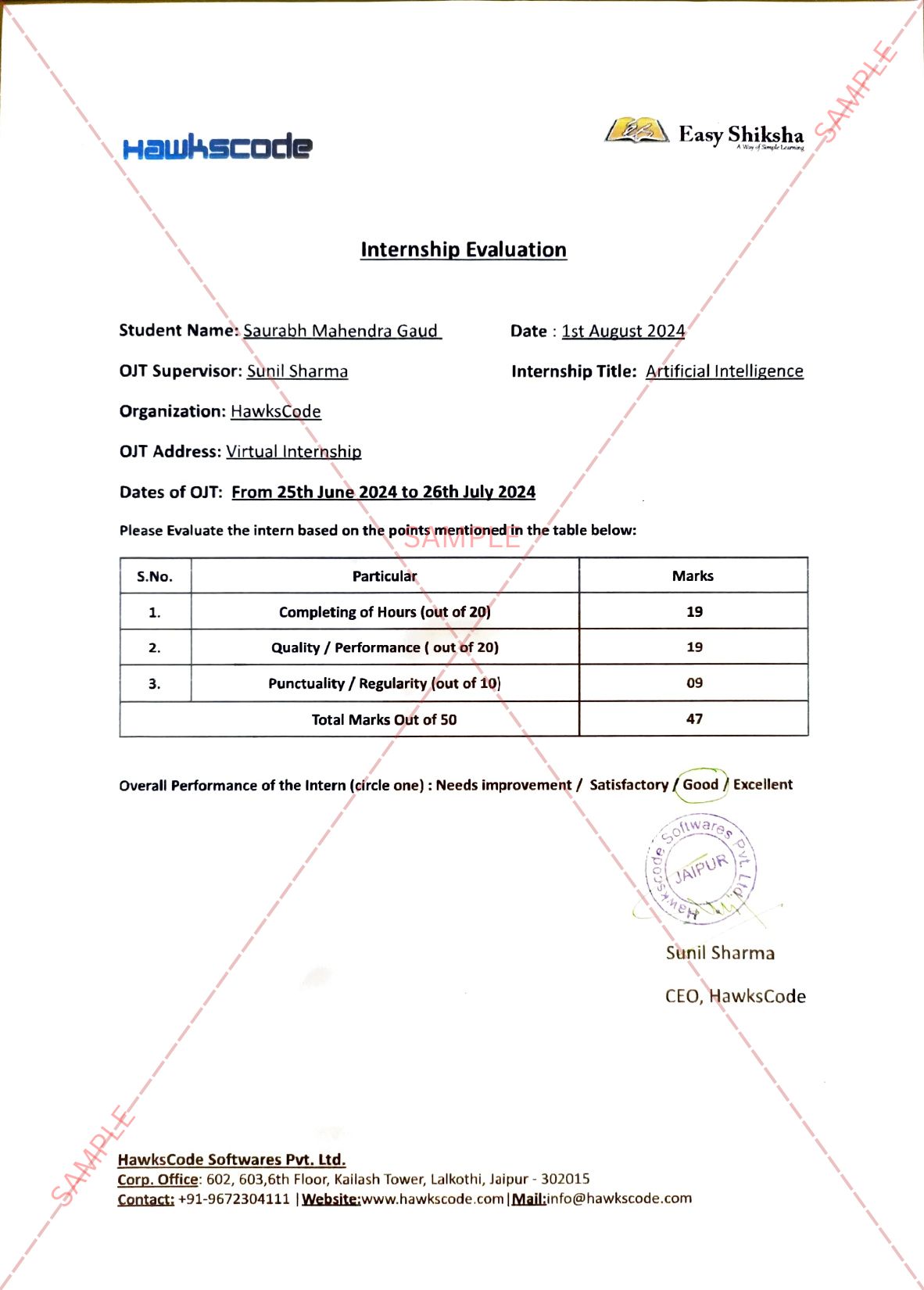
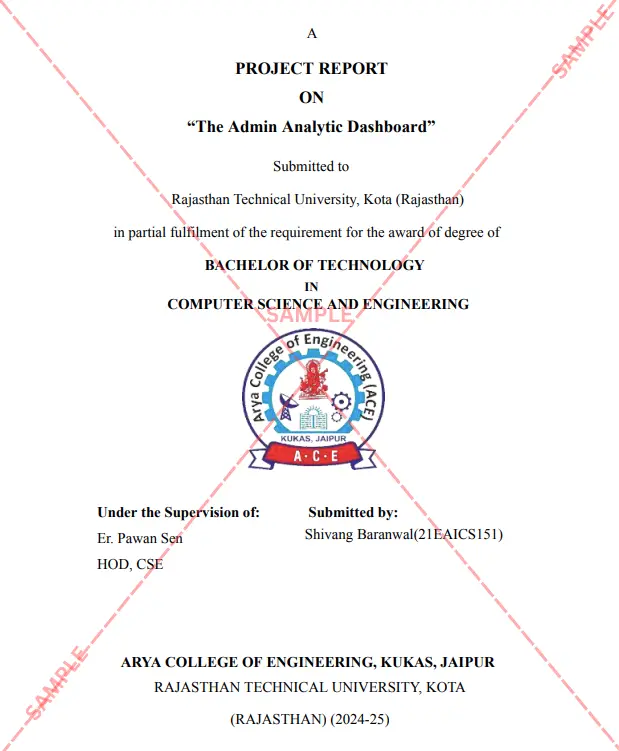
Insights from Internship Students: Testimonials
×
The Building Blocks of Career Capital
Career capital consists of multiple interconnected components that together shape a student's professional identity.
The first component is technical knowledge. Students must develop expertise in their chosen field through continuous learning. Whether pursuing engineering, management, healthcare, computer science, finance, or design, staying updated with current technologies and industry practices is essential.
The second component is practical experience. Employers value candidates who have applied their knowledge in real-world situations. Projects, internships, simulations, freelancing, and volunteer work all contribute significantly to career capital.
Communication skills form another critical pillar. Strong verbal communication, professional writing, presentation skills, and active listening enable individuals to collaborate effectively and lead teams confidently.
Problem-solving ability is equally important. Organizations seek professionals who can analyze situations, identify solutions, and make informed decisions under pressure.
Digital literacy has become indispensable in almost every profession. Familiarity with productivity software, digital collaboration tools, online research techniques, data analysis, and emerging technologies significantly enhances employability.
Professional ethics, emotional intelligence, adaptability, time management, leadership, and teamwork complete the foundation of robust career capital.
The Shift from Degrees to Skills
For many years, earning a university degree was considered sufficient preparation for a successful career. While degrees continue to hold importance, employers now recognize that academic qualifications alone cannot fully predict workplace performance.
Companies increasingly evaluate candidates based on demonstrated competencies. They examine portfolios, certifications, internships, coding projects, research work, communication abilities, and practical achievements.
This transition reflects the growing emphasis on skills-based hiring. Organizations require employees who can contribute immediately rather than spending months learning basic workplace expectations.
Students who proactively develop additional competencies distinguish themselves from equally qualified graduates. Every new certification, technical course, project, or internship strengthens their professional profile and increases their market value.
Continuous Learning as the Foundation of Career Capital
One of the defining characteristics of successful professionals is their commitment to lifelong learning. Knowledge acquired during formal education gradually becomes outdated as industries evolve.
Continuous learning enables individuals to remain relevant, competitive, and innovative throughout their careers.
Students should cultivate the habit of learning beyond classroom requirements. Reading industry articles, participating in webinars, completing online courses, exploring emerging technologies, and earning certifications contribute significantly to career growth.
Online education platforms have revolutionized access to quality learning resources. Instead of being limited by geographical boundaries or institutional schedules, students can now acquire valuable knowledge at their own pace.
Continuous learning demonstrates curiosity, discipline, and professional commitment—qualities that employers consistently appreciate.
The Role of Certifications in Career Growth
Professional certifications provide tangible evidence of a student's expertise. Unlike traditional examinations that primarily assess theoretical understanding, certifications often evaluate practical competencies aligned with industry standards.
Adding recognized certifications to a resume immediately enhances credibility. Recruiters view certifications as indicators of self-motivation and dedication to professional development.
Students should strategically pursue certifications that complement their academic programs. Courses in digital marketing, programming, artificial intelligence, finance, communication, cybersecurity, data analytics, graphic design, project management, entrepreneurship, and business analytics can significantly expand career opportunities.
Certifications also help bridge the gap between university education and industry requirements.
Experience remains one of the most valuable forms of career capital.
Students should actively seek opportunities to apply classroom learning in practical settings. Internships expose learners to workplace culture, organizational structures, client interactions, deadlines, and professional expectations.
Academic projects allow students to solve real-world problems while developing research and analytical skills. Participation in competitions, hackathons, innovation challenges, and collaborative assignments further strengthens practical competencies.
Volunteer work and leadership positions in student organizations also contribute valuable experiences that demonstrate initiative, responsibility, and teamwork.
Every meaningful experience becomes an investment in future employability.
Digital Skills Are No Longer Optional
The digital transformation of industries has fundamentally changed workplace expectations.
Regardless of academic discipline, students are expected to possess essential digital competencies. These include proficiency in productivity software, online collaboration platforms, cloud technologies, virtual communication, data management, and digital research.
Specialized digital skills such as coding, web development, data visualization, cybersecurity, artificial intelligence, cloud computing, and digital marketing are becoming increasingly valuable across multiple industries.
Students who continuously upgrade their digital capabilities remain better prepared for future job markets where technology will continue shaping organizational success.
Building a Strong Professional Portfolio
A professional portfolio showcases evidence of a student's capabilities.
Instead of merely listing skills on a resume, students should maintain documented examples of completed projects, research papers, presentations, designs, coding assignments, business case studies, certifications, and internship reports.
A strong portfolio allows recruiters to evaluate actual work rather than relying solely on academic records.
Students should regularly update their portfolios to reflect new accomplishments, learning experiences, and professional milestones.
A well-organized portfolio demonstrates consistency, growth, and commitment to excellence.
Networking as Career Capital
Professional relationships constitute another valuable dimension of career capital.
Networking is not simply about collecting contacts. It involves building meaningful relationships with mentors, faculty members, alumni, industry professionals, recruiters, and fellow learners.
Networking creates opportunities for internships, mentorship, career guidance, collaborations, and employment referrals.
Students should actively participate in webinars, workshops, professional conferences, online communities, alumni events, and career fairs to expand their professional networks.
Strong relationships often open doors that qualifications alone cannot.
Adaptability: The Future-Proof Skill
Career success increasingly depends upon adaptability.
Industries continuously introduce new technologies, business models, and operational methods. Students who embrace change rather than resist it position themselves for sustained professional growth.
Adaptability involves learning new tools, accepting constructive feedback, solving unfamiliar problems, and remaining open to continuous improvement.
Individuals with adaptable mindsets are more likely to thrive in uncertain environments and pursue emerging career opportunities confidently.
The Importance of Developing a Growth Mindset
One of the most valuable yet often overlooked aspects of career capital is having a growth mindset. Students who believe that abilities and intelligence can be developed through dedication and continuous learning are more likely to embrace challenges, seek feedback, and persist through difficulties. In today's competitive environment, employers appreciate candidates who demonstrate resilience and a willingness to improve rather than those who rely solely on existing knowledge.
A growth mindset encourages students to step outside their comfort zones by learning new technologies, taking up challenging projects, participating in competitions, and exploring interdisciplinary fields. Every new experience becomes an opportunity to expand career capital. EasyShiksha supports this mindset by offering learners access to a wide variety of courses that encourage continuous skill enhancement and professional development, enabling students to stay relevant in an ever-changing job market.
Career Capital Begins During College
Many students believe that career preparation starts after graduation. However, successful professionals understand that career capital begins accumulating from the first day of college. Every semester presents opportunities to build valuable experiences that contribute to future employability.
Students can strengthen their career profiles by participating in academic clubs, technical societies, cultural committees, innovation cells, and entrepreneurship programs. These activities help develop leadership, communication, event management, and teamwork skills while exposing students to practical situations that cannot be learned from textbooks alone.
EasyShiksha complements classroom education by allowing students to pursue industry-oriented certification programs alongside their college curriculum. This combination of academic learning and professional skill development creates a stronger foundation for long-term career success.
The Power of Industry-Relevant Learning
One of the major reasons graduates struggle during job placements is the gap between academic education and industry expectations. Employers seek professionals who understand current technologies, modern business practices, and practical workplace challenges.
Industry-relevant learning bridges this gap by exposing students to real-world applications of theoretical concepts. Learning current software tools, business strategies, coding languages, marketing techniques, financial technologies, and emerging innovations makes students job-ready.
EasyShiksha continuously focuses on providing courses that align with evolving industry trends. Students gain practical insights that prepare them for interviews, internships, and professional responsibilities while enhancing their confidence in applying newly acquired knowledge.
Building Personal Branding Alongside Career Capital
In today's digital world, personal branding has become an extension of career capital. Recruiters frequently review candidates' online presence before making hiring decisions. A professional digital identity reflects commitment, expertise, and credibility.
Students should focus on creating a professional resume, maintaining an updated LinkedIn profile, showcasing certifications, sharing completed projects, and participating in educational discussions online. A strong personal brand demonstrates initiative and positions students as lifelong learners.
EasyShiksha certifications and completed courses can become valuable additions to professional profiles, helping students showcase their commitment to continuous learning and self-improvement.
Soft Skills: The Invisible Strength Behind Career Success
While technical knowledge may help students secure interviews, soft skills often determine long-term professional growth. Organizations rely on employees who communicate effectively, collaborate with teams, solve conflicts professionally, and adapt to changing work environments.
Soft skills include communication, leadership, emotional intelligence, critical thinking, creativity, negotiation, time management, decision-making, and interpersonal abilities. These competencies improve workplace relationships and enhance productivity across all industries.
Students should actively participate in presentations, group discussions, seminars, workshops, and collaborative projects to strengthen these essential qualities. Online learning platforms like EasyShiksha also expose learners to interactive educational experiences that improve confidence and communication while expanding technical expertise.
Learning Beyond the Curriculum
Modern employers appreciate candidates who demonstrate curiosity beyond prescribed academic syllabi. Independent learning reflects motivation, discipline, and a genuine passion for professional growth.
Students should explore subjects beyond their primary field of study. For example, engineering students can learn digital marketing or entrepreneurship, while commerce students may benefit from data analytics or programming fundamentals. Such interdisciplinary knowledge broadens career opportunities and encourages innovative thinking.
EasyShiksha offers learners the flexibility to explore multiple domains without geographical limitations. Students can diversify their knowledge while continuing their formal education, creating a well-rounded professional profile.
Internship Experience as Career Capital
Internships remain one of the strongest contributors to career capital because they provide direct exposure to professional environments. During internships, students understand organizational culture, workplace expectations, communication standards, client interactions, and project execution.
Beyond technical learning, internships teach responsibility, accountability, teamwork, and professional ethics. They also help students identify career interests before entering full-time employment.
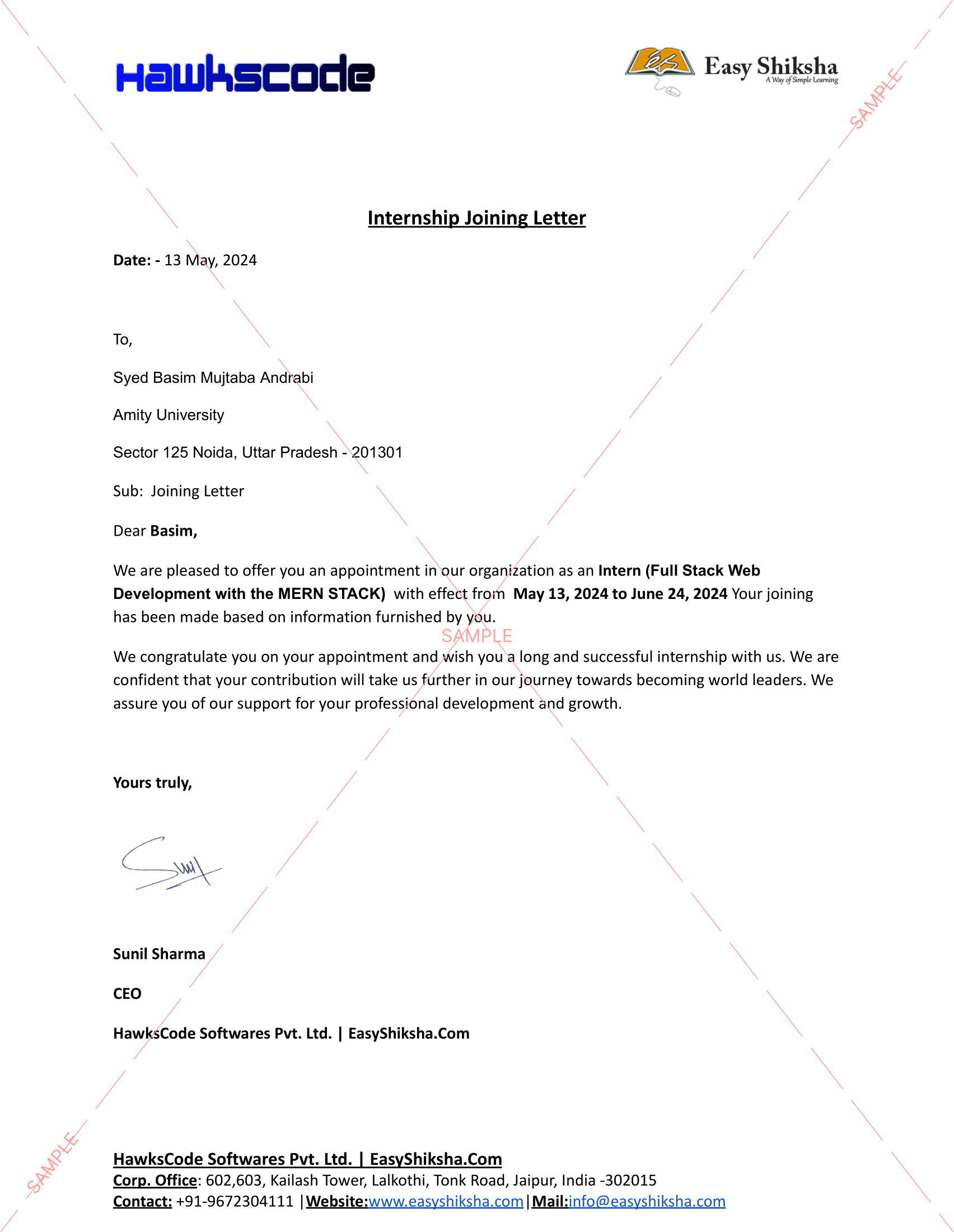
EasyShiksha provides internship opportunities that allow students to gain practical experience while strengthening their resumes. Such exposure helps learners transition more confidently from academic life into professional careers.
The Role of Technology in Career Development
Technology has transformed how students learn, communicate, collaborate, and build careers. Digital platforms now offer unlimited opportunities for acquiring new competencies regardless of geographical location.
Artificial Intelligence, cloud computing, blockchain, cybersecurity, machine learning, digital marketing, financial technology, and data science continue creating exciting career opportunities worldwide. Students who proactively learn these technologies position themselves ahead of their peers.
EasyShiksha empowers students by offering online courses that introduce learners to current technologies and practical applications. Flexible digital learning ensures students remain updated without disrupting their academic schedules.
Creating a Learning Habit That Lasts a Lifetime
Career capital grows through consistency rather than occasional effort. Students should dedicate time each week to learning something new, completing certifications, reading industry publications, attending webinars, or practicing technical skills.
Developing a lifelong learning habit ensures continuous professional growth even after securing employment. Industries evolve rapidly, making continuous education essential for career advancement.
EasyShiksha's self-paced learning model encourages students to maintain consistent progress. Whether learning after college hours or during weekends, students can steadily strengthen their expertise and remain competitive in the job market.
Entrepreneurship as Career Capital
Not every student aims to become an employee. Many aspire to become entrepreneurs, innovators, or business leaders. Career capital plays an equally important role in entrepreneurial success.
Entrepreneurs require problem-solving abilities, financial literacy, leadership, communication, strategic thinking, digital marketing knowledge, customer understanding, and resilience. Building these competencies before launching a venture significantly increases the chances of success.
EasyShiksha offers courses across business, management, marketing, finance, and entrepreneurship, enabling aspiring entrepreneurs to develop the knowledge required for building sustainable enterprises.
Preparing for Global Career Opportunities
Globalization has expanded employment opportunities beyond national boundaries. Many organizations now hire talent remotely, allowing skilled professionals to work with international companies from virtually anywhere.
To compete globally, students must develop internationally relevant skills, digital communication abilities, cross-cultural understanding, English proficiency, and familiarity with modern workplace technologies.
EasyShiksha contributes to global career readiness by providing accessible online education that aligns with international learning standards and industry expectations. Students gain practical knowledge that can support opportunities in both domestic and international job markets.
Measuring Career Capital
Students often ask how they can evaluate whether they are building sufficient career capital. While there is no single measurement, several indicators reflect steady progress.
An expanding portfolio of certifications demonstrates continuous learning. Successfully completed internships indicate practical exposure. Participation in projects reflects problem-solving capabilities. Leadership roles reveal management potential. Strong communication skills improve professional interactions. Networking activities create valuable career opportunities.
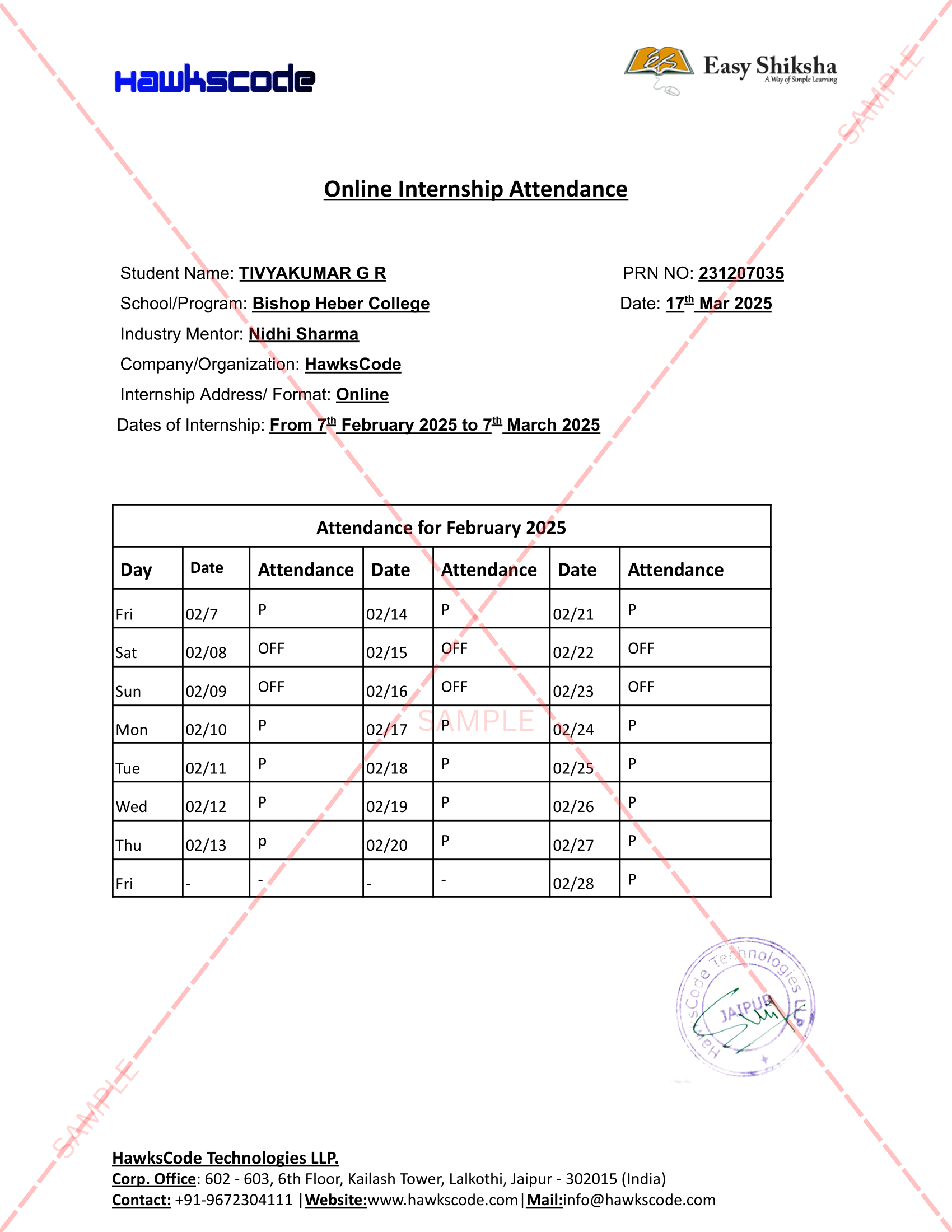
Regular self-assessment helps students identify strengths as well as areas requiring further development. EasyShiksha enables learners to track completed courses and certifications, making it easier to monitor personal and professional growth over time.
How EasyShiksha Helps Students Build Career Capital
EasyShiksha has established itself as a comprehensive online learning platform dedicated to empowering students through accessible, affordable, and career-oriented education.
Recognizing that modern careers demand more than academic excellence, EasyShiksha offers a wide range of learning opportunities designed to strengthen every aspect of career capital.
Students can explore courses across diverse disciplines, including technology, business, management, programming, digital marketing, finance, communication, entrepreneurship, and many other high-demand fields. These courses are carefully designed to help learners acquire practical knowledge alongside theoretical understanding.
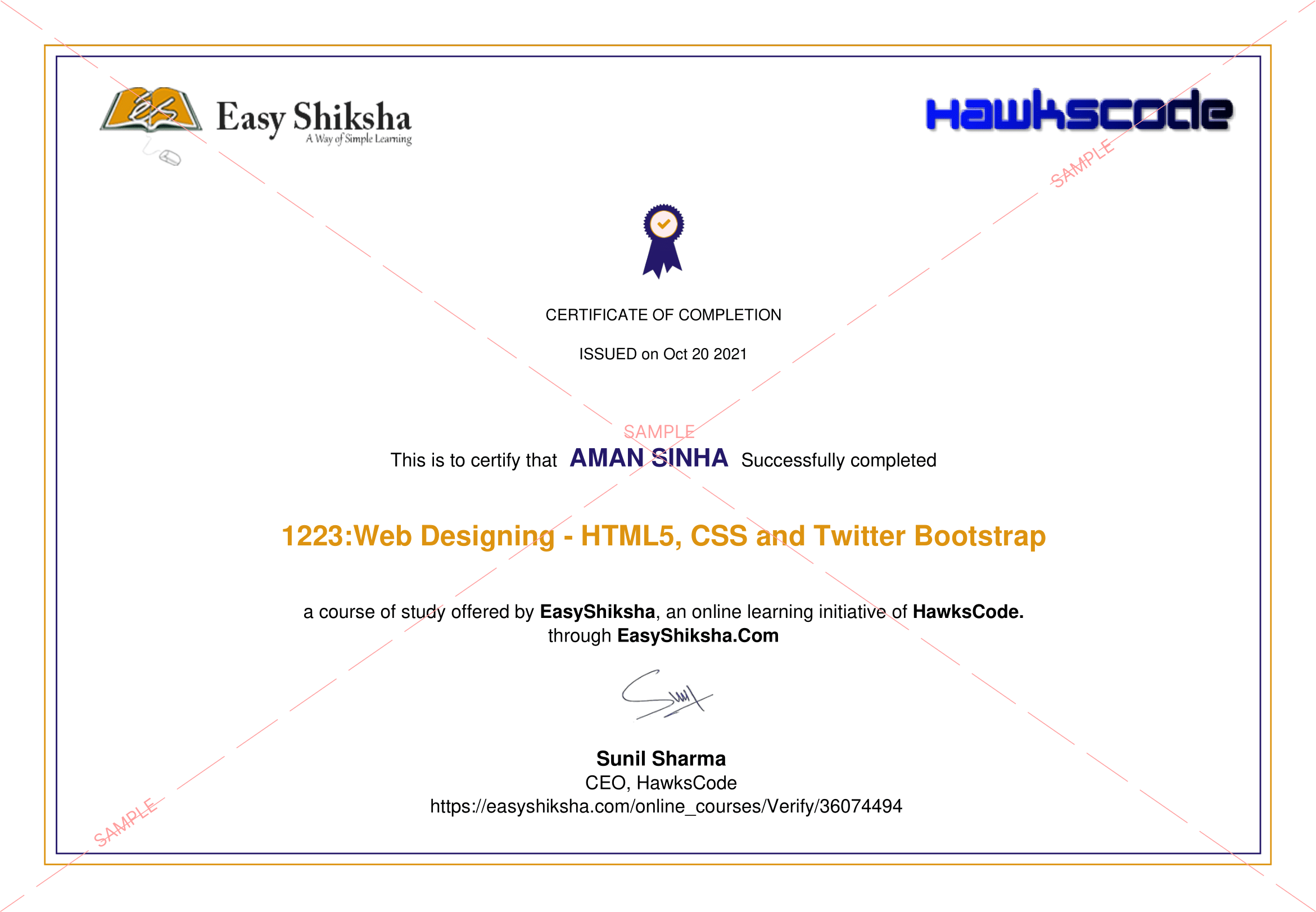
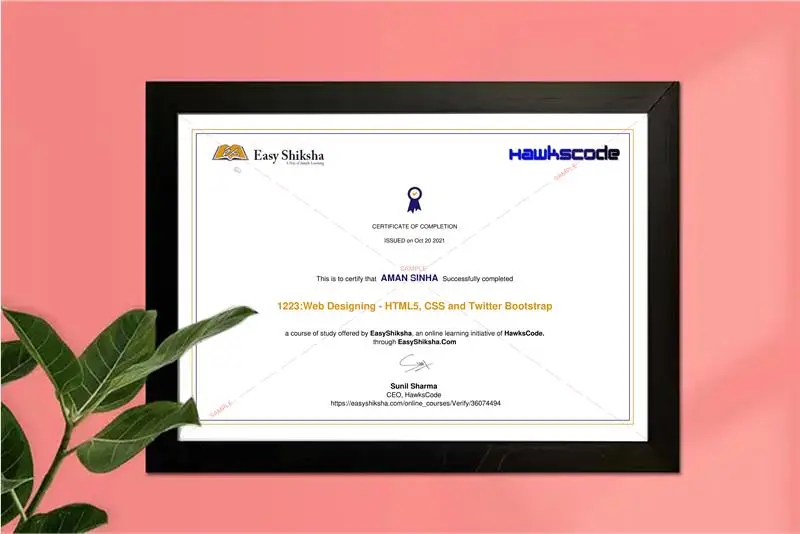
One of the significant advantages of EasyShiksha is its emphasis on certification-based learning. Upon successful completion of courses, students receive certificates that validate their newly acquired skills. These certifications strengthen resumes and demonstrate continuous learning to potential employers.
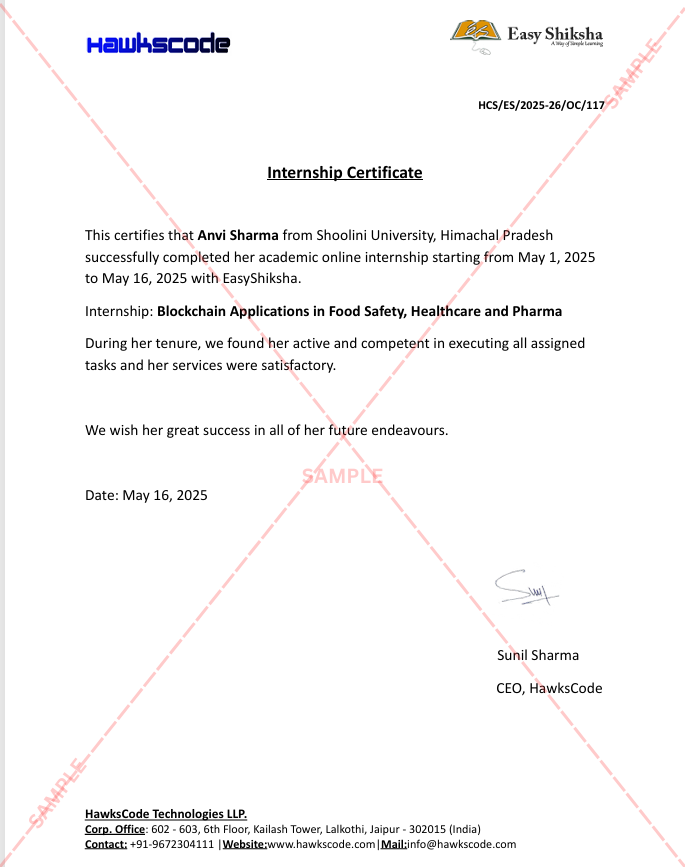
EasyShiksha also provides internship opportunities that enable students to gain practical industry exposure. Internships allow learners to apply theoretical concepts in professional settings while developing confidence, teamwork, communication, and workplace discipline.
The platform's flexible learning environment allows students to study according to their schedules. Whether balancing college coursework, part-time employment, or competitive examination preparation, learners can access educational resources anytime and from anywhere.
By integrating skill development, certification, practical learning, and career preparation into one platform, EasyShiksha becomes a valuable partner in helping students systematically build long-term career capital.
Frequently Asked Questions
Q. How can I apply for an internship with EasyShiksha?
You can apply by visiting our website, browsing available internships, and following the application instructions provided.
Q. What types of internships are available through EasyShiksha?
EasyShiksha offers a wide range of internships across technology, business, marketing, healthcare, and more.
Q. Will I receive a certificate upon completing an internship?
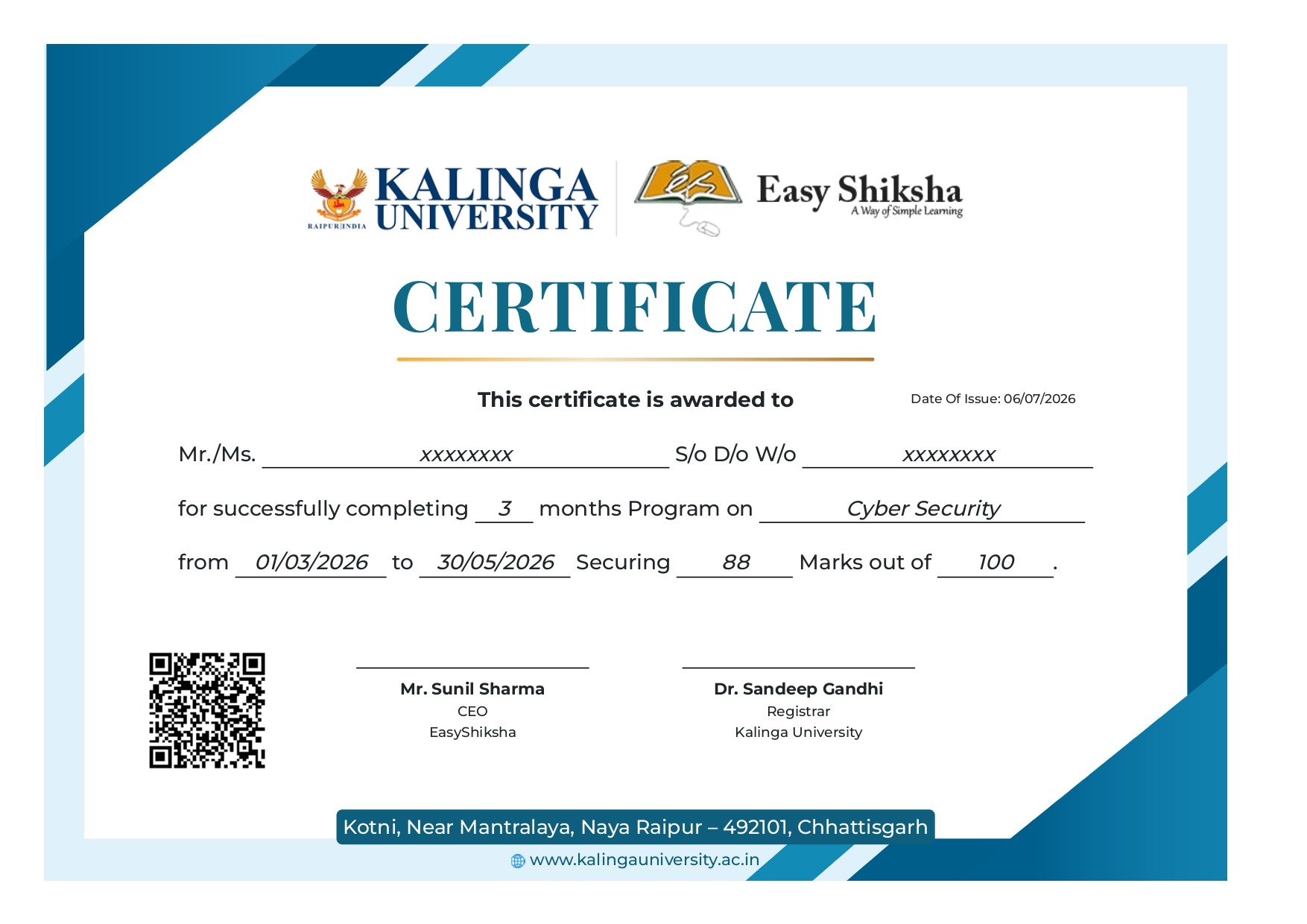
Yes, upon successful completion, you will receive a certificate recognizing your participation and achievements.
Q. Are EasyShiksha's certificates recognized?
Yes, the certificates are recognized by universities, colleges, and employers worldwide.
Q. When can I start the course?
You can choose any course and start immediately without delay.
Q. What are the course and session timings?
These are fully online courses. You can learn at any time and pace that fits your schedule.
Q. What will happen when my course is over?
After completion, you will have lifetime access to the course for future reference.
Q. Can I download the notes and study material?
Yes, you can access and download course materials and have lifetime access for future reference.
Q. What software/tools would be needed?
All necessary software/tools will be shared during the training as needed.
Q. I’m unable to make a payment. What should I do?
Try using a different card. If the problem persists, email us at info@easyshiksha.com.
Q. Do I get the certificate in hard copy?
No, only a soft copy is provided, which can be downloaded and printed if required.
Q. The payment got deducted but shows “failed”?
The deducted amount will be returned to your account in 7-10 working days automatically.
Q. Payment successful but dashboard shows ‘Buy Now’?
Reflection may take 30 mins. If longer, email info@easyshiksha.com with your screenshot.
Q. What is the refund policy?
Refunds are available for technical issues. No refunds once a certificate is generated.
Q. Can I enroll in a single course?
Yes, select any course, complete the details, and start learning immediately.
Q. Need further help?
Contact us at info@easyshiksha.com for any other questions.
Preparing for the Careers of Tomorrow
The careers of the future will increasingly reward individuals who combine technical expertise with creativity, collaboration, critical thinking, and emotional intelligence.
Artificial intelligence, automation, sustainability, data science, healthcare innovation, digital commerce, and remote work continue reshaping employment landscapes across industries.
Students should therefore focus on developing transferable skills that remain valuable regardless of changing technologies.
Continuous learning, resilience, innovation, leadership, communication, ethical decision-making, and adaptability will continue distinguishing successful professionals throughout their careers.
Platforms like EasyShiksha help students prepare for these evolving demands by offering opportunities to continuously expand knowledge and remain aligned with industry expectations.
Turning Learning into Lifelong Success
Career capital should be viewed as a lifelong investment rather than a short-term objective.
Every book read, every online course completed, every internship undertaken, every mentor consulted, every project delivered, and every challenge overcome contributes to long-term professional growth.
Students who consistently invest in themselves create opportunities that extend far beyond their first job. They become capable of adapting to change, pursuing leadership positions, launching entrepreneurial ventures, and contributing meaningfully to society.
Instead of waiting until graduation to think about careers, students should begin building career capital from the very first year of their academic journey. Small, consistent efforts accumulate into substantial professional advantages over time.
Conclusion
Career capital has emerged as one of the most valuable assets students can build in today's competitive and constantly changing world. While academic degrees continue to provide an essential foundation, long-term success increasingly depends upon the skills, experiences, certifications, adaptability, practical knowledge, and professional relationships that individuals cultivate throughout their learning journey.
Students who actively invest in career capital gain confidence, improve employability, strengthen their resumes, expand their professional networks, and become better prepared for future opportunities. Every learning experience becomes a stepping stone toward sustainable career growth.
EasyShiksha plays an important role in supporting this journey by providing accessible online education, industry-relevant courses, recognized certifications, internship opportunities, and flexible learning experiences tailored to modern career requirements. Through continuous learning and practical skill development, students can transform their academic potential into professional excellence.
Ultimately, career capital is not built in a single semester or through one qualification. It is the result of continuous effort, curiosity, lifelong learning, and strategic self-development. Students who begin building this asset today are investing in a future filled with greater opportunities, resilience, and lasting career success.
Anshika Jain is an Engineer, Developer, and Educational Content Author known for her dedication to technology and knowledge sharing. With a strong analytical mindset and a passion for innovation, she has consistently contributed to creating meaningful digital solutions and insightful educational articles.
Her ability to simplify complex technical concepts into engaging and easy-to-understand content makes her work valuable for students and learners across various platforms. Along with her technical expertise, Anshika is admired for her creativity, professionalism, and commitment to continuous learning.
She represents a perfect blend of technical excellence and impactful communication, inspiring others through both her development work and educational contributions.