In a world where information is available at the touch of a screen, being a knowledgeable student is no longer simply about remembering what was taught in a classroom. Students today are expected to understand concepts, connect ideas, think critically, recognize patterns, solve problems, and apply what they know to situations beyond textbooks. A good knowledge quiz can therefore be much more than a test of memory. It can become a fun way to discover what you know, identify what you have forgotten, and challenge yourself to learn something new.
This is exactly why student knowledge quizzes have become increasingly popular among learners of different ages. Whether you are a school student preparing for an examination, a college student looking to improve general awareness, or simply someone who enjoys testing your knowledge, quizzes can turn learning into an engaging experience.
EasyShiksha provides a learning environment where education can extend beyond traditional classroom methods. Through courses, quizzes, games, internships, and skill-building opportunities, students can explore subjects in interactive ways. A knowledge quiz can be one of the simplest ways to begin that journey because it requires curiosity rather than complicated preparation.
But here is the real question: Can you beat a student knowledge quiz?
You might be confident about science but uncertain about history. You may know technology extremely well but struggle with geography. Perhaps mathematics is your strongest subject, while general knowledge questions make you think twice. That is what makes a well-designed quiz interesting. It does not simply ask what you studied yesterday. It challenges the breadth and depth of your understanding.
Why Student Knowledge Quizzes Are More Than Just Games
When students hear the word “quiz,” they often imagine a classroom competition where the person who answers the most questions correctly wins. While competition can certainly make quizzes exciting, their educational value goes much further.
A quiz creates an opportunity for active recall. Instead of simply reading information, students have to retrieve it from memory. This process can help strengthen their ability to remember concepts and recognize information later.
For example, reading about the solar system may feel easy because the information is visible on the page. But when a question asks which planet has the largest number of moons or which planet is known for its prominent rings, the student has to actively retrieve the relevant information. That mental effort makes the learning process more engaging.
Quizzes can also reveal gaps in knowledge. A student may believe they understand a subject until they encounter questions that require them to apply or distinguish between concepts. Getting an answer wrong is not necessarily a failure. It can be a useful signal showing where additional learning is needed.
This makes quizzes valuable both before and after studying. Before learning a topic, a quiz can reveal what a student already knows. After learning, it can help evaluate how much of the material has been understood.
The Growing Importance of Interactive Learning
Traditional education has often depended heavily on lectures, textbooks, written assignments, and examinations. These methods continue to have value, but students today have access to many additional ways of learning.
Interactive learning can make students more involved in the process.
Instead of passively receiving information, students respond, make decisions, solve questions, receive feedback, and try again. This can make learning feel less like an obligation and more like an activity.
Quizzes fit naturally into this environment.
A student can take a short quiz during a study break, challenge a friend, participate in an online competition, or use questions to revise a difficult topic. The flexibility makes quizzes particularly suitable for digital learning platforms.
For an education platform such as EasyShiksha, interactive learning can also help connect knowledge acquisition with broader skill development. Students can move from a quiz to a course, from a course to a project, and from a project to an internship or career-oriented opportunity.
What Makes a Good Student Knowledge Quiz?
Not every quiz is equally useful.
A good student knowledge quiz should be interesting enough to maintain attention while also being educational enough to provide genuine learning value. The questions should not rely entirely on obscure facts that students could never reasonably know. Instead, they should test concepts, general awareness, reasoning, and useful knowledge.
A strong quiz also needs an appropriate level of difficulty.
If every question is extremely easy, students may lose interest. If every question is impossibly difficult, they may become frustrated. The best quizzes create a mixture of confidence and challenge.
A student might answer one question immediately, pause for another, reason through a third, and discover something completely new in the process. That variation makes the experience engaging.
Good questions should also have clear wording. Confusing questions can test a student's ability to interpret poor writing rather than their actual knowledge.
General Knowledge: The Foundation of a Well-Rounded Student
General knowledge is one of the most common areas found in student quizzes because it covers a broad range of subjects.
It can include geography, history, science, literature, technology, culture, economics, sports, environmental awareness, and everyday knowledge.
The value of general knowledge extends beyond quiz competitions.
A student who regularly explores different subjects develops a broader understanding of the world. They become more comfortable participating in discussions and can make connections between different areas of knowledge.
For example, understanding basic geography can make history easier to understand because political and cultural developments often depend on location. Learning about scientific discoveries can provide context for technological developments. Understanding economics can help students interpret current events and business news.
Knowledge does not always exist in isolated boxes.
One of the most interesting aspects of learning is discovering how different subjects connect.
Science Questions Can Test Understanding, Not Just Memory
Science is often treated as a subject that requires memorizing definitions, formulas, and facts. However, a good science quiz can test conceptual understanding.
Instead of asking only for a definition, a quiz can ask students to identify why a particular phenomenon occurs or determine which principle applies to a situation.
This encourages students to understand relationships.
A student who memorizes that plants require sunlight may know the fact. A student who understands photosynthesis can explain why light is important and how plants convert energy. The second type of understanding is much more useful.
Science quizzes can also introduce students to areas they may not study deeply in school, including astronomy, environmental science, genetics, physics, chemistry, biology, and emerging technologies.
This can spark curiosity.
A single interesting question about black holes, artificial intelligence, the human brain, renewable energy, or genetics can lead a student to explore an entire subject.
Technology Knowledge Is Becoming Essential
Students today are growing up in a technology-driven environment, but using technology and understanding technology are not the same thing.
A student may use smartphones, social media, cloud applications, and artificial intelligence tools every day without understanding how these technologies work or what their limitations are.
Technology-related quiz questions can encourage students to become more digitally aware.
Questions may cover computer fundamentals, cybersecurity, programming concepts, artificial intelligence, internet technologies, digital communication, software, and emerging innovations.
This kind of knowledge is increasingly relevant across careers.
Even students who do not plan to become software developers may eventually work with digital platforms, automated systems, data, online collaboration tools, or AI-assisted workflows.
Digital literacy is therefore becoming part of general professional literacy.
History Questions Help Students Understand the Present
History is sometimes viewed as a subject dominated by dates and names. But its deeper purpose is understanding how societies change.
A history quiz can encourage students to think about causes, consequences, people, movements, inventions, conflicts, cultural developments, and political transformations.
Understanding history can also help students interpret the present.
Modern institutions, international relationships, social structures, technologies, and cultural practices often have historical roots. When students understand those roots, current events can become easier to interpret.
A quiz question about an important historical event can therefore become the starting point for a larger exploration.
Instead of asking only, “When did this happen?” students can ask, “Why did it happen?” and “What changed afterward?”
That shift from memorization to understanding is one of the most important goals of effective education.
Geography Is More Relevant Than It Seems
Geography questions can appear simple, but they can reveal how well students understand the world around them.
Knowing countries, capitals, oceans, mountains, rivers, climates, and geographical regions provides a basic framework for understanding global events.
Geography also connects naturally with economics, politics, environmental science, culture, and history.
For example, understanding why certain regions are major agricultural areas requires knowledge of climate and soil. Understanding global trade requires awareness of ports, transportation routes, resources, and markets.
A student who develops geographical awareness is better equipped to understand global news and international developments.
Mathematics Questions Can Build Confidence
Many students approach mathematics with anxiety, but quizzes can provide a less intimidating environment for practicing mathematical thinking.
A short question can encourage students to calculate, estimate, identify patterns, compare quantities, or apply a formula.
The goal does not always have to be solving complicated equations. Basic mathematical reasoning is valuable in everyday life.
Students use percentages when comparing prices, ratios when interpreting information, probability when evaluating uncertainty, and arithmetic when managing money.
Mathematics therefore extends far beyond examination halls.
A quiz can make these connections visible.
Instead of thinking of mathematics as a collection of formulas, students can begin seeing it as a tool for understanding problems.
Document
#AbIndiaSikhegaGharSe
Online Internships for Students
EasyShiksha offers comprehensive online virtual internship programs tailored for students, graduates, freshers, and working professionals seeking academic advancement and upskilling certifications.
Get Job-Ready with Our Online Summer Internship 2025 Opportunities
Explore our wide selection of online job-ready internships featuring globally recognized certificates accepted by universities, colleges, and companies worldwide.
Obtain two authorized certificates recognized by universities & corporates.
Access our 100% online internships at genuine price.
Choose from flexible internship durations ranging from 2 weeks to 6 months.
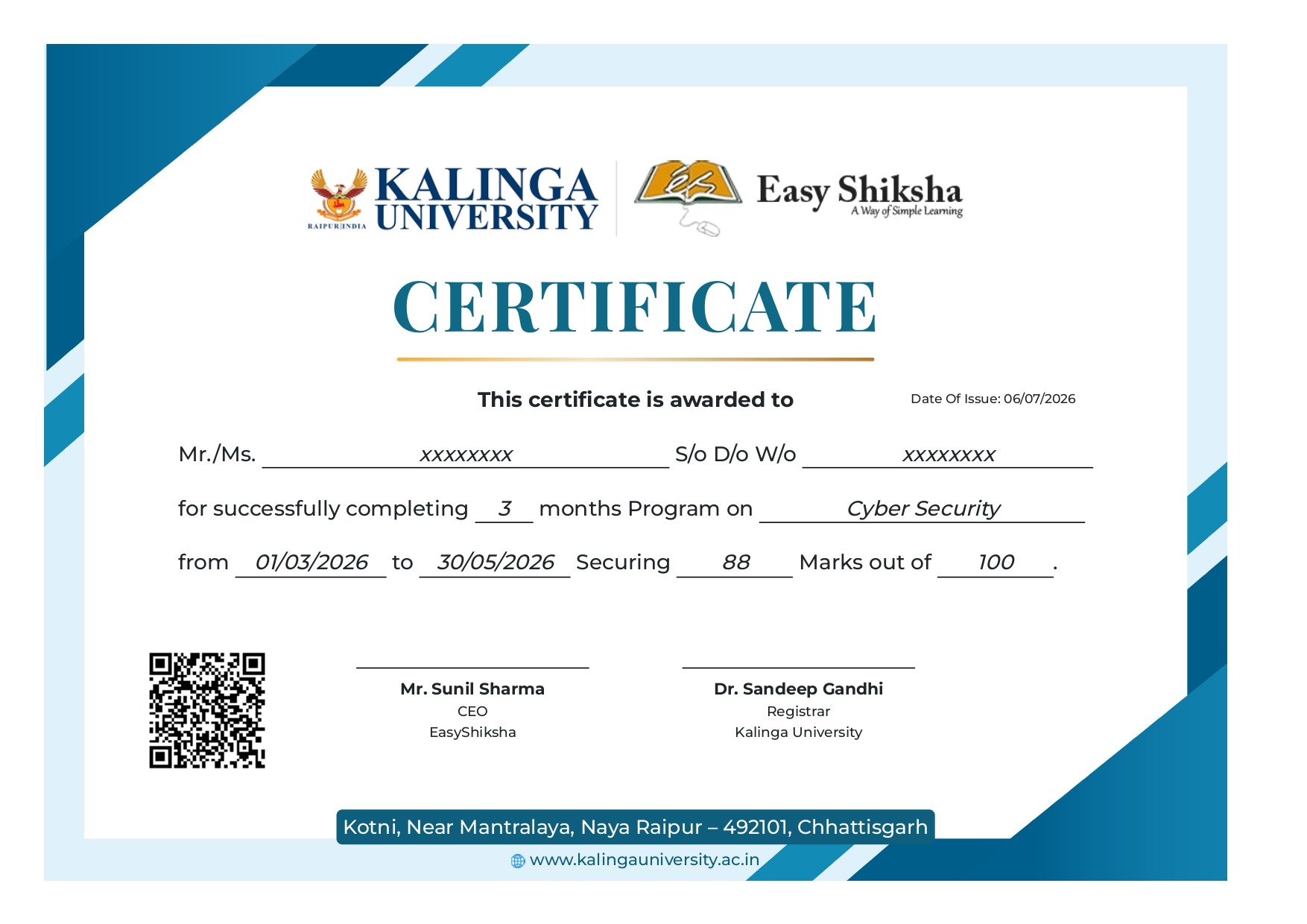
Upon completion, you will receive two certificates: an Internship Certificate and a Course Completion Certificate
Learn conveniently anytime, anywhere.
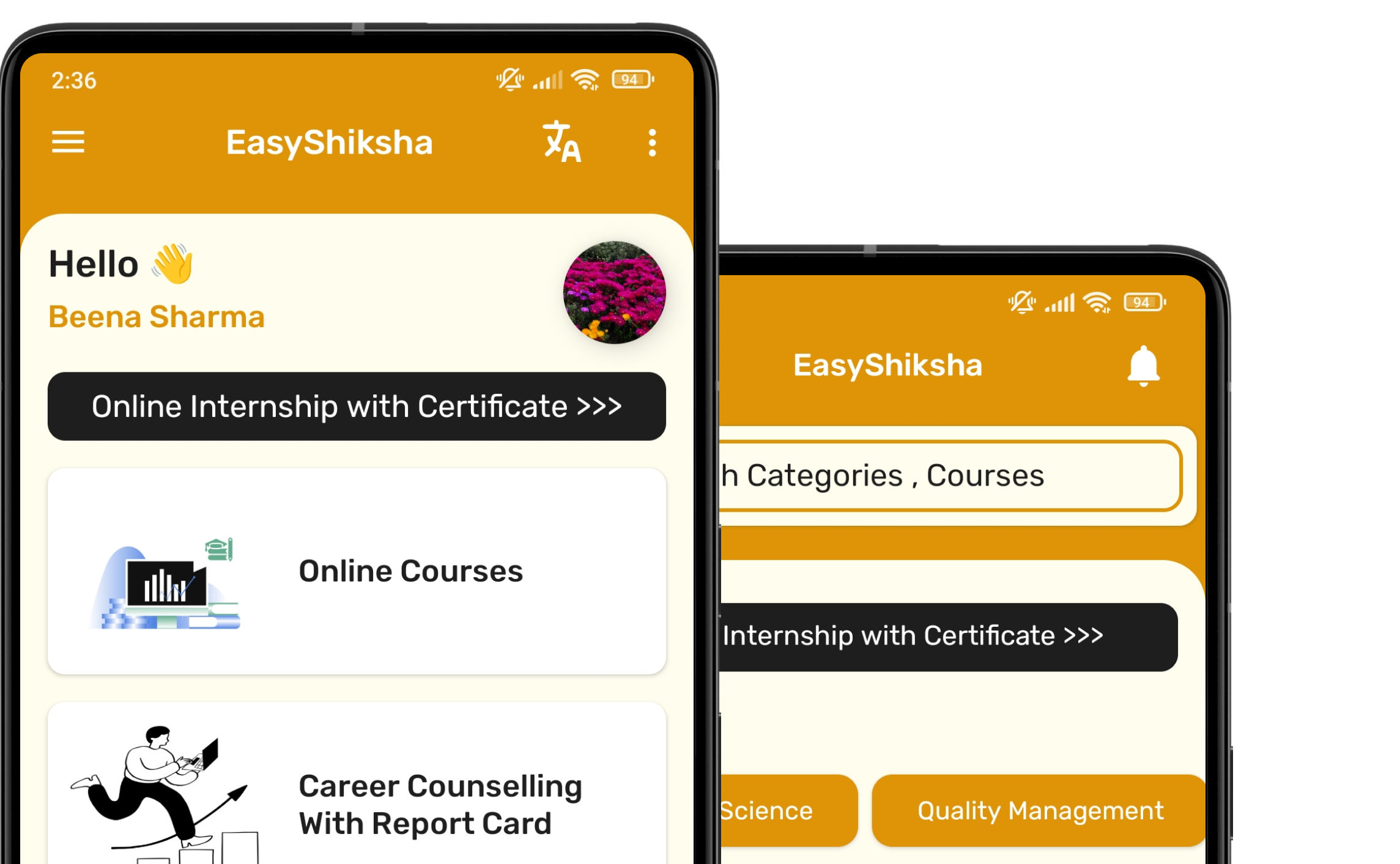
Access learning materials seamlessly via web or mobile. (Download App)
Language-based questions can challenge vocabulary, grammar, sentence structure, reading comprehension, and communication.
These skills are especially important for students preparing for higher education and employment.
A student may have strong technical knowledge but still need to communicate ideas clearly in interviews, presentations, emails, reports, and professional conversations.
Language quizzes can help students identify areas that require improvement.
They can also make vocabulary building more enjoyable. Encountering an unfamiliar word in a quiz often creates a stronger curiosity than simply seeing it in a dictionary.
The student may remember the word because it appeared in a challenging question.
Quiz Questions Can Develop Critical Thinking
The best questions do not always have answers that can be recalled instantly.
Some require comparison, interpretation, elimination, or logical reasoning.
These questions can develop critical thinking because students must evaluate the information available and determine which option best fits the situation.
This is particularly useful in higher education and professional life.
Real-world problems are rarely presented as straightforward textbook questions. People need to interpret information, identify important details, consider alternatives, and make decisions.
A quiz provides a small and accessible way to practice this process.
Why Getting a Question Wrong Can Be Useful
Students sometimes feel disappointed when they get quiz questions wrong. However, an incorrect answer can be one of the most valuable moments in the learning process.
When a student answers incorrectly and then discovers the correct explanation, the new information may become more memorable because it is connected to a specific mistake.
The important thing is how the student responds.
Instead of thinking, “I am bad at this subject,” a productive learner asks, “Why did I get this wrong?”
Perhaps the concept was misunderstood. Maybe two terms were confused. Perhaps the student remembered an outdated fact. Maybe they rushed the question.
Identifying the reason behind a mistake makes future improvement easier.
This is why quizzes should be viewed as learning tools rather than judgments of intelligence.
Your Quiz Score Does Not Define Your Intelligence
A quiz score measures performance on a particular set of questions under particular conditions. It does not measure a person's complete intelligence, creativity, curiosity, practical ability, or future potential.
A student may score poorly on general knowledge while possessing excellent artistic ability. Another may struggle with mathematics but demonstrate outstanding communication skills. Someone may know little about history but have impressive programming ability.
Every student has a different learning journey.
The purpose of a quiz is to discover what you know and what you can improve, not to place a permanent label on your abilities.
A low score can be the beginning of learning rather than the end of it.
Turning a Quiz Into a Learning Challenge
Students can make quizzes more meaningful by treating them as part of a larger learning challenge.
After completing a quiz, they can review the questions they found difficult and explore those topics further. If several questions involve science, they might take a science-related course. If technology questions create curiosity, they might explore programming or digital skills.
This creates a learning cycle.
A question creates curiosity. Curiosity leads to research. Research leads to understanding. Understanding creates confidence. Confidence encourages the student to take on a more difficult challenge.
This is how small interactive activities can become part of long-term learning.
Why Students Enjoy Friendly Competition
Competition has always been a powerful motivator in education.
A quiz becomes more exciting when students can challenge classmates, friends, siblings, or themselves.
Friendly competition can encourage students to prepare more carefully and pay greater attention to their performance. It can also create social learning opportunities because students often discuss questions with each other.
However, competition should remain healthy.
The objective should be to improve knowledge and enjoy the experience rather than make students feel embarrassed by lower scores.
A student who scores five out of ten today and eight out of ten next time has achieved meaningful progress, even if another student scored ten from the beginning.
Personal improvement is one of the most valuable forms of competition.
Quizzes Can Help Students Discover Their Interests
Sometimes students discover career interests accidentally.
A student may take a technology quiz and become fascinated by a question about artificial intelligence. Another may enjoy geography questions and start exploring international relations. Someone interested in business questions may realize that entrepreneurship appeals to them.
Curiosity can be an important career signal.
Students should pay attention to subjects they naturally want to explore further.
This does not mean that one quiz determines a career. Instead, repeated curiosity can reveal areas worth investigating through courses, projects, internships, or conversations with professionals.
The Role of Quizzes in Online Learning
Online education has changed how students access knowledge.
Students are no longer limited to the pace of a classroom. They can learn from videos, articles, interactive lessons, online courses, digital projects, quizzes, and educational games.
Quizzes are particularly useful in online learning because they provide immediate opportunities for active participation.
After watching a lesson, a student can test their understanding. After completing a course, they can evaluate their knowledge. Before beginning a new topic, they can identify what they already know.
This makes quizzes a natural companion to digital education.
For platforms such as EasyShiksha, they can also form a bridge between entertainment and structured learning.
EasyShiksha and the Idea of Learning Beyond Textbooks
Education should not end when a student closes a textbook.
Students need opportunities to explore knowledge through different formats and connect learning with practical experiences.
EasyShiksha brings together educational resources and opportunities designed to support students in developing knowledge and career-oriented skills. Courses can help students learn structured concepts, while quizzes and games can make learning more interactive. Internships can provide practical exposure, helping students understand how knowledge is applied in professional environments.
This combination reflects an important change in education.
Students are increasingly looking for learning experiences that are practical, flexible, accessible, and engaging.
A quiz may take only a few minutes, but it can encourage a student to spend hours exploring a subject they find interesting.
Welcome to Career Helper
A Career Concern of EasyShiksha
Career Helper suggests occupations that correspond to your interests, values, aspirations, and personality.
Career Helper consists of:
IQ Test
Basic Test
Advance Test
Psychometric Test
Know your talents, skills, strengths, and weaknesses.
Choose the profession that suits you best.
Get best career guidance by Experts.
Explore various career options in India with EasyShiksha.
Becoming better at quizzes does not require memorizing thousands of random facts.
A stronger strategy is to develop broad curiosity.
Read about different subjects. Follow credible educational resources. Explore science and technology developments. Learn about geography and history. Improve vocabulary. Practice logical reasoning. Understand basic mathematics. Stay aware of important developments in the world.
Most importantly, do not restrict learning to the subjects you already enjoy.
A student who only studies familiar topics may become highly knowledgeable in one area but lack broader awareness. Exploring unfamiliar subjects creates intellectual flexibility.
Students should also learn to read questions carefully. Many incorrect answers occur because students rush instead of identifying exactly what the question asks.
Sometimes the challenge is not remembering information but interpreting the question correctly.
The Psychology of a Good Quiz Challenge
A well-designed quiz creates a balance between confidence and uncertainty.
If students know every answer instantly, the experience becomes predictable. If they know nothing, the experience becomes discouraging.
The most engaging questions often create a moment of hesitation.
The student thinks, “I know this, but which option is correct?”
That moment encourages retrieval, reasoning, and decision-making.
This is one reason interactive quizzes can feel surprisingly addictive. Every question creates a small challenge, and every correct answer provides a sense of achievement.
Educational platforms can use this natural curiosity to make learning more engaging without reducing education to entertainment.
From Quiz Champion to Lifelong Learner
Winning a quiz can feel great, but the larger achievement is becoming someone who enjoys learning.
A student who is curious does not need to wait for an examination to study.
They may look up an unfamiliar word because they want to know its meaning. They may watch a documentary about a historical event. They may explore how an application works. They may read about a scientific discovery simply because the subject is interesting.
This attitude is extremely valuable in a rapidly changing world.
Knowledge becomes outdated. Technologies evolve. Careers change. New industries emerge.
A person who enjoys learning is better prepared for that uncertainty than someone who only learns when required.
Make Your Next Quiz Better Than Your Last
The most useful question after completing a quiz is not simply, “What was my score?”
Ask, “What did I learn?”
Maybe you discovered that you need to revise a scientific concept. Maybe you learned a historical fact you had forgotten. Perhaps you encountered a technology term for the first time.
Every quiz can leave you with something new.
Over time, repeated exposure to questions from different areas can expand your knowledge considerably.
The process is simple: attempt, review, learn, practice, and attempt again.
There is no requirement to be perfect from the beginning.
Conclusion: Can You Beat the Quiz?
So, can you beat a student knowledge quiz?
Perhaps you can. Perhaps the first attempt will reveal a few unexpected gaps in your knowledge. Maybe you will surprise yourself with how many answers you know, or maybe you will discover subjects that you have never explored seriously.
Either result is valuable.
The real purpose of a student knowledge quiz is not simply to identify the person with the highest score. It is to encourage curiosity, active recall, critical thinking, and the desire to learn more.
In an education environment increasingly shaped by digital learning, interactive experiences can make knowledge more accessible and enjoyable. Quizzes provide a simple way for students to test themselves, challenge their friends, discover their strengths, and identify areas for improvement.
For EasyShiksha learners, a quiz can be more than a few questions on a screen. It can be the beginning of a learning journey. One question may lead to a course. One course may lead to a project. One project may lead to an internship. And an internship may help transform classroom knowledge into career-ready experience.
Anshika Jain is an Engineer, Developer, and Educational Content Author known for her dedication to technology and knowledge sharing. With a strong analytical mindset and a passion for innovation, she has consistently contributed to creating meaningful digital solutions and insightful educational articles.
Her ability to simplify complex technical concepts into engaging and easy-to-understand content makes her work valuable for students and learners across various platforms. Along with her technical expertise, Anshika is admired for her creativity, professionalism, and commitment to continuous learning.
She represents a perfect blend of technical excellence and impactful communication, inspiring others through both her development work and educational contributions.