Choosing a career has traditionally been associated with a relatively small list of familiar professions. Students are often encouraged to think about becoming doctors, engineers, teachers, lawyers, accountants, designers, government officers, or business professionals. These careers continue to offer meaningful opportunities, but the modern employment landscape has expanded far beyond the professions most students hear about during childhood.
Technology, artificial intelligence, digital transformation, scientific innovation, changing consumer behavior, sustainability, healthcare advancements, and the growth of the creator economy have created thousands of specialized roles. Some of these careers did not exist in their current form a few decades ago. Others existed quietly within specialized industries but were not widely discussed in schools or communities.
As a result, a student may have the potential to succeed in a career they have never heard of simply because they have never encountered the profession.
This creates an important challenge for modern education.
Students cannot make informed career decisions if they know only a small fraction of the available possibilities.
Online learning platforms such as EasyShikshacan play an important role in changing this situation. By giving learners access to courses, skill-based learning, career-oriented content, quizzes, certifications, internships, and opportunities to explore different subjects, digital education can help students discover interests and professional pathways that may not be visible through traditional career guidance.
Career discovery should therefore not begin with the question, “Which famous profession should I choose?”
It should begin with a much broader question:
“What kinds of problems do I enjoy solving, what skills do I want to develop, and what kinds of work exist in the world that I may not know about yet?”
This shift can open an entirely new approach to career planning.
The Career World Is Bigger Than Students Realize
One of the biggest challenges students face is limited exposure.
A student may know that companies employ software developers, but they may not know about machine learning engineers, prompt engineers, cloud architects, UX researchers, data engineers, cybersecurity analysts, AI product managers, technical writers, developer advocates, or solutions architects.
A student interested in healthcare may know about doctors and nurses but may not have heard about health informatics specialists, clinical data analysts, medical writers, biomedical engineers, genetic counselors, healthcare UX designers, or digital health product professionals.
A student interested in the environment may know about environmental scientists but may not know about sustainability consultants, climate data analysts, carbon accounting specialists, renewable energy analysts, or environmental technology professionals.
The problem is not necessarily a lack of career opportunities.
It is often a lack of career visibility.
Why Students Usually Hear About the Same Careers
Students tend to hear about careers that are familiar within their families, schools, communities, media, and social circles.
Parents naturally recommend professions they understand.
Teachers may discuss careers commonly associated with academic subjects.
Friends often share similar knowledge.
Social media frequently highlights popular or glamorous professions.
This creates a cycle.
Students learn about a limited number of careers, choose from those careers, and then introduce the same careers to the next generation.
Digital education can interrupt this cycle by exposing learners to a much wider range of professional possibilities.
The Internet Has Changed Career Discovery
The internet has made it possible for students to explore professions beyond their immediate surroundings.
A student in a small town can learn about careers offered by technology companies in Bengaluru. A learner interested in animation can discover global opportunities.
A student fascinated by space science can research specialized roles in aerospace.
Someone interested in games can explore game design, game development, game testing, narrative design, level design, game analytics, or esports-related professions. This access to information can significantly expand a student's imagination.
However, simply having access to information is not enough. Students need structured ways to explore it.
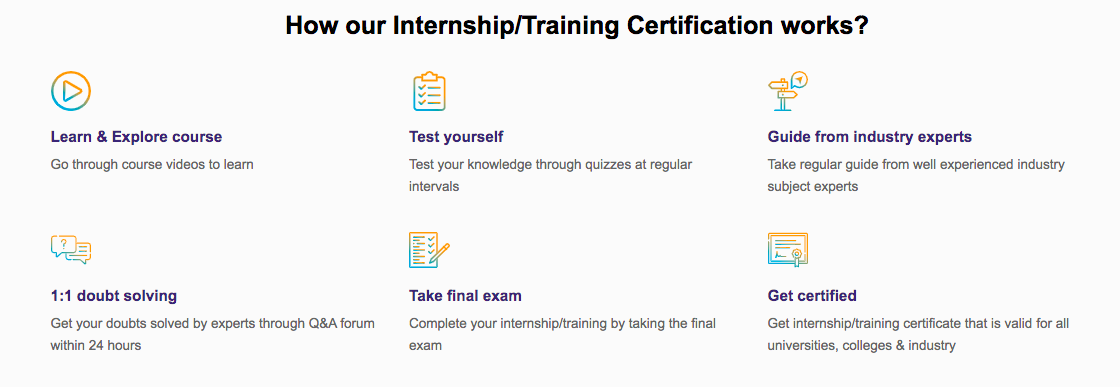
How EasyShiksha Internship/Training Program Works
Online Learning as a Career Discovery Tool
Online learning platforms can become powerful career exploration environments.
Students often discover their interests by trying things rather than simply reading about them.
A learner may think they are interested in artificial intelligence, take an introductory course, and discover that they particularly enjoy data analysis.
Another student may start learning web development and discover a stronger interest in user interface design.
Someone exploring digital marketing may realize that they enjoy analytics more than content creation.
This process is important because career interests are often discovered through experience.
EasyShiksha can support this exploration by allowing students to learn about different subjects through online courses and educational resources.
Students Should Explore Before They Specialize
One of the common mistakes in career planning is specializing too early.
A student may feel pressure to choose a single career before they have experienced enough different fields.
Exploration can reduce this pressure.
Instead of asking students to immediately decide what they want to become, educators can encourage them to explore several areas.
A learner can try programming, digital marketing, communication, design, entrepreneurship, data analysis, cybersecurity, or other subjects.
Through this process, patterns begin to appear.
Students can notice what activities they enjoy, what challenges they tolerate, and which subjects naturally hold their attention.
The Difference Between a Job Title and a Skill
Students often search for career names.
However, career discovery can become more useful when students begin with skills.
Instead of asking, “What job should I choose?” a student can ask:
“What am I good at?”
“What would I like to become good at?”
“What problems do I enjoy solving?”
“What kind of work environment suits me?”
“What subjects make me curious?”
These questions can lead to careers that students may never have considered.
For example, a student who enjoys writing and technology might eventually discover technical writing. A learner who likes psychology and technology might explore UX research.
Someone who enjoys mathematics and business might discover financial analytics. The combination of skills can reveal opportunities that are invisible when careers are viewed as isolated job titles.
Career Discovery Through Curiosity
Curiosity is one of the strongest tools for career exploration.
A student who constantly asks how things work may enjoy research or engineering.
Someone fascinated by how people behave may enjoy psychology, UX research, marketing, or behavioral science.
A learner who likes organizing complex information might enjoy data analysis, project management, or information architecture.
Students should therefore pay attention to the questions they naturally ask.
Curiosity can reveal interests before students have a professional vocabulary for them.
Turning Hobbies Into Career Clues
Hobbies can also provide useful clues.
A student who enjoys modifying computers may have an interest in hardware, networking, cybersecurity, or systems administration.
Someone who spends hours creating digital artwork may explore UI design, animation, 3D modeling, game design, or digital media.
A learner who enjoys making videos might explore video editing, motion graphics, content production, digital marketing, or creative strategy.
A hobby does not automatically determine a career.
However, it can provide clues about activities that naturally attract the student's attention.
EasyShiksha can help students turn these interests into structured learning experiences.
The Role of Short Online Courses
Short courses can be especially useful for career discovery because they reduce the cost of experimentation.
A student does not need to enroll in a multi-year degree simply to find out whether they enjoy a subject.
They can begin with a beginner-level online course.
If they enjoy it, they can continue.
If they discover that the field is not suitable, they can explore something else.
This makes digital learning a practical career experimentation tool.
EasyShiksha's online learning environment can give students opportunities to explore subjects before making larger educational commitments.
Discovering Careers Through Mini Projects
Courses become even more useful when students apply their knowledge.
Suppose a student is curious about data science.
Instead of only watching lessons, they can work with a small dataset.
A learner interested in web development can build a simple webpage.
Someone curious about graphic design can create a poster.
A student exploring digital marketing can develop a sample campaign.
A learner interested in cybersecurity can study basic security concepts through safe educational exercises.
Projects provide evidence about whether a student actually enjoys the work.
This is more informative than simply saying, “This career sounds interesting.”
Career Discovery Through Quizzes
Interactive quizzes can also help students explore their interests.
A well-designed career quiz should not tell a student exactly what career they must choose.
Instead, it can identify areas worth exploring.
For example, a quiz might indicate that a student demonstrates strong interest in analytical problem-solving.
The student can then explore data science, programming, finance, research, engineering, or analytics.
Another student may show strong creative and communication interests.
That learner could investigate design, content strategy, advertising, media, communication, or user experience.
EasyShiksha can use interactive quizzes as an entry point into broader learning pathways.
Why Career Quizzes Should Not Make Final Decisions
Career quizzes can be useful, but they should not be treated as definitive.
A student's interests can change.
A quiz captures a moment in time.
It cannot fully understand family circumstances, financial goals, personality development, future opportunities, or the student's ability to learn new skills.
Therefore, quizzes should be used as exploration tools.
The best outcome is not a single job recommendation.
The best outcome is a list of possibilities that encourages further research and learning.
AI Can Help Students Discover Hidden Careers
Artificial intelligence can make career exploration more personalized.
An AI career assistant could ask students about subjects they enjoy, skills they already possess, activities they like, problems they enjoy solving, and environments in which they prefer to work.
It could then introduce careers that match combinations of these interests.
This is particularly useful because students may not know the names of relevant professions.
For example, a student might say:
“I like psychology, technology, and understanding how people use apps.”
An AI system could introduce UX research as a potential field to explore.
Another student might say:
“I enjoy mathematics, computers, and solving business problems.”
The system could suggest areas such as data analytics, financial technology, operations research, or business intelligence.
The purpose should be discovery rather than automatic career selection.
Personalized Learning Can Reveal Hidden Interests
Sometimes students do not know what they enjoy until they start learning.
Personalized online learning can help reveal patterns.
If a student consistently chooses programming courses, performs well in logical problem-solving exercises, and enjoys technical projects, the platform may identify a strong technology interest.
Another learner might repeatedly engage with communication, writing, and entrepreneurship content.
These patterns can help students reflect on their interests.
With appropriate privacy protections, educational platforms can use learning behavior to make more relevant recommendations.
Career Exploration Should Include Emerging Professions
Students should not explore only established careers.
The modern economy continues to create new roles.
Artificial intelligence has generated demand for specialized roles involving AI development, evaluation, implementation, governance, and product management.
Climate technology is creating new opportunities related to sustainability and environmental data.
Digital healthcare is creating technology-oriented healthcare roles.
Cybersecurity continues to evolve as organizations become increasingly digital.
The creator economy has generated professional opportunities in content, production, community management, and digital strategy.
Students who explore emerging fields may discover opportunities that are not widely discussed in traditional career counseling.
Understanding the Careers Behind Technology
Many students see technology products but do not realize how many different professionals are involved in creating them.
A mobile application may require developers, designers, product managers, researchers, data professionals, cybersecurity specialists, quality assurance engineers, writers, marketers, customer experience specialists, and project managers.
This means a student who likes technology does not necessarily have to become a programmer.
There are many ways to participate in technology.
EasyShiksha can help learners explore these different skill areas through diverse online learning opportunities.
Careers Combining Multiple Subjects
Some of the most interesting careers exist at the intersection of subjects.
Technology and healthcare can lead to health technology.
Technology and finance can lead to fintech.
Technology and education can lead to EdTech.
Psychology and technology can lead to UX research or behavioral design.
Biology and computing can lead to bioinformatics.
Design and technology can lead to interaction design.
Business and data can lead to business intelligence.
Students should therefore avoid thinking about subjects as completely separate.
Combining interests can create unique career pathways.
The Importance of Transferable Skills
Career discovery should not focus only on technical skills.
Communication, critical thinking, creativity, collaboration, adaptability, research, time management, and problem-solving are valuable across industries.
A student who develops strong transferable skills can potentially move between roles more easily.
EasyShiksha can support this by offering learning opportunities across technical, professional, and personal development areas.
This creates a broader foundation for career exploration.
Discovering Careers Through Internships
Internships provide another important form of career discovery.
A student may think they want to work in software development but discover through an internship that they prefer product management.
Another learner may enter a marketing internship and discover a strong interest in analytics.
Practical exposure provides information that classroom learning cannot always provide.
EasyShiksha's internship-oriented ecosystem can help connect learning with professional exposure, allowing students to move from curiosity toward real-world experience.
Why Work Experience Matters Before Career Commitment
Students often make career decisions without seeing what the actual work looks like.
A job title can sound attractive without reflecting daily responsibilities.
Internships, projects, volunteering, freelancing, mentorship, and practical assignments can help students understand the reality behind a profession.
For example, a student interested in content creation may discover that professional content work involves research, editing, deadlines, analytics, and revisions.
This practical understanding helps students make more realistic decisions.
Learning From Professionals
Career discovery can become much more effective when students hear from people working in different professions.
Professionals can explain what their work actually involves.
They can discuss the skills they use, challenges they face, how they entered the industry, and what they wish they had known as students.
Digital platforms can make these interactions easier through webinars, interviews, recorded sessions, and educational content.
Students can gain exposure to professions they might never encounter within their immediate social circles.
Empower your team. Lead the industry
Get a subscription to a library of online courses and digital learning tools for your organization with
EasyShiksha
They can discuss different career possibilities without immediately judging them.
This creates a safer environment for students to discover their strengths.
Career Discovery for Students From Smaller Cities
Digital career exploration can be particularly valuable for students who have limited access to professional networks.
A student in a smaller town may rarely meet a cybersecurity analyst, data scientist, UX researcher, or product manager.
Online platforms can provide exposure to these careers.
Through courses, webinars, articles, interviews, and internships, students can discover opportunities that may not exist locally.
This can help reduce geographic limitations in career awareness.
Digital Education Can Democratize Career Information
Access to career information should not depend entirely on where a student lives or whom their family knows.
Online education can make information more widely accessible.
A student with an internet connection can potentially explore subjects, take courses, watch educational content, participate in communities, and discover professional pathways.
EasyShiksha can contribute to this broader access by bringing learning opportunities to students through a digital environment.
The goal is not simply to provide more content.
It is to help learners discover possibilities.
Career Discovery Should Be a Continuous Process
Career planning should not be treated as a single decision made at age fifteen or eighteen. The professional world changes.
Students develop new interests. Technologies evolve. New industries appear.
Therefore, career discovery should continue throughout education.
A student may discover one interest in school, another during college, and another through an internship.
This is normal. The ability to reassess and adapt is an important part of modern career development.
The Danger of Choosing a Career Only for Its Popularity
Popular careers can be attractive because they receive significant attention.
However, popularity does not guarantee personal suitability.
A career that is perfect for one student may be frustrating for another.
Students should therefore distinguish between what is trending and what is personally meaningful.
Technology careers, for example, include many different roles.
Students should explore the actual work involved rather than choosing a field simply because it is considered successful.
Salary Should Not Be the Only Career Factor
Financial stability matters.
Students and families understandably consider earning potential when choosing careers.
However, salary should be evaluated alongside interest, skills, work environment, growth opportunities, education requirements, lifestyle, and long-term goals.
A student who chooses a profession only because of its salary may struggle if they dislike the daily work.
Career exploration helps students understand the complete picture.
Understanding the Skills Behind a Career
One effective way to discover an unfamiliar career is to research its required skills.
Suppose a student discovers the role of a UX researcher.
They can investigate what the job involves.
They may find that it requires user interviews, research methods, communication, analysis, and an understanding of user behavior.
The student can then take an introductory course or complete a small project.
This turns an unfamiliar job title into something tangible.
EasyShiksha can support this process by giving students opportunities to learn the skills associated with different fields.
Building a Personal Career Exploration Map
Students can create their own career exploration journey. They can begin with subjects they enjoy. Then they can identify related skills.
Next, they can research careers that use those skills.
After that, they can take introductory courses. They can complete projects. They can participate in internships.
Finally, they can evaluate whether the field continues to interest them. This creates an evidence-based career decision process. Instead of choosing a profession based entirely on assumptions, students gather experiences.
Learning From What Students Dislike
Career discovery is not only about identifying what students love.
It is also about identifying what they do not enjoy. A student may discover that they dislike repetitive data entry.
Another may realize they do not enjoy public speaking. Someone else may discover that they prefer independent work to constant client interaction.
These observations help eliminate unsuitable career paths. Online courses and projects provide relatively safe environments for discovering these preferences.
Developing a Career Exploration Mindset
Students should be encouraged to think like explorers.
They do not need to know the final destination immediately.
They can investigate.
They can experiment.
They can learn.
They can change direction.
This mindset reduces the fear associated with making the “wrong” career choice.
Career development is increasingly a process rather than a single decision.
EasyShiksha as a Starting Point for Career Exploration
EasyShiksha can be positioned as a starting point for students who want to explore the relationship between learning and careers.
A student can begin with a subject of curiosity.
An online course can introduce the fundamentals.
A quiz can encourage reflection.
A project can provide practical experience.
A certificate can document learning.
An internship can provide professional exposure.
Together, these experiences can help students move from curiosity toward informed career decisions.
The Future of Career Discovery Will Be More Personalized
Technology will continue to change how students discover careers.
AI systems may analyze learning interests and recommend new fields.
Personalized learning platforms may suggest courses based on a student's strengths.
Virtual experiences may allow students to simulate professional environments.
Digital communities may connect learners with professionals.
Online internships may provide early exposure to workplace activities.
These technologies can make career exploration more interactive and accessible.
However, human judgment will remain important.
Students should ultimately make career decisions based on their own goals, circumstances, values, and experiences.
Students do not need to wait until graduation to explore careers.
Early exploration can be beneficial because it gives learners time to experiment.
A school student interested in technology can begin learning programming.
Someone curious about entrepreneurship can explore business concepts.
A student interested in design can try digital creativity tools.
Early exploration does not require an immediate career commitment.
It simply creates awareness.
By the time students reach higher education, they may have a clearer idea of what they want to investigate further.
The Connection Between Learning and Employability
Career discovery becomes more meaningful when students understand that learning should lead toward capability.
Knowing the name of a profession is not enough.
Students need to understand what skills that profession requires and how they can begin developing those skills.
This is where online learning becomes valuable.
EasyShiksha can help students connect career exploration with actual learning.
Instead of merely reading about a career, they can begin acquiring relevant skills.
This creates a direct connection between curiosity and action.
From Unknown Career to Possible Career
The journey of career discovery can begin with a simple moment of curiosity.
A student encounters an unfamiliar job title.
They research it.
They watch a professional explain it.
They explore the required skills.
They take an introductory course.
They complete a small project.
They discover that they enjoy the work.
The unknown career has now become a possible career.
This transformation is one of the most valuable outcomes of digital career education.
Conclusion
The world of careers is much larger than the list of professions students typically encounter in school, family conversations, or traditional career counseling. Technological change, digital transformation, scientific development, entrepreneurship, sustainability, healthcare innovation, and new forms of online work continue to create professional opportunities across industries.
The challenge for students is often not a lack of opportunities.
It is a lack of awareness.
A student cannot seriously consider a profession they have never encountered.
This is why career discovery needs to become a central part of modern education.
Online learning platforms such as EasyShiksha can play an important role in expanding students' awareness. Courses allow learners to experiment with subjects. Interactive quizzes can help them reflect on interests. Projects can turn abstract career ideas into practical experiences. Certifications can document learning, while internships can provide exposure to professional environments.
Most importantly, digital learning allows students to explore before they commit.
A student does not have to decide immediately whether they want to become a data scientist, UX researcher, cybersecurity analyst, AI product manager, technical writer, health technology professional, sustainability specialist, game designer, or another emerging professional. They can first discover what these careers involve.
Anshika Jain is an Engineer, Developer, and Educational Content Author known for her dedication to technology and knowledge sharing. With a strong analytical mindset and a passion for innovation, she has consistently contributed to creating meaningful digital solutions and insightful educational articles.
Her ability to simplify complex technical concepts into engaging and easy-to-understand content makes her work valuable for students and learners across various platforms. Along with her technical expertise, Anshika is admired for her creativity, professionalism, and commitment to continuous learning.
She represents a perfect blend of technical excellence and impactful communication, inspiring others through both her development work and educational contributions.