Choosing a career can sometimes feel like solving a mystery. There are countless professions, thousands of job roles, and an ever-growing number of specializations. Students often hear familiar career names such as doctor, engineer, teacher, lawyer, designer, accountant, or software developer, but the modern employment landscape contains many more possibilities than the traditional career list suggests.
What if choosing a career could be approached like a puzzle?
Imagine receiving five clues about a profession. One clue describes the kind of problems the professional solves. Another reveals the tools they use. A third tells you what kind of environment they work in. The fourth explains the skills they need. The fifth hints at the impact they can make.
Could you guess the career?
This simple idea can turn career exploration into an engaging learning experience. Instead of beginning with the question, “What career should I choose?”, students can begin by asking, “What kind of work do these clues describe?” The answer can reveal not only a profession but also the skills, interests, and personality traits associated with it.
For students on an educational platform such as EasyShiksha, career discovery does not have to be limited to career counseling sessions or long aptitude tests. Quizzes, games, courses, internships, and interactive challenges can all help students understand the relationship between education and the world of work.
The real challenge is not simply guessing the correct career.
It is understanding why the clues point toward that career and whether the profession could be a good fit for you.
Why Career Discovery Can Feel Difficult for Students
Students are often expected to make important career decisions at a relatively young age. They may have to choose subjects, courses, degrees, or specializations before they have had meaningful exposure to professional life.
This creates a challenge.
How can someone know whether they want to become a data analyst if they have never worked with real-world data? How can a student know whether cybersecurity interests them if they have never explored how digital security works? How can someone decide whether marketing is right for them if they have never planned a campaign?
Career awareness therefore needs to begin before the final decision.
Students need opportunities to explore professions gradually.
A career clue game can provide an easy starting point. It allows students to think about what different professionals actually do instead of focusing only on job titles.
A title such as “data scientist” may sound impressive, but what does that person actually do?
A title such as “UX designer” may sound creative, but what problems does that person solve?
A title such as “cybersecurity analyst” may sound technical, but what does their daily work involve?
Clues help answer these questions.
How the Five-Clue Career Challenge Works
The five-clue concept is straightforward.
Imagine that a career is hidden, and students receive five pieces of information about it. The first clue may be broad, while later clues become increasingly specific.
For example, the first clue might say that the professional works with information and patterns.
The second might reveal that they frequently use spreadsheets, databases, or analytical software.
The third might explain that they help organizations make decisions.
The fourth could mention statistical thinking.
The fifth might reveal that they turn complex information into useful business insights.
The answer could be a data analyst.
The interesting part is that students do not simply memorize a definition. They connect different pieces of information.
That is exactly the kind of thinking students need for career exploration.
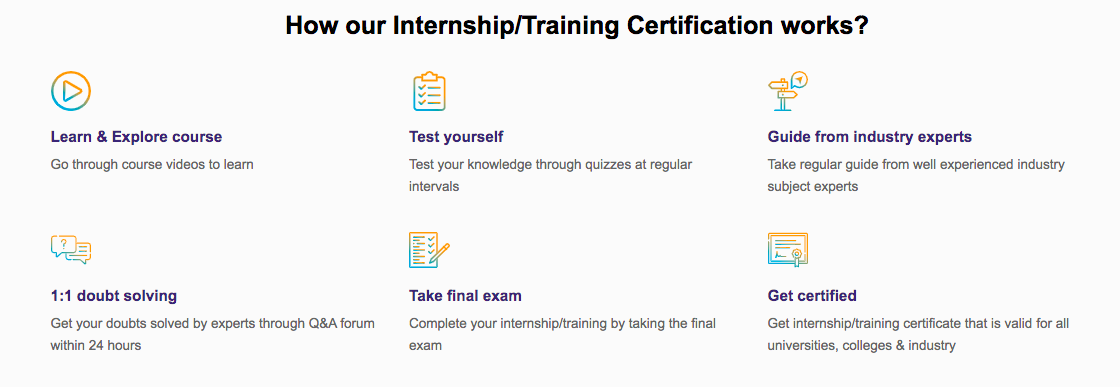
How EasyShiksha Internship/Training Program Works
Clue One: What Problem Does the Professional Solve?
The first and perhaps most important career clue is the problem.
Every meaningful profession exists because it addresses a need.
Doctors help diagnose and treat health conditions. Engineers design and improve systems. Teachers help people learn. Software developers create digital solutions. Accountants help organizations understand financial information. Cybersecurity professionals protect digital systems and information.
When students understand the problem behind a profession, the job title becomes easier to understand.
This is also useful when exploring unfamiliar careers.
Instead of asking, “What does a cloud engineer do?”, a student can ask, “What problem does a cloud engineer solve?”
The answer provides context.
Cloud professionals help organizations design, maintain, secure, and optimize computing infrastructure and services delivered through cloud environments.
Suddenly, the career becomes more understandable.
The problem is the first clue.
Clue Two: What Tools Does the Career Use?
The second clue can involve technology, equipment, software, or professional methods.
Different careers require different tools.
A graphic designer may work with design and prototyping software. A programmer works with development environments, programming languages, databases, and version-control systems. A financial analyst may rely heavily on spreadsheets, financial models, visualization tools, and data platforms.
Tools can provide a strong career clue because they reveal what kind of work happens behind the job title.
However, students should remember that tools change.
A particular software application may become popular today and less important tomorrow. Therefore, students should focus on understanding the underlying skill rather than memorizing a list of tools.
For example, learning data analysis is more valuable than simply learning where buttons are located in one spreadsheet application.
Tools are part of the clue, but they are not the entire career.
Clue Three: What Kind of Skills Are Required?
The third clue can reveal the abilities needed to succeed.
Some careers require deep technical knowledge. Others emphasize communication, creativity, organization, research, leadership, or problem-solving. Most modern professions require a combination.
Consider a digital marketer.
The person may need knowledge of marketing principles, content creation, social media, search engine optimization, analytics, communication, and audience behavior.
Now consider a software developer.
They may need programming, logical reasoning, debugging, system understanding, collaboration, communication, and continuous learning.
This shows why career selection should not be based only on school subjects.
A student may enjoy mathematics but dislike highly repetitive work. Another may enjoy writing but also be fascinated by technology.
Understanding skill combinations can reveal careers that students may not have previously considered.
Clue Four: Where Does the Professional Create Value?
Another useful clue is the environment in which a professional contributes.
Some people work primarily with customers. Others work with machines, software, information, research, products, or teams.
A professional's environment can reveal important characteristics of a career.
A laboratory scientist may spend significant time conducting experiments and analyzing results. A sales professional may interact frequently with customers and clients. A software developer may spend considerable time working with code and collaborating with technical teams. A teacher may work closely with students and educational communities.
Students should ask themselves what kind of environment they prefer.
Do they enjoy working with people?
Do they prefer technology?
Do they like structured environments?
Would they enjoy fieldwork?
Do they want creative freedom?
Would they prefer analytical tasks?
These preferences can help interpret the clues.
Clue Five: What Impact Does the Career Make?
The final clue can reveal the outcome of the work.
What changes because this professional does their job well?
This is an especially useful question because career satisfaction is not only about salary or job titles. Many people want their work to have meaning.
A cybersecurity professional protects information and systems.
A teacher contributes to learning and development.
A civil engineer can contribute to infrastructure.
A sustainability professional can work on environmental challenges.
A healthcare professional can contribute to patient care.
A product designer can make digital experiences easier to use.
When students understand the impact of a career, they can begin connecting professional work with personal values.
Career Mystery One: The Digital Problem Solver
Here is your first career mystery.
This professional spends significant time understanding how digital systems work. They may create applications, websites, software platforms, or automated solutions. Their work involves logical thinking, programming, testing, debugging, and collaboration.
They need to understand technical requirements and turn ideas into functioning digital products.
They also need to keep learning because programming languages, frameworks, platforms, and development practices continue to evolve.
What career are the clues pointing toward?
The answer is likely software developer or software engineer.
But the more important lesson is understanding why.
Software development is not simply about typing code. It involves analyzing requirements, designing solutions, writing and testing code, identifying problems, improving performance, and collaborating with other professionals.
Students interested in this career should explore programming fundamentals and gradually move toward practical projects.
A course can provide structured knowledge, but building something is where the clues become real.
Career Mystery Two: The Data Detective
Now imagine a professional who works with large amounts of information.
They examine numbers, identify patterns, clean and organize data, create visualizations, and help organizations understand what the information means.
They may use spreadsheets, databases, programming languages, statistical techniques, and data visualization tools.
Their work is not simply about calculating numbers.
They ask questions.
Why did sales decline?
Which customers are most active?
What patterns appear in the data?
What might happen under different conditions?
How can information support better decisions?
The answer could be data analyst.
This career combines analytical thinking with technology and communication.
That last part is particularly important.
A data analyst must often explain findings to people who are not specialists. A beautiful analysis has limited value if nobody understands what it means or what action should be taken.
This is why a data analyst's skill stack often includes technical skills, statistical understanding, critical thinking, and communication.
Career Mystery Three: The Digital Guardian
Here is another set of clues.
This professional spends time protecting systems, networks, applications, and information from digital threats.
They may monitor suspicious activity, investigate security incidents, assess vulnerabilities, improve security controls, and help organizations reduce risk.
The field changes constantly because attackers and technologies also change.
The answer is cybersecurity professional, with roles such as cybersecurity analyst being one possible example.
This career demonstrates why curiosity matters.
Cybersecurity professionals need to understand how systems work, how vulnerabilities can emerge, how threats operate, and how security measures can reduce risk.
They also need problem-solving abilities and continuous learning habits.
A student who enjoys technology and puzzles may find this career particularly interesting.
Career Mystery Four: The Experience Designer
Imagine a professional who is less concerned with writing code and more concerned with how people interact with a digital product.
They study users.
They ask what users need.
They examine where people become confused.
They create layouts, prototypes, user flows, and interfaces.
They may conduct research and test designs before a product is released.
This points toward UX or UI design, depending on the specific responsibilities.
The clue here is important because many students assume that design is simply about making something look attractive.
Modern digital design goes much deeper.
A good interface needs to be visually clear, accessible, intuitive, and aligned with user needs.
This career combines creativity, research, communication, technology awareness, and problem-solving.
A student who enjoys both design and understanding people's behavior may find this field worth exploring.
Career Mystery Five: The Business Storyteller
Here is a career that combines creativity and strategy.
This professional studies audiences, develops messages, creates content, monitors campaigns, evaluates performance, and helps organizations communicate with customers.
They may work with social media, websites, search engines, email campaigns, advertisements, analytics, branding, and content.
The answer could be digital marketer.
The interesting part is that digital marketing is not simply posting on social media.
A professional marketer needs to understand audiences and business goals.
Why should a customer care?
What message will communicate value?
Which platform is appropriate?
How can campaign performance be measured?
What should change based on the results?
Students interested in communication, creativity, business, and digital technology may find this career appealing.
Career Mystery Six: The Financial Interpreter
Consider a professional who works with financial information.
They examine transactions, prepare reports, analyze financial performance, monitor budgets, and help organizations understand their financial position.
They need attention to detail, numerical ability, financial knowledge, and familiarity with relevant software and regulations.
This points toward careers in accounting or financial analysis, depending on the responsibilities described.
The important clue is not simply that the person works with numbers.
They transform financial information into something useful for decision-making.
That requires both technical knowledge and professional judgment.
They may create educational materials, design learning experiences, explain difficult concepts, assess progress, and use technology to make learning more effective.
This could describe a teacher, instructional designer, learning and development professional, or education specialist, depending on the specific role.
The career demonstrates that education itself contains many different professions.
A person interested in teaching does not necessarily have to follow only one traditional pathway.
Technology has created new roles involving online education, educational content, learning platforms, instructional design, educational games, and digital learning experiences.
Students who enjoy both education and technology may find opportunities in this expanding space.
Why Career Clues Are Better Than Career Labels
Career labels can sometimes create assumptions.
When students hear “engineer,” they may imagine only one type of work.
When they hear “designer,” they may think only about visual creativity.
When they hear “computer professional,” they may assume programming is the only option.
Clues provide a broader picture.
They show the activities, skills, problems, tools, and outcomes behind a profession.
This can help students discover roles they might otherwise ignore.
A student who dislikes the idea of “coding” might still enjoy cybersecurity, product management, UX design, data visualization, technical writing, or other technology-related careers.
Career exploration should therefore go beyond titles.
The Hidden Clue: Your Personality
There is another clue students should consider: themselves.
Career exploration should not be based exclusively on what the market wants.
Students should also consider how they naturally approach work.
Do you enjoy solving complex problems?
Do you like interacting with people?
Do you prefer independent work?
Do you enjoy creating things?
Are you curious about how systems operate?
Do you like organizing information?
Do you enjoy explaining concepts?
Are you comfortable with uncertainty?
These characteristics do not permanently determine a career, but they can provide useful signals.
A student's personality is not a rigid career test.
People can develop new behaviors and skills.
However, understanding what naturally energizes you can help you explore suitable possibilities.
Skills Are Clues, Not Limitations
A student might think, “I am not good at mathematics, so I cannot work in technology.”
That conclusion may be too broad.
Different technology careers require different mathematical depth.
Similarly, being uncomfortable with public speaking does not mean a student can never develop communication skills.
Skills can be learned.
The purpose of career clues is not to eliminate possibilities immediately. Instead, they should help students understand what they may need to develop.
If a career sounds exciting but requires a skill you currently lack, the correct response may be to learn that skill rather than abandon the career immediately.
This is an important mindset for students.
Career exploration is about discovering what to develop, not just discovering what you already possess.
The Role of Courses in Solving the Career Mystery
Once students identify a career that interests them, the next step should be exploration.
Online courses can provide a structured way to understand the fundamentals of a field.
A student interested in cybersecurity can begin with basic security concepts.
Someone curious about digital marketing can explore marketing fundamentals and digital channels.
A student considering data analytics can learn spreadsheet skills, data concepts, and visualization.
Someone interested in programming can start with a beginner-friendly language and practical exercises.
Courses do not have to be treated as final career decisions.
They can be experiments.
A student can take an introductory course and ask:
Did I enjoy learning this?
Did I enjoy solving the problems?
Would I like to explore the subject more deeply?
The answers can provide new clues.
Quizzes Can Turn Career Exploration Into a Game
Career quizzes are particularly useful because they encourage students to interact with information.
Instead of reading a long career description, students can answer questions, identify clues, and compare possibilities.
For EasyShiksha, this kind of activity can make career awareness more engaging.
A student might be shown five clues and asked to identify the profession. After selecting an answer, they could explore what the career involves, which skills are important, what educational pathways are available, and which courses could help them get started.
This transforms a simple quiz into a learning journey.
The goal is not simply to get the answer correct.
The goal is to understand the career behind the answer.
Games Can Encourage Career Curiosity
Students naturally enjoy challenges.
A career mystery game can use that curiosity to introduce professional possibilities.
Imagine progressing through different levels.
The first level might involve common careers.
The second could introduce emerging digital roles.
The third might involve specialized careers.
The final level could present a complicated combination of clues where several professions appear possible.
This approach encourages students to think carefully.
It also introduces the idea that modern careers can overlap.
A technology professional may need business skills.
A marketer may need data skills.
A designer may need research skills.
An educator may need technology skills.
The boundaries between professions are becoming increasingly interconnected.
Internships Reveal the Clues Behind the Job
A career description can only tell students so much.
An internship provides firsthand exposure.
Students can observe how professionals work, how teams communicate, how tasks are assigned, and what skills are actually used.
This can confirm or challenge their expectations.
A student might discover that a career they imagined as highly creative involves considerable research and documentation.
Another may discover that a technical career involves much more communication than expected.
These are valuable discoveries.
Internships therefore function like real-world career clues.
They help students move from imagination to experience.
The Importance of Exploring Careers Before Final-Year Panic
Career exploration should ideally begin before the final year of college.
Waiting until graduation can create unnecessary pressure.
Students who explore careers earlier have more time to build relevant skills, take courses, participate in projects, seek internships, and understand industry expectations.
This does not mean students must decide their entire future in their first year.
It means they should remain curious.
First year can be about exploration.
Second year can involve experimentation.
Third year can involve specialization and practical experience.
Final year can focus more strongly on career preparation and transition.
The exact timeline will vary, but early exploration generally provides more flexibility.
What If You Guess the Wrong Career?
This is perhaps the most important question.
What happens if the career you choose does not suit you?
Nothing catastrophic.
Career paths can change.
Students often discover new interests after taking courses, completing projects, or gaining internships.
A person may begin in one field and move into another.
The transferable skills they develop can remain valuable.
This is why students should focus not only on job titles but also on broader capabilities such as communication, problem-solving, digital literacy, teamwork, adaptability, and learning ability.
These skills travel between careers.
Career Exploration Is a Process of Elimination
Sometimes students find the right career by discovering what they do not want.
A student may take a course and realize that they dislike the work.
That is useful information.
Another may complete a project and discover that they prefer research over implementation.
Someone else may enjoy working with customers more than working independently.
Each experience narrows the possibilities.
There is no requirement to love every subject you try.
Exploration works partly because it allows students to eliminate options.
The Difference Between a Career and a Job
Students should also understand that a career is broader than a single job.
A job is a particular position.
A career can involve multiple roles across many years.
Someone might begin as a junior software developer, move into a senior role, become a technical lead, and eventually transition into engineering management or entrepreneurship.
Similarly, someone might start in content marketing and later move into brand strategy, product marketing, communications, or consulting.
Therefore, students do not need to predict their exact job title for the next twenty years.
They need to identify a direction that gives them opportunities to learn and grow.
Career Clues Can Help Parents and Educators Too
Career exploration is not only useful for students.
Parents and educators can use clue-based activities to start conversations.
Instead of asking a student, “What do you want to become?”, which can sometimes create pressure, they can ask:
“What kind of problems do you enjoy solving?”
“Would you rather work with people, technology, information, or physical objects?”
“What activities make you lose track of time?”
“What kind of projects do you enjoy?”
“What skills would you like to develop?”
These questions can reveal useful information without forcing an immediate career decision.
Frequently Asked Questions
Q. How can I apply for an internship with EasyShiksha?
You can apply by visiting our website, browsing available internships, and following the application instructions provided.
Q. What types of internships are available through EasyShiksha?
EasyShiksha offers a wide range of internships across technology, business, marketing, healthcare, and more.
Q. Will I receive a certificate upon completing an internship?
Yes, upon successful completion, you will receive a certificate recognizing your participation and achievements.
Q. Are EasyShiksha's certificates recognized?
Yes, the certificates are recognized by universities, colleges, and employers worldwide.
Q. When can I start the course?
You can choose any course and start immediately without delay.
Q. What are the course and session timings?
These are fully online courses. You can learn at any time and pace that fits your schedule.
Q. What will happen when my course is over?
After completion, you will have lifetime access to the course for future reference.
Q. Can I download the notes and study material?
Yes, you can access and download course materials and have lifetime access for future reference.
Q. What software/tools would be needed?
All necessary software/tools will be shared during the training as needed.
Q. I’m unable to make a payment. What should I do?
Try using a different card. If the problem persists, email us at info@easyshiksha.com.
Q. Do I get the certificate in hard copy?
No, only a soft copy is provided, which can be downloaded and printed if required.
Q. The payment got deducted but shows “failed”?
The deducted amount will be returned to your account in 7-10 working days automatically.
Q. Payment successful but dashboard shows ‘Buy Now’?
Reflection may take 30 mins. If longer, email info@easyshiksha.com with your screenshot.
Q. What is the refund policy?
Refunds are available for technical issues. No refunds once a certificate is generated.
Q. Can I enroll in a single course?
Yes, select any course, complete the details, and start learning immediately.
Q. Need further help?
Contact us at info@easyshiksha.com for any other questions.
Building a Career Clue Mindset
Students can begin looking at everyday professional information differently.
When they see a job advertisement, they can analyze the clues.
What skills are requested?
What responsibilities are mentioned?
What tools are required?
What qualifications are expected?
What type of person would succeed in this role?
What problems would this person solve?
This practice can improve career awareness considerably.
Job descriptions stop looking like complicated lists of requirements and start becoming career maps.
How EasyShiksha Can Support Career Discovery
Career exploration becomes more effective when students have access to different forms of learning.
EasyShiksha can serve as a useful part of that exploration by combining online courses, quizzes, educational games, internships, and career-oriented learning opportunities.
Students can begin with curiosity.
A quiz can introduce a career.
A course can explain its fundamentals.
A project can provide practical application.
An internship can offer professional exposure.
A certificate can document learning.
Together, these experiences can help students move from uncertainty toward informed decision-making.
The important thing is not to complete every available activity.
It is to choose opportunities that answer meaningful questions about your future.
From Guessing the Career to Building the Career
The most exciting part of the five-clue challenge is what happens after the answer is revealed.
Suppose the answer is data analyst.
The student can now explore data analytics.
Suppose the answer is cybersecurity professional.
The student can investigate cybersecurity courses and projects.
Suppose the answer is UX designer.
The student can experiment with design tools and user research.
The quiz becomes the beginning rather than the end.
That is how educational games can create meaningful learning.
Curiosity becomes exploration.
Exploration becomes learning.
Learning becomes practice.
Practice becomes experience.
Experience can eventually become a career.
Conclusion: What Career Do the Clues Reveal?
A career can sometimes look mysterious when viewed only through its title.
But once you break it into clues, the picture becomes clearer.
What problems does the professional solve?
What tools do they use?
What skills do they need?
Where do they create value?
What impact does their work make?
These five clues can transform career exploration from a stressful decision into an engaging process of discovery.
The answer may be software development, data analytics, cybersecurity, digital marketing, design, finance, education, engineering, healthcare, or one of the many emerging professions that students can explore today.
Anshika Jain is an Engineer, Developer, and Educational Content Author known for her dedication to technology and knowledge sharing. With a strong analytical mindset and a passion for innovation, she has consistently contributed to creating meaningful digital solutions and insightful educational articles.
Her ability to simplify complex technical concepts into engaging and easy-to-understand content makes her work valuable for students and learners across various platforms. Along with her technical expertise, Anshika is admired for her creativity, professionalism, and commitment to continuous learning.
She represents a perfect blend of technical excellence and impactful communication, inspiring others through both her development work and educational contributions.