Technology has become one of the most influential forces shaping modern careers. Software applications, websites, mobile platforms, artificial intelligence, cloud computing, cybersecurity, data analytics, automation, and digital services have created opportunities across industries. As companies continue to adopt technology, students are increasingly interested in developing coding and programming skills that can help them enter the technology sector.
However, learning to code is not simply about memorizing programming syntax or watching tutorials.
A student may understand variables, loops, functions, databases, and programming concepts theoretically but still struggle when asked to build something independently. Professional software development requires much more than knowing the rules of a programming language. Developers need to analyze problems, break complex requirements into manageable tasks, identify errors, test solutions, optimize their work, and adapt when their first approach does not work.
This is where coding challenges become particularly valuable.
Coding challenges provide learners with opportunities to solve programming problems through practical application. Instead of only watching an instructor write code, students must think about a problem and develop their own solution. They encounter errors, experiment with approaches, test their ideas, and gradually improve.
For online learning platforms such as EasyShiksha, coding challenges can transform programming education from passive content consumption into active skill development. When combined with online courses, interactive assessments, projects, certifications, internships, and career-oriented learning, coding challenges can help students build the confidence and problem-solving abilities needed for technology careers.
The importance of coding challenges extends beyond technical knowledge. They can develop logical thinking, persistence, debugging skills, attention to detail, time management, and the ability to approach unfamiliar problems.
As technology careers continue to evolve, these skills can become increasingly valuable.
Understanding What Coding Challenges Really Are
A coding challenge is a programming problem that requires a learner to create a solution using code. The problem can be simple or complex.
A beginner might be asked to write a program that determines whether a number is even or odd. An intermediate learner might need to manipulate arrays, work with strings, or build a small application. An advanced student might solve an algorithmic problem involving graphs, optimization, databases, or system design.
The important element is that the learner must actively produce a solution.
A coding challenge is therefore different from simply following a programming tutorial.
During a tutorial, the instructor makes most of the decisions. During a challenge, the student makes those decisions. That difference is extremely important for skill development.
Why Learning Programming Requires Practice
Programming is a practical skill. A learner can understand the concept of a loop by reading its definition, but true understanding becomes clearer when they use loops to solve problems.
The same applies to functions, arrays, objects, databases, APIs, algorithms, and other programming concepts.
Practice helps convert theoretical knowledge into usable ability. Coding challenges create repeated opportunities to apply concepts.
A student who has learned conditional statements can solve several problems involving decision-making.
A learner studying arrays can practice searching, sorting, filtering, and manipulating data. A student learning functions can write reusable pieces of code. Over time, these repeated experiences strengthen programming confidence.
Coding Challenges Move Students From Watching to Doing
One of the biggest challenges of online education is passive learning.
A student can watch hours of programming videos and feel that they understand the subject. However, when faced with a blank coding editor, they may not know where to begin. Coding challenges solve this problem by requiring action.
The student must read a problem, understand the requirements, plan a solution, write code, test it, identify errors, and revise the solution. This process creates a much deeper learning experience.
For EasyShiksha, incorporating coding challenges alongside instructional videos can make programming courses more interactive and practical.
Instead of completing a lesson and immediately moving to the next video, learners can stop and apply what they have learned.
Problem-solving is one of the most important abilities in technology careers.
Professional developers rarely receive tasks that say exactly which programming technique to use.
Instead, they receive a requirement. A client may say that users should be able to search for products. A company may need to process large amounts of data.
A team may need to improve the performance of an application. A developer must determine how to approach the problem. Coding challenges provide practice for this process. The learner is given an objective rather than a complete solution.
They must decide what concepts, algorithms, data structures, and programming techniques might help. This develops independent thinking.
Learning to Break Large Problems Into Smaller Problems
Large programming tasks can appear intimidating. Professional developers often manage complexity by breaking a large problem into smaller components. Coding challenges can teach students this approach.
Suppose a student is asked to build a simple student management application.
The task may initially appear complicated.
The learner can divide it into smaller components.
They can first create a student data structure.
Then they can add functionality for adding students.
Next, they can create a search function.
After that, they can implement editing and deletion.
Finally, they can connect the pieces into a complete application.
This decomposition strategy is useful across software development.
Coding Challenges Teach Logical Thinking
Programming requires logical reasoning. A computer does not interpret vague intentions. Instructions must be clear. Coding challenges force students to think carefully about conditions, sequences, inputs, outputs, and edge cases.
For example, a challenge may require a program to determine whether a word is a palindrome.
The learner must consider how to compare characters and what should happen with different inputs. This type of thinking develops logical discipline. Over time, students become better at identifying relationships between information and predicting how a program will behave.
Debugging Is One of the Most Valuable Skills
Code rarely works perfectly on the first attempt. Even experienced developers encounter bugs.
A student who learns programming only by following examples may not gain enough experience dealing with failure.
Coding challenges naturally introduce errors.
A program may produce the wrong output.
A loop may run too many times.
A variable may contain an unexpected value.
A function may not behave as intended.
The learner must investigate.
This process is debugging. Debugging teaches students to avoid panic when something does not work.
Instead, they learn to inspect the problem systematically. That mindset is extremely valuable in professional technology environments.
Coding Challenges Teach Persistence
Programming can be frustrating. A student may spend a long time trying to solve a problem and still receive an incorrect result. This experience can actually be educational.
Students learn that programming is often an iterative process.
They try an approach.
They test it.
They identify a problem.
They revise the code.
They test again.
Eventually, they reach a solution. This develops persistence. For students preparing for technology careers, learning to remain patient when facing difficult technical problems can be as important as learning syntax.
Immediate Feedback Makes Coding Practice More Effective
Interactive coding environments can provide immediate feedback. A learner submits a solution and the system can run tests. If the solution is incorrect, the learner receives information about the result.
This allows students to experiment quickly. Traditional assignments can sometimes create long delays between submission and feedback.
Interactive coding challenges reduce that gap. For an online learning app such as EasyShiksha, immediate feedback can help students identify misunderstandings while the concept is still fresh.
Coding Challenges Can Reinforce Course Concepts
Coding challenges are particularly effective when connected directly to course material. Suppose an EasyShiksha learner completes a lesson about loops. The next activity can require them to use a loop to solve a practical problem.
After learning arrays, the learner can complete array-based exercises. After learning functions, they can create reusable functions.
This creates a learning cycle. The student learns a concept, applies it, receives feedback, and then moves forward.
This is more effective than treating theory and practice as completely separate activities.
Beginner Challenges Build Confidence
Students often feel intimidated when they first encounter programming. The syntax may look unfamiliar. Errors can seem confusing.
Large projects can appear impossible. Beginner-friendly coding challenges can gradually build confidence. A learner might start by solving very small problems.
They can print information, perform simple calculations, compare values, manipulate strings, or work with basic conditions.
Each completed challenge provides evidence that the learner can solve programming problems. As confidence grows, the complexity can increase. This gradual progression can make learning more approachable.
Intermediate Challenges Develop Technical Fluency
Once learners understand the fundamentals, challenges can become more complex.
Students can work with data structures, object-oriented programming, file handling, APIs, databases, asynchronous programming, and other concepts depending on the language and career pathway.
At this stage, coding challenges help students become more fluent. They begin to think in terms of programming patterns rather than individual commands.
They also learn to choose between different approaches.
For example, they may recognize that a dictionary or hash map is more efficient than repeatedly searching through a list. This type of decision-making is important in professional development.
Advanced Challenges Prepare Students for Technical Interviews
Technical interviews often involve coding problems. Candidates may be asked to write code, explain an algorithm, analyze complexity, or solve a programming problem under time constraints.
Regular coding practice can make this experience less intimidating. Students become familiar with reading unfamiliar problems, thinking aloud, testing solutions, and optimizing their approaches.
However, coding challenges should not be viewed solely as interview preparation. The deeper value lies in developing problem-solving skills that remain useful after the interview.
EasyShiksha learners preparing for technology careers can use coding challenges as one part of a broader preparation strategy that includes projects, courses, internships, communication skills, and career development.
Algorithms and Data Structures Become Easier Through Practice
Algorithms and data structures can seem highly theoretical when introduced through textbooks alone.
Coding challenges make these topics practical. Students can implement sorting algorithms, searching techniques, stacks, queues, trees, graphs, and other structures.
They can observe how different approaches behave. They can compare performance. They can discover why one algorithm works better than another for a particular problem.
This practical experience can make abstract concepts more understandable.
Understanding Time and Space Complexity
Professional developers need to consider efficiency. A solution that works for ten items may become extremely slow when processing millions of records.
Coding challenges can introduce students to concepts such as time complexity and space complexity.
For example, a student may create a solution that searches through an entire list repeatedly.
The solution works, but a coding challenge may encourage them to find a more efficient approach.
Through this process, learners begin to understand that programming is not only about getting the correct answer. It is also about creating solutions that perform appropriately.
Coding Challenges Encourage Experimentation
One of the best ways to learn programming is through experimentation.
Students can change a piece of code and observe what happens. They can test different algorithms. They can try alternative data structures.
They can modify inputs. Coding challenges provide a safe environment for this experimentation. There is rarely a single magical route to solving a programming problem.
Different learners may create different valid solutions. This teaches students that programming involves creativity as well as logic.
Multiple Solutions Teach Better Programming
A coding challenge can often be solved in several ways.
One solution may be simple but inefficient. Another may be more complex but faster. A third may use a particular data structure.
Comparing solutions helps learners understand trade-offs. This is an important professional skill.
Developers frequently have to balance performance, readability, maintainability, development time, and complexity. Coding challenges can introduce these ideas gradually.
Coding Challenges Develop Attention to Detail
Programming is sensitive to small mistakes.
A missing character, incorrect variable name, wrong condition, or misplaced bracket can cause a program to fail.
Coding challenges train students to pay attention. They learn to read problem statements carefully.
They learn to understand input and output requirements. They learn to test unusual cases. This attention to detail is valuable in professional software development.
Learning Through Failure
Failure is a normal part of programming.
A failed submission is not necessarily a sign that the learner is incapable. It is feedback. When a student receives an incorrect result, they have an opportunity to investigate.
What assumption was wrong?
Which part of the logic failed?
Did they misunderstand the input?
Is there an edge case?
Did the algorithm behave differently than expected?
This mindset transforms failure into information.
An effective learning platform should therefore make failure constructive rather than discouraging.
Coding Challenges Can Create a Growth Mindset
A growth mindset involves viewing abilities as skills that can improve through practice.
Coding challenges naturally reinforce this idea. A student may initially be unable to solve a problem. After studying the relevant concept and attempting several approaches, they may eventually succeed.
The experience demonstrates that progress comes through effort, experimentation, and learning. This can help students become more resilient. The lesson extends beyond programming.
Technology careers frequently require learning new frameworks, tools, languages, and systems. The ability to learn continuously is therefore extremely valuable.
Coding Challenges and Project-Based Learning
Challenges and projects serve different but complementary purposes.
A coding challenge typically focuses on a specific problem or concept.
A project requires the learner to combine multiple skills into a larger outcome.
For example, an individual challenge might require students to implement a search function.
A project might require them to build an entire e-commerce application.
Coding challenges can therefore act as building blocks for projects.
An EasyShiksha course could introduce a concept through lessons, reinforce it through challenges, and then incorporate it into a larger project.
This progression helps learners move from isolated skills to integrated abilities.
From Coding Challenges to Real-World Applications
The ultimate purpose of programming education is not to solve artificial problems forever.
Students need to understand how coding skills apply to real-world situations.
Coding challenges can gradually become more realistic.
Instead of asking students to manipulate numbers only, exercises can involve customer data, inventory records, financial calculations, user authentication, or API responses.
This makes practice more relevant.
The learner begins to understand that programming is a tool for solving real problems.
Building Portfolio Projects After Coding Practice
A technology employer may want evidence of what a candidate can build. Coding challenge performance can demonstrate problem-solving ability, but portfolio projects can provide broader evidence.
A student can take the skills developed through challenges and use them to build applications.
For example, a learner who has practiced database operations can create a student management system.
Someone who has learned APIs can build a weather or information dashboard. A web development learner can create a responsive website. These projects can be included in a portfolio.
EasyShiksha can complement this process by connecting online courses with practical project development and career-focused learning.
Coding Challenges and Internships
Internships provide students with an opportunity to experience professional environments.
However, entering an internship with no practical coding experience can be challenging. Coding challenges can help students develop basic problem-solving confidence before they begin.
A student who regularly practices debugging, algorithms, and programming logic may feel more comfortable when given technical tasks during an internship.
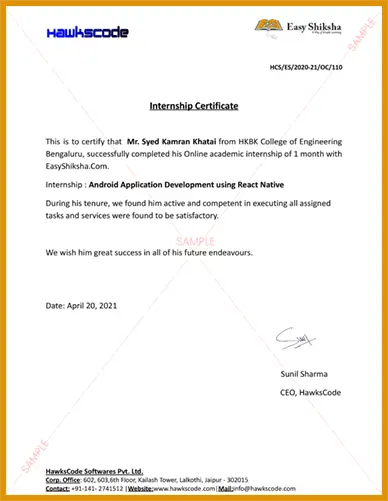
EasyShiksha's combination of courses and internship-oriented opportunities can provide a pathway from structured learning toward practical exposure.
The learner can study concepts, practice through challenges, develop projects, and then apply those skills in a professional environment.
Coding Challenges for Different Technology Careers
Not every technology career requires exactly the same programming skills.
A web developer may focus on HTML, CSS, JavaScript, frameworks, APIs, and databases. A data scientist may need Python, statistics, machine learning, and data manipulation.
A backend developer may work heavily with databases, APIs, server-side languages, and system architecture.
A cybersecurity professional may need scripting, networking, security concepts, and analytical skills. A mobile developer may focus on platform-specific languages and development frameworks.
Coding challenges can be customized according to these career paths. This makes them useful across a broad range of technology education.
Coding Challenges Can Support Non-Computer Science Students
Programming is no longer limited to computer science students.
Students studying business, economics, science, mathematics, design, and other fields increasingly encounter technology.
Basic programming can help learners automate tasks, analyze data, build digital projects, and understand modern technology.
EasyShiksha can help make coding approachable for beginners from different educational backgrounds.
A student does not necessarily need to pursue a software engineering career to benefit from programming knowledge. Coding literacy is increasingly becoming a useful professional skill across industries.
AI Is Changing Coding Practice
Artificial intelligence is changing how programming is learned and practiced.
AI coding assistants can explain errors, suggest code, generate examples, and help learners understand programming concepts.
This can make coding challenges more accessible.
However, students should be careful not to let AI solve every challenge for them.
If a learner copies the solution without understanding it, the educational value of the challenge is lost.
A better approach is to use AI as a tutor.
Students can ask for hints, explanations, alternative approaches, or help understanding an error.
They should still attempt the problem themselves.
This approach preserves the development of independent programming skills.
AI Tutors Can Provide Hints Instead of Answers
An AI tutor can be particularly useful during coding challenges.
Suppose a learner is stuck.
Instead of receiving the complete solution immediately, the AI can provide a hint.
It might ask whether the learner has considered a particular data structure.
It could explain the relevant concept without writing the entire program.
If the learner remains stuck, it can provide another clue.
This creates a guided learning experience.
For EasyShiksha, integrating intelligent assistance in this manner could make coding challenges more supportive while preserving their educational purpose.
Personalized Coding Practice
Different learners struggle with different programming concepts.
One student may have difficulty with loops.
Another may understand loops but struggle with recursion.
A third may be comfortable with programming syntax but weak in algorithmic thinking.
AI-powered learning systems can potentially identify these patterns.
A personalized platform could recommend additional exercises based on performance.
This means learners spend more time practicing what they actually need to improve.
Gamification Can Make Coding Challenges Engaging
Coding challenges can also incorporate carefully designed gamification.
Progress levels, achievements, streaks, challenge categories, and completion milestones can encourage learners to continue practicing.
The goal should not be to turn programming into a game without educational purpose.
Instead, game-like elements can provide motivation around meaningful progress.
A learner might complete a beginner challenge series before moving to intermediate problems.
The visible progression can create a sense of achievement.
Coding Challenges Can Develop Time Management
Technical interviews and professional tasks often involve deadlines.
Coding challenges can introduce time awareness.
Students can practice solving problems within a specified period.
However, speed should not be prioritized too early.
Beginners should first focus on understanding and correctness.
As their skills improve, they can gradually learn to solve problems more efficiently.
This creates a balance between accuracy and speed.
Coding Challenges Teach Students to Read Technical Requirements
Professional developers often receive written requirements.
They must understand what the client or product team actually needs.
Coding challenges teach this skill because the learner must carefully interpret the problem statement.
A student who reads only the first sentence may misunderstand important requirements.
This develops precision.
The ability to translate written requirements into technical solutions is a core professional skill.
Internship/Training with universally recognized certificates accepted by all Universities and Industries
Join over 1,00,000 students from 300+ universities who have already completed internships with EasyShiksha and are now employed at leading MNCs.
Technology professionals must explain their decisions to teammates, managers, clients, and other stakeholders.
Students should therefore learn to explain their solutions.
After completing a coding challenge, they can practice describing the approach, why it works, and what alternatives they considered.
This strengthens technical communication.
EasyShiksha can complement coding education with courses focused on communication, interview skills, workplace readiness, and other professional abilities.
Coding Challenges and Technical Interview Preparation
Technical interviews can be stressful for students who have never solved problems under observation.
Regular challenge practice can make the format more familiar.
Learners become comfortable reading a problem, discussing their approach, writing code, testing it, and explaining the result.
They also learn how to handle situations where they do not immediately know the solution.
This is important because interviews often evaluate the reasoning process rather than only the final answer.
Students should therefore practice explaining their thinking rather than memorizing solutions.
Building a Consistent Coding Habit
Programming skills improve through regular practice.
A student who codes for a few hours once a month may struggle to retain concepts.
Short, consistent practice sessions can be more effective.
Online learning platforms can support this through daily or weekly coding challenges.
A learner might solve one problem each day.
Over several months, these small sessions can create substantial experience.
EasyShiksha can encourage learners to integrate coding practice into their regular learning routine rather than treating it as a one-time activity.
From Beginner to Job-Ready Developer
Becoming job-ready requires more than completing a programming course.
A learner needs conceptual understanding, coding practice, projects, debugging experience, communication skills, and exposure to professional workflows.
Coding challenges can form one important layer of this journey.
The progression might begin with basic programming lessons.
Then the learner completes simple coding challenges.
As their skills improve, challenges become more complex.
Finally, they prepare for technical interviews and employment.
This creates a practical pathway from learning to career development.
The Importance of Real-World Projects
Coding challenges should eventually lead toward larger projects.
Projects teach students how to manage complexity.
They must organize files, design interfaces, work with databases, handle errors, test functionality, and consider user requirements.
These experiences are closer to professional software development than isolated coding questions.
An EasyShiksha learner can use coding challenges as preparation for project-based learning.
Each challenge can contribute to a growing toolkit of programming techniques.
Coding Challenges Can Help Create a Strong Portfolio
A strong portfolio tells a story. It shows what the learner knows and what they can build.
Coding challenges can demonstrate problem-solving practice, while projects demonstrate practical application.
Students can organize selected projects on platforms commonly used by developers and include explanations of the problems they solved.
They can describe the technologies used and the challenges they encountered. This provides potential employers with evidence of technical ability.
Measuring Progress Through Coding Performance
One advantage of coding platforms is that progress can be measurable.
Students can track the number of challenges completed, success rates, topics mastered, and areas requiring improvement.However, numbers alone do not define programming ability.
A learner who completes hundreds of very easy challenges may not be more capable than someone who completes fewer but more complex projects.
Therefore, performance data should be interpreted alongside projects and practical outcomes.
For EasyShiksha, a balanced approach could combine course completion, assessments, coding challenges, projects, and internship experiences.
Creating a Supportive Coding Environment
Students learn better when they feel comfortable making mistakes. A coding challenge environment should therefore avoid making learners feel that incorrect answers represent failure.
Instead, errors should be presented as opportunities to learn.
Hints, explanations, examples, and progressive difficulty can help learners remain motivated. This is especially important for beginners.
If the first programming experience is extremely difficult, students may conclude that they are not capable of coding. A carefully designed progression can create a different experience.
Coding Challenges and the Future of Tech Education
The technology industry changes rapidly. Programming languages evolve. Frameworks change. New development tools appear.
Artificial intelligence is transforming software development. Because of this, technology education cannot focus only on memorizing specific tools.
Students need transferable abilities. Problem-solving, logical thinking, debugging, learning independently, understanding algorithms, and adapting to new technologies are skills that can remain valuable even when specific tools change.
Coding challenges are particularly useful because they develop these transferable abilities.
EasyShiksha and the Future of Coding Education
EasyShiksha can contribute to the future of technology education by combining structured courses with practical learning.
A learner can begin with an introductory programming course. Interactive coding challenges can reinforce each lesson. AI-assisted guidance can help when learners become stuck.
Projects can demonstrate broader competence. Certifications can document course completion.
Internships can provide practical exposure. Career-oriented resources can help students prepare for employment.
This integrated model is more powerful than learning programming theory alone.
It creates a pathway from knowledge to practice and from practice toward professional experience.
What Employers Ultimately Want
Employers may use technical interviews and coding assessments to evaluate candidates, but professional success depends on more than solving algorithmic puzzles.
Companies need people who can understand requirements, communicate clearly, collaborate with teammates, debug problems, write maintainable code, learn new technologies, and contribute to real projects.
Coding challenges help develop several of these abilities.
But they should be combined with project work, teamwork, communication, internships, and practical experience.
Students should therefore avoid treating coding challenges as the entire path to a technology career.
They are one important component of a broader development journey.
Conclusion
Coding challenges can play a powerful role in preparing students for technology careers because they transform programming education from theoretical understanding into active problem-solving.
They encourage learners to think logically, break complex problems into smaller parts, write and test code, identify errors, experiment with solutions, and persist when their first attempt fails. These experiences develop abilities that extend beyond programming syntax.
For online learners, coding challenges are particularly valuable because they create opportunities to practice immediately after learning a concept. Instead of watching an entire programming course passively, students can repeatedly apply what they learn and receive feedback on their progress.
For EasyShiksha, coding challenges can become an important bridge between online education and career preparation. When combined with structured courses, AI-supported learning, practical projects, certifications, internships, and career-focused resources, they can help students develop a more complete technology skill set.
The journey from beginner to technology professional is not created by watching videos alone. It is built through repeated practice, experimentation, mistakes, problem-solving, projects, and real-world application.
A student who learns to face a difficult coding challenge learns more than how to write a program. They learn how to approach uncertainty.
Anshika Jain is an Engineer, Developer, and Educational Content Author known for her dedication to technology and knowledge sharing. With a strong analytical mindset and a passion for innovation, she has consistently contributed to creating meaningful digital solutions and insightful educational articles.
Her ability to simplify complex technical concepts into engaging and easy-to-understand content makes her work valuable for students and learners across various platforms. Along with her technical expertise, Anshika is admired for her creativity, professionalism, and commitment to continuous learning.
She represents a perfect blend of technical excellence and impactful communication, inspiring others through both her development work and educational contributions.