A job description may look like a simple list of responsibilities and requirements, but for students and fresh graduates, it can be much more than that. It can act as a career map.
When a company publishes a job description, it is communicating what it expects from a candidate. Sometimes the required skills are clearly mentioned. At other times, they are hidden inside phrases such as “work with cross-functional teams,” “analyze business data,” “manage multiple priorities,” “develop digital campaigns,” or “troubleshoot technical issues.”
Can you identify the skill behind the sentence?
That is the challenge.
For students preparing for internships, placements, freelance opportunities, or their first professional role, learning to read job descriptions is an important career skill. It helps them understand what employers actually expect, identify gaps in their current abilities, choose relevant courses, build practical projects, and prepare more effectively for interviews.
A student may read a job description and see dozens of words that appear complicated. But once those responsibilities are translated into skills, the description becomes much easier to understand.
“Create reports” may indicate data analysis and communication.
“Collaborate with multiple teams” may indicate teamwork and interpersonal communication.
“Manage deadlines” may indicate time management and organization.
“Develop content strategies” may indicate content creation, research, communication, and marketing knowledge.
“Troubleshoot technical issues” may indicate technical knowledge and problem-solving.
The ability to decode these clues can give students a significant advantage.
For learners on EasyShiksha, this activity can become an engaging career challenge. Instead of simply reading job descriptions, students can turn them into skill-identification puzzles. The question becomes simple but powerful:
Can you identify the skill from the job description?
Why Job Descriptions Matter for Students
Many students begin career preparation by searching for courses or certifications. That can be useful, but there is another place they should look first: actual job descriptions.
Job descriptions reveal what organizations are looking for. They can show the technical skills associated with a role, the soft skills employers expect, the tools commonly used, the level of experience required, and the types of responsibilities involved.
This information can help students make more informed learning decisions. Suppose a student wants to become a digital marketer. Instead of randomly completing marketing courses, they can examine several relevant job descriptions.
They may notice recurring requirements such as search engine optimization, content writing, social media management, analytics, communication, campaign planning, and digital advertising.
Those recurring requirements become clues. The student can then build a learning plan around them. This is much more strategic than choosing courses based only on popularity.
A Job Description Is a Hidden Skill Map
A job description often contains a hidden skill map. The company may not write, “We need someone with strong problem-solving skills.”
Instead, it may say, “Identify issues, investigate root causes, and recommend solutions.” That sentence describes problem-solving. A company may not simply say, “We need communication skills.”It may say, “Present findings to clients and internal stakeholders.”That describes communication and presentation skills.
A company may not say, “We need teamwork.”It may say, “Collaborate with designers, developers, marketing teams, and project managers.”That describes cross-functional collaboration. Once students learn how to interpret these phrases, job descriptions become easier to understand.
The First Skill Clue: “Analyze Data”
Suppose a job description says:
“Analyze data to identify trends and provide actionable insights.”What skill is hidden inside this sentence?The obvious answer is data analysis.
But there may be several supporting skills.The candidate may need spreadsheet knowledge, statistical reasoning, data visualization, critical thinking, and communication.The phrase “provide actionable insights” is particularly important.
It suggests that the employer does not simply want someone who can calculate numbers.They want someone who can interpret information and explain what should happen next.This is a useful lesson for students.A technical skill is often connected to a business outcome.
The Second Skill Clue: “Collaborate With Cross-Functional Teams”
Imagine seeing this requirement:
“Work closely with cross-functional teams to deliver projects.”The hidden skill is teamwork and collaboration.But there is more.
Cross-functional work means interacting with people who may have different responsibilities, priorities, and professional backgrounds.A candidate may need communication, adaptability, negotiation, organization, and interpersonal skills.Students can develop these abilities through group projects, internships, student organizations, competitions, and collaborative assignments.
When reading job descriptions, students should pay attention to words such as “collaborate,” “coordinate,” “liaise,” “work with,” and “partner.”These words often indicate people-oriented skills.
The Third Skill Clue: “Manage Multiple Priorities”
Consider this sentence:
“Manage multiple tasks and meet deadlines in a fast-paced environment.”The obvious skill is time management.
But the description may also indicate prioritization, organization, adaptability, and stress management.The employer wants someone who can determine what needs to be completed first.Students can practice this by managing academic work alongside projects, courses, internships, competitions, and personal responsibilities.
Time management is not simply about making a schedule.
It is about understanding priorities and consistently completing important work.
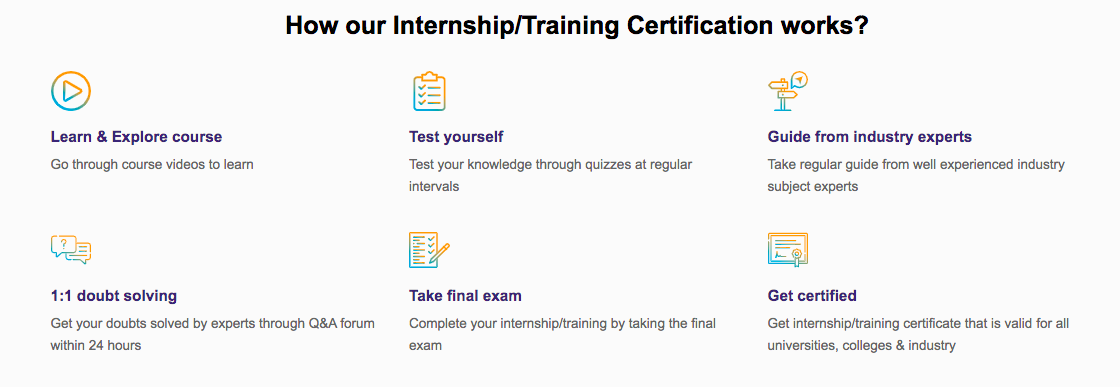
How EasyShiksha Internship/Training Program Works
The Fourth Skill Clue: “Develop Creative Campaigns”
Suppose a marketing job says:
“Develop creative campaigns to increase audience engagement.”What skills are hidden here?Creativity is one.
But the role may also require content development, marketing knowledge, audience research, communication, campaign planning, and analytics.The word “engagement” also provides a clue.
The employer may expect the candidate to understand how campaign performance is measured.Students should therefore learn to look beyond obvious keywords.A job description can contain multiple layers of skills.
The Fifth Skill Clue: “Troubleshoot Technical Issues”
This phrase appears frequently in technical roles.The obvious skill is technical troubleshooting.But troubleshooting also requires problem-solving, logical thinking, attention to detail, system understanding, and persistence.
A candidate may need to identify symptoms, investigate causes, test possible solutions, and verify the outcome.This is why technical education should include practical exercises.
Students who only memorize technical concepts may struggle when asked to diagnose a real problem.Practical projects help develop the thinking process behind troubleshooting.
The Sixth Skill Clue: “Present Findings to Stakeholders”
This phrase reveals presentation and communication skills.But who are stakeholders?
They could be managers, clients, customers, investors, colleagues, or other teams.The candidate therefore needs to adapt communication to the audience.
A technical report may need to be simplified for a non-technical audience.A business presentation may need to focus on outcomes rather than technical details.
Students should practice explaining the same concept in different ways.That ability can become extremely valuable in professional environments.
The Seventh Skill Clue: “Research Industry Trends”
This responsibility points toward research and analytical skills.
The candidate may need to gather information, evaluate sources, identify relevant trends, compare competitors, and summarize findings.
Students can develop these skills through academic research, market analysis projects, industry reading, and structured online learning.
The important lesson is that research is not simply searching online.Good research involves evaluating information and determining what is useful.
The Eighth Skill Clue: “Create and Maintain Documentation”
Documentation requirements often appear in technical and operational roles.The hidden skill is technical or professional writing.
A candidate may need to explain processes, create guides, record project information, or maintain internal documentation.
Good documentation requires clarity, organization, accuracy, and attention to detail.
Students sometimes underestimate writing because they associate professional careers with technical abilities.But strong writing can make technical expertise much more useful.
The Ninth Skill Clue: “Lead a Project”
This phrase clearly suggests leadership and project management.
However, project leadership involves several supporting skills.A candidate may need to define objectives, coordinate tasks, communicate with team members, manage deadlines, track progress, identify risks, and report outcomes.
Students do not need to wait until they have a managerial title to develop leadership.
They can lead college projects, student initiatives, events, competitions, or volunteer activities.What matters is taking responsibility for outcomes.
The Tenth Skill Clue: “Work Independently”
This phrase can reveal self-management and initiative.
An employer may be looking for someone who can take responsibility without constant supervision.
Students can demonstrate this through independent projects.
For example, instead of completing only assigned coursework, a student might identify a problem and build a solution independently.That shows curiosity, initiative, and self-directed learning.
The Eleventh Skill Clue: “Customer-Facing Role”
A customer-facing position requires strong communication and interpersonal skills.
But it may also require empathy, listening, conflict management, persuasion, patience, and product knowledge.
Students interested in sales, customer success, hospitality, retail, consulting, or service industries should pay close attention to these clues.
A candidate may have excellent academic results but still need to demonstrate their ability to interact professionally with customers.
The Twelfth Skill Clue: “Meet Sales Targets”
This phrase usually indicates sales ability and goal orientation.
But successful sales professionals often need communication, negotiation, customer understanding, relationship management, resilience, and data awareness.
Students may misunderstand sales as simply convincing people to buy something.
Modern sales can involve understanding customer problems and recommending appropriate solutions.
The skill is therefore partly about communication and partly about problem-solving.
The Thirteenth Skill Clue: “Optimize Performance”
The phrase “optimize performance” can appear in technology, marketing, operations, finance, and many other fields.The exact skill depends on context.
In software, it may mean improving system performance.In digital marketing, it may involve campaign optimization.In operations, it may involve improving processes.
The key skill is continuous improvement.
Students should learn to ask:
What is the current result?
What is causing inefficiency?
What can be changed?
How will improvement be measured?
This mindset is valuable across careers.
The Fourteenth Skill Clue: “Develop Strategies”
“Develop strategies” sounds impressive, but what does it actually mean?
Strategy involves understanding objectives, analyzing the current situation, identifying options, evaluating alternatives, and selecting a direction.Depending on the role, strategy can involve business knowledge, research, analytical thinking, creativity, and decision-making.Students should not assume that strategy belongs only to senior managers.
They can practice strategic thinking through projects.
For example, a student creating a digital campaign can define a target audience, choose platforms, determine content goals, and establish measurement criteria.That is already strategic thinking at a basic level.
The Fifteenth Skill Clue: “Ensure Accuracy”
This phrase often points toward attention to detail.
Accuracy is important in finance, healthcare, data, administration, engineering, documentation, quality assurance, and many other areas.Students can develop attention to detail by reviewing their own work carefully.
Before submitting a project, check calculations, formatting, references, spelling, data, and logic.Professional quality often depends on small details.
The Sixteenth Skill Clue: “Adapt to Changing Requirements”
This phrase indicates adaptability.Employers know that projects can change.Customers may change their expectations.
Technology may change.Business priorities may shift.A candidate who can adjust without losing focus can be valuable.
Students can demonstrate adaptability through experiences where they had to learn new tools or change an approach.The important part is showing that change did not stop progress.
The Seventeenth Skill Clue: “Learn New Technologies Quickly”
This is a direct clue toward learning agility and digital adaptability.
Employers may not expect students to know every technology used by the company.
Instead, they may want evidence that candidates can learn.A student who has independently learned several tools demonstrates this ability.
Online courses, practical projects, internships, and personal experimentation can all provide evidence.
The Eighteenth Skill Clue: “Prepare Reports”
Report preparation suggests written communication and analytical skills.
The exact requirements depend on the role.A report may require data analysis, research, organization, professional writing, visualization, or interpretation.
Students should practice writing structured reports during their education.A good report should make information easy to understand.
The Nineteenth Skill Clue: “Conduct Presentations”
This clearly indicates presentation skills.Presentation ability is useful in almost every career.
Students should practice presenting projects, explaining ideas, answering questions, and adjusting explanations according to the audience.Presentation skills improve through repetition.
The first presentation may feel uncomfortable.The tenth can feel significantly easier.
The Twentieth Skill Clue: “Identify Opportunities”
This phrase may point toward business awareness, strategic thinking, research, and initiative.
Someone who identifies opportunities does not simply complete assigned tasks.They notice possibilities.
They may identify a new customer segment, a process improvement, a product idea, a market trend, or an efficiency opportunity.
Curiosity is often the starting point.
Why Students Should Learn to Decode Job Descriptions
Understanding job descriptions can help students make better career decisions.
Suppose a student is considering digital marketing.They examine twenty job descriptions and notice that analytics appears repeatedly.
This tells them that learning only content creation may not be enough.They can add analytics to their skill stack.
Another student interested in software development notices that employers repeatedly mention version control, testing, cloud platforms, and collaboration.
That information can influence their learning plan.Job descriptions therefore provide real-world evidence of market expectations.
Suppose several entry-level job descriptions ask for experience with dashboards.
Instead of only watching tutorials, a student could build a dashboard project.
If job descriptions mention portfolio websites, the student can create one.
If they mention social media campaigns, the student can develop a sample campaign.This is how students can convert job-market information into practical experience.
Job Descriptions Can Improve Resume Writing
Students should tailor their resumes to relevant opportunities.
That does not mean copying the job description.
It means understanding what the employer values and highlighting genuine experiences that demonstrate those abilities.
If a role emphasizes data analysis and the student has completed a data project, that project should be described clearly.
If a role emphasizes communication and the student has delivered presentations or managed a student event, those experiences may be relevant.
A good resume makes relevant skills easy to identify.
Job Descriptions Can Improve Interview Preparation
Once students identify the skills mentioned in a job description, they can predict possible interview questions.
If the role requires teamwork, prepare a teamwork example.
If it requires problem-solving, prepare a problem-solving story.
If it requires leadership, think about a situation where you took responsibility.
If it requires data analysis, review relevant concepts and projects.
This turns interview preparation from random memorization into targeted preparation.
The Difference Between a Keyword and a Skill
One important distinction is that not every keyword represents a skill.
A company name is not a skill.A product name is not necessarily a skill.
A job title is not a skill.
Students should identify the action behind the word.
For example, “Excel” is a tool.
What skill does it support?
It might support data analysis, reporting, financial modeling, or organization.
Entrepreneurs need creative approaches to customer problems.
Students can demonstrate creativity through projects, designs, campaigns, research approaches, and problem-solving.
The Skill Behind “Strong Analytical Skills”
Analytical skills involve breaking information into parts, identifying patterns, comparing options, evaluating evidence, and drawing reasonable conclusions.
This skill appears across finance, technology, business, marketing, research, operations, and many other areas.
Students can develop analytical thinking by working with data, solving cases, comparing alternatives, and explaining the reasoning behind decisions.
The Skill Behind “Strong Communication Skills”
Communication is broader than speaking.
It includes writing, listening, presenting, explaining, questioning, and adapting information to different audiences.
Students should therefore practice both written and verbal communication.
A professional email is communication.
A presentation is communication.
A project report is communication.
An interview answer is communication.
A team discussion is communication.
The skill appears everywhere.
The Skill Behind “Problem-Solving”
Problem-solving is often hidden behind phrases such as “resolve issues,” “identify root causes,” “improve processes,” “troubleshoot,” or “develop solutions.”
These all suggest a candidate should be able to move from problem to solution.
Students should practice explaining their process.
What was the problem?
What information did you have?
What options did you consider?
Why did you choose one approach?
What happened?
What did you learn?
That structure demonstrates genuine problem-solving ability.
The Skill Behind “Customer-Centric”
Customer-centric roles require understanding customer needs and experiences.
This may involve empathy, communication, research, service, product understanding, and problem-solving.
Students can develop customer awareness by analyzing products and asking why customers choose them.
What problem does the product solve?
Who is the target audience?
What might frustrate users?
How could the experience improve?
This type of thinking is valuable in marketing, product management, design, sales, hospitality, and customer success.
The Skill Behind “Continuous Improvement”
Continuous improvement means looking for ways to make a process, product, or result better.
Students can practice this by reviewing their own projects.
What worked?
What did not?
What could be faster?
What could be clearer?
What could be more accurate?
This creates a habit of reflection.
Professional growth often comes from repeated cycles of action, feedback, and improvement.
Creating Your Own Job Description Challenge
Students can turn this concept into a practical game.
Choose a real entry-level job description.
Read it without looking at the skills section first.
Identify the responsibilities.
Then write down what skills you think each responsibility requires.
After that, compare your interpretation with the listed requirements.
This can reveal how well you understand professional language.
Repeat the exercise with different industries.
Over time, you will become better at identifying hidden skills.
EasyShiksha and the Skill Identification Challenge
For students using EasyShiksha, job-description challenges can complement online learning.
A student can begin with a career quiz.
Then explore a relevant course.
After learning the fundamentals, they can attempt a skill-identification challenge using actual job responsibilities.
The next step could be a practical project.
An internship can then provide real-world exposure.
This creates a learning cycle that connects education with employability.
Instead of treating courses, quizzes, internships, and career exploration as separate activities, students can use them as connected stages of professional development.
How Job Descriptions Can Reveal Career Trends
Reading multiple job descriptions can also help students notice industry trends.
If artificial intelligence skills increasingly appear across marketing, software, finance, education, or design roles, that is a signal.
If data literacy appears across traditionally non-technical positions, that is another signal.
If communication and collaboration appear almost everywhere, students can recognize their importance as transferable skills.
Students do not need to chase every trend.
But they should be aware of changes.
Career planning becomes stronger when students understand where their industry is heading.
What If You Do Not Have a Skill Yet?
Finding a skill requirement that you do not possess should not automatically discourage you.
Anshika Jain is an Engineer, Developer, and Educational Content Author known for her dedication to technology and knowledge sharing. With a strong analytical mindset and a passion for innovation, she has consistently contributed to creating meaningful digital solutions and insightful educational articles.
Her ability to simplify complex technical concepts into engaging and easy-to-understand content makes her work valuable for students and learners across various platforms. Along with her technical expertise, Anshika is admired for her creativity, professionalism, and commitment to continuous learning.
She represents a perfect blend of technical excellence and impactful communication, inspiring others through both her development work and educational contributions.