Education has traditionally relied on individual assessment methods to determine whether students have learned something. A quiz measures responses to questions, a written assignment evaluates the ability to explain ideas, a coding exercise tests programming knowledge, and a project demonstrates how a learner applies concepts to a practical task. Each method reveals a different aspect of learning, yet none necessarily provides a complete picture of a student's capability.
A learner might achieve an excellent score on a programming quiz but struggle to write functional code independently. Another student might explain a technical concept accurately in a written assignment but find it difficult to apply the concept when developing an application. A third learner might successfully complete a project by following a detailed tutorial but struggle when asked to solve a similar problem without assistance. These situations reveal an important distinction between knowing about a skill and demonstrating that skill under different conditions.
This challenge becomes increasingly important as digital education expands beyond conventional examinations. Students now learn through online courses, interactive quizzes, coding environments, simulations, internships, practical assignments, and AI-assisted learning experiences. These activities generate different forms of evidence, but educational platforms do not always combine them into a coherent assessment of capability.
The Cross-Modal Competency Engine offers a way to address this gap. It is a proposed assessment architecture that evaluates a learner's capability by combining evidence from multiple assessment formats, including quizzes, written explanations, coding tasks, practical projects, and other relevant learning activities. Rather than allowing one score to represent an entire skill, the engine examines what each piece of evidence demonstrates, how different results relate to one another, and where further assessment may be necessary.
For EasyShiksha, this concept could connect online courses, quizzes, projects, internships, certificates, and career guidance through a more comprehensive approach to competency assessment. The objective would be to help learners understand not only what they have studied, but also what they can demonstrate, how reliably they can apply it, and which areas require additional development.
What Is a Cross-Modal Competency Engine?
A Cross-Modal Competency Engine is a system designed to evaluate a particular capability using multiple forms of assessment evidence. The term cross-modal refers to the use of different ways of expressing, applying, or demonstrating knowledge. These may include selecting an answer, explaining a concept in writing, solving a programming problem, analysing data, creating a design, or completing a practical project.
The central principle is that a competency should be evaluated through evidence appropriate to the capability being assessed. A student learning programming may need to demonstrate conceptual understanding, code construction, debugging, and the ability to explain technical decisions. A learner studying digital marketing may need to interpret campaign data, develop a content strategy, write suitable material, and justify decisions using audience insights.
A single assessment format may provide useful information, but combining relevant formats can reveal strengths and weaknesses that would otherwise remain hidden. A quiz may indicate whether a learner understands a concept, while a practical task may show whether the learner can apply it. A written explanation may reveal the reasoning behind a decision, while a project may demonstrate whether several competencies can be integrated into a meaningful outcome.
The engine would connect these evidence sources to a defined competency model. Instead of treating every quiz, assignment, or project as an unrelated score, it would interpret each result in relation to a specific learning objective. The result could be a more detailed assessment of the learner's current capability, supported by identifiable evidence and accompanied by an explanation of its limitations.
Importantly, the engine would not assume that more assessment automatically produces better assessment. Its purpose would be to combine complementary evidence, not to test students continuously or collect unnecessary information. The quality and relevance of the evidence would matter more than its volume.
Why Traditional Assessment Methods Often Provide an Incomplete Picture
Traditional assessments are often designed around administrative convenience, standardisation, and the need to evaluate many students within limited time. Multiple-choice quizzes can be scored efficiently, written examinations can assess structured understanding, and practical assignments can evaluate application. These methods remain valuable, but problems arise when the result of one format is treated as a complete representation of a broad skill.
Consider a learner who scores highly on a quiz about cybersecurity. The score may demonstrate knowledge of terminology, security principles, and common threats. However, it does not necessarily establish that the learner can examine a suspicious event, interpret logs, identify an attack pattern, or recommend an appropriate response. Those capabilities require different forms of evidence.
A similar limitation exists in written assessments. A student may produce an excellent explanation of database normalisation but struggle to design a suitable database schema for an unfamiliar application. The written response demonstrates conceptual knowledge, while the practical task reveals whether that knowledge can be translated into a working solution.
Project assessments introduce another complication. A successful project may involve teamwork, external assistance, reused code, templates, or extensive guidance. These resources can be legitimate parts of professional work, but they complicate the interpretation of an individual student's contribution. A finished output alone may not reveal which decisions the learner made independently or which capabilities they actually demonstrated.
A Cross-Modal Competency Engine would address these limitations by examining the relationship between assessment formats. It would not discard quizzes, written assignments, or projects. Instead, it would use each method for the evidence it is best positioned to provide and identify where additional evidence is needed before making a stronger judgment.
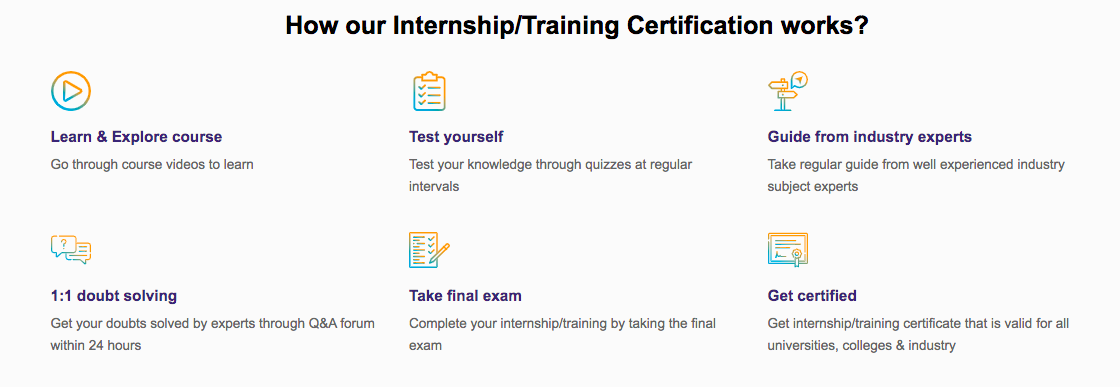
How EasyShiksha Internship/Training Program Works
The Foundation: Defining Competencies Before Measuring Them
The first requirement for a cross-modal assessment system is a clear definition of the competency being evaluated. Without this foundation, combining scores from different activities can create a misleading impression of precision.
A competency is more specific than a broad subject label. Knowing JavaScript, for example, is not one indivisible ability. It may involve understanding variables and functions, manipulating arrays and objects, handling asynchronous operations, responding to browser events, debugging errors, and organising code into maintainable components.
A student may demonstrate some of these abilities while remaining a beginner in others. Assigning one overall JavaScript score without explaining its meaning could hide these differences. A competency model would instead break the broad skill into relevant dimensions and identify what successful performance looks like for each one.
The same principle applies outside programming. A competency in written communication might involve structuring an argument, using appropriate evidence, adapting language to an audience, and communicating recommendations clearly. Data analysis might involve cleaning data, selecting appropriate methods, interpreting results, and explaining uncertainty.
Once the competencies are defined, the platform can determine which assessment formats provide meaningful evidence for each dimension. A quiz may be suitable for checking conceptual knowledge, while a practical assignment may be better suited to evaluating application. A reflective explanation may help reveal reasoning, and a project may demonstrate integration across multiple capabilities.
For EasyShiksha, this structure could connect course learning outcomes with assessments and practical activities. It would allow the platform to explain precisely what a learner has demonstrated rather than relying exclusively on a course-completion status or a general score.
How Quizzes Contribute to Competency Assessment
Quizzes provide an efficient way to evaluate conceptual understanding, recognition, recall, and selected forms of reasoning. They can identify whether students understand definitions, distinguish between related concepts, interpret scenarios, or recognise appropriate methods for solving a problem.
Within a Cross-Modal Competency Engine, quizzes would function as one evidence source rather than the final authority on a student's ability. A learner studying Python might answer questions about loops, functions, lists, and conditional statements. The results could indicate which concepts appear well understood and which require further attention.
The value of quiz evidence increases when questions are aligned with clearly defined learning objectives. A question that tests the meaning of a programming concept provides different evidence from one that asks the learner to predict the output of a short code fragment. Both can be useful, but they assess different aspects of understanding.
Repeated quiz performance may also reveal whether a learner can retrieve knowledge consistently rather than answer correctly by chance. However, repeated questions can create familiarity effects, so the engine should avoid interpreting performance on identical or highly similar items as independent proof of mastery.
Quizzes also have limitations. Multiple-choice questions may reveal whether a learner can identify the correct answer without demonstrating that they can generate the answer independently. A high score may therefore justify moving to a practical assessment rather than immediately declaring the entire competency mastered.
For EasyShiksha, quizzes could act as an initial diagnostic layer. They could help identify knowledge gaps, guide students towards relevant lessons, and determine which practical tasks are appropriate for the next stage of assessment.
Written Work: Revealing Explanation and Reasoning
Written work provides a different kind of evidence because it requires learners to express ideas, justify decisions, and organise information into a coherent explanation. Depending on the task, it can reveal conceptual understanding, analytical reasoning, communication ability, and awareness of limitations.
A student learning data analytics might be asked to explain why missing values should be examined before analysing a dataset. Another learner studying cybersecurity could describe why a particular incident response action is appropriate. A marketing student might justify a campaign strategy by connecting audience characteristics with the intended outcome.
These responses reveal aspects of thinking that a simple quiz may not capture. They can show whether the learner understands relationships between concepts, can communicate a decision, and recognises the conditions under which a method is appropriate.
However, written work must be evaluated according to its purpose. Good writing does not automatically prove technical competence, and grammatical errors do not necessarily indicate weak subject knowledge. A student may understand a programming concept but have difficulty expressing it in polished English. The assessment should distinguish subject understanding from language quality unless communication itself is part of the competency being evaluated.
AI-generated text creates an additional challenge. A polished explanation may not reflect the learner's independent understanding. The engine could therefore combine written work with follow-up questions, applied tasks, or requests to explain specific decisions in context.
Within EasyShiksha, written assignments could complement quizzes by revealing whether students can explain not only what an answer is, but why a particular approach makes sense.
Coding Tasks: Testing Whether Knowledge Can Be Applied
For technical subjects, coding tasks can provide direct evidence of a learner's ability to translate knowledge into executable solutions. They can assess syntax, logic, algorithm selection, debugging, data handling, and the ability to satisfy defined requirements.
A learner studying JavaScript might complete a task involving array manipulation, asynchronous operations, or event handling. The engine could examine whether the code produces the expected behaviour, handles relevant edge cases, and satisfies the stated constraints. Where appropriate, it could also evaluate readability, maintainability, and the quality of the learner's approach.
The evaluation must distinguish between different levels of success. Code that produces the correct output for one example may fail under other valid inputs. A solution that passes a basic test may still contain logical weaknesses. Conversely, a solution may use a different but valid approach from the one expected by the assessment author.
A robust coding assessment should therefore evaluate the requirements rather than merely compare the student's code with a reference answer. Automated tests can verify functional behaviour, while static analysis and human review may help assess additional qualities when they are relevant.
Coding tasks also require careful interpretation when external tools or AI assistance are permitted. In professional development, using documentation, libraries, and coding assistants can be appropriate. The important question is what the assessment is intended to measure. If the objective is independent coding knowledge, assistance may need to be restricted or disclosed. If the objective is building a solution using realistic tools, appropriate assistance may be allowed while the learner's decisions and understanding are evaluated.
For EasyShiksha, coding tasks could provide practical evidence that complements conceptual quizzes and written explanations, making technical competency assessment more representative of actual programming work.
Projects are particularly valuable because they require learners to combine multiple competencies in a larger task. A website project may involve planning, interface design, HTML, CSS, JavaScript, accessibility, testing, and problem-solving. A data analysis project may require data preparation, analytical methods, visualisation, interpretation, and communication.
Unlike a short quiz or coding exercise, a project can reveal whether the learner can coordinate these capabilities towards a meaningful outcome. It can also demonstrate how the learner responds to incomplete requirements, practical constraints, and unexpected problems.
However, project evidence requires more careful interpretation than simply checking whether the final output works. A finished application may have been built by a team, adapted from a template, or completed with extensive assistance. The system should identify which aspects of the work are attributable to the learner and which competencies were actually assessed.
Project evaluation could therefore consider the requirements, the final outcome, the learner's documented decisions, the testing process, and an explanation of important implementation choices. Where appropriate, a short demonstration or follow-up task could help establish whether the learner understands the submitted work.
A project should not automatically receive a higher competency weight merely because it is larger or more visually impressive. A small, carefully designed task may provide stronger evidence for a specific skill than a complex project in which the learner's individual contribution is unclear.
For EasyShiksha, project evidence could help connect course learning with practical application. It could also support student portfolios by documenting the competencies a project was intended to demonstrate and the conditions under which it was evaluated.
Combining Evidence Without Simply Averaging Scores
One of the most important technical challenges in cross-modal assessment is deciding how evidence from different formats should be combined. A quiz score of 85 percent, a written assignment scored 75 percent, and a coding task scored 90 percent cannot automatically be averaged into a meaningful competency score.
The assessments may measure different dimensions, use different difficulty levels, and have different reliability. A quiz may contain straightforward recall questions, while a coding task may require the learner to integrate several concepts. Treating the scores as directly interchangeable could produce a misleading result.
A more thoughtful system would first map each assessment to the competency dimensions it measures. It would then examine the quality, relevance, and reliability of the evidence. Where multiple assessments measure the same dimension, the engine could consider consistency across tasks. Where different assessments measure complementary dimensions, it could preserve those distinctions rather than collapsing everything into a single number.
For example, a learner might demonstrate strong conceptual understanding but weak independent application. The system should report this difference clearly instead of allowing a high quiz score to compensate automatically for an inability to complete the practical task.
The engine could also identify when the evidence is insufficient. If a learner has completed only a quiz, the system might conclude that conceptual understanding has been demonstrated to a certain extent while practical competence remains unverified. It should not invent certainty simply because a dashboard requires a score.
EasyShiksha could use a competency profile that presents separate dimensions of achievement, evidence quality, and remaining uncertainty. An overall summary may be useful, but it should be accompanied by enough detail for learners and educators to understand what the result means.
Detecting Contradictions Between Different Forms of Evidence
Cross-modal assessment becomes especially powerful when different evidence sources disagree. A learner may perform well on quizzes but struggle with coding tasks. Another may produce excellent practical work while finding it difficult to explain the underlying concepts. A third may submit a strong project but perform inconsistently when asked to solve a new problem independently.
These contradictions should not automatically be treated as proof of misconduct or lack of ability. They may reveal important differences in how the learner understands, applies, or communicates knowledge.
A high quiz score combined with weak coding performance may indicate that the student recognises concepts but needs more practice applying them. Strong practical work paired with weak written explanations may suggest that the learner can perform a task but needs support articulating the reasoning behind it. Inconsistent performance across similar tasks may indicate that the competency is not yet stable.
The engine could respond by identifying the most useful next assessment. Rather than requiring the learner to repeat an entire course, it might offer a targeted coding exercise, a short explanation task, or a new practical scenario.
The goal would be to resolve uncertainty through relevant evidence. Contradictions should lead to better diagnosis, not automatic penalties.
For EasyShiksha, this approach could make assessment more educationally useful. Students would receive clearer explanations of what they can already do and what they should practise next, while educators would gain a more differentiated view of learning needs.
Cross-Modal Assessment and AI-Based Evaluation
Artificial intelligence could help coordinate the assessment process by analysing different types of learner evidence. It could compare written explanations with competency criteria, inspect code against task requirements, summarise project evidence, and identify patterns across multiple attempts.
AI may also help generate targeted follow-up questions when evidence is incomplete. If a learner submits a working project but the reasoning behind an important decision is unclear, the system could ask the learner to explain that decision. If a quiz indicates strong conceptual knowledge but a coding task reveals difficulty applying it, the system could recommend a focused practical exercise.
However, AI-generated assessments and judgments require safeguards. A language model may misunderstand a valid explanation, overlook an alternative solution, or produce inconsistent feedback. Automated code evaluation may fail to recognise an unconventional but correct implementation. Project evaluation may be influenced by presentation quality even when the target competency concerns something else.
A responsible engine should therefore use clear assessment criteria, test its evaluation methods, record the basis for important judgments, and provide ways for learners to request review. High-stakes decisions should not depend solely on an unverified automated score.
AI should support the interpretation of evidence rather than replace sound assessment design. The system must remain transparent about which parts of a judgment are based on objective test results, rubric-based evaluation, automated interpretation, or human review.
For EasyShiksha, AI could help make cross-modal assessment more scalable, but trust would depend on the quality of the assessment framework and the ability to explain and challenge consequential results.
Building a Cross-Modal Competency Graph
A Cross-Modal Competency Engine could be supported by a competency graph that connects skills, learning objectives, assessment tasks, projects, and professional applications. The graph would represent which competencies are related and which forms of evidence can support a claim about each one.
For example, a learner developing frontend development capability might complete a quiz on JavaScript fundamentals, submit a coding exercise involving asynchronous operations, write an explanation of event handling, and build a small interactive website. Each activity would provide evidence for particular competency dimensions.
The graph could then show how the evidence relates to broader capabilities. A working website may demonstrate integration across several skills, but it should not automatically prove mastery of every technology or design principle used in the project. The relationship between the evidence and each competency must be explicit.
Such a graph could also help identify missing evidence. A learner may have demonstrated conceptual understanding and coding ability but have no evidence of testing, accessibility, or collaborative development. The system could recommend suitable learning activities without assuming that the missing evidence means the learner lacks the capability entirely.
In EasyShiksha's ecosystem, a competency graph could connect courses, quizzes, projects, internships, and career guidance. It would make it easier to understand how individual learning activities contribute to a larger capability profile and how that profile relates to future learning goals.
Connecting Cross-Modal Competency With Internships and Career Readiness
Assessment becomes more useful when it connects with the tasks students may encounter in professional settings. A coding exercise can demonstrate a specific technical skill, but a project or internship may reveal whether the learner can apply that skill within a broader workflow.
A learner working towards a web development role, for example, may need to demonstrate that they can implement a feature, test its behaviour, debug problems, communicate progress, and work with existing code. These competencies cannot all be inferred from a single multiple-choice assessment.
A cross-modal system could help students build evidence across progressively more demanding activities. They might begin with conceptual quizzes, move to focused coding tasks, complete an integrated project, and then apply their skills in a supervised internship or another relevant practical experience.
The system should distinguish between simulated and real workplace evidence. A project completed in an educational environment can demonstrate valuable practical capability, but it does not automatically establish experience working within a professional team or meeting an employer's requirements.
For EasyShiksha, connecting assessment with internships and career guidance could help students understand which competencies they have demonstrated and which remain to be practised. It could also help learners present their achievements more accurately when preparing portfolios or exploring employment opportunities.
Privacy, Fairness, and Learner Control
Combining multiple forms of evidence creates a richer picture of a learner, but it also introduces privacy and fairness concerns. Written work, coding histories, project files, quiz attempts, and internship evaluations may contain personal information or reveal sensitive details about learning behaviour.
The system should collect only information that is relevant to the stated assessment purpose. Students should understand what evidence is retained, how it is evaluated, who can access it, and whether it may be shared with institutions or employers. Appropriate retention limits and access controls should be part of the design.
Fairness also requires attention to differences in language proficiency, disability, access to technology, and previous educational opportunities. A written explanation should not unfairly penalise a learner for language difficulties when the intended competency is technical reasoning. A coding assessment should not depend on access to expensive software unless that requirement is relevant and disclosed. Alternative assessment formats may be necessary when they can measure the same competency without compromising the learning objective.
The system should also avoid turning incomplete evidence into permanent labels. A weak result on one task should be treated as information about performance under specific conditions, not a definitive judgment about a person's potential.
EasyShiksha could establish clear principles for transparent assessment, accessible participation, evidence correction, and appropriate human review. These safeguards would be essential if cross-modal competency profiles were used for certificates, internship selection, or career recommendations.
Empower your team. Lead the industry
Get a subscription to a library of online courses and digital learning tools for your organization with
EasyShiksha
The Future of EasyShiksha: From Scores to Evidence-Based Capability
A future-ready education platform should help learners understand more than whether they passed a quiz or completed a course. It should explain what they demonstrated, which forms of evidence support that conclusion, and where further practice may be useful.
The Cross-Modal Competency Engine could provide a foundation for this approach by connecting quizzes, written assignments, coding tasks, projects, and practical experiences through a common competency framework. Each assessment would contribute evidence appropriate to its purpose, while the system would preserve the differences between conceptual knowledge, applied performance, communication, and integrated capability.
For EasyShiksha, this could create stronger connections between online courses, assessments, projects, internships, certificates, and career guidance. A learner could see how a course develops foundational knowledge, how a quiz checks understanding, how a practical task tests application, and how a project demonstrates the integration of multiple skills.
The resulting profile would not claim that every competency can be reduced to one number. Instead, it would help learners understand their current strengths, the evidence behind their achievements, and the next steps that could improve their capabilities.
This model could also support more meaningful certificates. Rather than communicating only that a course was completed, a credential could describe the competencies assessed and the types of evidence used, provided that the assessment process and verification standards justify those claims.
The central opportunity is to make educational outcomes more transparent, useful, and connected to the work learners want to perform.
Conclusion: A Skill Should Be Judged by More Than One Signal
No single assessment method can reveal every dimension of a complex skill. Quizzes can test knowledge, written work can reveal explanation and reasoning, coding tasks can demonstrate implementation, and projects can show how different competencies work together. Each form of evidence has strengths, limitations, and appropriate uses.
The Cross-Modal Competency Engine brings these methods together through a structured approach to assessment. It defines the competency being evaluated, maps evidence to relevant dimensions, identifies contradictions, recognises uncertainty, and recommends additional assessment when needed. The purpose is not to generate a more complicated score, but to make judgments about capability more meaningful and defensible.
For EasyShiksha, this concept offers a potential way to connect courses, quizzes, practical projects, internships, certificates, and career guidance within a coherent learning ecosystem. Students could move beyond collecting completion records and develop a clearer picture of what they understand, what they can apply, and what they still need to practise.
Artificial intelligence could help analyse and connect these forms of evidence, but the quality of the system would depend on clear competency definitions, reliable assessment criteria, privacy protections, and opportunities for human review.
Ultimately, the most useful assessment system is not the one that collects the largest amount of student data or produces the most precise-looking score. It is the one that can explain, with appropriate evidence and honest limitations, what a learner has demonstrated and what that demonstration means.
The future of competency-based education lies in combining different forms of evidence to create a more accurate, transparent, and practical understanding of what students can actually do.
Anshika Jain is an Engineer, Developer, and Educational Content Author known for her dedication to technology and knowledge sharing. With a strong analytical mindset and a passion for innovation, she has consistently contributed to creating meaningful digital solutions and insightful educational articles.
Her ability to simplify complex technical concepts into engaging and easy-to-understand content makes her work valuable for students and learners across various platforms. Along with her technical expertise, Anshika is admired for her creativity, professionalism, and commitment to continuous learning.
She represents a perfect blend of technical excellence and impactful communication, inspiring others through both her development work and educational contributions.