


















B.Voc (Degree) in BBA (Aviation & Hospitality Management)
Program Overview
The BBA (Aviation & Hospitality Management) at Mangalayatan University is a three-year undergraduate management program that combines business administration with specialized learning in aviation, hospitality, travel and tourism. The curriculum develops foundational business knowledge through subjects such as Business Economics, Basic Accounting, Principles of Management, Advertising Management, Marketing Theory and Practices, Management and Cost Accounting, Organisational Behaviour, Human Resource Management and Business Environment. Alongside these management subjects, students study aviation and hospitality-oriented skill development components.
The aviation component introduces students to areas such as Introduction to Aviation, Airlines Hospitality Operations, Airport and Ground Handling Management, Aviation Safety and Security, International Flight Operation Procedure and Project on Emergency Drill Procedure. The curriculum covers aircraft operations, cabin crew functions, passenger handling, baggage handling, ramp services, aviation safety procedures, security drills, international travel documentation and airport operations.
The hospitality and tourism side of the program includes Introduction to Hospitality, Introduction to the Travel and Tourism Industry, Theory & Practice of Font Office Operation, Food & Beverage Operation, Housekeeping & Facility Management, Resort and Destination Marketing Management, Travel Agency & Tour Operations and Hospitality Management. Students therefore encounter front-office operations, food and beverage service, housekeeping, hotel departments, tourism geography, travel operations, resort management and destination marketing.
The final stage of the curriculum provides substantial practical exposure through Industrial Training and Project Report & Viva. The Industrial Training component is designed to provide real-world exposure in aviation and hospitality environments, with possible departmental exposure including customer service, airport terminal operations, baggage handling, security hold areas, boarding gates, ramp areas and check-in counters. The Project Report & Viva focuses on identifying aviation-industry problems, research, analysis, recommendations and reflection on industry learning.
Eligibility Criteria
The minimum eligibility for admission in B.Voc is 10+2 (in any stream) or equivalent or a two-year ITI Diploma after Class 10th or a three-year Polytechnic Diploma after Class 10th.
Approval Details
MHRD, Government of India and UGC
Curriculum
Semester I establishes the basic management foundation while introducing students to aviation, hospitality and travel and tourism. It carries 21 credits and contains three Core Courses and three Skill Development Components.
1. Business Economics
This subject introduces economic principles and their application to business and managerial decision-making.
Key Topics:
- Nature and scope of Business Economics
- Opportunity cost
- Incremental concept
- Time perspective
- Discounting principle
- Demand and its determinants
- Elasticity of demand
- Revenue concepts
- Demand forecasting
- Production function
- Cost concepts
- Market structures
- Pricing
- Profit maximization
- Break-even analysis
- Inflation
2. Basic Accounting
Basic Accounting introduces the fundamental concepts and procedures used to record and interpret business transactions and prepare financial information.
Key Topics:
- Accounting fundamentals
- Accounting terminology
- Accounting concepts
- Journal and ledger
- Trial balance
- Cash book
- Bank reconciliation
- Depreciation
- Final accounts
- Profit and loss
- Balance sheet
- Financial transactions
- Basic financial analysis
3. Principles of Management
This course introduces the functions, principles and evolution of management and develops an understanding of planning, decision-making, teams, leadership and organizational change.
Key Topics:
- Evolution of management thought
- Managerial functions
- Planning
- Decision-making
- Control
- Groups and teams
- Leadership
- Motivation
- Organizational power
- Organizational politics
- Conflict management
- Organizational change
4. Introduction to Aviation
This skill development component introduces the aviation industry and its operational environment.
Key Topics:
- Aviation industry fundamentals
- History and evolution of aviation
- Aviation terminology
- Aircraft fundamentals
- Airport operations
- Cabin crew profile
- Passenger services
- Aviation departments
- Basic aviation procedures
- Industry roles and responsibilities
5. Introduction to Hospitality
This course introduces the hospitality industry and its relationship with aviation and tourism.
Key Topics:
- Hospitality industry
- Hospitality services
- History of hospitality
- Indian hospitality industry
- Hotel classification
- HRACC
- Hotel departments
- Front Office
- Housekeeping
- Food and Beverage
- Food Production
- Hospitality market
6. Introduction to the Travel and Tourism Industry
This subject introduces tourism geography and the geographical factors that influence travel and tourism.
Key Topics:
- Geography and tourism
- Latitude and longitude
- Location of places
- Map reading
- Time zones
- Climate
- Flora and fauna
- Population and economy
- Transportation and communication
- Maps of India
- Asia and Europe
- Tourist attractions
- Tourism destinations in India
Download Syllabus
Semester II develops business and marketing knowledge while providing specialized exposure to airline hospitality, airport ground handling and front-office operations. The semester carries 21 credits.
1. Advertising Management
This subject introduces advertising planning and management as part of marketing communication.
Key Topics:
- Advertising concepts
- Advertising planning
- Advertising objectives
- Consumer and target audiences
- Media planning
- Advertising campaigns
- Creative communication
- Promotional strategies
- Campaign evaluation
- Advertising effectiveness
2. Marketing Theory and Practices
This course develops an understanding of marketing concepts and their application in business situations.
Key Topics:
- Marketing concepts
- Marketing environment
- Market segmentation
- Consumer behaviour
- Marketing strategy
- Product decisions
- Pricing
- Promotion
- Distribution
- Branding
- Digital marketing
- Marketing evaluation
3. Management and Cost Accounting
Management and Cost Accounting introduces cost concepts, cost classification and techniques used for planning and control.
Key Topics:
- Cost concepts
- Cost classification
- Cost sheets
- Product costing
- Single-unit costing
- Process costing
- Contract costing
- Marginal costing
- Absorption costing
- Break-even analysis
4. Airlines Hospitality Operations
This course provides specialized knowledge of passenger and cabin-service operations in aviation.
Key Topics:
- Cabin crew profile
- Aviation terminology
- Aircraft types
- Aircraft interior and exterior
- Cabin crew hierarchy
- Passenger handling
- Special assistance
- Onboard announcements
- Meal services
- Emergency procedures
- First aid
- Aviation security
- Crisis management
- Dangerous Goods Regulations (DGR)
5. Airport and Ground Handling Management
This subject introduces passenger services, ground handling, baggage operations and airport authorities.
Key Topics:
- Passenger categories
- Passenger handling
- SGHA
- Handling agencies
- Airline-agency agreements
- Passenger greeting and service
- Customs and immigration
- DGCA
- IATA and ICAO
- Air Traffic Control
- CISF
- Ground-handling operations
6. Theory & Practice of Font Office Operation
The syllabus lists this course title as Theory & Practice of Font Office Operation. The detailed course content uses the term Front Office and focuses on hotel front-desk operations.
Key Topics:
- Reservation systems
- Booking and cancellation
- Individual and group reservations
- Front-desk functions
- Guest arrival and departure
- Check-in and checkout
- Concierge and cashier functions
- Currency exchange
- Telephone etiquette
- Guest complaints
- Room rates
- Taxes and charges
- Folio
- ADR
- RevPAR
- Occupancy percentage
- Hotel revenue calculations
Semester III strengthens organizational and business knowledge while moving deeper into hospitality operations, housekeeping and aviation safety. It carries 21 credits.
1. Organisational Behaviour
This course explores individual and group behaviour in organizations and develops an understanding of motivation, leadership, teamwork and organizational change.
Key Topics:
- Organizational behaviour
- Perception and attribution
- Personality
- Learning
- Motivation
- Leadership
- Emotional intelligence
- Groups and teams
- Interpersonal relationships
- Organizational power
- Conflict
- Organizational change
2. Human Resource Management
This subject introduces human resource development, training, performance assessment and employee development.
Key Topics:
- HRD concepts
- HRD systems
- Management development
- Potential appraisal
- Training needs
- Training methods
- Training evaluation
- Job enrichment
- Work redesign
- Quality circles
- Human Resource Accounting
- Career management
- Stress management
3. Business Environment
Business Environment examines economic, political, legal, socio-cultural, international and technological factors influencing business.
Key Topics:
- Business environment
- Environmental scanning
- Economic systems
- Government policies
- Fiscal and monetary policies
- EXIM policies
- Political and legal environment
- Consumer protection
- Socio-cultural environment
- WTO
- World Bank
- IMF
- Foreign trade
- Technology
- Intellectual Property Rights
4. Food & Beverage Operation
This skill development course covers food and beverage service and restaurant operations.
Key Topics:
- Food and beverage service
- F&B service classification
- Service methods
- Service equipment
- Tableware
- Menu planning
- French classical menu
- Cheese service
- Restaurant operations
- Breakfast service
- QSR/Fast Food operations
- Guest relations
- Reservations
- Banquets
- Outdoor catering
- Room service
5. Housekeeping & Facility Management
This subject develops knowledge of housekeeping organization, cleaning procedures, guest-room operations and facility-related practices.
Key Topics:
- Housekeeping organization
- Job descriptions
- Interdepartmental communication
- Housekeeping documentation
- Equipment
- Cleaning agents
- Cleaning methods
- Public-area cleaning
- Guest-room cleaning
- Bed making
- Turn-down service
- Workplace safety
- Lost and found
- Linen management
6. Aviation Safety and Security
This course introduces aviation safety and security procedures and their practical application.
Key Topics:
- Aviation safety
- Security procedures
- Risk identification
- Emergency procedures
- Baggage security
- Threat management
- Ramp safety
- Aircraft security
- Dangerous Goods
- Safety drills
- Security checks
- Emergency response
- Aviation regulations
Semester IV combines business and communication subjects with automation, resort marketing and airport field exposure. It carries 19 credits.
1. Consumer Behaviour
Consumer Behaviour examines the factors that influence customer decisions and behaviour.
Key Topics:
- Consumer behaviour concepts
- Consumer decision-making
- Motivation
- Perception
- Learning
- Personality
- Lifestyle
- Social influences
- Cultural influences
- Consumer segmentation
- Customer expectations
- Buying behaviour
2. Entrepreneurship and Small Business Management
This subject introduces entrepreneurial thinking and the management of small businesses.
Key Topics:
- Entrepreneurship concepts
- Entrepreneurial characteristics
- Business ideas
- Opportunity identification
- Project formulation
- Business finance
- Budgeting
- Recruitment
- Operations
- Supply-chain management
- Growth strategies
- Strategic partnerships
3. Public Relations
Public Relations introduces organizational communication, stakeholder relationships and media-oriented communication.
Key Topics:
- Public Relations
- Internal and external PR
- Reputation management
- Stakeholder relations
- Media communication
- Press releases
- Feature writing
- Broadcast media
- Blogs
- Social media
- PR campaigns
- Online PR
- Content marketing
4. Automation in Operations
This course introduces technology and automation in tourism, hospitality and airline operations.
Key Topics:
- Automation in tourism
- Information as a resource
- Hotel automation
- Airline ticketing
- Airline reservations
- Passenger services
- Travel-business automation
- Computer Reservation Systems
- CRS evolution
- Opera software
- Kiosk management
- Data analytics
- Biometrics
- Technology in travel and hospitality
5. Resort and Destination Marketing Management
This course examines resort operations, planning, destination marketing and promotional strategies.
Key Topics:
- Resort management
- Hotel vs. resort management
- Resort evolution
- Resort planning
- Resort development
- Resort facilities
- Landscaping
- Amenities
- Dining and entertainment
- Market research
- Market segmentation
- Advertising
- Promotion
- Publicity
- Sales promotion
- Customer Relationship Management
6. Airport Visits and Field Work
This practical component provides exposure to airport departments and helps students connect classroom concepts with real operational environments.
Key Topics:
- Airport departments
- Airport check-in/check-out procedures
- Practical airport exposure
- Observation-based learning
- Airport operations
- Theory-practice connection
- Professional interaction
- Industry learning
- Airport functioning
Semester V develops advanced hospitality and marketing knowledge while introducing travel-agency operations, emergency drills and international flight procedures. It carries 21 credits.
1. Hospitality Management
This subject provides a broader understanding of hospitality, tourism and related service operations.
Key Topics:
- Nature of hospitality
- Hospitality services
- Accommodation industry
- Yield management
- Hospitality networks
- Hotel operations
- Reservations
- Room classification
- Front Office
- Housekeeping
- Food and Beverage
- Restaurant operations
- Room service
- Guest amenities
2. Business Law
Business Law introduces the legal environment relevant to commercial and organizational activities.
Key Topics:
- Business law fundamentals
- Commercial agreements
- Contracts
- Business organizations
- Legal responsibilities
- Consumer protection
- Corporate legal environment
- Intellectual property
- Business compliance
3. Experiential Marketing
Experiential Marketing focuses on creating customer experiences and using interactive marketing approaches.
Key Topics:
- Experiential marketing
- Consumer experience
- Brand experience
- Event-based marketing
- Customer engagement
- Interactive marketing
- Brand activation
- Promotional experiences
- Digital integration
- Social media
- Campaign evaluation
4. Travel Agency & Tour Operations
This course introduces travel-agency operations, travel documentation, reservations and tour-related processes.
Key Topics:
- Travel agency management
- Tour operations
- Travel documentation
- Passport procedures
- Visa procedures
- Health certificates
- Travel insurance
- Currency regulations
- Customs
- Global Distribution Systems
- Amadeus
- Galileo
- Travel booking
- Reservations
- Ticketing
5. Project on Emergency Drill Procedure
This project-based component develops understanding of aviation safety and security drills.
Key Topics:
- Baggage security drill
- Threat drill
- FOD drill
- Fire and fuel-spillage drill
- Drill audits
- Safety audit
- Security audit
- Compliance audit
- Enterprise Risk Management
- Ramp accident response
- Pre-flight inspection
- Security screening
- Baggage checks
- Dangerous Goods handling
- Cargo loading and unloading
6. International Flight Operation Procedure
This course introduces international passenger handling, travel documentation and airport vigilance.
Key Topics:
- International check-in
- Document verification
- Baggage handling
- ECR and ECNR
- TIMATIC
- Passport types
- Visa requirements
- Entry permits
- International travel documentation
- Passenger categories
- Travel fraud prevention
- Airport vigilance
Semester VI is the final semester and carries the highest semester credit load of 29 credits. It combines strategic and business subjects with Industrial Training and Project Report & Viva.
1. Business Policy
Business Policy introduces strategic management and organizational decision-making.
Key Topics:
- Business policy
- Strategic management
- Strategic planning
- Environmental scanning
- Strategy formulation
- Strategy implementation
- SWOT analysis
- Porter's Five Forces
- Corporate governance
- Competitive advantage
- Business-level strategy
- Corporate-level strategy
- Strategic decision-making
- Risk management
- Organizational structure
- Performance control
- CSR and ethics
2. Goods and Service Tax
This subject introduces the Goods and Services Tax framework and its application to business transactions.
Key Topics:
- Introduction to GST
- Constitutional framework
- Levy and collection
- CGST
- SGST
- IGST
- UTGST
- GST registration
- Composition scheme
- Input Tax Credit
- GST invoicing
- Record keeping
- Assessment and audit
- Refunds
- GST Council
- GST administration
3. Business Ethics and Governance
This course examines ethical decision-making, corporate governance and responsible business practices.
Key Topics:
- Ethics
- Ethical theories
- Ethical decision-making
- Business ethics
- Corporate Social Responsibility
- Stakeholder theory
- Corporate governance
- Organizational culture
- Ethical issues in marketing
- Finance and accounting ethics
- HR ethics
- Supply-chain ethics
- Global business ethics
- Emerging ethical challenges
4. Sales and Marketing
Sales and Marketing develops understanding of business organization, marketing, sales, customer relationships and digital marketing.
Key Topics:
- Business organization
- Advertising
- Public Relations
- Salesmanship
- Buyer behaviour
- Customer expectations
- International marketing
- Media relations
- Marketing principles
- Research methodology
- E-Commerce
- B2B marketing
- Customer Relationship Management
- Integrated Marketing Communication
- Rural marketing
- Sales and distribution
- Digital marketing
- Business sustainability
- Corporate governance
5. Industrial Training
Industrial Training provides practical exposure to real-world aviation and hospitality operations. The syllabus describes the training as an opportunity to understand industry departments, work on real-life challenges and apply classroom knowledge.
Key Areas of Exposure:
- Customer service
- Airport terminal
- Baggage handling
- Floor management
- Security hold area
- Boarding gates
- Queue management
- Ramp area
- International and domestic baggage areas
- Baggage reconciliation
- Baggage distribution
- International check-in
- Domestic check-in
- Industry reports
- Viva voce assessment
6. Project Report & Viva
This component develops research, analytical and problem-solving skills related to the aviation industry.
Key Topics:
- Identification of aviation-industry problems
- Research problem formulation
- Literature organization
- Research analysis
- Industry projects
- Critical evaluation
- Recommendations
- Problem-solving
- Decision-making
- Innovation and creativity
- Reflection on industry learning
- Viva voce
Fee Structure
Admission Process
Students can apply for the BBA (Aviation & Hospitality Management) programme through EasyShiksha. The complete application process is designed to make admission simple and convenient for eligible students.
Step 1: Click on Apply Now
Click the Apply Now button on the BBA (Aviation & Hospitality Management) programme page and begin your application through EasyShiksha.
Step 2: Complete Personal Information
Fill in the required personal, contact and academic details accurately in the application form.
Step 3: Upload Required Documents
Upload the required documents for eligibility and admission verification as specified during the application process.
Step 4: Pay Application Fee
Pay the applicable application fee through the available online payment options to submit your application and initiate the admission process.
Step 5: Application Review
The EasyShiksha team reviews your application and submitted documents to verify your eligibility and ensure that the required information and documents have been provided.
Step 6: University Enrollment
Once the application is successfully reviewed and the student is found eligible, EasyShiksha facilitates the enrollment process with Mangalyatan University.
Step 7: LMS Access
After successful enrollment, the student is provided access to the Learning Management System (LMS) to begin their academic journey and access the available learning resources.
Start Your Application
Ready to begin your journey in Software Development? Click Apply Now to submit your application through EasyShiksha.
Career & Placements
The BBA (Aviation & Hospitality Management) curriculum covers business administration, aviation operations, airport services, hospitality, travel and tourism, marketing, safety, security and practical industry training. Based on these curriculum areas, graduates can explore career opportunities across aviation, airports, hospitality, travel and tourism and related business functions.
Aviation and Airport Operations
- Airport Operations Executive – Support airport operational activities and coordination.
- Passenger Service Executive – Assist passengers with airport and travel-related services.
- Airport Customer Service Executive – Apply customer-service and passenger-handling knowledge.
- Ground Handling Executive – Work with passenger, baggage and ground-handling processes.
- Airport Terminal Executive – Support terminal operations and passenger-flow activities.
- Ramp Operations Executive – Explore roles related to ramp operations and aircraft handling processes.
- Baggage Handling Executive – Work with baggage processing, security and tracing procedures.
- Check-in Executive – Support domestic and international check-in operations.
Airline and Flight Operations
- Airline Hospitality Executive – Apply knowledge of airline hospitality and passenger services.
- Cabin Services Executive – Explore passenger-facing airline service functions.
- Flight Operations Support Executive – Apply knowledge of flight procedures and operational coordination.
- International Flight Operations Executive – Work with international travel procedures and documentation.
- Airline Customer Service Executive – Assist passengers with travel-related services and requirements.
Hospitality and Hotel Operations
- Hotel Operations Executive – Support hotel and accommodation operations.
- Front Office Executive – Work with reservations, check-in, checkout and guest services.
- Guest Relations Executive – Handle guest communication and service requirements.
- Housekeeping Executive – Work with housekeeping operations and guest-room services.
- Food & Beverage Executive – Explore restaurant, banquet and food-service operations.
- Hospitality Services Executive – Apply hospitality-management knowledge across accommodation and service operations.
Travel and Tourism
- Travel Consultant – Apply knowledge of travel documentation, bookings and travel requirements.
- Travel Agency Executive – Support travel-agency and reservation operations.
- Tour Operations Executive – Assist with tour planning and operational activities.
- Travel Operations Executive – Work with travel bookings, documentation and customer services.
- Destination Marketing Executive – Apply knowledge of destination promotion and marketing.
Resort and Destination Management
- Resort Operations Executive – Support resort operations and guest services.
- Resort Marketing Executive – Work with resort promotion, advertising and sales promotion.
- Destination Marketing Executive – Apply market research, segmentation and promotional strategies.
- Guest Experience Executive – Support customer experience and relationship management.
Marketing and Public Relations
- Marketing Executive – Apply marketing principles and promotional strategies.
- Sales Executive – Work with selling, customer expectations and distribution activities.
- Digital Marketing Executive – Apply digital marketing concepts and online promotional tools.
- Public Relations Executive – Work with stakeholder and media communication.
- Customer Relationship Management Executive – Apply CRM concepts to customer-service environments.
Safety and Security
- Aviation Safety Support Executive – Apply knowledge of aviation safety procedures.
- Airport Security Operations Support – Explore operational roles involving aviation security processes.
- Safety Drill Coordinator – Support safety and emergency-drill activities.
- Emergency Operations Support Executive – Apply knowledge of emergency procedures and response planning.
Entrepreneurship
The program also includes Entrepreneurship and Small Business Management, while its hospitality, travel, resort and marketing subjects provide business-oriented knowledge. Students interested in entrepreneurship can explore opportunities in areas connected with travel, tourism, hospitality and related services.
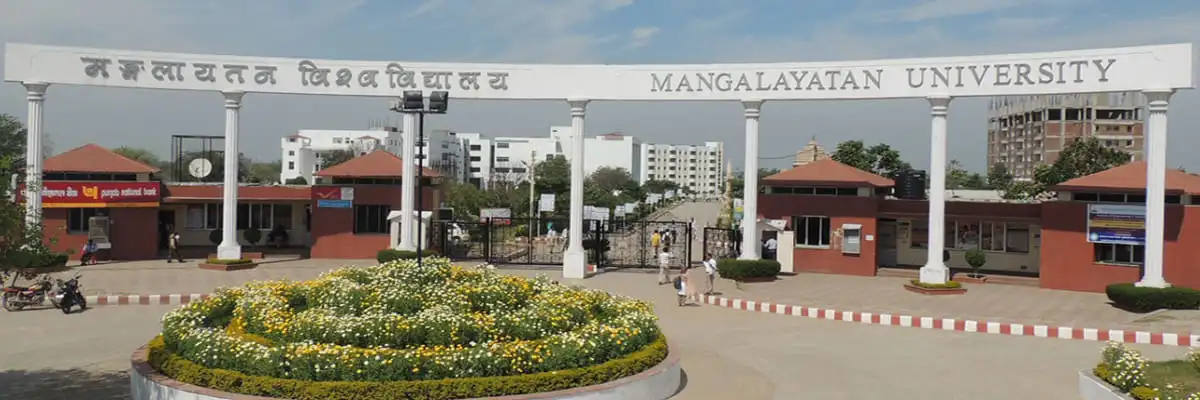
Mangalayatan University, Aligarh
Mangalayatan University is a UGC-recognized private university located in Aligarh, Uttar Pradesh, India. Known for its strong industry connections, cutting-edge curriculum, and commitment to technology-driven education, Mangalayatan University has established itself as one of central India's premier higher education institutions.
The university's vision is to foster academic excellence, industry readiness, and global competitiveness among its graduates — making it an ideal partner for EasyShiksha's mission of accessible, quality online education.
EasyShiksha has signed an MoU with Mangalayatan University to facilitate applications for various university programs and jointly offer B.Voc programs. All degrees and certifications under these programs will be awarded by Mangalayatan University. The EasyShiksha team will provide complete assistance and support throughout the admission and program process.
Mangalayatan University, Uttar Pradesh
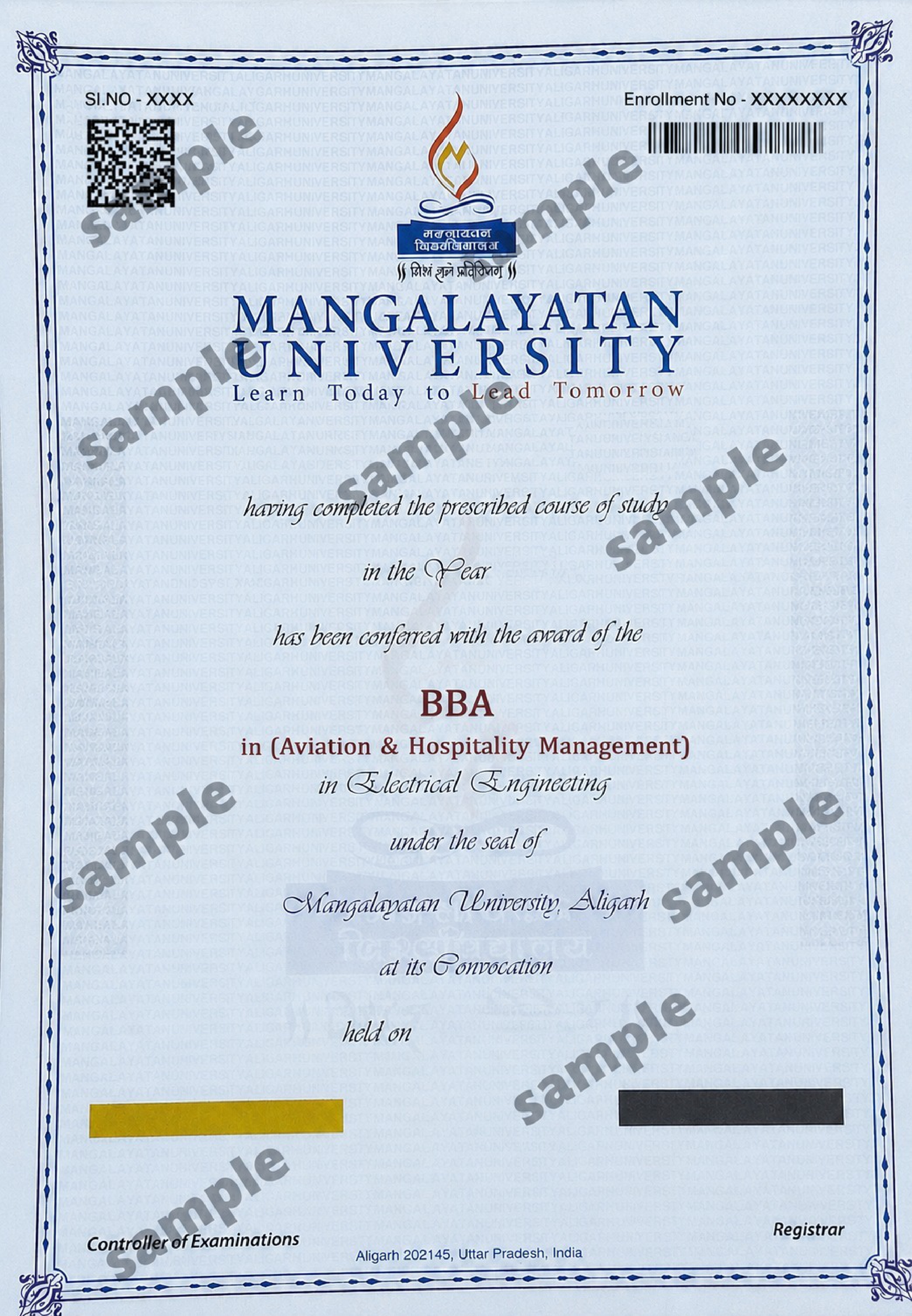
Sample Degree
Documents
Media Gallery
Frequently Asked Questions
Mangalayatan University is located at 33rd Milestone, Aligarh-Mathura Highway, Beswan, Aligarh, Uttar Pradesh, India. The campus is situated in close proximity to the Yamuna Expressway and the cities of Aligarh and Mathura.
Mangalayatan University was established in 2006 under the Mangalayatan University, Uttar Pradesh Act, 2006. The University states that it has the right to confer degrees under Sections 2(f) and 22(1) of the UGC Act.
Yes. Mangalayatan University states that it is recognized by the University Grants Commission (UGC) and was established through an Act of the Uttar Pradesh State Legislature. The University also lists NAAC A+ accreditation among its recognitions.
Yes. The University states that it is recognized by UGC-DEB for Open and Distance Learning (ODL) and is entitled by the UGC to offer online degree programmes. It also states that its online programmes are approved by AICTE.
Mangalayatan University offers programmes across multiple academic levels, including UG, PG, Diploma, PG Diploma and PhD. Its programme portfolio covers areas such as Engineering & Technology, Computer Applications, Management, Agriculture, Biotechnology, Pharmacy, Physiotherapy, Nursing, Journalism & Mass Communication and other disciplines.
Depending on the programme, applicants may be required to provide Class 10 and Class 12 certificates and marksheets, graduation/post-graduation marksheets where applicable, competitive examination rank card where applicable, migration/transfer certificate and recent passport-size photographs. Original documents may be required for verification.
Yes. The University states that students can apply for an education loan through banks, subject to the bank's eligibility criteria.
The BBA (Aviation & Hospitality Management) is a three-year undergraduate management program combining business administration with specialized education in aviation, airport operations, hospitality, travel and tourism. The curriculum contains six semesters and 132 total credits.
The program includes management subjects such as Business Economics, Basic Accounting, Principles of Management, Marketing Theory and Practices, Organisational Behaviour, Human Resource Management, Business Environment, Consumer Behaviour, Entrepreneurship and Small Business Management, Business Law and Business Policy. It also includes aviation, hospitality and tourism subjects such as Introduction to Aviation, Airlines Hospitality Operations, Airport and Ground Handling Management, Aviation Safety and Security, Hospitality Management, Travel Agency & Tour Operations and International Flight Operation Procedure.
Yes. The curriculum includes Airport Visits and Field Work, Project on Emergency Drill Procedure, Industrial Training and Project Report & Viva. Industrial Training provides exposure to airport departments and operational activities, while the final project focuses on research and problem-solving related to the aviation industry.
Students can develop skills related to business management, aviation operations, passenger handling, airport and ground handling, hospitality operations, front-office management, food and beverage service, housekeeping, travel operations, tourism, marketing, public relations, safety and security, customer service, communication, research and problem-solving.
Graduates can explore career areas across airport operations, airline services, passenger services, ground handling, baggage operations, hospitality, hotel operations, front office, travel agencies, tour operations, resort management, destination marketing, public relations and related business functions. Career outcomes depend on individual skills, experience and the organization or sector in which a graduate seeks employment.