Almost done — just verify your number so we can send course updates and certificates.
🔎︎
Used only for verification & updates
100% secure login • No spam • Your data is safe
We sent a 4-digit OTP to XXXXXXXXXXEdit
This helps us issue your certificates and updates
Incorrect OTP. Please try again.
Resend OTP in 00:30Didn't receive it? Resend
🔒 100% secure • OTP expires in 10 minutes
WhatsApp Verified
Takes less than 10 seconds
Please select your country.
Please select your state.
We use this to personalise your experience
You're all set!
We use cookies to improve your experience. By continuing to browse the site, you agree to our Privacy Policy and Cookie Policy.
Micro-Credentials and Digital Badges: Transforming the Future of Education and Skill Recognition
Anshika Jain - June 3, 2026 at 10:04 AM IST
The global education landscape is undergoing a significant transformation. Traditional degrees and long-term academic programs continue to hold value, but the rapid evolution of technology, industry requirements, and workplace expectations has created a growing demand for more flexible and skill-focused learning pathways. Employers increasingly seek candidates who possess practical, job-ready skills, while learners want educational opportunities that are accessible, affordable, and aligned with current market needs. In this changing environment, micro-credentials and digital badges have emerged as powerful tools for recognizing and validating specific skills and competencies.
Micro-credentials represent focused learning achievements that demonstrate mastery of particular subjects, skills, or competencies. Digital badges serve as visual and verifiable representations of these achievements, allowing learners to showcase their knowledge and capabilities in a modern and accessible format. Together, these innovations are reshaping how education, training, and professional development are delivered and recognized.
The rise of online learning platforms has accelerated the adoption of micro-credentials and digital badges. Learners today can access specialized courses from anywhere in the world and earn credentials that reflect their expertise in areas ranging from technology and business to communication and creative skills. Educational platforms such as EasyShiksha are playing an important role in this transformation by providing learners with flexible opportunities to acquire industry-relevant knowledge and certifications that support career advancement.
As lifelong learning becomes increasingly important in a rapidly changing economy, micro-credentials and digital badges are helping bridge the gap between education and employment. They offer learners a practical way to demonstrate competencies while enabling employers to identify qualified candidates more efficiently.
This article explores the concept of micro-credentials and digital badges, their significance in modern education, their benefits for learners and employers, and the role of platforms like EasyShiksha in supporting this innovative approach to learning and skill recognition.
Understanding Micro-Credentials
Micro-credentials are certifications that validate the acquisition of specific skills, knowledge, or competencies within a focused area of study. Unlike traditional degree programs, which often require several years of study and cover broad subject areas, micro-credentials concentrate on targeted learning outcomes.
These credentials are designed to recognize mastery of practical skills that are directly applicable in academic, professional, or personal contexts. Learners can complete micro-credential programs in significantly less time than conventional academic qualifications, making them attractive to students, working professionals, and lifelong learners.
Micro-credentials often focus on emerging technologies, industry-specific competencies, technical expertise, and professional development skills. Their flexibility allows learners to customize their educational journeys according to their individual goals and career aspirations.
As industries continue evolving rapidly, micro-credentials provide an efficient way for individuals to stay current with changing skill requirements.
What Are Digital Badges?
Digital badges are visual representations of achievements, skills, certifications, or competencies earned through educational programs and training experiences. They function as electronic credentials that can be displayed on professional profiles, resumes, websites, and social networking platforms.
Unlike traditional certificates, digital badges often contain embedded metadata that provides detailed information about the achievement. This information may include the issuing organization, learning outcomes, assessment criteria, completion date, and evidence of competency.
Digital badges make it easier for employers, educators, and professional networks to verify qualifications and understand the specific skills a learner has acquired.
By combining credibility, transparency, and portability, digital badges offer a modern solution for showcasing educational achievements in the digital age.
Document
#AbIndiaSikhegaGharSe
Online Internships for Students
EasyShiksha offers comprehensive online virtual internship programs tailored for students, graduates, freshers, and working professionals seeking academic advancement and upskilling certifications.
Get Job-Ready with Our Online Summer Internship 2025 Opportunities
Explore our wide selection of online job-ready internships featuring globally recognized certificates accepted by universities, colleges, and companies worldwide.
Obtain two authorized certificates recognized by universities & corporates.
Access our 100% online internships at genuine price.
Choose from flexible internship durations ranging from 2 weeks to 6 months.
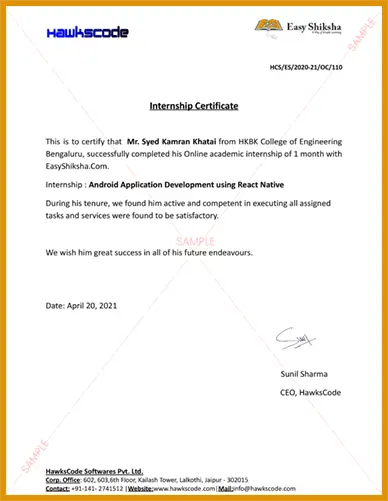
Upon completion, you will receive two certificates: an Internship Certificate and a Course Completion Certificate
Learn conveniently anytime, anywhere.
Access learning materials seamlessly via web or mobile. (Download App)
For many years, educational systems primarily focused on degree-based qualifications. While degrees continue to provide valuable foundational knowledge, employers increasingly seek evidence of specific competencies that align with workplace demands.
Technological advancements and industry changes have accelerated the need for continuous skill development. New job roles emerge frequently, requiring specialized knowledge that may not always be covered within traditional academic programs.
Micro-credentials and digital badges address this challenge by providing targeted learning opportunities that respond quickly to evolving industry needs.
This shift reflects a broader movement toward skill-based education, where demonstrated competencies play an increasingly important role in academic and professional success.
Why Micro-Credentials Are Gaining Popularity
Several factors have contributed to the growing popularity of micro-credentials. One of the most significant is the demand for flexible learning options. Many learners seek educational opportunities that fit around existing academic, professional, or personal commitments.
Micro-credentials allow individuals to acquire new skills without enrolling in lengthy degree programs. They offer focused learning experiences that can often be completed within weeks or months.
Employers also value micro-credentials because they provide clear evidence of relevant competencies. In fast-changing industries, the ability to demonstrate current skills is often more important than relying solely on qualifications obtained years earlier.
This combination of flexibility, relevance, and efficiency has positioned micro-credentials as an increasingly important component of modern education.
Bridging the Gap Between Education and Employment
One of the primary challenges facing educational institutions is ensuring that graduates possess skills aligned with industry requirements. Employers frequently report difficulties finding candidates with the specific competencies needed for modern workplaces.
Micro-credentials help bridge this gap by focusing on practical, industry-relevant skills. Learners can acquire competencies that directly support career goals and workplace performance.
Digital badges further enhance this process by providing easily shareable evidence of achievement. Employers can quickly assess candidates' qualifications and verify their expertise.
This alignment between education and employment benefits learners, educational institutions, and organizations seeking skilled professionals.
Supporting Lifelong Learning
The concept of lifelong learning has become increasingly important in today's economy. Technological advancements, automation, and changing job markets require individuals to continuously update their knowledge and skills.
Micro-credentials support lifelong learning by offering accessible opportunities for professional development and personal growth. Learners can pursue additional certifications throughout their careers, adapting to evolving industry demands and exploring new areas of interest.
Unlike traditional educational pathways, micro-credentials encourage continuous skill acquisition and incremental learning achievements.
Platforms such as EasyShiksha contribute to lifelong learning by providing flexible educational opportunities that accommodate learners at various stages of their careers.
Enhancing Employability Through Skill Validation
Employability depends not only on academic qualifications but also on the ability to demonstrate practical competencies. Employers increasingly seek candidates who can contribute effectively from the beginning of their employment.
Micro-credentials validate specific skills and provide evidence of competence in targeted areas. Digital badges make these achievements visible and accessible to employers during recruitment processes.
Whether learners develop expertise in digital marketing, programming, communication, project management, or emerging technologies, micro-credentials help communicate these capabilities clearly.
This enhanced visibility strengthens professional profiles and improves career opportunities.
The Role of Online Learning Platforms
The expansion of online education has played a significant role in the growth of micro-credentials and digital badges. Digital learning platforms provide learners with convenient access to specialized courses and certification programs.
Online education eliminates geographical barriers and enables individuals to learn at their own pace. This flexibility is particularly valuable for working professionals, students, and individuals balancing multiple responsibilities.
EasyShiksha exemplifies how online learning platforms support skill development by offering diverse educational resources and certification opportunities. Through accessible and flexible learning experiences, learners can acquire relevant competencies and earn credentials that support career advancement.
The combination of online education and micro-credentialing is helping democratize access to high-quality learning opportunities.
Digital Badges and Professional Branding
Professional branding has become increasingly important in competitive job markets. Individuals must effectively communicate their skills, achievements, and expertise to potential employers and professional networks.
Digital badges contribute to professional branding by providing visible and verifiable evidence of accomplishments. Learners can display badges on professional networking profiles, personal websites, portfolios, and resumes.
These credentials showcase commitment to learning, professional development, and skill enhancement.
By strengthening professional branding efforts, digital badges help individuals differentiate themselves in competitive employment environments.
Industry Applications of Micro-Credentials
Micro-credentials are being adopted across numerous industries. Technology companies use them to validate expertise in programming languages, cybersecurity, cloud computing, and artificial intelligence.
Business organizations recognize micro-credentials related to leadership, project management, communication, and data analysis. Healthcare professionals pursue certifications in specialized practices and emerging medical technologies.
Educational institutions, financial services organizations, creative industries, and government agencies are also embracing micro-credentialing as a means of recognizing and developing talent.
The versatility of micro-credentials contributes to their growing relevance across sectors.
Internship/Training with universally recognized certificates accepted by all Universities and Industries
Join over 1,00,000 students from 300+ universities who have already completed internships with EasyShiksha and are now employed at leading MNCs.
One of the greatest strengths of micro-credentials is their flexibility. Learners can select programs that align closely with their interests, career goals, and learning needs.
This personalized approach contrasts with traditional educational models that often require students to follow predetermined curricula.
Micro-credentials enable individuals to build customized learning pathways by combining certifications from different subject areas. This flexibility supports interdisciplinary learning and allows learners to adapt their educational experiences to changing objectives.
EasyShiksha's diverse course offerings align well with this trend, enabling learners to pursue knowledge and skills that match their personal and professional aspirations.
Building Confidence Through Achievement
Learning achievements play an important role in building confidence and motivation. Completing micro-credential programs provides learners with tangible evidence of progress and accomplishment.
Digital badges offer immediate recognition for effort and skill development. This visible acknowledgment can encourage continued learning and inspire individuals to pursue additional educational opportunities.
For students and professionals alike, earning credentials reinforces a sense of competence and achievement.
Confidence gained through continuous learning often translates into improved performance, greater career ambition, and enhanced personal growth.
Challenges and Considerations
Despite their many advantages, micro-credentials and digital badges are not without challenges. One consideration involves ensuring quality and credibility. Learners and employers must evaluate the reputation and standards of issuing organizations.
Standardization is another important issue. As the number of micro-credential providers grows, establishing consistent frameworks for recognition and assessment becomes increasingly important.
Additionally, while micro-credentials complement traditional qualifications, they do not necessarily replace comprehensive academic programs in all contexts.
Addressing these challenges will be essential for maximizing the long-term value and acceptance of micro-credentialing systems.
The Role of EasyShiksha in Micro-Credential Learning
EasyShiksha is contributing to the evolution of digital education by providing accessible learning opportunities that align with modern skill-development needs. Through a wide range of online courses and certifications, the platform enables learners to acquire practical knowledge and demonstrate their competencies effectively.
The flexibility offered by EasyShiksha allows students and professionals to pursue learning at their own pace while balancing academic, career, and personal responsibilities. This approach reflects the growing demand for personalized and skill-focused education.
As micro-credentials continue gaining recognition, platforms like EasyShiksha are well-positioned to support learners seeking industry-relevant knowledge, continuous development, and career advancement.
By promoting lifelong learning and professional growth, EasyShiksha helps learners remain competitive in an increasingly dynamic global economy.
The Future of Micro-Credentials and Digital Badges
The future of education is likely to involve a combination of traditional qualifications, online learning experiences, micro-credentials, and digital certifications. As industries continue evolving rapidly, employers will increasingly value demonstrable skills and continuous professional development.
Emerging technologies such as blockchain may further enhance the security, transparency, and verification of digital credentials. Artificial intelligence could support personalized learning pathways that align micro-credential opportunities with individual career goals.
Educational institutions, employers, and online learning platforms are expected to collaborate more closely in developing credentialing systems that reflect real-world skill requirements.
Micro-credentials and digital badges are poised to become integral components of future educational ecosystems.
Conclusion
Micro-credentials and digital badges are transforming the way skills, knowledge, and achievements are recognized in modern education and professional development. By providing focused, flexible, and industry-relevant learning opportunities, they address the growing demand for practical competencies and lifelong learning.
These innovative credentials enable learners to demonstrate expertise, enhance employability, build professional brands, and pursue personalized educational pathways. For employers, they offer efficient methods for identifying qualified candidates and validating skills.
Online learning platforms such as EasyShiksha play a crucial role in supporting this transformation by delivering accessible education and certification opportunities that align with contemporary workforce needs. Through continuous learning and skill development, learners can earn meaningful credentials that contribute to both personal growth and professional success.
As the future of education becomes increasingly digital and skill-focused, micro-credentials and digital badges will continue shaping how individuals learn, achieve, and demonstrate their capabilities in an ever-changing world.