












Join thousands of students achieving their dreams with expert-led courses.
Join free and unlock everything on EasyShiksha.
Takes less than 3 seconds — no password needed
Please enter a valid email address.
Checking your email…
Almost done — just verify your number so we can send course updates and certificates.
Used only for verification & updates
Incorrect OTP. Please try again.
Takes less than 10 seconds
Please select your country.
Please select your state.

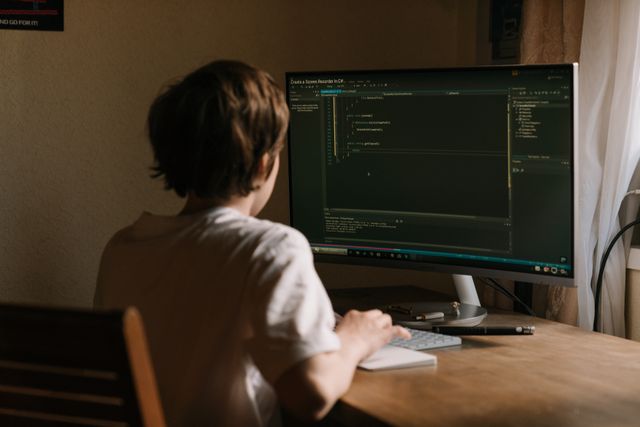
The world is becoming increasingly digital, and technology now influences nearly every aspect of modern life. From communication and education to healthcare, business, entertainment, and scientific research, computer technology plays a central role in shaping how people live and work. As technology continues to evolve, coding has emerged as one of the most valuable skills students can acquire. Once considered a specialized skill reserved for software engineers and computer scientists, coding is now recognized as a fundamental literacy that empowers individuals to understand, create, and innovate in the digital world.
Learning coding at an early age offers numerous advantages that extend far beyond computer programming itself. It helps students develop critical thinking, problem-solving abilities, creativity, logical reasoning, and confidence. Early exposure to coding also prepares learners for future educational opportunities and career paths in technology-driven industries.
As schools and educational institutions increasingly integrate technology into their curricula, coding education has become more accessible than ever. Online learning platforms such as EasyShiksha have played a significant role in this transformation by providing students with flexible and engaging opportunities to learn programming skills from an early stage. Through accessible courses, practical exercises, and self-paced learning environments, EasyShiksha enables learners to build strong foundations in coding while developing skills relevant to the modern economy.
This article explores the importance of learning coding early, the benefits it offers for academic and personal development, its role in career preparation, and how platforms like EasyShiksha support young learners in developing future-ready skills.
Coding, also known as programming, is the process of creating instructions that computers follow to perform specific tasks. These instructions are written in programming languages such as Python, Java, JavaScript, C++, and many others.
At its core, coding is a method of problem-solving and communication. Programmers use code to develop software applications, websites, mobile apps, games, automation systems, and technological solutions that address real-world challenges.
In today's digital society, coding is becoming increasingly important because technology influences virtually every industry. Understanding how software works allows students to move beyond being passive consumers of technology and become active creators of digital solutions.
Early exposure to coding provides learners with valuable skills that support both educational achievement and long-term career success.
The demand for coding skills continues to increase as organizations across industries undergo digital transformation. Businesses rely on software systems, data analytics, artificial intelligence, cloud computing, and automation technologies to improve efficiency and competitiveness.
As a result, professionals with programming knowledge are highly sought after in fields ranging from information technology and engineering to healthcare, finance, education, and marketing.
Even careers that are not directly related to software development increasingly require digital literacy and technical understanding.
By learning coding early, students gain a competitive advantage and position themselves for future opportunities in an evolving job market.
Get a subscription to a library of online courses and digital learning tools for your organization with EasyShiksha
Request Demo NowOne of the most significant benefits of learning coding early is the development of logical thinking. Coding requires students to analyze problems, identify patterns, and create step-by-step solutions.
When writing code, learners must think systematically and consider how different instructions interact to produce desired outcomes. This process strengthens logical reasoning and encourages structured thinking.
Logical thinking skills developed through coding can be applied to academic subjects such as mathematics, science, and engineering, as well as everyday decision-making situations.
Students who practice coding regularly often become more confident in approaching complex challenges and solving problems effectively.
Problem-solving is a critical skill in both education and professional life. Coding provides continuous opportunities for students to identify challenges, test solutions, and refine their approaches.
Programming projects often involve debugging errors, optimizing performance, and overcoming unexpected obstacles. These experiences teach learners how to approach problems analytically and persist through difficulties.
Rather than viewing mistakes as failures, coding encourages students to treat them as opportunities for learning and improvement.
This mindset fosters resilience, adaptability, and confidence, qualities that contribute significantly to long-term success.
Contrary to the misconception that coding is purely technical, programming is also a highly creative activity. Coding allows students to transform ideas into reality by creating websites, applications, games, animations, and digital experiences.
Young learners can use coding to express their creativity while developing practical technical skills. They can design unique projects, experiment with innovative concepts, and bring imaginative ideas to life.
Creativity and innovation are increasingly important in modern workplaces, where organizations seek individuals capable of developing original solutions and adapting to changing circumstances.
Coding provides a powerful platform for nurturing these abilities from an early age.
Learning coding often involves completing projects and solving increasingly complex challenges. Each accomplishment provides learners with a sense of achievement and reinforces their confidence.
Successfully creating a program, fixing a bug, or developing a functional application demonstrates tangible progress and motivates continued learning.
This confidence extends beyond programming. Students who overcome technical challenges frequently develop greater belief in their ability to learn new skills and tackle difficult tasks.
Confidence gained through coding contributes positively to academic performance, personal growth, and future career aspirations.
Coding supports the development of skills that enhance performance across multiple academic disciplines. Logical reasoning, analytical thinking, pattern recognition, and problem-solving are valuable in mathematics, science, and technology subjects.
Programming also strengthens attention to detail and encourages students to think critically about processes and outcomes.
Many educational concepts become easier to understand when students learn how to break complex problems into smaller, manageable components.
As a result, coding can contribute to improved academic outcomes and a stronger overall learning experience.
Computational thinking is a problem-solving approach that involves breaking down complex problems, identifying patterns, creating abstractions, and designing step-by-step solutions.
Coding serves as an effective medium for developing computational thinking skills. Students learn how to analyze situations systematically and create efficient methods for solving challenges.
These skills are applicable far beyond computer science. Computational thinking supports decision-making, research, project management, and innovation in numerous fields.
Developing this mindset early prepares students to navigate increasingly complex academic and professional environments.
Technology is expected to continue driving economic growth and innovation in the coming decades. As new industries emerge and existing industries evolve, coding skills will remain highly valuable.
Learning coding early provides students with foundational knowledge that can support careers in software development, data science, artificial intelligence, cybersecurity, robotics, game design, and many other fields.
Even students who pursue non-technical careers benefit from understanding how technology works and how digital systems influence modern organizations.
Early exposure to coding broadens career possibilities and enhances future employability.
Coding teaches students that success often requires persistence and continuous improvement. Programming challenges rarely have immediate solutions, and learners must often experiment with multiple approaches before achieving desired results.
This process helps students develop resilience and patience. They learn to view obstacles as part of the learning journey rather than reasons to give up.
Persistence is a valuable life skill that supports academic achievement, professional development, and personal growth.
By learning coding early, students build habits that contribute to long-term success in various aspects of life.
Coding naturally promotes self-directed learning. As students explore programming concepts, they often seek additional resources, experiment with new techniques, and investigate solutions independently.
This curiosity-driven approach encourages lifelong learning and intellectual independence.
Online platforms such as EasyShiksha support independent learning by providing flexible access to coding courses, tutorials, and educational resources. Learners can progress at their own pace while exploring topics that align with their interests and goals.
The ability to learn independently is increasingly important in a rapidly changing world where continuous skill development is essential.
Digital literacy refers to the ability to use, understand, and engage effectively with technology. While many students are familiar with digital devices, true digital literacy involves understanding how technology functions behind the scenes.
Coding provides valuable insights into software development, data management, algorithms, and digital systems.
This deeper understanding enables students to become informed users and creators of technology rather than passive consumers.
As digital technologies continue to shape society, digital literacy will remain a critical competency for future generations.
Many coding projects involve collaboration, whether through classroom activities, online communities, or professional development environments.
Students learn how to communicate ideas, share responsibilities, provide feedback, and work toward common goals. These experiences strengthen teamwork and interpersonal skills.
Collaboration is a highly valued competency in modern workplaces, where projects often require contributions from diverse teams with different areas of expertise.
Coding provides meaningful opportunities for learners to develop these essential skills.
Welcome to Career Helper
A Career Concern of EasyShiksha
Technology has created unprecedented opportunities for entrepreneurship. Many successful startups and businesses are built around software applications, digital platforms, and innovative technological solutions.
Students who learn coding early gain the ability to transform ideas into functional products and services. They can develop websites, applications, and digital tools that address real-world needs.
Entrepreneurial thinking combined with coding skills empowers learners to create value, solve problems, and pursue independent ventures.
This combination of technical and entrepreneurial capabilities can open doors to exciting opportunities throughout their careers.
Emerging technologies such as artificial intelligence, machine learning, blockchain, virtual reality, and the Internet of Things are reshaping industries worldwide.
Coding serves as the foundation for understanding and working with these advanced technologies. Students who begin learning programming early are better positioned to explore emerging fields and participate in future innovations.
Exposure to coding helps learners adapt more easily to technological advancements and remain competitive in evolving professional environments.
As technology continues advancing, coding skills will become increasingly relevant and valuable.
EasyShiksha plays an important role in helping students develop coding skills through accessible and flexible online learning opportunities. The platform offers courses designed to introduce learners to programming concepts in an engaging and structured manner.
Students can explore coding fundamentals, programming languages, and technology-related subjects while learning at their own pace. This flexibility allows learners to balance coding education with academic responsibilities and personal interests.
EasyShiksha's emphasis on skill development and practical learning helps students build confidence, strengthen technical competencies, and prepare for future educational and career opportunities.
By making coding education accessible to a wide audience, EasyShiksha contributes to the development of digitally empowered learners.
The importance of coding education is expected to grow as technology becomes increasingly integrated into daily life and professional activities. Educational institutions worldwide are recognizing coding as a fundamental skill alongside traditional subjects.
Future learning environments will likely place greater emphasis on computational thinking, digital literacy, and technology-driven problem-solving.
Online learning platforms, interactive educational tools, and project-based learning experiences will continue making coding education more accessible and engaging.
Students who begin learning coding early will be well-positioned to thrive in a future shaped by innovation, automation, and digital transformation.
Learning coding early offers numerous benefits that extend far beyond technical proficiency. It strengthens logical thinking, problem-solving abilities, creativity, confidence, resilience, collaboration, and digital literacy. These skills support academic achievement, personal development, and future career success in an increasingly technology-driven world.
As industries continue evolving and digital technologies become more influential, coding will remain one of the most valuable competencies students can acquire. Early exposure to programming empowers learners to understand technology, create innovative solutions, and adapt to changing professional landscapes.
Platforms such as EasyShiksha play a vital role in supporting this educational journey by providing accessible, flexible, and engaging coding courses that help students develop future-ready skills. Through continuous learning and practical application, learners can build strong foundations that prepare them for success in higher education, professional careers, and lifelong growth.
Ultimately, learning coding early is not merely about becoming a programmer. It is about developing the mindset, skills, and confidence needed to succeed in the digital age and contribute meaningfully to the future of innovation and progress.
More News Click Here
New Courses
Opamp Projects: Design & Simulate Operational Amplifier Based Projects on Proteus & LTSpice Software
Biomedical Project: Design Digital Thermometer with Atmega32, Arduino & LM35 Temperature Sensor
Fusion 360 Learn CAD and Earn Money Online
Analog Electronic Lab Based Course on MOSFETs using MULTISIM








Discover thousands of colleges and courses, enhance skills with online courses and internships, explore career alternatives, and stay updated with the latest educational news..

Gain high-quality, filtered student leads, prominent homepage ads, top search ranking, and a separate website. Let us actively enhance your brand awareness.
Download EasyShiksha Mobile Apps from Android Play Store, Apple App Store, Amazon App Store, and Jio STB.



1 million+ learned on the EasyShiksha App
Trusted by Standards & Global Compliance Frameworks





Built under internationally recognized standards for quality, information security, educational excellence and business continuity.
ISO 9001:2015 | ISO/IEC 27001:2022 | ISO 21001:2018 | ISO 22301:2019 | DPIIT Recognized Startup | MSME Registered