“We as researchers will not compromise on our ethics and integrity,” IIT Bombay professor Shobha Shukla told India Today Digital when asked whether the government’s role in higher education could have a bearing on the scientific temperament of Indian institutions. Her remarks came against the backdrop of the Free to Think 2026 report by Scholars at Risk, which placed India in the “severely restricted” category in its assessment of academic freedom.
The report, covering July 1, 2025 to June 30, 2026, records 382 attacks on higher education communities across 59 countries and territories. It also examines government involvement in university governance, leadership appointments and academic affairs.
According to the Academic Freedom Index data cited in the report, India’s score fell from 0.38 in 2022 to 0.14 in 2025.
For the IIT Bombay professor, however, the question is closely tied to the purpose of an academic institution.
“Academia is meant to be the congregation of the free thinker, radical thinkers or the people who are always on the fringes,” she said.
She said questioning was part of scientific work and that academics could resist pressure to alter their thinking.
“So, I do not think the government or anybody can put pressure on us and ask us to think differently,” Shukla said. “We may not speak sometime, but we will not bend.”
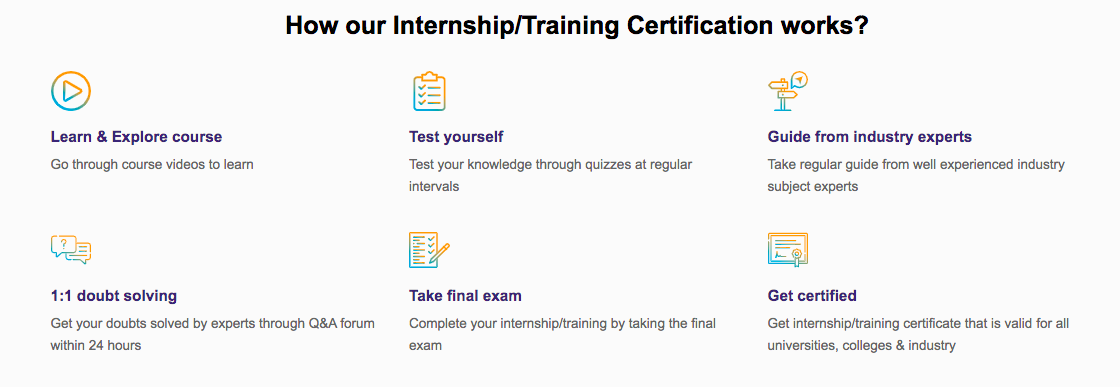
How EasyShiksha Internship/Training Program Works
She linked this position to what she described as a culture of curiosity in Indian society. Scientific inquiry, she said, begins with the habit of asking questions and carries into research.
“As an Indian society, we are very much science-bending attitude, we have that science mindset,” she said. “Curiosity is inherent in most of the child and Indian mindset.”
Shukla also spoke of the place of Indian researchers and scientists in institutions around the world, attributing part of that record to this culture of scientific inquiry.
Her greater concern, she said, was to preserve that curiosity among younger students.
“We should encourage our young children's to proceed with their scientific curiosity,” she said.
She illustrated the point through a comparison. A person, she said, could spend a day working for two chocolates or choose one chocolate and spend the day playing with a favourite toy.
“I would like to do one chocolate and play whole day,” she said. “And that is what I have chosen to be.”
Research, she said, was a choice made not merely for income but because those engaged in it believed in the work.
“All of us who are sitting here, we could have had a very good high paying salary job in anywhere around the world,” she said. “But we have chosen to do these things, because we believe in it, and we enjoy this process.”
IIT Bombay stands among India’s foremost institutions of higher learning, and over the years its departments have undertaken research in association with the Government, industry and other institutions.
In the recent years, the Institute has taken up projects in such fields as quantum sensing, carbon capture and artificial intelligence, besides entering into new collaborations with industry and public bodies.
Its research record, and the scholars who have passed through its halls, have given the Institute a place of consequence in the scientific life of India and beyond.
K Chandrasekhar, director of IIM Visakhapatnam, offered another perspective. He, in an exclusive interview with India Today, said Indian institutions were not under pressure and that questioning an established idea should not, by itself, be taken as evidence of pressure on academia.
“The very first thought that we put is academic freedom in top institutes of the country,” he said.
The discussion therefore turns not only on government and universities, but on what institutions expect of those within them: whether students and scholars may question established ideas and pursue inquiry without being asked to conform.
For Shukla, the answer rests with the next generation.
“With the new generation new challenges will come, but old problems will not be today's problem,” she said.
Her final position was stated in the same terms with which she began: “We will not bend.”
Anshika Jain is an Engineer, Developer, and Educational Content Author known for her dedication to technology and knowledge sharing. With a strong analytical mindset and a passion for innovation, she has consistently contributed to creating meaningful digital solutions and insightful educational articles.
Her ability to simplify complex technical concepts into engaging and easy-to-understand content makes her work valuable for students and learners across various platforms. Along with her technical expertise, Anshika is admired for her creativity, professionalism, and commitment to continuous learning.
She represents a perfect blend of technical excellence and impactful communication, inspiring others through both her development work and educational contributions.