Digital education platforms increasingly influence how students learn, how their progress is evaluated and which opportunities become visible to them. Artificial intelligence recommends courses, assessment systems calculate scores, algorithms personalise learning pathways and digital profiles record educational achievements. These technologies can make education more accessible and efficient, but they also introduce an important question: how can students know whether the systems making decisions about their education are fair, reliable and transparent?
Financial institutions operate within extensive auditing and reporting frameworks because their decisions can affect savings, investments, credit access and economic stability. Their systems are expected to maintain accurate records, follow established procedures and provide evidence that important transactions have been handled appropriately. Although educational platforms operate in a different environment, their influence on learners can also be significant. An inaccurate assessment, biased recommendation or unexplained decision may affect a student's confidence, educational choices and future opportunities.
Yet many digital learning systems are evaluated primarily through operational indicators such as course completion, user engagement, enrolments, examination scores and revenue. These measurements are useful, but they do not necessarily reveal whether the platform treats different students fairly, explains its recommendations or protects educational records from misuse.
This creates an opportunity to consider a new concept: Education Platform Auditing. It proposes that educational platforms should be examined not only for technical performance but also for the fairness, accuracy, transparency and accountability of their educational processes.
For EasyShiksha, this idea is particularly relevant because a connected education ecosystem can involve online courses, quizzes, internships, certificates, university programmes, career guidance and job-related learning. As these services become increasingly integrated with digital technologies, the platform's responsibility extends beyond delivering educational content. It also involves ensuring that students can trust the systems through which their learning experiences are managed.
An education audit framework inspired by financial auditing could provide a structured way to examine these responsibilities. It would not mean copying banking regulations or treating every learning decision as a financial transaction. Instead, it would adapt important principles such as independent verification, accurate record-keeping, explainable decisions, risk assessment and accountability to the specific needs of education.
The central question is no longer simply whether an education platform works. It is whether it works fairly, whether its decisions can be examined and whether students have meaningful ways to challenge errors.
Why Education Platforms Need an Auditing Framework
Traditional educational institutions have established mechanisms for quality assurance, academic review, accreditation and examination oversight. These systems can examine curriculum standards, teaching processes, institutional performance and educational outcomes. However, digital platforms introduce additional layers of decision-making that may not be fully covered by conventional academic reviews.
A modern education platform may use algorithms to recommend courses, determine assessment difficulty, identify learning gaps, evaluate quiz responses and suggest career pathways. These systems can operate continuously and influence thousands of students without every decision receiving direct human attention.
The complexity increases when a platform combines multiple educational services. A student's course activity may influence future recommendations, quiz results may affect learning pathways, internship records may contribute to career profiles and certificates may be used to demonstrate achievements to external organisations.
If these processes are not properly monitored, errors can spread across the learner's journey. An inaccurate assessment may lead to an unsuitable recommendation, which may then influence the student's preparation for an internship or professional opportunity.
An auditing framework could help identify these problems systematically. It would examine whether the platform's educational processes operate according to documented rules, whether information is accurate and whether automated decisions produce outcomes that can be justified.
The purpose would not be to audit every minor interaction manually. Instead, it would establish controls for the decisions and processes that have meaningful consequences for students.
What Does Financial Auditing Teach the Education Sector?
Financial auditing is built around the idea that important records and decisions should be supported by evidence. Organisations are expected to maintain reliable documentation, follow established procedures and make their financial activities subject to appropriate examination.
These principles can offer useful lessons for digital education. An education platform should be able to explain how it records course completion, calculates assessment results, issues certificates and recommends learning opportunities. It should also maintain evidence that its systems are functioning as intended.
One important principle is traceability. In financial systems, transactions should leave records that allow authorised reviewers to understand what happened and when. Educational systems could apply a similar principle to significant learning events. A student's assessment result should be traceable to the assessment attempt, evaluation criteria and relevant scoring process.
Another principle is separation of responsibilities. Financial organisations use internal controls to reduce the risk of errors and conflicts of interest. Education platforms could similarly distinguish between the team responsible for developing an assessment and the process responsible for reviewing its reliability.
Independent examination is another valuable concept. A platform should not always be the only authority determining whether its own systems are fair. External reviewers, academic experts or qualified auditors could examine selected processes and publish appropriate findings.
These ideas could help establish a stronger culture of accountability in digital education.
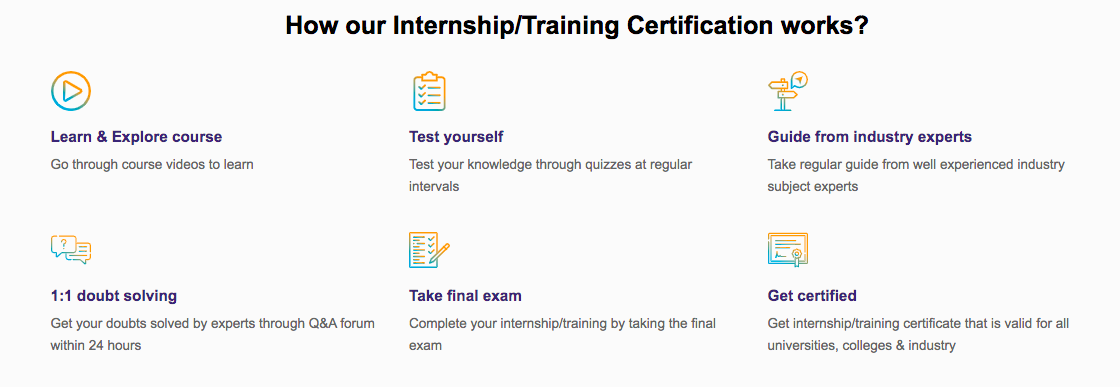
How EasyShiksha Internship/Training Program Works
The Education Audit Framework: Five Dimensions of Trust
An education platform audit could examine several interconnected dimensions. The first would focus on data accuracy, ensuring that course records, assessment results, certificates and learner profiles correctly represent what happened. The second would examine algorithmic fairness, investigating whether automated systems produce unjustified differences in treatment between students.
The third dimension would focus on transparency. Students should be able to understand important platform decisions, including assessment rules, recommendation criteria and credential requirements. The fourth would examine privacy and security, ensuring that educational information is collected, stored, accessed and shared responsibly.
The fifth dimension would focus on accountability and correction. A trustworthy platform should have clear procedures for investigating complaints, correcting inaccurate records and reviewing decisions that may have harmed a student's educational progress.
These dimensions would work together rather than operating as separate compliance activities. Accurate data is necessary for fair assessments, transparency makes decisions easier to examine, privacy protects students and accountability provides a way to correct failures.
For EasyShiksha, such a framework could potentially become a foundation for reviewing the quality and reliability of its connected educational services.
Auditing Algorithmic Fairness in Course Recommendations
Course recommendations are among the most common uses of intelligent systems in digital education. A platform may analyse a student's interests, previous courses, assessment performance and learning activity to suggest what they should study next.
Personalised recommendations can make education more relevant, but they can also create hidden limitations. An algorithm may repeatedly recommend similar courses because it relies heavily on past activity. Students who initially explore one subject may receive fewer opportunities to discover other fields. Learners with limited previous educational exposure may receive less advanced recommendations even when they are capable of progressing.
This can create a recommendation loop in which the system reinforces existing patterns instead of expanding educational opportunities.
An algorithmic fairness audit could examine how recommendations are generated and whether different groups of students receive meaningfully different opportunities. It could investigate whether certain subjects, institutions or learning pathways are consistently favoured without an educational justification.
The audit would also examine whether students can understand why a particular course has been recommended and whether they can explore alternatives.
For EasyShiksha, this could mean reviewing whether its course discovery and recommendation processes help learners explore relevant opportunities rather than repeatedly directing them towards a narrow selection of content. The goal should be useful personalisation without restricting student choice.
Auditing Assessment Systems for Accuracy and Bias
Assessment is one of the most consequential parts of an education platform because it determines how learning is measured and communicated. Quizzes, examinations, assignments and automated evaluation systems can influence scores, certificates and future learning recommendations.
An assessment audit would examine whether questions accurately test the intended learning outcomes, whether scoring rules are applied consistently and whether the evaluation process produces reliable results.
For example, an online quiz may contain ambiguous questions or multiple defensible answers. An automated scoring system may reject a valid response because it expects a particular wording. A programming assessment may evaluate only the final output while ignoring whether the student's solution is correct, secure or efficient.
These problems can create unfair results even when the platform's software is functioning as designed.
A structured audit could review question quality, answer validation, marking consistency and the handling of technical failures. It could also examine whether students receive sufficient information about assessment rules and whether they have a way to request a review.
For EasyShiksha, quizzes should ideally provide more than numerical scores. They should support learning by identifying areas of understanding and difficulty. Auditing assessment quality could help ensure that results accurately reflect what students know rather than merely measuring their ability to respond to imperfect questions.
Can Education Platforms Be Audited for Equal Opportunity?
Fairness in education does not mean that every student must receive identical learning experiences. Students have different backgrounds, levels of preparation, learning needs and career objectives. Personalised education may therefore require different recommendations and forms of support.
The important question is whether differences in treatment are educationally justified.
An algorithm might recommend foundational material to one student and advanced content to another because their assessment results indicate different levels of preparation. This could be appropriate. However, if the system consistently limits opportunities for certain learners because of incomplete historical data or unrelated demographic patterns, it may create unfair outcomes.
An equal-opportunity audit would examine whether students can access relevant courses, assessments, internships and other learning opportunities under fair and transparent conditions.
It could also investigate whether technical limitations create barriers for students using different devices, internet connections or accessibility tools. A learning platform may technically offer the same course to everyone while delivering a substantially different experience to students who cannot access its features reliably.
For EasyShiksha, fairness should be considered across the complete learning journey. Students should have meaningful opportunities to discover courses, demonstrate their abilities and explore internships or career pathways without being unnecessarily restricted by opaque automated decisions.
The Hidden Risk of Engagement-Based Education
Many digital platforms use engagement metrics to understand user activity. Time spent on a course, number of visits, completed lessons and frequency of interaction can provide useful information about platform performance.
However, engagement does not automatically represent learning quality. A student may spend several hours on a course without understanding the material, while another may learn the same concepts in significantly less time. A platform that treats time spent as the primary measure of educational success may reward activity rather than genuine understanding.
An education audit could examine whether engagement metrics are being used appropriately. It would investigate whether the platform distinguishes between participation, knowledge acquisition and demonstrated capability.
This distinction is important because commercial performance indicators can influence educational decisions. If a recommendation system is optimised mainly for clicks or course enrolments, it may prioritise content that attracts attention rather than content that best supports student development.
For EasyShiksha, the objective should be to connect platform performance with meaningful educational outcomes. Engagement data can remain useful, but it should not replace assessments, practical evidence and student progress as measures of learning quality.
Auditing Certificates and Digital Credentials
Certificates are important because they allow students to communicate educational achievements to universities, employers and other organisations. However, the reliability of a certificate depends on the accuracy of the information it represents.
An audit of credential systems could examine whether certificates are issued only after the required completion conditions are met, whether the issuing organisation is clearly identified and whether records can be verified after issuance.
It could also distinguish between different types of achievements. Completing a course, passing an examination and demonstrating practical competence are not necessarily equivalent. If every certificate communicates these outcomes in the same way, employers and students may misunderstand the level of achievement being represented.
A credential audit could therefore review the relationship between course objectives, assessment requirements and certificate descriptions. It could examine whether the certificate makes accurate claims about the learner's achievement.
For EasyShiksha, this would support a more evidence-based credential approach. Course certificates could communicate completion, while credentials associated with assessed projects or demonstrated competencies could provide additional information about practical capability.
The objective would be to make certificates more trustworthy rather than simply increasing their number.
Auditing Internship and Career Opportunity Allocation
Internships and career opportunities can have a significant influence on a student's professional development. However, the systems used to recommend, shortlist or allocate opportunities may introduce fairness concerns.
An internship recommendation system might prioritise students based on course completion, previous experience, location, assessment scores or profile information. These factors may be relevant, but their use should be transparent and appropriate to the opportunity.
If the system relies on incomplete data, capable students may be overlooked. If previous platform activity strongly influences recommendations, students who joined later may receive fewer opportunities. If location or other personal information is used without a clear justification, the system may create unnecessary barriers.
An opportunity-allocation audit could examine the criteria used to recommend or distribute internships and whether the process is consistent with the stated requirements.
It could also assess whether students understand why they were shortlisted or excluded and whether there is a process for correcting inaccurate profile information.
For EasyShiksha, such an audit could help strengthen the connection between education and professional exposure. Internships should support student development through relevant matching criteria rather than opaque selection processes that learners cannot understand or question.
Educational platforms collect information that can reveal a great deal about students. This may include personal details, academic records, assessment attempts, learning activity, project submissions and career interests.
Such information can improve learning recommendations, but it also creates responsibilities. Platforms must ensure that educational data is collected for appropriate purposes, protected against unauthorised access and shared only under suitable conditions.
A privacy audit would examine what information is collected, why it is needed, how long it is retained and which systems or organisations can access it. It would also review whether students receive understandable information about data practices and whether their rights can be exercised effectively.
Security auditing would examine technical and organisational safeguards. This could include access controls, authentication, encryption, backup procedures, vulnerability management and incident-response processes.
The Indian Digital Personal Data Protection Act, 2023, and applicable rules and requirements provide an important legal context for organisations handling digital personal data in India. Educational platforms should evaluate their obligations according to the law and the nature of the data they process. A general education audit should complement, not replace, specialised legal and security assessments.
For EasyShiksha, privacy and security should be treated as essential components of educational trust rather than technical matters considered only after a problem occurs.
The Importance of an Independent Education Auditor
One of the central lessons from financial auditing is the value of independent examination. If an organisation evaluates its own systems without sufficient separation or external scrutiny, important problems may remain unnoticed.
Education platforms could adopt a similar approach through independent reviews of selected educational processes. Auditors might include qualified technology specialists, academic experts, assessment professionals, privacy specialists and other relevant independent reviewers.
Their responsibility would be to examine whether documented processes are followed, whether important claims are supported by evidence and whether identified weaknesses are addressed.
The scope of an audit would need to be carefully defined. A technical security review cannot establish that an assessment is academically valid, just as an academic review cannot independently confirm that a platform's data security is adequate.
Different audit areas may therefore require different expertise.
For EasyShiksha, independent reviews could potentially provide additional confidence to students, educational partners and organisations that recognise its credentials. The value would come not from claiming that a platform is perfect, but from demonstrating that its important systems are regularly examined and improved.
Internal Controls: Preventing Problems Before They Reach Students
Auditing is not only about identifying problems after they occur. Strong internal controls can reduce the likelihood of errors and make educational systems more reliable.
For example, a platform could maintain documented procedures for reviewing assessment questions before publication. Changes to scoring rules could be recorded and tested before being applied to live assessments. Certificate issuance could be linked to verified completion conditions rather than relying on manual assumptions.
Similarly, important recommendation systems could be monitored for unusual changes in outcomes. Access to sensitive student information could be restricted according to job responsibilities, and significant administrative actions could be recorded.
These controls create a more reliable operational environment. They also make later audits easier because reviewers can examine evidence of how processes were managed.
For EasyShiksha, internal controls could be developed around course publication, assessment management, internship records, certificate generation and student data access. The aim would be to reduce preventable errors while maintaining a manageable operating process.
Transparency Reports: Making Educational Accountability Visible
Financial organisations often publish reports that help stakeholders understand their performance, risks and governance. Education platforms could consider a similar approach through periodic transparency reporting.
An education transparency report could explain how assessments are reviewed, how student data is handled, how automated recommendations are governed and how complaints or correction requests are managed. It could also describe significant system changes and the steps taken to address identified weaknesses.
The report would not need to reveal confidential student information, proprietary algorithms or security-sensitive technical details. Instead, it would communicate the principles and controls governing the platform.
Transparency reporting could also help students understand the difference between what a platform promises and what it can demonstrate. For example, a platform might explain whether course recommendations are automated, whether human review is available for disputed assessments and how credential verification works.
For EasyShiksha, a carefully designed transparency approach could strengthen trust among students, universities, internship partners and employers. It would provide a visible explanation of how educational processes are managed rather than relying entirely on marketing claims.
AI Governance: Auditing the Decisions Made by Intelligent Systems
As artificial intelligence becomes more deeply integrated into education, auditing must extend to automated decision-making. AI may help recommend courses, generate practice questions, analyse student responses and support career exploration.
These systems can introduce risks that are not always visible through ordinary operational testing. A model may perform well on average while producing inaccurate recommendations for particular groups of learners. It may generate educational explanations containing factual errors or interpret incomplete student records as evidence of low capability.
An AI audit could examine the data used to develop or configure a system, the purpose for which it is deployed, its known limitations and the mechanisms available for human review.
It should also investigate whether students are informed when AI meaningfully influences an educational decision. If an automated assessment or recommendation has important consequences, learners should have a way to understand and challenge the result.
For EasyShiksha, AI governance could become particularly relevant if intelligent systems are used to connect course performance with future learning pathways. Recommendations should remain understandable, relevant and open to correction. Human oversight should be available where decisions could materially affect a student's opportunities.
A Proposed Education Audit Architecture for EasyShiksha
EasyShiksha could potentially explore a structured Education Audit Architecture that connects operational controls with educational quality and student protection. The framework would begin by identifying the processes that have the greatest influence on learners. These may include assessment, certificate issuance, course recommendations, internship matching, educational records and data sharing.
Each process could have documented standards describing what should happen, what evidence should be maintained and how errors should be corrected. For example, an assessment process could define how questions are reviewed, how scoring is validated and how students can request a reassessment.
The next stage would involve periodic internal reviews. Relevant teams could examine whether documented procedures are followed and identify recurring issues. This would allow the platform to correct problems before they become larger sources of student dissatisfaction.
A further stage could introduce independent assessments for higher-risk areas such as privacy, security, automated decision-making and credential reliability. External reviewers could examine the relevant systems and provide recommendations for improvement.
Finally, the platform could communicate appropriate findings through transparency reports. These reports would describe the scope of the review, the general findings and the corrective actions taken without disclosing sensitive personal or technical information.
This is a proposed model rather than a description of existing EasyShiksha audit practices. Its implementation would require careful planning, suitable expertise and a clear distinction between academic quality assurance, technology auditing, legal compliance and independent governance.
What Should an Education Platform Audit Measure?
A meaningful education audit should not become another system that rewards organisations for producing large numbers of reports. Its purpose should be to establish whether important educational processes are reliable and whether students are protected from avoidable errors.
The review should consider whether assessment results accurately reflect student responses, whether credentials represent the achievements they claim to represent and whether recommendation systems operate according to documented educational objectives. It should also examine how personal data is handled, whether students can access their records and whether complaints are resolved through a consistent process.
Another important measure is the effectiveness of corrective action. An audit that repeatedly identifies the same problem without improvement provides limited value. Platforms should be able to demonstrate that identified weaknesses have been addressed and that the changes have reduced the likelihood of recurrence.
The system should also distinguish between operational efficiency and educational effectiveness. A platform may process thousands of assessments quickly while still producing inaccurate results. Similarly, a recommendation system may increase course enrolments without improving the relevance of learning pathways.
For EasyShiksha, audit measures should therefore connect operational performance with student experience, educational reliability and meaningful learning outcomes.
The Risks of Over-Auditing Education
Although auditing can strengthen accountability, applying excessive compliance procedures can create problems of its own. Education platforms need room to experiment with teaching methods, assessment formats and new learning technologies.
If every minor change requires extensive approval, innovation may become unnecessarily slow. Smaller educational providers may also struggle with the cost of maintaining complex audit systems.
Another risk is reducing educational quality to whatever can be easily measured. If audit frameworks focus only on numerical indicators, organisations may optimise their systems to perform well against those indicators without improving the actual learning experience.
For example, a platform might reduce assessment complaints by making questions easier rather than improving their accuracy. It might improve course completion statistics by shortening learning activities rather than strengthening understanding.
A balanced audit framework should therefore focus on material risks and meaningful evidence. It should be proportionate to the platform's size, services and influence over student outcomes. The objective should be to improve trust and educational quality without turning every learning interaction into an administrative exercise.
Empower your team. Lead the industry
Get a subscription to a library of online courses and digital learning tools for your organization with
EasyShiksha
As digital education expands, students will increasingly depend on platforms to manage important parts of their learning journeys. Educational systems may become more interconnected, credentials may become more portable and AI may play a larger role in determining what students learn next.
These developments will increase the importance of accountability. Students will need to know whether assessments are reliable, whether educational records are accurate and whether automated recommendations serve their interests.
Institutions and employers will also need confidence in digital credentials and learning evidence. A certificate becomes more valuable when its issuing process, assessment requirements and verification mechanisms are trustworthy.
Education auditing could therefore become an important part of the wider digital education infrastructure. Rather than being treated only as an occasional compliance exercise, it could become a continuous process of reviewing, testing and improving educational systems.
For platforms such as EasyShiksha, this could create an opportunity to differentiate through responsible educational technology. A platform that can explain how its assessments work, how certificates are verified and how student information is protected may build stronger long-term relationships with learners and educational partners.
The future of digital education should not depend only on how quickly platforms adopt new technology. It should also depend on how responsibly that technology is used.
Conclusion: Trust Should Be Designed Into Education Platforms
Education platforms increasingly influence decisions that shape students' learning experiences and professional opportunities. Their assessments, recommendations, certificates and student records can affect how learners understand their progress and how external organisations evaluate their capabilities.
This makes fairness and transparency essential requirements rather than optional features. Financial auditing offers useful principles for addressing these responsibilities, including accurate record-keeping, independent verification, internal controls, risk assessment and accountability.
An education platform audit could examine whether assessment systems are reliable, whether recommendation algorithms provide fair opportunities, whether certificates accurately represent achievements and whether student data is handled responsibly. It could also ensure that learners have meaningful ways to question errors and request corrections.
For EasyShiksha, an Education Audit Architecture could potentially connect these principles across online courses, quizzes, internships, certificates, university programmes and career guidance. Internal controls, independent reviews, AI governance and transparent reporting could help establish a more trustworthy educational environment.
The objective would not be to make education as restrictive as financial compliance. It would be to adapt the most useful principles of accountability to a sector where the consequences of inaccurate or unfair decisions can extend throughout a student's academic and professional journey.
Ultimately, an education platform should be judged not only by the number of learners it serves or the courses it delivers, but also by the reliability of the decisions it makes and the fairness with which it treats students.
The next generation of trusted education platforms will not simply need to prove that their technology works. They will need to demonstrate that it works accurately, fairly, transparently and in the best interests of the learners who depend on it.
Anshika Jain is an Engineer, Developer, and Educational Content Author known for her dedication to technology and knowledge sharing. With a strong analytical mindset and a passion for innovation, she has consistently contributed to creating meaningful digital solutions and insightful educational articles.
Her ability to simplify complex technical concepts into engaging and easy-to-understand content makes her work valuable for students and learners across various platforms. Along with her technical expertise, Anshika is admired for her creativity, professionalism, and commitment to continuous learning.
She represents a perfect blend of technical excellence and impactful communication, inspiring others through both her development work and educational contributions.