Choosing a career has become increasingly complex. Students today can access thousands of courses, professional profiles, career guides, salary reports, educational videos, online communities, and job descriptions within minutes. Yet having more information does not necessarily make career decisions easier. In many cases, students are surrounded by information but remain uncertain about what a particular profession actually involves on a day-to-day basis.
A student may know that software developers write code, digital marketers create campaigns, financial analysts study data, designers build experiences, cybersecurity professionals protect systems, and data scientists work with information. However, these descriptions provide only a surface-level understanding of professional life. They do not necessarily explain how people in those careers think, solve problems, communicate, respond to feedback, manage deadlines, use tools, or deal with unexpected situations. A profession can sound attractive when described in general terms and feel very different when experienced through actual tasks.
This creates a gap between career awareness and career understanding. Students can know about a profession without knowing whether they would enjoy its work. They can understand the qualifications required for a career without understanding the skills they would need to practise. They can complete a degree related to a field and only later discover that the actual professional environment does not match what they imagined.
This is where interactive career exploration becomes important. Instead of asking students to make career choices based primarily on descriptions, education platforms can give them opportunities to experience simplified versions of professional tasks. A student interested in marketing can analyse a simulated campaign. A student curious about programming can solve a coding challenge. A learner considering finance can interpret a business dataset. Someone interested in cybersecurity can investigate a simulated security incident. These activities cannot reproduce an entire profession, but they can provide a meaningful first encounter with the type of thinking and work involved.
For an education ecosystem such as EasyShiksha, interactive career exploration can become a natural extension of online courses, quizzes, projects, internships, certificates, games, and career guidance. Instead of treating career discovery as a separate activity, EasyShiksha can connect it directly with learning and practical experience. The result is a model in which students do not have to guess what a career might feel like. They can begin exploring it.
The Problem With Career Decisions Based Only on Information
Career information is valuable, but information has limitations. A job description may explain responsibilities, required qualifications, and expected skills, but it usually presents a profession from an external perspective. It describes what the role is rather than what performing the role feels like.
This distinction becomes particularly important for students who have limited exposure to professional workplaces. Someone who has never worked with a development team may find it difficult to understand what software development actually involves. Similarly, a student who has never analysed a marketing campaign may have a limited understanding of the analytical and strategic work behind digital marketing.
Career exploration often becomes dependent on indirect signals. Students may choose a profession because it is popular among their peers, frequently discussed on social media, recommended by family members, associated with a particular salary range, or presented as a growing field. These factors can influence awareness, but they do not necessarily tell students whether the actual work aligns with their interests and strengths.
Interactive experiences introduce another source of information: personal experience. Even a small simulation can reveal something that a career article cannot. A student may discover that they enjoy analysing problems more than creating presentations. Another may realise that they enjoy designing solutions but dislike repetitive technical tasks. Someone else may discover that communication-oriented activities are more engaging than independent analytical work.
These discoveries are valuable because career clarity often develops through exposure rather than through a single moment of decision.
From Career Descriptions to Career Experiences
The traditional model of career guidance often follows a sequence in which students receive information, evaluate their interests, select an educational path, and eventually enter the workplace. Interactive learning can introduce experimentation much earlier in that process.
Imagine a student interested in becoming a product manager. Instead of reading a paragraph explaining that product managers coordinate user needs, business objectives, technical constraints, and product development, the student could be presented with a simulated product challenge. They might receive feedback from fictional users, limited resources, competing requirements, and a product deadline. The student then has to decide which problem should be prioritised.
This activity would not turn the student into a product manager. However, it could expose them to the type of prioritisation and decision-making associated with the role. The student may discover that they enjoy balancing different constraints or that they prefer tasks requiring deeper technical concentration.
The same principle can apply across many professions. Interactive experiences transform career exploration from passive observation into active participation.
This is especially relevant for online education because digital platforms can deliver experiences at scale. A student does not need physical access to a corporate office to experience a simplified workplace scenario. A carefully designed digital environment can introduce representative professional tasks from almost anywhere.
What Makes an Interactive Career Experience Useful?
An interactive career experience should do more than make a career topic entertaining. Its primary purpose should be to help students understand the nature of professional work. The experience therefore needs to reflect meaningful aspects of the profession without attempting to simulate every complexity.
A useful experience may involve a realistic problem, a decision, a practical task, a set of constraints, and an opportunity to receive feedback. The student should have to think rather than simply click through information.
For example, a cybersecurity exploration activity could present an organisation experiencing unusual system activity. The student might need to examine basic clues, identify suspicious behaviour, determine what information requires further investigation, and select an appropriate response. A beginner would not be expected to perform advanced cybersecurity operations. The activity would simply demonstrate that cybersecurity involves investigation, reasoning, attention to detail, and structured decision-making.
Similarly, a digital marketing simulation could ask a student to select an audience, interpret campaign performance, identify a weak point, and suggest a change. The activity introduces the student to the relationship between strategy, communication, data, and experimentation.
The quality of career exploration therefore depends less on visual complexity and more on whether the activity exposes students to authentic forms of professional thinking.
The Role of EasyShiksha in Interactive Career Exploration
EasyShiksha already represents a learning environment that connects courses, quizzes, internships, certificates, career guidance, projects, games, and other educational experiences. Interactive career exploration can connect these components into a more continuous journey.
A student might first encounter a career through a short interactive scenario. If the experience generates curiosity, the platform could provide an introductory course. After completing the course, the student could take a quiz to assess conceptual understanding and then attempt a practical project. Once the student has developed foundational skills, the next stage could involve an internship or more advanced project.
This creates a pathway from career curiosity to career capability.
The important aspect is that the student does not have to make a major commitment at the beginning. The student explores first, learns second, practises third, and gradually decides whether deeper investment in that field makes sense.
This approach can also make EasyShiksha's different learning features more interconnected. Courses are no longer isolated learning products. Quizzes are not merely assessments. Projects are not simply assignments. Internships are not disconnected experiences. Each can become part of a larger career exploration journey.
Interactive Experiences Can Reveal Hidden Interests
Students do not always know what they are interested in because they have not encountered enough professional experiences. Interests can emerge through exposure.
A student may initially believe they want to become a programmer because they enjoy technology. After completing several coding challenges, they may discover that what actually interests them is analysing user behaviour and designing digital products. Another student may think they want to become a designer but discover through a product challenge that they particularly enjoy research and problem definition.
These discoveries are not failures. They are useful refinements of career understanding.
Interactive experiences can therefore help students move from broad interests toward more specific professional directions. Technology can be explored through programming, cybersecurity, artificial intelligence, cloud computing, data analysis, electronics, or product development. Business can be explored through finance, marketing, entrepreneurship, operations, human resources, or management.
The purpose is not to force students into narrow categories. It is to expose them to enough variety that they can identify meaningful patterns in their own engagement.
Career Exploration Through Simulated Projects
Projects provide one of the strongest formats for interactive career discovery because they combine learning and application. A simulated project can represent a simplified professional assignment while remaining accessible to beginners.
A student interested in architecture could work on a conceptual space-planning activity. Someone exploring content creation could develop a communication campaign for a fictional organisation. A learner curious about data analytics could investigate a business dataset and identify trends. A student interested in finance could evaluate a simplified investment or budgeting scenario.
The project does not need to produce professional-grade output. At the exploration stage, its purpose is to reveal how the student responds to the process.
Does the student enjoy the problem? Do they remain curious when the task becomes difficult? Do they enjoy researching possible solutions? Do they prefer technical execution or strategic planning? Do they enjoy revising their work after receiving feedback?
These questions may provide more useful career signals than simply asking students which professions they find attractive.
Quizzes as a Bridge Between Exploration and Learning
Quizzes can add a diagnostic layer to interactive experiences. Within EasyShiksha, quizzes can be positioned not merely as tests of memory but as tools for identifying understanding and guiding the next stage of learning.
Suppose a student completes a basic data analytics simulation. The platform could follow the experience with a short quiz covering concepts encountered during the activity. The results could indicate which concepts the student understands and where additional learning may be required.
This creates a feedback loop. The student experiences a professional task, discovers a knowledge gap, studies the relevant concept, and then returns to another practical activity.
Such a cycle can make learning more meaningful because students understand why a particular concept matters. Instead of learning statistics simply because it appears in a syllabus, they encounter a practical situation in which statistical reasoning becomes useful.
This connection between experience and education can increase the relevance of online learning.
AI-Powered Personalisation in Career Exploration
Artificial intelligence could make interactive career exploration more personalised by adapting experiences to individual learners. Instead of providing the same sequence of activities to every student, an AI-powered learning system could respond to behaviour and progress.
If a student demonstrates strong engagement with analytical challenges, the system could introduce related areas such as data analytics, finance, business intelligence, or cybersecurity. If the learner enjoys creative problem-solving, the platform could introduce design, content, product development, or digital media scenarios.
However, personalisation should not become premature classification. A student's early performance should not be treated as a permanent prediction of career potential. Beginners may perform poorly simply because they lack prior exposure. Someone who struggles with programming today may develop strong programming skills after structured learning and practice.
Therefore, AI should use career exploration data to generate opportunities rather than impose conclusions. The objective should be to widen meaningful exploration while helping students recognise emerging interests and learning needs.
The Career Sandbox and the Reduction of Career Guesswork
Interactive career experiences are closely connected to the idea of a Career Sandbox. A sandbox provides a safe environment in which students can test professional activities without facing the full consequences of a real-world commitment.
This is particularly important when students are considering unfamiliar careers. A student may hesitate to enrol in a specialised programme because they are uncertain about whether the field suits them. A short interactive experience can reduce that uncertainty by providing an initial taste of the work.
The student can then decide whether to continue exploring.
This creates a more flexible model of career decision-making. Students do not need to know everything before beginning. They can start with a small experiment and allow their understanding to develop through repeated experiences.
From Experimentation to Practical Skill Development
Interactive experiences become more valuable when they lead naturally into skill development. Exploration should not end with a simulation score. It should help students understand what they can learn next.
For example, a student completes a basic web development simulation and discovers that they enjoy building interfaces. The platform can recommend a beginner web development course. After completing the course, the student can create a small project. A quiz can assess their conceptual understanding, while another practical challenge can test application.
Over time, the student moves from curiosity to capability.
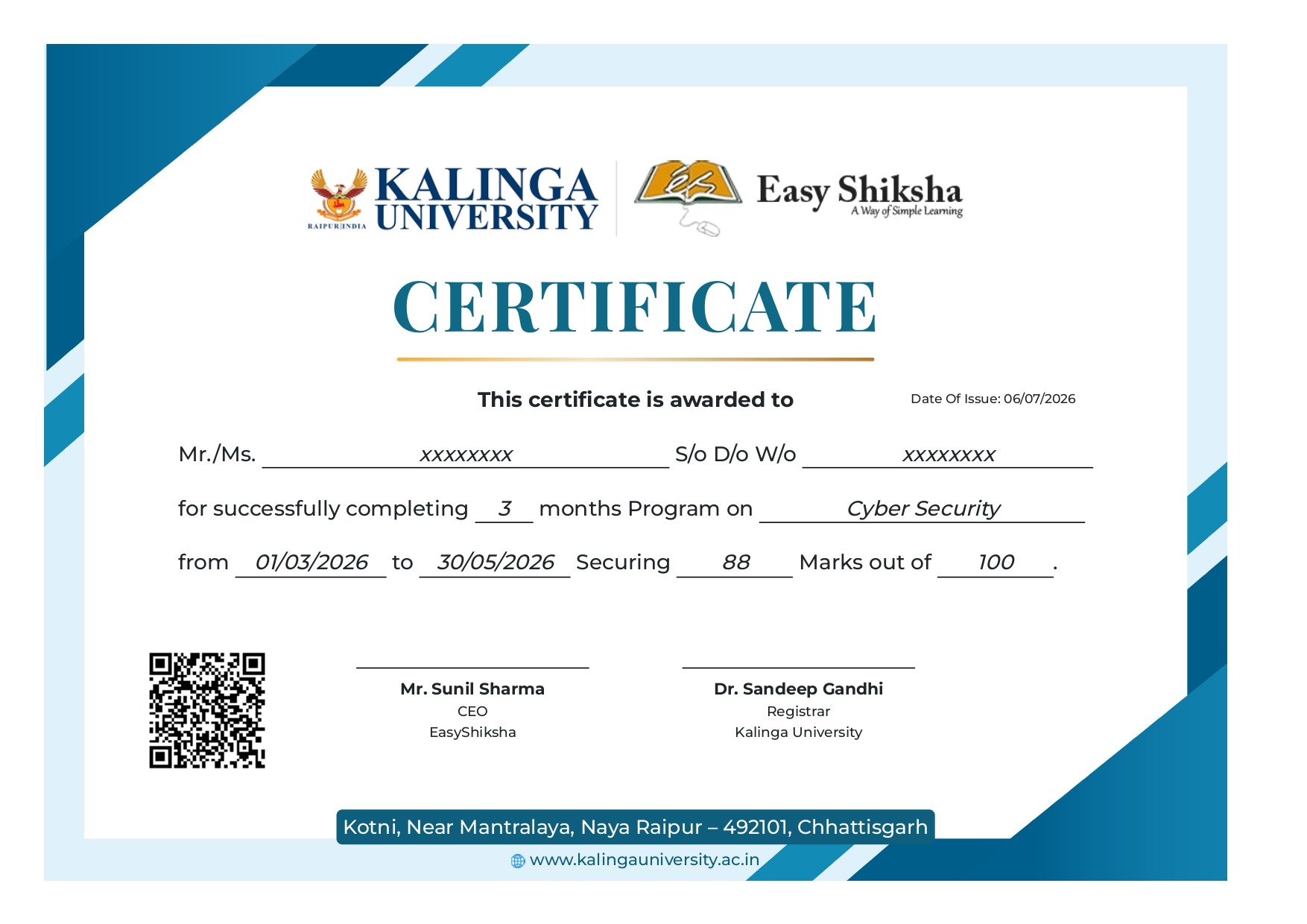
This progression aligns strongly with EasyShiksha's broader learning model. Online courses provide structured knowledge. Quizzes support assessment. Projects provide application. Internships introduce practical exposure. Certificates document completed learning. Career guidance connects these experiences with professional possibilities.
Interactive exploration can become the layer that helps students determine which pathway deserves deeper investment.
Career Exploration and the Future of Internships
Internships remain an important bridge between education and employment, but students may benefit from some exposure to professional expectations before entering a real workplace. Interactive experiences can provide that preparation.
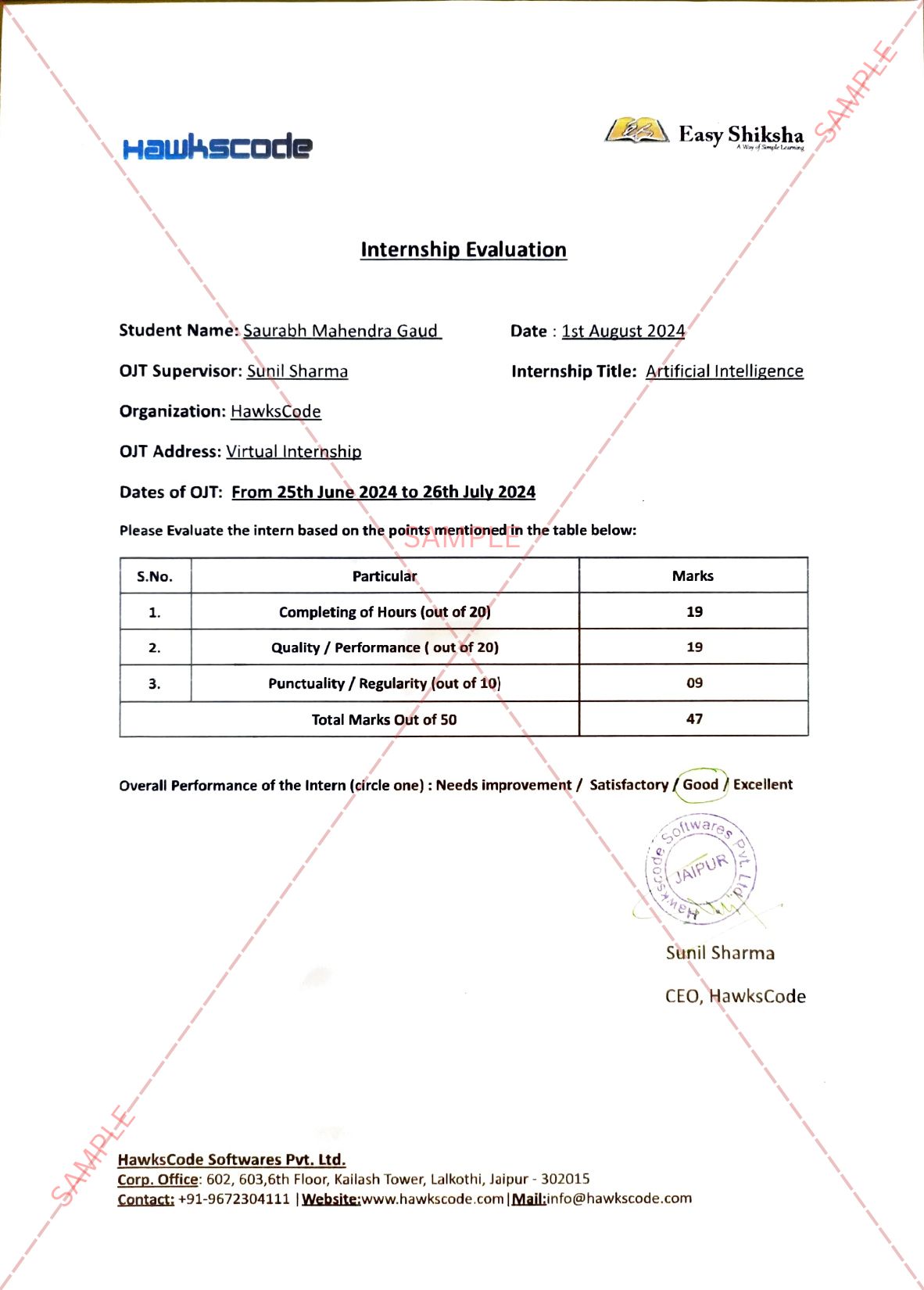
A simulated internship task could introduce a student to receiving a project brief, interpreting requirements, working within a deadline, presenting an output, and responding to feedback. These experiences can help students understand that professional work is not simply about knowing information. It requires communication, prioritisation, adaptability, problem-solving, and revision.
This can make internships more meaningful because students arrive with some familiarity with the structure of professional tasks.
For EasyShiksha, interactive career exploration could therefore become an early stage in an internship-readiness pathway. Students could explore several professions, identify areas of interest, complete relevant learning, develop projects, and then move into internship opportunities aligned with their developing skills.
Building a Career Portfolio From Exploration
Career exploration can also generate useful digital evidence. Instead of recording only completed courses and certificates, a platform could maintain a history of the student's experiments and practical activities.
A learner's digital profile might show that they explored marketing through a campaign simulation, investigated data analytics through a project, completed a foundational course in programming, and participated in a virtual internship. This creates a more detailed representation of the learning journey.
The portfolio becomes a story of development rather than a list of credentials.
For students, this can help them reflect on their own progress. For employers or internship providers, practical evidence can provide additional context about a candidate's interests and capabilities.
The broader principle is that career identity can be built through evidence of exploration and application, not only through declarations of interest.
Learning From Failure Without Fear
One of the greatest advantages of simulated career environments is the ability to make mistakes safely. Professional environments often involve real consequences, but educational simulations can turn errors into learning opportunities.
A student may choose the wrong marketing audience, misunderstand a dataset, produce inefficient code, or make an inappropriate business decision. Instead of treating the mistake as a permanent failure, the platform can explain the outcome and allow the learner to try again.
This creates an environment in which experimentation becomes normal.
Such experiences can also develop an important professional habit: reflection. Students begin to ask why a decision did not work, what evidence they overlooked, what assumption was incorrect, and what they could change in another attempt.
These habits are transferable across professions.
Why Career Exploration Should Begin Before Specialisation
Career exploration is particularly valuable before students make major academic commitments. The earlier students can encounter different types of work, the more opportunity they have to refine their interests.
This does not mean that every student needs to explore dozens of careers. Excessive choice can itself become overwhelming. The objective is structured exposure.
Students can begin with broad domains and gradually narrow their exploration based on genuine engagement. Someone interested in technology can explore several adjacent areas. A student interested in business can compare different functions. Someone interested in creative work can experience design, content, communication, and digital production.
By the time students choose specialised courses or degrees, they may have a more developed understanding of what they are choosing and why.
This can help transform education from a sequence of predetermined decisions into a process of informed discovery.
Beyond Traditional Career Tests
Career assessments have an important role, but interactive experiences offer a different form of evidence. A test asks students to respond to questions. An interactive experience asks them to perform a task.
Neither approach needs to replace the other.
A future career exploration platform could combine interest assessments, quizzes, interactive simulations, projects, AI-supported recommendations, mentor guidance, and real internship experiences. Each component contributes a different perspective.
The assessment may identify areas of curiosity. The simulation may reveal engagement. The project may demonstrate application. The course may develop knowledge. The internship may provide real-world exposure.
Together, these experiences create a more comprehensive career exploration process.
The Career Exploration Journey on EasyShiksha
EasyShiksha can position interactive career exploration as part of a connected student journey rather than as an isolated tool. A learner could enter the platform without knowing exactly what they want to pursue and begin with a simple career discovery experience.
From there, interactive simulations could introduce different professional environments. Quizzes could identify conceptual understanding and learning gaps. Courses could build foundational knowledge. Projects could convert knowledge into practical evidence. Games could make exploration engaging. Certificates could document structured learning. Internships could provide deeper workplace exposure. Career guidance could help students interpret their experiences and plan their next steps.
The strength of this approach lies in continuity. Students do not need to restart their career journey every time they move from one learning activity to another. Their progress can remain connected.
This creates the possibility of a digital career journey in which exploration, learning, practice, and experience reinforce one another.
Empower your team. Lead the industry
Get a subscription to a library of online courses and digital learning tools for your organization with
EasyShiksha
The Future: From Career Guessing to Career Discovery
The future of career education may increasingly move away from the expectation that students should know their professional direction before they have had meaningful exposure to professional work. Instead, digital education platforms can provide structured environments where students discover their preferences through experience.
Interactive career exploration will not eliminate uncertainty. No simulation can perfectly predict whether someone will enjoy a profession over several years. Career interests can change, industries can evolve, and personal circumstances can influence professional decisions.
The goal is therefore not certainty. The goal is better-informed experimentation.
A student who has explored several professional environments can make decisions based on more than reputation, salary expectations, social pressure, or vague descriptions. They can reflect on what they actually enjoyed doing, which challenges motivated them, which skills they want to develop, and which areas they are willing to explore further.
That is a more active form of career development.
Conclusion: Let Students Experience Before They Decide
Career decisions become difficult when students are asked to choose from professions they have never experienced. Information can introduce possibilities, but interactive experiences can make those possibilities tangible.
Career exploration without guesswork does not mean eliminating uncertainty. It means giving students better evidence with which to navigate uncertainty. Simulations, quizzes, projects, games, courses, AI-supported recommendations, and internships can collectively create an environment where students can explore professional possibilities before making major commitments.
For EasyShiksha, this approach creates an opportunity to connect its different educational components into a continuous career discovery ecosystem. A student can explore a profession, attempt a practical task, identify a learning gap, complete a course, test the new knowledge through a project, receive feedback, build a certificate-backed learning record, and eventually move toward an internship or employment opportunity.
The deeper idea is that career clarity does not always arrive through a single test or conversation. It can emerge gradually through experience.
The question students face should not always be, “Which career should I choose?” It can also be, “Which career would I like to experience next?”
When education gives students the opportunity to ask that question and provides meaningful ways to explore the answer, career discovery becomes part of learning itself. EasyShiksha can support that transition by connecting knowledge with experimentation, experimentation with projects, projects with experience, and experience with a developing professional identity.
Anshika Jain is an Engineer, Developer, and Educational Content Author known for her dedication to technology and knowledge sharing. With a strong analytical mindset and a passion for innovation, she has consistently contributed to creating meaningful digital solutions and insightful educational articles.
Her ability to simplify complex technical concepts into engaging and easy-to-understand content makes her work valuable for students and learners across various platforms. Along with her technical expertise, Anshika is admired for her creativity, professionalism, and commitment to continuous learning.
She represents a perfect blend of technical excellence and impactful communication, inspiring others through both her development work and educational contributions.