Artificial intelligence is changing how students access information, solve problems, complete assignments, and develop professional skills. A learner can now ask an AI system to explain a scientific concept, generate a programming solution, analyse a business problem, summarise a research paper, or suggest a career pathway. These capabilities create new educational opportunities, but they also introduce a fundamental challenge: students may become increasingly skilled at obtaining answers without necessarily becoming better at evaluating them.
Traditional education generally assesses what students know, how accurately they apply concepts, and whether they can produce a correct answer. These measures remain important, but the growing availability of AI creates a need to examine another capability: whether students can recognise when an intelligent system is wrong, question its assumptions, investigate its evidence, and construct a stronger conclusion of their own.
This raises an important possibility for the future of education. Could students be assessed on how effectively they challenge an AI system rather than only on how well they use it?
Such an approach would move beyond basic AI literacy. Instead of simply teaching students how to write prompts or generate useful outputs, education could assess whether learners can critically examine those outputs. A student might be asked to evaluate an AI-generated explanation, identify unsupported claims, test a programming solution, challenge a misleading recommendation, or explain why a seemingly convincing answer should not be accepted without further investigation.
For EasyShiksha, this concept creates an opportunity to connect artificial intelligence with critical thinking, quizzes, practical projects, internships, certificates, and career preparation. Online courses could introduce the principles of verification, assessments could test students' ability to challenge machine-generated reasoning, and practical assignments could demonstrate how these skills operate in real situations.
The objective would not be to encourage students to disagree with AI for the sake of disagreement. It would be to help them distinguish between answers that deserve confidence, answers that require further investigation, and answers that should be rejected because the available evidence does not support them.
In an increasingly automated economy, the ability to question intelligent systems may become an important part of independent thinking. Education must therefore consider whether this ability should be taught explicitly, practised regularly, and assessed alongside conventional academic knowledge.
What Does It Mean to Challenge an AI System?
Challenging an AI system means critically examining its output instead of accepting it automatically. The process involves identifying claims, evaluating evidence, testing reasoning, checking assumptions, and determining whether the answer adequately addresses the original problem.
A student who challenges AI effectively does not simply respond that a generated answer is incorrect. The student must explain what appears questionable, identify the evidence needed to evaluate the claim, and determine whether the original conclusion should be revised.
Consider a student who asks an AI system to explain why a particular business experienced declining sales. The system might attribute the decline to changing customer preferences and recommend a new advertising campaign. A passive user may accept the recommendation immediately. A critical learner might ask whether the available data actually supports that explanation, whether pricing or distribution changed during the same period, and whether another factor could account for the decline.
The student is not necessarily proving that the AI is wrong. Instead, the student is testing whether its conclusion is justified.
This distinction is essential because AI can produce accurate and useful answers. Automatically rejecting its output would be as unproductive as automatically accepting it. The educational objective is to develop evidence-based evaluation rather than a general attitude of distrust.
A strong challenge should be relevant to the claim, proportionate to the available evidence, and open to revision when new information becomes available. Students should learn that a well-supported AI answer may deserve acceptance, while an uncertain answer may require qualification and an incorrect answer may need correction.
Why Traditional Assessments May Not Be Enough
Traditional assessments are designed to determine whether students understand particular concepts, remember important information, and apply knowledge to defined problems. Multiple-choice questions, written examinations, coding assignments, and practical tests can measure these abilities effectively when they are designed appropriately.
However, the widespread availability of generative AI changes the conditions under which students demonstrate their knowledge. A learner may obtain a correct explanation or complete solution without independently understanding the reasoning behind it. The submitted output may therefore reveal less about the student's actual capability than it did before AI assistance became widely available.
This does not mean that every AI-assisted assignment is unreliable or that traditional examinations have lost their value. Rather, it means that educators may need additional methods for determining whether students can independently evaluate and apply the information they receive.
For example, a programming assignment may show that a student can produce a functioning application. A further assessment could ask the learner to inspect an AI-generated implementation, identify a security weakness, explain why a proposed solution fails under particular conditions, or compare two approaches before selecting one.
Similarly, a student writing a research report could be asked to verify the sources behind AI-generated claims and explain how the evidence influenced the final argument.
These activities assess a different dimension of competence. They reveal whether students can move beyond producing an answer and evaluate the quality of the reasoning that supports it.
For EasyShiksha, this could complement conventional course assessments rather than replace them. Students would still need subject knowledge, but they would also demonstrate that they can use that knowledge to examine AI-generated work.
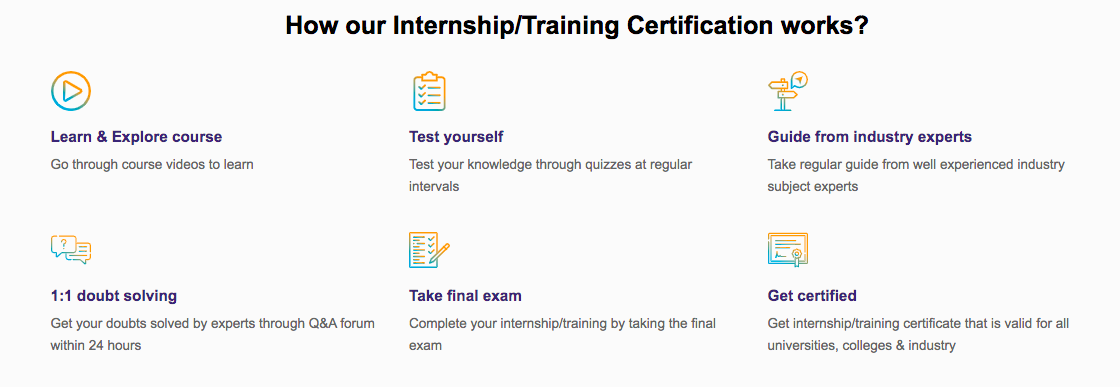
How EasyShiksha Internship/Training Program Works
The Difference Between Prompt Engineering and Critical AI Evaluation
Prompt engineering has become a familiar concept in AI education. It involves formulating instructions that help a system produce more relevant, structured, or useful outputs. Students can learn to specify a task clearly, provide context, define constraints, and request an appropriate response format.
These skills are useful, but effective prompting does not automatically demonstrate critical thinking.
A student may write an excellent prompt and receive an inaccurate answer. Another student may use a simple prompt, recognise that the result contains unsupported claims, investigate the evidence, and arrive at a more reliable conclusion. The second student may demonstrate stronger evaluation skills even though the initial prompt was less sophisticated.
This distinction suggests that education should assess both the ability to obtain useful AI assistance and the ability to evaluate what the system produces.
Critical AI evaluation begins after the answer appears. Students need to identify which claims are factual, which are interpretations, and which depend on assumptions. They should be able to determine whether the response addresses the question, whether its evidence is sufficient, and whether alternative explanations deserve consideration.
A sophisticated AI user is not simply someone who knows how to obtain a polished response. It is someone who can decide whether that response is trustworthy enough for the intended purpose.
EasyShiksha could explore this distinction through learning activities that first teach students how to use AI tools and then challenge them to evaluate the resulting outputs. This would help learners develop a more complete understanding of AI competence, combining effective interaction with independent judgment.
The AI Challenge Assessment Model
An AI Challenge Assessment Model could be designed as a structured method for evaluating how students examine machine-generated answers. Instead of asking only for the final answer to a question, the assessment would present an AI-generated response and require the student to determine whether its reasoning is valid.
The activity might begin with a question relevant to the learner's course. The AI system would provide an explanation, recommendation, calculation, code sample, or analytical conclusion. Students would then examine the output and identify the parts that deserve verification.
The next stage would involve evidence testing. Learners might compare the answer with course material, consult reliable sources, run a calculation, execute code, or test a recommendation against the conditions described in the question. The method would depend on the subject being studied.
Students would then explain their findings. They might confirm that the answer is correct, identify a specific error, qualify an uncertain conclusion, or explain why the available evidence is insufficient to reach a definitive judgment.
The final stage would evaluate whether the student can construct a defensible response. A successful learner would not merely criticise the AI output but demonstrate a better understanding of the problem and explain how the evidence supports the final conclusion.
This model would turn AI into an object of investigation rather than simply a source of information. Students would learn through comparison, verification, and reasoned disagreement.
For EasyShiksha, the model could be adapted to online courses, interactive quizzes, practical projects, and subject-specific assessments. It would provide a common educational structure while allowing the actual challenges to vary according to the discipline.
Assessing Whether Students Can Detect Factual Errors
One of the most accessible forms of AI challenge assessment involves identifying factual inaccuracies. AI systems can sometimes produce incorrect dates, misstate definitions, confuse related concepts, or present unsupported claims with convincing language.
Students should learn to recognise that fluency and confidence do not guarantee accuracy. A response may sound professional while containing a fundamental mistake.
An assessment could present a generated explanation of a historical event, a scientific process, a financial concept, or a technical standard. The student would need to verify the relevant claims using reliable evidence and explain whether the answer is accurate.
The task should require more than finding a minor wording issue. It should test whether the learner can identify a meaningful error, distinguish it from harmless variation, and provide a supported correction.
For instance, a student studying chemistry might examine an AI-generated explanation of a reaction and determine whether the stated conditions and products are consistent with the underlying principles. A learner studying finance could verify whether a calculation uses the correct rate, period, and assumptions. A student learning web development might investigate whether an explanation accurately describes how a browser handles a particular feature.
These exercises could be adjusted to the learner's level. Beginners might verify clearly defined facts, while advanced students could investigate conflicting sources, incomplete explanations, or claims that require specialist knowledge.
The purpose is not to turn every student into an expert fact-checker overnight. It is to develop the habit of treating important claims as something that can be examined rather than simply accepted.
Testing Reasoning Instead of Looking Only for Wrong Facts
Factual accuracy is only one dimension of a reliable answer. An AI system can use correct facts and still reach an unjustified conclusion.
This can happen when the system confuses correlation with causation, overlooks a relevant variable, applies a general rule to an unsuitable situation, or assumes that evidence supports a stronger conclusion than it actually does.
Assessing students on reasoning challenges would help educators determine whether learners can identify these problems. The AI-generated answer might contain no obviously false statement, yet its conclusion could still be weak because the evidence is incomplete.
Imagine an AI-generated report claiming that a new teaching method caused examination scores to improve because students who used the method achieved higher marks. A critical student would need to consider whether the students had similar starting abilities, whether other teaching changes occurred, and whether the evidence supports a causal relationship rather than a simple association.
The student might conclude that the teaching method appears promising but that the available information does not establish causation. Such a response demonstrates a more sophisticated form of evaluation than simply identifying an incorrect fact.
EasyShiksha could use reasoning-based assessments across business, science, mathematics, technology, and social research. Students could examine conclusions, identify missing assumptions, and explain what additional evidence would make an argument stronger.
These activities would encourage learners to understand not only whether a statement is true, but also whether the reasoning used to support it is logically justified.
Can Students Challenge AI Without Knowing the Correct Answer?
One of the most important questions in this assessment model is whether students must already know the correct answer before they can challenge AI.
In some situations, subject knowledge is essential. A student cannot reliably identify a complex programming error without understanding relevant programming principles. Similarly, evaluating a financial calculation requires knowledge of the underlying concepts.
However, students do not always need to know the final answer immediately to recognise that a response deserves investigation. They may identify missing evidence, contradictory claims, unclear assumptions, or an answer that fails to address the original question.
This is a valuable capability in its own right. Responsible evaluation often begins with recognising the limits of one's knowledge.
An assessment could therefore reward students for identifying uncertainty accurately. A learner might explain that the AI's conclusion appears plausible but cannot be verified using the supplied evidence. Another might identify two competing explanations and describe what information would help distinguish between them.
The student should not receive full credit merely for expressing doubt. The challenge must still be specific and reasoned. The learner should identify what is uncertain, explain why the uncertainty matters, and propose a sensible way to investigate it.
This approach would teach students that intellectual honesty is part of critical thinking. A person who knows when evidence is insufficient may make better decisions than someone who confidently accepts or rejects an answer without adequate justification.
The Role of Evidence in AI Challenge Assessment
A challenge becomes meaningful when it is supported by evidence. Students should learn to distinguish between personal disagreement, plausible suspicion, and a demonstrable problem in an AI-generated response.
Evidence can take different forms depending on the task. In a mathematical problem, it may involve recalculating the result. In programming, it may involve testing code against defined requirements. In research, it may involve consulting reliable sources. In business analysis, it may involve comparing a recommendation with relevant data and operational constraints.
The assessment should consider whether the evidence actually supports the student's conclusion. Finding one source that disagrees with the AI does not automatically establish that the AI is wrong. The source itself may be unreliable, outdated, or addressing a different question.
Students should therefore learn to evaluate the relevance and reliability of their evidence. They should understand when an official document, peer-reviewed study, technical specification, or direct test is more appropriate than a general online explanation.
For EasyShiksha, evidence-based challenge activities could become a bridge between theoretical learning and practical competence. Students would practise making claims, supporting those claims, and revising their conclusions when stronger evidence becomes available.
Over time, this could help learners develop a disciplined approach to information verification that remains useful even when the AI tools they use change.
AI Challenge Assessments Across Different Subjects
The Human-AI Challenge Assessment approach can be adapted to multiple disciplines without requiring every subject to use the same evaluation method.
In programming, students could examine AI-generated code that appears functional but fails under particular inputs, introduces a security vulnerability, or does not satisfy the stated requirements. Learners would test the implementation, identify the problem, and explain a suitable correction. The assessment would measure technical understanding alongside the ability to verify machine-generated solutions.
In mathematics, an AI system might present a solution containing an incorrect transformation, a misapplied formula, or an unsupported conclusion. Students would reconstruct the reasoning, locate the first invalid step, and establish the correct result. The goal would be to evaluate mathematical understanding rather than reward students for spotting a deliberately obvious mistake.
In business and finance, learners could evaluate an AI-generated market analysis, budget recommendation, or financial projection. They would examine the assumptions, verify calculations, identify omitted costs, and determine whether the recommendation is appropriate for the stated circumstances.
In writing and research, students could investigate whether a generated argument represents its sources accurately, whether the evidence supports its claims, and whether alternative perspectives have been considered. The assessment could reward accurate interpretation and well-supported criticism rather than disagreement alone.
These applications would allow EasyShiksha to integrate AI challenge assessment into its existing subject areas. The framework would remain consistent, while the evidence and reasoning expected from students would reflect the knowledge and professional standards of each discipline.
Using Quizzes to Measure AI Challenge Skills
Quizzes can provide an accessible starting point for assessing how students evaluate AI-generated answers. A quiz might present a short response and ask learners to identify its most important weakness, determine whether the conclusion follows from the evidence, or select which additional information would be most useful for verification.
However, quiz design must be careful. If every AI-generated response contains an obvious error, students may learn to assume that the machine is always wrong. That would replace one unhelpful habit with another.
A more balanced assessment should include accurate answers, partially supported claims, ambiguous cases, and responses containing genuine errors. Students should sometimes conclude that the AI's answer is sound and explain why the evidence supports it. In other cases, they should identify a specific limitation or recognise that further investigation is necessary.
This variation would help distinguish genuine evaluation skills from a simple strategy of searching for mistakes.
EasyShiksha could use quizzes to introduce the basic principles of AI evaluation before moving students toward longer practical assignments. Immediate feedback could explain which evidence supports a conclusion and why a particular criticism is or is not justified.
As students progress, the questions could become more complex, requiring them to compare multiple responses, evaluate competing explanations, or justify their own conclusions in writing.
Moving Beyond Quizzes to Practical AI Challenge Projects
Quizzes are useful for focused assessment, but practical projects can reveal whether students apply AI evaluation skills in more realistic situations.
A project could ask students to use an AI system to explore a problem and then independently evaluate its recommendations. The student might document the original question, identify important claims, test relevant outputs, and explain how the final solution differs from or confirms the AI's response.
For example, a web development learner could use AI to propose a website feature, then test whether the suggested implementation meets accessibility, security, and performance requirements. A marketing student could examine an AI-generated campaign and evaluate its claims, audience assumptions, and suitability for the intended market.
The project should not reward students simply for producing the longest criticism or finding the greatest number of errors. A concise, well-supported evaluation may be stronger than a lengthy report filled with minor objections. The quality of the reasoning and the relevance of the evidence should determine the result.
For EasyShiksha, these projects could connect course completion with practical evidence of capability. Students would demonstrate not only that they can use AI, but also that they can examine its output and make informed decisions about how it should be applied.
Such work could become part of a portfolio that learners use to discuss their skills during internships, interviews, and professional opportunities.
How Should Students Be Scored?
Assessing AI challenge skills requires clear criteria because disagreement alone is not proof of critical thinking. A student may reject a correct answer for weak reasons, while another may accept the answer after careful verification. The assessment must distinguish between these outcomes.
A strong evaluation would consider whether the student correctly identifies the relevant issue, uses appropriate evidence, explains the reasoning behind the challenge, and proposes a defensible conclusion. It should also consider whether the student recognises uncertainty and avoids making claims that go beyond the available evidence.
The assessment must allow for multiple defensible conclusions when the problem genuinely permits them. If the AI's answer is incomplete rather than entirely incorrect, students should be able to explain that distinction. Similarly, if the available information cannot settle a question, the assessment should not force learners to invent certainty.
Educators should also avoid scoring students according to how often they disagree with AI. Such a metric would encourage unnecessary criticism and could make learners less willing to accept correct information. The objective is to reward justified evaluation, not opposition.
AI tools might help educators provide formative feedback on students' explanations, but automated grading should itself be subject to quality checks. For consequential assessments, educators should retain appropriate oversight and a way to review disputed outcomes.
EasyShiksha could begin with transparent rubrics and low-stakes practice tasks, allowing students to understand how their reasoning is evaluated before these skills influence more significant academic decisions.
The Risk of Teaching Students to Distrust AI
An AI challenge assessment programme could create an unintended problem if it presents artificial intelligence primarily as a source of mistakes. Students might conclude that successful critical thinking means finding something wrong with every answer.
This would be a poor educational outcome. AI systems can provide valuable explanations, generate useful alternatives, and support accurate analysis. Students need to understand both their strengths and their limitations.
A well-designed assessment should therefore test calibration: the ability to match confidence with the quality of the evidence. Students should accept well-supported answers, question uncertain claims, and reject conclusions that are demonstrably flawed.
They should also understand that AI errors vary in importance. A minor formatting issue is not equivalent to a security vulnerability or a false claim in a research report. Effective evaluation requires attention to the consequences of an error as well as its existence.
For EasyShiksha, the educational message should be that AI is a tool to evaluate thoughtfully, not an authority to obey blindly or an opponent to defeat. Students should learn to collaborate with AI when it is useful, verify its work when necessary, and rely on appropriate human expertise when the situation exceeds their knowledge.
This balanced approach would prepare learners for professional environments in which the ability to use intelligent systems responsibly matters more than either unquestioning trust or blanket rejection.
Human Judgment, Academic Integrity, and Responsible AI Use
AI challenge assessment could also support academic integrity by making the student's reasoning process more visible. Instead of evaluating only a final submission, educators could ask learners to explain the decisions behind their work, identify which AI suggestions they used, and demonstrate that they understand the resulting solution.
This approach is particularly useful when students are permitted to use AI as part of an assignment. Clear expectations should distinguish acceptable assistance from activities that undermine the intended learning objective. A task designed to assess independent coding ability may require students to complete certain sections without generated solutions, while a project designed to assess AI collaboration may explicitly allow AI assistance.
The important point is transparency. Students should know what forms of assistance are permitted, how they should document relevant AI use, and which skills they are expected to demonstrate independently.
An AI challenge assessment could ask students to compare an initial machine-generated response with their final work and explain which recommendations they accepted, modified, or rejected. The learner would need to provide reasons rather than simply claim to have used AI responsibly.
For EasyShiksha, these practices could help students develop professional habits that extend beyond academic assignments. In workplaces, employees may need to explain the origin of an analysis, verify generated outputs, protect confidential information, and accept responsibility for decisions made with AI assistance.
Preparing Students for an AI-Driven Workplace
The ability to challenge AI may become relevant across many professional roles, although its importance will vary according to the work involved. Employees may increasingly use AI to generate code, draft reports, analyse data, prepare presentations, or recommend business decisions. In such settings, employers need people who can determine whether the output meets the actual requirements.
A developer who can inspect generated code may help identify defects before they affect users. A financial analyst who can challenge an unrealistic projection may help prevent poor investment or budgeting decisions. A marketer who can verify claims and evaluate audience assumptions may protect a brand's credibility. A researcher who can distinguish strong evidence from unsupported statements may produce more reliable conclusions.
These capabilities combine subject knowledge with verification, judgment, and communication. Employees need to explain why an output is unreliable, what evidence supports an alternative, and what action should follow.
EasyShiksha could connect AI challenge assessment with career preparation by integrating these tasks into practical projects and internship experiences. Learners could build evidence of how they evaluate automated recommendations, test technical outputs, and explain decisions under realistic constraints.
This would help students demonstrate a practical form of AI literacy that goes beyond knowing which tools to use. It would show that they can work with AI while maintaining responsibility for the quality of their work.
Empower your team. Lead the industry
Get a subscription to a library of online courses and digital learning tools for your organization with
EasyShiksha
Building an AI Challenge Learning Pathway at EasyShiksha
EasyShiksha could explore a progressive learning pathway that introduces AI challenge skills gradually. Students would begin by learning how AI systems generate responses, why confident outputs can still be inaccurate, and why important claims should be verified.
Early activities could focus on clear examples of factual errors and unsupported conclusions. As learners develop confidence, they could progress to reasoning problems, conflicting evidence, incomplete information, and domain-specific challenges. The difficulty would increase according to the learner's demonstrated understanding rather than simply the number of tasks completed.
Quizzes could assess recognition and basic evaluation. Projects could require students to test AI outputs, document their evidence, and defend their conclusions. Internships could introduce practical cases in which generated recommendations must be checked against professional requirements. Career guidance could help learners understand how these capabilities relate to different occupations.
Certificates could recognise completion of a defined learning pathway, while project portfolios could provide additional evidence of practical performance. Any formal claim of proficiency would need transparent criteria and meaningful assessment rather than relying solely on participation.
The pathway should also teach students when not to challenge an answer unnecessarily. Learners should understand that accepting a correct, well-supported conclusion can demonstrate good judgment just as much as identifying a genuine error.
This would make AI challenge assessment part of a broader educational approach in which students learn to question intelligently, verify carefully, and use technology responsibly.
Conclusion: The Next Generation of Learners Must Know How to Question Intelligent Systems
Artificial intelligence is making it easier to obtain information, generate solutions, and complete many tasks that once required substantial independent effort. This creates an important educational question: how can institutions determine whether students are developing the judgment needed to evaluate those outputs rather than merely reproducing them?
Assessing how well students challenge AI offers one possible answer. Through structured tasks, learners can demonstrate whether they recognise factual errors, identify unsupported reasoning, verify evidence, evaluate uncertainty, and construct defensible conclusions. These capabilities complement subject knowledge and practical skills because they help students determine when an AI-generated answer should be trusted, revised, or rejected.
The purpose is not to encourage constant disagreement. Effective AI evaluation requires intellectual discipline. Students must accept correct answers when the evidence supports them, question uncertain claims when justification is incomplete, and identify errors when they can demonstrate that the reasoning fails. They must also recognise the limits of their own knowledge and seek appropriate evidence or expertise when necessary.
For EasyShiksha, this concept could connect online courses, quizzes, practical projects, internships, certificates, and career preparation through a consistent emphasis on independent evaluation. Students could learn a concept, examine an AI-generated explanation, test its claims, explain their reasoning, and apply the resulting knowledge to practical work.
The resulting educational model would move beyond teaching students how to obtain answers from AI. It would help them develop the ability to examine those answers critically and take responsibility for how they are used.
In an AI-driven economy, access to information may become increasingly easy. The ability to determine whether that information is reliable, relevant, and sufficient for a decision may remain a demanding professional skill. Students who develop this capability will be better prepared to collaborate with intelligent systems without surrendering their independent judgment.
The future of AI literacy should therefore include a question that every learner eventually learns to ask: not simply whether an AI system can answer, but whether its answer deserves to be believed.
Anshika Jain is an Engineer, Developer, and Educational Content Author known for her dedication to technology and knowledge sharing. With a strong analytical mindset and a passion for innovation, she has consistently contributed to creating meaningful digital solutions and insightful educational articles.
Her ability to simplify complex technical concepts into engaging and easy-to-understand content makes her work valuable for students and learners across various platforms. Along with her technical expertise, Anshika is admired for her creativity, professionalism, and commitment to continuous learning.
She represents a perfect blend of technical excellence and impactful communication, inspiring others through both her development work and educational contributions.