

















M.Voc (Degree) in Hospitality & Tourism Management
Program Overview
The Master of Vocation (M.Voc) in Hospitality & Tourism Management at Mangalayatan University is a postgraduate vocational program focused on advanced knowledge and professional skills in the hospitality and tourism sector. The curriculum covers global tourism, hospitality operations, food production, food and beverage service, front office and housekeeping, organizational leadership, tourism policy, research methodology, financial management, entrepreneurship, human resources, events, restaurants, and transportation.
The program is structured across four semesters with a total of 120 credits, with each semester carrying 30 credits. The curriculum combines specialized classroom-based learning with practical and industry-oriented components. Subjects such as Integrated Food Production & Safety Management, Front Office & Housekeeping Protocols and Systems, F&B Service Operations & Management, Advanced Beverage & Bar Operations Management, and Strategic Event, Crisis & Restaurant Management provide focused knowledge of hospitality operations.
The program also incorporates research, data analysis, leadership, financial control, marketing, entrepreneurship, health and safety, and strategic management. Students are introduced to research methodology, data analysis using tools such as Excel and SPSS basics, tourism policy and legal frameworks, revenue control, financial accounting, and strategic human resource management.
Practical and industry exposure is an important component of the curriculum. The syllabus includes Industry Internship - I (Field & Corporate Exposure), Intensive Workshop & Field Visits (Practical Application), Strategic Management Dissertation, and Industry Internship - II (On Job Training). These components provide opportunities to apply academic concepts in practical, field, research, and industry-oriented settings.
Eligibility Criteria
The minimum eligibility for admission to the M.Voc program is a relevant undergraduate degree or equivalent qualification from a recognized institution, subject to the university's admission requirements.
Approval Details
MHRD, Government of India and UGC
Curriculum
The first semester establishes a broad foundation in global tourism and hospitality while introducing students to professional communication, IT applications, food production and safety, front office and housekeeping systems, and food and beverage service operations. Each course carries 6 credits, making the semester total 30 credits.
1. Global Tourism, Hospitality & Society
This subject introduces students to the scope, evolution, systems, social dimensions, sustainability, and contemporary challenges of global tourism and hospitality.
Key Topics:
- Meaning, scope and importance of tourism and hospitality
- Evolution and historical development of global tourism
- Tourism components, including attractions, accessibility and accommodation
- Types of tourism such as leisure, business, cultural, eco, medical and adventure tourism
- Global hospitality industry structure
- Tourism systems, destinations and travel flows
- Tourism and society, culture and heritage conservation
- Sustainable, responsible, eco and community-based tourism
- Technology, digital marketing and AI in tourism
- Crisis management and emerging tourism trends
2. Professional Communication & IT Applications
This subject develops professional communication capabilities alongside foundational and hospitality-specific IT skills.
Key Topics:
- Fundamentals and process of professional communication
- Verbal, non-verbal, written and visual communication
- Communication barriers and effective communication
- Listening, speaking, reading and writing skills
- Professional etiquette and grooming
- Business correspondence, emails, memos and reports
- Telephone etiquette and guest communication
- Presentation, teamwork and conflict resolution
- IT fundamentals and MS Office applications
- Property Management Systems (PMS), CRS and GDS
- CRM, digital payments and e-commerce
- AI, chatbots, automation and cybersecurity in hospitality
3. Integrated Food Production & Safety Management
This subject covers food production, culinary operations, food commodities, nutrition, hygiene, safety, kitchen management and contemporary food safety systems.
Key Topics:
- Introduction to food production and culinary arts
- Kitchen departments and brigade system
- Kitchen layout, design and workflow
- Cooking methods and culinary terminology
- Food commodities, nutrition and balanced diets
- Food storage and preservation
- Menu planning and portion control
- Food contamination and prevention
- HACCP principles and ISO standards
- Kitchen hygiene and sanitation
- Food costing, budgeting and wastage control
- Inventory and stock control
- Food safety management systems and audits
- Sustainable food production practices
- Risk assessment and legal compliance
4. Front Office & Housekeeping Protocols and Systems
This subject focuses on the operational and management aspects of front office and housekeeping departments within hospitality organizations.
Key Topics:
- Front office role and organizational structure
- Reservations, reception, registration and cashiering
- Types of hotels and room categories
- Guest cycle management
- Front office procedures and computerized reservation systems
- Check-in and check-out procedures
- Room assignment and key control
- Guest requests, complaints and special needs
- Property Management Systems
- Housekeeping organization and operations
- Room and public-area cleaning procedures
- Linen and laundry management
- Housekeeping SOPs and safety systems
- Quality control and guest satisfaction
- Sustainable housekeeping and smart room technologies
5. F&B Service Operations & Management
This subject develops knowledge of food and beverage service operations, service techniques, beverage management, cost control and quality management.
Key Topics:
- Food and beverage department organization
- Types of F&B outlets
- Roles and responsibilities of service staff
- Service ethics, etiquette and grooming
- Table, buffet, room and takeaway service
- Silver, American, French and Russian service
- Mise-en-place and mise-en-scène
- Table setting and order-taking procedures
- Beverage and bar operations
- F&B outlet planning and organization
- Menu planning and pricing
- Food and beverage cost control
- Inventory and staffing management
- POS systems, digital menus and online ordering
- Customer satisfaction and sustainable F&B operations
Download Syllabus
The second semester moves toward strategic and analytical areas of hospitality and tourism management. It includes organizational leadership, research and data analysis, food and beverage revenue control, advanced tourism policy and legal frameworks, and the first industry internship. The semester carries 30 credits.
1. Strategic Organizational Behavior & Leadership
This subject explores organizational behavior, group dynamics, leadership theories, organizational culture and strategic leadership in hospitality and service environments.
Key Topics:
- Fundamentals of organizational behavior
- Personality, perception, attitudes and values
- Learning and motivation theories
- Group behavior and team dynamics
- Team building and group decision-making
- Conflict management and negotiation
- Classical and modern leadership theories
- Transformational and transactional leadership
- Organizational structure and culture
- Organizational change and development
- Emotional intelligence and decision-making
- Ethics, corporate governance, diversity and inclusion
2. Data Analysis, Research Methodology & Presentation
This subject develops research capabilities and introduces students to data collection, processing, statistical analysis, research reporting and presentation.
Key Topics:
- Fundamentals and types of research
- Qualitative, quantitative and mixed-method research
- Research design and hypothesis formulation
- Literature review and research ethics
- Primary and secondary data
- Surveys, interviews, observation and questionnaires
- Sampling techniques and sample size
- Data editing, coding and tabulation
- Descriptive statistics
- Data visualization using charts, graphs and tables
- Excel and SPSS basics
- Research reporting and referencing
- Hypothesis testing, correlation and regression
- Big data, data analytics and business intelligence
3. Food, Beverage & Revenue Control Systems
This subject focuses on cost control, revenue management, inventory control, financial systems and technology used to improve hospitality business performance.
Key Topics:
- Principles of cost and revenue control
- Fixed, variable, semi-variable, direct and indirect costs
- Food, beverage, labor and overhead costs
- Purchase and receiving procedures
- Food production and portion control
- Standard recipes and yield management
- Food costing and pricing
- Beverage inventory and costing
- Cash control and billing systems
- Internal control and auditing
- POS systems
- Budgeting and forecasting
- Yield management and dynamic pricing
- Revenue management strategies
- Risk management and fraud prevention
4. Advanced Tourism Policy, Geography & Legal Framework
This subject examines tourism policy, planning, geography, legal frameworks, international regulations and contemporary policy challenges.
Key Topics:
- Tourism policy and planning
- Role of government and private sector
- National and international tourism policies
- Tourism geography and destinations
- Physical, cultural and man-made tourism attractions
- Indian tourism geography and circuits
- Map reading and itinerary planning
- Tourism laws and regulations
- Contract law and consumer protection
- Licensing, permits and labor laws
- International travel regulations
- Passport, visa and immigration procedures
- Aviation laws and travel regulations
- Sustainable tourism policies and environmental laws
- Crisis management and tourism governance
5. Industry Internship - I (Field & Corporate Exposure)
This curriculum component provides field and corporate exposure as part of the second semester. The syllabus identifies the component but does not provide further detailed unit-wise content in the document.
The third semester emphasizes advanced beverage operations, entrepreneurship and marketing, financial accounting, health and safety management, and practical application through intensive workshops and field visits. The semester carries 30 credits.
1. Advanced Beverage & Bar Operations Management
This subject provides advanced knowledge of beverages, bar operations, mixology, inventory management, cost control, legal requirements and emerging beverage-sector practices.
Key Topics:
- Classification of alcoholic and non-alcoholic beverages
- Wines, regions, grape varieties and labeling
- Spirits and production processes
- Beer types, brewing and service
- Mocktails, specialty coffees, teas and health drinks
- Bar planning, layouts and types
- Bar equipment, tools and glassware
- Bar SOPs and staffing
- Mixology and cocktail preparation
- Beverage pairing and presentation
- Beverage costing and pricing
- Inventory and stock management
- POS and bar management software
- Licensing, health, safety and hygiene
- Sustainable and emerging bar operations
2. Entrepreneurship Development & Marketing Strategy
This subject develops knowledge of entrepreneurship, business planning, marketing strategy, digital marketing and business growth in hospitality and tourism.
Key Topics:
- Fundamentals and types of entrepreneurship
- Entrepreneurial qualities and ecosystem
- Hospitality and tourism business opportunities
- Idea generation and opportunity identification
- Feasibility analysis and market research
- Business plan preparation
- Business registration and legal requirements
- Sources of finance and startup risk management
- Marketing mix
- Market segmentation, targeting and positioning
- Consumer behavior and branding
- Digital marketing and social media
- Online travel agencies and distribution channels
- SEO and online advertising
- CRM and customer engagement
- Competitive strategies and business growth
3. Financial Accounting & Cost Analysis for Hospitality
This subject develops accounting and financial analysis capabilities with specific applications to hospitality operations.
Key Topics:
- Financial accounting fundamentals
- Accounting concepts, principles and standards
- Double-entry system and accounting cycle
- Journal, ledger and trial balance
- Financial statement preparation
- Trading Account, Profit & Loss Account and Balance Sheet
- Ratio analysis
- Cash flow and fund flow statements
- Cost accounting in hospitality
- Food and beverage cost control
- Standard costing and variance analysis
- Break-even and CVP analysis
- Budgeting and financial control
- Capital budgeting
- NPV, IRR and payback period
- Financial planning and forecasting
4. Comprehensive Health, Hygiene & Medical Protocols
This subject covers health, hygiene, sanitation, occupational safety, first aid, medical protocols and crisis-related health management in hospitality settings.
Key Topics:
- Health and hygiene fundamentals
- Personal hygiene standards
- Workplace sanitation
- Biological, chemical and physical hazards
- Food hygiene and safe handling
- Food contamination prevention
- Cleaning and sanitization
- Pest control and waste management
- Occupational health and safety
- Fire safety and emergency procedures
- Risk assessment and hazard identification
- First aid procedures
- Handling medical emergencies
- Infection control and disease prevention
- Public health and crisis management
5. Intensive Workshop & Field Visits (Practical Application)
This component is included in Semester III as a 6-credit practical application course. It is identified in the curriculum as an intensive workshop and field-visit component designed around practical application. The syllabus does not provide separate unit-wise topics for this component.
The final semester focuses on strategic human resource and production management, event and restaurant management, airline and transportation operations, dissertation work, and on-job industry training. It carries 30 credits.
1. Human Resource & Production Management Leadership
This subject focuses on strategic human resource management, workforce management, production operations and leadership within hospitality and tourism organizations.
Key Topics:
- Fundamentals of human resource management
- Recruitment, selection and training
- Human resource planning and job analysis
- Employee induction and orientation
- Performance appraisal
- Employee relations and engagement
- Conflict resolution and grievance handling
- Labor laws and employee welfare
- Production planning and control
- Scheduling and workflow management
- Quality control and resource management
- Leadership in operations
- Strategic HRM and talent management
- Lean management and process improvement
- Technology in HR and production management
2. Strategic Event, Crisis & Restaurant Management
This subject covers event planning, restaurant operations, crisis and risk management, strategic decision-making, sustainability and technology applications.
Key Topics:
- Fundamentals and types of event management
- Event planning, design and budgeting
- Event logistics and resource management
- Vendor and stakeholder coordination
- Restaurant layout and infrastructure
- Restaurant kitchen, service and administration
- Menu planning and pricing
- Restaurant staffing and supervision
- Customer service and guest satisfaction
- Crisis and risk management
- Emergency response and business continuity
- Strategic planning and decision-making
- Event and restaurant marketing
- Financial and quality management
- Sustainability and digital transformation
3. Airline Industry, Ticketing & Global Transportation
This subject is included as MVOHTM-403 in the Semester IV curriculum and carries 6 credits. The uploaded syllabus identifies the subject title but does not provide unit-wise or detailed topic content for this subject. Therefore, no additional topics are being inferred beyond the official subject name.
4. Strategic Management Dissertation
This subject develops research and dissertation skills in hospitality and tourism, covering research planning, methodology, data analysis, academic writing and dissertation presentation.
Key Topics:
- Dissertation purpose and research planning
- Selection of research topics
- Problem identification and research objectives
- Hypothesis formulation
- Literature review and research gaps
- Research proposal preparation
- Qualitative and quantitative research approaches
- Data collection and sampling
- Research instruments
- Research ethics
- Data editing, coding and analysis
- Excel and SPSS basics
- Dissertation structure and academic writing
- Referencing, citations and bibliography
- Plagiarism and academic integrity
- Dissertation presentation and viva voce
5. Industry Internship - II (On Job Training)
The final curriculum component is Industry Internship - II (On Job Training). It forms part of Semester IV and carries 6 credits. The syllabus identifies the component but does not provide further unit-wise content.
Fee Structure
Admission Process
Students can apply for the M.Voc Hospitality & Tourism Management programme through EasyShiksha. The complete application process is designed to make admission simple and convenient for eligible students.
Step 1: Click on Apply Now
Click the Apply Now button on the M.Voc Hospitality & Tourism Management programme page and begin your application through EasyShiksha.
Step 2: Complete Personal Information
Fill in the required personal, contact and academic details accurately in the application form.
Step 3: Upload Required Documents
Upload the required documents for eligibility and admission verification as specified during the application process.
Step 4: Pay Application Fee
Pay the applicable application fee through the available online payment options to submit your application and initiate the admission process.
Step 5: Application Review
The EasyShiksha team reviews your application and submitted documents to verify your eligibility and ensure that the required information and documents have been provided.
Step 6: University Enrollment
Once the application is successfully reviewed and the student is found eligible, EasyShiksha facilitates the enrollment process with Mangalyatan University.
Step 7: LMS Access
After successful enrollment, the student is provided access to the Learning Management System (LMS) to begin their academic journey and access the available learning resources.
Start Your Application
Ready to begin your journey in Software Development? Click Apply Now to submit your application through EasyShiksha.
Career & Placements
The M.Voc in Hospitality & Tourism Management curriculum covers hospitality operations, tourism management, food and beverage operations, revenue control, human resources, events, restaurant management, entrepreneurship, research and transportation. Based on these curriculum areas, graduates can explore opportunities across hospitality, tourism, food and beverage, events, travel and related service-management environments.
Hospitality Operations
- Front Office Professional – Apply knowledge of reservations, reception, guest cycles, PMS and front-office systems.
- Housekeeping Operations Professional – Work with housekeeping procedures, room management, sanitation, quality control and service standards.
- Hospitality Operations Executive – Support the coordination and management of hospitality operations across departments.
Food & Beverage Management
- F&B Operations Professional – Work with food and beverage service operations, outlet management and customer service.
- Food Production Professional – Apply knowledge of kitchen operations, food production, safety and cost control.
- Bar Operations Professional – Utilize knowledge of beverage management, mixology, bar operations, inventory and beverage costing.
- F&B Cost Control Professional – Apply food, beverage, inventory and revenue-control concepts.
Tourism & Travel
- Tourism Operations Professional – Apply knowledge of tourism systems, destinations, travel flows and tourism planning.
- Tourism Planning Professional – Work with tourism policy, geography, destination planning and sustainable tourism concepts.
- Travel and Transportation Operations Professional – Explore roles related to travel and global transportation based on the curriculum's transportation and airline-industry component.
Events & Restaurant Management
- Event Management Professional – Work in event planning, logistics, budgeting, stakeholder coordination and event operations.
- Restaurant Management Professional – Apply knowledge of restaurant operations, staffing, menu planning, pricing and customer experience.
- Crisis and Risk Management Professional – Apply hospitality-oriented knowledge of risk assessment, crisis response and business continuity.
Marketing & Business
- Hospitality Marketing Professional – Work with hospitality marketing, branding, market segmentation and customer engagement.
- Digital Marketing Professional – Apply knowledge of social media marketing, SEO, online advertising and digital distribution channels.
- Entrepreneurship & Business Development Professional – Explore hospitality and tourism business opportunities using business planning, feasibility analysis and growth strategies.
- CRM Professional – Apply customer relationship management concepts within hospitality and tourism businesses.
Finance & Revenue Management
- Hospitality Finance Professional – Apply accounting, financial statements, budgeting and financial analysis concepts.
- Cost Control Professional – Work with food, beverage, labor and operational cost-control processes.
- Revenue Management Professional – Apply revenue control, yield management, dynamic pricing and forecasting concepts.
Human Resources & Leadership
- Human Resource Professional – Work with recruitment, training, performance appraisal, employee relations and workforce management.
- Training & Development Professional – Apply knowledge of employee training and development within hospitality organizations.
- Hospitality Team Leader – Use organizational behavior, leadership, communication and team-management skills in service environments.
Research & Academic Applications
- Hospitality & Tourism Research Professional – Apply research methodology, data analysis, statistical techniques and dissertation research skills.
- Research Support Professional – Work with data collection, analysis, research reporting and presentation activities.
Entrepreneurship
- Hospitality Entrepreneur – Explore opportunities to develop hospitality and tourism ventures using business planning, market research and entrepreneurial knowledge.
- Tourism Business Entrepreneur – Apply tourism, marketing, financial and strategic management knowledge to business development.
These career areas represent potential opportunities supported by the curriculum; actual roles may depend on a graduate's skills, experience, employer requirements and professional interests.
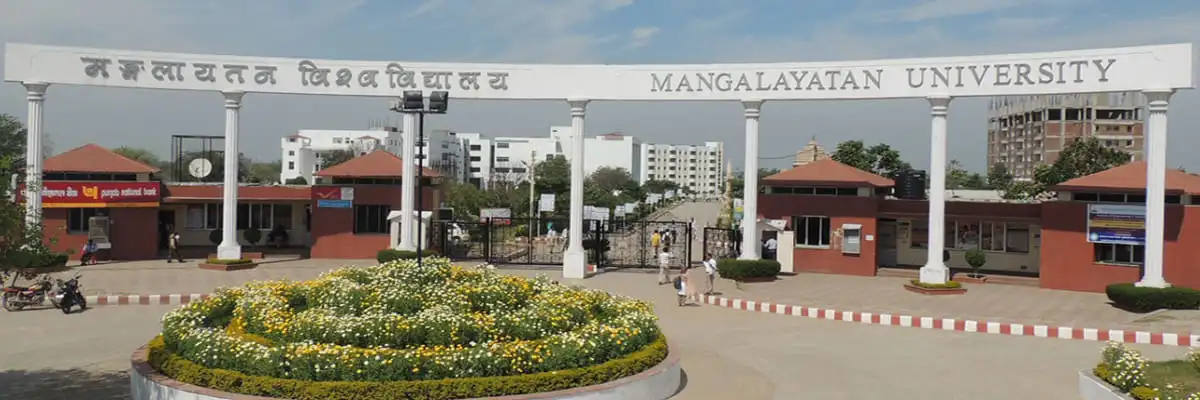
Mangalayatan University, Aligarh
Mangalayatan University is a UGC-recognized private university located in Aligarh, Uttar Pradesh, India. Known for its strong industry connections, cutting-edge curriculum, and commitment to technology-driven education, Mangalayatan University has established itself as one of central India's premier higher education institutions.
The university's vision is to foster academic excellence, industry readiness, and global competitiveness among its graduates — making it an ideal partner for EasyShiksha's mission of accessible, quality online education.
EasyShiksha has signed an MoU with Mangalayatan University to facilitate applications for various university programs and jointly offer B.Voc programs. All degrees and certifications under these programs will be awarded by Mangalayatan University. The EasyShiksha team will provide complete assistance and support throughout the admission and program process.
Mangalayatan University, Uttar Pradesh
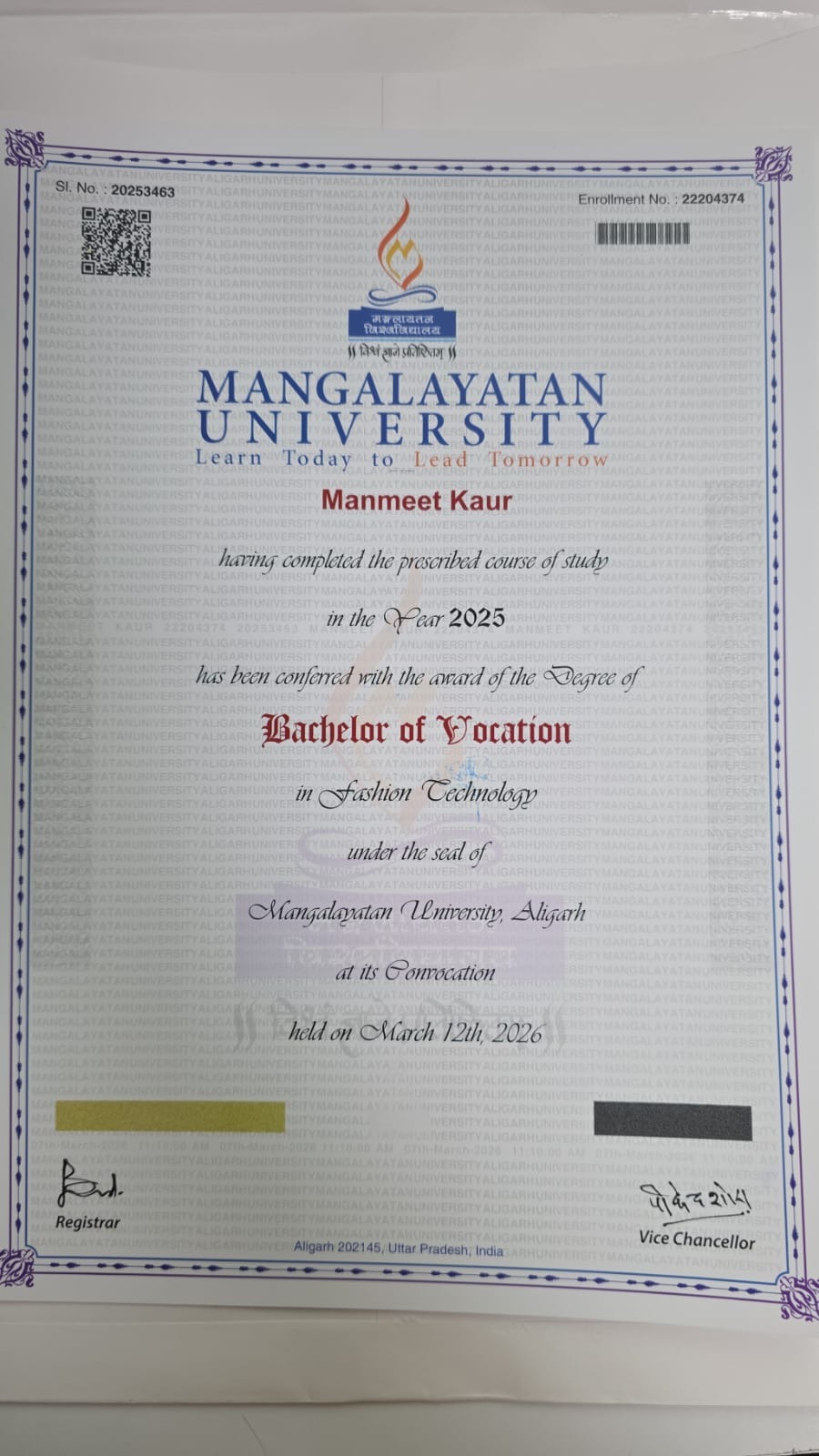
Sample Degree
Documents
Media Gallery
Frequently Asked Questions
Mangalayatan University is located at 33rd Milestone, Aligarh-Mathura Highway, Beswan, Aligarh, Uttar Pradesh, India. The campus is situated in close proximity to the Yamuna Expressway and the cities of Aligarh and Mathura.
Mangalayatan University was established in 2006 under the Mangalayatan University, Uttar Pradesh Act, 2006. The University states that it has the right to confer degrees under Sections 2(f) and 22(1) of the UGC Act.
Yes. Mangalayatan University states that it is recognized by the University Grants Commission (UGC) and was established through an Act of the Uttar Pradesh State Legislature. The University also lists NAAC A+ accreditation among its recognitions.
Yes. The University states that it is recognized by UGC-DEB for Open and Distance Learning (ODL) and is entitled by the UGC to offer online degree programmes. It also states that its online programmes are approved by AICTE.
Mangalayatan University offers programmes across multiple academic levels, including UG, PG, Diploma, PG Diploma and PhD. Its programme portfolio covers areas such as Engineering & Technology, Computer Applications, Management, Agriculture, Biotechnology, Pharmacy, Physiotherapy, Nursing, Journalism & Mass Communication and other disciplines.
Depending on the programme, applicants may be required to provide Class 10 and Class 12 certificates and marksheets, graduation/post-graduation marksheets where applicable, competitive examination rank card where applicable, migration/transfer certificate and recent passport-size photographs. Original documents may be required for verification.
Yes. The University states that students can apply for an education loan through banks, subject to the bank's eligibility criteria.
The M.Voc in Hospitality & Tourism Management is a postgraduate vocational program focused on advanced knowledge and practical skills across tourism, hospitality operations, food and beverage management, front office and housekeeping, leadership, finance, marketing, events, research and related areas. The program consists of four semesters and 120 total credits.
The curriculum includes subjects such as Global Tourism, Hospitality & Society; Integrated Food Production & Safety Management; Front Office & Housekeeping Protocols and Systems; Strategic Organizational Behavior & Leadership; Data Analysis, Research Methodology & Presentation; Entrepreneurship Development & Marketing Strategy; Financial Accounting & Cost Analysis for Hospitality; Human Resource & Production Management Leadership; Strategic Event, Crisis & Restaurant Management; and Strategic Management Dissertation, along with practical and industry-oriented components.
Yes. The curriculum includes Industry Internship - I (Field & Corporate Exposure), Intensive Workshop & Field Visits (Practical Application), Strategic Management Dissertation, and Industry Internship - II (On Job Training). Research methodology and data analysis are also included in the curriculum.
Students can develop skills related to hospitality operations, tourism management, food and beverage service, food safety, front office and housekeeping, leadership, communication, data analysis, financial management, marketing, entrepreneurship, human resources, event management, crisis management and research.
Graduates can explore career areas in hospitality operations, tourism, food and beverage management, front office and housekeeping, events, restaurants, revenue management, finance, marketing, human resources, entrepreneurship and hospitality/tourism research. Career options depend on individual skills, experience and employer requirements.