


















D.Voc in Event Management
Program Overview
The Diploma Event Management program at Mangalayatan University is a 1-year Diploma program structured across two semesters and carrying a total of 54 credits. The curriculum focuses on the planning, marketing, accounting, communication, production and execution aspects of events. It combines event-specific management knowledge with professional skills required for working with clients, vendors, sponsors, teams and other event stakeholders.
In Semester I, students are introduced to Persona Management, Event Marketing, Event Accounting, Computer Fundamentals, Special Events: Wedding Planning, Event Communication, and Project Report – I (Practical). These subjects cover personal presentation, professional etiquette, audience analysis, event branding, digital marketing, sponsorship, budgeting, accounting records, computer applications, wedding planning, communication, public relations and presentation skills.
Semester II develops further event-management capabilities through Event Planning, Cost and Management Accounting, Event Production, Event Catering, Business Communication, Marketing Management, and Industrial Training and Project Report – II (Practical). Students study event concept development, budgeting, resource management, production, stage and lighting, event catering, communication, marketing strategies, digital marketing and practical industry exposure.
Overall, the curriculum supports the development of skills in event planning, event marketing, budgeting and cost control, production coordination, catering management, client communication, vendor management, digital tools, professional presentation, risk management and event execution. The program also includes project work and industrial training, giving students opportunities to apply the concepts covered in the curriculum in practical event-management contexts.
Eligibility Criteria
The minimum eligibility for admission is 10+2 (in any stream) or equivalent or a two-year ITI Diploma after Class 10th or a three-year Polytechnic Diploma after Class 10th.
Curriculum
The first semester introduces students to the fundamental professional, marketing, financial, technological and communication skills required in event management. It also includes a dedicated focus on wedding planning and a practical project component. Semester I carries 26 credits.
1. Persona Management
Persona Management introduces students to personal and professional presentation in the event-management industry. The subject covers self-awareness, grooming, communication, etiquette, leadership and interpersonal skills required when interacting with clients, guests and event teams.
Key Topics:
- Persona, self-awareness and self-image
- Personality traits and behavioral patterns
- Personal and professional image
- First impressions and body language
- SWOT analysis for personal development
- Personal grooming and hygiene
- Professional dress code and attire
- Presentation skills
- Etiquette and manners
- Verbal, non-verbal, written and visual communication
- Interpersonal relationships and teamwork
- Cross-cultural communication
- Business etiquette and networking
- Dining etiquette and social behavior
- Stress and emotional management
- Handling challenging guests and VIPs
- Emotional intelligence
- Leadership and teamwork
- Time management and goal setting
- Continuous self-improvement and adaptability
2. Event Marketing
Event Marketing introduces the principles and processes involved in marketing events. Students learn about market research, audience segmentation, event branding, promotional activities, digital marketing, sponsorship and revenue generation.
Key Topics:
- Meaning and scope of event marketing
- Importance of marketing in the event industry
- Events as marketing tools
- Event marketing process and life cycle
- Market research
- Target-market identification
- Audience segmentation
- Consumer behavior
- Competitor analysis and benchmarking
- Event positioning
- Event branding and brand identity
- Advertising and promotional mix
- Media partnerships and public relations
- Social media and digital promotion
- Influencer and content marketing
- Email campaigns and online advertising
- SEO and event promotion
- Digital marketing analytics and ROI
- Sponsorship proposals and agreements
- Co-branding and partnerships
- Ticketing, merchandising and collaborations
3. Event Accounting
Event Accounting develops foundational accounting and financial-management knowledge relevant to event operations. Students learn bookkeeping, event budgeting, cost control, financial statements, reporting and the use of accounting software.
Key Topics:
- Accounting and finance in event management
- Basic accounting terms and principles
- Types of accounts and accounting concepts
- Financial management for events
- Journal entries and ledger posting
- Trial balance
- Cash book, purchase book and sales book
- Petty cash management
- Vendor and client accounts
- Event budgeting
- Fixed and variable costs
- Budget monitoring and variance analysis
- Cost-control strategies
- Contingency planning
- Income and expenditure statements
- Profit and loss account
- Balance sheet
- Cash flow and fund flow analysis
- Financial reporting
- Basic taxation and compliance considerations
- Tally, QuickBooks and Excel-based systems
- Financial reports and invoices
- Vendor payments and client billing
- Audit preparation and financial documentation
4. Computer Fundamentals
Computer Fundamentals provides basic computer and digital skills applicable to business and event-management operations. The course covers computer systems, office applications, internet use, data management, security and event-management technology.
Key Topics:
- Computer fundamentals and features
- Hardware and software
- Input, output and storage devices
- Operating systems
- Windows and basic Linux overview
- Computers in event management
- MS Word
- MS Excel
- MS PowerPoint
- MS Outlook
- Event budgets and financial tracking
- Presentation and report creation
- Internet and networking basics
- Email and online tools
- Cloud storage
- Online research
- Data security
- Digital collaboration tools
- Data privacy and cyber safety
- File organization and backup
- Viruses, phishing and malware
- Vendor, client and participant databases
- Event-management software and CRMs
- Reports and analytics for post-event evaluation
5. Special Events: Wedding Planning
Special Events: Wedding Planning focuses on the planning and management of weddings as a specialized event category. Students study wedding concepts, budgeting, logistics, décor, vendor coordination, event execution, marketing and professional ethics.
Key Topics:
- Meaning, importance and scope of wedding planning
- Traditional, destination, theme-based and fusion weddings
- Role and responsibilities of a wedding planner
- Wedding industry and client expectations
- Wedding planning process
- Wedding budgeting
- Venue, décor, catering and entertainment costs
- Logistics and scheduling
- Vendor selection and negotiation
- Transportation and accommodation
- Guest arrangements
- Wedding décor and color themes
- Lighting and floral arrangements
- Theme development
- Stage setup and table settings
- Sustainable and eco-friendly wedding ideas
- Vendor coordination
- Contracts and agreements
- Rehearsals and event flow
- Crisis handling and last-minute changes
- On-site coordination
- Wedding marketing and portfolio development
- Social media promotion
- Client relationship management
- Cultural sensitivity
- Professional ethics and confidentiality
6. Event Communication
Event Communication develops communication skills specifically for event-management environments. The subject covers client and vendor communication, written and digital communication, public relations, media handling, presentations and public speaking.
Key Topics:
- Fundamentals of communication
- Verbal, non-verbal, written and visual communication
- Communication barriers
- Communication flow in event organizations
- Team coordination and client relations
- Interpersonal communication
- Listening, questioning and feedback
- Client, vendor, sponsor and team communication
- Conflict management
- Emotional intelligence and empathy
- Professional emails and proposals
- Event briefs
- Press releases and invitations
- Promotional content
- Event reports and post-event summaries
- Digital communication tools
- Social media communication
- Public relations and media handling
- Press conferences and media coverage
- Crisis communication
- Reputation management
- Presentation and public speaking
- Voice modulation and body language
- Audience interaction and Q&A
7. Project Report – I (Practical)
Project Report – I (Practical) is included in Semester I as a 2-credit practical component. The curriculum lists the subject but does not provide a separate unit-wise syllabus or specific project topic.
Download Syllabus
The second semester advances students into the operational and managerial aspects of event management. It covers event planning, cost and management accounting, production, catering, business communication, marketing management and practical industrial training. Semester II carries 28 credits.
1. Event Planning
Event Planning introduces the complete event-planning process, from understanding client requirements and developing concepts to budgeting, logistics, risk management, execution and post-event evaluation.
Key Topics:
- Concept, nature and scope of event planning
- Corporate, social, cultural, sports and institutional events
- Role of an event planner
- Event planning stages
- Creativity, organization and time management
- Client requirements and event objectives
- Event concepts and creative themes
- Feasibility studies
- Event proposals
- Venue selection and site inspection
- Layout and seating arrangements
- Event ambience
- Budget preparation
- Resource allocation
- Logistics and manpower management
- Vendor selection and coordination
- Procurement and payment schedules
- Event timelines and checklists
- Event operations
- Risk assessment
- Contingency planning
- Crowd control and safety
- Emergency response
- Legal and statutory requirements
- Event evaluation and feedback
- Event reports and documentation
- Client debriefing and relationship management
2. Cost and Management Accounting
Cost and Management Accounting develops knowledge of cost classification, budgeting, standard costing, marginal costing, break-even analysis and managerial decision-making in event operations.
Key Topics:
- Cost and management accounting
- Financial, cost and management accounting
- Cost control in event management
- Cost terminology and classification
- Direct and indirect costs
- Material, labor and overhead costs
- Fixed, variable and semi-variable costs
- Cost allocation and apportionment
- Cost absorption
- Cost sheets and statements
- Budgetary control
- Master, flexible, cash and sales budgets
- Standard costing
- Variance analysis
- Performance monitoring
- Marginal costing
- Contribution and P/V ratio
- Margin of safety
- Break-even analysis
- Cost-volume-profit relationships
- Pricing and profitability decisions
- Make-or-buy decisions
- Accept-or-reject decisions
- Financial planning and control
- Management reporting
- Event performance analysis
3. Event Production
Event Production focuses on the technical and operational side of producing events. Students study stage, sound and lighting, infrastructure, logistics, production technology, safety and coordination with technical teams and vendors.
Key Topics:
- Meaning and scope of event production
- Role of production in event success
- Event production process
- Production timelines and deliverables
- Creative, technical and logistical coordination
- Stage setup and design
- Sound systems
- Lighting design and techniques
- Audio-visual elements
- Technical vendors and production crews
- Venue layout
- Seating, signage and backstage arrangements
- Power supply and electrical safety
- Backup systems
- Transport and equipment movement
- Material handling
- On-site management
- Troubleshooting
- Event production software
- Scheduling tools
- LED walls and projection mapping
- Digital media and live streaming
- Hybrid and virtual event production
- Production schedules
- Team and vendor management
- Health and safety
- Risk management
- Legal permissions and licenses
- Post-event dismantling and evaluation
4. Event Catering
Event Catering introduces catering operations for different types of events, including menu planning, food production, service, beverage management, hygiene, sustainability and vendor coordination.
Key Topics:
- Role and importance of catering in events
- On-premise and off-premise catering
- Outdoor, institutional and specialty catering
- Catering and guest experience
- Role of a catering manager
- Catering operations for different events
- Menu planning
- Theme, budget, audience and seasonal considerations
- À la carte, buffet, plated and cocktail menus
- Wedding and corporate-event menus
- Dietary preferences and restrictions
- Cultural considerations
- Food and beverage costing and pricing
- Food production and kitchen organization
- Food preparation and presentation
- Buffet, silver service and banquet service
- Kitchen and service-team coordination
- Large-scale catering logistics
- Beverage classification
- Alcoholic and non-alcoholic beverages
- Beverage service procedures
- Bar setup
- Alcohol-service licensing considerations
- Beverage cost control
- Food hygiene and sanitation
- Waste management
- Sustainability in catering
- Food storage and transportation
- Caterer and supplier coordination
- Quality control and guest feedback
5. Business Communication
Business Communication develops professional communication skills for business and event-management settings. Students learn written communication, client interaction, presentations, digital communication and professional etiquette.
Key Topics:
- Meaning and importance of business communication
- Principles of effective communication
- Verbal, non-verbal and written communication
- Communication barriers
- Client relations
- Business correspondence
- Letters, memos and email
- Professional proposals and quotations
- Business reports
- Notices and circulars
- Meeting agendas and minutes
- Business writing
- Press releases
- Client communication
- Oral communication
- Meetings and presentations
- Listening and questioning
- Feedback techniques
- Client interviews and negotiations
- Conflict handling
- Team communication
- Public speaking
- Presentation structure and delivery
- Voice modulation and body language
- Audience engagement
- Digital communication platforms
- Virtual meetings and online collaboration
- Digital communication etiquette
- Cross-cultural communication
- Confidentiality and ethical communication
6. Marketing Management
Marketing Management introduces general marketing principles and their application to events and services. The subject covers market research, consumer behavior, product and pricing strategies, promotion, distribution and modern marketing trends.
Key Topics:
- Meaning and nature of marketing
- Core marketing concepts
- Needs, wants and demand
- Marketing mix and 4Ps
- Marketing environment
- Marketing and event success
- Market research
- Data collection and analysis
- Consumer behavior
- Buying motives
- Market segmentation
- Targeting and positioning
- Product and product life cycle
- Product differentiation and branding
- Pricing objectives and policies
- Pricing methods
- Pricing strategies for services and events
- Promotion mix
- Advertising
- Sales promotion
- Public relations
- Personal selling
- Integrated marketing communications
- Event promotion
- Print, electronic and digital media
- Distribution channels
- Marketing intermediaries
- Event sponsorship
- Digital marketing
- Social media marketing
- Influencer collaborations
- Green marketing
- Ethical marketing
- Customer relationship management
- Experiential and content marketing
7. Industrial Training and Project Report – II (Practical)
Industrial Training and Project Report – II (Practical) is the practical component listed in Semester II and carries 4 credits. It combines industrial training with project-report work.
Fee Structure
Admission Process
Students can apply for the DIPLOMA Event Management programme through EasyShiksha. The complete application process is designed to make admission simple and convenient for eligible students.
Step 1: Click on Apply Now
Click the Apply Now button on the DIPLOMA Event Management programme page and begin your application through EasyShiksha.
Step 2: Complete Personal Information
Fill in the required personal, contact and academic details accurately in the application form.
Step 3: Upload Required Documents
Upload the required documents for eligibility and admission verification as specified during the application process.
Step 4: Pay Application Fee
Pay the applicable application fee through the available online payment options to submit your application and initiate the admission process.
Step 5: Application Review
The EasyShiksha team reviews your application and submitted documents to verify your eligibility and ensure that the required information and documents have been provided.
Step 6: University Enrollment
Once the application is successfully reviewed and the student is found eligible, EasyShiksha facilitates the enrollment process with Mangalyatan University.
Step 7: LMS Access
After successful enrollment, the student is provided access to the Learning Management System (LMS) to begin their academic journey and access the available learning resources.
Start Your Application
Ready to begin your journey in Software Development? Click Apply Now to submit your application through EasyShiksha.
Career & Placements
The Diploma Event Management curriculum covers event planning, marketing, accounting, production, catering, communication, wedding planning, technology, cost management and practical training. Based on these curriculum areas, students can explore opportunities across event-management agencies, wedding planning, corporate events, production operations, marketing and related service environments.
Event Planning & Management
- Event Coordinator – Support the planning, scheduling, coordination and execution of events.
- Event Planning Assistant – Assist with event concepts, venue coordination, timelines, vendors and event documentation.
- Event Operations Assistant – Support the operational activities required before and during events.
- Event Executive – Assist with client requirements, event planning, coordination and execution activities.
Wedding & Special Events
- Wedding Planning Assistant – Support wedding planning, vendor coordination, guest arrangements, scheduling and event execution.
- Wedding Coordinator – Assist in coordinating wedding functions, vendors, timelines and on-site activities.
- Special Events Coordinator – Support planning and execution for special and social events.
Event Marketing & Promotion
- Event Marketing Executive – Support event promotion, audience engagement and marketing activities.
- Digital Event Marketing Assistant – Work with digital platforms, social media, email campaigns and online promotional activities.
- Event Promotion Coordinator – Assist with promotional campaigns, media partnerships and audience-building activities.
- Sponsorship Coordinator – Support sponsor identification, proposals, partnerships and event revenue activities.
Event Production & Operations
- Event Production Assistant – Support event production activities involving technical, creative and logistical teams.
- Production Coordinator – Assist with production schedules, vendors, equipment and event operations.
- Stage & Production Support Professional – Assist with stage, sound, lighting and related production coordination.
- Event Logistics Assistant – Support venue setup, transportation, equipment movement and material handling.
Catering & Hospitality
- Event Catering Coordinator – Assist with catering arrangements, menu planning, vendors and service coordination.
- Catering Operations Assistant – Support food production, service operations and event catering logistics.
- Food & Beverage Event Assistant – Assist with beverage management, service procedures and guest experience.
Communication & Client Relations
- Client Relations Executive – Support communication and coordination with clients and event stakeholders.
- Event Communication Executive – Assist with proposals, event briefs, invitations, reports and digital communication.
- Public Relations Assistant – Support media relations, press communication and event-related PR activities.
Entrepreneurship & Freelancing
- Event Planning Entrepreneur – Explore independent event-planning services based on relevant skills and experience.
- Wedding Planning Entrepreneur – Develop independent wedding-planning services.
- Event Promotion Freelancer – Provide event marketing and digital promotion services.
- Event Coordination Freelancer – Offer coordination and support services for suitable events.
These represent potential career areas based on the curriculum. Actual roles and responsibilities may vary according to an individual's skills, experience, employer requirements and work environment.
Mangalayatan University, Aligarh
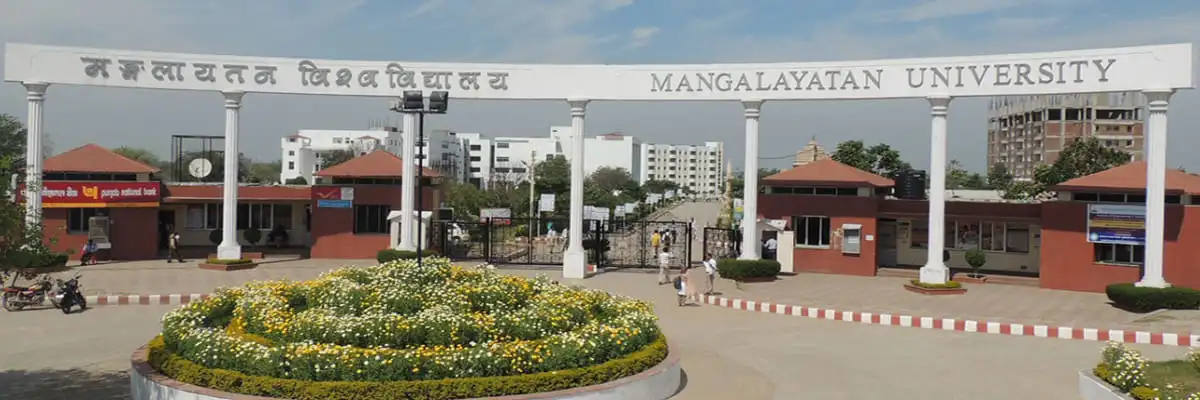
Mangalayatan University is a UGC-recognized private university located in Aligarh, Uttar Pradesh, India. Known for its strong industry connections, cutting-edge curriculum, and commitment to technology-driven education, Mangalayatan University has established itself as one of central India's premier higher education institutions.
The university's vision is to foster academic excellence, industry readiness, and global competitiveness among its graduates — making it an ideal partner for EasyShiksha's mission of accessible, quality online education.
EasyShiksha has signed an MoU with Mangalayatan University to facilitate applications for various university programs and jointly offer B.Voc programs. All degrees and certifications under these programs will be awarded by Mangalayatan University. The EasyShiksha team will provide complete assistance and support throughout the admission and program process.
Mangalayatan University, Uttar Pradesh
Sample Degree
Documents
Media Gallery
Frequently Asked Questions
Mangalayatan University is located at 33rd Milestone, Aligarh-Mathura Highway, Beswan, Aligarh, Uttar Pradesh, India. The campus is situated in close proximity to the Yamuna Expressway and the cities of Aligarh and Mathura.
Mangalayatan University was established in 2006 under the Mangalayatan University, Uttar Pradesh Act, 2006. The University states that it has the right to confer degrees under Sections 2(f) and 22(1) of the UGC Act.
Yes. Mangalayatan University states that it is recognized by the University Grants Commission (UGC) and was established through an Act of the Uttar Pradesh State Legislature. The University also lists NAAC A+ accreditation among its recognitions.
Yes. The University states that it is recognized by UGC-DEB for Open and Distance Learning (ODL) and is entitled by the UGC to offer online degree programmes. It also states that its online programmes are approved by AICTE.
Mangalayatan University offers programmes across multiple academic levels, including UG, PG, Diploma, PG Diploma and PhD. Its programme portfolio covers areas such as Engineering & Technology, Computer Applications, Management, Agriculture, Biotechnology, Pharmacy, Physiotherapy, Nursing, Journalism & Mass Communication and other disciplines.
Depending on the programme, applicants may be required to provide Class 10 and Class 12 certificates and marksheets, graduation/post-graduation marksheets where applicable, competitive examination rank card where applicable, migration/transfer certificate and recent passport-size photographs. Original documents may be required for verification.
Yes. The University states that students can apply for an education loan through banks, subject to the bank's eligibility criteria.
Mangalayatan University has a 70+ acre campus in Aligarh, Uttar Pradesh.
Mangalayatan University holds an A+ accreditation grade from the National Assessment and Accreditation Council (NAAC).
Yes. Mangalayatan University carries AICTE approval for its technical programmes.
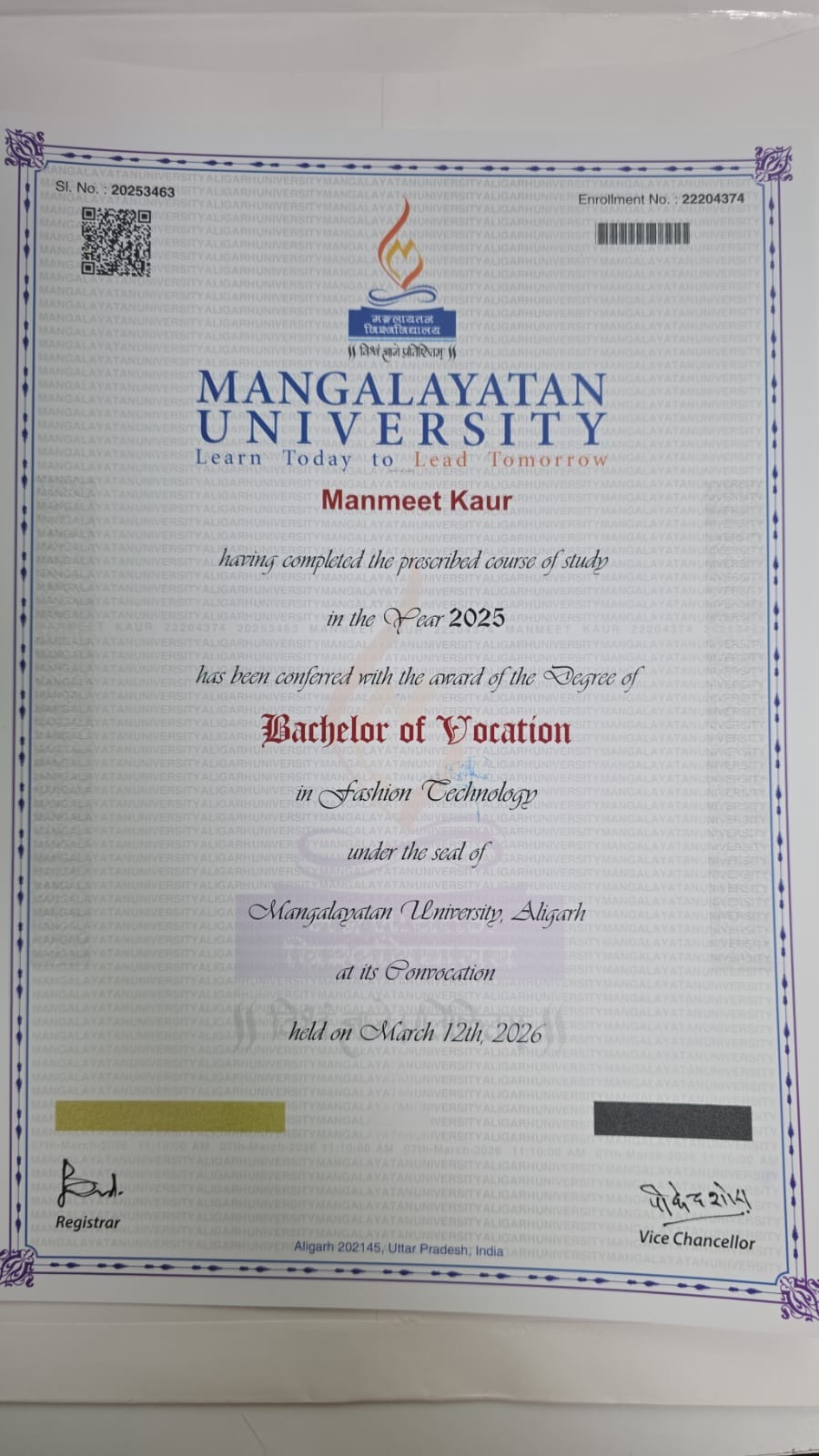
The degree certificate is issued and signed directly by Mangalayatan University, rather than by EasyShiksha or another third-party platform.
The degree certificate is personalised with the student's name, programme, and completion date and carries the university's official signature and seal.
Yes. The university's campus hosts optional immersion sessions associated with select Executive and Hybrid-mode programmes.
Students can select a Mangalayatan University programme, submit their personal details and required documents, pay the application fee, and proceed through the university's application review process.
Yes. Applications submitted through EasyShiksha can be monitored through the dashboard, where applicants can view status updates such as Under Review and Accepted along with their reference ID.
The Diploma Event Management at Mangalayatan University is a 1-year program consisting of two semesters and a total of 54 credits. It covers event planning, marketing, accounting, communication, production, catering, wedding planning and related professional skills.
The curriculum includes Persona Management, Event Marketing, Event Accounting, Computer Fundamentals, Special Events: Wedding Planning, Event Communication, Event Planning, Cost and Management Accounting, Event Production, Event Catering, Business Communication and Marketing Management. It also includes Project Report – I (Practical) and Industrial Training and Project Report – II (Practical).
Yes. The curriculum includes Project Report – I (Practical) in Semester I and Industrial Training and Project Report – II (Practical) in Semester II. The syllabus does not specify the particular project topics, training organization or training duration.
Students can develop skills in event planning, event marketing, budgeting and cost control, vendor coordination, event production, catering management, communication, public speaking, client relations, digital tools, sponsorship, risk management and event execution. The curriculum also addresses wedding planning, digital marketing and modern event-production technologies.
Students can explore opportunities in event planning and coordination, wedding planning, event marketing, event production, catering, logistics, client relations and public relations. Potential roles include Event Coordinator, Event Planning Assistant, Wedding Planning Assistant, Event Marketing Executive, Event Production Assistant, Catering Coordinator and Client Relations Executive.