
M.Voc (PG Diploma) in Event Management
Program Overview
The Post Graduate Diploma (Event Management) at Mangalayatan University is a one-year postgraduate diploma program structured into Semester I and Semester II. The curriculum provides comprehensive academic exposure to event planning, event marketing, event accounting, event communication, event production, management, event design, catering, marketing management, budgeting, costing and logistics. The course structure lists core subjects across both semesters, covering the major functional areas involved in event management.
Semester I focuses on foundational and operational aspects of event management. Students study Persona Management, Event Marketing, Event Accounting, Computer Fundamentals, Special Events – Wedding Planning, Event Communication, Event Planning, and Event Production. These subjects cover communication and presentation, personal grooming, leadership, marketing, accounting, computer applications, wedding planning, professional communication, event planning, venue selection, budgeting, event coordination and event production.
Semester II expands the curriculum into management, financial, creative, catering, communication, marketing and logistics areas. The subjects are Fundamentals of Management, Cost & Management Accounting, Event Concepts & Designing, Event Catering, Business Communication, Marketing Management, Budgeting and Costing of Events, and Event Logistics. Students are introduced to management principles, cost control, event design, catering operations, business communication, marketing strategies, event financing, pricing, sponsorship and logistics coordination.
The curriculum develops knowledge and skills related to event planning, event communication, marketing, budgeting, cost management, event production, wedding planning, venue and logistics management, catering coordination, business communication and event design. It also includes topics such as risk management, sponsorship, vendor management, crisis response, post-event evaluation and ROI, providing broad academic coverage of the event-management process.
Eligibility: The uploaded syllabus does not specify an admission eligibility requirement. Therefore, no specific qualification, percentage or prior academic requirement has been assumed.
Eligibility Criteria
The minimum eligibility for admission to the PG Diploma program is a relevant undergraduate degree or equivalent qualification from a recognized institution, subject to the university's admission requirements.
Approval Details
MHRD, Government of India and UGC
Curriculum
Semester I introduces students to the communication, marketing, financial, technological, planning and production aspects of event management. It includes eight core courses covering personal and professional development, event marketing, accounting, computer fundamentals, wedding planning, communication, event planning and event production.
1. Persona Management
Course Code: PGDEV-101
Course Type: Core Course
Persona Management develops communication, presentation and personal-development skills relevant to professional environments. The syllabus covers English communication, pronunciation, reading, listening, spoken English, writing, personal grooming, health and nutrition, time management, public speaking and leadership.
Key Topics:
- Purpose and Process of Communication
- English Communication
- Phonetics and Pronunciation
- Reading and Listening Skills
- Grammar and Vocabulary
- Writing and Oral Expression
- Speaking Practice and Voice Control
- Personal Grooming
- Health and Nutrition
- Time Management
- Public Speaking
- Audience Analysis
- Speech Preparation and Delivery
- Leadership Theories and Models
- Leadership Styles
- Teamwork
- Problem-Solving and Decision-Making
- Ethics and Social Responsibility
- Leading Change and Innovation
2. Event Marketing
Course Code: PGDEV-102
Course Type: Core Course
Event Marketing introduces students to marketing concepts and their application in event-related activities. The subject covers marketing processes, market analysis, customer relationship management, marketing mix, budgeting, branding, market segmentation, social media marketing and event promotion.
Key Topics:
- Nature and Process of Marketing
- Market Analysis
- Customer Relationship Management
- Modern Marketing Principles
- Marketing Functions
- Integrated Marketing
- Marketing Mix
- Product, Price, Place and Promotion
- Marketing Budget
- Marketing Control
- Brand Promotion
- Catchment Area
- Marketing Environment
- Market Segmentation
- Event Life Cycle
- Social Media Marketing
- Branding and Advertising
- Event Promotions
- ATL Activities
- BTL Activities
3. Event Accounting
Course Code: PGDEV-103
Course Type: Core Course
Event Accounting introduces accounting principles and financial concepts relevant to event-related activities. Students learn about accounting equations, journal and cash-book preparation, ledgers, trial balance, depreciation, final accounts, budgeting, profit and loss, break-even analysis, cash flow and marginal costing.
Key Topics:
- Basic Accounting Terminology
- Accounting Equation
- Dual Aspect of Accounting
- Debit and Credit Rules
- Journal and Cash Book
- Banking Transactions
- Ledger and Trial Balance
- Stock Valuation
- Depreciation
- Reserves and Provisions
- Final Accounts
- Issue of Shares and Debentures
- Bonus Shares and Rights Issue
- Redemption of Preference Shares and Debentures
- Accounting Principles and Concepts
- Budget Sheets
- Profit and Loss Statement
- Break-Even Point
- Cash Flow Analysis
- Cost Sheet
- Marginal Costing
- Rectification of Errors
- Bank Reconciliation Statement
- Bills of Exchange and Promissory Notes
4. Computer Fundamentals
Course Code: PGDEV-104
Course Type: Core Course
Computer Fundamentals provides basic knowledge of computer systems, software, hardware, memory, operating systems, databases, MS Office, networking and Internet applications.
Key Topics:
- Computer Characteristics
- Hardware and Software
- Evolution and Generations of Computers
- Analog and Digital Computers
- General-Purpose and Special-Purpose Computers
- Applications and Limitations of Computers
- Number Systems
- Types of Software
- Smartphone Uses
- Computer Peripherals
- Input and Output Devices
- Primary and Secondary Memory
- RAM, ROM, PROM, EPROM and EEPROM
- Operating Systems
- Databases
- MS Word
- MS Excel
- MS PowerPoint
- Computer Networks
- LAN, WAN and MAN
- Information Systems
- Internet and World Wide Web
- HTTP and FTP
5. Special Events – Wedding Planning
Course Code: PGDEV-105
Course Type: Core Course
Special Events – Wedding Planning focuses on planning and organizing weddings and other social events. The syllabus covers wedding concepts, venue and budget planning, wedding themes, hospitality, client management, vendor management and different wedding-related services.
Key Topics:
- Introduction to Wedding Planning and Special Events
- Types of Special Events and Weddings
- Arranging Special Events
- Arranging Weddings
- Social Events
- Life Cycle Events
- History of Wedding
- Scope of Wedding Planning
- Wedding Concepts
- Date and Venue Selection
- Event Budgeting
- Destination Weddings
- Inter-City Weddings
- Cruise Weddings
- Wedding Checklist
- Wedding Designing
- Wedding Planning and Budgeting
- Wedding Planning Themes
- Wedding Rituals
- Banquet Management
- Hindu, Marwari and Jain Weddings
- North Eastern Weddings
- NRI Weddings
- Western Weddings
- Theme and Fairy-Tale Weddings
- Hospitality Management
- RSVP
- Client Management
- Vendor Management
- Vendor Checklists
- Light and Sound Management
- Technical Equipment Management
- Wedding Insurance
- Layouts and Props
- Fabrication
- Catering
- Transport
- Photography
- Entertainment
6. Event Communication
Course Code: PGDEV-106
Course Type: Core Course
Event Communication develops professional communication and interpersonal abilities relevant to event environments. The subject covers communication processes, interpersonal skills, body language, professional etiquette, job-search skills, interviews and presentation skills.
Key Topics:
- Professional Communication
- Event Planning and Communication
- Communication Process
- Communication Barriers
- Audience Analysis and Segmentation
- Types of Communication
- Professional Communication Strategies
- Written Communication
- Verbal and Non-Verbal Communication
- Interpersonal Skills
- Active Listening
- Conversation Skills
- Emotion Handling
- Body Language
- Gestures and Postures
- Eye Contact and Facial Expressions
- Voice Control and Modulation
- Professional Etiquette
- Grooming Etiquette
- Dining Etiquette
- Email Etiquette
- Telephone Etiquette
- Job Search Skills
- Career in Events
- Job Portals
- Resume and CV Writing
- Cover Letter
- Interview Training
- Mock Interviews
- Presentation Skills
- Stage Confidence and Stress Management
7. Event Planning
Course Code: PGDEV-107
Course Type: Core Course
Event Planning covers the principles and practices involved in planning and managing events, meetings, conferences and conventions. Students study event objectives, design, venue selection, logistics, promotion, budgeting, sponsorship, risk management, event execution and post-event evaluation.
Key Topics:
- Introduction to Event Planning and Management
- Types of Events
- Event Management Process
- Event and Meeting Planning
- Event Objectives
- Program Planning
- Preliminary Planning
- Budgeting and Financial Management
- Site and Venue Selection
- Event Promotion
- Marketing and Advertising
- Event Themes and Concepts
- Event Design Elements
- Decor, Lighting and Audio/Visual
- Venue Logistics
- Contract Negotiations
- Site Visits
- Housing and Transportation
- Food and Beverages
- Communication Technology
- Registration Procedures
- Marketing and Communication Plans
- Social Media Promotion
- Branding and Sponsorship
- Risk Assessment and Management
- Insurance, Permits and Contracts
- Staffing and Volunteer Management
- Event Setup and Breakdown
- On-Site Management
- Crisis Response
- Post-Event Evaluation
- ROI Measurement
- Continuous Improvement
8. Event Production
Course Code: PGDEV-108
Course Type: Core Course
Event Production introduces the production requirements involved in staging and executing events. It covers event concepts, themes, manpower coordination, set design, stage setup, fabrication, lighting, sound, LED setups, backstage management, vendor handling and on-site event management.
Key Topics:
- Introduction to Event Production
- Event Production Concepts
- Event Themes
- Support Staff and Manpower Coordination
- Set Designing
- Stage Setups
- Fabrication
- Light Setup and Arrangements
- Backstage Management
- Sound Setups
- LED Setups
- Vendor Handling
- Role of Event Production in Event Management
- On-Site Management
- Communication and Coordination
- Handling Unforeseen Challenges
- Emergency Management
- Post-Event Evaluation
- Pre-Production Analysis
- Post-Production Analysis
- In-House Production
- Outsourced Production Houses
Download Syllabus
Semester II develops management, financial, creative, catering, communication, marketing, budgeting and logistics knowledge. The semester includes eight core courses covering management fundamentals, cost and management accounting, event design, catering, business communication, marketing management, event budgeting and logistics.
1. Fundamentals of Management
Course Type: Core Course
Fundamentals of Management introduces the principles and functions of management. The syllabus covers management concepts, planning, organizing, directing, leadership, motivation, communication and controlling.
Key Topics:
- Concepts of Management
- Objectives, Nature and Scope of Management
- Significance of Management
- Evolution of Management Thought
- Taylor, Weber and Fayol
- Planning
- Planning Process
- Planning Techniques
- Decision-Making
- Organizing
- Types of Organization
- Delegation of Authority
- Authority and Responsibility
- Centralization and Decentralization
- Span of Control
- Directing
- Coordination
- Leadership Styles
- Supervision
- Motivation and Motivation Theory
- Communication
- Controlling
- Principles and Techniques of Controlling
- Relationship Between Planning and Controlling
2. Cost & Management Accounting
Course Type: Core Course
Cost & Management Accounting focuses on accounting concepts used for decision-making, planning and control. The subject covers cost classification, cost behaviour, budgeting, cost control, costing of services and management accounting in event management.
Key Topics:
- Nature and Scope of Cost Accounting
- Cost Concepts and Classification
- Costing Methods and Techniques
- Installation of Costing Systems
- Cost Audit
- Direct and Indirect Costs
- Fixed and Variable Costs
- Cost Behaviour
- Event Budgeting
- Cost Control
- Costing of Services
- Management Accounting
- Application of Management Accounting in Event Management
3. Event Concepts & Designing
Course Type: Core Course
Event Concepts & Designing introduces the stages and creative components involved in event management. The course covers event research, design, planning, coordination and evaluation, along with event infrastructure, target audiences, event structure, sponsorship, budgeting and creative event design.
Key Topics:
- Five Stages of Event Management
- Research, Design, Planning, Coordination and Evaluation
- Definition and Objectives of Events
- Types of Events
- Leisure Events
- Cultural Events
- Organizational Events
- Personal Events
- Event Characteristics
- Event Infrastructure
- Core Concept and Core People
- Core Talent and Core Structure
- Event Process
- Clients and Target Audience
- Event Objectives
- Event Budgets
- Event Organizers
- Marketing Intelligence
- Event Structure
- Creative Parameters
- Media
- Pre-Event Planning
- Police Permissions and Security
- Event Designing
- Five C's of Event Conceptualization
- Costing and Safety Margins
- Sponsorship and Networking
- Brand Personality
- Event Execution
- Events as a Marketing Tool
- Brand Building
- Emerging Trends
- Destination Wedding Design
- Artist Nights
- DJ Nights
- Music Concerts
- Fairs and Carnivals
- Religious Festivals
- Social Events
4. Event Catering
Course Type: Core Course
Event Catering introduces students to the planning and management of catering operations for different events. The syllabus covers catering types, menu planning, dietary requirements, food costing, beverage service, event coordination, equipment, inventory, suppliers, sustainability and ethics.
Key Topics:
- Introduction to Event Catering
- Catering Industry
- Types of Catered Events
- Catering Roles and Responsibilities
- Menu Design and Development
- Dietary Restrictions and Accommodations
- Food Costing
- Pricing Strategies
- Food and Beverage Service
- Beverage Service
- Bar Setup and Operation
- Alcohol Laws and Regulations
- Client Needs and Expectations
- Event Logistics and Coordination
- Communication and Customer Service
- Equipment Selection and Maintenance
- Inventory Management
- Supplier and Vendor Relationships
- Environmental Sustainability
- Ethical Considerations
5. Business Communication
Course Type: Core Course
Business Communication develops communication skills for professional and business environments. It covers communication models, corporate communication, business correspondence, presentations, interviews, resume writing and communication in international and culturally sensitive situations.
Key Topics:
- Meaning and Objectives of Business Communication
- Forms of Communication
- Communication Models and Processes
- Principles of Effective Communication
- Corporate Communication
- Formal and Informal Communication
- Communication Networks
- Grapevine Communication
- Communication Barriers
- Group Discussions
- Mock Interviews
- Seminars
- Individual and Group Presentations
- Business Letters
- Bank and Insurance Correspondence
- Oral Communication
- Non-Verbal Communication
- Presentation Skills
- Survey Conducting
- Body Language
- Para Language
- Interviewing Skills
- Resume Writing
- Letters and Applications
- Modern Forms of Communication
- International Communication
- Cultural Sensitivity
6. Marketing Management
Course Type: Core Course
Marketing Management develops an understanding of marketing concepts and techniques and their application to marketing-management responsibilities. The syllabus covers marketing environment, segmentation, targeting, positioning, product management, pricing, distribution, promotion, public relations and emerging marketing trends.
Key Topics:
- Nature and Scope of Marketing
- Evolution of Marketing
- Marketing Environment
- Segmentation
- Targeting and Positioning
- Differentiation Strategies
- Marketing Organizations
- Marketing Research
- Product Management
- Product Levels and Classification
- New Product Development
- Product Differentiation
- Product Life Cycle
- Branding
- Packaging and Labelling
- Pricing Concepts
- Pricing Policies and Methods
- Distribution Channel Management
- Intermediaries
- Channel Structure
- Marketing Communication
- Advertising
- Sales Promotion
- Publicity
- Personal Selling
- Public Relations
- Direct Marketing
- Marketing Ethics
- E-Marketing
- E-Services
- Customer Relationship Management
- Viral Marketing
- Ambush Marketing
- Green Marketing
7. Budgeting and Costing of Events
Course Type: Core Course
Budgeting and Costing of Events focuses on financial planning and cost management for events. Students are introduced to event financing, cost control, budgeting, job and contract costing, event pricing, revenue generation and sponsorship.
Key Topics:
- Event Financing
- Financial Planning in Event Management
- Components of Event Financial Management
- Feasibility Study
- Financial Management Terminology
- Financial Challenges
- Sustainable Funding
- Cost Accounting
- Financial Accounting
- Management Accounting
- Financial Management
- Types of Costs
- Cost Control
- Cost Control Process
- Job Costing
- Contract Costing
- Service Costing
- Marginal Costing
- Break-Even Point
- Cost Reduction
- Event Budgeting
- Types of Budgets
- Budget Systems
- Budget Construction
- Budgeting Methods
- Budgetary Control
- Budget Reporting
- Financial Negotiations
- Event Pricing
- Ticket Pricing
- Pricing Strategies
- Cost-Oriented Pricing
- Cost-Plus Pricing
- Markup Pricing
- Event Revenue Generation
- Sponsorship
- Sponsorship Proposals
- Sponsorship Business Plans
- Sponsorship Strategy
- Legal Issues
8. Event Logistics
Course Type: Core Course
Event Logistics provides an in-depth understanding of logistics management associated with events. The syllabus covers accommodation, transportation, venues, technical facilities, event resources, equipment, conference materials and merchandise planning.
Key Topics:
- Concept and Significance of Event Logistics
- Nature and Elements of Event Logistics
- Hotel Room Booking
- Accommodation Arrangements
- Travel and Flight Arrangements
- Stakeholder and Guest Requirements
- Event Venue
- Venue Capacity and Location
- Venue Structure and Ventilation
- Accommodation and Transportation
- Boarding and Lodging
- Venue and Site Design
- Audio-Visual Production
- Budgeting and Negotiation
- Technical Design
- Health and Safety
- Event Coordination
- Run Charts
- Flight Booking for Artists and Guests
- Visa Assistance
- Hotel Booking
- Airport and Hotel Transfers
- Conference Facilities
- Sound and Lighting Equipment
- Audio-Visual Facilities
- Interpreters
- Catering Services
- Secretarial Support
- Badges and Name Plates
- Conference Kits
- Brochures and Posters
- Backdrops, Panels and Standees
- Event Logistics Policies
- Event Benchmarks and Standards
- Resource Collection
- Equipment Reservation
- Merchandise
- Merchandise Budget Planning
- Merchandise Assortment Planning
- Inventory
Fee Structure
Admission Process
Students can apply for the PG DIPLOMA Event Management programme through EasyShiksha. The complete application process is designed to make admission simple and convenient for eligible students.
Step 1: Click on Apply Now
Click the Apply Now button on the PG DIPLOMA Event Management programme page and begin your application through EasyShiksha.
Step 2: Complete Personal Information
Fill in the required personal, contact and academic details accurately in the application form.
Step 3: Upload Required Documents
Upload the required documents for eligibility and admission verification as specified during the application process.
Step 4: Pay Application Fee
Pay the applicable application fee through the available online payment options to submit your application and initiate the admission process.
Step 5: Application Review
The EasyShiksha team reviews your application and submitted documents to verify your eligibility and ensure that the required information and documents have been provided.
Step 6: University Enrollment
Once the application is successfully reviewed and the student is found eligible, EasyShiksha facilitates the enrollment process with Mangalyatan University.
Step 7: LMS Access
After successful enrollment, the student is provided access to the Learning Management System (LMS) to begin their academic journey and access the available learning resources.
Start Your Application
Ready to begin your journey in Software Development? Click Apply Now to submit your application through EasyShiksha.
Career & Placements
The Post Graduate Diploma (Event Management) curriculum covers event planning, marketing, communication, accounting, production, wedding planning, management, catering, budgeting, event design and logistics. The syllabus also specifically addresses career-related skills, including job portals, resume writing, CV writing, interviews and careers in events.
Based on the knowledge areas covered by the curriculum, students can explore opportunities in the following areas, depending on their skills and experience.
Event Planning and Coordination
- Event Planning Executive – Supports the planning, organization and coordination of events.
- Event Coordinator – Coordinates event activities, schedules, teams, vendors and related requirements.
- Event Operations Executive – Supports event setup, execution and on-site coordination.
- Conference and Meeting Coordinator – Can explore coordination roles related to meetings, conferences and conventions.
Event Marketing and Promotion
- Event Marketing Executive – Supports marketing activities associated with events.
- Event Promotion Executive – Works with promotional activities, branding and event campaigns.
- Marketing Executive – Can explore marketing roles involving segmentation, promotion, branding and customer relationships.
- Social Media Marketing Executive – Can work with social media promotion and event communication activities.
Wedding and Special Events
- Wedding Planning Executive – Supports wedding planning, budgeting, themes, hospitality and vendor coordination.
- Wedding Coordinator – Assists with the coordination of wedding-related activities and service providers.
- Special Events Coordinator – Can explore opportunities related to social and special events.
- Wedding Vendor Coordinator – Supports communication and coordination with vendors.
Event Production
- Event Production Executive – Supports event production planning and execution.
- Production Coordinator – Coordinates production-related requirements, staff and vendors.
- Stage and Set-up Coordinator – Can work with stage setups, fabrication, lighting and related arrangements.
- Backstage Operations Executive – Supports backstage and on-site production activities.
Event Logistics
- Event Logistics Executive – Supports transportation, accommodation, venue and equipment coordination.
- Venue Coordination Executive – Assists with venue-related arrangements and logistics.
- Conference Logistics Coordinator – Can support accommodation, travel, conference facilities and event materials.
- Event Resource Coordinator – Supports equipment, materials, suppliers and resource arrangements.
Event Catering and Hospitality
- Event Catering Coordinator – Supports catering planning and event food-service coordination.
- Catering Operations Executive – Can assist with menu, food costing, equipment and inventory activities.
- Event Hospitality Executive – Supports client and guest requirements during events.
- Catering Vendor Coordinator – Can assist with supplier and vendor coordination.
Event Finance and Cost Management
- Event Budgeting Executive – Supports preparation and management of event budgets.
- Event Costing Executive – Can work with event costing, cost control and pricing activities.
- Event Finance Support Executive – Supports financial planning and revenue-related activities.
- Sponsorship Coordinator – Can assist with sponsorship proposals, strategies and revenue-generation activities.
Communication and Business Support
- Event Communication Executive – Supports professional and event-related communication.
- Business Communication Executive – Can explore roles involving business correspondence, presentations and professional communication.
- Client Relationship Executive – Can apply communication and customer-management skills in client-facing environments.
- Public Relations Support Roles – The curriculum includes public relations within its marketing-management content, allowing learners to explore related communication activities.
Entrepreneurship and Independent Event Services
- Event Planning Services – Learners may explore independent event-planning activities based on their skills and experience.
- Wedding Planning Services – The curriculum provides detailed exposure to wedding concepts, budgeting, vendors, hospitality and event services.
- Event Production Services – Learners with appropriate skills and experience may explore production-related services.
- Event Coordination Services – Independent coordination services may be explored in areas covered by the curriculum.
Mangalayatan University, Aligarh
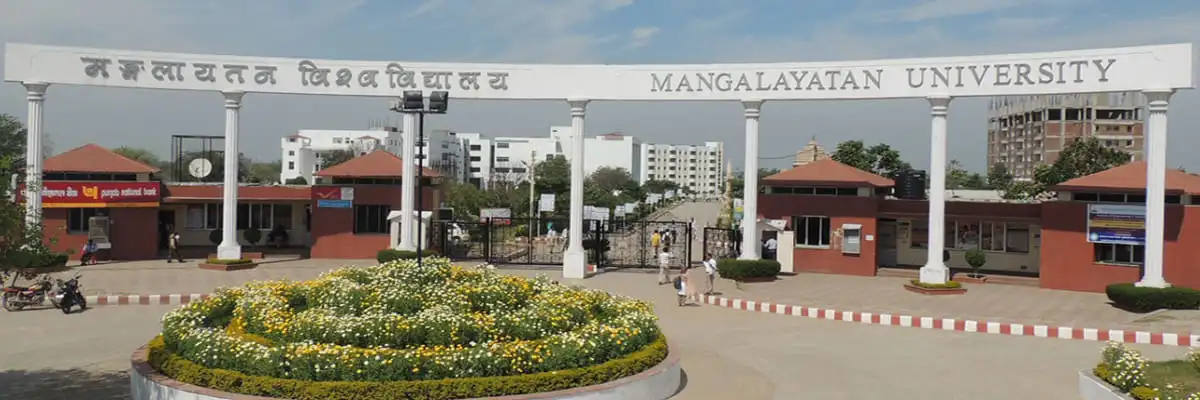
Mangalayatan University is a UGC-recognized private university located in Aligarh, Uttar Pradesh, India. Known for its strong industry connections, cutting-edge curriculum, and commitment to technology-driven education, Mangalayatan University has established itself as one of central India's premier higher education institutions.
The university's vision is to foster academic excellence, industry readiness, and global competitiveness among its graduates — making it an ideal partner for EasyShiksha's mission of accessible, quality online education.
EasyShiksha has signed an MoU with Mangalayatan University to facilitate applications for various university programs and jointly offer B.Voc programs. All degrees and certifications under these programs will be awarded by Mangalayatan University. The EasyShiksha team will provide complete assistance and support throughout the admission and program process.
Mangalayatan University, Uttar Pradesh
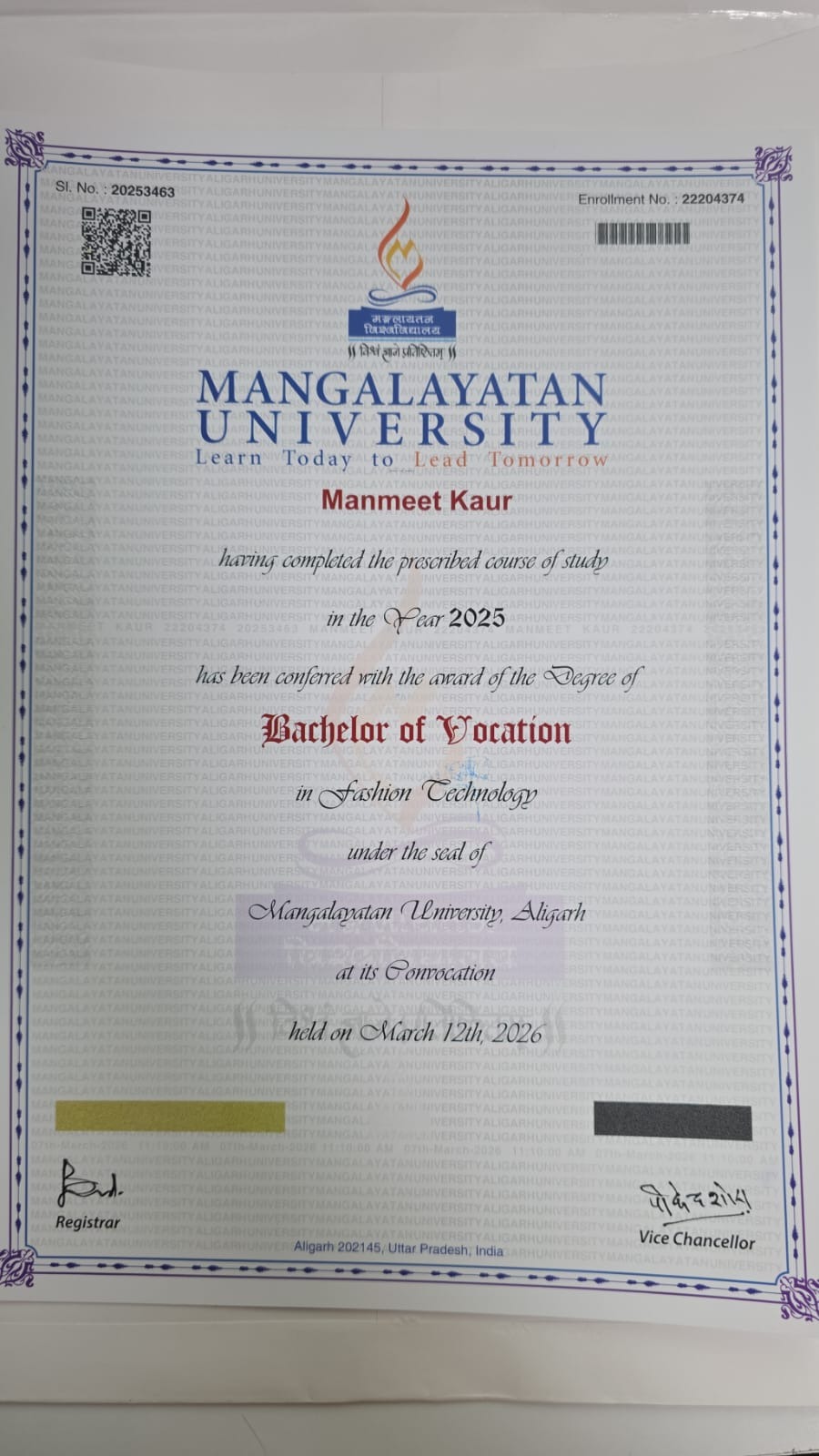
Sample Certificate
Documents
Media Gallery
Frequently Asked Questions
Mangalayatan University is located at 33rd Milestone, Aligarh-Mathura Highway, Beswan, Aligarh, Uttar Pradesh, India. The campus is situated in close proximity to the Yamuna Expressway and the cities of Aligarh and Mathura.
Mangalayatan University was established in 2006 under the Mangalayatan University, Uttar Pradesh Act, 2006. The University states that it has the right to confer degrees under Sections 2(f) and 22(1) of the UGC Act.
Yes. Mangalayatan University states that it is recognized by the University Grants Commission (UGC) and was established through an Act of the Uttar Pradesh State Legislature. The University also lists NAAC A+ accreditation among its recognitions.
Yes. The University states that it is recognized by UGC-DEB for Open and Distance Learning (ODL) and is entitled by the UGC to offer online degree programmes. It also states that its online programmes are approved by AICTE.
Mangalayatan University offers programmes across multiple academic levels, including UG, PG, Diploma, PG Diploma and PhD. Its programme portfolio covers areas such as Engineering & Technology, Computer Applications, Management, Agriculture, Biotechnology, Pharmacy, Physiotherapy, Nursing, Journalism & Mass Communication and other disciplines.
Depending on the programme, applicants may be required to provide Class 10 and Class 12 certificates and marksheets, graduation/post-graduation marksheets where applicable, competitive examination rank card where applicable, migration/transfer certificate and recent passport-size photographs. Original documents may be required for verification.
Yes. The University states that students can apply for an education loan through banks, subject to the bank's eligibility criteria.
The Post Graduate Diploma (Event Management) is a one-year program at Mangalayatan University structured into Semester I and Semester II. It covers event planning, marketing, communication, accounting, production, wedding planning, management, event design, catering, budgeting, costing and logistics.
The program includes 16 core courses across two semesters. Semester I includes Persona Management, Event Marketing, Event Accounting, Computer Fundamentals, Special Events – Wedding Planning, Event Communication, Event Planning and Event Production. Semester II includes Fundamentals of Management, Cost & Management Accounting, Event Concepts & Designing, Event Catering, Business Communication, Marketing Management, Budgeting and Costing of Events, and Event Logistics.
The uploaded syllabus does not separately specify an internship, industrial training or standalone project. However, several courses include applied and activity-oriented areas such as event planning, event setup and breakdown, on-site management, vendor handling, mock interviews, event production, logistics coordination and event design.
Students can develop skills related to event planning, event marketing, professional communication, public speaking, leadership, budgeting, accounting, cost control, event production, wedding planning, venue management, logistics, catering coordination, event design, sponsorship, marketing and client/vendor coordination. The curriculum also addresses risk management, crisis response and post-event evaluation.
Depending on their skills and experience, students can explore opportunities related to event planning, event coordination, event marketing, wedding planning, event production, event logistics, catering coordination, event budgeting, sponsorship, business communication and marketing. The syllabus also includes career-in-events and job-search topics such as job portals, resume writing, CV writing and interview training.