


















B.Voc in Culinary Arts
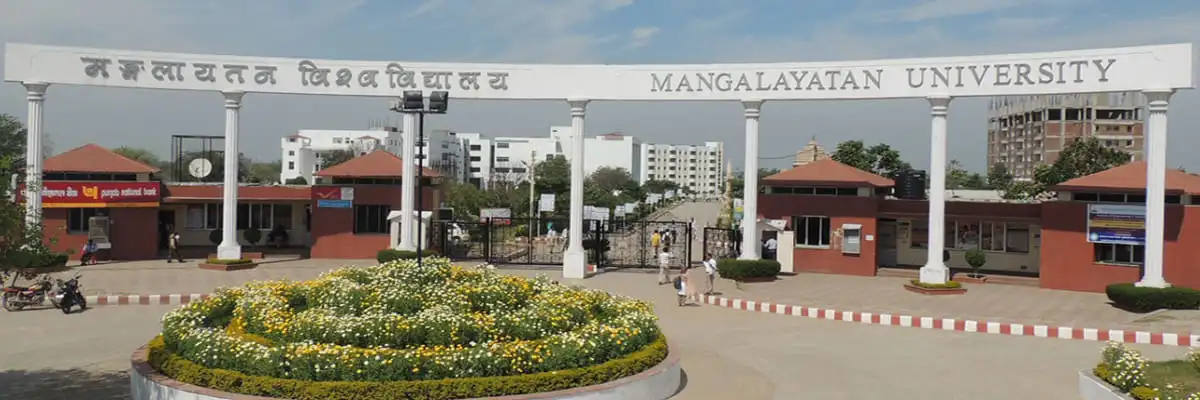
Program Overview
The Advance Diploma in Culinary Arts at Mangalayatan University is a four-semester program focused on culinary knowledge, food preparation, bakery and patisserie, food and beverage service, hotel operations, regional and international cuisines, menu planning and gastronomy. The curriculum begins with foundational culinary principles and progressively introduces advanced culinary, hospitality and food-service concepts.
The first two semesters cover Culinary Principles, Indian Regional Cuisine, Bakery & Patisserie, Food & Beverage Service Operations, Hotel Operations, Hygiene & First Aid, Business Communication, Hotel Front Office, Health & Nutrition, Environmental Studies and Basic French. Practical components are explicitly included for Indian Regional Cuisine and Bakery & Patisserie.
Semester III expands the academic focus through Menu Planning, International Cuisines, Garde Manger, Hotel Housekeeping, Food Engineering, Entrepreneurship Development, Human Resource Management and Gastronomy. This stage combines culinary specialization with food-service management, hospitality operations, entrepreneurship and an understanding of gastronomy.
Semester IV is dedicated to practical industry exposure through Industrial Training Log Book and Certificate I, Industrial Training Report I, Industrial Training Appraisals I, Industrial Training Viva Voce I, Industrial Visit and Industrial Study Tour Report, all of which are identified as practical components in the syllabus.
Eligibility Criteria
The minimum eligibility for admission is 10+2 (in any stream) or equivalent or a two-year ITI Diploma after Class 10th or a three-year Polytechnic Diploma after Class 10th.
Approval Details
MHRD, Government of India and UGC
Curriculum
Semester I establishes the foundations of culinary arts and hospitality. It covers culinary principles, Indian regional cuisine, bakery and patisserie, food and beverage service, hotel operations, hygiene, first aid and business communication. Practical components are included for Indian Regional Cuisine and Bakery & Patisserie.
1. Culinary Principles-I
Course Code: BVOCCA-101
Credits: 4
Culinary Principles-I introduces the foundations of professional culinary arts, kitchen organization, cooking methods, ingredients, equipment, hygiene, basic preparations, nutrition and contemporary culinary trends.
Key Topics:
- Introduction and scope of Culinary Arts
- History and evolution of cooking
- Professional kitchen and role of a chef
- Classical and modern kitchen organization
- Kitchen brigade and chef responsibilities
- Basic cooking principles and methods
- Ingredients, stocks, sauces and soups
- Kitchen equipment and safety
- Hygiene, sanitation and HACCP basics
- Cutting and knife skills
- Mise-en-place
- Basic salads, dressings and breakfast cookery
- Nutrition and culinary science
- Culinary terminology
- Molecular gastronomy and fusion cuisine
- Sustainable cooking and modern culinary trends
2. Indian Regional Cuisine-I -Theory
Course Code: BVOCCA-102
Credits: 3
This subject explores the diversity and heritage of Indian cuisine, including regional culinary traditions, ingredients, cooking techniques, traditional equipment, festival foods and contemporary developments.
Key Topics:
- Introduction to Indian cuisine
- Historical and cultural influences
- North Indian cuisine
- West Indian cuisine
- East Indian cuisine
- South Indian cuisine
- Regional ingredients and spices
- Traditional Indian cooking equipment
- Festival and ritual foods
- Evolution of modern Indian cuisine
- Contemporary trends in Indian cuisine
- Culinary tourism and regional food festivals
3. Indian Regional Cuisine-I-Practical
Course Code: BVOCCA-103
Credits: 2
Indian Regional Cuisine-I-Practical is the practical component associated with the Semester I Indian Regional Cuisine curriculum. The syllabus explicitly lists the practical subject, but does not provide a separate detailed practical-unit outline.
Key Area:
- Practical component of Indian Regional Cuisine-I
4. Bakery &Patisserie- I-Theory
Course Code: BVOCCA-104
Credits: 3
This subject introduces bakery and patisserie, covering ingredients, bread making, cakes, pastries, biscuits, hygiene and contemporary bakery practices.
Key Topics:
- Introduction to bakery and patisserie
- Bakery ingredients
- Flour and gluten formation
- Yeast and fermentation
- Fats, eggs, dairy and leavening agents
- Basic bakery principles
- Bread-making methods
- Cakes and batters
- Pastry types and preparation
- Biscuits and cookies
- Bakery hygiene and safety
- Gluten-free and low-sugar bakery products
- Artisanal and sourdough breads
- Fusion and plated desserts
5. Bakery &Patisserie- I-Practical
Course Code: BVOCCA-105
Credits: 2
This practical subject accompanies Bakery & Patisserie-I and is explicitly included in the Semester I structure. The uploaded syllabus does not provide a separate detailed practical-unit breakdown.
Key Area:
- Practical component of Bakery & Patisserie-I
6. Food & Beverage service operations
Course Code: BVOCCA-106
Credits: 3
Food & Beverage Service Operations covers the organization of food and beverage service, service equipment, service styles, menus, beverages, restaurant operations and hygiene.
Key Topics:
- Introduction to Food & Beverage Service
- F&B service organization
- Service personnel responsibilities
- Service equipment and restaurant furniture
- Table, assisted and self-service
- Specialized service
- Menu knowledge
- Non-alcoholic beverages
- Introduction to alcoholic beverages
- Food and beverage control
- Restaurant operations
- Reservations and guest seating
- Order taking and KOT/BOT systems
- Billing and settlement
- Hygiene, sanitation and safety
7. Hotel Operations
Course Code: BVOCCA-107
Credits: 4
Hotel Operations introduces hotel-industry functions including front office, housekeeping, food and beverage, engineering, sales and marketing, accounting, security and technology in hotel operations.
Key Topics:
- Hotel industry and hotel classification
- Hotel organizational structures
- Front office operations
- Guest cycle
- Housekeeping operations
- Food and beverage operations
- Hotel engineering and maintenance
- Sales and marketing
- Hotel accounting and financial control
- Security and safety
- Property Management Systems
- Computerized reservation and billing systems
- Sustainable hotel practices
- MICE and emerging hotel trends
8. Hygiene & First Aid
Course Code: BVOCCA-108
Credits: 3
Hygiene & First Aid focuses on personal, food and environmental hygiene, food safety, first-aid procedures, CPR, fire safety and health and safety practices relevant to hospitality.
Key Topics:
- Personal and food hygiene
- Good Hygiene Practices
- Food contamination and food-borne diseases
- Safe food handling and storage
- Cross-contamination prevention
- Kitchen and environmental hygiene
- Waste management
- First-aid principles
- Basic first-aid procedures
- CPR and AED basics
- Fire safety
- Emergency procedures
- Occupational health and safety
- FSSAI and HACCP basics
- Modern hygiene-monitoring practices
9. Business communication
Course Code: BVOCCA-109
Credits: 2
Business Communication develops oral, written, interpersonal and professional communication skills relevant to hospitality and service environments.
Key Topics:
- Communication process and types
- Verbal and non-verbal communication
- Communication barriers
- Oral communication
- Telephone etiquette
- Public speaking and presentations
- Business letters and emails
- Reports, notices and memos
- Resume and cover-letter writing
- Body language
- Interpersonal communication
- Conflict resolution
- Hospitality communication
- Meetings and presentations
- Professional documentation
- Digital communication tools
- Professional behavior and etiquette
Download Syllabus
Semester II develops culinary skills further through advanced culinary principles, regional Indian cuisine, bakery and patisserie, hotel front-office operations, health and nutrition, environmental studies and basic French.
1. Culinary Principles-II-
Course Code: BVOCCA-201
Credits: 4
Culinary Principles-II advances the study of cooking methods, ingredients, stocks, sauces, soups, meat and seafood cookery, baking, menu planning and food presentation.
Key Topics:
- Advanced cookery concepts
- Professional kitchen workflow
- Ingredient selection and storage
- Modern cooking methods
- Sous-vide and other cooking techniques
- Stocks and mother sauces
- Soups and garnishing
- Vegetable and egg cookery
- Poultry cookery
- Meat and seafood cookery
- Baking and pastry basics
- Menu planning
- Food presentation
- Modern plating and gastronomy
2. Indian Regional Cuisine-II-Theory
Course Code: BVOCCA-202
Credits: 3
Indian Regional Cuisine-II continues the study of Indian culinary traditions with greater coverage of regional cuisines, traditional techniques, festive foods and contemporary developments.
Key Topics:
- Diversity of Indian cuisine
- North Indian cuisine
- Eastern Indian cuisine
- Western Indian cuisine
- Southern Indian cuisine
- Central Indian and tribal cuisine
- Regional ingredients and techniques
- Festive and ritualistic foods
- Contemporary regional cuisine
- Health, nutrition and sustainability in Indian food
- Indian cuisine in global gastronomy
3. Indian Regional Cuisine-I-Practical
Course Code: BVOCCA-203
Credits: 2
The Semester II course structure lists this practical component under the official subject name Indian Regional Cuisine-I-Practical. The uploaded syllabus does not provide a separate practical-unit description.
Key Area:
- Practical component of Indian regional cuisine
4. Bakery &Patisserie- II-Theory
Course Code: BVOCCA-204
Credits: 3
Bakery & Patisserie-II introduces advanced baking and pastry concepts, including specialty breads, pastries, cakes, cold desserts, confectionery, bakery science and contemporary patisserie trends.
Key Topics:
- Advanced bakery operations
- Professional bakery equipment and safety
- Advanced bread-making methods
- Pre-ferment and sourdough
- Specialty breads
- Pastry doughs
- Cakes and sponges
- Icings and decorations
- Cold and frozen desserts
- Mousses and bavarois
- Ice creams and sorbets
- Sugar cookery
- Chocolate and confectionery
- Bakery science
- Vegan and gluten-free bakery
- Contemporary patisserie
5. Bakery &Patisserie- II-Practical
Course Code: BVOCCA-205
Credits: 2
This is the practical component associated with Bakery & Patisserie-II and is explicitly included in the Semester II structure. No separate practical-unit breakdown is provided in the source.
Key Area:
- Practical component of Bakery & Patisserie-II
6. Hotel Front Office
Course Code: BVOCCA-206
Credits: 4
Hotel Front Office covers reservation procedures, guest registration, guest services, front-office accounting, interdepartmental coordination, safety and security and modern front-office technology.
Key Topics:
- Front-office organization
- Reservation procedures
- Reservation systems
- Overbooking and cancellations
- Guest registration
- Room assignment
- Guest cycle
- Guest information and concierge services
- VIP guest handling
- Front-office accounting
- Guest accounts and billing
- Payment methods
- Interdepartmental coordination
- PMS and communication systems
- Guest privacy and confidentiality
- Mobile check-in and online booking
- Automation and AI in hotel services
- Customer relationship management
7. Health & Nutrition
Course Code: BVOCCA-207
Credits: 4
Health & Nutrition introduces nutrition concepts, macronutrients, micronutrients, energy balance, nutrition through the life cycle, diet and disease, food safety and contemporary nutrition issues.
Key Topics:
- Nutrition and balanced diet
- Carbohydrates, proteins and fats
- Vitamins and minerals
- Water and energy balance
- BMR and energy expenditure
- Nutrition through the life cycle
- Nutrition for athletes
- Diet and lifestyle diseases
- Therapeutic diets
- Food allergies and intolerances
- Food safety and adulteration
- Sustainable nutrition
- Contemporary diet trends
8. Environmental Studies
Course Code: BVOCCA-208
Credits: 2
Environmental Studies covers natural resources, ecosystems, biodiversity, pollution, climate change, environmental management and sustainable practices relevant to hospitality and food operations.
Key Topics:
- Environmental studies and sustainable development
- Natural resources
- Ecosystems
- Biodiversity conservation
- Environmental pollution
- Solid waste management
- Climate change
- Environmental ethics
- Environmental movements
- Population and environmental impact
- Environmental management in hospitality
- Sustainable food sourcing
- Water and energy conservation
9. Basic French
Course Code: BVOCCA-209
Credits: 2
Basic French introduces foundational French language skills with specific applications to hospitality and culinary arts.
Key Topics:
- French alphabet and pronunciation
- Basic grammar
- Numbers, dates and seasons
- Greetings and polite expressions
- Personal pronouns and basic verbs
- Everyday vocabulary
- Food and beverage terminology
- Travel and hospitality vocabulary
- Hotel and restaurant conversations
- French culinary terminology
- Menu interpretation
- Basic reading and writing
- French culture and gastronomy
- Hospitality-focused oral practice
Semester III moves toward advanced culinary and hospitality concepts. It covers menu planning, international cuisines, Garde Manger, housekeeping, food engineering, entrepreneurship, human resource management and gastronomy.
1. Menu Planning
Course Code: BVOCCA-301
Credits: 4
Menu Planning focuses on menu concepts, planning principles, menu design, nutrition, costing, menu engineering and contemporary menu practices.
Key Topics:
- Introduction to menus
- Types of menus
- Customer profiles and menu planning
- Nutritional requirements
- Seasonality and ingredient availability
- Balance, variety, contrast and harmony
- Menu design and layout
- Menu pricing
- Legal aspects of menu design
- Special-diet menu planning
- Hotel and restaurant menus
- QSR, cafeteria and catering menus
- Food costing
- Portion control
- Menu engineering
- Health-conscious and sustainable menus
- Digital and online menus
2. International Cuisines-I-Theory
Course Code: BVOCCA-302
Credits: 3
International Cuisines-I introduces global gastronomy and examines major international culinary traditions, including French, Italian, Mediterranean, Middle Eastern, American, Mexican, Chinese and Japanese cuisines.
Key Topics:
- International cuisine and global gastronomy
- French cuisine
- Italian cuisine
- Mediterranean cuisine
- Middle Eastern cuisine
- American and Mexican cuisine
- Chinese cuisine
- Japanese cuisine
- Global culinary traditions
- Fusion cuisine
- Health-conscious international dining
- Sustainable food trends
- Culinary tourism
3. International Cuisines-I-Practical
Course Code: BVOCCA-303
Credits: 2
This practical subject accompanies International Cuisines-I and is explicitly included in the Semester III course structure. The syllabus does not provide a separate detailed practical-unit breakdown.
Key Area:
- Practical component of International Cuisines-I
4. Garde Manger – Theory
Course Code: BVOCCA-304
Credits: 3
Garde Manger – Theory focuses on cold-kitchen operations, salads, dressings, sandwiches, appetizers, charcuterie, preservation, cold buffets, cheese and modern cold-kitchen trends.
Key Topics:
- Introduction to Garde Manger
- Cold-kitchen organization
- Salads and dressings
- Sandwiches
- Appetizers and hors d’oeuvres
- Canapés, crudités, dips and tapas
- Charcuterie
- Forcemeats and preservation methods
- Sausages, pâtés, terrines and roulades
- Cold buffets and platters
- Garnishes and decorations
- Cheese and dairy products
- Vegan and plant-based preparations
- Modern Garde Manger trends
5. Garde Manger – Practical
Course Code: BVOCCA-305
Credits: 2
Garde Manger – Practical is the practical component accompanying the Garde Manger theory course. The official course structure lists the practical subject for Semester III, but a separate practical-unit outline is not provided.
Key Area:
- Practical component of Garde Manger
6. Hotel House Keeping
Course Code: BVOCCA-306
Credits: 2
Hotel House Keeping covers housekeeping organization, cleaning methods, equipment, guest-room management, laundry, linen, interior decoration, pest control and safety.
Key Topics:
- Housekeeping department
- Staff duties and responsibilities
- Cleaning methods and agents
- Sustainable cleaning practices
- Housekeeping equipment
- Guest-room management
- Bed making and turn-down service
- Laundry operations
- Linen and uniform management
- Fabrics and upholstery
- Interior decoration
- Color, lighting and space
- Pest control
- Housekeeping safety and emergency procedures
7. Food Engineering
Course Code: BVOCCA-307
Credits: 4
Food Engineering introduces engineering principles relevant to food preparation, processing and preservation, including heat transfer, refrigeration, dehydration, fluid flow, mass transfer and packaging.
Key Topics:
- Food engineering fundamentals
- Food properties
- Material and energy balance
- Heat transfer
- Thermal food processing
- Refrigeration and freezing
- Cold-chain management
- Evaporation and dehydration
- Food rheology
- Fluid flow
- Diffusion and osmosis
- Concentration and extraction
- Membrane processes
- Food packaging
- Modified Atmosphere Packaging
- Vacuum packaging
- Sustainable packaging
8. Entrepreneurship Development
Course Code: BVOCCA-308
Credits: 3
Entrepreneurship Development introduces entrepreneurship concepts, opportunity identification, business planning, financial management, institutional support, legal aspects and entrepreneurship opportunities in culinary and food-service businesses.
Key Topics:
- Entrepreneurship concepts
- Entrepreneurial qualities
- Entrepreneurial motivation
- Creativity and innovation
- Leadership and risk management
- Business idea generation
- Opportunity evaluation
- Feasibility analysis
- Business-plan preparation
- Project formulation
- Financial planning
- Working-capital management
- Cost control and profit planning
- Institutional support
- Business ownership
- Licensing and registration
- IPR
- FSSAI and HACCP basics
- Culinary entrepreneurship
- Cloud kitchens, food trucks and catering
9. Human Resource Management
Course Code: BVOCCA-309
Credits: 3
Human Resource Management covers HR planning, recruitment, training, performance appraisal, compensation, employee relations, legal aspects and strategic HR practices in hospitality and culinary organizations.
Key Topics:
- Introduction to HRM
- HR functions in hospitality and food industries
- Human resource planning
- Manpower forecasting
- Job analysis
- Recruitment and selection
- Training and development
- Employee development
- Performance appraisal
- Compensation and benefits
- Employee welfare
- Employee relations
- Grievance handling
- Employee engagement and motivation
- Labour-law considerations
- Occupational health and safety
- Strategic HRM in hospitality and culinary arts
10. Gastronomy
Course Code: BVOCCA-310
Credits: 4
Gastronomy explores food as culture, art and science, tracing the history of food and culinary traditions while examining classical, contemporary and scientific approaches to gastronomy.
Key Topics:
- Introduction to gastronomy
- Food, culture, art and science
- History and evolution of food
- Culinary traditions of the world
- Regional Indian cuisines
- Classical gastronomy
- Escoffier and French classical cuisine
- Haute cuisine and nouvelle cuisine
- Molecular gastronomy
- Contemporary gastronomy
- Fusion cuisine
- Food science and sensory evaluation
- Flavor pairing and food textures
- Modern culinary techniques
- Food and society
- Gastronomy and tourism
- Sustainable and ethical gastronomy
Semester IV is structured around industrial training and industry-oriented practical exposure. The official course table lists six components, with a total of 24 credits.
1. Industrial Training Log Book and Certificate I
Course Code: BVOCCA-401A
Credits: 4
Component: Practical
This practical component requires an Industrial Training Log Book and Certificate I as specified in the official curriculum. The syllabus does not provide further detailed assessment or activity guidelines beyond the listed component.
Key Area:
- Industrial training log book and certificate documentation
2. Industrial Training Report I
Course Code: BVOCCA-401B
Credits: 4
Component: Practical
Industrial Training Report I is included as a practical Semester IV component for documenting the industrial-training experience according to the official curriculum.
Key Area:
- Industrial training report
3. Industrial Training Appraisals I
Course Code: BVOCCA-401C
Credits: 4
Component: Practical
Industrial Training Appraisals I is an explicitly listed practical component of Semester IV. The uploaded syllabus does not provide additional appraisal criteria or detailed assessment instructions.
Key Area:
- Industrial training appraisal
4. Industrial Training Viva Voce I
Course Code: BVOCCA-401D
Credits: 4
Component: Practical
Industrial Training Viva Voce I is included as a practical component in Semester IV and is associated with the industrial-training structure.
Key Area:
- Viva voce associated with industrial training
5. Industrial Visit
Course Code: BVOCCA-402A
Credits: 4
Component: Practical
Industrial Visit is explicitly included as a Semester IV practical component. The syllabus does not provide additional details about the destination, duration or specific activities of the visit.
Key Area:
- Industrial visit
6. Industrial Study Tour Report
Course Code: BVOCCA-402B
Credits: 4
Component: Practical
Industrial Study Tour Report is listed as a Semester IV practical component. The syllabus does not provide additional requirements for the report beyond the official subject listing.
Key Area:
- Industrial study tour report
Fee Structure
Admission Process
Students can apply for the DIPLOMA Culinary Arts programme through EasyShiksha. The complete application process is designed to make admission simple and convenient for eligible students.
Step 1: Click on Apply Now
Click the Apply Now button on the DIPLOMA Culinary Arts programme page and begin your application through EasyShiksha.
Step 2: Complete Personal Information
Fill in the required personal, contact and academic details accurately in the application form.
Step 3: Upload Required Documents
Upload the required documents for eligibility and admission verification as specified during the application process.
Step 4: Pay Application Fee
Pay the applicable application fee through the available online payment options to submit your application and initiate the admission process.
Step 5: Application Review
The EasyShiksha team reviews your application and submitted documents to verify your eligibility and ensure that the required information and documents have been provided.
Step 6: University Enrollment
Once the application is successfully reviewed and the student is found eligible, EasyShiksha facilitates the enrollment process with Mangalyatan University.
Step 7: LMS Access
After successful enrollment, the student is provided access to the Learning Management System (LMS) to begin their academic journey and access the available learning resources.
Start Your Application
Ready to begin your journey in Software Development? Click Apply Now to submit your application through EasyShiksha.
Career & Placements
The Advance Diploma in Culinary Arts covers culinary production, bakery and patisserie, food and beverage service, hotel operations, front office, housekeeping, menu planning, international cuisines, Garde Manger, food engineering, gastronomy, entrepreneurship and human resource management. Based on these curriculum areas, students can explore opportunities across culinary, food-service, hospitality and related sectors.
Culinary & Food Production Roles
- Commis Chef – Potential role supporting food preparation and kitchen operations.
- Chef de Partie – Potential kitchen role aligned with specialized culinary-station operations and relevant experience.
- Culinary Operations Associate – Potential role supporting professional food-production activities.
- Food Production Associate – Potential opportunity in commercial food-service operations.
Bakery & Patisserie Roles
- Bakery Associate – Potential role involving bakery production.
- Pastry Associate – Potential opportunity in pastry and dessert preparation.
- Patisserie Assistant – Potential role supporting professional patisserie operations.
- Confectionery Associate – Potential work involving confectionery and dessert production.
Food & Beverage Service Roles
- Food & Beverage Service Associate – Potential role in restaurant and hospitality service.
- Restaurant Service Associate – Potential work involving guest service and restaurant operations.
- Banquet Service Associate – Potential role in banquet and catering service.
- Beverage Service Associate – Potential opportunity involving beverage-service operations.
Hotel Operations
- Front Office Associate – Potential role involving reservations, registration and guest services.
- Guest Service Associate – Potential opportunity focused on guest interaction and service.
- Housekeeping Associate – Potential role in hotel housekeeping operations.
- Hotel Operations Associate – Potential opportunity across different hotel departments.
Culinary Entrepreneurship
- Catering Business Entrepreneur – Students may explore entrepreneurship in catering based on the program's entrepreneurship curriculum.
- Bakery Business Entrepreneur – Potential entrepreneurial path involving bakery and patisserie.
- Food-Service Entrepreneur – Potential opportunity to develop a food-service business.
- Cloud Kitchen Entrepreneur – The curriculum specifically discusses cloud kitchens as an area of culinary entrepreneurship.
Menu & Food-Service Planning
- Menu Planning Associate – Potential role involving menu development and planning.
- Food Costing Associate – Potential work related to food costing and menu engineering.
- Food-Service Operations Associate – Potential opportunity supporting food-service planning and operations.
Hospitality Management & Support Functions
- Hospitality HR Associate – Potential role in human-resource functions within hospitality and food-service organizations.
- Hotel Training/HR Support Associate – Potential work related to training and employee-development activities.
- Hospitality Communication Associate – Potential role where professional communication skills are relevant.
These are potential career areas based on the curriculum. The syllabus does not guarantee placement, employment or salary after completion.
Mangalayatan University, Aligarh
Mangalayatan University is a UGC-recognized private university located in Aligarh, Uttar Pradesh, India. Known for its strong industry connections, cutting-edge curriculum, and commitment to technology-driven education, Mangalayatan University has established itself as one of central India's premier higher education institutions.
The university's vision is to foster academic excellence, industry readiness, and global competitiveness among its graduates — making it an ideal partner for EasyShiksha's mission of accessible, quality online education.
EasyShiksha has signed an MoU with Mangalayatan University to facilitate applications for various university programs and jointly offer B.Voc programs. All degrees and certifications under these programs will be awarded by Mangalayatan University. The EasyShiksha team will provide complete assistance and support throughout the admission and program process.
Mangalayatan University, Uttar Pradesh
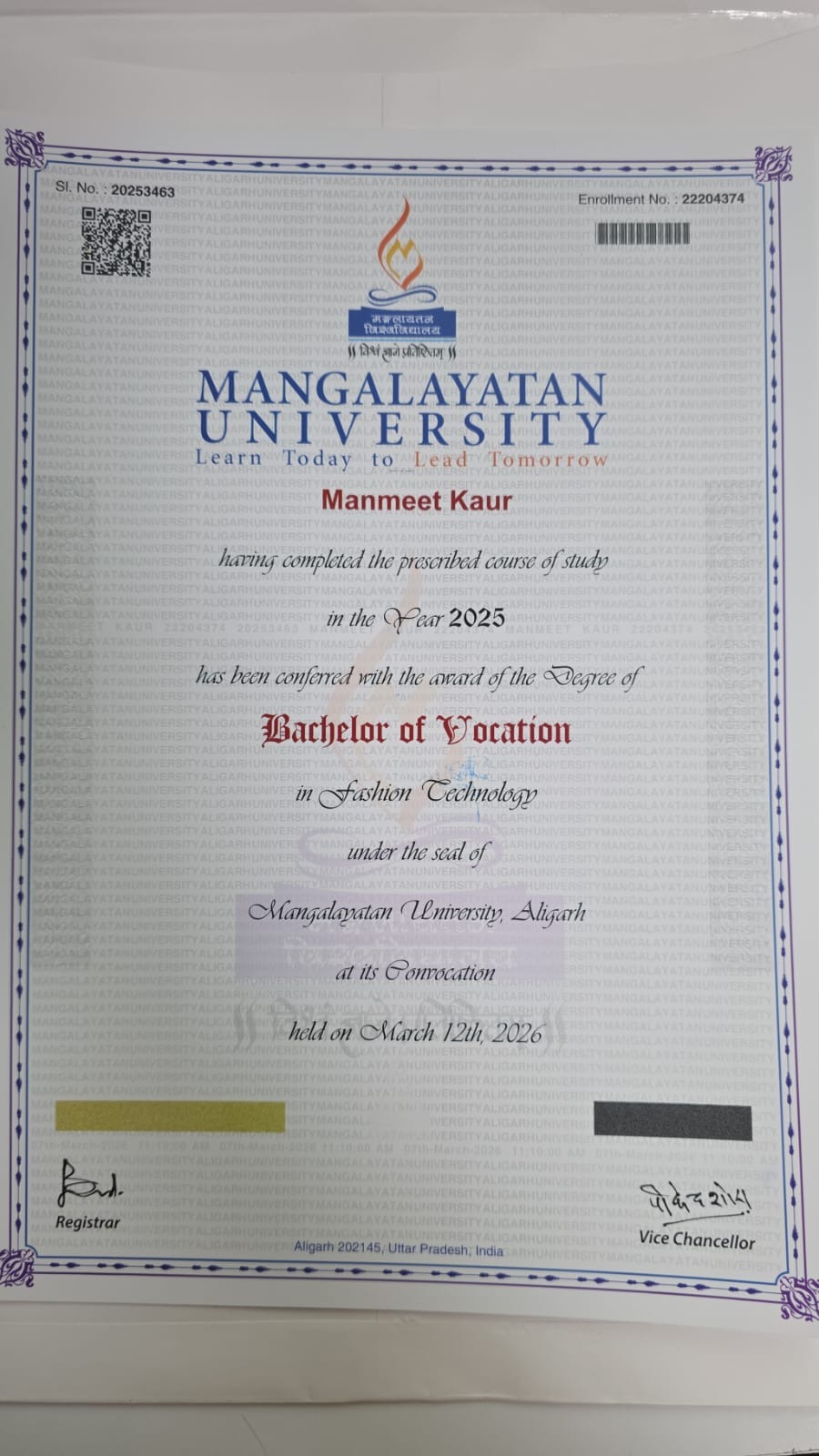
Sample Certificate
Documents
Media Gallery
Frequently Asked Questions
Mangalayatan University is located at 33rd Milestone, Aligarh-Mathura Highway, Beswan, Aligarh, Uttar Pradesh, India. The campus is situated in close proximity to the Yamuna Expressway and the cities of Aligarh and Mathura.
Mangalayatan University was established in 2006 under the Mangalayatan University, Uttar Pradesh Act, 2006. The University states that it has the right to confer degrees under Sections 2(f) and 22(1) of the UGC Act.
Yes. Mangalayatan University states that it is recognized by the University Grants Commission (UGC) and was established through an Act of the Uttar Pradesh State Legislature. The University also lists NAAC A+ accreditation among its recognitions.
Yes. The University states that it is recognized by UGC-DEB for Open and Distance Learning (ODL) and is entitled by the UGC to offer online degree programmes. It also states that its online programmes are approved by AICTE.
Mangalayatan University offers programmes across multiple academic levels, including UG, PG, Diploma, PG Diploma and PhD. Its programme portfolio covers areas such as Engineering & Technology, Computer Applications, Management, Agriculture, Biotechnology, Pharmacy, Physiotherapy, Nursing, Journalism & Mass Communication and other disciplines.
Depending on the programme, applicants may be required to provide Class 10 and Class 12 certificates and marksheets, graduation/post-graduation marksheets where applicable, competitive examination rank card where applicable, migration/transfer certificate and recent passport-size photographs. Original documents may be required for verification.
Yes. The University states that students can apply for an education loan through banks, subject to the bank's eligibility criteria.
Mangalayatan University has a 70+ acre campus in Aligarh, Uttar Pradesh.
Mangalayatan University holds an A+ accreditation grade from the National Assessment and Accreditation Council (NAAC).
Yes. Mangalayatan University carries AICTE approval for its technical programmes.
The degree certificate is issued and signed directly by Mangalayatan University, rather than by EasyShiksha or another third-party platform.
The degree certificate is personalised with the student's name, programme, and completion date and carries the university's official signature and seal.
Yes. The university's campus hosts optional immersion sessions associated with select Executive and Hybrid-mode programmes.
Students can select a Mangalayatan University programme, submit their personal details and required documents, pay the application fee, and proceed through the university's application review process.
Yes. Applications submitted through EasyShiksha can be monitored through the dashboard, where applicants can view status updates such as Under Review and Accepted along with their reference ID.
The Advance Diploma in Culinary Arts is a one-year Diploma program at Mangalayatan University covering culinary principles, Indian regional cuisine, bakery and patisserie, food and beverage service, hotel operations, hygiene, nutrition, front office and hospitality communication. The official 1-year structure consists of two semesters with 26 credits in each semester.
The two-semester curriculum includes subjects such as Culinary Principles-I and II, Indian Regional Cuisine-I and II, Bakery & Patisserie-I and II, Food & Beverage Service Operations, Hotel Operations, Hygiene & First Aid, Business Communication, Hotel Front Office, Health & Nutrition, Environmental Studies and Basic French. Practical components are also included for Indian Regional Cuisine and Bakery & Patisserie.
The 1-year curriculum explicitly includes practical subjects in Indian Regional Cuisine and Bakery & Patisserie in both semesters. The uploaded 1-year structure does not list a separate internship or industrial training component.
Students can develop foundational skills in culinary preparation, cooking methods, bakery and patisserie, Indian regional cuisine, food and beverage service, hotel operations, front-office procedures, hygiene and safety, nutrition and professional communication. The curriculum also introduces French terminology relevant to hospitality and culinary environments.
Depending on their skills and experience, students can explore opportunities in culinary production, bakery and patisserie, food and beverage service and hotel operations. Potential areas include culinary assistant, commis-level kitchen roles, bakery assistant, food-service associate, restaurant service assistant and front-office roles.