Engineering education often introduces students to machines, instruments and technical systems through models that function exactly as expected. Laboratory equipment is prepared before demonstrations, experimental procedures are carefully arranged, and students are usually guided toward results that match theoretical predictions. This approach helps learners understand fundamental principles and develop confidence in using technical systems. However, it can also create an incomplete picture of engineering practice. Real equipment does not always operate perfectly. Sensors drift, motors overheat, electrical connections become unstable, mechanical components wear out and control systems respond unexpectedly to changing conditions.
Professional engineers are rarely judged only by their ability to operate a perfectly functioning machine. They are also expected to identify faults, understand why failures occur, assess their consequences and restore systems safely. An engineer working in manufacturing, automation, electronics, construction, energy or transportation must be prepared for situations in which the actual behaviour of equipment differs from its intended behaviour. Yet students may complete several years of technical education without experiencing enough structured opportunities to investigate equipment failures.
This creates an important educational question: what would happen if engineering students learned through controlled equipment failures instead of encountering only perfectly functioning models? Rather than presenting failure as an interruption to laboratory learning, educational institutions could deliberately introduce safe, limited and carefully documented fault conditions. Students could then investigate how equipment behaves when a component becomes unreliable, a sensor produces incorrect readings or a mechanical system operates outside its expected range.
This approach could be described as Controlled Equipment Failure Learning. It would not involve exposing students to uncontrolled hazards or deliberately damaging expensive laboratory equipment. Instead, it would use safe fault simulations, replaceable components, isolated training rigs and supervised experiments to help learners understand how engineering systems respond when something goes wrong.
For EasyShiksha, this concept offers an opportunity to connect technical courses, quizzes, practical projects, simulation-based learning, internships, certificates and university programmes around a more realistic understanding of engineering. The objective would be to prepare students not only to build and operate systems, but also to diagnose, evaluate and recover them when their behaviour becomes abnormal.
Controlled Equipment Failure Learning is an educational approach in which students investigate deliberately introduced faults under defined and safe conditions. The equipment or its simulation is designed to behave differently from its normal operating state, allowing learners to observe symptoms, collect evidence and identify possible causes.
The central idea is to make failure an organised learning condition rather than an accidental event. In a conventional laboratory, a motor may be demonstrated under normal operating conditions so students can understand its speed, torque and electrical characteristics. In a controlled failure experiment, students may also examine how the motor behaves when a simulated sensor fault occurs, a load changes unexpectedly or a protective mechanism activates.
The student is not simply told that a fault exists. Instead, the learner is presented with observable evidence and must investigate the problem. This may involve examining measurements, comparing operating conditions, consulting circuit diagrams, analysing system behaviour and testing possible explanations.
The approach resembles aspects of professional fault diagnosis and maintenance engineering. It encourages students to understand the relationship between a system's intended operation and its actual behaviour. It also introduces the idea that engineering knowledge must remain useful when assumptions are no longer valid.
Why Perfectly Functioning Models Can Create an Incomplete Understanding
Perfectly functioning models are valuable teaching tools because they help students learn how systems are intended to operate. A functioning electrical circuit can demonstrate current flow, voltage distribution and component relationships. A working hydraulic system can explain pressure, flow and mechanical movement. A correctly operating robotic arm can introduce programming, motion control and automation.
The limitation appears when students encounter only successful operating conditions. They may become familiar with the expected output without understanding how the system responds when one of its components becomes unreliable. They might know how to calculate the expected voltage in a circuit but struggle to identify why a measured voltage differs from the theoretical value. They may understand the operating sequence of a conveyor system but have little experience identifying the source of an unexpected stoppage.
This creates a difference between theoretical understanding and diagnostic capability. Knowing how a system should behave does not automatically provide the ability to determine why it is behaving differently.
Controlled failure experiments can bridge this gap by allowing students to compare normal and abnormal operating conditions. They can observe how a small change in one component influences the wider system and develop a more complete understanding of the relationships between components.
The objective is not to reduce the importance of successful demonstrations. It is to make them the foundation for investigating the conditions under which successful operation can no longer be maintained.
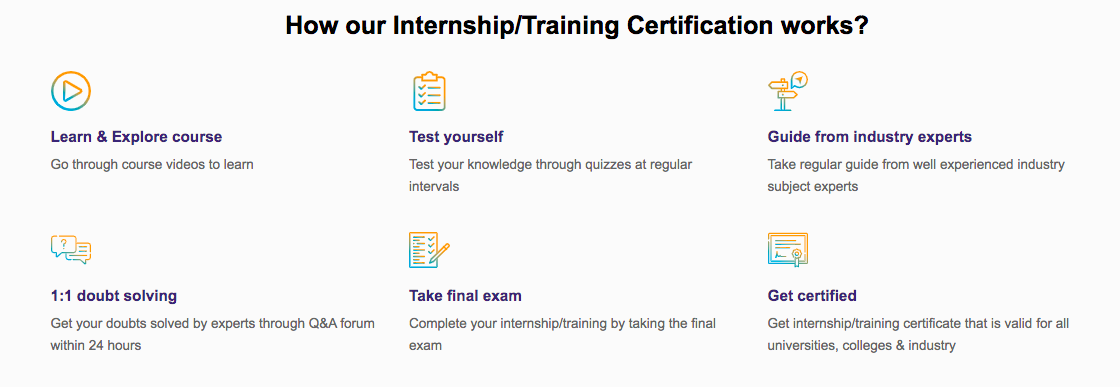
How EasyShiksha Internship/Training Program Works
From Following Instructions to Investigating Problems
Many laboratory exercises are structured around predefined instructions. Students connect components, follow a sequence of steps, record readings and compare their results with expected values. This structure is appropriate for introductory learning, but it may not always develop independent diagnostic thinking.
A controlled failure experiment changes the nature of the task. Instead of following instructions to produce a known result, students receive a system that is operating abnormally and must investigate what has happened. The learner needs to determine which information is relevant, which measurements should be taken and which possible causes should be examined first.
Consider a student working with a basic electrical control circuit. Under normal conditions, the circuit operates as expected. During a supervised experiment, the instructor introduces a simulated open-circuit condition through a safe training switch. The student observes that the output no longer activates and must investigate the circuit to locate the interruption.
The educational value comes from the reasoning process. The student must understand the circuit, identify the affected section and verify the suspected cause rather than simply replacing a component at random.
This transforms laboratory learning from procedural execution into technical investigation. It also helps students understand that engineering problems rarely arrive with a clear explanation of what has failed.
Learning the Difference Between Symptoms and Root Causes
One of the most important skills in engineering is distinguishing between a visible symptom and the underlying cause of a problem. A machine may stop unexpectedly, but the stoppage itself does not explain what happened. The cause could be a power interruption, sensor malfunction, mechanical obstruction, overheating condition, communication failure or incorrect control instruction.
Students who focus only on symptoms may attempt to correct the immediate problem without understanding why it occurred. This can lead to repeated failures because the original cause remains unresolved.
Controlled failure learning can introduce students to root-cause analysis. They can examine the sequence of events leading to a failure, identify relevant operating conditions and determine which component or interaction contributed to the abnormal behaviour.
For example, a conveyor system may stop because a sensor incorrectly detects that an object is blocking the path. Replacing the motor would not solve the actual problem because the motor is not responsible for the false detection. Students must investigate the relationship between the sensor, control logic and mechanical operation.
This approach teaches a broader engineering principle: a successful repair should address the cause of a failure, not merely remove its most visible symptom.
The Role of Fault Injection in Engineering Education
Fault injection is a technique used to introduce a controlled fault into a system so that its response can be observed and evaluated. In engineering education, it can provide a structured way to investigate how equipment behaves when selected components or operating conditions are changed. The fault may be introduced physically through a dedicated training device, electronically through a test interface or virtually through a simulation environment.
For example, an electronics student could investigate how a circuit responds when a resistor value changes from its specified range. A mechanical engineering student could examine a training assembly in which a replaceable bearing produces abnormal vibration. A computer engineering student could study how a controller responds when it receives delayed or incomplete sensor information. Each activity presents a different technical problem, but all require students to compare expected behaviour with observed behaviour.
The important requirement is that fault injection must be designed around safety and learning objectives. Students should not be asked to create dangerous electrical conditions, disable essential protective systems or damage operational machinery. Training equipment should use isolated circuits, low-energy components, software-controlled faults, guarded mechanisms or other suitable safeguards. The instructor should be able to control the fault, restore normal operation and prevent the experiment from affecting unrelated equipment.
When designed responsibly, fault injection can make otherwise invisible engineering principles observable. Students can see how a system responds to a specific disturbance and investigate the relationships that determine whether it continues operating, enters a protective state or stops functioning.
Understanding Failure Across Different Engineering Disciplines
Controlled failure experiments can be adapted to almost every major engineering discipline because each field deals with systems that can behave differently from their intended operating conditions. The nature of the fault changes, but the learning objective remains similar: students must identify the abnormal condition, understand its causes and evaluate an appropriate response.
In mechanical engineering, learners can investigate vibration, friction, misalignment, wear and changes in load. A training assembly might contain replaceable components that allow students to compare normal and abnormal vibration patterns. They could examine how bearing conditions affect noise, temperature and rotational behaviour, while learning why multiple measurements may be needed before a fault can be identified confidently.
Electrical and electronics students can investigate open circuits, short-circuit behaviour through safe simulation, component degradation and unstable sensor readings. Rather than simply assembling a circuit that works, they can examine how an individual component influences the entire system. They can use multimeters, oscilloscopes and circuit diagrams to trace abnormal readings and verify possible causes.
Civil engineering students can explore structural defects through physical models and simulation. A model beam may be tested under different loading conditions, while a digital environment can demonstrate how cracks, reduced cross-sections or support changes influence structural response. These activities should remain within controlled educational models rather than involving unsafe testing of real structures.
In computer and control engineering, students can investigate communication delays, incorrect input signals, software exceptions and controller responses. They can examine what happens when a sensor sends incomplete data or when a control instruction is not executed as expected. These exercises help connect software logic with physical system behaviour.
The interdisciplinary value is significant because students begin to recognise that failure diagnosis is not restricted to one branch of engineering. It is a general professional capability that combines technical knowledge, evidence gathering and structured reasoning.
How Controlled Mechanical Failures Build Deeper Understanding
Mechanical systems provide particularly useful opportunities for controlled failure experiments because their behaviour can often be observed through movement, sound, vibration, temperature and physical deformation. Students can investigate how changes in one component influence the performance of an entire assembly.
A simple rotating shaft experiment can demonstrate this principle. Under normal conditions, the shaft operates with a defined alignment and produces a relatively stable vibration pattern. A training setup could then introduce a small, controlled misalignment using an adjustable fixture. Students would compare the vibration measurements before and after the change and investigate how the altered alignment affects the system.
The exercise can introduce concepts such as vibration frequency, amplitude, mechanical balance, bearing loads and alignment tolerances. It also helps students understand why a machine may continue operating even when a fault has begun to develop. The absence of an immediate breakdown does not necessarily indicate that a system is healthy.
Students can also investigate material fatigue using specimens designed for safe testing. They can examine how repeated loading influences deformation and compare the behaviour of specimens subjected to different controlled conditions. This connects mechanics, materials science and failure analysis while showing why the history of a component's operation can matter as much as its current condition.
Electrical Faults as Opportunities to Understand System Behaviour
Electrical systems often contain interconnected components whose behaviour depends on the correct relationship between voltage, current, resistance, control signals and protective devices. A fault in one section may influence several other parts of the circuit, making electrical troubleshooting a useful application of controlled failure learning.
A student may initially learn how to assemble a circuit and calculate expected values under normal conditions. The next stage could introduce a simulated fault through a training board. The learner would receive a circuit that does not produce the expected output and would need to determine whether the issue is related to the supply, a connection, a component or the control section.
The process encourages students to use measurement tools systematically. Instead of changing several components at once, they can test specific points, compare readings with expected values and narrow down the possible causes. This develops an understanding of diagnostic discipline, where every measurement should help answer a technical question.
Such experiments can also explain the purpose of protective systems. Students can examine how fuses, circuit breakers, isolation mechanisms and current-limiting devices respond under simulated fault conditions. They can learn why protective components are selected according to the characteristics of a circuit and why bypassing safety mechanisms is not an acceptable troubleshooting method.
The emphasis should remain on safe, supervised training systems rather than exposing learners to uncontrolled electrical faults.
Sensor Failure and the Problem of Incorrect Information
Modern engineering systems increasingly depend on sensors to understand their operating environments. Industrial machines use sensors to monitor temperature, pressure, vibration, speed, position and other variables. Robots rely on sensors to detect objects and navigate physical spaces, while automated production systems use sensor information to coordinate different stages of operation.
A sensor does not always provide accurate information. Its output may drift, become noisy, remain fixed at an incorrect value or disappear because of a connection or communication problem. If the control system accepts incorrect information without verification, it may make an unsuitable decision.
Students can investigate these problems through controlled sensor-fault experiments. A temperature sensor training system, for example, could introduce a simulated offset between the actual temperature and the reported value. Learners would compare the sensor output with an independent reference measurement and determine whether the difference falls within the expected tolerance.
This teaches more than sensor calibration. It helps students understand that automated systems depend on the quality of the information they receive. A machine may execute its programmed instructions correctly and still produce an incorrect outcome because the input data is unreliable.
For students preparing for careers in automation, robotics, electronics and industrial engineering, this is an essential distinction. They must learn to question measurements, validate signals and understand the consequences of inaccurate information.
Software and Control-System Failures
Engineering equipment increasingly combines mechanical components with software-based control. A modern machine may depend on embedded systems, programmable logic controllers, communication networks and automated decision rules. As a result, equipment failure is not always caused by a damaged physical component. It may emerge from incorrect logic, timing problems, software exceptions or communication failures.
Controlled software faults can help students understand these relationships without putting physical equipment at risk. An instructor could introduce a simulated delay in a sensor signal or configure a training controller to receive an incomplete input. Students could then observe how the control sequence changes and investigate why the system does not produce its expected output.
Another exercise could involve an automated process that receives conflicting signals from two sensors. Students would examine how the control logic interprets the information and determine whether the system should continue operating, pause or request human intervention.
These activities connect programming with engineering behaviour. They demonstrate that software is not merely an abstract set of instructions when it controls physical equipment. Its logic can influence movement, temperature, pressure, production timing and safety-related decisions.
This makes controlled failure learning particularly relevant to students studying embedded systems, mechatronics, industrial automation, robotics and the Internet of Things.
Predictive Maintenance and Learning to Recognise Early Warning Signs
Many engineering failures develop gradually rather than appearing suddenly. Bearings may show increasing vibration, electrical components may experience temperature changes, and pumps may produce unusual pressure patterns before their performance deteriorates significantly. Recognising these early warning signs is an important part of maintenance and reliability engineering.
Controlled failure experiments can help students understand the difference between a system that has already failed and one that is showing signs of developing a problem. A training machine could generate a sequence of measurements representing normal operation, early degradation and more severe abnormal behaviour. Students would analyse the changing data and determine when further inspection or maintenance may be appropriate.
This creates a connection with predictive maintenance, which uses information about equipment condition to estimate when intervention may be required. Students can learn how vibration analysis, thermal monitoring, current measurements and other diagnostic techniques contribute to equipment health assessment.
They should also understand the limitations of prediction. An unusual measurement does not always indicate an imminent failure, and a model cannot guarantee that a machine will fail at a specific time. Reliable maintenance decisions require appropriate evidence, an understanding of operating conditions and human judgement.
For EasyShiksha learners, this topic could connect mechanical engineering, data analytics, AI, electronics and industrial automation through practical projects involving equipment condition monitoring.
Empower your team. Lead the industry
Get a subscription to a library of online courses and digital learning tools for your organization with
EasyShiksha
Physical fault experiments are valuable, but they are not always affordable or practical for every educational institution. Digital twins and engineering simulations can extend failure-based learning by allowing students to investigate abnormal conditions in virtual representations of equipment.
A digital model of a motor, pump, robotic arm or production system can be used to examine how changes in operating conditions influence performance. Students may introduce simulated faults, compare system responses and investigate the effects of different corrective actions. They can repeat scenarios without damaging physical equipment or consuming replacement components.
For example, a student could use a simulated pump system to investigate how a reduction in flow, increased vibration or altered operating pressure affects performance. The learner could examine different explanations and compare them with the available measurements. The simulation would provide a controlled environment in which the student can develop diagnostic reasoning before moving to supervised physical equipment.
However, simulation results depend on the assumptions and accuracy of the model. A digital representation may not capture every physical interaction, material variation or environmental condition. Students should therefore learn to treat simulations as useful investigative tools rather than perfect substitutes for real equipment.
A strong educational approach would combine virtual failure scenarios with physical experiments whenever appropriate. This would help learners compare predicted behaviour with actual observations and recognise the limitations of both.
Failure Mode and Effects Analysis as a Learning Tool
Failure Mode and Effects Analysis, commonly known as FMEA, is a structured method used to identify possible ways in which a system can fail and examine the consequences of those failures. It can become an effective learning framework when students are introduced to equipment failure through controlled experiments.
Instead of waiting for a fault to appear, learners can examine a system and consider which components are most likely to fail, how those failures might affect other components and what measures could reduce the associated risks. They can then compare their predictions with the behaviour observed during a supervised experiment.
For example, a student studying an automated packaging machine might investigate what happens when a position sensor stops providing accurate information. The learner could consider the immediate effect on the machine, the possibility of incorrect product positioning and the consequences for the wider production process. A controlled simulation could then demonstrate whether the predicted effects match the actual system response.
This method connects theoretical risk assessment with practical evidence. Students learn that engineering reliability depends not only on identifying individual component weaknesses but also on understanding how failures propagate through connected systems.
Developing Engineering Judgement Under Uncertainty
Equipment failures rarely provide complete information. An engineer may observe unusual noise, inconsistent measurements or unexpected movement without knowing the cause immediately. Several possible explanations may appear reasonable, and selecting the wrong one can waste time or introduce additional risks.
Controlled failure learning can help students become comfortable working with incomplete information. Rather than providing the exact fault location at the beginning of an exercise, educators can present a collection of symptoms and allow learners to determine which evidence should be examined first.
This develops a disciplined approach to uncertainty. Students learn to distinguish between an observation and an assumption, consider alternative explanations and test their conclusions against measurements. They also learn that a diagnosis should be supported by evidence rather than confidence alone.
For instance, if a motor becomes unusually warm, students should not immediately conclude that the motor itself is defective. They may need to investigate the load, ventilation, operating duration, electrical supply and mechanical condition. The exercise teaches them to consider the wider system before recommending corrective action.
Such judgement is difficult to develop through memorising definitions or following fixed laboratory instructions. It grows when learners repeatedly encounter problems that require investigation, verification and reasoned decisions.
Learning Safe Recovery Instead of Simply Restarting Equipment
Identifying a fault is only one part of engineering problem-solving. Students must also understand how to respond safely, restore the system and verify that the original problem has been addressed.
A common mistake in technical environments is to treat restarting equipment as the same thing as repairing it. A machine may resume operation after a reset, but the underlying problem may remain. If the cause has not been identified, the fault could return and potentially create a more serious situation.
Controlled recovery exercises can teach students to follow a structured response. They can learn why equipment may need to be isolated, why stored energy must be considered, why inspection should occur before restarting and why protective devices should never be bypassed simply to restore production quickly. The precise procedures will depend on the equipment, workplace rules and applicable safety requirements.
Students can also learn the importance of verification. After a corrective action, the system should be tested under appropriate conditions to determine whether it has returned to normal operation. The learner should record what was changed, what evidence supports the diagnosis and whether any limitations remain.
This develops an understanding of engineering responsibility. The objective is not simply to make a machine work again, but to ensure that it can operate safely and reliably.
Controlled Failure Learning and the Development of Resilience
Engineering problems can be frustrating, particularly when a system does not behave as expected. Students who have experienced only successful demonstrations may interpret unexpected results as evidence that they have misunderstood the entire subject. They may become dependent on instructors to identify faults or provide the next troubleshooting step.
A carefully designed failure-based learning environment can help students respond differently. When failure is presented as an expected and manageable part of the investigation, learners can focus on understanding the problem rather than treating it as a personal setback.
This does not mean that students should be exposed to repeated failure without guidance. Unstructured difficulty can produce confusion rather than learning. The instructor must provide sufficient context, suitable equipment and opportunities to reflect on the results. The challenge should be demanding enough to encourage independent thinking while remaining achievable with appropriate support.
Over time, students may become more willing to test hypotheses, revise their assumptions and learn from unsuccessful attempts. This can support a form of professional resilience based on technical understanding rather than simply persistence.
For future engineers, the ability to remain systematic when equipment behaves unexpectedly is an important workplace capability.
Measuring Diagnostic Capability Instead of Only Technical Recall
Traditional engineering assessments often evaluate whether students can explain concepts, perform calculations or identify components. These assessments remain necessary, but they do not fully reveal whether learners can diagnose an unfamiliar technical problem.
Failure-based assessments could evaluate how students approach an abnormal system. An instructor might present a simulated equipment fault and examine whether the learner collects relevant evidence, identifies possible causes, chooses suitable diagnostic methods and verifies the result.
The assessment should consider the quality of the reasoning process rather than reward only the final diagnosis. A student may reach a correct conclusion through an unsupported guess, while another may follow a careful investigative process and identify the limits of the available evidence. These are not equivalent demonstrations of competence.
Digital assessment systems could record the sequence of actions taken during a simulation, the measurements selected and the explanations provided by the learner. This information could help educators understand whether a student needs more practice with measurement, circuit interpretation, mechanical systems or fault analysis.
For EasyShiksha, quizzes could establish foundational understanding, while interactive assessments and practical projects could evaluate how learners apply that knowledge to abnormal operating conditions. This would create a more complete picture of engineering capability than a conventional score alone.
Connecting Failure-Based Learning With Industry Internships
Industrial environments provide important opportunities to observe how equipment is maintained, monitored and restored. Students may encounter production systems, automated machinery, electrical panels, sensors and maintenance procedures that cannot be fully represented through introductory classroom exercises.
Internships can help learners connect controlled failure experiments with professional practice. A student who has already investigated simulated motor faults, sensor errors or mechanical misalignment may enter an industrial environment with a better understanding of what technicians and engineers are trying to detect.
However, internships should not place students in situations where they are expected to independently diagnose or repair hazardous equipment without appropriate training and supervision. Their role should be aligned with their competence and the organisation's safety procedures. Observation, documentation, supervised inspection and participation in approved maintenance activities can all provide valuable experience.
After an internship, students could reflect on the types of equipment problems they observed and connect those experiences with their previous coursework. They could identify which diagnostic methods were used, how teams communicated and why certain recovery procedures were followed.
This would create a meaningful connection between academic learning and the realities of industrial work.
How EasyShiksha Could Integrate Controlled Failure Learning
EasyShiksha's broader educational ecosystem provides a useful foundation for exploring controlled equipment failure as a structured learning pathway. Online courses could introduce the theoretical principles of mechanical systems, electrical circuits, electronics, control engineering, sensors, automation and maintenance. Students could then use quizzes to assess their understanding of normal equipment behaviour before progressing to abnormal operating conditions.
Interactive simulations could introduce controlled faults without requiring every learner to access physical machinery. Students could investigate a simulated motor that produces abnormal vibration, a sensor that provides inconsistent readings or a controller that receives incomplete information. These activities could encourage learners to identify symptoms, examine evidence and select suitable diagnostic approaches.
Project-based learning could extend this experience. A student might design a basic monitoring system that detects unusual temperature or vibration readings. Another could create a simulated fault-diagnosis interface for an automated process. Such projects would allow learners to connect engineering concepts with programming, data analysis and practical problem-solving.
Where suitable facilities are available, universities and training institutions could complement virtual exercises with supervised physical experiments using dedicated fault-injection boards, replaceable mechanical components and isolated training equipment. Internships could then connect this foundation with real industrial maintenance and reliability practices.
Certificates could document the learning stages completed, while career guidance could help students explore opportunities in maintenance engineering, automation, reliability engineering, industrial electronics, robotics and equipment testing. The central opportunity is to make fault diagnosis a connected educational experience rather than an isolated laboratory activity.
Building an Engineering Portfolio Around Problem Diagnosis
A traditional student portfolio may contain completed projects, CAD drawings, presentations and certificates. These materials can demonstrate technical knowledge, but they may not reveal how the student responds when a system fails.
A failure-based project portfolio could provide additional evidence. Students could document the original system, the controlled fault condition, the measurements collected, the diagnostic process and the corrective action tested. They could also explain which assumptions were incorrect and what they learned from the experiment.
For example, a learner might include a project involving a simulated temperature-monitoring system. The portfolio could show the normal sensor output, the deliberately introduced measurement offset, the method used to identify the discrepancy and the verification process following correction.
Such documentation would help demonstrate practical reasoning to potential employers. It would show that the student can investigate a problem, work with technical evidence and explain the relationship between a fault and its consequences.
For EasyShiksha, this could connect project-based learning with career readiness. Students would not only complete courses but also build a record of technical investigations that demonstrates how they apply their knowledge.
The Risks of Introducing Failure Into Educational Environments
Although controlled equipment failure learning offers substantial educational value, it must be designed carefully. The word failure should never be interpreted as permission to create uncontrolled faults in operational equipment. Electrical faults, excessive mechanical loads, overheating, pressure changes and disabled protective systems can cause injury or equipment damage if introduced without appropriate safeguards.
Educational institutions should use purpose-built training systems, low-energy circuits, software simulations, isolated test environments and replaceable components wherever suitable. Experiments should be reviewed by qualified instructors, and students should receive relevant safety guidance before participating. Any physical activity should follow the equipment manufacturer's instructions and the institution's safety procedures.
There is also an educational risk in presenting failure as the only valuable learning method. Students still need to understand normal operation before they can diagnose abnormal behaviour. They require a strong foundation in engineering theory, measurement, design and system operation. Failure-based exercises should extend this knowledge rather than replace it.
Another concern is assessment fairness. Students may encounter different fault scenarios with different levels of difficulty. Educators should therefore define consistent learning objectives and evaluate the reasoning process using transparent criteria. The aim should be to assess diagnostic capability, not reward learners who happen to receive an easier fault.
A responsible approach balances challenge with safety, guidance and reliable assessment.
Frequently Asked Questions
Q. How can I apply for an internship with EasyShiksha?
You can apply by visiting our website, browsing available internships, and following the application instructions provided.
Q. What types of internships are available through EasyShiksha?
EasyShiksha offers a wide range of internships across technology, business, marketing, healthcare, and more.
Q. Will I receive a certificate upon completing an internship?
Yes, upon successful completion, you will receive a certificate recognizing your participation and achievements.
Q. Are EasyShiksha's certificates recognized?
Yes, the certificates are recognized by universities, colleges, and employers worldwide.
Q. When can I start the course?
You can choose any course and start immediately without delay.
Q. What are the course and session timings?
These are fully online courses. You can learn at any time and pace that fits your schedule.
Q. What will happen when my course is over?
After completion, you will have lifetime access to the course for future reference.
Q. Can I download the notes and study material?
Yes, you can access and download course materials and have lifetime access for future reference.
Q. What software/tools would be needed?
All necessary software/tools will be shared during the training as needed.
Q. I’m unable to make a payment. What should I do?
Try using a different card. If the problem persists, email us at info@easyshiksha.com.
Q. Do I get the certificate in hard copy?
No, only a soft copy is provided, which can be downloaded and printed if required.
Q. The payment got deducted but shows “failed”?
The deducted amount will be returned to your account in 7-10 working days automatically.
Q. Payment successful but dashboard shows ‘Buy Now’?
Reflection may take 30 mins. If longer, email info@easyshiksha.com with your screenshot.
Q. What is the refund policy?
Refunds are available for technical issues. No refunds once a certificate is generated.
Q. Can I enroll in a single course?
Yes, select any course, complete the details, and start learning immediately.
Q. Need further help?
Contact us at info@easyshiksha.com for any other questions.
The Future of Engineering Laboratories
The engineering laboratory of the future may combine physical equipment, digital twins, virtual simulations and controlled fault-injection systems. Students could begin by understanding a system under normal operating conditions, then investigate simulated failures before progressing to supervised physical experiments.
AI-supported tools could help learners interpret measurement patterns, compare possible causes and understand technical documentation. Digital twins could provide a representation of equipment behaviour, while physical test rigs could demonstrate how real components respond under controlled conditions. Together, these methods could create a more connected learning environment.
Such laboratories may also make technical education more flexible. Institutions with limited physical equipment could use simulations to provide a wider range of learning scenarios, while shared fabrication and testing facilities could support selected physical experiments. The most important requirement would be to preserve the relationship between theoretical predictions, simulated behaviour and physical evidence.
As industries adopt more automated and interconnected equipment, the ability to diagnose abnormal behaviour will become increasingly important. Engineering education should therefore prepare students to understand both successful operation and the conditions that can interrupt it.
Conclusion: Learning to Engineer When Things Go Wrong
Engineering education should prepare students for more than the operation of perfectly functioning machines. Real technical environments involve changing conditions, component degradation, measurement errors, software problems and unexpected interactions between systems. Professionals must be capable of identifying these problems, evaluating evidence, understanding their consequences and restoring equipment safely.
Controlled Equipment Failure Learning offers a structured way to develop these abilities. Through safe fault injection, virtual simulations, physical training rigs and diagnostic projects, students can investigate how equipment behaves outside its normal operating conditions. They can develop root-cause analysis, measurement skills, uncertainty management, troubleshooting discipline and a stronger understanding of system reliability.
For EasyShiksha, this concept creates an opportunity to connect online courses, quizzes, interactive simulations, practical projects, internships, certificates and university programmes into a more realistic engineering education pathway. Students could first understand how systems are designed to work, then investigate what happens when selected conditions change and finally demonstrate their ability to analyse and respond to technical problems.
The purpose is not to make engineering education more difficult by introducing unnecessary failures. It is to make learning more representative of the environments in which engineers will eventually work. A student who understands only successful operation may know how to follow a procedure, but a student who can investigate abnormal behaviour is developing a deeper form of engineering competence.
Engineering education becomes more realistic when students learn not only how to make systems work, but also how to understand, diagnose and safely recover them when they do not.
Anshika Jain is an Engineer, Developer, and Educational Content Author known for her dedication to technology and knowledge sharing. With a strong analytical mindset and a passion for innovation, she has consistently contributed to creating meaningful digital solutions and insightful educational articles.
Her ability to simplify complex technical concepts into engaging and easy-to-understand content makes her work valuable for students and learners across various platforms. Along with her technical expertise, Anshika is admired for her creativity, professionalism, and commitment to continuous learning.
She represents a perfect blend of technical excellence and impactful communication, inspiring others through both her development work and educational contributions.