Mathematical models influence decisions across almost every modern industry. Banks use statistical models to estimate credit risk, manufacturers rely on mathematical simulations to predict equipment performance, hospitals use predictive systems to support resource planning, logistics companies calculate delivery routes, and energy providers forecast electricity demand. These models transform complex real-world situations into mathematical representations that can be analysed, compared and used to make decisions. Their apparent precision often creates confidence in the results. However, every mathematical model is built on assumptions about how the world behaves, which variables matter, how those variables are connected and which conditions can be ignored.
These assumptions are not always visible to the people using the model. A financial model may assume that historical market behaviour will remain relevant in the future. A manufacturing simulation may assume that a material has uniform properties. A supply-chain model may treat delivery times as predictable even when weather, traffic and geopolitical disruptions create uncertainty. A healthcare prediction model may assume that the population used to develop it is sufficiently similar to the population in which it will be applied. When these assumptions do not match reality, even mathematically correct calculations can produce misleading conclusions.
This creates an important educational question: could students be trained not only to solve mathematical problems but also to identify the hidden assumptions behind mathematical models used in real industries? Such an ability would move mathematics education beyond formula application and toward model interpretation, critical evaluation and responsible decision-making.
For an education ecosystem such as EasyShiksha, this idea offers an opportunity to connect mathematics courses, quizzes, practical projects, internships, university programmes, certificates and career guidance through a more applied form of mathematical learning. Students could explore how mathematical models are constructed, where their limitations originate and how assumptions influence the decisions made by organisations. The objective would be to prepare learners who can understand not only what a model calculates, but also whether the model deserves to be trusted in a particular situation.
Understanding Hidden Assumptions in Mathematical Models
A mathematical model is a simplified representation of a real-world system. It selects certain variables, defines relationships between them and uses mathematical rules to describe or predict behaviour. This simplification is necessary because real industrial systems are often too complicated to represent in complete detail. A manufacturing process may involve temperature, pressure, friction, material composition, machine vibration, operator behaviour and environmental conditions. A model cannot always represent every factor at once, so its designers decide which factors to include and which to approximate or exclude.
These decisions introduce assumptions. Some assumptions are explicitly documented, while others are embedded in the mathematical structure, the data used or the way the model is applied. A linear regression model, for example, may assume a particular form of relationship between variables. A statistical analysis may rely on assumptions about the distribution or independence of observations. An optimisation model may assume that resources, costs or constraints are known with sufficient accuracy. A simulation may assume that the system's behaviour remains stable under the conditions being tested.
Hidden assumptions are not necessarily mistakes. They are often practical choices that make modelling possible. The problem emerges when users forget that these choices exist or apply a model outside the conditions for which its assumptions are reasonable. Students therefore need to understand the difference between an assumption that is acceptable for a particular purpose and one that creates an unacceptable distortion.
Why Mathematical Accuracy Does Not Guarantee Real-World Accuracy
One of the most important lessons in applied mathematics is that a calculation can be performed correctly while the model itself remains unsuitable. Mathematical accuracy concerns whether the operations follow the rules of mathematics. Model accuracy concerns whether the mathematical representation adequately describes the real system. These are related but different questions.
Consider a company that uses a model to estimate the time required to manufacture a product. The model may calculate production time using machine speed, processing duration and the number of units. If all the supplied values are entered correctly, the final calculation may be mathematically flawless. However, if the model assumes that machines operate continuously without maintenance interruptions, it may underestimate actual production time. The issue is not arithmetic. It is the assumption that machine availability remains constant.
A similar problem can occur in financial forecasting. A model may project future revenue using historical growth rates. The calculation may be correct, but the model may implicitly assume that market demand, customer behaviour and competitive conditions will remain sufficiently stable. If a new regulation or technological change alters the market, the forecast may become unreliable.
Students should therefore learn to separate three questions. Is the mathematical calculation correct? Is the model based on reasonable assumptions? Are the conditions in which the model is being used sufficiently similar to the conditions for which it was designed? This distinction is essential for anyone entering a profession where mathematical outputs influence practical decisions.
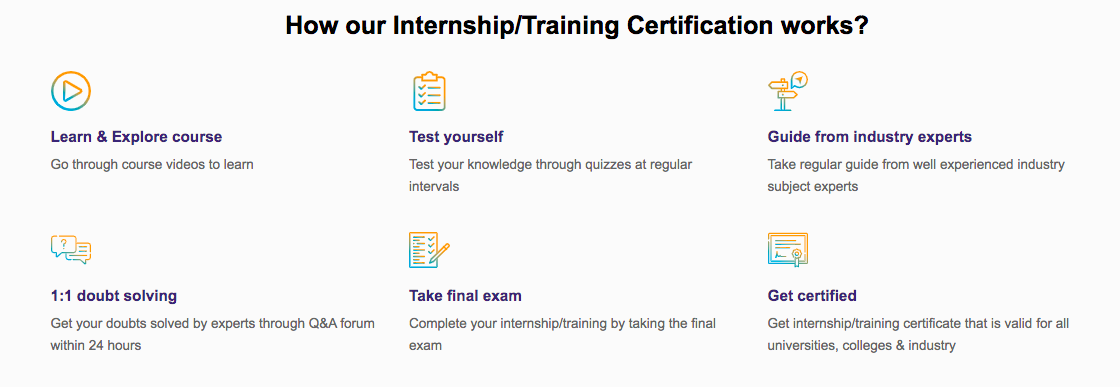
How EasyShiksha Internship/Training Program Works
The Industry-Wide Importance of Assumption Literacy
The ability to identify and evaluate assumptions can be described as assumption literacy. It is the capacity to recognise the simplifications, conditions and constraints embedded in a mathematical model and to understand how they affect its results. This skill is relevant far beyond mathematics or engineering departments because modern organisations increasingly depend on data-driven systems.
In finance, assumption literacy helps analysts examine interest-rate expectations, default probabilities, market volatility and customer behaviour. In manufacturing, it helps engineers evaluate material properties, machine reliability, production capacity and process variation. In healthcare, it helps professionals question whether a predictive model is appropriate for a particular patient population or clinical environment. In logistics, it helps planners understand how route optimisation depends on travel-time estimates, delivery constraints and demand forecasts.
The same capability is valuable in business management, agriculture, environmental science, telecommunications and public infrastructure. A student who understands the assumptions behind a model is better prepared to challenge an unsuitable recommendation, explain uncertainty and identify when additional information is required. This is increasingly important because professionals may use mathematical outputs without having designed the underlying models themselves.
Training Students to Recognise the Structure of a Model
Students cannot evaluate hidden assumptions effectively unless they first understand how a model is structured. A useful starting point is to examine the relationship between a real-world problem, its mathematical representation, the data supplied to it and the result it produces.
For example, a model predicting electricity demand may use temperature, population, time of day, industrial activity and historical consumption. Students can examine why these variables were selected and whether other factors might matter. They can consider whether the relationship between temperature and electricity demand is linear, whether seasonal patterns have been represented adequately and whether unusual events have been included in the training data.
This process helps learners recognise that a mathematical model is not simply a formula. It is a chain of decisions. The problem must first be defined, relevant variables must be selected, relationships must be represented, parameters must be estimated and the resulting model must be evaluated. Assumptions can enter at every stage.
An effective educational approach would ask students to reconstruct this chain rather than merely reproduce the final equation. They would learn to identify what the model represents, what it leaves out and which conditions must hold for its conclusions to remain useful.
The Difference Between Explicit and Hidden Assumptions
Some mathematical assumptions are directly stated. A problem may specify that an object moves at constant speed, that a market contains many buyers and sellers, or that a production process operates under fixed conditions. These are explicit assumptions because the learner can see them before performing the calculation.
Hidden assumptions are more difficult to recognise because they may not be written in the problem statement. A model might use historical data without explaining that the data came from a particular region or customer group. A simulation might treat a material as homogeneous even though the actual material contains internal variations. A forecasting model might assume that missing observations are random when the missing data are concentrated around unusual events.
Students should learn to investigate both categories. They should ask what the model explicitly states and what it appears to take for granted. This distinction can be introduced through case studies in which the mathematical method is already known but the assumptions are deliberately incomplete or presented in technical documentation.
The educational value lies in helping learners develop the habit of looking beyond the visible formula. They begin to understand that a model's meaning depends not only on its mathematical structure but also on the conditions that give that structure practical relevance.
Industry Case Study: Manufacturing and the Assumption of Uniform Materials
Manufacturing provides a particularly clear environment for teaching assumption identification because mathematical models are used to predict the behaviour of materials, machines and production processes. Engineers may use mathematical and computational models to estimate stress, deformation, heat transfer, vibration and fatigue.
A structural model may simplify a material by treating it as homogeneous and isotropic. Homogeneous means that the material is assumed to have consistent properties throughout its volume, while isotropic means that its properties are assumed to be the same in every direction. These assumptions can be useful for certain materials and applications, but they may not accurately represent composites, layered structures, additive-manufactured components or materials with directional properties.
Students could examine a model of a component under mechanical loading and compare its predictions with a scenario involving layered or direction-dependent material behaviour. They could investigate how changing the material assumptions affects predicted deformation or stress distribution. The exercise would demonstrate that the mathematical method may remain unchanged while the interpretation of its output changes significantly.
This type of learning is especially relevant to engineering students preparing for careers in mechanical design, civil engineering, manufacturing, aerospace and materials science. It develops an understanding that industrial models must be evaluated in relation to the physical characteristics of the systems they represent.
Industry Case Study: Finance and the Assumption of Stable Behaviour
Financial models frequently depend on assumptions about future conditions. Investment analysis, credit scoring, risk management and financial forecasting all involve mathematical representations of uncertain events.
A credit-risk model, for example, may estimate the probability that a borrower will fail to repay a loan. Its predictions may depend on income, repayment history, existing debt, employment information and other variables. However, the model may perform differently when economic conditions change or when it is applied to a population that was not adequately represented in its development data.
Students studying finance and data analytics could examine how changes in interest rates, employment conditions or borrower characteristics affect model performance. They could explore the difference between historical relationships and future uncertainty, while considering whether the available data represent the population to which the model will be applied.
Such exercises would help students understand that financial models do not eliminate uncertainty. They organise information and estimate possible outcomes under particular assumptions. Professionals must still interpret those estimates carefully, especially when decisions affect individuals, businesses and financial institutions.
Industry Case Study: Healthcare and Population Assumptions
Healthcare models often use mathematical and statistical methods to estimate disease risk, predict hospital demand, support diagnosis or analyse treatment outcomes. These models can be valuable, but their reliability depends partly on the populations and conditions represented in the data.
A predictive model developed using records from one hospital may not perform equally well in another hospital with different patient demographics, diagnostic practices or access to healthcare. A model may also rely on assumptions about how measurements are collected or how missing clinical information should be interpreted.
Students should learn that a model's performance in one setting does not automatically establish its reliability in every setting. They can examine how differences in data collection, population characteristics and clinical environments may affect predictions. They can also discuss why healthcare models require careful validation and professional oversight.
For students exploring health technology, biotechnology, public health, data science or biomedical engineering, assumption literacy can become an important part of responsible analytical practice. It encourages them to question whether the model is appropriate for the people and circumstances affected by its recommendations.
Industry Case Study: Logistics and the Assumption of Predictable Travel Time
Logistics companies use optimisation models to plan routes, allocate vehicles, estimate delivery times and manage warehouses. These models may assume that travel times are known, demand is sufficiently predictable and vehicles have fixed capacities.
Real transportation networks, however, are affected by traffic congestion, road closures, weather, vehicle breakdowns, local restrictions and unexpected changes in demand. A route that appears optimal under average travel-time assumptions may not remain optimal during a disruption.
Students could work with a simplified delivery-planning model and then introduce conditions that challenge its assumptions. They might compare a route selected using average travel time with one selected using uncertain travel-time ranges. They could also examine how the best route changes when a vehicle becomes unavailable or when delivery priorities shift.
This approach teaches students that optimisation does not necessarily produce a universally best decision. It produces a solution that is best under the model's stated objective, constraints and assumptions. Understanding those conditions is essential for applying optimisation responsibly.
Teaching Through Model Failure Instead of Only Model Success
Traditional mathematical exercises often present complete information and expect students to obtain a correct answer. This is useful for learning mathematical procedures, but it does not fully prepare students to evaluate models used in complex industries. A more advanced approach would allow learners to investigate situations in which a model produces a plausible but misleading result.
A model-failure exercise could begin with a realistic industrial scenario. Students would receive the model's purpose, input variables, mathematical structure and a set of assumptions. They would then examine what happens when one or more assumptions become invalid. The task would be to identify the source of the failure, explain its effect and determine whether the model needs adjustment, additional data or a narrower scope of application.
For example, a demand forecast might perform well under ordinary conditions but fail during a sudden change in consumer behaviour. Students could investigate whether the model is too dependent on historical patterns or whether important variables have been omitted. They would learn that model failure is not always evidence of poor mathematical technique. It may reveal that the real system has changed or that the original representation was incomplete.
This approach makes mathematical learning more closely connected to professional practice. It also encourages students to see errors as evidence that can improve their understanding of a model.
Counterfactual Thinking: What Happens If an Assumption Changes?
Counterfactual thinking is a powerful method for investigating mathematical assumptions. It asks students to consider how the model's output would change if a particular condition were different.
Suppose a manufacturing model assumes that a machine operates at a fixed efficiency. Students could explore what happens if efficiency decreases as the machine heats up or if maintenance interruptions become more frequent. In a financial model, they could examine how a forecast changes if interest rates rise more quickly than expected. In a logistics model, they could test how route recommendations change when delivery times become more variable.
This method helps learners distinguish between assumptions that have little influence on the final result and assumptions that strongly affect it. It also introduces the idea of sensitivity analysis, in which students examine how changes in input values or model parameters influence outputs.
Through counterfactual exercises, students move beyond asking whether a model gives an answer. They begin asking how dependent that answer is on the conditions under which it was produced.
Sensitivity Analysis as a Tool for Assumption Testing
Sensitivity analysis examines how changes in a model's inputs or parameters affect its results. It can help reveal which assumptions are particularly influential and where a model may be fragile.
Consider a business model that estimates production costs using material prices, labour costs, energy consumption and output volume. If a small change in energy prices produces a large change in estimated profitability, the model may be highly sensitive to that input. If a change in an assumed production rate has little effect, that assumption may be less influential within the tested range.
Students can learn to vary one parameter at a time, compare outputs and interpret the size of the resulting change. More advanced learners can explore interactions between multiple variables, where changing two assumptions together produces an effect that cannot be understood by examining either variable independently.
This is an important bridge between mathematical theory and industrial decision-making. It teaches learners that assumptions do not all carry equal consequences. Some may be harmless simplifications, while others can determine whether a decision is financially, technically or operationally sound.
The Role of Uncertainty and Probability
Many industrial models deal with uncertainty rather than fixed values. Demand, prices, machine failure, delivery times and patient outcomes cannot always be predicted with certainty. Mathematical models may therefore use probability distributions, confidence intervals, scenarios or simulation techniques to represent possible outcomes.
Students should learn to distinguish between uncertainty that is represented by the model and uncertainty that the model ignores. A model may include random variation in demand while assuming that supplier availability remains constant. It may represent equipment failure probabilistically while ignoring the possibility of a new type of failure.
This distinction is important because a model can appear sophisticated while still omitting a major source of uncertainty. Learners should examine which uncertain factors are included, how they are represented and whether the assumptions behind those representations are justified.
Probability and statistics education can become more applied when students use real or simulated industrial scenarios to investigate these questions. They learn not only how to calculate probabilities but also how to interpret what those probabilities mean in a practical decision environment.
AI as an Assistant for Discovering Hidden Assumptions
Artificial intelligence could support assumption literacy by helping students inspect mathematical models and identify conditions that deserve further investigation. An AI learning assistant could analyse a model description, explain its mathematical structure and generate questions about the assumptions behind its variables, parameters and data.
For example, when a student studies a demand-forecasting model, the system could prompt them to investigate whether the model assumes stable consumer behaviour, whether seasonal patterns are represented and whether the training data include unusual market conditions. When a learner examines a structural simulation, AI could help identify whether the model assumes linear material behaviour, fixed boundary conditions or simplified loading conditions.
However, AI-generated assumption lists should not be treated as verified conclusions. The system may overlook important domain-specific conditions or suggest assumptions that do not apply to the model under examination. Students must learn to verify suggestions against mathematical documentation, experimental evidence, technical standards and expert knowledge.
The educational objective should therefore be to use AI as an investigative assistant rather than an authority. It can help learners ask better questions, but students must develop the ability to judge whether those questions are relevant and whether the available evidence supports an answer.
Building an Assumption Audit Into Mathematics Education
A structured assumption audit could become a recurring activity in applied mathematics courses. Instead of ending an exercise after obtaining a numerical answer, students could examine the conditions under which the answer is meaningful.
Such an audit would begin by identifying the real-world system represented by the model. Students would then examine the variables included, the relationships assumed, the data sources used and the conditions under which the model is expected to operate. They would consider which factors have been simplified or excluded and investigate how changes in important assumptions affect the output.
The final stage would involve explaining the model's limitations in clear language. Students should be able to communicate not only the result but also the circumstances in which it may become unreliable. This is particularly valuable because industrial professionals often need to explain technical results to managers, clients, regulators and colleagues who may not have advanced mathematical training.
An assumption audit would therefore combine mathematical reasoning, domain knowledge, critical thinking and professional communication.
Connecting Assumption Literacy With EasyShiksha Courses and Quizzes
EasyShiksha could explore assumption literacy as a learning theme across its online courses and assessment ecosystem. Mathematics, statistics, engineering, finance, computer science, artificial intelligence and data analytics courses could introduce model assumptions through examples relevant to their respective disciplines.
Quizzes could test whether students can distinguish between an explicit condition, an implicit assumption, a model limitation and an unsupported conclusion. Rather than focusing only on formula recall, assessment questions could present short industrial scenarios and ask learners to identify which assumption is most important to investigate.
This would allow quizzes to measure a different dimension of mathematical understanding. A student might know how to solve an equation but still need to demonstrate that they understand the conditions under which the equation can be applied. By connecting assessment with model interpretation, EasyShiksha could support a more practical approach to mathematical learning.
Projects That Turn Students Into Model Investigators
Projects could provide a deeper opportunity for students to practise identifying assumptions. A learner might select a model used in a particular industry, study its purpose and investigate the assumptions that influence its predictions. The project could involve building a simplified version of the model, changing selected assumptions and comparing the resulting outputs.
An engineering student could examine a heat-transfer model, while a finance student could investigate a credit-risk model. A computer science student might analyse a recommendation algorithm, and a business analytics student could explore a demand forecast. The mathematical complexity could be adjusted according to the learner's level.
The most important outcome would not necessarily be the creation of a highly sophisticated model. It would be the ability to explain what the model assumes, why those assumptions matter and how its conclusions might change under different conditions. This would give students a practical portfolio project that demonstrates analytical judgement rather than only technical implementation.
Internships and Exposure to Real Industrial Models
Internships can provide an important transition from classroom modelling to professional model evaluation. Students may encounter spreadsheets, forecasting tools, simulation software, dashboards and analytical systems that organisations use to support daily operations.
During an internship, learners could observe how professionals select model inputs, interpret results and respond when predictions do not match actual outcomes. They could also examine how organisations document limitations, update assumptions and decide when a model needs to be recalibrated or replaced.
For EasyShiksha, connecting assumption-focused projects with internships could help students understand how mathematical reasoning is used in real workplaces. A student who has already practised model auditing in a course may be better prepared to ask informed questions during an internship. The experience can then reveal new assumptions and practical limitations that were not visible in classroom examples.
This connection between courses, projects and internships can make mathematical education more closely aligned with professional expectations.
Preparing Students for Model Governance and Responsible Decision-Making
As organisations rely more heavily on mathematical and AI-driven models, the ability to evaluate their assumptions becomes part of responsible decision-making. Models can influence lending, recruitment, healthcare resource allocation, infrastructure planning and industrial safety. A poorly understood assumption can therefore affect more than the accuracy of a calculation.
Students should understand that model evaluation includes questions of fairness, transparency, accountability and appropriate use. A model developed using incomplete or unrepresentative data may produce unequal outcomes for different groups. A model used beyond its intended scope may create decisions that are difficult to justify. A technically sophisticated system may still be unsuitable if its limitations are not communicated to the people relying on it.
Assumption literacy can help future professionals recognise these risks before they become operational problems. It does not replace specialised governance, regulation or expert review, but it provides a foundation for asking whether a model is appropriate, sufficiently validated and responsibly applied.
Measuring Whether Students Have Developed Assumption Literacy
Assessing assumption literacy requires more than testing whether students can name common mathematical assumptions. Learners should demonstrate that they can identify relevant assumptions in unfamiliar situations, explain their consequences and use evidence to evaluate them.
One useful assessment approach would involve presenting students with a model and asking them to explain its intended purpose, identify conditions that may affect its reliability and investigate how changes in those conditions influence the output. Another approach could provide a model that performs well under ordinary circumstances but produces misleading results when an important assumption is violated.
Assessment could consider the quality of the learner's reasoning, the relevance of the assumptions identified, the accuracy of their sensitivity analysis and their ability to communicate limitations. This would help distinguish between students who can memorise modelling terminology and students who can genuinely evaluate a model.
For EasyShiksha, such assessments could become part of advanced course pathways and practical project evaluations. Certificates could recognise completion of relevant learning experiences, while project portfolios could provide more detailed evidence of the student's analytical capability.
Empower your team. Lead the industry
Get a subscription to a library of online courses and digital learning tools for your organization with
EasyShiksha
The Future of Mathematics Education: From Solving Models to Questioning Them
The future of mathematical education will need to prepare students for a world in which models are increasingly embedded in software, industrial equipment, financial systems and AI applications. Many professionals will use models developed by others rather than constructing every equation themselves. Their responsibility will often involve interpreting outputs, checking whether the model is suitable and recognising when conditions have changed.
This means that mathematical education should develop two complementary abilities. Students need the technical competence to understand and use mathematical methods, but they also need the critical competence to evaluate the assumptions behind those methods. One without the other is incomplete.
Educational platforms can help bring these abilities together by connecting mathematical foundations with industrial case studies, quizzes, simulation exercises, projects and workplace exposure. AI can support personalised guidance, but students must remain responsible for evaluating evidence and understanding the limits of automated recommendations.
For EasyShiksha, assumption literacy represents a possible way to make mathematics education more connected to real professional decisions. It can help learners see mathematics not as a collection of formulas detached from the world, but as a language used to represent complex systems through deliberate simplifications.
Conclusion: Teaching Students to Question the Mathematics Behind Decisions
Mathematical models are powerful because they simplify reality into structures that can be analysed and used. Their usefulness, however, depends on the assumptions that support them. A model may produce a precise answer while relying on conditions that are incomplete, outdated or unsuitable for the situation in which it is being applied.
Training students to identify hidden assumptions would add an important dimension to mathematics education. Learners would develop the ability to examine model structure, distinguish explicit conditions from implicit assumptions, investigate uncertainty, perform sensitivity analysis and recognise when a model's conclusions may no longer be reliable. These skills are relevant across manufacturing, finance, healthcare, logistics, energy, technology and other industries.
EasyShiksha could explore this approach by connecting online courses, quizzes, practical projects, internships, certificates and career guidance around the evaluation of real-world mathematical models. Students could move from learning mathematical techniques to investigating industrial applications and presenting evidence-based explanations of model limitations.
The ultimate goal is not to make students suspicious of every mathematical model. It is to make them informed users of mathematical knowledge. A capable professional should be able to calculate an answer, understand how it was produced and recognise the conditions under which it can be trusted.
The next generation of mathematically skilled professionals will need to do more than solve models. They will need to understand the assumptions that make those models meaningful.
Anshika Jain is an Engineer, Developer, and Educational Content Author known for her dedication to technology and knowledge sharing. With a strong analytical mindset and a passion for innovation, she has consistently contributed to creating meaningful digital solutions and insightful educational articles.
Her ability to simplify complex technical concepts into engaging and easy-to-understand content makes her work valuable for students and learners across various platforms. Along with her technical expertise, Anshika is admired for her creativity, professionalism, and commitment to continuous learning.
She represents a perfect blend of technical excellence and impactful communication, inspiring others through both her development work and educational contributions.