Artificial intelligence is increasingly becoming part of how students access scientific information, understand complex theories and explore unfamiliar subjects. An educational AI assistant can explain a biological process, summarise a research paper, interpret experimental results or help a student understand a scientific debate. These capabilities can make scientific learning more accessible, particularly when students need explanations beyond what is available in a conventional textbook.
However, a new challenge emerges when different educational AI systems interpret the same scientific evidence in different ways. One system may emphasise a particular explanation, while another may highlight an alternative interpretation. Both may refer to the same research findings, use technically convincing language and present their conclusions confidently. A student who receives these different explanations may struggle to understand which interpretation is more reliable, whether the disagreement reflects genuine scientific uncertainty or whether one of the systems has misunderstood the evidence.
This situation introduces an important question for the future of AI-supported education: what happens when educational AI systems develop different interpretations of the same scientific evidence?
The issue is more complex than ordinary factual disagreement. Scientific evidence often requires interpretation. Research findings depend on experimental methods, sample sizes, measurement conditions, statistical assumptions and the limitations of the available data. Two explanations may differ because they focus on different aspects of the same evidence, while another disagreement may result from an inaccurate interpretation or an unsupported conclusion.
For an education ecosystem such as EasyShiksha, this creates an opportunity to develop a more evidence-aware approach to AI-supported learning. Online courses, quizzes, projects, university programmes and research-oriented activities could help students understand how scientific claims are formed, why interpretations differ and how evidence should be evaluated. Instead of presenting AI as a single authority, educational systems could help learners navigate scientific disagreement with greater confidence and critical understanding.
Why Different AI Systems May Interpret the Same Evidence Differently
AI systems do not necessarily process and explain scientific information in identical ways. Their outputs can vary according to model architecture, training data, retrieval sources, instructions, reasoning methods and the context provided by the user. Even when two systems receive the same research paper, they may focus on different findings or assign different importance to particular details.
One system may prioritise the main conclusion of a study, while another may pay more attention to its limitations. A system designed to provide beginner-friendly explanations may simplify the findings, whereas a research-oriented assistant may discuss statistical uncertainty and methodological constraints. These differences can produce explanations that appear inconsistent even when they are based on the same underlying evidence.
For example, imagine that two AI systems analyse a study examining the relationship between sleep duration and academic performance. One system may emphasise that students who sleep longer tend to achieve better academic outcomes. Another may point out that the study identifies an association rather than proving that additional sleep directly causes improved grades. Both observations may be relevant, but their explanations communicate different levels of certainty.
The disagreement becomes problematic when students cannot distinguish between the research findings, the interpretation of those findings and the additional assumptions introduced by the AI system.
Educational platforms must therefore recognise that AI-generated scientific explanations are interpretations of evidence, not automatically definitive representations of scientific truth.
Scientific Evidence Is Not Always the Same as a Scientific Conclusion
One of the most important distinctions in scientific learning is the difference between evidence and interpretation. Evidence consists of observations, measurements, experimental results and other information collected through scientific methods. A conclusion explains what those findings suggest within a particular research context.
The same evidence can sometimes support more than one interpretation, particularly when the research question is complex or the available data is incomplete. This does not mean that every interpretation is equally valid. Scientific explanations must still be evaluated according to the quality of the evidence, the suitability of the methods and the logical relationship between the findings and the conclusion.
Consider research examining the effects of a particular agricultural technique on crop productivity. A study may report increased yields under specific soil and climate conditions. One AI system might interpret the findings as evidence that the technique improves agricultural productivity. Another might emphasise that the effect depends on rainfall, soil composition and the type of crop.
The second explanation does not necessarily contradict the first. It adds conditions that may limit the general application of the findings. If students are shown only the simplified conclusion, they may assume that the technique produces the same result in every environment.
This is why educational AI should distinguish between what a study directly demonstrates and what can reasonably be inferred from it.
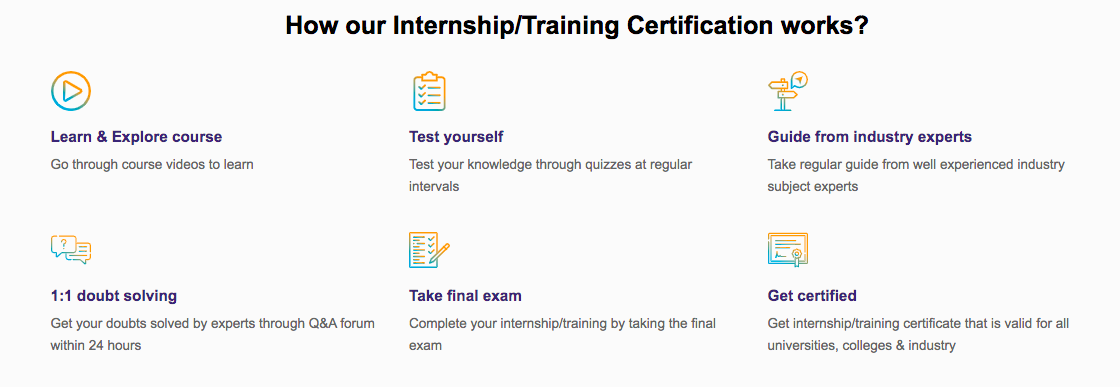
How EasyShiksha Internship/Training Program Works
The Problem of False Scientific Consensus
When multiple AI systems provide similar answers, students may assume that their agreement confirms the accuracy of the explanation. However, agreement between AI systems does not automatically establish scientific consensus.
Different models may rely on overlapping training information, retrieve similar sources or reproduce the same widely circulated explanation. Their agreement may therefore reflect shared information patterns rather than independent verification.
The reverse situation is also possible. Two systems may disagree even when the scientific community has a well-established understanding of the subject. Their differences may come from incomplete retrieval, outdated information or inconsistent interpretation rather than genuine scientific uncertainty.
This creates two risks for education. Students may accept a weak claim because several AI systems repeat it, or they may become unnecessarily uncertain about a scientific principle because different systems produce conflicting explanations.
A responsible learning platform should not use the number of AI systems supporting a statement as a substitute for evaluating evidence. Instead, it should examine the quality of the sources, the methods used to produce the findings and the extent to which the interpretation is supported by established scientific knowledge.
Understanding the Sources of Scientific Disagreement
Different AI interpretations can emerge from several sources. One is the selection of research material. If two systems retrieve different studies, they may emphasise different findings or focus on different populations and conditions. A system using older research may also produce an explanation that does not reflect more recent evidence.
Another source is methodological interpretation. A study may use observational data, controlled experiments, simulations or statistical modelling. These methods provide different forms of evidence and support different levels of causal inference. If an AI system fails to recognise the methodological distinction, it may present an association as proof of causation or generalise a limited result beyond the study's scope.
Differences can also emerge from the way systems summarise complex research. A long scientific paper may contain several findings, qualifications and limitations. A simplified summary can unintentionally give more importance to one conclusion while omitting information that changes its meaning.
Finally, some disagreements reflect genuine scientific uncertainty. Research findings may be mixed, competing explanations may remain under investigation or new evidence may challenge earlier assumptions. In such situations, the correct educational response is not necessarily to select one explanation immediately. It may be to communicate what is known, what remains uncertain and why further research is needed.
A Scientific Interpretation Comparison Framework
A proposed Scientific Interpretation Comparison Framework could help educational platforms examine why different AI systems produce different explanations of the same evidence. Its purpose would be to compare interpretations systematically rather than treating disagreement as proof that one system is incorrect.
The process would begin by identifying the original scientific evidence. This could include a research paper, experimental dataset, scientific report or a collection of credible studies. The system would then identify the central findings, the methods used and the limitations acknowledged by the researchers.
The next stage would examine the interpretations generated by different AI systems. Each interpretation would be separated into its central claims, supporting evidence, assumptions and conclusions. This would make it easier to identify whether the systems disagree about the data itself, the meaning of the findings or the extent to which the results can be generalised.
The framework could then classify the disagreement. Some differences may be purely explanatory, where systems communicate the same finding using different language. Others may involve different levels of certainty, missing conditions or genuinely incompatible conclusions.
Finally, the system would prepare an explanation that shows students what the evidence supports, where the interpretations differ and which questions remain unresolved. Human educators and subject experts would review important or ambiguous findings before they are used in formal educational content.
How AI Could Separate Research Findings From Interpretation
An important capability for educational AI would be the ability to distinguish the original research findings from the explanations added during summarisation. This distinction could reduce the risk of students treating an AI-generated interpretation as though it were a direct statement from the research itself.
Suppose a scientific study reports that a particular intervention was associated with improved outcomes among a specific group of participants. An AI assistant might summarise this as evidence that the intervention improves outcomes. Another system might describe the finding more cautiously, explaining that the study identified an association within the observed group.
A comparison system could identify the difference and return to the original study. It could examine the research design, the population studied and the authors' stated limitations. It might then explain that the result supports a relationship under the conditions examined but does not independently establish that the intervention will produce the same effect in every population.
This process would help students understand how scientific conclusions should be constructed. It would also demonstrate that accurate interpretation requires attention to the original evidence rather than reliance on a summary alone.
For EasyShiksha, this could become a useful feature in science-related courses and research activities, where students need to distinguish between experimental findings, interpretations and broader claims.
The Role of Scientific Uncertainty in AI-Supported Learning
Scientific uncertainty is often misunderstood as a weakness in knowledge. In reality, uncertainty is an important part of scientific investigation. Researchers may have strong evidence for a particular explanation while still recognising limitations, unresolved questions or alternative possibilities.
Educational AI should communicate uncertainty without making established knowledge appear unreliable. For example, a well-supported scientific principle should not be presented as merely one opinion among many. At the same time, a developing research topic should not be described as though every question has already been settled.
Different AI systems may communicate uncertainty differently. One may use cautious language and explain limitations, while another may provide a simplified conclusion. Students could interpret these differences as disagreement about the underlying science.
An educational system should therefore explain the type of uncertainty involved. It could distinguish between uncertainty caused by limited data, uncertainty about a research method, uncertainty in the interpretation of results and genuine disagreement among scientific explanations.
This would help students develop a more accurate understanding of how scientific knowledge evolves. They would learn that uncertainty does not mean that all claims are equally credible. The strength of an explanation still depends on the available evidence.
Multi-Agent AI as a Scientific Debate Environment
One possible way to investigate conflicting interpretations is to use multiple specialised AI agents. Rather than asking one AI system to generate a final explanation, an educational platform could assign different agents distinct analytical responsibilities.
A research evidence agent could examine the original study and identify its main findings. A methodology agent could evaluate the research design, sample characteristics and limitations. A critical interpretation agent could challenge conclusions that appear broader than the evidence supports. Another agent could compare the explanations with established scientific principles and relevant research.
The agents could then exchange findings and identify areas of agreement and disagreement. If one agent claims that a study demonstrates a causal relationship while another identifies an observational design, the system could investigate whether the causal conclusion is justified.
This approach would not make the agents independent scientific authorities. Their conclusions would still require source verification and human oversight. However, structured analytical disagreement could help expose assumptions and omissions that might remain hidden in a single generated explanation.
EasyShiksha could potentially explore such a system as part of an evidence-based learning architecture, especially for subjects in which research interpretation and scientific reasoning are important.
Teaching Students to Compare Competing AI Explanations
Students should not be expected to resolve every scientific disagreement independently. However, they can develop the ability to compare explanations and identify what makes one interpretation more reliable than another.
An educational activity could present two AI-generated summaries of the same research study. One might accurately describe the findings but overstate their wider significance. The other might communicate the limitations more carefully but omit an important result. Students could be asked to compare both explanations with the original research.
This would encourage them to examine whether the summaries preserve the meaning of the study, whether the conclusions follow from the methods and whether important conditions have been omitted.
Such activities can also help students recognise that a more cautious explanation is not automatically more accurate. The goal is not to reward the system that uses the most qualifications. It is to evaluate whether the explanation reflects the evidence appropriately.
EasyShiksha could integrate these comparison exercises into science courses, research methodology lessons and AI literacy programmes. Students would practise evaluating scientific information instead of relying entirely on whichever AI response appears most convincing.
Quizzes That Measure Scientific Interpretation Skills
Traditional science quizzes often test definitions, formulas and factual recall. These remain important, but they do not always reveal whether students can interpret research evidence or recognise the limitations of a scientific conclusion.
A more advanced quiz could present a short description of an experiment and ask students to identify what the findings actually demonstrate. Another question could compare two explanations and ask which one makes an unsupported assumption. A third could examine whether the sample size, research design or experimental conditions limit the conclusion.
For example, a quiz might describe an observational study showing a relationship between exercise frequency and reported wellbeing. Students could be asked whether the findings establish that exercise directly caused the improvement. The question would test their understanding of the difference between association and causation rather than simply asking them to recall a definition.
AI systems could help generate varied versions of these activities, while separate verification processes ensure that the answer keys and explanations remain accurate.
For EasyShiksha, such quizzes could make scientific reasoning an assessable capability alongside subject knowledge. Students would learn how to evaluate the strength of evidence rather than simply memorising research conclusions.
Connecting Scientific Interpretation With Practical Projects
Projects can help students understand why scientific evidence must be interpreted within its context. A learner may understand a research principle theoretically but struggle when applying it to a new dataset or practical situation.
A student studying environmental science, for example, might examine temperature measurements from different locations. Two AI systems could generate different explanations for an observed trend. The student would then need to examine the data, consider the measurement conditions and determine whether either interpretation is adequately supported.
A data science student could compare AI-generated interpretations of a dataset and investigate whether the conclusions account for missing values, sampling limitations and potential bias. A biology student could examine how differences in experimental conditions affect the interpretation of research results.
These projects would help learners understand that scientific reasoning involves more than obtaining an answer. It requires examining the quality of the data, evaluating the methods and explaining why a conclusion is justified.
Within EasyShiksha, project-based learning could provide a practical environment for developing these capabilities. It would also connect theoretical courses with evidence evaluation and applied problem-solving.
Games and Simulations for Exploring Scientific Disagreement
Interactive simulations could make scientific interpretation more accessible by allowing students to change variables and observe how different conditions affect results.
Imagine a simulation in which students investigate the relationship between plant growth and environmental conditions. They could modify light exposure, water availability and temperature while observing changes in plant development. Different AI systems might explain the observed outcomes by emphasising different variables.
Students could then investigate whether the explanations are compatible or whether one overlooks an important condition. The simulation would provide a controlled environment for testing claims rather than relying entirely on written arguments.
A similar activity could be developed for physics, chemistry, economics or environmental science. Students could explore how changing assumptions influence the outcome and why a conclusion that works in one situation may not apply in another.
Games and simulations could therefore become more than engagement tools. They could provide environments in which learners examine the relationship between evidence, assumptions and scientific explanations.
The Scientific Evidence Provenance Layer
When AI systems interpret scientific information, it is important to know where the underlying evidence came from. A scientific explanation should be traceable to the research findings, data or established principles that support it.
A proposed Scientific Evidence Provenance Layer could record the sources used to generate an explanation, the date of the information, the relevant research context and the claims supported by each source. It could also distinguish between direct findings and interpretations produced by an AI system.
For example, an explanation about climate patterns might draw on observational records, scientific models and published research. The system could show which parts of the explanation come from measured observations and which depend on model-based projections.
This would help students understand that different forms of scientific evidence have different strengths and limitations. It would also make it easier for educators to identify outdated or inappropriate sources.
For EasyShiksha, evidence provenance could support more transparent AI-assisted course content and help students develop responsible research habits. The goal would be to make the origin and context of important scientific claims easier to examine.
Updating Educational Content When Scientific Knowledge Changes
Scientific knowledge is continually refined. New research may confirm an earlier explanation, reveal limitations or introduce evidence that requires existing interpretations to be reconsidered. Educational materials must therefore be reviewed periodically.
When different AI systems interpret the same evidence differently, the disagreement could serve as a signal that a particular topic requires closer examination. It may indicate that the material contains outdated information, oversimplified explanations or unresolved scientific questions.
A content-review system could compare the existing lesson with newer research and identify sections that may require updating. It could also examine whether quizzes and assignments continue to reflect the revised explanation.
However, an AI-generated disagreement should not automatically trigger a content change. Scientific claims must be evaluated against credible evidence and appropriate academic standards. Some disagreements may reflect differences in terminology or scope rather than new scientific findings.
EasyShiksha could potentially use this approach to support continuous course improvement, especially in subjects such as artificial intelligence, biotechnology, environmental science and computer science, where research and technical practices can change rapidly.
The Risk of Creating Confusion Through Multiple AI Answers
Although comparing AI interpretations can improve critical thinking, showing students several conflicting explanations without guidance may create unnecessary confusion. Beginners may not have enough background knowledge to determine which claims are supported.
A learning platform should therefore present disagreement in a structured and age-appropriate way. It should first establish the basic scientific concept, then explain where interpretations differ and why those differences matter.
For example, students learning an introductory scientific principle should not be presented with several advanced theoretical debates before understanding the foundational concept. The educational system should introduce complexity progressively.
It should also distinguish between established findings and unresolved questions. A disagreement between AI systems does not automatically mean that the scientific community is divided. Students need to understand whether the difference comes from model limitations, source selection or genuine academic debate.
The objective is to build scientific confidence and critical thinking together, not to make every scientific statement appear uncertain.
Human Oversight and Academic Responsibility
AI systems can help compare evidence, identify inconsistencies and generate alternative interpretations. However, scientific expertise remains important when evaluating complex research, particularly when conclusions involve specialised methods or competing theories.
Educators and subject experts should review significant disagreements before they are incorporated into formal learning materials. They can determine whether an interpretation is academically defensible, whether an important limitation has been overlooked and whether the explanation is appropriate for the student's level.
Human oversight is also necessary because AI systems may confidently produce incorrect interpretations. If several agents share similar limitations or rely on the same incomplete sources, their agreement may create a misleading impression of reliability.
Educational platforms should make it possible for educators to inspect the evidence behind AI-generated explanations and understand why different systems reached different conclusions.
This approach preserves the value of AI assistance while ensuring that academic responsibility remains with qualified people.
Empower your team. Lead the industry
Get a subscription to a library of online courses and digital learning tools for your organization with
EasyShiksha
EasyShiksha and the Future of Evidence-Aware Learning
EasyShiksha's educational ecosystem provides an opportunity to explore how scientific interpretation can become part of the broader learning experience. Online courses can introduce scientific concepts and research methods, while quizzes can assess whether students understand the difference between evidence and interpretation.
AI-supported activities could compare alternative explanations of the same study, identify missing assumptions and help students examine the reliability of sources. Projects could provide opportunities to interpret datasets and investigate competing conclusions. Games and simulations could allow learners to test how changing conditions influence scientific outcomes.
University programmes could also benefit from this approach by integrating evidence evaluation into subject-specific learning. Students studying biotechnology, environmental science, data analytics, healthcare-related subjects or artificial intelligence could develop the ability to examine research findings and communicate uncertainty responsibly.
Career guidance could connect these capabilities with professional roles that require analytical thinking, research literacy and evidence-based decision-making.
The opportunity is not to make EasyShiksha a platform that chooses one AI interpretation on behalf of every student. It is to explore a learning environment in which students understand why interpretations differ, how scientific conclusions are evaluated and when further evidence is required.
Measuring Scientific Interpretation Skills
If educational systems want students to become better at evaluating scientific evidence, they need ways to assess this capability. Traditional marks may indicate whether a student remembers a scientific principle, but they may not reveal whether the learner can distinguish between a research result and an unsupported conclusion.
A more comprehensive assessment could examine how students identify the main findings of a study, recognise its limitations, compare alternative explanations and justify their conclusions. It could also evaluate whether students can revise their interpretation when new evidence becomes available.
These abilities should not be reduced to a single score without context. A learner may be strong at identifying methodological limitations but need more practice interpreting statistical results. Another may understand the scientific concept but struggle to communicate uncertainty clearly.
A structured learning profile could describe these different dimensions and recommend appropriate activities. This would help students understand their progress while giving educators a clearer picture of their research and reasoning skills.
For EasyShiksha, such assessment could complement course completion and quiz performance with evidence of scientific literacy and critical interpretation.
Conclusion: Teaching Students to Navigate Scientific Disagreement
When educational AI systems interpret the same scientific evidence differently, students face a challenge that goes beyond choosing which answer sounds more convincing. They must understand where the evidence comes from, what the research actually demonstrates, which assumptions influence the interpretation and whether the disagreement reflects genuine scientific uncertainty or an AI-generated error.
This challenge also creates an opportunity. Educational AI can help students compare explanations, examine research methods, identify unsupported conclusions and understand how scientific knowledge develops. However, these capabilities must be supported by reliable sources, transparent reasoning and human academic oversight.
For EasyShiksha, this concept could connect online courses, quizzes, projects, games, simulations and university programmes through an evidence-aware learning approach. Students could learn not only scientific facts but also how to interpret findings, evaluate competing explanations and communicate what remains uncertain.
The future of intelligent education should not depend on presenting one confident AI-generated explanation as the final authority. It should help learners understand the evidence behind an explanation and develop the judgment to evaluate different interpretations.
When AI systems disagree about scientific evidence, education has an opportunity to teach something more valuable than choosing an answer: how to think critically about the evidence that makes an answer credible.
Anshika Jain is an Engineer, Developer, and Educational Content Author known for her dedication to technology and knowledge sharing. With a strong analytical mindset and a passion for innovation, she has consistently contributed to creating meaningful digital solutions and insightful educational articles.
Her ability to simplify complex technical concepts into engaging and easy-to-understand content makes her work valuable for students and learners across various platforms. Along with her technical expertise, Anshika is admired for her creativity, professionalism, and commitment to continuous learning.
She represents a perfect blend of technical excellence and impactful communication, inspiring others through both her development work and educational contributions.