Educational games have become an increasingly interesting part of digital learning because they allow students to interact with concepts instead of simply reading about them. Through simulations, challenges, quests and interactive environments, learners can practise problem-solving, experiment with strategies and receive immediate feedback. A student may successfully manage a virtual business, complete a cybersecurity challenge, solve a programming puzzle or make decisions inside a simulated workplace. Yet an important question remains: does success inside the game demonstrate that the student can apply the same skill outside it?
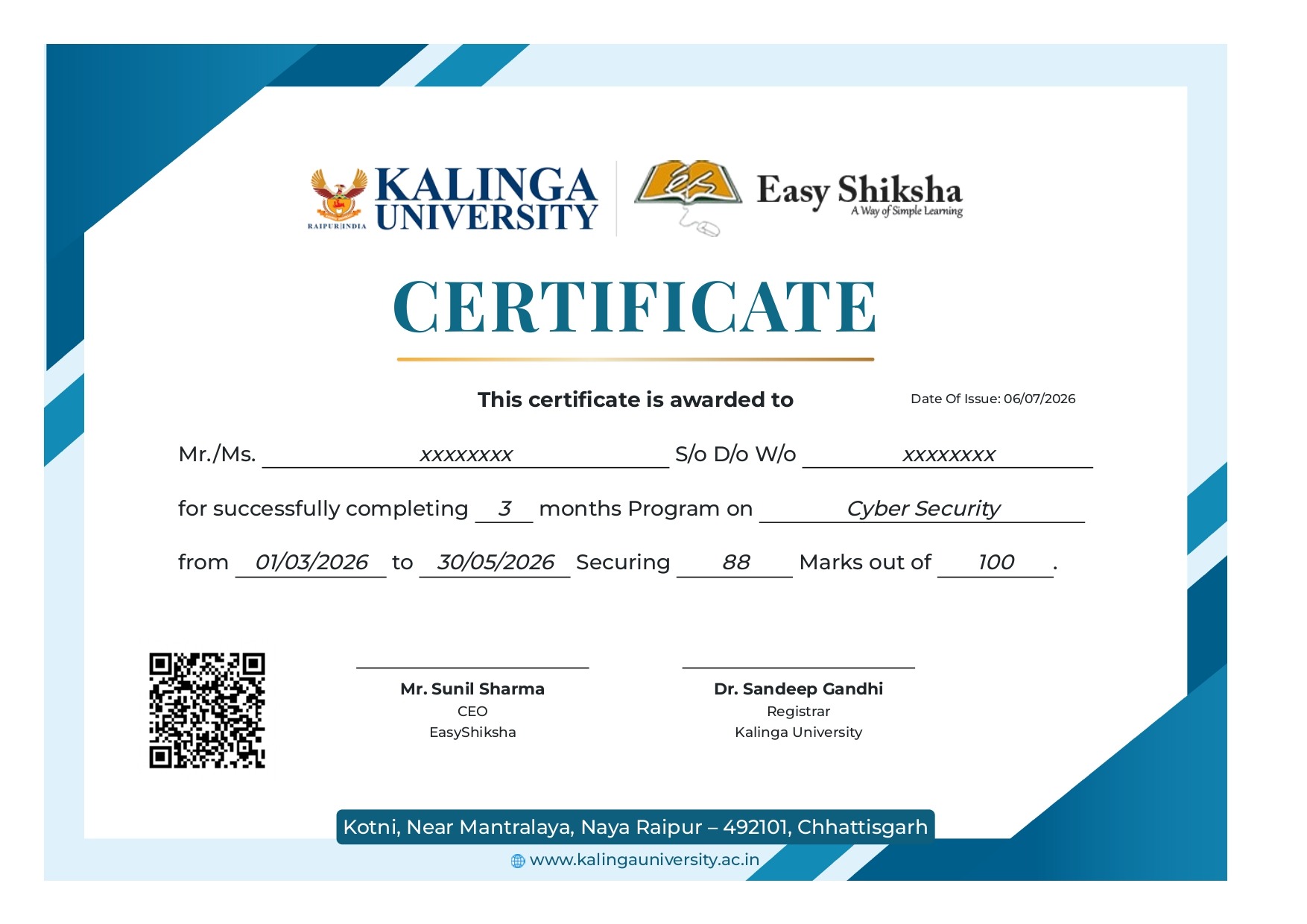
Imagine an EasyShiksha learner who performs exceptionally well in a business simulation. The student knows how to allocate a budget, manage limited resources and respond to changes in customer demand. After completing several levels, the learner earns a high score and unlocks a certificate of achievement. However, when presented with an unfamiliar business problem involving different information, competing priorities and an incomplete set of instructions, the same student struggles to determine what to do. The learner may have mastered the game's mechanics without developing the broader capability that the game was intended to teach.
This distinction introduces the Reality-Transfer Challenge: determining whether a student can apply a skill learned in an educational game to an unfamiliar task outside the original environment. It shifts the focus from game completion to transferable capability. Instead of asking only whether a learner succeeded inside a simulation, educators must examine whether the learner understands the underlying principles well enough to recognise and use them in a different context.
For EasyShiksha, this challenge creates an opportunity to connect educational games with online courses, quizzes, practical projects, internships, certificates and career guidance. Games can introduce concepts and provide controlled practice, while unfamiliar follow-up tasks can test whether the learning extends beyond the original experience. The result could be a more meaningful approach to game-based education, in which engagement becomes the starting point for capability development rather than the final measure of success.
The central question is not whether students can win educational games. It is whether they can use what they learned when the game is no longer there to guide them.
What Is the Reality-Transfer Challenge?
The Reality-Transfer Challenge is a proposed educational framework for evaluating whether knowledge and skills acquired in one learning environment can be applied successfully in a different environment. It examines the movement from familiar practice to unfamiliar application, with particular attention to skills developed through educational games and simulations.
Learning transfer occurs when a person uses previously acquired knowledge or capability to approach a new problem. Sometimes the new task closely resembles the original learning activity. A student who practises calculating percentages in a game may later apply the same calculation to a similar financial exercise. This is a relatively direct form of transfer because the underlying structure of the problem remains familiar.
More challenging forms of transfer occur when the surface details change. A learner may understand resource allocation inside a game but need to recognise the same principle in project management. A student who learns debugging through a puzzle may need to diagnose a problem in unfamiliar code. A learner who practises risk identification in a cybersecurity simulation may need to recognise a comparable pattern in a business process.
The Reality-Transfer Challenge focuses on this more demanding transition. It asks whether the student has developed a flexible understanding of the skill or has merely learned to respond to familiar cues within the original activity.
For EasyShiksha, the framework could provide a design principle for educational games and the assessments that follow them. Every important learning experience could be paired with a suitable transfer task that tests the underlying capability in a changed context.
Why Game Performance Can Be Misleading
Educational games often provide structured environments with clear objectives, visible feedback and predictable rules. These features make them engaging and useful for practice, but they can also make success easier to achieve without deep understanding.
A student may discover that a particular sequence of actions consistently produces a favourable result. Once the sequence is memorised, the learner can repeat it successfully even without understanding why it works. The game records successful performance, but that performance may reflect familiarity with the environment rather than independent problem-solving.
For example, a student playing a financial-management game may learn to reduce expenses whenever a budget indicator turns red. This strategy might work across several levels. However, in a real business context, reducing expenses indiscriminately could damage essential operations or reduce future revenue. The learner needs to understand which expenses can be reduced, which investments should be protected and how the decision affects the organisation's wider objectives.
The problem is not that the game has failed to engage the student. The problem is that the evidence of success is incomplete. The learner may have developed a useful habit without learning when that habit is appropriate.
EasyShiksha could address this limitation by treating game scores as evidence of performance within a specific environment, not automatic proof of transferable competence. Follow-up tasks would help determine whether the student can explain the relevant principle, recognise when it applies and adapt it to different conditions.
The Difference Between Game Mastery and Skill Mastery
Game mastery refers to a learner's ability to navigate the mechanics, objectives and rules of a particular game. Skill mastery refers to the learner's ability to perform the underlying task or apply the relevant knowledge under appropriate conditions.
The two can overlap, but they are not identical. A student may become highly proficient at a programming game because its puzzles repeatedly use the same pattern. That student may still struggle when asked to debug a program with unfamiliar structure or explain why a particular solution works. Similarly, a learner may achieve a high score in a business simulation by discovering an effective strategy for the game's specific economic model without understanding how real businesses differ.
Skill mastery requires a deeper relationship between knowledge and action. The learner must recognise the problem, identify relevant information, choose an appropriate approach and evaluate the outcome. When the context changes, the learner should be able to determine which parts of the previous approach remain useful and which require modification.
For EasyShiksha, this distinction could influence how educational game achievements are represented. Completing a game could demonstrate participation and successful performance in that environment. Transfer assessments, practical projects and independent explanations could provide additional evidence of broader capability.
Such a model would make educational achievements more meaningful because it would distinguish between what a student completed and what the student can demonstrate beyond the original learning activity.
Designing the Transfer Gap Between a Game and Reality
The transfer gap is the distance between the environment in which a skill is learned and the environment in which the learner is expected to use it. This distance can involve changes in presentation, context, complexity, available information, tools or the consequences of decisions.
A student who practises spreadsheet formulas in a tutorial and then completes a nearly identical worksheet faces a relatively small transfer gap. A learner who must use spreadsheet analysis to investigate an unfamiliar business problem faces a larger gap because the student must first identify which information matters and which calculations are appropriate.
The transfer gap should not be made unnecessarily large. If a task introduces too many unfamiliar concepts simultaneously, it becomes difficult to determine whether the student is struggling with the intended skill or with unrelated demands. A useful challenge changes the context while preserving a meaningful connection to the capability being assessed.
An EasyShiksha learning pathway could therefore introduce transfer progressively. Students might begin with an activity closely related to the game, move to a task with different surface details and eventually attempt a more unfamiliar scenario requiring independent interpretation. Each stage would provide information about how flexibly the learner can apply the skill.
This progression would help educators identify where transfer begins to break down. The student may understand the underlying principle but fail to recognise when it is relevant, or may recognise the problem but struggle to adapt the original strategy. These are different learning needs and require different forms of support.
The Three Stages of Reality Transfer
A practical Reality-Transfer Challenge could examine three connected stages: recognition, adaptation and independent application.
Recognition occurs when the student identifies that a principle learned in the game is relevant to a new task. For example, a learner who practises identifying suspicious patterns in a cybersecurity game must recognise a comparable warning sign in a differently presented scenario. The details may change, but the underlying relationship remains relevant.
Adaptation occurs when the student modifies the original strategy to suit the new environment. A method that worked inside the game may need adjustment because the real-world task contains different constraints, tools or objectives. A learner who understands budgeting, for instance, may need to adapt a familiar resource-allocation strategy to account for delayed payments or unexpected operating costs.
Independent application occurs when the student can use the skill without relying on the game's familiar instructions, visual cues or step-by-step guidance. The learner must interpret the problem, select an approach and evaluate the result using the information available.
These stages should not be treated as rigid categories that every learner passes through in exactly the same order. They are useful dimensions for examining the transfer process. A student may recognise a principle immediately but need substantial support to adapt it, while another may apply a familiar strategy successfully without being able to explain the underlying concept.
For EasyShiksha, examining these dimensions could produce a more informative picture of student development than a single game score.
Reality Transfer in Programming Games
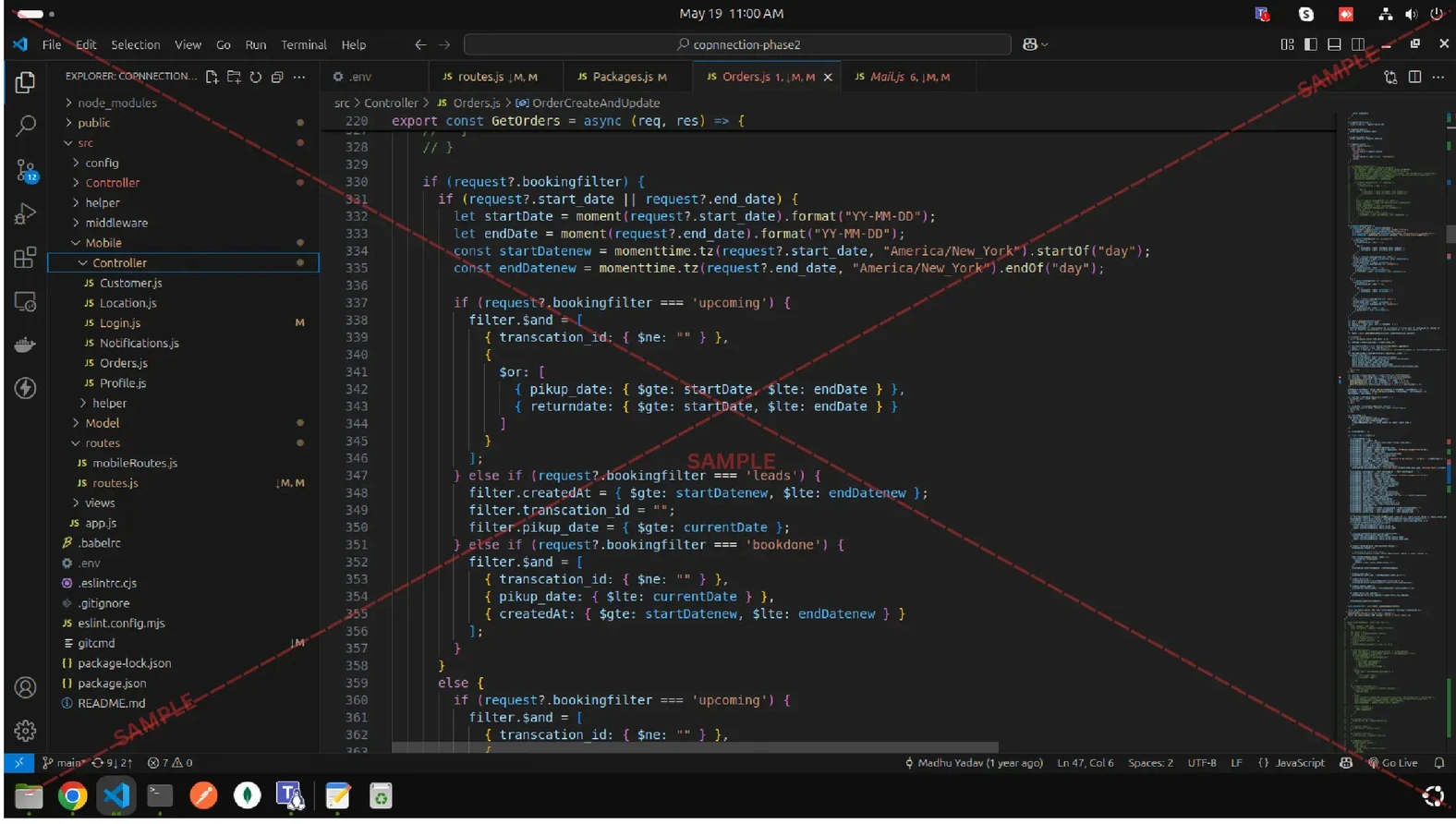
Programming games often teach concepts through short challenges involving sequences, conditions, loops, functions or debugging. These experiences can help beginners understand how instructions produce outcomes, but the ultimate objective is to enable students to use programming concepts in unfamiliar tasks.
Consider a student who completes a game involving conditional statements. The game provides a character, a defined objective and a limited set of instructions. The learner discovers how to use conditions to control the character's movement and successfully completes the level.
A transfer challenge could then ask the student to inspect an unfamiliar piece of code that makes an incorrect decision under certain conditions. Instead of presenting the problem as another game level, the task might involve determining why a simple inventory application incorrectly classifies products as available or unavailable.
The student must recognise that the same logical principle is relevant, understand how the condition affects program behaviour and identify an appropriate correction. The context is different, but the underlying capability remains connected to the original learning experience.
EasyShiksha could potentially connect programming games with practical coding exercises, debugging assignments and small projects. A learner who succeeds in a game would receive an opportunity to apply the same concepts in a different environment. If difficulties emerge, the platform could recommend targeted instruction rather than assuming that game completion guarantees programming proficiency.
Reality Transfer in Business and Financial Simulations
Business games provide another useful setting for testing transferable capability because they often involve multiple variables and competing objectives. Students may manage budgets, allocate resources, analyse customer behaviour or make investment decisions. However, success within a simplified simulation does not necessarily demonstrate readiness for unfamiliar business problems.
A learner might perform well in a game by consistently investing in the most profitable product. A transfer task could introduce a company with limited cash reserves, uncertain demand and a product that generates lower immediate returns but supports a strategically important customer group. The learner would need to reconsider the original strategy.
The important question would not be whether the student chooses one predetermined answer. It would be whether the decision reflects an understanding of the relevant trade-offs. A reasonable solution should account for the company's objectives, the available evidence, the risks involved and the consequences of alternative choices.
Finance learning could use a similar method. Students might first practise budgeting in a game and later analyse an unfamiliar monthly expense dataset. The transfer task would require them to identify patterns, distinguish fixed and variable costs and propose a budget that fits the stated constraints.
For EasyShiksha, these activities could connect game-based learning with practical business projects and finance courses. Students would have opportunities to demonstrate that they can apply familiar principles even when the details and demands of the task change.
Reality Transfer in Cybersecurity and Risk Assessment
Cybersecurity skills depend heavily on recognising patterns in unfamiliar situations. A student may learn how to identify suspicious links, recognise weak authentication practices or interpret basic security alerts through a game. The challenge is whether the student can use that knowledge when the same underlying risk appears in a different form.
For example, a cybersecurity game might teach a learner to recognise an unusual login attempt through a clearly marked warning. A transfer assessment could present a different set of login records, unfamiliar terminology and several competing explanations for the activity. The learner would need to identify which evidence is relevant and explain what additional information might be needed before taking action.
This tests more than recognition. It examines whether the student understands the reasoning behind the original decision and can apply it when the clues are less obvious.
A stronger task might ask the student to prioritise several security issues with different levels of severity and urgency. The learner would need to consider possible impact, available resources and the need to maintain normal operations.
EasyShiksha could potentially use controlled cybersecurity simulations followed by defensive analysis tasks. These experiences would allow students to practise risk assessment and incident response without interacting with unauthorised real-world systems. Assessment would focus on sound reasoning, appropriate use of evidence and safe professional practice.
Building Unfamiliar Tasks Without Making Them Unfair
An unfamiliar task must challenge the learner's ability to transfer knowledge without introducing irrelevant barriers. If the assessment requires advanced reading comprehension when the intended learning objective is basic programming logic, poor performance may reflect the additional language demand rather than the programming skill itself.
Designing valid transfer tasks therefore requires a clear understanding of what should remain constant and what should change. The underlying capability should remain relevant, while the surface context, presentation or constraints change enough to test flexible application.
For example, a student who learns percentage calculations through a shopping game could be asked to analyse a discount in a business invoice. The context changes, but the mathematics remains accessible. If the intended objective is more advanced reasoning, the task might require comparing several pricing strategies with different constraints.
The assessment should also provide sufficient information for a reasonable solution. Real-world problems can contain uncertainty, but ambiguity should be intentional and relevant to the skill being tested. Students should not lose credit because essential instructions were omitted accidentally.
For EasyShiksha, educators and developers could review transfer tasks together to ensure that they measure the intended capability. Testing with learners at different experience levels could reveal whether the challenge is appropriately difficult and whether its instructions are clear.
Measuring Transfer Beyond the Final Answer
The final answer is important, but it does not always reveal whether a student has genuinely transferred a skill. A learner might guess correctly, use an inappropriate method that happens to produce the right result or arrive at a solution with extensive assistance.
A Reality-Transfer Challenge should therefore examine the process as well as the outcome. Depending on the task, useful evidence may include the student's explanation, the information selected, the strategy chosen, the ability to identify relevant constraints and the way the learner responds when new information becomes available.
For a programming task, the assessment could examine whether the code works, whether the student can explain the logic and whether the solution handles the conditions specified in the problem. For a business task, it could consider the consistency between the recommendation and the evidence, along with the student's recognition of risks and trade-offs.
The assessment should not demand lengthy explanations for every simple task. The evidence required should be proportionate to the capability being evaluated. A short practical task may provide sufficient evidence for a narrow skill, while a complex professional competency may require several independent demonstrations.
EasyShiksha could potentially combine game results, unfamiliar tasks, quizzes and practical project evidence to develop a more complete view of student capability. The important principle is that no single signal should automatically be treated as proof of broad competence when the skill requires application across multiple contexts.
AI as a Reality-Transfer Assessment Assistant
Artificial intelligence could support Reality-Transfer Challenges by helping generate alternative scenarios, adapt task presentation and provide feedback on student reasoning. However, AI-generated variation must preserve the educational objective and the validity of the assessment.
Suppose a learner completes a game about resource allocation. An AI-supported system could create a new scenario involving a different organisation, resource type and set of constraints while preserving the core reasoning requirement. The learner would encounter an unfamiliar task without needing an entirely new game to be developed manually.
AI could also help explain why a student's strategy was unsuitable for the new context. Rather than simply marking an answer wrong, the system might identify an overlooked constraint or ask the student to compare the expected outcome with the available evidence.
However, generated tasks need validation. An AI system could accidentally introduce a hidden assumption, create contradictory information or make one version substantially harder than another. Where transfer performance influences formal certification or other consequential outcomes, automated feedback should operate within established assessment rules and appropriate human oversight.
For EasyShiksha, AI would be most valuable as a tool for expanding practice and supporting feedback, while educators and assessment designers remain responsible for defining what the task measures and verifying that its outcomes are meaningful.
Connecting Reality Transfer With Courses, Projects and Internships
Reality transfer becomes more valuable when it is embedded in a complete educational pathway rather than treated as a one-time test after a game. A course introduces the knowledge, a game provides structured practice, an unfamiliar task examines transfer and a practical project provides a further opportunity to apply the capability.
Consider a student learning web development through EasyShiksha. The learner begins with a course covering HTML, CSS and JavaScript, then practises programming logic through interactive challenges. After completing these activities, the student receives an unfamiliar task that requires building or debugging a small interface with different requirements from those used in the original exercises.
The learner's performance can reveal whether the underlying concepts are understood well enough to support independent work. The next stage might involve a larger project that combines several skills and requires planning, testing and problem-solving.
Internships could provide a further opportunity to use these capabilities in a professional environment. Although a simulation cannot reproduce every aspect of workplace experience, transfer assessments may help identify which skills a student is ready to practise and which areas require additional preparation.
EasyShiksha could potentially connect these stages through learning recommendations that respond to evidence. Students who demonstrate strong transfer might progress towards more complex projects, while learners who struggle could receive targeted revision and another opportunity to apply the concept in a different context.
Common Failure Patterns in Reality Transfer
Students may struggle to transfer learning for several different reasons, and each requires a different response. Some learners remember the procedure but fail to recognise when it is relevant. Others understand the principle but cannot adapt it when the available information changes. Some depend heavily on visual cues, while others succeed only when the task follows the same sequence used during practice.
A student may also lack the foundational knowledge needed to understand the unfamiliar task. In this case, repeated transfer assessments are unlikely to help until the missing prerequisite is addressed. Another learner may understand the concept but have difficulty explaining the reasoning, which means the assessment should distinguish between the ability to perform the task and the ability to articulate the underlying principle.
EasyShiksha could potentially analyse patterns across multiple attempts to determine which type of support is most appropriate. A learner who fails to recognise a relevant concept might benefit from comparison activities that highlight similarities between different problems. A learner who recognises the concept but cannot adapt it may need scenarios with changing constraints and opportunities to compare strategies.
These interpretations should remain provisional rather than becoming permanent labels. Performance can change as students gain experience, and a single unsuccessful task does not establish that a learner lacks a particular capability.
Avoiding the False Confidence Problem
Educational games can create a strong sense of progress because students receive frequent feedback and visible rewards. This can improve motivation, but it may also lead learners to overestimate how well they can perform outside the game.
A student who repeatedly completes familiar challenges may interpret that success as evidence of broad mastery. When the student encounters an unfamiliar task, the gap between perceived and demonstrated ability can be discouraging.
The solution is not to make educational games less engaging. It is to communicate what each achievement demonstrates and provide opportunities for students to test their understanding in new contexts. A game-completion badge can represent successful participation, while a separate transfer assessment can provide evidence of application beyond the original environment.
EasyShiksha could potentially help learners understand this distinction through transparent feedback. Students might see that they have mastered a particular game mechanic while still needing practice applying the underlying skill independently. Such feedback should encourage development rather than undermine confidence.
Over time, students could learn to view transfer tasks as a normal part of education. Success would no longer mean only completing the activity in front of them; it would also mean understanding how to use their knowledge when the situation changes.
Empower your team. Lead the industry
Get a subscription to a library of online courses and digital learning tools for your organization with
EasyShiksha
Request Demo Now
The Future of Reality-Transfer Learning on EasyShiksha
The Reality-Transfer Challenge could become a useful design principle for an education ecosystem that combines digital learning with practical capability development. Educational games would provide controlled environments for experimentation, while transfer tasks would test whether students can apply the same principles under different conditions.
Online courses could introduce concepts, quizzes could examine foundational understanding and AI-supported simulations could provide repeated practice. Unfamiliar tasks would then reveal whether learners can recognise and adapt their skills beyond the original activity. Projects and internships could provide additional opportunities to apply those capabilities in increasingly realistic environments.
This approach could also make educational games more useful for career exploration. A student interested in finance, software development, marketing or cybersecurity could experience different professional challenges and discover which types of problems they enjoy solving. These experiences would support exploration without claiming to predict future performance or guarantee career success.
The long-term opportunity is to make learning achievements more closely connected to what students can actually do. Instead of treating course completion, game scores and certificates as interchangeable measures of capability, EasyShiksha could potentially use them as different forms of evidence within a broader learning journey.
The value would lie in helping students move from familiarity to understanding, from understanding to flexible application and from application to practical experience.
Conclusion: The Real Test Begins When the Game Ends
Educational games can make learning interactive, engaging and memorable, but their greatest value emerges when students can use what they learn beyond the original environment. A high score demonstrates success within a particular set of rules. Transferable competence requires something more: the ability to recognise relevant principles, adapt strategies and solve unfamiliar problems without depending on the cues that made the original task easy.
The Reality-Transfer Challenge provides a framework for examining this difference. By pairing games with carefully designed unfamiliar tasks, educators can investigate whether students have developed flexible understanding rather than merely memorised a successful sequence of actions. The approach also helps identify specific learning gaps and creates opportunities for targeted practice.
For EasyShiksha, this framework could connect educational games with online courses, quizzes, projects, internships, certificates and career guidance. Students could practise skills in a game, apply them in a new context, receive feedback and then progress towards more complex practical work. AI could help generate varied scenarios and provide personalised support, while validated assessment methods would ensure that the evidence remains meaningful.
Ultimately, educational success should not be measured only by how well students perform inside a learning environment designed to help them succeed. It should also consider whether they can take what they have learned into unfamiliar situations and use it effectively.