Modern education increasingly focuses on making learning experiences predictable, structured and personalised. Students are guided through carefully organised lessons, receive explanations in a logical sequence, practise concepts through familiar exercises and encounter assessments that often follow recognisable patterns. Digital learning platforms extend this structure through progress indicators, recommended lessons, automated feedback and personalised study pathways. Such predictability can make education easier to navigate, particularly for students who are learning independently. However, it also raises an important question: can an educational experience become so predictable that it gradually reduces the learner's opportunity to discover, question and think independently?
The Neural Prediction Error Paradox explores this possibility. The concept draws on the broader neuroscience principle that the brain continuously forms expectations about incoming information and updates its internal models when actual experiences differ from those expectations. When an event is different from what the brain predicts, the mismatch can generate a prediction error. This discrepancy may encourage attention, learning and the revision of existing expectations. When every instructional step follows an entirely familiar pattern, however, students may have fewer opportunities to encounter meaningful surprises that require them to reconsider what they know.
This does not mean that predictable education is inherently ineffective. Consistency, clear explanations and structured instruction are essential for building foundational knowledge. The challenge emerges when predictability becomes excessive and students begin anticipating not only the structure of a lesson but also the reasoning, answers and outcomes expected from them. They may learn how to navigate the instructional process without necessarily developing a deeper understanding of the subject.
For an educational ecosystem such as EasyShiksha, this creates an interesting opportunity to explore how courses, quizzes, games, projects, internships, university programmes and career guidance could incorporate carefully designed variations in learning experiences. Rather than making every instructional step surprising, a platform could investigate how to balance familiarity with meaningful intellectual uncertainty. The objective would be to help students develop stronger understanding by occasionally encountering information, questions and situations that challenge their existing expectations.
Understanding Neural Prediction Error
The human brain does not process every experience as an entirely new event. It continuously uses previous experiences to anticipate what may happen next. When a student reads a familiar type of question, for example, they may predict the structure of the answer before finishing the sentence. When a teacher introduces a topic using a familiar explanation pattern, the student may anticipate the next stage of the lesson. These predictions help the brain process information efficiently because it does not need to construct a completely new interpretation every time something happens.
Prediction error refers to the difference between an expected outcome and the information actually received. When the brain encounters a discrepancy, it may need to update its existing expectations, depending on the importance and reliability of the new information. This process is relevant to learning because acquiring knowledge often involves modifying an existing understanding rather than simply adding another fact.
Consider a student who believes that all metals are magnetic. If the student encounters an experiment involving a metal that is not attracted to a magnet, the observation conflicts with the existing belief. The discrepancy creates an opportunity to revise the student's mental model. The student may investigate different properties of metals and eventually understand that magnetic behaviour depends on material composition and structure.
The important point is that the unexpected observation creates a reason to reconsider the existing explanation. Without that discrepancy, the student might continue using an oversimplified understanding without recognising its limitations.
Neural prediction error is a scientific concept associated with how the brain processes expectations and unexpected information. Its application to education should therefore be understood as a research-informed design perspective rather than a claim that every surprising classroom event automatically produces better learning.
The Neural Prediction Error Paradox in Education
The paradox emerges when educational systems become extremely efficient at anticipating what students will encounter. A learner may begin to recognise the exact sequence of instructional activities, the format of every quiz, the structure of feedback and even the types of answers that are rewarded. This familiarity can improve navigation and reduce unnecessary confusion, but it may also encourage students to rely on procedural expectations rather than independently understanding the subject.
For example, a student who repeatedly completes multiple-choice questions in which the correct answer is usually the longest option may gradually begin using answer-length patterns instead of evaluating the actual content. Similarly, a student who has completed many quizzes following the same structure may become skilled at identifying familiar question patterns without being equally capable of applying the underlying knowledge to a different situation.
In these cases, the student is learning something, but the learning may not be what the educational system intended. They are learning how to predict the assessment rather than necessarily mastering the academic concept.
This is where the Neural Prediction Error Paradox becomes important. A learning environment can become highly organised while unintentionally reducing opportunities for students to encounter situations that challenge their assumptions. The system may optimise the experience for smooth progression, yet deeper understanding may require occasional moments in which the learner has to pause, reconsider and construct a new explanation.
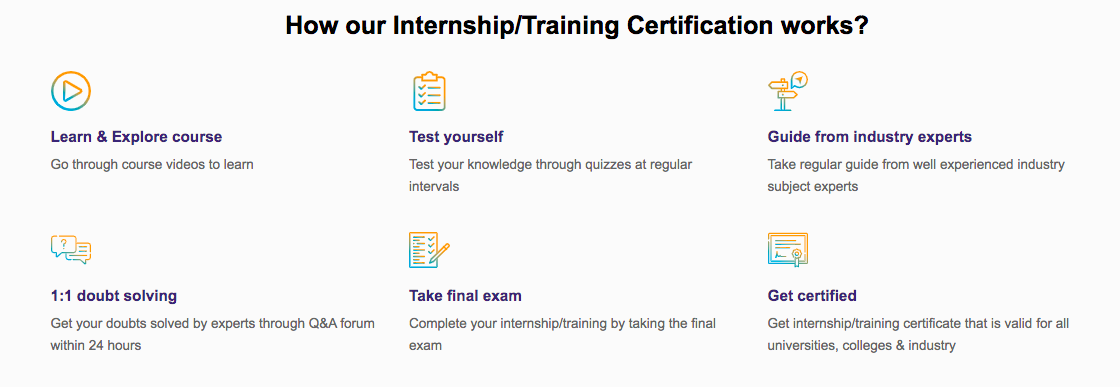
How EasyShiksha Internship/Training Program Works
Predictability and the Development of Mental Models
Students develop mental models to understand how different concepts relate to one another. These models help them explain observations, solve problems and make predictions about unfamiliar situations. A student learning physics, for example, gradually develops an internal understanding of how force, mass and acceleration are related. A student studying economics begins connecting demand, supply, incentives and market behaviour.
Predictability supports the development of these models because repeated examples help learners recognise important relationships. However, mental models can become overly simplified when students encounter only examples that confirm their current understanding.
A student who learns about gravity through examples involving objects falling vertically may understand the basic concept but struggle to apply it to orbital motion. The issue is not necessarily that the student has failed to memorise the relevant information. The issue may be that the mental model has been developed through a narrow collection of familiar situations.
Introducing carefully selected variations can reveal the limits of the student's current understanding. An unfamiliar example may require the learner to reconsider whether the original explanation applies under different conditions. This process can encourage conceptual flexibility.
For EasyShiksha, this principle could influence how online courses present examples. Instead of relying exclusively on predictable demonstrations, courses could gradually introduce contrasting situations that help students identify which parts of a concept remain consistent and which depend on specific conditions.
When Familiar Instructional Patterns Become Learning Shortcuts
Educational platforms frequently use consistent instructional structures. A lesson may begin with a definition, continue with an explanation, provide an example, introduce a quiz and finish with a summary. This approach is useful because students become familiar with the learning environment and can concentrate on the subject instead of repeatedly understanding a new interface.
However, when every lesson follows precisely the same intellectual sequence, students may start anticipating the activity rather than actively processing the content. They may automatically wait for the example instead of attempting to construct one. They may skip the explanation because they expect the summary to provide the important information. They may even begin treating the quiz as a routine checkpoint rather than an opportunity to test their understanding.
The problem is not the existence of a predictable structure. It is the possibility that students begin responding to the structure mechanically.
A more thoughtful instructional design could preserve familiar navigation while varying the intellectual experience. One lesson might begin with a practical problem before introducing the theory. Another might present an observation that appears to contradict the student's expectations. A third might ask learners to compare two explanations before revealing the formal concept.
Such variations could encourage students to engage with the subject in different ways without making the platform unnecessarily confusing.
The Difference Between Productive Surprise and Confusion
An important distinction must be made between meaningful surprise and arbitrary unpredictability. Introducing unexpected information does not automatically improve learning. If a student encounters an unfamiliar question without having the necessary background knowledge, the experience may create confusion rather than productive reasoning.
For example, a beginner learning programming may benefit from an unexpected output that reveals a misunderstanding of how variables work. However, presenting an advanced asynchronous programming problem before the student understands basic functions and control flow may create unnecessary difficulty.
Productive surprise occurs when the unexpected element is connected to knowledge that the learner can use to interpret it. The student has enough foundational understanding to recognise that something does not match their expectations, investigate the difference and develop a revised explanation.
Confusion, by contrast, may occur when the learner cannot identify the relevant relationship or does not possess the prerequisite knowledge needed to make sense of the information.
This distinction should guide any attempt to introduce prediction-based learning design. The purpose is not to surprise students continuously. It is to create occasional, meaningful discrepancies that encourage deeper thought while preserving clarity, accessibility and appropriate support.
Prediction Error and Attention During Learning
Attention is an important part of the relationship between unexpected information and learning. When an event differs from what a person expects, it may attract attention because the brain has to determine whether the discrepancy is important. In an educational setting, this could happen when a familiar concept is presented through an unusual example or when a quiz reveals that an apparently correct assumption is incomplete.
Imagine a student who believes that increasing the sample size always guarantees that a research study will produce an accurate conclusion. An instructional activity could present a large dataset containing systematic measurement bias. The student may initially expect the larger sample to produce a more reliable result, only to discover that increasing the number of biased observations does not remove the underlying problem.
The unexpected result creates an opportunity to distinguish between sample size and measurement quality. The student must reconsider the original assumption rather than simply memorising another definition.
Nevertheless, attention alone is not sufficient for learning. A surprising animation, unusual sound or dramatic question may attract attention without contributing to meaningful understanding. Educational design must ensure that the unexpected element is connected to the learning objective and followed by an opportunity to interpret what happened.
For EasyShiksha, this could mean using carefully constructed examples and assessments that reveal important conceptual differences rather than introducing novelty purely to make lessons entertaining.
Designing Courses Around Controlled Intellectual Uncertainty
Online courses are often organised around carefully planned sequences of topics. This structure helps students move from foundational knowledge toward advanced understanding. The Neural Prediction Error Paradox suggests that these sequences could be improved by introducing controlled intellectual uncertainty at selected points.
A course on artificial intelligence, for example, could begin with familiar explanations of how machine learning systems identify patterns. After students understand the basic process, the course might present a situation in which a model performs well on training data but poorly on unfamiliar examples. The learner is then asked to predict why the system failed before receiving the explanation.
This activity creates a discrepancy between the student's expectation and the model's actual behaviour. The student must use previously learned concepts to investigate the problem.
A course on digital marketing could similarly introduce a campaign that receives substantial engagement but produces very few conversions. Students who expect high engagement to translate directly into business results would need to reconsider the relationship between attention, audience intent and commercial outcomes.
Such examples can make abstract concepts more meaningful because students encounter situations in which their initial expectations are incomplete.
The opportunity for EasyShiksha would be to explore instructional designs in which each course combines stable conceptual foundations with selected moments of intellectual challenge. The aim would be to develop the ability to transfer knowledge rather than simply recognise familiar lesson patterns.
Quizzes as Prediction Testing Environments
Quizzes can play a particularly important role in prediction-based learning because they provide opportunities to test what students expect to happen. Conventional assessments usually focus on whether a learner selects the correct answer. A more exploratory approach could also examine the reasoning and confidence behind the response.
Before revealing the result, a quiz could ask students to consider how confident they are in their prediction. When the answer is revealed, learners could compare their expectation with the actual result and investigate any discrepancy.
For instance, a student studying web development might predict how a JavaScript expression will behave before executing it. If the actual output differs from the prediction, the student has an opportunity to inspect the evaluation order, data types or coercion rules involved.
The learning value comes from the comparison between expectation and observation. Students can identify where their mental model produced an incorrect prediction and revise it using the relevant explanation.
A platform such as EasyShiksha could potentially explore confidence-aware quizzes that record more than correct and incorrect responses. Such an approach would need to distinguish between a confident misconception, an uncertain but correct response and a simple calculation mistake. These patterns could help educators understand where conceptual explanations may need improvement.
The Role of Educational Games in Creating Meaningful Prediction Errors
Games naturally involve expectations, decisions and outcomes. Players form predictions about what will happen after they make a particular choice, and the game provides feedback that may confirm or challenge those expectations. This makes educational games a potentially useful environment for exploring prediction-based learning.
Consider a business simulation in which students manage a small company. A learner may assume that lowering prices will always increase total revenue because more customers will purchase the product. The simulation could introduce a situation in which the lower price reduces the profit earned per sale so significantly that the business performs worse despite selling more units.
The unexpected outcome encourages the learner to examine the relationship between price, demand, costs and profitability. Instead of simply reading a definition of revenue and profit, the student experiences how different business variables interact.
Similarly, a science-based game could allow students to predict the result of changing one variable in an experiment before observing the simulated outcome. If the result differs from the student's expectation, the game could encourage them to investigate the underlying mechanism.
For EasyShiksha, educational games could potentially become more than engagement tools. They could provide structured environments in which students test hypotheses, observe consequences and revise their understanding through repeated decisions.
AI and the Detection of Conceptual Prediction Errors
Artificial intelligence could support the Neural Prediction Error approach by helping educational systems identify recurring differences between what students expect and what they demonstrate through their responses. However, detecting such differences would require more information than ordinary answer scoring.
An AI-enabled learning environment could analyse quiz attempts, confidence ratings, explanations, project decisions and patterns of repeated mistakes. It might identify that a student consistently predicts an incorrect outcome in a particular type of problem, even when they can correctly recall the relevant definition.
For example, a learner may correctly explain the concept of responsive web design but repeatedly predict that a fixed-width layout will adapt automatically to smaller screens. The difference between the student's verbal knowledge and practical prediction could indicate that the concept has not been fully integrated into their mental model.
AI could use this information to recommend a practical demonstration, a contrasting example or a targeted exercise. The system would not simply repeat the original explanation. It would attempt to address the specific relationship that the learner appears to misunderstand.
This is a proposed application rather than an established capability that should be assumed to exist on EasyShiksha. Its development would require reliable learning data, carefully designed assessments and validation by educators. AI-generated interpretations of student understanding should also remain open to human review because incorrect answers can have several causes.
Personalised Learning Without Excessive Predictability
Personalisation is one of the most important opportunities in digital education. Students differ in their prior knowledge, learning pace, interests and familiarity with different subjects. AI can potentially use these differences to recommend more appropriate learning experiences.
However, personalisation can become overly predictable if the system continually provides content that matches a learner's existing preferences and performance patterns. A student who consistently performs well in one type of question may receive more questions of the same type. A learner who prefers video explanations may rarely encounter opportunities to construct an explanation independently.
This can create a narrow learning environment in which students become increasingly comfortable with familiar formats but receive limited exposure to alternative approaches.
A more balanced personalised system could preserve the student's preferred learning supports while gradually introducing different forms of intellectual activity. A learner who usually studies through video explanations might occasionally be asked to interpret a diagram or solve a practical problem. A student who performs well in multiple-choice quizzes could be introduced to open-ended reasoning exercises.
The objective should not be to disregard individual preferences. It should be to prevent personalisation from becoming a mechanism that continuously reinforces existing habits.
The Importance of Retrieval and Unexpected Contexts
Retrieval practice involves recalling previously learned information rather than simply reviewing it. It is widely used in education because attempting to retrieve knowledge can help strengthen learning, although its effectiveness depends on factors such as task design, timing and the learner's existing knowledge.
Prediction-based learning could extend this idea by asking students to retrieve knowledge in contexts that differ from the original lesson. A learner may understand a concept when it appears in a familiar textbook example but struggle when the same principle is embedded in a practical situation.
For example, a student studying cybersecurity may learn about phishing through a conventional explanation. Later, the student could encounter a simulated workplace message that uses an unfamiliar presentation but contains similar warning signs. The student would need to identify the underlying security principle without relying on the original example.
The unfamiliar context creates a useful test of whether the learner has understood the transferable concept or merely memorised the original presentation.
EasyShiksha could potentially connect this approach with courses, quizzes, projects and internship preparation. Students could revisit previously learned concepts through different situations, helping them develop the ability to recognise knowledge beyond its original instructional format.
Empower your team. Lead the industry
Get a subscription to a library of online courses and digital learning tools for your organization with
EasyShiksha
Projects create natural opportunities for students to encounter outcomes that differ from their expectations. Unlike many conventional exercises, projects often involve several interacting variables, incomplete information and decisions that cannot be reduced to one predetermined sequence.
A student developing a website may expect a design to work perfectly after implementing the initial layout. During testing, the design may behave differently on smaller screens. The discrepancy encourages the student to investigate responsive layouts, browser behaviour and CSS constraints.
A learner working on a marketing project may predict that one type of content will attract the most engagement, only to find that another format performs better with the intended audience. A student building a data analysis project may discover that the dataset contains missing values or unexpected patterns that change the original interpretation.
These experiences can encourage students to question assumptions and adjust their methods.
For EasyShiksha, projects could be positioned as environments where learners test predictions against practical outcomes. The educational value would not depend on whether every project succeeds exactly as planned. It would depend on whether students can explain unexpected results, identify the causes and make informed improvements.
Internships as Real-World Prediction Challenges
Internships introduce students to professional environments in which expectations frequently differ from actual workplace conditions. A learner may expect a task to require only technical knowledge but discover that communication, collaboration, time management and understanding business requirements are equally important.
A programming intern, for example, may anticipate that completing a feature involves writing code according to a specification. In practice, the task may require understanding an existing codebase, identifying dependencies, discussing requirements with colleagues and testing changes across different environments.
The difference between expectation and reality can reveal gaps in professional readiness. It can also help students develop a more realistic understanding of how academic knowledge is applied.
A connected EasyShiksha learning journey could potentially use internship reflections to identify these gaps. Students might document what they expected before beginning a task, what actually happened and what they learned from the difference. Such reflections could inform future courses, projects and career guidance.
This would make internships more than temporary work experiences. They could become opportunities to examine and update students' understanding of professional environments.
Avoiding Surprise Fatigue and Cognitive Overload
Although meaningful discrepancies can support learning, continuously introducing unexpected events may have the opposite effect. Students need periods of stability in which they can organise information, practise essential skills and consolidate what they have learned.
If every lesson begins with a surprising example, every quiz changes its format and every activity introduces an unfamiliar challenge, students may spend too much effort adapting to the instructional environment. This can reduce the attention available for the subject itself.
The design challenge is therefore to balance predictability and variation. Familiar structures should provide a stable foundation, while selected variations should challenge important assumptions. Students should understand the purpose of an unexpected activity and receive sufficient explanation after encountering it.
A good learning system would not attempt to maximise surprise. It would aim to introduce meaningful discrepancies at moments when students have enough knowledge to interpret them.
Measuring Whether Prediction-Based Learning Is Effective
A major challenge in applying this concept is determining whether prediction-based instructional design actually improves learning. Student engagement, time spent on a lesson and immediate quiz performance cannot independently establish deeper understanding.
A more useful evaluation could examine whether students become better at explaining unfamiliar situations, correcting misconceptions and transferring knowledge to new problems. It could also examine whether they retain important concepts after a period of time and whether they can apply those concepts without depending on familiar question formats.
Educational researchers could compare different instructional approaches using carefully designed studies. One group might receive a conventional sequence of explanations and exercises, while another experiences the same core content with selected prediction activities and opportunities to explain unexpected outcomes. Both groups could then complete assessments that include familiar and unfamiliar contexts.
Such studies would need to account for differences in prior knowledge, instructional time, motivation and assessment difficulty. They should also examine whether the benefits of prediction-based activities vary across subjects and age groups.
For EasyShiksha, the long-term opportunity would be to treat prediction-based learning as a design hypothesis that can be tested rather than a universal rule that every student must follow.
Student Confidence and the Calibration of Understanding
Students do not always know whether their understanding is accurate. A learner may be highly confident in an incorrect explanation or uncertain about a concept they actually understand well. This difference between confidence and demonstrated knowledge is important because students often use their own confidence to decide whether they need additional practice.
Prediction-based activities could help students become more aware of this gap. Before attempting a question, learners could record what they expect to happen and how confident they are in that expectation. After receiving the result, they could examine whether their confidence was justified.
Over time, this process may help students recognise the conditions under which their assumptions are reliable and when they need to investigate further.
However, confidence should not be treated as a direct measurement of knowledge. Some students may hesitate to express confidence even when they understand a concept, while others may feel certain because they are familiar with the wording of a question. Confidence information should therefore be interpreted alongside performance, explanations and practical application.
Ethical Considerations in AI-Based Prediction Analysis
If educational platforms begin analysing students' expectations, confidence and response patterns, they will collect information that may reveal more about learning behaviour than conventional scores alone. This creates important responsibilities around privacy, transparency and student control.
Students should understand why prediction activities are being used and what information is recorded. Learning data should be collected only for clearly explained educational purposes, with appropriate safeguards for storage, access and sharing.
AI systems must also avoid labelling students permanently on the basis of a limited number of incorrect predictions. A learner who makes a mistake in one subject should not be classified as generally poor at reasoning. Educational behaviour changes with experience, context and support.
The purpose of prediction analysis should be to improve learning opportunities, not to create fixed judgments about student ability. Any recommendations should remain explainable and, where appropriate, open to review by educators.
EasyShiksha and the Opportunity to Explore Prediction-Based Learning
EasyShiksha's broader learning ecosystem provides a useful context for exploring how predictable instructional patterns and meaningful intellectual variations might be combined. Online courses could introduce concepts through structured explanations and then present carefully selected situations that challenge students' initial assumptions. Quizzes could ask learners to predict outcomes before revealing the correct answers, while games could allow them to test decisions and observe unexpected consequences.
Projects could extend this approach by asking students to document their expectations before beginning practical work and compare those expectations with the results. Internships could provide real-world situations in which learners discover how professional tasks differ from their academic assumptions. Certificates could recognise completed learning experiences, while career guidance could help students interpret the practical capabilities they develop.
University programmes could also benefit from instructional approaches that encourage students to question simplified explanations and examine how academic principles behave under different conditions.
The central opportunity is not to make every part of the platform unpredictable. It is to create a learning environment in which students move between familiar foundations and carefully designed intellectual challenges. Such a model could support stronger conceptual understanding while maintaining the clarity and structure that learners need.
The Future of Education: From Following Instructions to Testing Expectations
As digital education becomes more personalised, platforms will increasingly be able to organise content according to student progress and previous activity. This may improve accessibility and help learners move through complex subjects at an appropriate pace. However, educational quality will depend on more than how accurately a system predicts what a student is likely to do next.
A future-oriented learning system should also create opportunities for students to question their own predictions. It should encourage them to examine why an answer differs from their expectation, identify the assumptions behind their reasoning and revise their understanding when new evidence appears.
This requires a shift in how instructional success is defined. A student should not be evaluated only on how smoothly they follow a sequence of lessons. They should also be encouraged to demonstrate that they can respond intelligently when a problem does not follow the expected pattern.
AI can support this process by identifying recurring conceptual difficulties and recommending relevant activities. Educators remain essential for interpreting complex learning needs, providing context and ensuring that the challenges are appropriate.
The future of intelligent education may therefore involve a balance between instructional reliability and intellectual uncertainty. The learning pathway can be organised, but the thinking that takes place within it should remain active and exploratory.
Conclusion: Learning Needs Both Structure and Meaningful Surprise
The Neural Prediction Error Paradox raises an important question for modern education: can excessive predictability reduce the opportunities students have to question assumptions, revise mental models and develop independent understanding? Predictable instruction provides valuable structure, but when students become more skilled at anticipating the educational process than understanding the subject, learning may become procedural rather than deeply transferable.
The solution is not to make education confusing or continuously surprising. It is to distinguish between useful consistency and excessive instructional repetition. Students need clear explanations, familiar learning structures and reliable feedback, but they also need carefully designed situations in which their expectations are tested. These moments can encourage them to investigate discrepancies, reconsider assumptions and connect knowledge with unfamiliar contexts.
For EasyShiksha, this concept offers an opportunity to explore more thoughtful connections between online courses, quizzes, educational games, projects, internships, university programmes and career guidance. Each learning experience could combine a stable foundation with meaningful opportunities to test predictions and apply knowledge beyond familiar examples.
The most valuable outcome would not be a student who can anticipate every instructional step. It would be a student who can respond confidently when reality does not follow the expected pattern. Education should prepare learners not only to recognise familiar answers but also to investigate unexpected outcomes, revise their thinking and use knowledge in situations they have never encountered before.
The goal of intelligent education should not be to eliminate uncertainty from learning. It should be to help students understand what to do when their expectations are challenged.
Anshika Jain is an Engineer, Developer, and Educational Content Author known for her dedication to technology and knowledge sharing. With a strong analytical mindset and a passion for innovation, she has consistently contributed to creating meaningful digital solutions and insightful educational articles.
Her ability to simplify complex technical concepts into engaging and easy-to-understand content makes her work valuable for students and learners across various platforms. Along with her technical expertise, Anshika is admired for her creativity, professionalism, and commitment to continuous learning.
She represents a perfect blend of technical excellence and impactful communication, inspiring others through both her development work and educational contributions.