Scientific discoveries rarely reach students in the same form in which they first emerge. A research finding may begin as a complex investigation involving specialised terminology, experimental conditions, statistical analysis, competing explanations and carefully defined limitations. Before it becomes part of a textbook, online course or classroom presentation, it passes through several stages of interpretation and simplification. Researchers explain their findings, academic writers interpret the research, curriculum designers organise the information, educators convert it into lessons and digital platforms present it through videos, summaries, diagrams and quizzes. Each stage makes the knowledge more accessible, but each also creates an opportunity for its original meaning to change.
This transformation is necessary. Students cannot be expected to understand every scientific discovery through the full technical language of research publications. Educational content must be appropriate to the learner's age, existing knowledge and learning objectives. A school student studying genetics requires a different explanation from a postgraduate researcher studying molecular biology. The challenge is therefore not whether scientific knowledge should be simplified. It is how to simplify it without damaging the relationships, conditions and limitations that make the original discovery meaningful.
The Knowledge Half-Transformation Problem describes a situation in which scientific knowledge is simplified so extensively, or through so many layers of interpretation, that the educational version retains only part of the original discovery's meaning. The resulting explanation may remain technically related to the research, but it can communicate a substantially different understanding. A preliminary finding may become a confirmed fact. A relationship observed under specific conditions may become a universal rule. A complex scientific mechanism may be reduced to a convenient analogy that students later mistake for the actual process.
This problem is especially relevant to digital education because learning materials can be created, summarised, republished and reused at considerable speed. Artificial intelligence can transform research papers into lessons, generate simplified explanations and produce assessments, but every transformation introduces the possibility of losing important context.
For an education ecosystem such as EasyShiksha, this creates an opportunity to explore a more systematic approach to scientific knowledge translation. Courses, articles, quizzes and other learning resources could be designed to preserve the essential meaning of scientific discoveries while adapting their complexity to different educational levels. The objective would be to make advanced knowledge understandable without turning carefully qualified scientific findings into misleading educational statements.
Understanding the Knowledge Half-Transformation Problem
Knowledge transformation is the process through which information changes form as it moves between different audiences, formats and levels of complexity. In education, this transformation is unavoidable because research knowledge must be interpreted before it can be used effectively in teaching.
The problem begins when the transformation preserves the topic but changes the underlying meaning. A research paper may report that a particular intervention was associated with an improvement in a measured outcome among a specific group of participants. An educational summary might simplify this into a statement that the intervention improves the outcome. Although the two statements appear similar, the second removes important information about the research design, population and limits of the finding. Students may interpret an observed association as proof of a universal causal effect.
The word "half" in Knowledge Half-Transformation does not refer to a literal measurement in which exactly fifty per cent of information disappears. It represents a conceptual condition in which an educational explanation retains some of the original knowledge but loses enough of its structure to change how the discovery is understood. The transformation may preserve the central subject, terminology or headline result while removing the qualifications that determine what the result actually means.
This distinction matters because educational content can be factually recognisable while conceptually incomplete. A student may remember the simplified statement accurately and still misunderstand the scientific discovery behind it.
Why Scientific Discoveries Cannot Be Transferred Without Interpretation
Scientific research is produced within specialised environments. Researchers work with particular questions, methods, instruments, samples, models and assumptions. A discovery is therefore rarely just a standalone fact. It is usually a conclusion reached under defined conditions and supported by a particular body of evidence.
When that discovery enters education, its context must be translated. A research finding about a biological mechanism may need to be explained through a diagram. A discovery in physics may require mathematical simplification. A result in artificial intelligence may need an introductory explanation before students can understand the technical method behind it.
However, translation is not the same as copying information into simpler language. It requires decisions about which details can be removed, which relationships must remain intact and which limitations are essential for understanding the finding.
For example, a scientific discovery involving a complex interaction between several variables may be introduced through one dominant factor to help beginners understand the basic idea. This can be educationally useful if the lesson clearly communicates that the explanation is simplified. It becomes problematic when students are led to believe that the selected factor explains the entire phenomenon.
The responsibility of educational design is therefore to preserve the conceptual foundation of a discovery even when its technical detail is reduced.
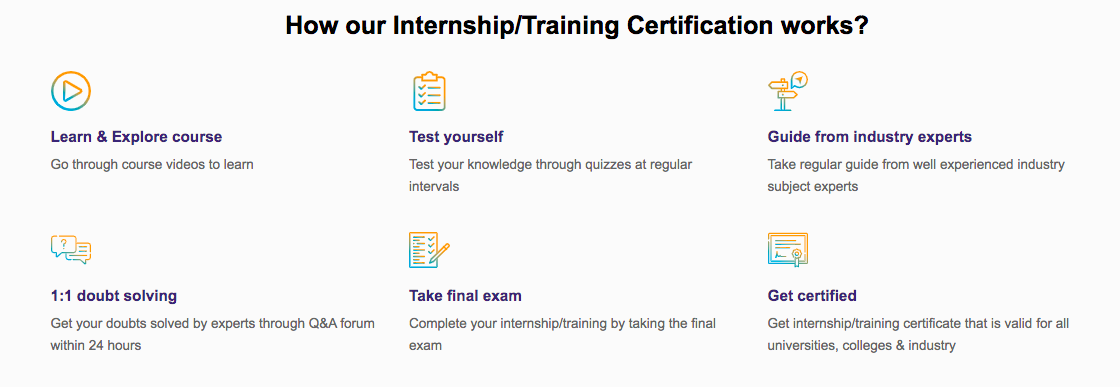
How EasyShiksha Internship/Training Program Works
The Difference Between Simplification and Knowledge Distortion
Simplification and distortion are often confused because both involve removing information. Yet they have very different educational consequences. Simplification reduces complexity while preserving the essential relationships of a concept. Distortion changes those relationships or removes conditions that are necessary for interpreting the concept correctly.
Consider a lesson explaining the structure of an atom. An introductory diagram may show electrons arranged around a nucleus. This representation can help beginners understand that atoms contain different components. However, if the diagram is presented as a complete description of electron behaviour, it can create a misleading mental model. More advanced explanations must introduce the quantum mechanical nature of electrons and clarify the limitations of the introductory representation.
The simplified model is not automatically wrong. Its educational value depends on whether its purpose and limitations are communicated appropriately.
The same issue appears in climate science, medicine, economics, genetics and artificial intelligence. A scientific concept may be simplified into a memorable sentence, but that sentence must not imply more certainty, generality or causal power than the evidence supports.
A strong educational system should therefore evaluate simplification according to meaning preservation rather than word reduction. The most successful explanation is not necessarily the shortest one. It is the one that makes the concept accessible without teaching students a fundamentally incorrect version of it.
How Scientific Knowledge Changes Across Educational Stages
Scientific discoveries typically pass through several communication environments before becoming familiar educational knowledge. The first stage may involve an original research publication. The second may include review articles, scientific commentary or academic interpretation. Later stages may involve textbooks, curriculum materials, lectures, online articles and simplified digital learning resources.
Each stage has a different purpose. Research publications provide detailed methods and evidence. Review articles organise findings across studies. Textbooks establish a structured understanding of a discipline. Introductory lessons help learners acquire foundational concepts. Digital summaries provide quick access to information.
The difficulty is that every stage may remove context that was available in the previous one. A textbook may simplify a research conclusion for a broad audience. An online article may reduce the textbook explanation to a few paragraphs. A short video may convert those paragraphs into a memorable statement. An AI-generated summary may then reproduce the statement without its original qualifications.
By the time students encounter the final version, they may have no indication that the original discovery was more conditional or uncertain than the simplified explanation suggests.
This is not necessarily the result of careless writing. It can emerge from the combined effect of many individually reasonable editorial decisions. The Knowledge Half-Transformation Problem is therefore a system-level challenge rather than merely an individual author's mistake.
The Loss of Scientific Uncertainty
One of the most important elements that can disappear during educational simplification is uncertainty. Scientific discoveries are often presented with qualifications because researchers understand that evidence has limits. The size of a study, the methods used, the population examined and the possibility of alternative explanations all influence how confidently a result can be interpreted.
However, educational content often favours direct statements because they are easier to teach and assess. A carefully qualified research conclusion may become a simple sentence that sounds definitive. Students may then assume that the scientific community has reached complete agreement when the evidence is still developing.
This is particularly important in emerging fields such as artificial intelligence, biotechnology, neuroscience and climate research. New discoveries can change existing explanations, and early findings may be revised as additional evidence becomes available.
Educational content should not make every scientific concept appear uncertain. Established knowledge deserves clear explanations. However, when evidence is preliminary, contested or context-dependent, the educational version should preserve that distinction.
For EasyShiksha, this could mean designing learning materials that distinguish between established principles, developing evidence and open scientific questions. Students would learn not only what researchers currently understand but also how confidently a particular conclusion can be accepted.
When Correlation Becomes Causation During Simplification
One of the most common forms of knowledge distortion occurs when an observed relationship is converted into a causal explanation. Scientific research may identify an association between two variables without proving that one directly causes the other. During simplification, the distinction can disappear.
Imagine a study that identifies an association between a particular learning practice and improved academic performance. The original research may carefully discuss participant characteristics, study limitations and possible alternative explanations. An educational article may reduce the finding to a statement that the practice increases performance. This changes the meaning of the evidence.
Students who encounter the simplified version may begin to treat the relationship as a universal scientific principle. They may also apply it in situations that were never examined by the original study.
The problem is not limited to educational psychology. It can occur in nutrition research, public health, economics, environmental science and technology studies. A research result that describes a statistical association may be transformed into a simplified explanation of cause and effect.
A responsible knowledge translation process must preserve the distinction between observation, association, causal evidence and established mechanism. These are not interchangeable forms of scientific knowledge.
The Disappearance of Experimental Conditions
Scientific discoveries are often valid only under specific experimental conditions. Researchers may use a particular temperature, concentration, population, measurement technique or laboratory environment. These details help define the scope of the finding.
When scientific results become educational content, some of these conditions may be removed to reduce complexity. Unfortunately, the resulting explanation can make a context-specific result appear universal.
For example, a material may demonstrate a particular property under controlled laboratory conditions, but its behaviour may differ in an industrial environment. A medical intervention may show a measurable outcome in a selected study population without producing the same result in every population. A machine learning model may perform effectively on one dataset while failing to generalise to unfamiliar data.
If educational content presents the result without its original conditions, students may misunderstand what the discovery actually demonstrates.
This is why scientific simplification should retain the conditions that materially affect the conclusion. Not every experimental detail needs to appear in an introductory lesson, but the essential boundaries of the finding should remain visible.
How Educational Analogies Can Change Scientific Meaning
Analogies are valuable teaching tools because they connect unfamiliar concepts with experiences students already understand. A scientific process may be compared with a familiar object, system or everyday activity. These comparisons can reduce cognitive difficulty and make abstract ideas easier to remember.
However, analogies have limits. They highlight selected similarities while ignoring differences. If the limitations are not explained, students may begin to interpret the analogy as a literal description.
For instance, describing the human brain as a computer can help introduce information processing, memory and communication between different systems. Yet the comparison cannot fully represent the biological, chemical and adaptive processes involved in the brain. Similarly, describing genes as instructions can help explain their role in biological development, but it may oversimplify the interaction between genetic information, environmental conditions and cellular regulation.
The problem becomes more serious when an analogy is reused across multiple educational resources without its limitations. Students may repeatedly encounter the same simplified comparison and gradually treat it as a complete scientific explanation.
A better approach would be to introduce analogies as temporary learning models. Educational content could explain what the comparison helps students understand, where it stops being accurate and which more advanced concept replaces or extends it.
The Role of Artificial Intelligence in Knowledge Transformation
Artificial intelligence is changing how scientific knowledge enters digital education. AI systems can summarise research papers, generate simplified explanations, translate technical terminology, create diagrams and produce quizzes from educational material. These capabilities can make research more accessible and reduce the time required to develop learning resources.
However, AI systems may also accelerate the Knowledge Half-Transformation Problem. A generated summary may remove important qualifications, interpret an association as causation or combine findings from different contexts. If the output is then used to create another summary or course, the original meaning may become increasingly difficult to recover.
The danger is not simply that AI might invent a completely false fact. It may produce a statement that is mostly related to the original research but lacks the context required to interpret it accurately. Such outputs can be particularly persuasive because they are fluent, organised and written in an authoritative style.
Educational platforms should therefore treat AI-generated simplification as a transformation that requires verification. The system should preserve the original source, identify the claims extracted from it and check whether the simplified explanation retains the meaning and limitations of the evidence.
For EasyShiksha, AI could potentially assist educators in producing different versions of the same lesson while maintaining a connection to a verified conceptual foundation.
Developing a Knowledge Transformation Audit
A useful response to this problem could be a proposed Knowledge Transformation Audit. Rather than evaluating only the final educational resource, the audit would examine how the original scientific discovery has changed during its journey into teaching material.
The process could begin by identifying the central research claims and their supporting evidence. The educational explanation would then be compared with those claims to determine which details have been preserved, simplified, qualified or omitted. The audit would examine whether the simplified version still communicates the same essential relationships and whether it introduces stronger conclusions than the original research supports.
This would not require every educational lesson to reproduce an entire research paper. The objective would be to identify whether any omitted information changes the interpretation of the discovery.
For example, if an introductory lesson removes complex statistical methods but preserves the study's main limitations and conclusion, the simplification may be appropriate. If it removes the limitations and presents a preliminary finding as a universal law, the transformation would require revision.
A Knowledge Transformation Audit could become a valuable editorial process for digital courses, research-based articles and educational resources that depend on recent scientific findings.
Building a Scientific Knowledge Lineage
Another proposed approach would be to create a knowledge lineage connecting the original discovery with its educational representations. A scientific concept could be linked to its research sources, review articles, textbook explanations, course modules, diagrams and assessment questions.
This would allow editors to understand where a particular educational statement originated and how it changed as it moved between different formats.
For instance, a lesson about neural networks could be connected to the foundational research and technical explanations that support its central concepts. Its simplified examples could be linked to the original definitions, while its quiz questions could be associated with the specific learning outcomes they assess.
A knowledge lineage would also make corrections more manageable. If a scientific explanation changes because of new evidence, the platform could identify related learning materials that may require review.
For EasyShiksha, this could potentially support a more connected content architecture in which educational resources are not isolated documents but related representations of an evolving body of knowledge.
Designing Multiple Levels of Explanation Without Losing Meaning
Different students require different levels of complexity. A beginner may need an intuitive explanation, while an advanced learner may need mathematical models, experimental evidence and technical terminology. Providing the same explanation to everyone would limit the effectiveness of personalised education.
However, creating multiple versions of a lesson introduces another challenge. Each version must preserve the essential meaning of the concept even when the amount of detail changes.
A possible approach is to establish a verified conceptual foundation before generating level-specific explanations. The foundation would define the central principles, relationships, assumptions and limitations. Beginner, intermediate and advanced versions could then explain those principles using different language and examples.
The beginner version might use an analogy and a simple diagram. The intermediate version could introduce the mechanism and relevant conditions. The advanced version might examine experimental methods, mathematical relationships and unresolved research questions. Although the presentations would differ, they would remain connected to the same underlying conceptual structure.
This approach could be particularly useful for EasyShiksha's courses and quizzes. Students could progress from introductory understanding toward deeper scientific reasoning without having to unlearn misleading explanations introduced at earlier stages.
The Importance of Preserving Negative Evidence
Educational summaries often focus on what a scientific study discovered. However, scientific research also contains information about what was not demonstrated, which explanations were rejected and which outcomes were not observed.
Negative evidence can be essential to understanding the scope of a discovery. A study may show that a particular method did not produce a measurable improvement under certain conditions. An experiment may reject one proposed mechanism while leaving another explanation unresolved. A research team may identify limitations that prevent a conclusion from being generalised.
When these details disappear during simplification, students may receive an incomplete picture of how scientific knowledge develops. They may assume that discoveries emerge through a direct path from question to confirmation rather than through testing, revision and rejection of competing explanations.
A more complete educational explanation should preserve important negative findings when they affect the interpretation of the result. This does not mean that every lesson must include every unsuccessful experiment. It means that the evidence necessary to understand the discovery should not be removed simply because it makes the explanation less straightforward.
Knowledge Transformation Across Different Academic Disciplines
The Knowledge Half-Transformation Problem appears differently across academic subjects because each discipline has its own standards of evidence and explanation.
In biology, simplification can remove interactions between genes, environmental conditions and cellular mechanisms. A lesson may present a biological trait as the direct result of a single gene when the actual process involves multiple factors. In physics, a simplified model may be useful at an introductory level but misleading if students are not told which assumptions make it valid. In chemistry, an explanation may describe a reaction while omitting conditions that influence its rate or outcome.
In economics and finance, research findings may be converted into general rules even when they depend on market conditions, policy environments or behavioural assumptions. In computer science, a technical explanation may be simplified in a way that hides important differences between programming languages, system architectures or runtime environments. In health education, a study involving a particular population may be presented as though its findings apply equally to everyone.
The verification process must therefore recognise disciplinary differences. A common framework can support the transformation audit, but the criteria used to preserve meaning must be appropriate to the subject being taught.
How Quizzes Can Reveal Knowledge Transformation Errors
Quizzes can provide more than a measure of student performance. They can also help educators identify whether a simplified explanation has produced an inaccurate mental model.
Suppose a course introduces a scientific principle through an analogy. Students may answer direct questions correctly because they remember the analogy, but struggle when asked to apply the principle to an unfamiliar situation. This may indicate that the lesson has supported memorisation without developing a sufficiently accurate conceptual understanding.
A more useful assessment could ask students to distinguish between the simplified model and the scientific process it represents. They could be asked to identify where an analogy stops being valid, explain which conditions affect a result or compare a simplified statement with a more precise research conclusion.
For EasyShiksha, quizzes could potentially be designed to assess whether students understand the boundaries of an explanation rather than only whether they remember its wording. This would help identify cases where educational simplification has made a concept easier to memorise but harder to apply correctly.
Teaching Students to Recognise Scientific Simplification
Students should not be expected to accept every educational explanation without examining its scope. As they progress through different levels of education, they need to develop the ability to distinguish between an introductory model, an established scientific principle and a research finding that remains uncertain.
This skill can be developed through evidence-based learning activities. Students could compare a simplified educational statement with the original research conclusion, examine which conditions were omitted and determine whether the simplified version changes the meaning. They could also evaluate whether an analogy accurately represents the concept or whether it introduces a misleading comparison.
Such activities would develop scientific literacy alongside subject knowledge. Students would learn that simplified explanations are useful starting points but should not always be treated as complete descriptions.
An EasyShiksha course could potentially integrate these activities into lessons and assessments, helping learners understand not only scientific discoveries but also how knowledge is communicated and interpreted.
Measuring Knowledge Preservation
A Knowledge Transformation Audit would require a way to evaluate whether the educational version preserves the essential meaning of the original discovery. A single score would be unlikely to capture every aspect of this process, but a structured evaluation could examine several dimensions.
The review could consider whether the main finding remains accurate, whether causal and conditional relationships have been preserved, whether important limitations are communicated and whether the examples demonstrate the concept correctly. It could also examine whether uncertainty has been represented appropriately and whether the educational explanation introduces claims that cannot be traced to the original evidence.
The results should be interpreted in context. A beginner lesson should not be judged by the same level of technical completeness as an advanced research course. The important question is whether the simplification is appropriate for its audience without changing the central meaning.
Any evaluation system should also be tested by subject experts. Automated tools may help identify missing qualifications or differences between source and summary, but human review remains necessary when the meaning depends on specialised disciplinary knowledge.
The Risks of Excessive Scientific Detail
Preventing knowledge distortion does not mean filling every educational lesson with technical qualifications. Too much detail can overwhelm beginners, increase cognitive load and make it difficult for students to identify the central idea.
An educational platform must therefore balance precision with accessibility. The purpose of a beginner lesson is not to reproduce every detail of a research publication. It is to establish a reliable foundation on which more advanced knowledge can be built.
The solution is progressive disclosure. A lesson can introduce a simple explanation while making it clear that the model is introductory. As students advance, the platform can reveal additional conditions, evidence and exceptions. This approach allows complexity to increase with the learner's capability rather than presenting every detail at the beginning.
The essential requirement is that the simplified version should remain compatible with the more advanced explanation. Students should be able to extend their understanding rather than replace a fundamentally misleading model.
EasyShiksha and a More Reliable Scientific Learning Ecosystem
EasyShiksha's educational ecosystem creates an opportunity to consider scientific knowledge transformation as part of content development and quality assurance. Online courses, educational articles, quizzes, university programmes and career-oriented learning resources can all benefit from explanations that preserve the meaning of the knowledge they communicate.
A proposed knowledge transformation framework could connect original evidence with simplified lessons and their related assessments. Educators could review whether the key claims remain accurate, whether important limitations have been preserved and whether the examples reflect the underlying scientific principles. AI could support the creation of different explanation levels, while subject experts could evaluate complex or uncertain material.
The platform could also use learner feedback and assessment performance to identify explanations that require improvement. If students repeatedly misunderstand a concept despite completing the relevant lesson, the issue may involve instructional design, missing prerequisites or an oversimplified explanation.
This would create a more continuous relationship between content development and learning outcomes. Rather than treating publication as the final stage of educational content creation, the platform could review how well the material supports accurate understanding after students begin using it.
Empower your team. Lead the industry
Get a subscription to a library of online courses and digital learning tools for your organization with
EasyShiksha
The Future of Scientific Knowledge Translation in Digital Education
The future of digital education will involve increasingly rapid movement between research, AI systems, educational platforms and learners. Scientific discoveries may be converted into simplified explanations, interactive simulations and personalised courses within shorter periods than traditional textbook development allowed.
This speed creates opportunities, but it also makes knowledge preservation more important. Educational platforms will need to understand where information originated, how it was transformed and whether its essential meaning survived each stage.
AI could potentially support this process through source comparison, claim extraction, explanation analysis and knowledge lineage tracking. Educational systems may also develop tools that compare beginner and advanced explanations to identify whether the underlying principles remain consistent.
The long-term objective should be to make scientific knowledge more accessible without weakening its reliability. Students should be able to encounter complex discoveries through clear explanations while still understanding the evidence, limitations and conditions that define those discoveries.
Conclusion: Simplifying Knowledge Should Not Mean Losing Its Meaning
Scientific discoveries must be transformed before they become effective educational content. Researchers, educators, curriculum designers and digital platforms all play a role in making complex knowledge understandable to different learners. Simplification is therefore an essential part of education, but it must be handled carefully.
The Knowledge Half-Transformation Problem highlights what can happen when a discovery passes through multiple layers of explanation and gradually loses important parts of its original meaning. Uncertainty may disappear, correlation may become causation, experimental conditions may be forgotten and analogies may be mistaken for complete scientific descriptions. The final educational resource may remain recognisable while communicating a distorted version of the original knowledge.
A more reliable approach would combine knowledge transformation audits, scientific evidence tracking, conceptual verification, multiple levels of explanation and expert review. Quizzes and learner feedback could help identify where simplified content fails to produce accurate understanding. AI could assist in creating accessible explanations while preserving connections to the original evidence.
For EasyShiksha, this represents an opportunity to explore a learning ecosystem in which accessibility and scientific accuracy develop together. The goal should not be to make every lesson as technically complex as a research paper. It should be to ensure that each level of explanation provides a dependable foundation for the next.
Scientific knowledge becomes educationally valuable when it is made understandable without losing the meaning that made it scientifically important.
Anshika Jain is an Engineer, Developer, and Educational Content Author known for her dedication to technology and knowledge sharing. With a strong analytical mindset and a passion for innovation, she has consistently contributed to creating meaningful digital solutions and insightful educational articles.
Her ability to simplify complex technical concepts into engaging and easy-to-understand content makes her work valuable for students and learners across various platforms. Along with her technical expertise, Anshika is admired for her creativity, professionalism, and commitment to continuous learning.
She represents a perfect blend of technical excellence and impactful communication, inspiring others through both her development work and educational contributions.