





Join thousands of students achieving their dreams with expert-led courses.
Join free and unlock everything on EasyShiksha.
Takes less than 3 seconds — no password needed
Please enter a valid email address.
Checking your email…
Almost done — just verify your number so we can send course updates and certificates.
Used only for verification & updates
Incorrect OTP. Please try again.
Takes less than 10 seconds
Please select your country.
Please select your state.

Internships have become an essential part of modern education and career development. They serve as a bridge between academic learning and professional experience, allowing students to apply theoretical knowledge in real-world work environments. In today's competitive job market, internships are often considered a crucial stepping stone toward securing full-time employment and building a successful career.
For students, internships offer valuable opportunities to develop practical skills, understand workplace culture, expand professional networks, and gain insights into their chosen industries. Employers also view internships as an effective way to evaluate potential future employees and identify talented individuals who can contribute to organizational success.
However, simply obtaining an internship does not guarantee career growth. Many students unknowingly make mistakes that limit the benefits they could gain from these experiences. Some fail to take initiative, while others overlook opportunities to learn, network, or demonstrate professionalism. These mistakes can reduce the overall value of an internship and even impact future career prospects.
As students prepare for internships, it is important to understand common pitfalls and develop strategies to avoid them. Online learning platforms such as EasyShiksha play an important role in helping students prepare for internships by offering skill-development courses, professional certifications, and career-oriented learning resources. By combining practical experience with continuous learning, students can maximize the benefits of internship opportunities and strengthen their employability.
This article explores the most common internship mistakes students should avoid, explains why these mistakes occur, and provides insights into how learners can make their internships meaningful, productive, and career-enhancing experiences.
Internships are more than temporary work assignments. They are structured learning experiences designed to expose students to professional environments and industry practices.
Through internships, students gain firsthand exposure to workplace expectations, organizational structures, project management processes, and professional communication. They also learn how academic concepts are applied in practical settings.
Internships help students identify career interests, develop confidence, and build professional networks that may support future job opportunities. Many employers consider internship experience when evaluating job candidates because it demonstrates initiative, adaptability, and workplace readiness.
Given their importance, students should approach internships with a mindset focused on learning, growth, and professional development.
One of the most common mistakes students make is starting an internship without establishing clear objectives. Some students view internships simply as mandatory academic requirements rather than valuable learning opportunities.
Without specific goals, interns may struggle to identify what they want to achieve during the experience. This can lead to passive participation and missed opportunities for growth.
Students should define their objectives before beginning an internship. These goals may include developing technical skills, understanding industry practices, improving communication abilities, building professional relationships, or gaining exposure to specific roles.
Having clear goals provides direction and helps interns make informed decisions throughout their experience.
Important Announcement EasyShiksha has officially launched the Online Internship Program “Ab India Sikhega Ghar Se”
Many students accept internship opportunities without thoroughly researching the organization. This lack of preparation can create difficulties when interacting with supervisors, colleagues, and clients.
Understanding an organization's mission, products, services, culture, and industry position demonstrates professionalism and genuine interest. It also helps interns adapt more quickly to workplace expectations.
Research enables students to contribute more effectively during discussions, ask informed questions, and align their efforts with organizational objectives.
Preparation reflects commitment and can leave a positive impression on employers from the very beginning of the internship.
Some students view internships merely as short-term requirements rather than opportunities for long-term career development. As a result, they may invest minimal effort and focus only on completing assigned tasks.
This mindset can significantly limit learning and growth. Every internship provides opportunities to gain knowledge, build skills, and establish professional relationships.
Students who approach internships with enthusiasm and commitment are more likely to receive valuable responsibilities, mentorship, and future career opportunities.
Treating an internship as an investment in one's future encourages greater engagement and professional development.
Professionalism is one of the most important qualities employers expect from interns. Unfortunately, some students underestimate the significance of workplace behavior and conduct.
Arriving late, missing deadlines, dressing inappropriately, or displaying a casual attitude can create negative impressions. Even minor lapses in professionalism may affect how supervisors evaluate an intern's performance.
Professional behavior includes punctuality, reliability, respect, accountability, and ethical conduct. Demonstrating professionalism consistently helps build trust and credibility within the organization.
Students should remember that internships often serve as extended evaluations for future employment opportunities.
Many interns hesitate to ask questions because they fear appearing inexperienced or unqualified. However, avoiding questions can lead to misunderstandings, mistakes, and missed learning opportunities.
Internships are designed for learning. Supervisors generally expect interns to seek clarification when needed and demonstrate curiosity about their work.
Asking thoughtful questions shows engagement, initiative, and a willingness to learn. It also helps interns perform tasks more accurately and efficiently.
Students should view questions as tools for growth rather than signs of weakness.
A common mistake among interns is waiting passively for instructions rather than actively seeking opportunities to contribute.
While supervisors provide guidance, organizations often value interns who demonstrate initiative and enthusiasm. Taking initiative may involve volunteering for projects, proposing ideas, assisting colleagues, or exploring additional learning opportunities.
Proactive behavior reflects motivation and a strong work ethic. It also increases visibility within the organization and can lead to more meaningful responsibilities.
Students who consistently take initiative often gain richer internship experiences and stronger professional recommendations.
Effective time management is essential in professional environments. Interns frequently juggle multiple tasks, deadlines, meetings, and learning activities.
Students who struggle with organization may miss deadlines, overlook responsibilities, or experience unnecessary stress. Poor time management can affect productivity and professional reputation.
Developing scheduling habits, prioritizing tasks, and maintaining organized workflows contribute to successful internship performance.
Online learning platforms like EasyShiksha often emphasize productivity and professional skill development, helping students strengthen competencies that support workplace success.
Feedback is one of the most valuable aspects of an internship. Supervisors provide feedback to help interns improve performance, develop skills, and understand workplace expectations.
Unfortunately, some students become defensive or fail to act on constructive criticism. This limits personal growth and may hinder professional development.
Successful interns view feedback as an opportunity for learning rather than a personal criticism. They actively listen, ask for clarification, and implement suggestions to improve performance.
A willingness to learn from feedback demonstrates maturity, adaptability, and commitment to growth.
Completing assigned tasks is important, but internships offer much broader learning opportunities. Some students become narrowly focused on their immediate responsibilities and overlook the larger organizational context.
Understanding how different departments collaborate, observing workplace processes, and learning about industry trends can provide valuable insights beyond daily assignments.
Interns should take advantage of opportunities to observe meetings, interact with professionals, and explore various aspects of the organization.
A broader perspective enhances learning and contributes to more informed career decisions.
One of the greatest benefits of internships is access to professional networks. However, many students fail to build relationships with colleagues, mentors, and industry professionals.
Networking is not simply about collecting contacts. It involves establishing meaningful professional relationships based on mutual respect and genuine interest.
Strong professional connections can provide mentorship, career guidance, references, and future job opportunities.
Students should engage respectfully with coworkers, participate in workplace events, and maintain professional relationships beyond the internship period.
Get a subscription to a library of online courses and digital learning tools for your organization with EasyShiksha
Request Demo NowCommunication is a fundamental workplace competency. Interns who communicate poorly may create confusion, misunderstand instructions, or struggle to collaborate effectively.
Professional communication includes active listening, clear writing, respectful interactions, and timely responses. Students should make an effort to improve both verbal and written communication throughout their internships.
Strong communication skills enhance teamwork, productivity, and professional credibility.
EasyShiksha offers various courses that help learners strengthen communication abilities and prepare for workplace interactions.
An internship should contribute to skill development. Some students focus solely on completing tasks without considering how their experiences align with long-term career goals.
Interns should identify the skills most relevant to their chosen industries and actively seek opportunities to develop them. Technical skills, problem-solving abilities, leadership qualities, and communication competencies all contribute to career readiness.
Combining internship experience with continuous learning through platforms like EasyShiksha allows students to strengthen their qualifications and remain competitive in the job market.
Continuous skill development increases both confidence and employability.
Every organization has a unique culture shaped by values, communication styles, and operational practices. Students who ignore workplace culture may struggle to integrate effectively into teams.
Understanding organizational norms helps interns adapt to professional environments and build positive relationships.
Observing workplace behavior, respecting company values, and demonstrating cultural awareness contribute to successful integration.
Adaptability is an important professional skill that extends far beyond internship experiences.
Many students complete internships without keeping records of their accomplishments, projects, and contributions. As a result, they may struggle to update resumes or discuss experiences during future interviews.
Documenting achievements throughout an internship helps students recognize their growth and communicate their value effectively.
Keeping track of projects, responsibilities, and measurable outcomes provides useful material for resumes, portfolios, and professional profiles.
These records can significantly strengthen future job applications and career opportunities.
Not every internship assignment will be exciting or challenging. Some tasks may appear repetitive or administrative in nature.
Students sometimes lose motivation when assigned routine work, failing to recognize its importance within larger organizational processes.
Even simple tasks provide opportunities to demonstrate reliability, attention to detail, and professionalism. Employers often evaluate interns based on how they handle routine responsibilities.
Maintaining a positive attitude regardless of task complexity reflects maturity and commitment.
Mentorship can significantly enhance internship experiences, yet many students do not actively seek guidance from experienced professionals.
Mentors provide valuable insights, career advice, industry knowledge, and constructive feedback. Building mentorship relationships helps students navigate career decisions more effectively.
Interns should identify individuals whose expertise they admire and engage respectfully in conversations about professional development.
Strong mentorship relationships often extend beyond the internship period and contribute to long-term career success.
Preparing for an internship requires more than academic knowledge. Students must develop practical skills, professional competencies, and workplace readiness.
EasyShiksha supports students by offering flexible online courses, certifications, and skill-development programs designed to enhance employability. Learners can strengthen communication skills, technical expertise, leadership abilities, and industry-specific knowledge before entering professional environments.
The platform's focus on continuous learning enables students to build confidence and competence while preparing for internship opportunities.
By combining internship experiences with educational resources from EasyShiksha, students can maximize learning outcomes and strengthen their career prospects.
Internships provide invaluable opportunities for students to bridge the gap between education and professional practice. They offer practical experience, industry exposure, networking opportunities, and skill development that contribute significantly to career success.
However, the value of an internship depends largely on how students approach the experience. Mistakes such as lacking clear goals, avoiding questions, neglecting networking, ignoring feedback, or failing to take initiative can limit growth and reduce long-term benefits.
By maintaining professionalism, embracing continuous learning, seeking mentorship, developing relevant skills, and approaching internships with enthusiasm, students can transform these opportunities into powerful stepping stones for future success.
Platforms like EasyShiksha further support this journey by providing educational resources and skill-development opportunities that prepare students for workplace challenges and professional growth. As the job market becomes increasingly competitive, combining practical internship experience with ongoing learning remains one of the most effective strategies for building a successful and rewarding career.
More News Click Here
New Courses
Opamp Projects: Design & Simulate Operational Amplifier Based Projects on Proteus & LTSpice Software
Biomedical Project: Design Digital Thermometer with Atmega32, Arduino & LM35 Temperature Sensor
Fusion 360 Learn CAD and Earn Money Online
Analog Electronic Lab Based Course on MOSFETs using MULTISIM








Discover thousands of colleges and courses, enhance skills with online courses and internships, explore career alternatives, and stay updated with the latest educational news..

Gain high-quality, filtered student leads, prominent homepage ads, top search ranking, and a separate website. Let us actively enhance your brand awareness.
Download EasyShiksha Mobile Apps from Android Play Store, Apple App Store, Amazon App Store, and Jio STB.
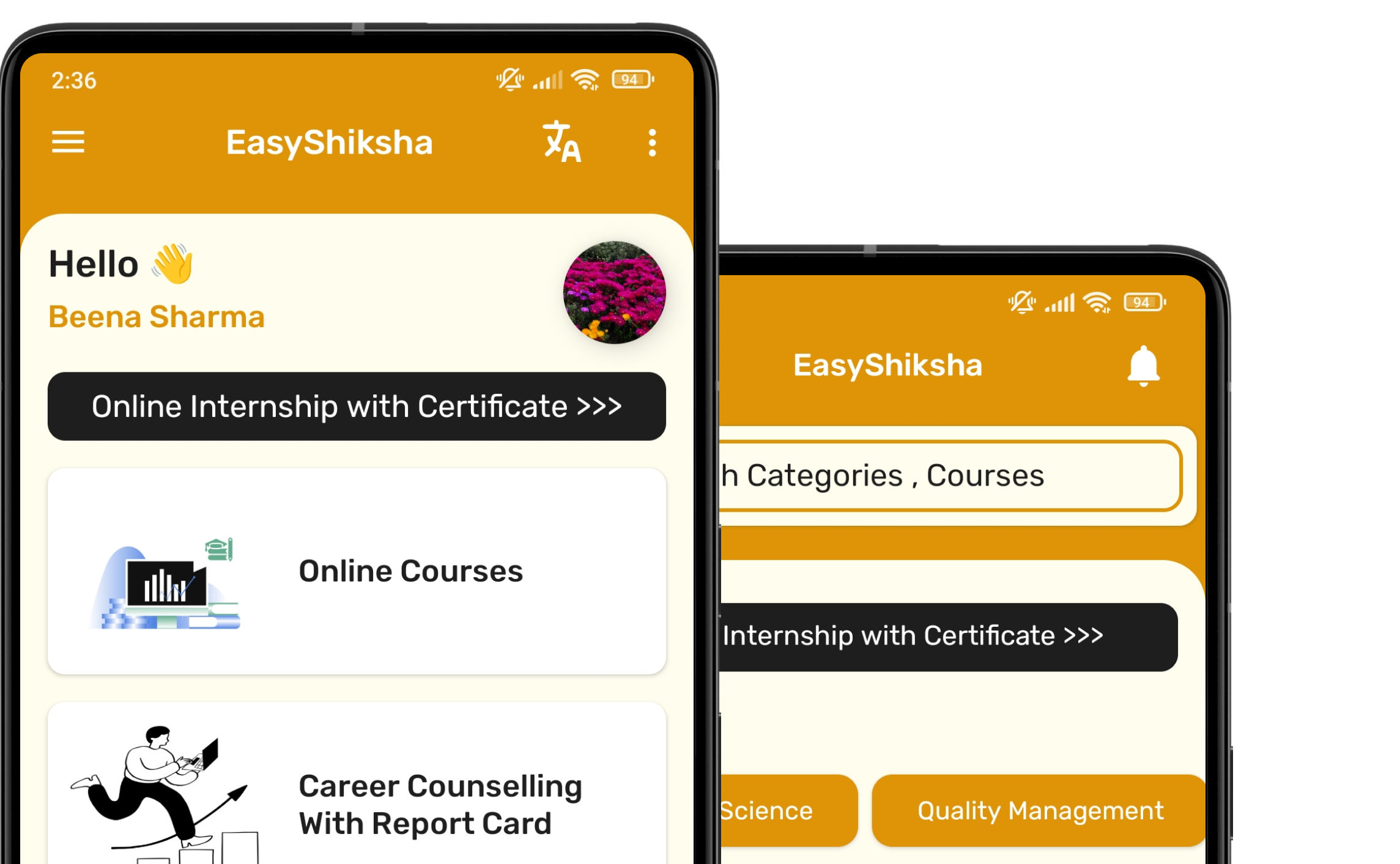


1 million+ learned on the EasyShiksha App
Trusted by Standards & Global Compliance Frameworks





Built under internationally recognized standards for quality, information security, educational excellence and business continuity.
ISO 9001:2015 | ISO/IEC 27001:2022 | ISO 21001:2018 | ISO 22301:2019 | DPIIT Recognized Startup | MSME Registered