India’s classrooms are changing, but not always in the same way or at the same pace. In one home, a student may be using digital tools to revise a difficult concept, practise questions, receive instant feedback and track progress. In another, an equally capable student may still depend only on classroom notes, shared devices or limited guidance outside school hours.
This is the new digital divide taking shape in education. It is no longer only about whether a student has access to the internet or a device. It is also about whether that access is helping them learn better.
Access has improved, but learning support must now deepen
For years, digital inclusion in education was measured largely through infrastructure. That was necessary, and it remains important. India has made clear progress on this front. According to the Economic Survey 2024-25, drawing on UDISE+ 2023-24, India’s school system serves 24.8 crore students across 14.72 lakh schools. Among these, 57.2 percent of schools have access to computers and 53.9 percent have internet access. These numbers show how far the system has moved, but they also show why the next phase of education technology must go beyond availability.
These numbers show how far the system has moved, but they also show why the next phase of education technology must go beyond availability.
A connected classroom is not automatically an enabled classroom. A student with a smartphone is not automatically receiving meaningful academic support. A child watching a video lesson is not always learning in a way that is personalised, guided or measurable. The real question is whether technology is being used to improve understanding, confidence and outcomes.
AI as a learning enabler, not just a subject
India’s education system has built strong academic foundations for generations of students. Structured subjects, textbooks, examinations and classroom discipline have helped millions move ahead and have produced professionals respected across the world. The opportunity now is not to replace this foundation, but to strengthen it with tools that can make learning more adaptive and application-led.
Every student learns differently. Some grasp a concept quickly. Some need more examples. Some understand better through practice. Others need a concept explained in a simpler language or through a different method. In a large classroom, even the most committed teacher may not always have the time to personalise learning for every child. AI can help bridge this gap by supporting students at their own pace and giving teachers sharper visibility into where help is needed.
This is a very different conversation from simply teaching students about AI. The larger opportunity is to use AI to improve how students learn. AI-enabled platforms can help identify weak areas, recommend targeted practice, explain concepts in multiple ways, provide instant feedback and make revision more focused.
The home learning gap is also changing
The divide becomes sharper when we look at how students experience digital learning at home. The National Statistics Office’s Comprehensive Modular Survey: Telecom, 2025 found that at least one smartphone was available in 82.1 percent of rural households and 91.3 percent of urban households. Internet availability within homes stood at 83.3 percent in rural areas and 91.6 percent in urban areas.
On paper, these numbers are encouraging. They show that digital access has expanded significantly across India.
But access alone does not tell the full story. A smartphone may be shared by multiple family members. Internet access may be available, but not always stable enough for interactive learning. A student may be able to watch content but may not receive doubt-solving support, personalised feedback or guided practice. This is where the difference between passive access and effective learning becomes critical.
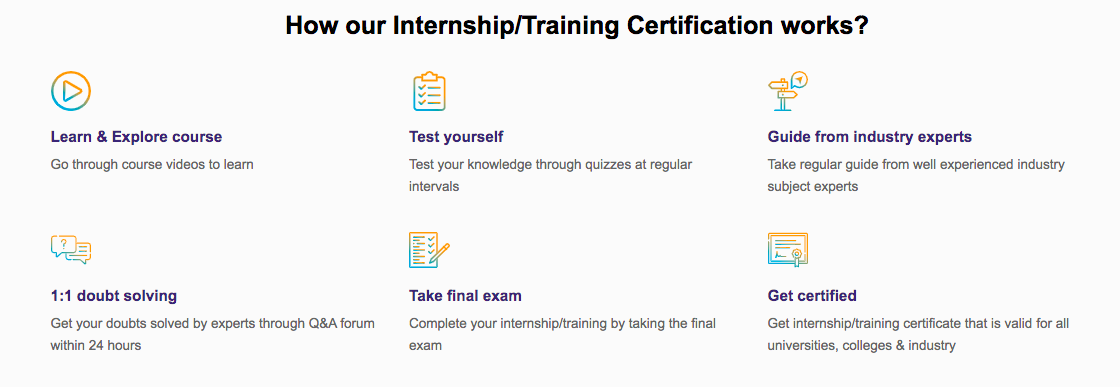
How EasyShiksha Internship/Training Program Works
From passive content to active learning
The next phase of digital education must therefore focus on quality of use. Are students only consuming content, or are they actively learning? Are they receiving feedback on their mistakes? Are parents and teachers able to see progress? Are platforms affordable and simple enough for families beyond large metros? Are tools designed for students who may be learning on modest devices or in mixed-language environments?
AI-enabled learning can help answer many of these questions, provided it is built with inclusion in mind. It can give a student in a smaller town access to structured practice and feedback that may otherwise be difficult to find. It can help a teacher identify patterns across a classroom instead of relying only on periodic tests. It can allow parents to understand not just how much time a child spent studying, but where they are improving and where they need support.
Affordability will shape who benefits
Affordability will also matter. As awareness around AI and future skills grows, many families are already looking for supplementary learning options. Specialised courses, mentoring programmes and project-led platforms are becoming more common. But if the most effective tools remain available only to students who can pay a premium, the learning gap will widen.
In a country where talent is widely distributed, opportunity cannot be limited by income, location or awareness.
This is why the conversation around AI in education needs to become more practical. It should not be limited to coding, AI curriculum or advanced technology courses. For most students, AI will matter first as a learning companion - something that helps them understand a chapter better, practise smarter, prepare more confidently and receive support when a teacher or tutor is not immediately available.
Empower your team. Lead the industry
Get a subscription to a library of online courses and digital learning tools for your organization with
EasyShiksha
Infrastructure will continue to be the base. Devices, connectivity and affordable access are essential. But they are only the beginning. The real promise lies in what students are able to do with that access. When technology becomes personalised, responsive and outcome-oriented, it can move from being a digital add-on to becoming a meaningful part of everyday learning.
India’s strength lies in the scale of its student population and the ambition of its families. The country has already shown that digital adoption can move rapidly when access, affordability and relevance come together. The next challenge is to ensure that AI-enabled learning does not become another advantage available only to a few.
The new digital divide is not just between students who are connected and those who are not. It is between students who use technology passively and those who are supported by it actively. Closing that gap will be essential if India wants more of its students to participate confidently in the future of learning and work.
The opportunity ahead is not only to teach students about AI. It is to use AI to help them learn with greater clarity, confidence and consistency. That is where the real promise of digital education now lies.
For students preparing for exams, this can mean moving from generic study plans to more
Anshika Jain is an Engineer, Developer, and Educational Content Author known for her dedication to technology and knowledge sharing. With a strong analytical mindset and a passion for innovation, she has consistently contributed to creating meaningful digital solutions and insightful educational articles.
Her ability to simplify complex technical concepts into engaging and easy-to-understand content makes her work valuable for students and learners across various platforms. Along with her technical expertise, Anshika is admired for her creativity, professionalism, and commitment to continuous learning.
She represents a perfect blend of technical excellence and impactful communication, inspiring others through both her development work and educational contributions.