Artificial intelligence is changing how people acquire knowledge, solve problems, and complete professional tasks. Learners can now access explanations, generate ideas, analyse information, and practise unfamiliar skills with digital assistance. However, these capabilities raise an important question about modern education. What actually makes someone intelligent when both humans and AI contribute to a solution?
Traditional education often measures intelligence through examinations, subject knowledge, and individual performance. These measures remain important, but they cannot fully explain how people solve complex problems in modern workplaces. Professional success frequently depends on combining knowledge, reasoning, experience, and technological support. A person must understand a problem, select appropriate resources, evaluate possible solutions, and make responsible decisions.
This creates an opportunity to introduce the Intelligence Composition Model. It is a proposed framework for understanding how effective problem-solving emerges from four connected components: human reasoning, AI support, practical experience, and domain knowledge. Each component contributes a different strength. Their combined effectiveness depends on how well they complement one another.
For EasyShiksha, this model offers a useful direction for connecting online courses, quizzes, projects, internships, certificates, university programmes, and career guidance. Courses can build domain knowledge, while quizzes can strengthen reasoning and test understanding. AI-supported activities can accelerate exploration, and practical experiences can teach learners how to apply knowledge under real conditions.
The central idea is that intelligence should not be understood as a fixed quantity belonging exclusively to humans or machines. It can also be examined through the way different capabilities work together. Education must therefore help learners develop individual competence while teaching them to combine human thinking, technological assistance, and practical experience effectively.
What Is the Intelligence Composition Model?
The Intelligence Composition Model describes how multiple sources of capability can combine to produce effective decisions and solutions. Instead of treating intelligence as a single skill, it examines the contributions of different cognitive and practical resources.
Human reasoning enables people to interpret problems, question assumptions, recognise context, and evaluate consequences. AI support can accelerate information processing, generate alternatives, identify patterns, and assist with routine tasks. Practical experience helps people understand how decisions behave outside controlled learning environments. Domain knowledge provides the concepts and principles needed to evaluate whether a solution is relevant.
These components are connected, but they are not interchangeable. AI can generate a technical recommendation without understanding every organisational constraint. Experience can reveal practical difficulties without automatically explaining their underlying causes. Domain knowledge can establish principles, while reasoning determines how those principles should be applied.
Effective intelligence emerges when these capabilities work together appropriately. A learner who possesses strong subject knowledge but cannot evaluate evidence may reach unreliable conclusions. Someone with excellent reasoning but limited domain knowledge may overlook important technical constraints. Another learner may use powerful AI tools without understanding whether the generated output is correct.
The model therefore focuses on composition rather than simple accumulation. Adding more tools, courses, or information does not automatically improve performance. The important question is whether each component contributes meaningfully to the task.
For EasyShiksha, this framework could help organise learning around complete problem-solving capabilities rather than isolated educational activities. Students would develop knowledge, practise reasoning, use technology thoughtfully, and apply their learning through practical experiences.
Component One: Human Reasoning as the Decision-Making Core
Human reasoning helps learners interpret information and determine what should happen next. It includes logical analysis, critical thinking, contextual interpretation, and the ability to compare competing explanations.
When students encounter unfamiliar problems, they must often decide which information matters. They need to identify assumptions, distinguish evidence from opinion, and recognise when a proposed solution fails to address the actual requirement. These decisions require more than generating an answer.
Consider a student using AI to prepare a business strategy. The system might suggest several pricing models based on general market principles. The student must still consider the target audience, business objectives, available resources, and possible consequences. The best recommendation depends on the circumstances rather than the number of suggestions produced.
Human reasoning also supports ethical evaluation. A technically effective solution may create privacy concerns, exclude certain users, or introduce unacceptable risks. Learners must understand these implications before deciding whether to implement a recommendation.
Education can develop reasoning through structured questions, open-ended assignments, debates, case studies, and reflective activities. Students should practise explaining why they selected a particular approach and what evidence supports their conclusion.
EasyShiksha could potentially integrate these activities into courses and quizzes. Instead of testing only whether students remember information, assessments could examine how they interpret scenarios and justify decisions.
The objective is not to make learners reject automated assistance. It is to ensure that they retain the ability to evaluate and direct the problem-solving process.
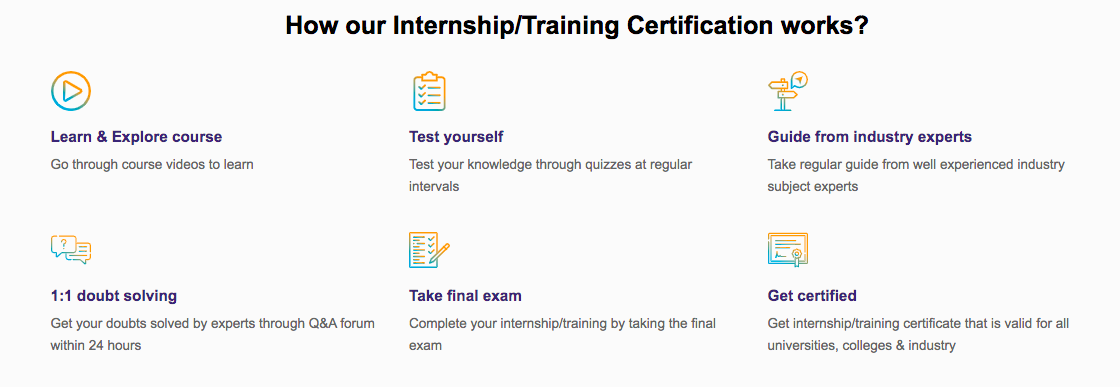
How EasyShiksha Internship/Training Program Works
Component Two: AI Support as a Capability Multiplier
AI can extend what learners accomplish by helping them process information, explore alternatives, and receive feedback. It can explain unfamiliar concepts, generate practice questions, summarise material, and assist with complex workflows.
These capabilities can make learning more accessible. Students can revisit difficult topics, request alternative explanations, and practise at their own pace. AI can also reduce time spent on repetitive tasks, allowing learners to focus on higher-value activities.
However, AI support is not automatically beneficial in every situation. Generated outputs can contain errors, omit important context, or reflect unsuitable assumptions. Learners may also become dependent on complete solutions if they rarely attempt problems independently.
The Intelligence Composition Model therefore treats AI as a supporting resource rather than an unquestionable authority. Its contribution should be evaluated according to the task, the quality of the output, and the learner's ability to verify the result.
For example, a programming student could use AI to explore possible debugging strategies. The student should still understand the error, test the proposed changes, and confirm that the solution meets the requirements. The educational value comes from combining assistance with active reasoning.
EasyShiksha could potentially design AI-supported learning activities around this principle. Students might receive explanations and hints before attempting independent tasks. Later assessments could test whether they can apply the same concepts in new situations.
This approach would help learners develop technological fluency without sacrificing independent capability. AI becomes more valuable when students understand how to use it, question it, and recognise its limitations.
Component Three: Practical Experience as a Reality Check
Domain knowledge and theoretical reasoning provide important foundations, but practical experience reveals how ideas behave under real conditions. Projects, internships, simulations, and workplace assignments expose learners to constraints that textbooks may not fully capture.
A student may understand software development concepts but struggle when integrating components into a working application. A marketing learner may understand campaign metrics but find it difficult to respond to changing customer behaviour. A business student may know financial principles yet struggle when information is incomplete.
Experience helps learners recognise these gaps. It reveals the difference between knowing a procedure and adapting it to a specific situation. It also develops judgment about priorities, communication, collaboration, and resource limitations.
Practical experience does not automatically produce expertise. Students need feedback and reflection to understand what happened and why. Repeating an activity without examining mistakes may reinforce ineffective habits.
EasyShiksha's courses, projects, and internship opportunities could potentially form a connected development pathway. Students would first acquire foundational knowledge, then practise through structured tasks before applying their skills in more realistic environments.
For instance, a learner studying digital marketing could begin with campaign concepts, analyse sample data, develop a simulated campaign, and eventually contribute to a supervised project. Each stage would introduce greater complexity and responsibility.
The experience component would help students test whether their knowledge remains useful outside familiar exercises. It would also reveal which additional skills they need to develop.
Component Four: Domain Knowledge as the Foundation
Domain knowledge refers to the concepts, methods, principles, and specialised information required to understand a particular field. It provides the foundation on which reasoning, AI assistance, and practical experience operate.
A learner cannot reliably evaluate every technical recommendation without understanding the relevant subject. A programmer needs knowledge of programming concepts to assess generated code. A finance student needs accounting principles to interpret financial statements. A cybersecurity learner needs security fundamentals to recognise dangerous configurations.
AI can help people access explanations, but it cannot remove the need to understand the field being studied. Without sufficient knowledge, learners may struggle to recognise inaccurate outputs or identify important omissions.
Domain knowledge also helps people ask better questions. Students who understand a subject can describe problems more precisely, identify relevant constraints, and evaluate possible solutions. Their knowledge improves the quality of both independent reasoning and AI-supported work.
EasyShiksha could potentially structure courses around progressive knowledge development. Foundational lessons would establish essential concepts, while advanced activities would require learners to connect those concepts across multiple topics.
Quizzes could identify knowledge gaps before students begin complex projects. Practical assignments could then reveal whether the knowledge can be applied accurately.
Within the Intelligence Composition Model, domain knowledge is not merely another item in a student's profile. It is a foundation that makes the other components more effective.
Why the Four Components Must Work Together
The four components become most useful when they reinforce one another. Human reasoning identifies the problem and evaluates possible approaches. Domain knowledge provides the principles needed to understand the situation. AI support can accelerate exploration, while practical experience tests whether the proposed solution works.
A weakness in one component can reduce the effectiveness of the others. Strong AI assistance cannot reliably compensate for a learner who cannot recognise obvious errors. Practical experience without sufficient conceptual understanding may lead to repeated trial and error. Domain knowledge without application can remain disconnected from real problems.
Consider a student developing a website. Domain knowledge helps the student understand HTML, CSS, JavaScript, and accessibility principles. Human reasoning helps determine the structure and behaviour the website requires. AI can assist with debugging, documentation, and alternative implementations. Practical testing reveals whether the finished website works for its intended users.
Each component contributes something different. None independently guarantees a successful outcome.
EasyShiksha could potentially use this relationship to design integrated learning experiences. Students would not simply complete four separate activities. They would encounter tasks requiring knowledge, reasoning, appropriate assistance, and practical verification together.
This integrated approach could provide a more realistic picture of competence. It would also help students understand why individual skills become more valuable when combined with complementary capabilities.
Designing an Intelligence Composition Profile
A proposed Intelligence Composition Profile could describe how a learner performs across the model's four components. It would focus on observable evidence rather than attempting to measure intelligence as a single universal quantity.
The profile might examine conceptual understanding, reasoning quality, responsible AI use, practical execution, and the ability to transfer learning. Each dimension would require assessments suited to the relevant subject and learning objective.
A student could demonstrate strong domain knowledge but need more practice applying concepts independently. Another learner might show effective problem-solving but lack the specialised knowledge required for advanced tasks. These differences would help educators recommend more appropriate learning activities.
Such a profile should remain flexible because capabilities develop over time. A student's performance in one subject should not be treated as proof of equal performance across all subjects. Likewise, one difficult assessment should not define the learner's overall potential.
EasyShiksha could potentially use this framework to connect assessment results with personalised recommendations. Students might receive additional foundational lessons, reasoning exercises, AI literacy activities, or practical assignments according to their demonstrated needs.
The profile could also support career exploration by showing which capabilities a learner has demonstrated and which require further development.
Its value would depend on transparency. Students should understand what each dimension measures, how evidence is collected, and how recommendations are generated.
From Course Completion to Integrated Capability
Many learning platforms organise progress around individual courses. A learner enrols, completes lessons, passes assessments, and receives a certificate. This structure provides clear milestones, but it may not fully capture how different capabilities combine.
The Intelligence Composition Model encourages a broader view of learning outcomes. Instead of asking only whether a course was completed, educators can examine whether the learner can apply its concepts within a meaningful task.
A course in data analytics, for example, can teach statistical concepts and visualisation methods. A learner may demonstrate understanding through quizzes before analysing a dataset. AI could assist with exploring patterns, while independent reasoning would help evaluate whether the conclusions are justified.
The final project would connect knowledge, reasoning, technological support, and practical application. It would also reveal gaps that separate conceptual understanding from usable capability.
EasyShiksha could potentially create learning pathways that connect courses with projects and internships. A certificate would recognise a learning milestone, while additional practical evidence could demonstrate how the learner applied the material.
This approach would not make course completion less important. It would give completion a clearer place within a larger development process.
The objective is to help students progress from understanding individual concepts toward combining those concepts in realistic situations.
Using Quizzes to Strengthen Intelligence Composition
Quizzes can support the Intelligence Composition Model when they assess more than memorisation. They can identify knowledge gaps, test reasoning, and help learners practise evaluating information.
Foundational quizzes can establish whether students understand the concepts needed for later activities. Scenario-based questions can then examine whether they can apply those concepts under specific conditions.
AI literacy questions could ask learners to evaluate generated outputs or identify missing evidence. Reasoning questions could require students to compare explanations and select the most defensible conclusion. Applied assessments could connect these skills to realistic professional tasks.
The design should match the intended learning outcome. A recall quiz should not be presented as proof of advanced judgment. Similarly, a single AI-generated answer should not determine whether a student possesses independent capability.
EasyShiksha could potentially combine short quizzes with practical follow-up activities. A student might first answer questions about programming logic and then complete a small debugging exercise. The two assessments would provide different but complementary evidence.
Feedback should explain the underlying concept and help learners improve. When students understand why an answer fails, they can correct misconceptions rather than simply memorise the correct option.
This creates a more useful connection between assessment and development.
Projects offer an opportunity to observe how students combine multiple capabilities. Unlike narrowly defined exercises, projects often require planning, research, technical execution, evaluation, and revision.
A web development project could require students to interpret a brief, select an appropriate structure, implement features, test accessibility, and resolve errors. AI assistance might be permitted, but students would still need to explain important decisions and verify the finished work.
A business project could involve analysing market information, comparing strategies, and presenting a recommendation. Domain knowledge would support the analysis, while human reasoning would help interpret the evidence. Practical constraints would determine whether the proposal was realistic.
These activities provide richer evidence than simply checking whether a final deliverable exists. Two students may produce similar results while demonstrating different levels of understanding and independence.
EasyShiksha could potentially develop project-based learning pathways that include planning, implementation, testing, and reflection. Assessment criteria would identify the contribution of each component without requiring students to avoid useful tools.
The final objective would be to evaluate both the quality of the work and the learner's ability to explain how the result was achieved.
Internships and the Transition to Professional Intelligence
Internships introduce learners to environments where multiple capabilities must operate together. Students encounter real deadlines, changing requirements, team communication, and practical constraints.
A learner may possess strong theoretical knowledge but struggle to prioritise tasks. Another may use AI effectively but overlook the need to verify important outputs. Someone else may produce technically sound work yet find it difficult to explain decisions to colleagues.
These experiences reveal development needs that conventional examinations may not capture. They also provide opportunities to practise professional judgment under supervision.
EasyShiksha could potentially connect course completion with internship preparation and reflection. Before an internship, students could demonstrate foundational knowledge and complete relevant practical exercises. During the experience, they could document tasks and receive feedback. Afterward, they could identify which capabilities improved and which require further practice.
This process would help connect educational activity with workplace learning. It could also inform future course recommendations.
Internship assessment must remain fair and transparent. Students need clear expectations, meaningful feedback, and opportunities to learn from mistakes. Their performance should be judged against relevant tasks rather than vague impressions.
The Intelligence Composition Model provides a useful framework for describing the different capabilities that contribute to successful workplace performance.
AI Literacy and Responsible Delegation
AI literacy involves more than knowing how to use prompts or access digital tools. Learners need to understand when AI is appropriate, what its outputs can and cannot establish, and how to verify its recommendations.
Responsible delegation begins with task analysis. Some activities are repetitive and easy to check, making them suitable for automation. Other tasks require contextual interpretation, sensitive judgment, or careful human oversight.
Students should learn to distinguish between assistance that strengthens understanding and assistance that replaces the intended learning activity. Using AI to generate practice questions may support learning. Submitting generated answers without understanding them may undermine the same objective.
EasyShiksha could potentially teach these distinctions through practical exercises. Learners might compare AI-supported and independent solutions, identify errors, and explain which parts require verification.
This approach would make AI usage part of a broader capability framework. Students would learn not merely how to access assistance, but how to decide whether that assistance improves the result.
Responsible delegation also requires recognising personal limitations. Sometimes the best decision is to consult an instructor, supervisor, or subject expert rather than continue independently.
Effective intelligence composition depends on selecting the right resource for the problem.
Personalised Learning Through Capability Gaps
Students rarely develop all four components at the same pace. Their strengths and weaknesses can differ according to prior experience, learning opportunities, and subject familiarity.
Personalised learning can respond to these differences. A student with weak domain knowledge may need foundational lessons before attempting advanced tasks. A learner with strong knowledge but limited practical experience may benefit from projects. Someone who relies heavily on generated answers may need activities that develop verification and independent reasoning.
EasyShiksha could potentially use assessment evidence to recommend appropriate next steps. These recommendations should focus on specific capabilities rather than broad labels about intelligence.
For example, a student might receive a recommendation to practise debugging independently after completing guided programming lessons. Another might be encouraged to evaluate several business strategies before selecting one. These tasks would address identifiable development needs.
Personalisation should also recognise progress. Once a learner demonstrates a capability consistently, the system can introduce greater complexity or move toward a different learning objective.
The aim is not to keep students permanently within personalised exercises. It is to help them develop a broader range of capabilities and apply those capabilities with increasing independence.
Measuring Progress Without Reducing Intelligence to One Score
A single intelligence score would oversimplify the model. Performance depends on subject knowledge, task difficulty, available resources, assessment conditions, and prior experience.
A student might demonstrate excellent reasoning in a familiar domain but need guidance in an unfamiliar field. This variation is normal and should inform interpretation rather than become a permanent label.
Assessment should therefore preserve the distinction between the model's components. Knowledge tests can evaluate conceptual understanding, while projects can assess application. AI-related tasks can examine responsible tool use, and scenario-based activities can reveal reasoning quality.
Multiple observations can provide a more reliable picture than one test. Assessors should also distinguish the quality of a final result from the process used to achieve it.
For EasyShiksha, any proposed capability profile should explain what has been measured and what remains uncertain. It should not imply that performance in a limited set of tasks predicts every future outcome.
Privacy must also remain central. Learning records should be collected for clear educational purposes and handled responsibly. Students should have access to understandable explanations of how their information is used.
Measurement becomes valuable when it guides improvement rather than creating misleading comparisons.
The Role of Certificates and Demonstrable Evidence
Certificates can recognise completed learning and provide a record of educational achievement. However, their meaning becomes clearer when the assessed outcomes are explicit.
A course certificate might demonstrate successful completion of foundational instruction. A practical project could provide additional evidence of applied knowledge. An internship assessment might demonstrate workplace exposure, while a structured task could reveal how the learner uses AI responsibly.
These achievements should not be treated as interchangeable. Each represents a different kind of evidence, and the credential should describe its scope accurately.
EasyShiksha could potentially connect certificates with projects and clearly defined competencies. Students could build a record showing both their learning history and selected examples of applied capability.
Such a record could help students communicate their development to employers. It would also encourage them to focus on meaningful learning rather than accumulating credentials without practical application.
Verification remains essential. A certificate should not claim that a student independently demonstrated a capability unless the assessment actually tested that capability.
The Intelligence Composition Model could help define which outcomes a particular course or credential measures. This would make educational achievements easier to interpret.
Privacy, Fairness, and Human Oversight
A capability-based learning system may collect information about quiz results, project performance, tool usage, and practical assessments. These records can support personalised learning, but they also create responsibilities.
Students should understand what information is collected and why it matters. They should know how assessments influence recommendations and how they can challenge results they believe are inaccurate.
Fairness requires considering differences in access, language, disability, and learning conditions. Students should not receive lower capability assessments merely because they use appropriate assistive technology or require accessible formats.
AI-generated assessments also require oversight. Automated systems may misunderstand responses, misinterpret context, or reward superficial patterns. Important decisions should use suitable review processes rather than relying on unexplained scores.
EasyShiksha could potentially use the Intelligence Composition Model as a learning framework without turning it into a rigid ranking system. The purpose should be to guide development, identify support needs, and improve the relevance of educational pathways.
Human oversight remains important because educational decisions affect opportunities and confidence. Technology should support thoughtful assessment rather than replace professional responsibility.
Empower your team. Lead the industry
Get a subscription to a library of online courses and digital learning tools for your organization with
EasyShiksha
The Future of Education as Intelligence Composition
The future of education will likely involve increasingly close collaboration between learners and intelligent systems. Students will use AI to explore information, practise skills, and complete tasks. They will also need the knowledge and judgment required to evaluate the results.
This environment rewards more than isolated competence. Learners must connect subject knowledge with reasoning, use technological assistance appropriately, and apply their understanding under practical conditions.
The Intelligence Composition Model offers a way to describe these relationships. It encourages educational systems to consider how different capabilities combine instead of measuring progress through course completion alone.
For EasyShiksha, the model could connect learning content with quizzes, projects, internships, certificates, and career guidance. Each stage could contribute evidence about the learner's developing capabilities.
Courses would establish the foundation. Assessments would reveal understanding. Projects would test application, while internships would introduce workplace constraints. AI-supported activities would teach students to use intelligent tools responsibly.
These experiences could create a more continuous approach to learning and career preparation. Students would develop the ability to combine knowledge, judgment, tools, and experience in increasingly complex situations.
The aim is not to make every learner equally skilled in every component. It is to help each learner understand their current strengths, develop missing capabilities, and combine resources effectively.
Conclusion: Intelligence Depends on How Capabilities Work Together
The Intelligence Composition Model offers a broader perspective on learning in an AI-supported world. It recognises that effective problem-solving depends on the relationship between human reasoning, AI support, practical experience, and domain knowledge.
Human reasoning helps learners interpret situations and evaluate consequences. AI can accelerate exploration and support routine work. Practical experience reveals how ideas perform under real conditions, while domain knowledge provides the foundations for reliable decisions.
None of these components is sufficient for every task. Their value depends on how appropriately they are combined. Strong domain knowledge can improve AI evaluation, while practical experience can refine reasoning. Human judgment can direct technology toward meaningful objectives.
EasyShiksha could potentially use this framework to connect online courses, quizzes, projects, internships, certificates, university programmes, and career guidance. Such an approach would help learners move beyond isolated achievements toward integrated capabilities.
The most useful educational system will not simply teach students more information or give them access to more tools. It will help them understand problems, select appropriate resources, verify results, and apply knowledge responsibly.
As AI continues to evolve, students will need to become effective collaborators with technology while retaining ownership of their decisions. Education must prepare them to recognise both what machines can contribute and what the situation still requires from them.
Anshika Jain is an Engineer, Developer, and Educational Content Author known for her dedication to technology and knowledge sharing. With a strong analytical mindset and a passion for innovation, she has consistently contributed to creating meaningful digital solutions and insightful educational articles.
Her ability to simplify complex technical concepts into engaging and easy-to-understand content makes her work valuable for students and learners across various platforms. Along with her technical expertise, Anshika is admired for her creativity, professionalism, and commitment to continuous learning.
She represents a perfect blend of technical excellence and impactful communication, inspiring others through both her development work and educational contributions.