Artificial intelligence is changing the way students approach education. A learner can now ask an AI assistant to explain a difficult concept, solve a mathematical problem, generate computer code, summarise a chapter, analyse a dataset or prepare an essay within seconds. Tasks that previously required substantial time and independent effort can now be completed with remarkable speed. For students, this accessibility can reduce frustration and make complicated subjects easier to explore. For educational platforms, it creates opportunities to provide personalised explanations, interactive practice and immediate feedback at a scale that was previously difficult to achieve.
Yet this transformation raises a fundamental question: when artificial intelligence performs the reasoning required to complete a task, what exactly is the student learning?
A student who uses AI to generate a working program may receive a useful result without understanding how the code works. A learner who asks an AI system to analyse a business problem may obtain a convincing recommendation without knowing how the conclusion was reached. Someone who uses AI to write an essay may submit a polished document without developing the ability to construct an argument, evaluate evidence or communicate an independent perspective. In each situation, the visible output may suggest success, while the learning that produced it remains uncertain.
This creates a distinction between task completion and capability development. Completing a task demonstrates that a result has been produced. Learning requires a deeper process in which students develop knowledge, improve their reasoning, understand the principles behind a solution and become increasingly capable of applying those principles independently. AI can support this process, but it can also conceal the absence of learning when students rely on generated answers without engaging with the underlying ideas.
For EasyShiksha, this question is particularly relevant to the future of online courses, quizzes, projects, internships, certificates and career guidance. As AI becomes integrated into educational experiences, the challenge will not simply be to make learning faster or easier. It will be to determine whether students are becoming more capable as a result of using these tools.
The central question for intelligent education is therefore not whether students can use AI to produce better answers. It is whether they can develop better thinking through their interaction with AI.
The Output Illusion: Why a Correct Answer Does Not Always Mean Learning
Educational systems have traditionally relied on observable outcomes to estimate learning. Students answer questions, complete assignments, solve problems and receive marks. These outcomes provide useful information, but they do not always reveal the complete process through which a result was produced.
AI makes this limitation more significant because it can generate high-quality outputs without requiring the student to perform all the reasoning independently. A student may submit an excellent explanation, functional code or sophisticated analysis even when their understanding of the subject remains limited. If the assessment evaluates only the final output, it may overestimate the student's actual capability.
Consider a student learning JavaScript. The student asks an AI assistant to create a function that filters an array, receives working code and submits it successfully. The output may be correct, but several different learning outcomes are possible. The student might understand the function, recognise why the solution works and be able to modify it for a different requirement. Alternatively, the student might simply copy the code without understanding arrays, callback functions or the conditions used in the implementation.
The same result can therefore emerge from very different levels of understanding.
This is the output illusion: the assumption that a successful result automatically indicates successful learning. AI does not create this problem from nothing, because students could previously copy answers from books, websites or other people. However, generative AI makes it easier to produce customised answers quickly, often with convincing explanations that make limited understanding difficult to detect.
Educational platforms must therefore look beyond whether students can submit acceptable work. They need ways to determine whether learners understand the concepts involved, can explain their decisions and can transfer their knowledge to unfamiliar problems.
What Does It Mean to Learn When AI Is Involved?
Learning in an AI-assisted environment should not be defined as the complete absence of technological help. Students have always used tools, reference materials, calculators, textbooks and guidance from teachers. AI can become another valuable resource within this broader learning environment.
The important distinction is between using a tool to extend one's capabilities and allowing the tool to replace the cognitive activity that the learner is expected to develop. A calculator can help a student perform arithmetic, but a student learning number operations may still need to understand the underlying relationships. A programming assistant can accelerate implementation, but a student learning programming must still develop the ability to interpret requirements, understand code and diagnose errors.
AI-assisted learning can involve several different outcomes. Students may learn subject knowledge, develop the ability to evaluate generated information, practise asking precise questions, compare alternative solutions or understand when a tool is unreliable. They may also learn to combine human judgment with machine-generated suggestions to solve more complex problems.
These are genuine capabilities, but they are not interchangeable. Knowing how to prompt an AI system does not automatically mean understanding the subject in which it produces an answer. Likewise, being able to explain a concept does not necessarily demonstrate the ability to apply it in a practical setting.
A well-designed educational experience should identify which capability it intends to develop. If the objective is to teach independent reasoning, the student must have opportunities to reason independently. If the objective is to teach effective AI-assisted problem-solving, students should learn how to use AI critically and responsibly. The assessment should reflect the actual learning objective rather than treating every successful output as evidence of the same competence.
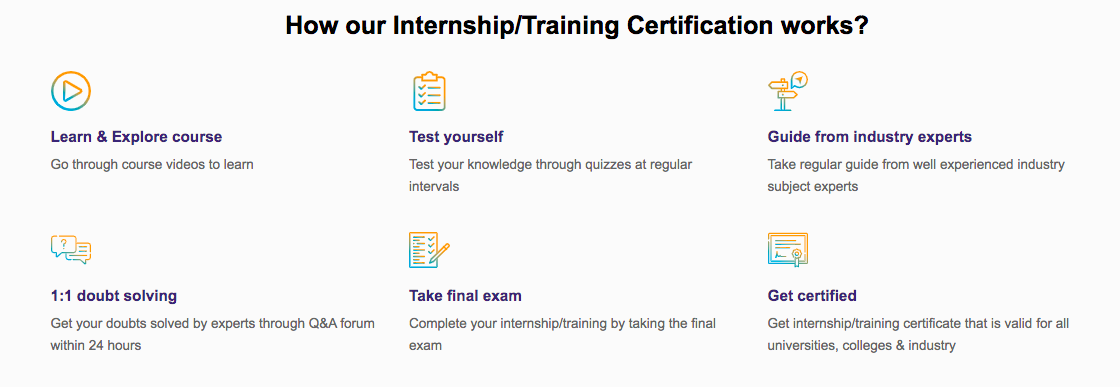
How EasyShiksha Internship/Training Program Works
The Cognitive Outsourcing Problem
Cognitive outsourcing occurs when people delegate mental activities to external tools rather than performing those activities themselves. This can be useful because it frees attention for more complex work. However, it becomes educationally problematic when students consistently outsource the very thinking they are supposed to learn.
A student learning mathematics may ask AI to solve every equation before attempting it independently. A learner studying history may rely on generated summaries without examining the original evidence. A programming student may request complete solutions whenever an error appears rather than investigating why the error occurred.
In these situations, the tool removes immediate difficulty but may also remove opportunities for the learner to practise retrieval, reasoning and problem-solving. If this pattern continues, students can become efficient at obtaining answers while remaining dependent on external assistance to reproduce the same performance.
The problem is not that every delegated task reduces learning. Professionals routinely use software and automation to avoid unnecessary work. The educational question is whether the delegated activity is central to the capability being developed.
For example, a student learning graphic design does not need to perform every repetitive technical operation manually. However, the student should still develop an understanding of visual hierarchy, composition, accessibility and audience needs. AI can accelerate production, but it should not automatically replace the judgment required to determine whether a design is appropriate.
EasyShiksha could address this challenge by distinguishing between activities that students should practise independently and activities in which AI assistance is an intended part of the learning process. This would allow technology to support efficiency without silently undermining the learning objectives.
The Hidden Difference Between Knowing and Performing
One of the most important challenges in AI-assisted education is distinguishing what a student knows from what a student can produce with assistance. These two capabilities overlap, but they are not identical.
A student may understand a concept but struggle to produce a polished result quickly. AI can help overcome this difficulty by improving presentation, suggesting structure or assisting with repetitive implementation. In such cases, the technology may allow the student to communicate existing knowledge more effectively.
The opposite situation is equally possible. A student may produce an impressive result with AI assistance without possessing the knowledge needed to explain or reproduce it. The output looks sophisticated, but the underlying capability is weaker than it appears.
This distinction matters because different tasks require different levels of independence. A professional who knows how to use AI to improve a report may be performing effectively. A student being assessed on their ability to construct an argument independently may need to demonstrate that ability without having the entire argument generated for them.
The solution is not to prohibit assistance in every situation. It is to make the conditions of performance explicit. Assessments should identify whether they measure independent knowledge, assisted performance or the ability to collaborate effectively with AI.
For EasyShiksha, this distinction could become part of a more transparent assessment framework. Students could demonstrate knowledge through quizzes, application through projects and AI-assisted productivity through tasks that deliberately permit tool use. Each activity would provide different evidence, helping educators avoid confusing assisted output with independent mastery.
AI Should Sometimes Ask Questions Instead of Giving Answers
Most AI assistants are designed to respond helpfully to user requests. When a student asks how to solve a problem, the system may immediately explain the method or provide the complete solution. This can be appropriate when the learner needs clarification, but it is not always the best response for learning.
Sometimes, a question is more educationally useful than an answer. Instead of immediately solving a programming problem, an AI tutor could ask the student what the function is expected to return. Instead of writing an entire argument, it could ask which evidence supports the student's central claim. Instead of identifying every error in a dataset, it could encourage the learner to explain which values appear inconsistent and why.
This approach creates space for the student to participate in the reasoning process. The AI becomes a guide that helps the learner move forward rather than a substitute that completes the task.
The quality of this interaction depends on timing. Asking questions when a student lacks the necessary foundation can create frustration. A learner who has never encountered a concept may need a clear explanation before meaningful independent reasoning becomes possible. Conversely, a student who already understands the basics may benefit from being prompted to attempt the problem before receiving assistance.
An intelligent educational system should therefore adjust its behaviour to the learning objective and the student's current understanding. It should know when to explain, when to demonstrate, when to offer a hint and when to invite another attempt.
For EasyShiksha, this principle could be incorporated into AI-supported quizzes, practice exercises and interactive learning experiences. The goal would be to help students make progress while preserving the thinking that gives the learning experience its value.
The Productive Struggle Principle in AI Education
Learning often involves uncertainty, failed attempts and the need to reconsider an initial approach. Not every difficulty is beneficial, but carefully designed challenges can encourage students to retrieve knowledge, test ideas and develop more flexible problem-solving strategies.
AI changes the relationship between learners and difficulty because assistance is available almost instantly. A student no longer needs to remain stuck for long before requesting a complete explanation. While this accessibility can improve the learning experience, it also makes it important to distinguish between unnecessary frustration and productive struggle.
Suppose a student is learning data analytics and encounters a problem involving missing values in a dataset. An AI assistant could immediately clean the data and provide a completed analysis. Alternatively, it could explain the possible consequences of missing information and ask the student to determine which treatment is appropriate for the dataset.
The second approach may require more effort, but it gives the learner an opportunity to practise judgment. The student must consider the context, identify assumptions and explain the implications of the chosen method.
This does not mean AI should withhold assistance indefinitely. If the learner repeatedly fails because they misunderstand a prerequisite concept, the system should provide targeted instruction. The objective is to preserve meaningful reasoning, not to make learning unnecessarily difficult.
An EasyShiksha learning environment could potentially use progressive assistance, beginning with conceptual hints and moving towards more detailed explanations when required. Such a design would allow students to experience the satisfaction of solving problems while ensuring that support remains available when the difficulty becomes unproductive.
Learning to Question AI Rather Than Trust It Automatically
When students use AI, they are not only learning the subject. They are also learning how to evaluate information produced by a system that can be helpful, incomplete or incorrect.
Generative AI can produce fluent explanations that sound authoritative even when they contain factual errors, flawed reasoning or unsupported assumptions. Students who accept these responses without verification may develop confidence in answers they cannot independently evaluate.
A more valuable educational experience would teach students to examine AI-generated information critically. They should learn to identify the claims being made, check whether the evidence supports them, compare alternative explanations and recognise when the system lacks sufficient information.
For example, a student studying business strategy might receive an AI-generated recommendation to enter a particular market. Instead of accepting the recommendation, the learner could examine the assumptions about customer demand, competition, pricing and operational costs. The task would become an exercise in evaluating the quality of reasoning rather than merely receiving a recommendation.
Similarly, a student using AI to debug code could test the suggested solution, inspect the changes and verify whether the fix addresses the original problem without creating new errors.
This introduces an important capability: critical AI literacy. Students must understand not only how to obtain AI-generated information but also how to judge its reliability and limitations.
EasyShiksha could incorporate this capability into courses and practical assignments by asking learners to review generated answers, identify unsupported claims and justify whether a proposed solution should be accepted. In an environment increasingly shaped by AI, the ability to question a convincing answer may become as important as the ability to generate one.
Designing Assessments That Reveal Understanding
If AI can produce answers, assessments must become more thoughtful about what they measure. Simply increasing the number of questions or making assignments longer will not necessarily solve the problem. A better approach is to design assessment activities that reveal the student's understanding of the underlying concepts.
One approach is to ask learners to explain their decisions. A student who submits a project might also describe why a particular method was chosen, which alternatives were considered and what limitations remain. The explanation provides additional information about the reasoning behind the result.
Another approach is to introduce unfamiliar variations. A student who has learned to solve one type of problem could be asked to apply the same principle under different conditions. This helps determine whether the learner understands the underlying concept or has simply reproduced a familiar solution.
Practical demonstrations can provide further evidence. A programming student might be asked to modify an existing function, explain an error or implement a related feature. A marketing student might need to revise a campaign strategy after receiving new information about the audience or budget.
No single method can prove complete understanding. A student may explain a concept well but struggle to apply it, while another may demonstrate practical competence without providing a polished verbal explanation. A combination of assessments can therefore provide a more balanced picture.
For EasyShiksha, quizzes, projects, interactive exercises and supervised assessments could be designed to measure different dimensions of capability. The aim would not be to make AI use impossible, but to make the learner's actual understanding more visible.
One possible feature of an AI-enabled learning platform is an independent thinking check. After completing an AI-assisted task, a student could be asked to demonstrate a key concept without relying on the same level of assistance.
For example, after using AI to build a JavaScript application, the learner might explain a function, modify a small part of the code or solve a related problem independently. A student who used AI to analyse a dataset might be asked to interpret a different section of the data and explain the reasoning behind the conclusion.
This check would provide additional evidence about what the learner retained and understood. It would also help students recognise the difference between being able to produce a result with assistance and being able to perform independently.
However, independent checks should be designed carefully. A brief test cannot capture every dimension of capability, and performance may be affected by anxiety, accessibility needs or the unfamiliarity of the assessment format. The result should be interpreted as one piece of evidence rather than a permanent label describing the student's intelligence or potential.
The feature should also match the learning objective. If a course specifically teaches AI-assisted workflows, the ability to use AI effectively is part of the intended competence. In that case, independent performance should not be the only measure of success.
Within EasyShiksha, independent thinking checks could help connect learning activities with more credible assessments of understanding, especially when students use AI during practice or project development.
AI-Assisted Learning and the Development of Metacognition
Metacognition refers to the ability to monitor and regulate one's own thinking. Students use metacognitive skills when they assess what they understand, recognise uncertainty, select a strategy and determine whether their approach is working.
AI can support this process by helping students reflect on their performance. After completing a task, a learner could be prompted to identify which parts they understood, where they needed assistance and which decisions they would make differently next time. The system could then compare the student's reflection with the assessment evidence and suggest areas for further practice.
This approach could help students become more aware of their learning patterns. Rather than simply collecting correct answers, they would begin to understand the conditions under which they can solve problems successfully and the situations in which they need additional support.
The process must avoid turning reflection into another automated formality. If students simply generate reflective statements using AI without considering their own experience, the activity may reproduce the same problem it is intended to solve. Reflection is valuable when learners genuinely examine their decisions and connect feedback with future action.
EasyShiksha could potentially incorporate structured reflection into courses, quizzes and projects. The aim would be to help students understand not only what they achieved but also how their understanding developed, where their reasoning remains weak and what they should practise next.
The Difference Between AI Fluency and Subject Mastery
As AI tools become more common, students may develop an important new skill: AI fluency. This includes the ability to frame requests, provide useful context, evaluate generated results, revise instructions and integrate AI into a workflow.
AI fluency can be valuable across many professions. A developer who can use AI to investigate an unfamiliar library may work more efficiently. A marketer who can use AI to explore alternative campaign ideas may generate a wider range of possibilities. A researcher who understands how to use AI responsibly may be able to organise information more effectively.
However, AI fluency should not be confused with subject mastery. A student may know how to request a sophisticated financial analysis without understanding accounting principles. Another may generate complex code without being able to diagnose why the program fails. The ability to operate the tool does not automatically establish the ability to evaluate the quality of its output.
Modern education should therefore develop both capabilities while keeping them conceptually distinct. Students should learn how to use AI effectively and how to develop the domain knowledge needed to judge whether AI is helping them achieve the correct outcome.
For EasyShiksha, this distinction could inform the design of courses and certificates. Some learning outcomes could focus on AI-assisted productivity, while others would focus on independent subject knowledge, practical execution or critical evaluation. Clearly defining these outcomes would make credentials more meaningful and help learners communicate their actual capabilities.
What Happens When Students Enter the Workplace?
The distinction between AI-generated output and student capability becomes especially important when learners move into employment. In professional environments, employees may have access to AI tools, automated workflows and software that can perform substantial portions of a task. Employers may therefore value people who can use these tools effectively while retaining the judgment needed to supervise their output.
A junior developer may use AI to generate code, but still needs to understand requirements, identify security risks, test functionality and maintain the application. A business analyst may use AI to summarise data, but must determine whether the analysis is relevant to the business question. A content professional may use AI to produce an initial draft, but must verify claims, understand the audience and ensure that the final material meets the required standard.
These responsibilities require a combination of domain knowledge, independent judgment and tool proficiency. Employees who accept every generated answer without evaluation may introduce errors into professional work. Those who reject all AI assistance may miss opportunities to improve efficiency.
Students therefore need opportunities to practise working with AI under realistic conditions. They should learn when to delegate a task, when to verify a result, when to intervene and when a decision requires human judgment.
EasyShiksha could connect these capabilities with practical projects and internship preparation. Students would not only learn how to use AI tools, but also practise taking responsibility for the quality of the work produced with them.
Certificates Should Reflect What Students Can Actually Demonstrate
AI also creates a challenge for digital credentials. If students can use AI to generate assignments and complete learning activities, a certificate based solely on task completion may provide limited information about what the learner can do independently.
This does not mean that certificates become meaningless in an AI-assisted environment. Their value depends on the learning outcomes, assessment standards and evidence behind them. A certificate supported by appropriate assessments can still communicate meaningful achievement, even when AI tools are permitted during parts of the learning process.
The important requirement is transparency. A credential should accurately represent the capability that was assessed. If a course evaluates AI-assisted project delivery, the certificate should not automatically imply that the learner can perform every part of the task without assistance. If independent problem-solving is a central learning objective, the assessment should include evidence of that capability.
An evidence-based approach could connect course completion with specific competency claims, practical work and assessment conditions. This would help students, educators and employers understand what a credential represents without assuming that every learner completed every task under identical circumstances.
For EasyShiksha, this could strengthen the relationship between online courses, quizzes, projects, internships and certificates. The objective would be to recognise learning accurately while encouraging students to develop capabilities that remain useful beyond the immediate availability of an AI assistant.
Empower your team. Lead the industry
Get a subscription to a library of online courses and digital learning tools for your organization with
EasyShiksha
How EasyShiksha Could Design AI That Strengthens Thinking
A future-facing EasyShiksha learning experience could treat AI as a flexible educational partner rather than a universal answer generator. The system would first identify the purpose of an activity. If the student is learning a foundational concept, the AI might explain the idea and provide examples. If the student is practising a skill, it could offer hints and feedback while allowing the learner to complete the task. If the activity assesses independent reasoning, the system could clearly communicate the permitted level of assistance.
The learning experience could then adapt according to the student's demonstrated understanding. A learner who answers correctly and explains the reasoning could move towards more complex tasks. A student who produces the correct output but cannot explain it might receive a related exercise designed to test understanding. Someone who repeatedly struggles with a prerequisite concept could receive a clearer explanation before attempting the task again.
Projects could provide opportunities to apply knowledge in practical settings, while reflection activities could help students understand their own decisions. Career guidance could connect the resulting evidence with relevant roles and identify capabilities that require further development.
This model would require careful implementation, transparent assessment criteria and appropriate privacy safeguards. It should not infer a student's intelligence or future potential from a small number of interactions. Instead, it would use relevant evidence to guide learning and provide opportunities for students to improve.
The defining principle would be that AI assistance should contribute to capability development, not merely accelerate the production of completed work.
Conclusion: The Real Measure Is What Remains When the AI Is Gone
Artificial intelligence is changing what students can produce, how quickly they can complete tasks and how they access explanations. These changes create significant opportunities for education, but they also challenge traditional assumptions about assessment and learning. A correct answer may demonstrate successful tool use without proving independent understanding. A polished project may reflect genuine capability, substantial assistance or a combination of both.
The answer is not to remove AI from education or assume that students must perform every task without technological support. AI can make learning more accessible, help students overcome obstacles and allow them to explore complex ideas. The challenge is to ensure that assistance does not quietly replace the reasoning, judgment and practical skills students are expected to develop.
For EasyShiksha, this means designing educational experiences around clear learning objectives. Courses should build knowledge, quizzes should test understanding, projects should require meaningful application and assessments should provide appropriate evidence of competence. AI can support every stage, but its role should be determined by what the learner needs to develop.
Students also need to learn how to evaluate AI-generated information, recognise uncertainty, question assumptions and take responsibility for the quality of their work. These capabilities will become increasingly important in professional environments where AI can perform many routine tasks but cannot remove the need for sound judgment.
Ultimately, the most important question is not how much work a student can complete with AI. It is whether the student becomes more knowledgeable, more capable and more independent through the experience.
When AI does the thinking, the educational system must make sure the student is still learning how to think.
Anshika Jain is an Engineer, Developer, and Educational Content Author known for her dedication to technology and knowledge sharing. With a strong analytical mindset and a passion for innovation, she has consistently contributed to creating meaningful digital solutions and insightful educational articles.
Her ability to simplify complex technical concepts into engaging and easy-to-understand content makes her work valuable for students and learners across various platforms. Along with her technical expertise, Anshika is admired for her creativity, professionalism, and commitment to continuous learning.
She represents a perfect blend of technical excellence and impactful communication, inspiring others through both her development work and educational contributions.