A professional spends years developing expertise in a particular industry. An engineer learns to solve complex technical problems, a financial analyst becomes skilled at interpreting business performance, a healthcare professional develops clinical knowledge, and a marketing specialist learns how to understand customer behaviour. Over time, these individuals develop professional judgment, practical experience and the ability to make decisions in situations that beginners may find difficult. Yet an unexpected problem can emerge when these professionals move into a different industry. Knowledge that previously produced excellent results may suddenly become less effective, and decisions that once seemed straightforward may require an entirely different approach.
This phenomenon can be described as the Expertise Portability Problem. It refers to the difficulty of transferring professional knowledge, skills and judgment from one industry to another without losing their effectiveness. Although two industries may use similar technologies, processes or terminology, the conditions under which professionals apply their expertise can be significantly different. A strategy that works in manufacturing may fail in healthcare. A project management method developed in software engineering may require substantial modification when applied to construction. Financial knowledge acquired in traditional banking may not automatically provide the expertise required to evaluate emerging digital financial products.
The problem is not necessarily that professional knowledge becomes incorrect when a person changes industries. Rather, expertise is often developed within a particular environment containing assumptions, rules, incentives, risks and patterns of behaviour. When these conditions change, the professional must determine which parts of their knowledge remain useful and which require reinterpretation.
This creates an important question for modern education: how can students and professionals learn to transfer expertise between industries without assuming that knowledge acquired in one environment will work identically in another?
For EasyShiksha, this question offers an opportunity to connect online courses, quizzes, internships, projects, university programmes, certificates and career guidance through a deeper approach to interdisciplinary learning. Instead of preparing students only to acquire knowledge within one subject, education could also prepare them to understand how professional knowledge behaves when transferred into unfamiliar industries.
What Is the Expertise Portability Problem?
Expertise portability describes the ability to apply knowledge, practical skills and professional judgment effectively in a different domain, industry or working environment. It is related to transferable skills, but it extends beyond the ability to reuse general capabilities such as communication, teamwork, analytical thinking and problem-solving.
A professional may possess advanced expertise in one field but discover that the same knowledge has different meanings, limitations or consequences elsewhere. The underlying technical principle may remain valid, but its practical application may change because the surrounding environment is different.
Consider a data analyst who has spent several years working in retail. The analyst understands sales patterns, customer segmentation, inventory behaviour and demand forecasting. When moving into healthcare analytics, the individual can still use statistical reasoning and data-processing skills. However, healthcare introduces different requirements involving patient privacy, clinical interpretation, medical terminology, data quality and the consequences of incorrect predictions.
The analyst's technical expertise has not disappeared, but it cannot be transferred without adaptation. A model that predicts retail demand may be structurally different from a model used to support clinical decisions. The cost of an incorrect prediction, the reliability of available data and the standards for interpreting results may also differ substantially.
Expertise portability therefore requires more than remembering previously learned concepts. It requires understanding the conditions under which those concepts are valid and recognising when a new environment demands different assumptions.
Why Expertise Becomes Connected to a Particular Industry
Professional expertise rarely develops in isolation. Individuals learn through repeated exposure to specific problems, tools, organisational structures and decision-making environments. Over time, they develop mental models that help them interpret situations quickly.
An experienced manufacturing engineer may recognise signs of equipment failure because years of working with industrial machinery have helped them understand particular patterns. A cybersecurity professional may identify suspicious network behaviour through familiarity with common attack techniques. A financial professional may recognise unusual transaction patterns based on experience with specific markets and regulatory conditions.
These capabilities are valuable because they allow experts to make decisions without analysing every situation from the beginning. However, this efficiency can create a hidden limitation. Professionals may begin to assume that the patterns they recognise are universal when they are actually specific to their industry.
For example, an experienced project manager may be accustomed to environments where project requirements are clearly defined before execution begins. When moving into an early-stage research environment, the same manager may encounter projects in which objectives change as new evidence emerges. A management method that assumes stable requirements may become unsuitable.
The problem emerges because expertise contains both general knowledge and environment-dependent knowledge. When these components are not clearly distinguished, professionals may transfer the wrong assumptions along with their valuable capabilities.
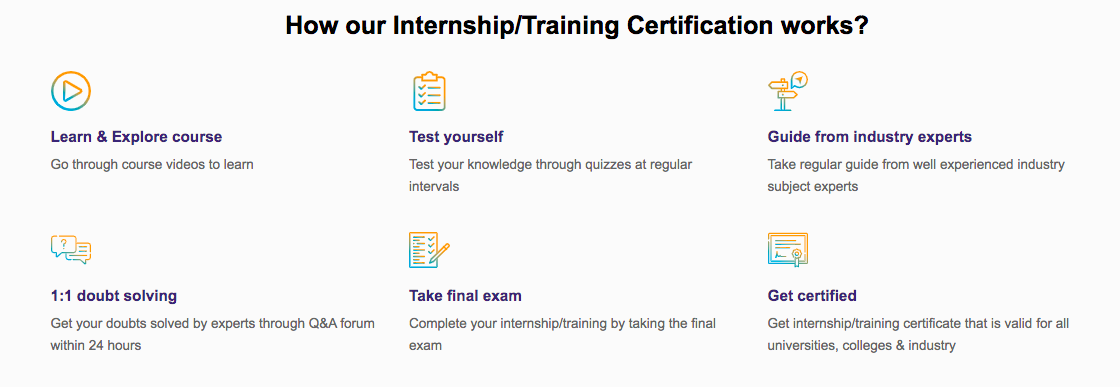
How EasyShiksha Internship/Training Program Works
The Difference Between Transferable Skills and Portable Expertise
Transferable skills and portable expertise are closely related, but they describe different levels of professional capability.
Transferable skills are capabilities that can be applied across multiple environments. Communication, teamwork, critical thinking, time management and general problem-solving are common examples. These skills can support professional performance in many industries, although their application may still require adjustment.
Portable expertise involves a deeper understanding of how specialised knowledge can be adapted to a new environment. It requires the professional to recognise the underlying principles behind a technique, identify the conditions in which those principles remain valid and modify their approach when the new industry operates differently.
For example, a software developer may have strong transferable skills in logical reasoning and debugging. However, moving into financial technology requires additional expertise in transaction integrity, financial regulations, security requirements and operational risk. The ability to write software remains useful, but professional competence depends on understanding the new industry's requirements.
Similarly, a healthcare administrator moving into aviation operations may bring valuable experience in scheduling, resource coordination and safety procedures. Yet aviation has its own regulatory environment, operational constraints and safety requirements. The professional must understand which management principles can be reused and which procedures require specialised knowledge.
Education should therefore distinguish between teaching students how to perform a task and teaching them how to understand the conditions that make a particular approach successful.
Hidden Assumptions: The Biggest Barrier to Expertise Portability
One of the most important reasons expertise fails to transfer is that professionals often carry hidden assumptions from their original industry.
An assumption may have become so familiar that the individual no longer recognises it as an assumption. It may appear to be a universal rule simply because it has consistently worked in the person's previous environment.
For example, a marketing specialist moving from consumer retail into healthcare may assume that customer engagement strategies can be transferred directly. However, healthcare decisions involve trust, professional responsibility, privacy and potentially serious consequences. Communication approaches that are acceptable in retail may be inappropriate when discussing medical services.
Similarly, a software professional moving into industrial automation may assume that system updates can be deployed through familiar software-development practices. Industrial environments may require additional testing, safety validation and carefully controlled maintenance windows because system failure can affect physical equipment and human safety.
The challenge is not simply learning new terminology. It is identifying which beliefs, procedures and decision rules were developed specifically for the original industry.
A professional who can recognise these assumptions is more likely to adapt successfully. Someone who transfers them without examination may make decisions that appear reasonable in the original context but create problems in the new one.
Context Changes the Meaning of Knowledge
Knowledge is often presented in education as a collection of concepts, definitions and procedures. However, professional knowledge gains meaning through the context in which it is applied.
A mathematical model may be correct under particular assumptions but unsuitable when those assumptions do not hold. A management framework may work in an organisation with stable teams but become ineffective in a rapidly changing environment. A machine-learning technique may perform well on one dataset but produce unreliable results when applied to data generated through a different process.
This means that expertise portability requires context recognition.
Professionals need to understand not only what a method does but also why it works, which conditions it requires and where its limitations begin. Without this understanding, they may confuse familiarity with suitability.
For instance, a forecasting method developed for predictable consumer demand may perform poorly when applied to emergency healthcare resource planning. Both situations involve forecasting, but the patterns, consequences and uncertainty may be very different.
An education system that prepares students for cross-industry careers should therefore teach concepts together with their assumptions, operating conditions and limitations.
The Role of Industry-Specific Rules and Regulations
Professional knowledge is also shaped by regulatory requirements. Different industries operate under distinct legal frameworks, safety standards, professional responsibilities and compliance obligations.
A finance professional moving into healthcare may possess strong analytical and operational capabilities, but healthcare information is subject to privacy and data-protection requirements that differ from those encountered in financial services. An engineer moving into aviation may understand technical design but must also learn the specific certification, safety and operational requirements associated with aircraft systems.
These differences can prevent expertise from transferring directly, even when the technical capabilities appear similar.
A professional may know how to design a secure information system but still lack the specialised knowledge required to implement it in a regulated medical environment. Similarly, a project manager may understand general risk management but need to learn industry-specific safety obligations before managing infrastructure projects.
This creates an important educational requirement. Students should understand that professional expertise includes knowledge of the environment in which work is performed. Technical ability alone may not be sufficient when regulations, responsibilities and consequences change.
Expertise Portability Across Major Industries
The Expertise Portability Problem becomes easier to understand when examining how similar professional capabilities behave across different industries.
From Manufacturing to Healthcare
Manufacturing professionals often develop expertise in process optimisation, quality control, equipment reliability and production efficiency. These capabilities may be valuable in healthcare operations, particularly in areas such as hospital logistics, medical equipment management and supply-chain coordination.
However, healthcare systems operate under additional clinical, ethical and patient-safety requirements. A manufacturing approach that prioritises output efficiency may need modification when applied to patient care, where individual needs and clinical judgment cannot be reduced to production targets.
A professional entering healthcare must understand that operational improvement is important, but it must remain compatible with patient safety and professional responsibility.
From Finance to Technology
Financial professionals often develop strong capabilities in quantitative analysis, risk assessment, forecasting and decision-making under uncertainty. These capabilities can support careers in technology, particularly financial technology, data analytics and product strategy.
However, technology organisations may operate with faster development cycles, experimental product releases and different forms of operational uncertainty. Financial models based on historical patterns may not adequately capture the behaviour of emerging technologies.
Professionals moving between these industries must learn how to adapt financial reasoning to environments where products, user behaviour and business models can change rapidly.
From Software Engineering to Industrial Operations
Software engineers develop expertise in algorithms, system architecture, debugging, automation and performance optimisation. These capabilities can be useful in manufacturing, energy, transportation and industrial automation.
However, software systems connected to physical infrastructure introduce additional constraints. A software error may affect machinery, production lines or safety-critical operations. Industrial systems may also require compatibility with legacy equipment and specialised communication protocols.
The professional must understand how software decisions interact with physical processes and operational risks.
From Retail to Logistics
Retail professionals may understand customer behaviour, sales forecasting, inventory management and demand patterns. These capabilities can support logistics and supply-chain operations.
However, logistics involves additional considerations such as transportation networks, warehouse capacity, delivery constraints, supplier reliability and geographic uncertainty. Customer demand alone does not determine how efficiently goods can move through a supply chain.
A professional moving from retail into logistics must understand how commercial demand interacts with physical distribution systems.
From Education to Corporate Training
Teachers and educational designers develop expertise in explaining concepts, designing assessments and supporting learning. These capabilities can transfer into corporate training and professional development.
However, workplace learning is often connected to operational performance, organisational objectives and specific job responsibilities. A training programme may need to demonstrate that employees can perform a defined task rather than simply understand a theoretical subject.
The educator must adapt instructional methods to the professional environment in which learning will be applied.
The Expertise Portability Gap
The difference between what a professional already knows and what they can successfully apply in a new industry can be described as an Expertise Portability Gap.
This gap does not represent a complete absence of knowledge. It refers to the additional understanding required to make existing expertise effective under new conditions.
For example, a mechanical engineer moving into renewable energy may already understand thermodynamics, mechanical design and equipment performance. However, the new role may require additional knowledge of energy storage, grid integration, renewable resource variability and environmental considerations.
The professional does not need to discard their existing expertise. They need to connect it with the new industry's requirements.
A useful educational framework would identify this gap before a student or professional begins a major transition. It could compare existing competencies with the knowledge, assumptions and professional standards required in the destination industry.
This would make career transitions more structured. Instead of asking learners to repeat an entire qualification, an education platform could help identify the specific knowledge areas that need further development.
Can AI Measure Expertise Portability?
Artificial intelligence could potentially help analyse how professional knowledge transfers between industries. AI systems can compare job descriptions, course curricula, competency frameworks, technical documents and professional standards to identify similarities and differences.
For example, an AI-enabled system could compare the capabilities of a manufacturing quality engineer with the requirements of a healthcare quality-management role. It might identify transferable competencies in process analysis, documentation, root-cause investigation and quality improvement, while highlighting additional requirements related to clinical safety and healthcare regulation.
AI could also analyse a professional's previous projects and training records to identify evidence of relevant experience. It could then suggest courses or practical assignments that address the most important gaps.
However, similarity between job descriptions does not prove that expertise is transferable. Two roles may use similar terminology while requiring different levels of judgment, technical knowledge and responsibility.
AI should therefore function as a mapping and recommendation assistant rather than an authority that declares someone qualified for a new profession. Human experts should review important recommendations, particularly when the destination industry involves safety, legal or financial responsibilities.
The most valuable contribution of AI would be helping learners understand what they already know, what remains relevant and what they must learn before applying their expertise in a different environment.
Traditional education often organises subjects into separate departments and professional pathways. Students study computer science, finance, engineering, healthcare or management within clearly defined academic structures.
Specialisation is necessary for developing deep expertise, but excessive separation can make it difficult for learners to understand how knowledge operates across industries.
Cross-industry learning could help address this limitation. Students could examine the same underlying concept in different professional environments and compare how its application changes.
For example, risk management could be studied through banking, aviation, healthcare and cybersecurity. Students would discover that all four fields involve identifying threats, estimating consequences and selecting protective measures. However, the acceptable level of risk, regulatory requirements and potential consequences differ considerably.
Similarly, automation could be examined through manufacturing, agriculture, logistics and healthcare. Students would learn that automation principles may be shared, but the systems, constraints and responsibilities vary.
This approach would develop contextual understanding. Learners would become more capable of identifying reusable principles without assuming that every industry operates in the same way.
Designing Courses Around Knowledge Transfer
Courses designed to improve expertise portability should go beyond presenting concepts within a single industry. They should help learners understand the conditions under which professional methods can be transferred.
A course in project management, for example, could examine how planning methods behave in software development, construction, healthcare and research. Students could compare project uncertainty, stakeholder involvement, resource constraints and regulatory requirements.
A data analytics course could use examples from retail, education, finance and healthcare to show how the same analytical techniques require different interpretations depending on the data and decision-making environment.
The course should also help students recognise situations in which a familiar method should not be transferred. This is important because successful expertise portability depends as much on identifying inappropriate applications as it does on recognising useful similarities.
For EasyShiksha, this could become an opportunity to design learning pathways that connect foundational courses with industry-specific applications. Students would learn a professional concept and then examine how it changes when applied in another field.
Quizzes as Tools for Measuring Contextual Understanding
Quizzes could help evaluate whether students understand the difference between a general principle and its industry-specific application.
Instead of asking only for definitions, assessments could present scenarios from unfamiliar industries. Students would need to identify which parts of their existing knowledge remain useful and which additional conditions must be considered.
For example, a learner who has studied inventory management could be presented with a healthcare supply scenario. The question might examine whether the student understands why ordinary stock-management assumptions need adjustment when dealing with essential medical supplies.
Another assessment could present a software deployment scenario involving industrial equipment. Students would need to recognise that familiar development practices may require additional operational and safety controls.
Such quizzes would evaluate contextual reasoning rather than simple memorisation. They could also help identify whether learners understand the limitations of the methods they have studied.
EasyShiksha could potentially use scenario-based quizzes to support this form of interdisciplinary learning and help students prepare for professional transitions.
Projects That Require Cross-Industry Adaptation
Projects provide a stronger opportunity to demonstrate whether expertise can be transferred successfully. Students could be asked to take a method they have learned in one field and adapt it to a problem in another.
A student studying business analytics might develop a sales forecasting model and then examine how the same approach would need to change when applied to hospital resource planning. A software development student might create an automated scheduling application and then adapt its design for a logistics environment.
The assessment would focus on the reasoning behind the adaptation. Students would need to explain which principles were preserved, which assumptions were changed and what additional knowledge was required.
This would create a more realistic form of interdisciplinary education because professionals rarely transfer knowledge into completely identical situations. They must interpret the new environment and make decisions about how their existing expertise should be modified.
Projects could therefore become evidence of a student's ability to move beyond familiar examples and apply knowledge under different conditions.
Internships as Real-World Expertise Portability Laboratories
Internships could provide some of the strongest opportunities to observe expertise portability because they expose students to unfamiliar professional environments.
A student who has completed online courses in programming, data analysis or business management may discover that applying those skills in a workplace requires additional understanding. Professional communication, organisational procedures, technical constraints and industry-specific expectations can change how knowledge is used.
For example, a student with strong spreadsheet skills may enter a finance internship and discover that financial reporting requires accuracy, auditability and regulatory awareness. Another student may understand digital marketing concepts but find that a healthcare organisation must communicate with greater attention to professional responsibility and public trust.
Internships allow learners to observe these differences and understand how knowledge changes in practice.
For EasyShiksha, the connection between courses and internships could potentially support a structured expertise-portability journey. Students could study a foundational concept, apply it in a project, encounter its limitations during an internship and then identify the additional knowledge needed for a different professional environment.
This would make practical experience an important part of developing adaptable expertise.
Building an Expertise Portability Profile
A future education platform could explore the idea of an Expertise Portability Profile. Rather than recording only completed qualifications and certificates, this profile would describe how a learner's capabilities may apply across different industries.
The profile could connect academic knowledge, technical skills, practical projects, internship experience and demonstrated competencies. It could also distinguish between capabilities that are broadly applicable and those that depend heavily on a particular professional environment.
For example, a student with experience in database management, statistical analysis and business reporting might have a foundation for moving towards financial analytics, healthcare analytics or supply-chain intelligence. However, each pathway would require additional domain knowledge.
The profile could make these relationships visible. It would not guarantee that the learner is qualified for every related role, but it could help identify realistic directions for further development.
Such a model could also support lifelong learning. As professionals acquire new experience, their expertise portfolio could evolve to reflect additional industries, projects and specialised knowledge.
Avoiding the Danger of Superficial Versatility
Encouraging expertise portability should not lead to the belief that professionals can become experts in every industry simply by completing a few short courses.
Deep professional knowledge requires sustained study, practical experience and an understanding of complex responsibilities. A person with general knowledge of healthcare should not automatically be considered qualified to perform clinical work. Similarly, basic cybersecurity training does not establish the expertise required to manage critical infrastructure.
Education must distinguish between transferring foundational knowledge, developing supporting competencies and acquiring full professional qualification.
A strong portability framework would make these distinctions visible. It would identify which capabilities can be transferred directly, which require additional training and which require formal certification, supervised experience or regulatory approval.
This would help prevent the misuse of the concept. The objective is not to eliminate professional specialisation but to make transitions between industries more informed and evidence-based.
Measuring the Success of Expertise Transfer
If expertise portability becomes an educational objective, platforms and institutions will need ways to evaluate whether students can actually apply knowledge in a different environment.
Traditional course completion and examination scores may provide evidence of subject understanding, but they do not necessarily demonstrate successful transfer.
A more comprehensive evaluation could examine how learners perform when given unfamiliar problems, whether they recognise context-specific assumptions, how effectively they adapt established methods and whether they identify gaps in their knowledge before making decisions.
For example, a student who has studied project management could be evaluated through scenarios from industries not covered extensively in the original course. The assessment would examine whether the learner can identify relevant principles, recognise differences and develop a suitable approach.
Longer-term research could also examine whether learners who receive cross-industry training adapt more successfully during internships, professional transitions and multidisciplinary projects.
These evaluations would need to distinguish between genuine expertise transfer and superficial familiarity with new terminology.
Frequently Asked Questions
Q. How can I apply for an internship with EasyShiksha?
You can apply by visiting our website, browsing available internships, and following the application instructions provided.
Q. What types of internships are available through EasyShiksha?
EasyShiksha offers a wide range of internships across technology, business, marketing, healthcare, and more.
Q. Will I receive a certificate upon completing an internship?
Yes, upon successful completion, you will receive a certificate recognizing your participation and achievements.
Q. Are EasyShiksha's certificates recognized?
Yes, the certificates are recognized by universities, colleges, and employers worldwide.
Q. When can I start the course?
You can choose any course and start immediately without delay.
Q. What are the course and session timings?
These are fully online courses. You can learn at any time and pace that fits your schedule.
Q. What will happen when my course is over?
After completion, you will have lifetime access to the course for future reference.
Q. Can I download the notes and study material?
Yes, you can access and download course materials and have lifetime access for future reference.
Q. What software/tools would be needed?
All necessary software/tools will be shared during the training as needed.
Q. I’m unable to make a payment. What should I do?
Try using a different card. If the problem persists, email us at info@easyshiksha.com.
Q. Do I get the certificate in hard copy?
No, only a soft copy is provided, which can be downloaded and printed if required.
Q. The payment got deducted but shows “failed”?
The deducted amount will be returned to your account in 7-10 working days automatically.
Q. Payment successful but dashboard shows ‘Buy Now’?
Reflection may take 30 mins. If longer, email info@easyshiksha.com with your screenshot.
Q. What is the refund policy?
Refunds are available for technical issues. No refunds once a certificate is generated.
Q. Can I enroll in a single course?
Yes, select any course, complete the details, and start learning immediately.
Q. Need further help?
Contact us at info@easyshiksha.com for any other questions.
How EasyShiksha Could Develop an Expertise Portability Learning Model
EasyShiksha's combination of online courses, quizzes, internships, projects, certificates, university programmes and career guidance could support a proposed learning model centred on expertise portability.
The process could begin with foundational subject learning. Students would acquire knowledge in areas such as programming, finance, marketing, data analytics, engineering or business management. Courses would explain the underlying concepts along with their assumptions and limitations.
The next stage could introduce cross-industry examples. Students would examine how the same professional principle operates in different environments and why its application changes. Scenario-based quizzes could test whether learners understand these differences.
Practical projects could then require students to adapt their existing knowledge to an unfamiliar industry problem. Internships could provide further exposure to real professional environments, allowing learners to identify the additional competencies required for successful performance.
Career guidance could connect these experiences with potential career pathways. Instead of recommending a new field solely because a student has completed a related course, the system could consider their demonstrated capabilities, practical experience and remaining learning requirements.
Certificates could document completed learning and assessment milestones, while a structured learner profile could preserve evidence of interdisciplinary development.
This would create a learning ecosystem that helps students understand not only what they know but also where that knowledge can be applied responsibly.
The Future of Careers Will Require Contextual Expertise
Professional careers are becoming increasingly connected across disciplines. Artificial intelligence is influencing finance, healthcare, manufacturing, education and logistics. Data analytics is becoming relevant to fields that traditionally relied on specialised domain knowledge. Automation is changing operational processes across industries, while sustainability is creating new connections between engineering, economics, agriculture and public policy.
As these changes continue, professionals may increasingly need to move between related fields during their careers. Some will change industries entirely, while others will work in multidisciplinary teams where knowledge from several domains must be combined.
In this environment, the ability to transfer expertise will become an important professional capability. However, successful transfer will depend on understanding context, recognising limitations and learning the rules of a new environment.
Educational systems that teach only isolated subject knowledge may not fully prepare students for this reality. Learners will need opportunities to compare industries, test familiar methods under unfamiliar conditions and develop the judgment required to adapt responsibly.
Conclusion: Expertise Should Travel With Understanding, Not Assumptions
Professional knowledge is valuable, but it is not automatically portable. Expertise develops within particular environments, and the assumptions that make a method successful in one industry may become limitations when it is transferred to another. A professional who understands only how a technique works may struggle when its operating conditions change. A professional who understands why it works, where it applies and what can invalidate it is better prepared to adapt.
The Expertise Portability Problem highlights the need for education to prepare learners for more than the acquisition of specialised knowledge. Students should also learn how to identify transferable principles, recognise industry-specific assumptions, adapt established methods and determine when additional expertise is necessary.
For EasyShiksha, this concept could create new connections between online courses, quizzes, internships, projects, certificates, university programmes and career guidance. Courses could introduce foundational knowledge, quizzes could test contextual understanding, projects could demonstrate cross-industry adaptation and internships could expose students to the practical conditions that influence professional decisions.
The objective would not be to create professionals who claim expertise in every field. It would be to develop individuals who can enter unfamiliar environments, understand their requirements and transfer their existing capabilities without making careless assumptions.
Ultimately, the future of professional education may depend not only on how deeply students understand one industry, but also on how intelligently they can apply their knowledge when the industry changes.
True expertise is not simply the ability to repeat what worked in the past. It is the ability to understand why it worked, recognise when the conditions have changed and adapt the knowledge accordingly.
Anshika Jain is an Engineer, Developer, and Educational Content Author known for her dedication to technology and knowledge sharing. With a strong analytical mindset and a passion for innovation, she has consistently contributed to creating meaningful digital solutions and insightful educational articles.
Her ability to simplify complex technical concepts into engaging and easy-to-understand content makes her work valuable for students and learners across various platforms. Along with her technical expertise, Anshika is admired for her creativity, professionalism, and commitment to continuous learning.
She represents a perfect blend of technical excellence and impactful communication, inspiring others through both her development work and educational contributions.